

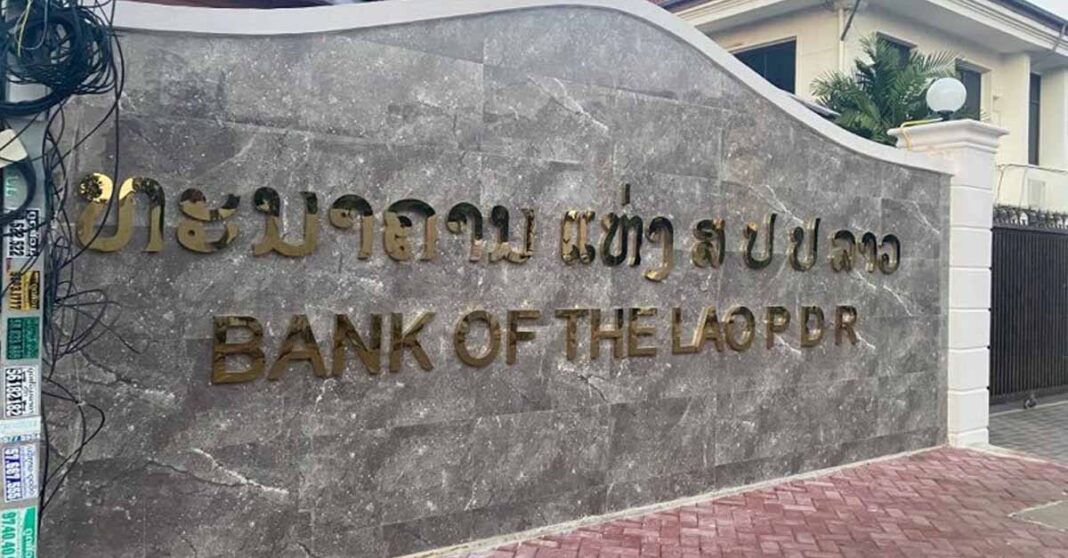
The Bank of the Lao PDR (BOL) announced on 20 November that it is reducing the 7-day base interest rate from 9% to 8.5% per annum. The decision followed the Monetary Policy Committee (MPC) Meeting IV for 2025, chaired by Governor Bounkham Vorachit.
The rate cut aims to boost liquidity in the financial system, encourage credit growth, and strengthen the resilience of the Lao economy amid global slowdowns, exchange rate fluctuations, and sluggish domestic lending.
During the meeting, the MPC reviewed the implementation of previous resolutions, assessed current economic conditions, and discussed the economic outlook for 2026.
Reports presented at the meeting noted that the Lao economy faced several risks in the first ten months of 2025, including slower global growth, volatile exchange rates, high foreign debt repayment needs, and domestic fundamentals that remain relatively weak.
Despite these challenges, inflation is expected to stay moderate, with projections for the fourth quarter around 5 percent.
Monetary Policy Plans for 2026
To address these challenges, the MPC agreed to maintain a mixed monetary policy approach in 2026, focusing on improving instruments such as the base interest rate and the reserve requirement ratio.
The BOL will continue issuing short-term bonds based on economic conditions and maintain a managed exchange rate system.
Under this system, commercial banks can operate within a ±6.5 percent margin, while daily reference rates will be adjusted flexibly to stabilize the kip and monitor currency fluctuations.
The committee also approved a schedule for four monetary policy meetings in 2026, during which officials will review measures to control commodity prices, implement tax exemptions, and tackle illegal trade that affects government revenue.
Additional efforts will focus on centralizing government deposit accounts and improving next-day transfer processes to ensure funds do not remain idle in agent bank accounts.
Coordination and information sharing between the BOL and relevant agencies will remain a priority to implement monetary and commodity price control policies effectively.
