

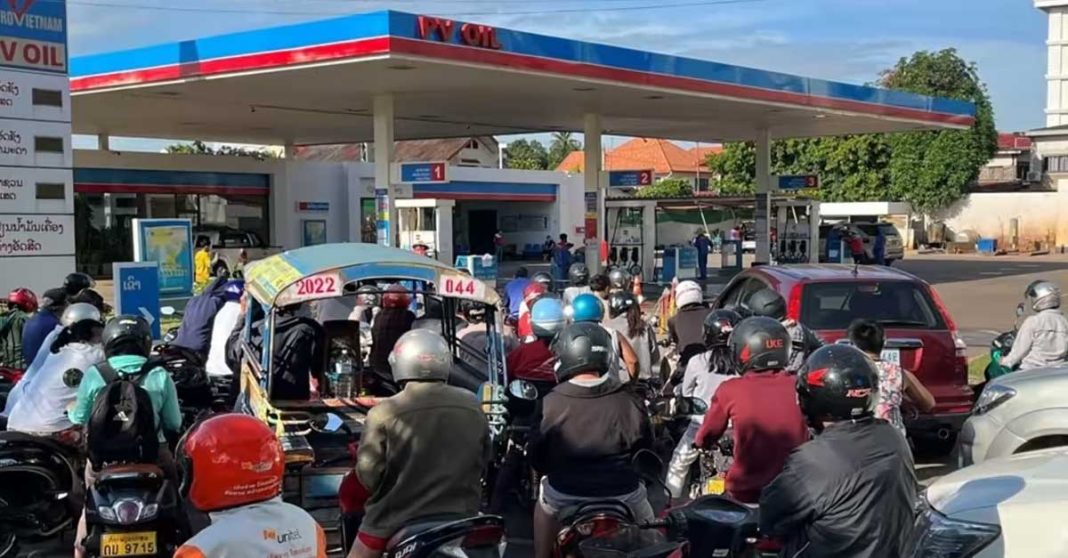
Fuel prices across Laos surged sharply on 6 March following turbulence in global oil markets triggered by the escalating conflict in the Middle East.
Under a new pricing announcement effective from 6 AM, retail fuel prices increased by LAK 3,150 for special gasoline, LAK 3,810 for regular gasoline, and LAK 7,380 for diesel.
The diesel adjustment is particularly significant. Fuel price changes in Laos normally fluctuate between LAK 80 and 300 per liter, making the LAK 7,380 increase one of the largest single adjustments in recent years.
Large price movements of this scale were last seen during the global energy crisis of 2022, when supply disruptions and surging oil prices triggered several major fuel hikes across the country.
Global Conflict Drives Oil Market Volatility
The latest price surge follows a dramatic escalation in the Middle East after coordinated strikes on Tehran by the United States and Israel killed Iran’s Supreme Leader Ali Khamenei.
Iran responded with missile and drone attacks across the region, raising fears of a wider conflict and threatening global energy supply routes.
Particular concern has focused on the Strait of Hormuz, a narrow waterway connecting the Persian Gulf to the open ocean. The strait carries roughly one-fifth of the world’s daily oil shipments, making it one of the most critical chokepoints in global energy trade.
Any disruption to tanker traffic through the strait can quickly push global oil prices higher. Since the escalation, crude prices have climbed to around USD 75–85 per barrel, increasing pressure on fuel-importing countries across Asia.
Domestic Impact Already Visible
The price increase is expected to further affect transportation costs, logistics, and consumer prices across Laos, where diesel plays a key role in agriculture, freight transport, and electricity generation.
Earlier this week, long queues formed at several gas stations in Vientiane as drivers rushed to fill up amid fears of supply disruptions.
Authorities have repeatedly stated that fuel supply remains stable, while urging residents and businesses to use fuel responsibly and avoid panic buying.
The Ministry of Industry and Commerce has also ordered fuel importers and distributors to submit daily reports on import volumes and supply plans, while warning operators against hoarding fuel or manipulating the market.
Heavy Dependence on Thai Fuel
Laos remains highly dependent on imported fuel, particularly from Thailand.
According to data from the Department of Foreign Trade, Thailand supplied 97.10 percent of Laos’ fuel imports, worth USD 1.22 billion out of a total USD 1.26 billion in fuel imports last year.

Other suppliers account for only a small share of the market. Vietnam supplied USD 15.9 million (1.26 percent), Singapore USD 15.6 million (1.24 percent), and China USD 4.09 million (0.32 percent). Imports from South Korea, Japan, the United States, and other countries together accounted for less than 0.1 percent.
The figures highlight how closely Laos’ domestic fuel prices are tied to both global oil markets and supply conditions in Thailand.
