

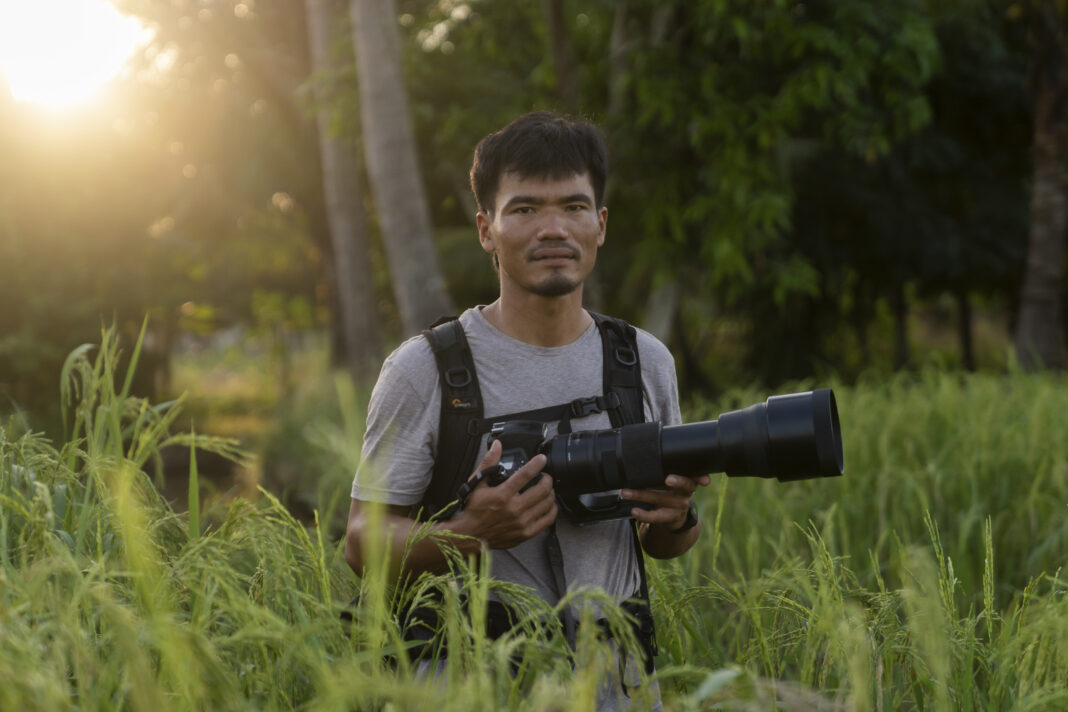
In the forests of Laos, observation comes before words for Souksamlan “Toun” Laladeth.
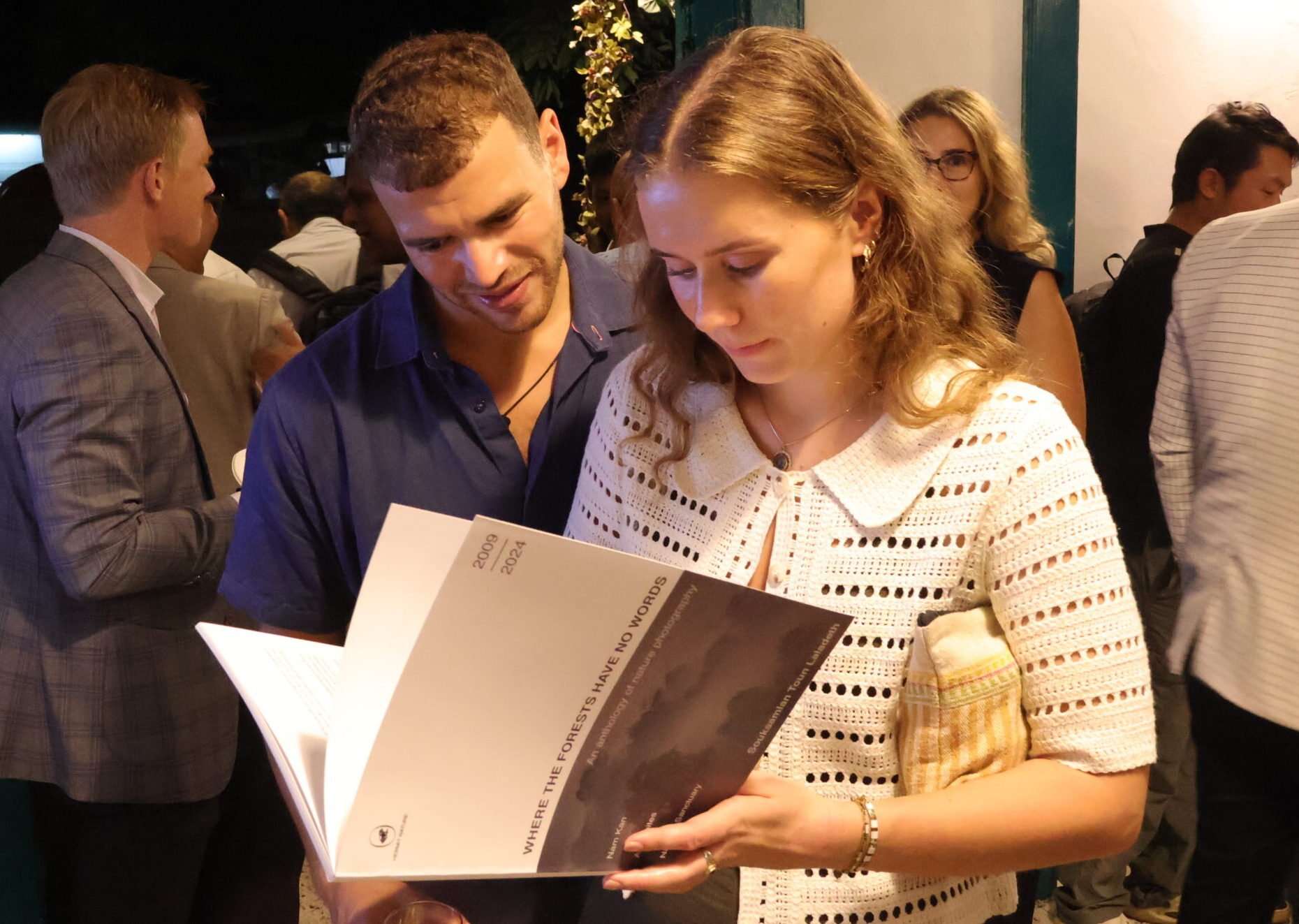
That idea inspired the title of his debut visual anthology, Where the Forests Have No Words, officially launched on 5 October in Vientiane*.*
“People call me a conservation and nature photographer. But really, I’m just a simple person, nothing more,” Toun said.
Toun’s connection with nature began easily in life. Growing up in the northern Bokeo Province, his mother taught him which forest vegetables were safe to eat, while his father, a local hunter, taught him how to track animals.
“Nature and forest, they cannot speak,” Toun says. “Spending time in nature is key to understanding its language.”
Years later, as he began working professionally in the forest, Toun learned more from experienced animal trackers in South Africa and Northern Europe. They taught him how to move silently in the forest, observe his surroundings closely, and think like the animals he was following.
“If you want to see wildlife, you have to think like wildlife, you have to move like wildlife, you have to act like wildlife,” Toun said.
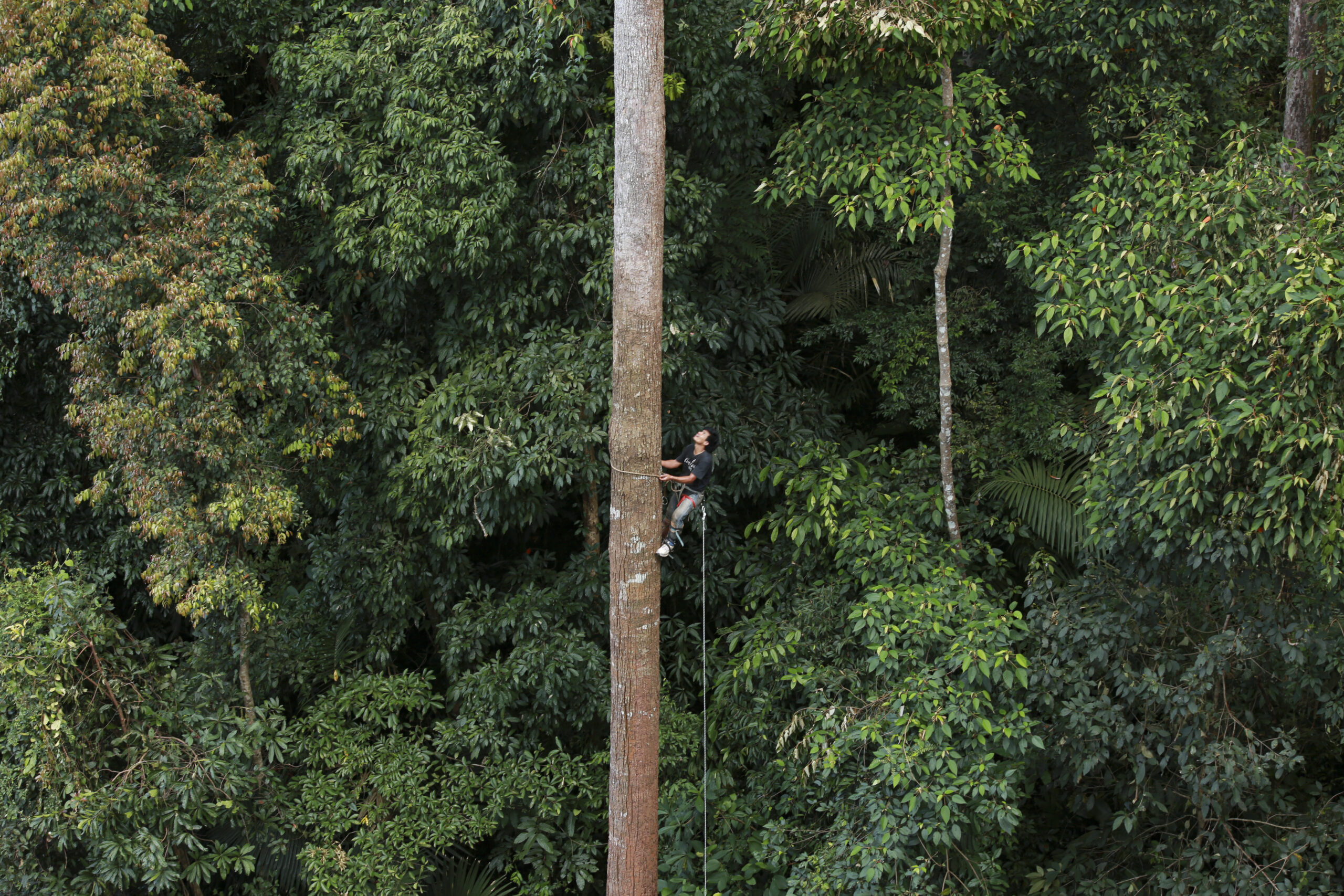
In 2009, Toun began working in the Nam Kan National Park as a porter, carrying food and supplies through the forest. He wanted to become a guide, so he carried a notebook and taught himself English one word at a time. When he struggled to communicate with visitors, he relied on gestures and sign language.
Two years later, he moved into construction and maintenance, leading a six-person team that built suspended treehouses in the forest canopy. He designed them without formal plans, climbing into the trees himself to understand how the branches moved.
“I just climbed the trees. I then sat on the branches and tried to understand their structure,” he said. “When you build a tree house, you have to follow the structure of the tree and understand its movements.”
The project took eight months and included high-wire cables across mountain valleys. Toun spent much of that time about 30 meters above the ground, watching gibbons and rare birds move through the canopy.
A Photography Journey
His interest in photography began with a small compact camera given to him by a friend. He later bought his first “serious camera” and received long lenses, including a 300mm and an 800mm, from his boss.
“After I finished my construction work, I had some free time. I just took the equipment and went into the forest alone to shoot some photos,” Toun said.
In 2021, he entered the “Hope Vision” photography exhibition and won a top award for photographs showing “the beauty of light, movement, and some really rare animals that can only be found in Laos.”
The award eventually brought him to Vientiane.
Then, he met Jeetendra Marcelline, founder and general manager of Lanjan Holdings, at a noodle shop. The meeting changed the direction of his work. Toun joined the team, spending his mornings photographing animals, sorting images, and tracking species.
In 2022, he joined the Saola Foundation for Annamite Conservation, working with experienced trackers and local communities to search for the saola and a newly identified mammal.
Toun still prefers to experience the forest on its own terms. He often walks barefoot through forests and riverbeds, using his feet to feel the ground and water.
“When you’re in the forest, it’s automatic; you calm down, you walk, and you use your ears to see things.”
More Action
Toun believes Laos’ natural resources can support its people when they are managed responsibly. For him, protecting nature also means working with the communities that depend on it.
“Conservation is all about working with people,” he said. “Humans are the ones who caused the problem, we need to work together to fix it.”
His approach to conservation is all about paying attention to the place around him and doing what he can to protect it, wherever he is.
“Every place that I stay or I live… I have this philosophy for my life: to protect where you are.”
Creating Where the Forests Have No Words was not always easy. Toun struggled to put some of his experiences into words.
“Sometimes I don’t have the language, but I explain my experience to the team… they recap the meaning, and then they put it into words,” he said.
Through it all, Toun remains happy with the path he has chosen.
As long as he can carry his equipment into the forest, observe nature, and share what he sees with the world, Toun said he will keep doing what he does.
He hopes his work can show what is possible and encourage others to care for the places around them.
Contacts: https://lanjanholdings.com/contact/
