

Laos’ population is growing more slowly, with birth rates falling and the population getting older, according to the country’s 2025 Population and Housing Census.
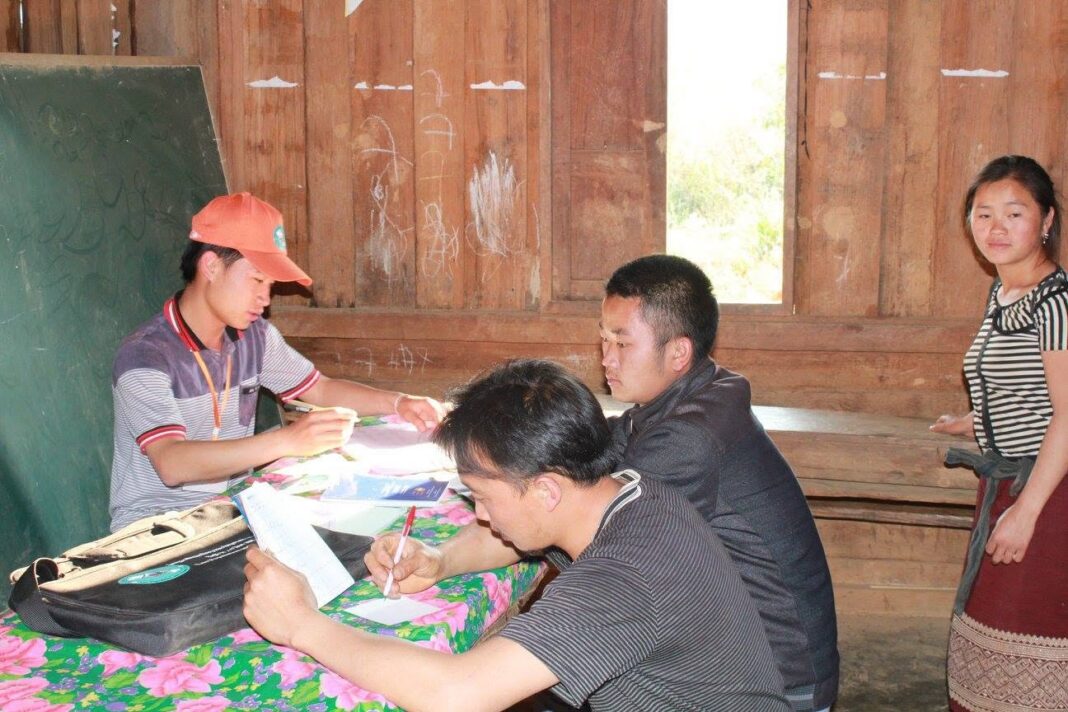
The fifth nationwide census ran from 3 November to 28 December 2025. For the first time, the Lao Statistics Bureau collected data digitally, following four years of preparation with support from UNFPA and other development partners.
Census workers directly counted 6.74 million usual residents. A follow-up survey found that the initial count had missed about 497,000 people, bringing the estimated resident population to 7.24 million.
“We are 95 percent confident in the results,” Deputy Minister of Finance Phetsamone Sone said at the census launch on 20 October.
The findings show that Laos’ annual population growth rate fell to 1.1 percent in 2025, less than half the peak of 2.5 percent recorded between 1985 and 1995.
The birth rate has also dropped over the past decade, from 28 births per 1,000 people in 2015 to 18.1 in 2025. Meanwhile, the median age rose from 18.5 years in 2005 to 27 years in 2025.
Women Are Becoming Mothers at Different Ages
The census recorded 122,043 births and 23,806 deaths in the 12 months before the survey.
It also found differences in the age at which women become mothers. The average age was 23.5 years nationwide and 25.4 years in urban areas. In rural communities without road access, it was 21.2 years.
The figures show that the timing of motherhood varies across the country, but they do not explain why birth rates are falling. Further research would be needed to understand the factors behind the change.
A Country of Uneven Population Distribution
Four provinces and the capital account for more than 40 percent of Laos’ population: Savannakhet, Vientiane Capital, Champasak, and Luang Prabang. Savannakhet and Vientiane Capital each account for about 13 percent.
Population growth also varies widely by province. Attapeu and Sekong are growing fastest, at close to 3 percent a year, while Champasak and Savannakhet have seen little growth.
About two-thirds of the population live in rural areas. Around 301,500 rural residents still lack road access, nearly 30 percent of whom live in Houaphanh Province.
Population density also differs sharply across the country. Vientiane Capital has 228 people per square kilometre, while Phongsaly has just 12.
What the Changes Mean for Laos
The changing age structure could create opportunities for economic growth, but it also presents challenges for public planning.
“Knowing these changes in the population age structure can create opportunities for economic growth, and estimate how much they require to invest in education, health, skills, employment, and social protection,” UNFPA Representative to Laos Bakhtiyor Kadyrov said.
With children making up a smaller share of the population, demand for some services may change over time. At the same time, a larger share of working-age people could support economic growth if enough jobs and training opportunities are available.
The census found that Laos had 53.8 children and older people for every 100 people of working age in 2025, down from 76.4 in 2005. Known as the dependency ratio, the measure compares the number of children and older people with the working-age population.
A lower ratio means fewer dependants relative to the working-age population, potentially creating more room for investment and economic growth. But the benefits will depend partly on whether people can find stable jobs and earn enough to support themselves and their families, according to documents shared by the Lao Statistics Bureau and UNFPA Laos.
*Information from UNFPA Laos, and Lao Statistics Bureau
