

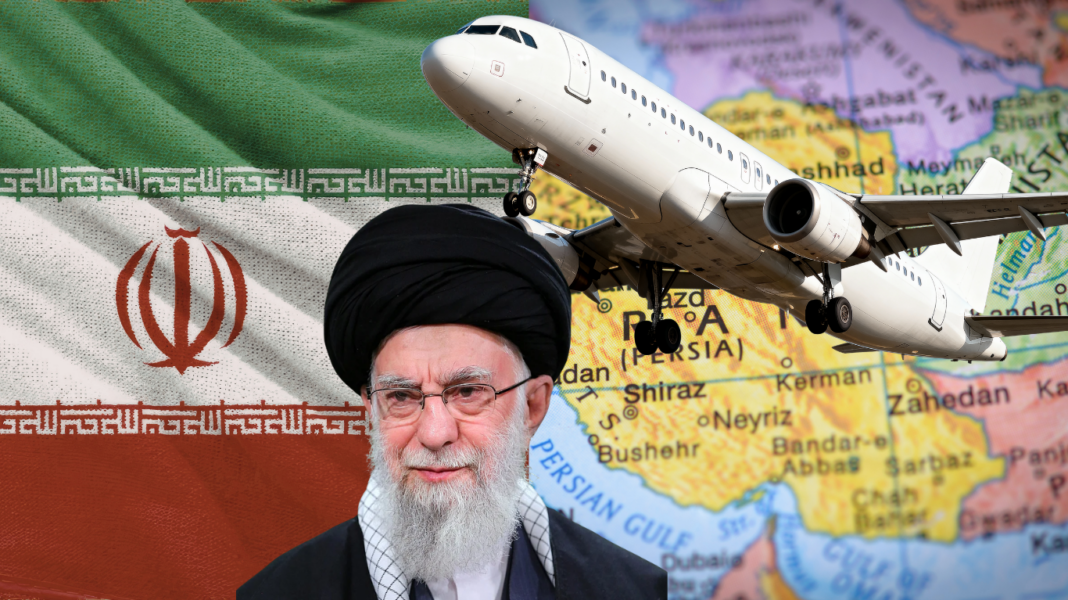
A sudden military escalation in the Middle East erupted over the weekend, triggering immediate airspace closures over Iran and parts of the Gulf, while governments across the region began preparing evacuation plans. Despite the escalation, most Southeast Asian airlines continue to operate normally.
Explosions struck Tehran in the early hours of 28 February after the United States and Israel launched coordinated strikes on Iranian military and nuclear-related facilities.
By Sunday morning, Iran’s Supreme Leader Ayatollah Ali Khamenei had been confirmed dead following the strikes, marking a dramatic turning point in the conflict.
Iran responded with missile and drone attacks targeting Israel and US facilities across several countries in the region. In response to the widening confrontation, multiple Middle Eastern states closed or restricted their airspace, disrupting major aviation corridors linking Europe and Asia.
Southeast Asian Flights Continue
Despite the turmoil, several Southeast Asian carriers report limited impact on their European routes.
Vietnam Airlines confirmed its flights to Europe continue to operate as scheduled, as the carrier does not route through Israeli or Iranian airspace. Other Vietnamese airlines, including Vietjet Air and Bamboo Airways, do not operate European services and have reported no disruption.
Thai Airways also stated that its European flights remain largely unaffected. The airline has rerouted certain services to avoid conflict zones, adding marginal flight time, but operations continue.
The main disruption in Southeast Asia has come through Middle Eastern carriers.
Qatar Airways temporarily suspended flights between Vietnam and Doha from 28 February to 2 March, while Emirates halted services to and from Dubai. Vietnamese authorities reported thousands of passengers affected by cancellations and delays.
Thailand Prepares, Laos Yet to Comment
Thailand faces a more immediate challenge on the ground.
The Thai Labour Ministry confirmed that approximately 7,700 Thai nationals are registered in Iran. However, according to the Thai Embassy in Tehran, only 29 have requested immediate repatriation.
The ministry estimates there are around 110,000 Thai nationals across the Middle East, including 65,000 in Israel, over 20,000 in the United Arab Emirates, and smaller communities in Saudi Arabia, Bahrain, Qatar, Egypt, Oman, Kuwait, Jordan, Iraq, Iran, Yemen, Lebanon, and Syria.
Prime Minister Anutin Charnvirakul placed authorities on maximum readiness, with the Royal Thai Air Force preparing aircraft for possible evacuation missions. Thailand’s Foreign Ministry has advised its citizens in Iran to remain calm, stay indoors, and maintain contact with embassy and consular hotlines.
In contrast, Laos has not issued an official public statement as of 2 March regarding its nationals in Iran.
There is no publicly available data on the number of Lao citizens residing in the country. International migration statistics suggest the Lao community in Iran is small, likely numbering fewer than 1,000 people.
Without a resident embassy in Tehran, Lao nationals may need to rely on third-country diplomatic missions or overland exit routes should the situation deteriorate.
Meanwhile, Vietnam’s Ministry of Foreign Affairs confirmed that Vietnamese nationals in Iran and Israel remain safe. Hanoi has advised its citizens to avoid travel to affected areas and to stay in close contact with representative missions.
Regional Impact
The conflict has forced airspace closures across parts of Iran, Iraq, Israel, Qatar, Bahrain, Kuwait, and the United Arab Emirates, affecting some of the world’s busiest aviation corridors between Europe and Asia.
For now, Southeast Asian national carriers continue to operate with minimal disruption. However, governments across the region remain on alert as the conflict unfolds and evacuation contingencies remain in place.
