

OP-ED by Mehmet Enes Beşer
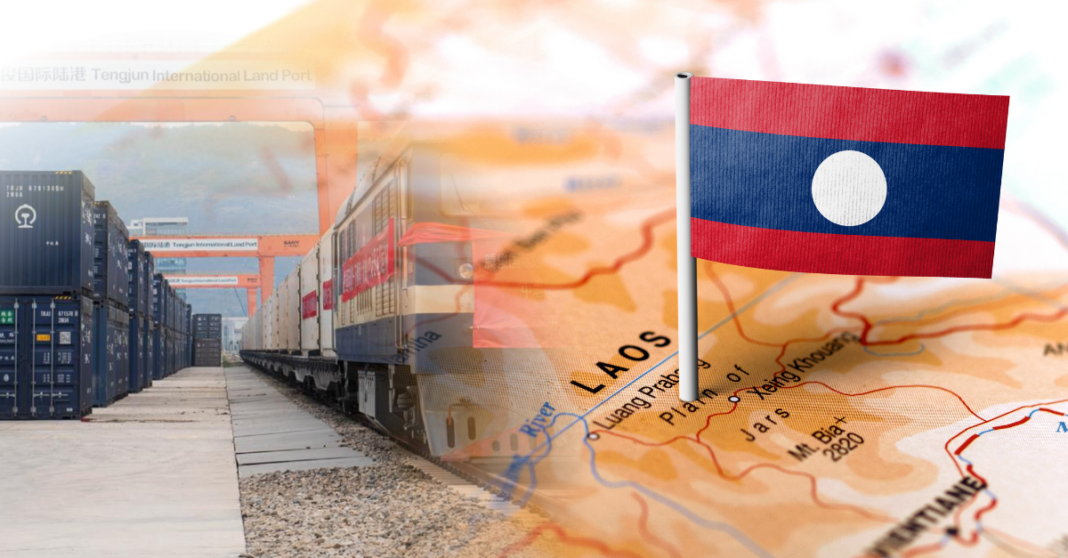
On 22 June, Laos and Cambodia opened a new agricultural transit route at Thanaleng Dry Port, allowing Cambodian durian, mangoes, rice and other agricultural products to cross Laos by road before continuing to China on the Laos-China Railway.
The new route reportedly cuts the journey for perishable goods from almost 20 days to about one week. It is a practical example of how Laos is using its growing rail and road connections to link producers in neighbouring countries with larger regional markets.
As more goods move through the country, there is scope to build a wider network of logistics, storage, processing and other services around the railway, allowing Lao businesses to take part in and benefit from growing regional trade.
The Laos-China Railway provides an important foundation for this expansion. But connectivity alone does not automatically create new businesses or higher-value economic activity. Farmers and small businesses also need reliable access to roads, storage facilities, customs services, financing and markets.
A World Bank assessment of the railway’s potential found that the connection could significantly increase Lao incomes over the long term, provided the country also improves border procedures, feeder roads, cargo handling and competition in multimodal logistics.
These supporting services are particularly important for agricultural trade. A farmer may have access to a fast railway connection, but still struggle to use it if produce cannot reach a collection point efficiently, requires refrigerated storage or faces delays during inspection.
Building Around Existing Connections
Laos has already made progress in developing the infrastructure needed to support the railway.
Thanaleng Dry Port now combines customs clearance, warehousing, container handling and transfers between standard-gauge and metre-gauge railways. Its operator reports that around 2,000 vehicles enter or leave the facility each day.
The facility is also working to improve cargo consolidation, an important part of making cross-border transport more efficient. Import-heavy traffic can leave trucks returning without cargo, while stronger Lao exports could help create more balanced flows in both directions.
The railway’s freight network has expanded rapidly since operations began in late 2021. By June 2026, it had carried more than 80 million tonnes of freight, while the number of goods transported had grown from just over 10 commodity categories at launch to more than 3,800.
Cold-chain logistics have also created new opportunities. Refrigerated trains connecting China, Laos and Thailand have transported fresh produce to Chinese markets in as little as three days. China imported more than 185,000 tonnes of fruit through the railway in the first half of 2026, up 73.1 percent from the same period a year earlier.
These developments suggest that Laos is already becoming an increasingly important transport link in regional supply chains. The next step is to ensure that more Lao producers and businesses can participate in those supply chains.
That could include expanding shared packhouses and cold-storage facilities, improving product testing and certification, strengthening digital customs systems and helping smaller businesses consolidate shipments.
The goal would not necessarily be to build large new facilities everywhere. Smaller, commercially viable services located around existing railway and logistics hubs could help businesses access the infrastructure that is already in place.
Supporting Lao Businesses
The challenge is particularly relevant for Laos’ small businesses.
The World Bank’s 2025 economic monitor found that improved road and railway connectivity was supporting transport services and exports, while domestic demand remained constrained. Its 2026 assessment of the private sector also highlighted limited access to finance, skills shortages and delays in border clearance among the challenges facing businesses.
For smaller agricultural producers, these constraints can make it difficult to take full advantage of new transport connections.
Better access to aggregation, packaging, testing, financing and logistics services could help more Lao businesses meet the requirements of regional markets. Over time, that could allow the railway to support not only the movement of goods through Laos, but also more processing and value-added activity within the country.
This does not mean Laos needs to replace its existing partners or build a separate system around the railway. Rather, the opportunity lies in making existing infrastructure work more effectively with local businesses and producers.
Where International Partners Can Help
International partners could play a role in this next stage by supporting technical training, agricultural processing, logistics services and equipment.
Türkiye is one potential partner. Its export-oriented machinery sector and experience in agricultural equipment could complement Laos’ existing cooperation with China and other countries. The Turkish Cooperation and Coordination Agency, or TİKA, has also worked in Laos on agriculture and capacity-building.
Rather than focusing on a single large project, cooperation could begin with smaller pilot projects around existing railway nodes. These could connect agricultural producers with shared processing or cold-storage facilities, while providing training for Lao technicians and businesses.
Any such projects would need to be based on local demand and commercial feasibility, with maintenance, training and financing considered from the beginning.
Türkiye’s recent status as an ASEAN Dialogue Partner also gives it an opportunity to develop practical cooperation with Southeast Asian countries. In Laos, that could mean contributing to areas where its technical and commercial expertise complements existing development efforts.
The broader opportunity, however, extends well beyond any single international partner.
The Laos-China Railway has already given the country a new connection to regional markets. As trade continues to grow, the challenge, and opportunity, is to build the businesses, services and skills that can grow alongside it.
Editor’s Note: This article was contributed by Mehmet Enes Beşer. Views and information presented are those of the author.
Mehmet Enes Beşer is a researcher focusing on ASEAN, and a graduate of Sociology in Boğaziçi University. His work examines Türkiye’s relations with Southeast Asian countries, particularly in the fields of economic development, industrial cooperation, and foreign policy.
