

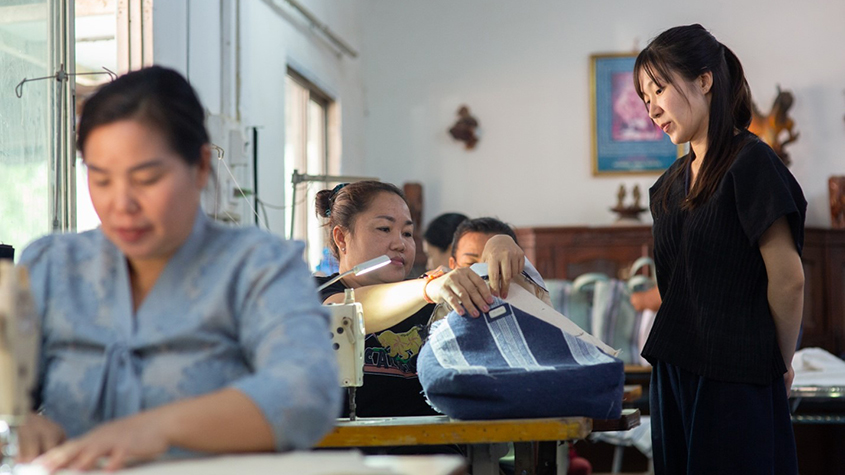
Business and labor experts met in Vientiane on 3 September to discuss standard guidelines for responsible business operations.
The meeting, led by The Lao National Chamber of Commerce and Industry (LNCCI) and the International Labor Organization (ILO), brought together government, workers’ and employers’ representatives, business associations and enterprises to discuss how international Responsible Business Conduct (RBC) principles can be adapted to the Lao context.
Participants addressed workers’ rights, occupational health and safety, and stakeholder relationships, while considering the capacities and constraints of micro, small and medium-sized enterprises.
Discussions aimed to ensure the draft guidelines are practical for businesses of different sizes and sectors, not only large or export-oriented firms.
Xaybandit Rajaphong, Vice President of LNCCI, said the chamber is ready to coordinate the initiative as the employers’ representative, but stressed that it cannot be done by one party alone and will require input from the government, the Lao Central Confederation of Trade Unions, business associations and enterprises.
ILO representative Viboon Sitthimourada highlighted the importance of RBC as Laos prepares to graduate from Least Developed Country (LDC) status. He said that it is essential that Laos adopts responsible business conduct in order to strengthen the market’s competitiveness.
He noted that the new Decent Work Country Program will help businesses prepare for changing trading conditions, buyer expectations and market regulations linked to LDC graduation.
This aligns with the country’s positive outlook in the economic shift, with government officials viewing the changing status as a turning point in national development.
From ‘Special’ Privileges to Greater Opportunity
In a separate interview published on the ministry of foreign affairs pages, Deputy Prime Minister and Foreign Minister Thongsavanh Phomvihane framed LDC graduation as a shift from “special” privileges to greater opportunity.
“While we might lose some ‘special’ privileges, we gain much more in terms of ‘opportunity’,” he said in the video interview, citing improved access to capital as international financial institutions treat Laos as a developing rather than a least-developed country.
He said exiting LDC status requires stronger legal systems and production standards, which in turn force Lao firms to become more competitive.
“If we don’t grow and compete, we will never truly develop. We have to stand on our own feet,” Thongsavanh said.
Further stakeholder consultations are planned to refine the guidelines and align them with international labour standards and sustainable development goals, supporting decent work and enterprise competitiveness as Laos approaches LDC graduation.
