Home Blog Page 1008

Industrial organizations overestimate remote access security, new global report finds

“The State of Industrial Remote Access 2026” reveals rising vendor risk, visibility gaps, and accelerating shift toward unified OT access platforms

COPENHAGEN, Denmark, March 3, 2026 /PRNewswire/ — Industrial organizations worldwide are entering 2026 with growing confidence in their remote access security posture — but new research commissioned by Secomea shows that confidence often exceeds operational reality.

According to The State of Industrial Remote Access 2026 industry report[1], based on a global survey of 400 senior leaders across manufacturing and critical infrastructure, most organizations rate their session visibility and regulatory readiness as “good.” However, deeper analysis reveals significant structural gaps in vendor oversight, credential hygiene, and auditability.

The report identifies a widening “confidence-to-evidence gap” in industrial cybersecurity: while compliance confidence rises quickly at moderate levels of visibility, full vendor session auditability remains uncommon.
 

The State of Industrial Remote Access 2026


Key Findings

Vendor access is the primary risk multiplier

As vendor ecosystems expand, incident likelihood rises sharply. Organizations managing 21–100 external vendors report the highest exposure levels. Risk concentrates where vendor session visibility is partial and credential reviews are infrequent.

Vendor-related risk, the report concludes, is not primarily driven by vendor behavior — but by how organizations structure and govern vendor access.

Partial vendor visibility is the global norm

Only 43% of organizations report full audit trails of vendor sessions. The majority operate with partial visibility, creating compliance and forensic blind spots.

Absence of vendor visibility correlates with universal incident exposure.

Zero trust adoption delivers measurable impact

Zero Trust depth shows a clear stepwise relationship with:

  • Higher session visibility
  • Improved vendor auditability
  • Faster enablement speeds
  • Reduced incident volatility

Organizations implementing all five core Zero Trust principles reach visibility levels not achieved through tooling alone.

Governance and IT/OT alignment predict outcomes

Nearly 70% of organizations now operate under shared IT/OT governance models — the structure most consistently associated with balanced security, operational speed, and auditability.

Where alignment weakens, vendor-related incident exposure nearly triples.

Tool fragmentation erodes control

Most organizations rely on multiple parallel access tools — VPNs, OEM utilities, PAM solutions, and emerging OT-dedicated platforms.

Session visibility declines measurably as tool stack complexity increases. Organizations using three or more remote access tools report lower visibility and higher friction than those operating consolidated environments.

Consolidation momentum is accelerating

The data shows a clear market shift toward identity-centric, unified OT remote access platforms.

Compared to non-users, organizations using OT-dedicated platforms report:

  • Higher average session visibility
  • Stronger full audit trail rates
  • Lower incident exposure
  • Faster vendor enablement
  • Stronger IT/OT alignment

The report concludes that consolidation is not about replacing every legacy tool, but about governing access through a single operational control layer.

A structural shift, not a tactical upgrade

Remote access has evolved from a convenience tool to a strategic control surface for industrial operations.

As regulatory pressure intensifies and vendor ecosystems expand, the industry is converging toward:

  • Federated vendor control models
  • Shared IT/OT governance
  • Identity-based access enforcement
  • Time-bound, session-based permissions
  • Unified auditability

The report describes this transition as a move from fragmented, reactive access to standardized, secure, policy-driven remote operations.

About the report

The State of Industrial Remote Access 2026 is based on a global survey of 400 OT, IT, compliance, and executive leaders across manufacturing and critical infrastructure sectors. The study examines architectural patterns, governance models, vendor access practices, Zero Trust adoption, regulatory alignment, and operational performance indicators.

About Secomea

Secomea is a Secure Remote Access (SRA) solution purpose-built for industrial networks and OT equipment. Over 8,000 customers worldwide rely on Secomea to manage secure remote access to their machines, prevent downtime, and strengthen cybersecurity across their global operations. For more than 15 years, Secomea has supported manufacturers and machine builders with a simple, scalable solution that bridges IT/OT requirements and provides the visibility, compliance, and control required to defend the factory floor.

1. https://secomea.com/guides/the-state-of-industrial-remote-access/.
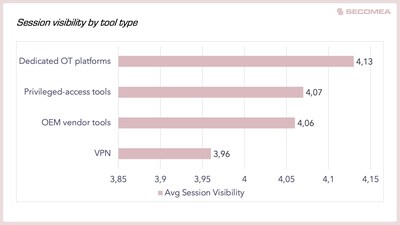
 

Session visibility by tool category
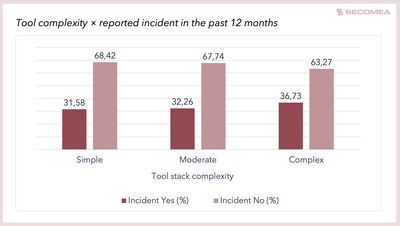


Reported incident rate by tool stack complexity
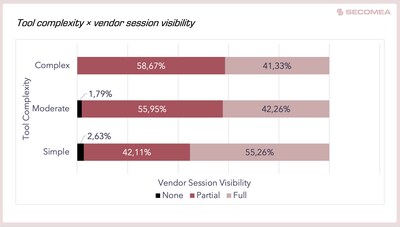


Vendor session visibility by tool
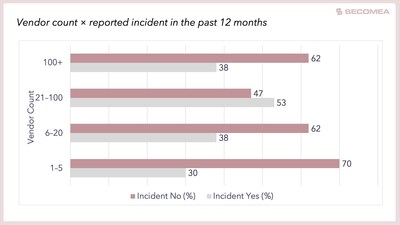


Reported incident rate by vendor count
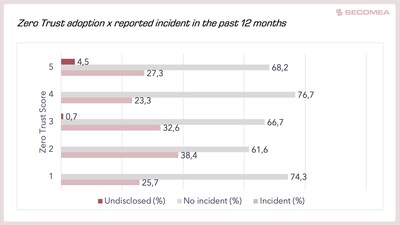


Zero trust adoption and incident rate


As an AI-Native Phone Pioneer, nubia Reshapes the Paradigm of Human-Device Interaction at MWC Barcelona 2026

  • nubia M153 with Doubao AI Assistant is the true AI-native phone that brings an “autopilot“ experience to the AI phone
  • AI Pet iMoochi redefines emotional companionship with lifelike interactions, a furry, cloud-soft design and evolving personalities

BARCELONA, Spain, March 3, 2026 /PRNewswire/ — ZTE Corporation, a global leading provider of integrated information and communication technology solutions, showcased its expanded portfolio of AI devices designed for a new era of interaction at MWC Barcelona 2026. Taking center stage were two groundbreaking innovations: nubia M153 with Doubao AI Assistant, which saw a limited launch in the Chinese market in December, and AI Pet iMoochi. These two devices represent a major leap forward for ZTE’s “AI for All” strategy, driving the evolution of personal smart devices and accelerating the advancement of a Full-Scenario AI Ecosystem.

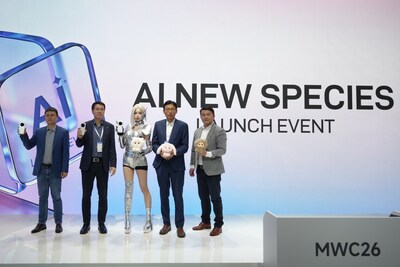
ZTE AI New Species Event at MWC Barcelona 2026

As An “AI-Native Phone Pioneer”, nubia M153 with Doubao AI Assistant Defines A True “Autopilot” Experience

As an AI-Native Phone Pioneer, nubia is leading cutting-edge AI technology innovation and commercial adoption with its “Innovation + Action” approach. By deeply integrating AI across hardware, software, and its wider ecosystem, nubia is reshaping the paradigm of human-device interaction, working to transform AI from a mere tool into an agentic, symbiotic partner that understands and grows with you. nubia M153 with Doubao AI Assistant is the true AI-native phone that brings an “autopilot” experience to the AI phone powered by its OS-level Agent capabilities.

nubia M153 with Doubao AI Assistant is the outcome of an in-depth collaboration between Doubao and nubia at the OS level, capable of understanding and executing complex user commands in natural language, enabling cross-application task execution. This marks a paradigm shift from “users operating their phones” to “AI autonomously handling tasks for them”. By seamlessly executing multi-step workflows, it delivers a highly natural and intuitive interaction. Whether booking a restaurant or comparing prices across platforms, a single voice command is all it takes. The phone then autonomously navigates necessary apps to handle the entire process from searching, comparing, booking and mapping the route.

nubia M153 with Doubao AI Assistant is built on a solid hardware foundation to support its advanced AI capabilities. It is powered by Snapdragon® 8 Elite Mobile Platform, coupled with 16GB of RAM and 512GB of storage, ensuring smooth AI computing and multitasking.

Designed to collaboratively refine AI experiences with developers and tech enthusiasts, nubia M153 with Doubao AI Assistant saw a limited launch in the Chinese market on December 1, 2025.

The New AI Species iMoochi Redefines Emotional Companionship

Designed to be a warm, understanding emotional companion. iMoochi features a furry, cloud-soft texture and soulful eyes. Its true magic lies in its rich, multi-modal interactions. Moving past mechanical dialogue, iMoochi utilizes a unique “iMoochi language” and distinctive “milky coos” to deliver a natural, comforting interactive experience. Through gentle haptic feedback and tactile sensors, a simple pat on the head or prolonged caressing results in loving nuzzling, joyful coos, and delighted tail wags. Operating on its own lifelike rhythm, iMoochi lives in its “own little world”, it yawns when sleepy, feels hunger, senses temperature changes, and even reacts to the feeling of weightlessness when playfully tossed in the air.

iMoochi is perfect for users seeking stress relief, particularly young urban professionals, animal lovers unable to keep real pets, or families looking for a shared interactive bond. A dedicated companion app deepens this friendship by allowing users to name their iMoochi, check its mood, and read its personal diary, making the companionship feel valued. The iMoochi family features five distinct members: Hopami, Mimiu, Cynomi, Mogogo and Morin.

Whether reshaping human-device interaction with nubia M153 with Doubao AI Assistant, or defining a new category with AI Pet iMoochi, ZTE’s lineup at MWC 2026 brings its “AI for All” strategy to life.

For more information, please visit the ZTE booth (3F30, Hall 3, Fira Gran Via) at MWC Barcelona 2026 or explore: https://www.zte.com.cn/global/about/exhibition/mwc26.html

MEDIA INQUIRIES:
ZTE Corporation
Communications
Email: ZTE.press.release@zte.com.cn

GFL Sports & Entertainment, Inc. Launches as Publicly Traded MMA League, Introducing a New Ownership Model for Athletes and Fans

GFL Partners with DealMaker to Launch $5 Million Equity Raise and Announces Senior Leadership and Advisory Appointments

LAS VEGAS, March 3, 2026 /PRNewswire/ — GFL Sports & Entertainment, Inc. (OTC: GFLE) today announced its public market launch and unveiled the next phase of development for the Global Fight League (GFL), a new professional MMA organization built on a shared-ownership model. Through a collaboration with DealMaker, a registered broker-dealer and investor platform, GFL is opening a public equity raise of up to $5 million, creating a transparent structure designed to align athletes, fans, and partners through participation in the league’s long-term growth.

As a publicly traded company, GFL is introducing a model that expands access to ownership beyond traditional private capital. At a time when institutional investors are acquiring stakes in professional sports franchises and leagues, GFL is structuring participation to allow a broader base of stakeholders — including athletes and fans — to invest in a global sports property.

GFLE Executive Chairman Vince Hesser said, “The sports industry has evolved into one of the most valuable investment sectors in the world, yet public access to ownership has been limited. The Global Fight League is building a transparent structure that aligns performance, participation, and long-term value creation across athletes, fans, and investors.”

Hesser is a seasoned executive and private investor with more than $2 billion in transactions across sports, media, real estate, and international business, including leadership roles spanning more than 100 MMA events.

GFLE has entered into an alliance with DealMaker to provide the regulatory, technical, and investor-engagement infrastructure required to support a public capital raise, compliance, and investor relations. Trusted by organizations such as the Green Bay Packers, DealMaker has raised more than $2.3 billion in capital across more than 900 offerings and is accelerating a new model of community-driven sports investment.

GFLE also announced that Jeffrey Pollack has joined the organization as Senior Advisor to help guide the GFL’s strategy, governance, and growth.

“GFL opens ownership to fans and athletes from the start,” said Pollack. “The massive influx of institutional capital into sports reflects a multi-trillion dollar opportunity for investors around the world. We believe the athletes and audience that power the industry also deserve access to ownership in the value they help create.”

Pollack brings more than 25 years of senior leadership experience driving innovation and growth at the league and team level. He was President and CEO of the XFL, and has held senior positions across the NFL, NBA, NASCAR, Professional Bull Riders, and World Series of Poker.

Pollack is assembling GFL’s Business Advisory Council, which initially includes: Kevin LeGrett, former President of iHeart Sports and West Coast Division President at iHeartMedia; Basil DeVito, a veteran sports and television executive with senior leadership experience across the WWE, XFL, Breeders’ Cup, and NBA; Laura Gentile, former ESPN Executive Vice President and Chief Marketing Officer and founder of espnW; Bruce Smith, founder of Hydrow and CEO of Sensor Bio; and Gareb Shamus, founder of Comic Con and co-founder of the International Fight League.

GFL is founded on a vision developed by Darren Owen, a longtime MMA executive, promoter, and producer. As Commissioner of the Global Fight League, Owen’s primary focus will be competition, event production, and athlete relations.

Owen has started to establish the league’s Athlete Performance & Wellness Council, bringing together elite fighters and trusted industry voices to help guide standards for the athlete experience. The council includes Tyron Woodley, Benson Henderson, Ilima-Lei Macfarlane, Cat Zingano, Héctor Lombard, Jessica Aguilar, legendary broadcaster Mike Goldberg, MMA athlete-relations icon Burt Watson, and Dr. Jen Welter, a leader in athlete psychology and mental wellness.

“GFL was built to put athletes first on fight night and throughout their entire career,” said Owen. “From performance and wellness to preparation, recovery, and long-term financial planning, our commitment is to support and respect fighters as people and professionals.”

As part of its formal launch, GFL also announced that Scott Parker has been named the league’s Chief Marketing Officer. Parker is a marketing leader with senior experience at PepsiCo, Disney/ESPN, TuneIn, and the XFL, including the launch of the SEC Network and the College Football Playoff.

GFL is building toward a 2026 debut season, with additional details to be announced as the equity raise progresses over the next four to six months. The league plans to launch with four teams in New York, Los Angeles, Miami, and London, featuring a unified team structure in which men and women compete side by side as part of the same organization.

Forward-Looking Statements Notice
This press release includes statements that may be deemed “forward-looking statements” and, as such, is subject to the following forward-looking notice disclaimer: Certain information posted in this press release contains “forward-looking information”, including “future-oriented financial information” and “financial outlook”, under applicable securities laws (collectively referred to herein as forward-looking statements). These statements are not guarantees of future performance and undue reliance should not be placed on them. Such forward-looking statements necessarily involve known and unknown risks and uncertainties, which may cause actual performance and financial results in future periods to differ materially from any projections of future performance or result expressed or implied by such forward-looking statements. Although forward-looking statements contained in this press release are based upon what management of the Company believes are reasonable assumptions, there can be no assurance that forward-looking statements will prove to be accurate, as actual results and future events could differ materially from those anticipated in such statements. The Company undertakes no obligation to update forward-looking statements if circumstances or management’s estimates or opinions should change except as required by applicable securities laws. The reader is cautioned not to place undue reliance on forward-looking statements.

Reserve your shares at: https://invest.mmagfl.com

About DealMaker
Headquartered in New York City, DealMaker is a leading fintech platform powering the future of capital raising. With more than $2.3 billion raised across 1,000+ offerings, DealMaker provides companies with end-to-end infrastructure to acquire, convert, and engage investors through compliant digital securities offerings. For more information, visit https://dealmaker.tech.

DealMaker Securities LLC, a registered broker-dealer, and member of FINRA | SIPC, located at 30 East 23rd Street, 2nd Floor, NY, NY 10010, is the Intermediary for this offering and is not an affiliate of or connected with the Issuer.  Please check our background on FINRA’s BrokerCheck.

DealMaker Securities LLC does not make investment recommendations.

DealMaker Securities LLC is NOT placing or selling these securities on behalf of the Issuer.

DealMaker Securities LLC is NOT soliciting this investment or making any recommendations by collecting, reviewing, and processing an Investor’s documentation for this investment.

DealMaker Securities LLC conducts Anti-Money Laundering, Identity and Bad Actor Disqualification reviews of the Issuer, and confirms they are a registered business in good standing.

DealMaker Securities LLC is NOT vetting or approving the information provided by the Issuer or the Issuer itself.

Media Contact: Joe Favorito, Global Fight League, PR@mmagfl.com, 917-566-8345

3CLogic Chosen by Apex Systems to Enhance ServiceNow-Driven Managed Services

New solution strengthens Apex Systems’ ServiceNow-aligned delivery model with integrated contact center capabilities.

ROCKVILLE, Md., March 3, 2026 /PRNewswire/ — 3CLogic, the leading AI-powered contact center platform purpose-built for ServiceNow, today announced that Apex Systems, a global technology services firm and award-winning ServiceNow Elite Partner, has selected its Voice AI platform to enhance their managed services offering. The selection comes as Apex Systems continues to invest in and expand its ServiceNow and contact center services to its globally diverse Fortune 500 clientele.

GlideFast Consulting, an integral part of Apex Systems’ enterprise platform solutions offerings and a multi-year Elite ServiceNow partner, sought a solution that would leverage and monetize its existing investment in ServiceNow Customer Service Management (CSM) while elevating customer experiences and agent performance. 

Adam Mason, the VP of Strategy at GlideFast Consulting said, “We were looking for a solution that could extend our ServiceNow investment into a fully integrated, AI driven contact center to support global 24×7 operations with intelligent routing, real time insights, and automation. 3CLogic was the perfect fit.”

The deployment will deliver a number of advanced features to optimize its global 24×7 managed services operations including:

  • ServiceNow integrated Contact Center as a Service (CCaaS) solution to easily manage and deploy personalized call routing experiences to optimize speed of service.
  • Real-time call transcription (RTT) integrated with ServiceNow to support live agents with in-the-moment insights and assisted recommendations to optimize speed of resolution.
  • ServiceNow integrated SMS to enable automated reminders or facilitate on demand click-to-SMS from ServiceNow’s Configurable Agent Workspace.
  • Agent automation to include call summarizations and resolution notes powered by ServiceNow Now Assist.
  • Contact Center data integrated with ServiceNow Platform Analytics to enable a single and real-time supervisor view of daily engagements across both voice and digital channels.

The announcement builds on the 2025 strategic partnership between 3CLogic and GlideFast Consulting focused on delivering integrated ServiceNow contact center solutions.

“There is nothing more validating than to have the privilege of going beyond a partnership and be selected as the technology foundation our clients trust to power their own customer experiences”, states Guillaume Seynhaeve, VP of Alliances at 3CLogic. “We’re honored to support Apex Systems as they expand their ServiceNow managed services offering with modern, AI-driven voice capabilities.”

3CLogic is a ServiceNow certified Advanced Platform Build Partner with offerings available for ServiceNow IT Service Management, CRM and Industry Workflows, and HR Service Delivery . The organization will be will be in attendance at ServiceNow’s annual Knowledge 2026 event this May in Las Vegas where it plans to unveil its latest set of innovations. 

For more information, visit 3CLogic.com.

About 3CLogic
3CLogic transforms customer and employee experiences with its patented and award-winning AI-powered cloud contact center solutions purpose-built to enhance today’s leading CRM and Customer Service Management platforms. Globally available and leveraged by the world’s leading brands, its offerings empower enterprise organizations with innovative capabilities, such as intelligent self-service, Generative AI, Conversational AI, agent automation & coaching, and AI-powered sentiment analytics — all designed to lower operational costs, maximize ROI, and deliver better, faster, and more personalized interactions for IT, employee, and customer service. For more information, please visit www.3clogic.com.

ServiceNow, the ServiceNow logo, and other ServiceNow marks are trademarks and/or registered trademarks of ServiceNow, Inc. in the United States and/or other countries.

GSMA Calls for Regulatory Readiness for Direct-to-User LEO Satellite Services

New paper recommends developing adaptive and proportionate regulatory frameworks for Direct-to-User LEO satellite services

BARCELONA, Spain, March 3, 2026 /PRNewswire/ — A new era of Satellite services, enabled by Low-Earth-Orbit constellations, requires a fresh approach to regulation worldwide, according to a position paper released today by the GSMA.


The paper, ‘Regulatory Preparedness for Satellite Services’, urges policymakers to take proactive steps to modernise regulatory frameworks and outlines five guiding principles to promote innovation, ensure consistent user protection across technologies, safeguard essential public-interest needs, support investment across communications networks, and build consumer trust.

John Giusti, Chief Regulatory Officer, GSMA, said: “As LEO satellite services rapidly advance, they are transforming global connectivity, expanding coverage to underserved communities, strengthening resilience, and enabling new D2D services. Growing partnerships between mobile and satellite providers are accelerating innovation and enhancing the overall connectivity experience for users.

As these capabilities scale, governments are increasingly considering the need for greater regulatory alignment. Establishing comparable requirements for mobile and satellite providers delivering similar services will help ensure consistent consumer protection, support sustainable long-term investment, and safeguard national sovereignty — all while delivering greater value, quality, and trust for users.”

The GSMA paper comes at a time when new satellites are being launched, and operators are expanding into new markets and services. As LEO constellations scale rapidly, forward-looking regulatory frameworks will be essential to maximise the potential benefits of these new technologies.

Five core principles to guide regulatory frameworks

The paper sets out five principles to guide modern regulatory frameworks:

  1. Transparency and Predictability: Establish clear, consistent, and accessible rules for market entry so that both new satellite entrants and existing mobile operators can make confident, long-term investment decisions together.
  2. Regulatory Parity: Maintain a level playing field by ensuring that satellite providers face the same legal and regulatory obligations as mobile operators.
  3. Harmonisation: Align national policies with regional and international standards to reduce regulatory fragmentation, making it easier and more efficient for global satellite constellations to operate across borders.
  4. Collaboration and Consultation: Maintain open dialogue between governments, regulators, and industry to ensure that new policies are evidence-based, inclusive of all stakeholders and reflect market realities.
  5. Balance Innovation with Regulation: Support technological growth while ensuring satellite operators comply with national interests, such as consumer protection, data privacy and national security.

Read full report here and website.


Huawei Releases 115 Industrial Intelligence Showcases with Global Customers; and Launches 22 Industrial Intelligence Solutions with Partners at MWC 2026

BARCELONA, Spain, March 3, 2026 /PRNewswire/ — During MWC Barcelona 2026, Huawei released 115 industrial intelligence showcases, together with its customers, during Industrial Digital and Intelligent Transformation Summit 2026. The summit, titled Advancing Industrial All Intelligence, was held by Huawei to explore new practices in industrial intelligence with its customers, partners, and peers. Besides, Huawei announced the launch of upgrades to its SHAPE 2.0 partner framework. Huawei also showcased 22 new industrial intelligence solutions with partners, for the electric power, manufacturing and retail, finance, transportation, oil and gas, ISP, media, public service, and smart city sectors.

Huawei proposed the ACT Pathway: A replicable intelligence framework

AI technologies have advanced rapidly over the last year, with reasoning models and agentic workflows both maturing, and physical AI beginning to truly take off. This has allowed AI tools to begin entering core production scenarios and helped applications move from pilots to large-scale use. AI agents can also now better understand and interact with the physical world, and are now capable of making decisions independently.

Huawei introduced the ACT Pathway, and three key steps specified in the ACT framework were mandatory for achieving comprehensive industrial intelligence. The first step is “assessing high-value scenarios”. Huawei has helped customers identify over 1,000 core production scenarios where AI can play a big role. The second is “calibrating AI models with high-quality vertical data”. Huawei has built a 6-layer AI security framework to ensure every stage of the AI lifecycle is secure and trustworthy. The third is “transforming business operations with AI talent”. Talent that understands both industry and AI are needed. Huawei does this by three areas, including hands-on practice programs, CANN open-source communities, vertical industry communities on Huawei Cloud, and ICT Academies.

Huawei worked with customers to release global industrial intelligence showcases

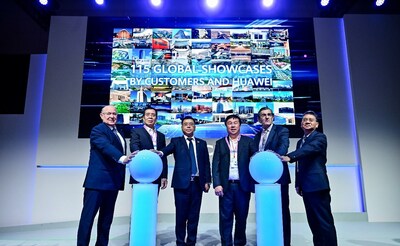
During the summit, A number of Huawei’s customers joined on stage to launch 115 global showcases for industrial intelligence, including executives from Eskom, Shandong Port Group, Converge ICT, HM Hospitales, and PetroChina (Beijing)’s Digital Intelligent Research Institute, CNPC, providing reference for organizations of various sectors to embark on their journey towards intelligence.

from left to right: Len De Villiers, Chief Technology and Information Officer of Eskom; Zhang Liangang, Chief Scientist of Shandong Port Group; Nicholas Ma, Corporate Vice President, President Global Gov. & Enterprise Key Accounts, Huawei; Dennis Uy, CEO and Co-Founder of Converge ICT; Dr. Juan Abarca Cidón, President of HM Hospitales; and Su Yila, Deputy Director of PetroChina (Beijing) Digital Intelligent Research Institute Co., Ltd, CNPC

Huawei upgraded the SHAPE 2.0 partner framework

Huawei upgraded the SHAPE 2.0 partner framework with AI as the core engine, which includes five major updates:

The First is AI-powered products upgrades. Huawei is embedding AI into product and solution offerings, such as the new network agents which can now automate fault location and network optimization to make O&M more efficient.

Secondly, Huawei has upgraded their joint innovation mechanism. Partners can use one-stop AgentArts on Huawei Cloud to develop agents and industry AI solutions.

The third is helping partners develop AI capabilities. Huawei released a set of standards for AI capabilities and launched over 20 new AI certification courses. And it plans to help over 1,000 partners get AI-certified.

The fourth is making cooperation more efficient with AI. Huawei provides multiple AI tools that help partners increase productivity, like AI-assisted configuration and HUAWEI eKit chat for technical support.

Fifth is creating more growth opportunities with AI. Huawei deploys over 3,000 scenario-specific AI experts and launches intelligent transformation lighthouse projects across 38 industries. Its AI-integrated solutions, like the Atlas 850 server, empower partners to efficiently build their own all-in-one AI solutions.

At the summit, Huawei showcased 22 of its latest industrial intelligence solutions jointly developed with partners.

Global customers and partners shared innovative practices at the summit

Len De Villiers, Chief Technology and Information Officer of Eskom, said at the summit, “Sustainable electricity supports economic growth, reduces poverty, and improves living standards. Eskom remains pivotal in transforming lives through our significant contribution to South Africa’s economy. Eskom’s strategy and turnaround plan is to pursue financial and operational sustainability, and to modernize power system and energy transition. Through unbundling, Eskom will evolve to be more agile and attract the funding required to deliver the future energy landscape and economic growth.”

Ng Wun-kit, Principal of Pui Kiu Middle School, Hong Kong, China, said at the summit, “Vision of Pui Kiu Middle School in the AI era is to be a leading AI-driven educational pioneer, leveraging technology to deliver personalized, intelligent learning, and cultivate future-ready leaders with global perspectives and innovative minds. We have already implemented AI General Knowledge Course, AI-Empowered Smart Classroom, and Smart & Safe Campus. We will launch the Global Model School of Huawei AI Education Center (AIEC) Solution, and we look forward to sharing our transformative journey, proven methodologies with the international community.”

Hoy-Jin Lee, Vice President of Sales, Solum Europe GmbH, said at the summit, “With the industry’s most extensive ESL lineup, Solum is equipped to optimize any store setting. We have jointly developed an All-in-One Retail Infrastructure Platform, unifying telecom infrastructure and ESL into one scalable, cost-efficient architecture. This solution features a unified gateway that supports LTE, Wi-Fi and ESL, with no dedicated ESL AP required; it offers pre-integrated, ready-to-use deployment and an independent, secure network architecture, which can help reduce total cost of ownership (TCO) by up to 55 percent and deliver up to 33% savings for large-format stores.”

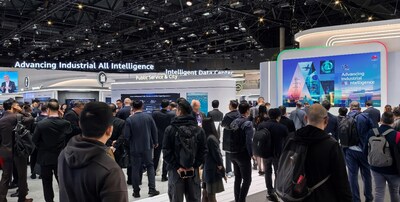
In the Enterprise Business exhibition area in Hall 1, 98 exhibition stands and 51 interactive demos were set up to demonstrate Huawei’s commitment to intelligent transformation and innovative digital infrastructure, showcasing the latest products, solutions, and global practices of industrial intelligent transformation to customers and partners.

Besides, Huawei set up a partner exhibition area to display its latest partner policies, tools, marketable solutions, and star products.

The Huawei Enterprise booth at MWC Barcelona 2026

please visit: MWC Barcelona 2026 | Huawei Enterprise

Huawei’s Yang Chaobin: Creating Mobile Value Creates a Better Intelligent World

BARCELONA, Spain, March 3, 2026 /PRNewswire/ — Yang Chaobin, CEO of Huawei’s ICT Business Group, today called on the ICT industry to intensify efforts in ensuring everyone can access the fast track of AI at MWC Barcelona 2026. This call included recommendations on spectrum and network capabilities for scaling 5G-Advanced to support emerging AI applications, and an appeal to expand inclusive connectivity to bridge the digital divide in underserved regions.

In his keynote, Yang said, “The intelligent era is approaching fast. New AI applications are emerging every day, and so it is time for the industry to come together to unleash the full potential of 5G-A. We must efficiently utilize new spectrum resources like U6 GHz to create new value for the industry while paving the way for evolution to 6G.“

As AI applications like text-to-video and AI-powered shopping become more and more common, token consumption will surge. The number of tokens consumed daily has grown 300 times over the past two years. Yang believes that this is creating enormous opportunities for the mobile industry.

However, these achievements have highlighted gaps that he says the industry must address. First, Networks must move away from being downlink-centric and deliver ultra-high bandwidth both uplink and downlink to support multimodal data exchanges between devices and clouds for AI. Second, networks must provide secure, reliable, and ultra-low-latency connectivity to support real-time AI collaboration and intelligent decision-making.

6G standardization is also already underway, and its standards are not expected to be frozen before March 2029, according to 3GPP. Yang explained that the next five years will create a window of opportunity both for mobile AI services to boom and for the industry to create new value, so long as carriers invest effectively in 5G-A. This half-generation step between 5G and 6G is already playing a key role in the industry, as it delivers 10 times higher uplink speeds, superior AI service experience, new IoT technologies like reduced capability (RedCap) and passive IoT, and AI for differentiated network capabilities. 

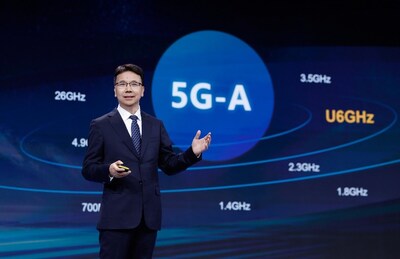
Yang Chaobin, Huawei ICT BG CEO, speaking at MWC Barcelona 2026

5G-A has been commercially deployed at scale in more than 300 cities around the world, and its deployment is expanding to all frequency bands. New and refarmed spectrum resources are needed to make 5G-A even more capable, particularly in countries and regions where C-band resources are scarce. The U6 GHz band is becoming the key to unleashing this network potential. 

After multiple rounds of discussion at the World Radiocommunication Conference (WRC), U6 GHz has been established as a mainstream frequency band for future mobile communications. 5G-A already supports U6 GHz, and mainstream device chips and the industry chain for 5G-A devices are also mature. This means 5G-A is ready for large-scale commercial use. Yang urged his speech attendees, all of whom are players in the telecom industry, to lean deeper into collaboration on 5G-A and frequency bands like U6 GHz to support surging AI service demand.

The second focus of Yang’s speech was the industry’s urgent need to address global imbalances in digital access. According to GSMA, more than 300 million people are not covered by a mobile broadband network. Over the past two decades, the communications industry has made great efforts to bridge the digital divide, but the rapid growth of AI seems to be widening this gap. Stronger digital inclusion drives and continued innovation are needed. 

Yang encouraged further exploration of inclusive connectivity strategies like diversified frequency-band combinations and more cost-effective solution design. Huawei itself has launched innovative all-scenario RuralStar solutions to provide inclusive mobile access to 170 million people in 80 countries, as well as a number of additional inclusion programs. These include the DigiTruck classrooms providing rural students digital skills training in Kenya, inclusive financial services for rural residents in Bangladesh, and mobile medical services for villages in Argentina.

Wrapping up his keynote, Yang called on all industry players to continue working together on commercial 5G-A adoption at scale in order to address the pressing needs from emerging AI services and pave the way for evolution to 6G.

MWC Barcelona 2026 will be held from March 2 to March 5 in Barcelona, Spain. During the event, Huawei will showcase its latest products and solutions at stand 1H50 in Fira Gran Via Hall 1.

The era of agentic networks is now approaching fast, and the commercial adoption of 5G-A at scale is gaining speed. Huawei is actively working with carriers and partners around the world to unleash the full potential of 5G-A and pave the way for the evolution to 6G. We are also creating AI-Centric Network solutions to enable intelligent services, networks, and network elements (NEs), speeding up the large-scale deployment of level-4 autonomous networks (AN L4), and using AI to upgrade our core business. Together with other industry players, we will create leading value-driven networks and AI computing backbones for a fully intelligent future.

For more information, please visit: https://carrier.huawei.com/en/minisite/events/mwc2026/

HiRO Leads Cross‑Border Dialogue at JPM, Offering Insights for Biotechs Seeking Asian Investment

SOMERSET, N.J., March 3, 2026 /PRNewswire/ — Harvest Integrated Research Organization (HiRO), a global contract research organization specializing in strategic planning for clinical development and cross‑border clinical trial solutions and services, concluded a successful presence at the 44th Annual J.P. Morgan Healthcare Conference in San Francisco.

HiRO’s Founder and CEO, Dr. Karen Chu, was a featured speaker at RESI JPM, where she moderated a panel convening investors and strategics at the forefront of the cell and gene therapy revolution. Panelists Robert Balfour of ALSA Ventures and Bettina Ernst of BERNINA BioInvest highlighted the current momentum in cell and gene therapies, discussed how they assess technical and commercial risk, identified partnership models that accelerate progress, and outlined where capital is flowing in this rapidly advancing field.

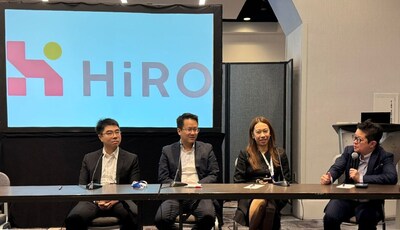
Dr. Chu also led a workshop titled “Leveraging Asia: How to Navigate Asian VC Investment Mandates.” The session opened with the 2026 industry outlook and key trends, then highlighted priority therapeutic areas. It explained the NewCo model and the criteria Asian venture capital firms use to evaluate global biotech assets, their co‑investment preferences, and expectations for commercialization. The workshop featured Asia‑based investors Dr. Alva Chen, Managing Director and Head of Therapeutics, VMS Group; Jayson Lee, Partner and Head of Healthcare Investing, LongRiver Investments; and Dr. Maomeng Tong, Principal, INCE Capital, who shared strategic insights for biotechs pursuing cross‑border capital or collaboration.

(Left to right): Dr. Maomeng Tong, Principal, INCE Capital; Jayson Lee, Partner and Head of Healthcare Investing, LongRiver Investments; Dr. Alva Chen, Managing Director and Head of Therapeutics, VMS Group; Dr. Karen Chu, Founder and CEO, HiRO.

“Asia’s steady capital recovery is fueling more diverse, higher-quality biotech deals. Investors are increasingly favoring more scalable, capital-efficient, innovative business models. One such emerging approach is the NewCo model, which combines equity participation with experienced management teams, leverages Asia’s efficient clinical speed and ecosystem partners to accelerate data generation, and enables program-level co-development. These elements de-risk global development in multiple ways, making the opportunities more attractive for international syndicates,” said Dr. Alva Chen, Managing Director and Head of Therapeutics, VMS Group.

“Clinical development now spans multiple regions more than ever and requires an integrated strategy. HiRO’s cross‑border capabilities across APAC, the US, and Europe allow us to align regulatory strategy, site selection, and operational execution to bridge data across regions, accelerate timelines, and reduce redundant costs. By leveraging local expertise, regional cost advantages, and selective partnerships, we help biotech sponsors generate earlier, higher‑quality readouts and deploy capital more efficiently to advance financing and licensing goals,” said Dr. Karen Chu, Founder and CEO of HiRO.

About Harvest Integrated Research Organization (HiRO)

Harvest Integrated Research Organization (HiRO) is a globally oriented, innovative clinical research organization. With global operations and integrated capabilities, HiRO provides a full range of cross-border solutions and services to its clients, including early pre-clinical strategic planning, clinical trial design, regulatory affairs, pharmacovigilance, statistics, data management, end-to-end project management, and clinical and medical monitoring services.

As an emerging global CRO, HiRO strives to become a market-leading, integrated global clinical research organization that works collaboratively with biotech and pharmaceutical companies to bring new products from the laboratory to the market, providing more effective solutions for patients worldwide. For more information on HiRO, please visit www.harvestiro.com.