Home Blog Page 105

Laos Enhances Climate Resilience Through Its First Climate Adaptation Forum

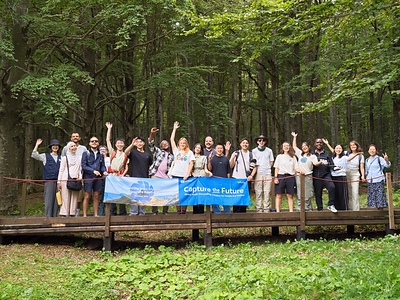
A picture of Participants from the Ministry of Agriculture and Environment, GGGI, and UN-Habitat attend Laos’ first Climate Adaptation Forum in Vientiane Capital. (Photo supplied)

The Lao Climate Adaptation Forum was successfully convened to strengthen collaboration among relevant stakeholders in accelerating climate adaptation developments across the country in Vientiane Capital, on 22 July. The forum gathered representatives from line ministries, development partners, private sectors, civil society organizations, academic institutions, youth initiatives, and local communities to communicate strategic priorities and identify actionable pathways for building a climate-resilient future of Laos.

This forum highlighted Laos’ key policy frameworks in climate change adaptation, including the National Adaptation Plan (NAP), the three Sectoral Adaptation Strategies and Action Plans (SAPs), the development progress of the Sub-national Adaptation Roadmap and other relevant initiatives. 

Served as a national platform for knowledge exchange, policy dialogue, and stakeholders’ engagement, the Forum featured introduction of key policy instruments, interactive panel discussions, and exhibition booths showcasing climate adaptation initiatives, and innovative practices from across sectors. Through this forum, participants were perceived to highlight climate adaptation policies of Laos, explored opportunities to strengthen partnership, and identified pathways to scale up effective adaptation measures to mobilize greater investments and support for enhancing climate resilience.

In addition, the Forum offered a remarkable stage to demonstrate that climate adaptation finances and private sector roles can drive policies into actionable and impactful investments. Importantly, voices from subnational representatives were heard which will inform strategic investment in areas that are most vulnerable, and people are at risk of climate change impacts.

With the joint efforts of the Department of Environment within the Ministry of Agriculture and Environment, the Global Green Growth Institute (GGGI), and UN-Habitat, the Lao PDR Climate Adaptation Forum built a strong partnership in advancing Laos climate adaptation developments. The Lao PDR Climate Adaptation Forum marked a vital step toward translating policies into coordinated action to enhance the resilience of our livelihoods, ecosystems, and economy.

Keynote from Chairs:

Quote from Chanthakhone Boualaphanh, Vice Minister of Agriculture and Environment

“To translate our strategies and plans into concrete action, this forum serves as an important platform for all relevant stakeholders to exchange knowledge, identify opportunities, and foster the multi-sector partnerships needed to implement climate adaptation efforts across Lao PDR.”

Quote from Dagmar Zwebe, GGGI Country Representative, Laos

“Climate change is a complex challenge that no single entity can solve alone and real progress on happens when plans become action. Through strong partnerships and targeted investments, we can deliver practical solutions that strengthen resilience across Lao PDR.” 

Quote from Avi Sarkar, Regional Advisor for South-East Asia and Head of Office, UN-Habitat Laos 

“Every year, climate impacts become more visible, more frequent and more costly. Climate adaptation is not a conversation we can have once and move on from. The challenge before us is no longer simply identifying climate risks; it is deciding together how we translate those priorities into action, investment and lasting impact.”

HKU Launches First Community Pharmacist-Led Osteoporosis Screening Programme in Hong Kong

COSA Risk Assessment Tool Deployed Across Community Pharmacies to Identify Undiagnosed Patients


HONG KONG SAR – Media OutReach Newswire – 23 July 2026 – The Department of Pharmacology and Pharmacy, LKS Faculty of Medicine , the University of Hong Kong (HKUMed) today announced the launch of Hong Kong’s first structured community pharmacist-led osteoporosis screening programme, built upon the validated Chinese Osteoporosis Screening Algorithm (COSA). The initiative enables trained community pharmacists to proactively identify individuals at high risk of osteoporosis — a condition that affects millions yet remains widely undiagnosed — and to facilitate timely referral to family physicians for clinical evaluation, bone mineral density assessment, and diagnosis, thereby helping hidden patients in community to receive appropriate care.

(from left) Ms Kuki Ku, a Christian Family Service Centre (CFSC) community pharmacist; Mr. Gary Kong Ching-yue, Programme Director - Primary Health Care Services, CFSC; Professor Cheung Ching-lung, Associate Professor, Department of Pharmacology and Pharmacy, LKS Faculty of Medicine, the University of Hong Kong and Ms Shum, a participant of COSA screening service, support more community pharmacies and other primary healthcare platforms establish osteoporosis screening, working collaboratively to build a comprehensive bone health management network rooted in "early identification, timely diagnosis, and prompt treatment."
(from left) Ms Kuki Ku, a Christian Family Service Centre (CFSC) community pharmacist; Mr. Gary Kong Ching-yue, Programme Director – Primary Health Care Services, CFSC; Professor Cheung Ching-lung, Associate Professor, Department of Pharmacology and Pharmacy, LKS Faculty of Medicine, the University of Hong Kong and Ms Shum, a participant of COSA screening service, support more community pharmacies and other primary healthcare platforms establish osteoporosis screening, working collaboratively to build a comprehensive bone health management network rooted in “early identification, timely diagnosis, and prompt treatment.”

Despite being one of the most prevalent bone diseases in Hong Kong, osteoporosis is estimated to go undiagnosed and untreated in up to 80% of those affected, largely because the disease is asymptomatic until a fracture occurs. By embedding screening within the familiar and accessible setting of community pharmacies, this programme represents a significant step forward in closing the gap between disease burden and clinical intervention.

Osteoporosis Can Lead to Fragility Fractures with Mortality Rates Comparable to Major Cancers

Osteoporosis affects approximately 30% of women and 8% of men aged over 50 or above in Hong Kong, causing progressive deterioration of bone density that leaves patients vulnerable to fragility fractures — fractures that occur from low-impact forces such as a minor fall or even a sudden movement. These fractures carry consequences far beyond physical injury.

Research demonstrates that the one-year mortality rate following a hip fracture can exceed that of certain common cancers, including prostate and breast cancer. Local hospital data further indicate that nearly half of all patients who sustain a fragility hip fracture do not survive beyond five years. Despite these grave outcomes, public awareness remains alarmingly low: international studies suggest that fewer than one in ten at-risk individuals proactively seek a bone mineral density assessment.

Community Pharmacies as an integral part of Primary Healthcare with Pharmacists Playing a Key Role

Recognising the urgent need for a scalable, community-based approach to osteoporosis detection, community pharmacies are increasingly recognised as one of the vital platforms for screening and health education. Community pharmacies play a unique position in the primary healthcare ecosystem — they are among the most frequently visited and trusted healthcare touchpoints in daily life, offering not only medication dispensing but also accessible health consultations, disease prevention education, risk assessments, and referrals, serving as a critical component of the primary healthcare ecosystem.

Standardising the COSA Screening Process to Reach High-Risk Individuals in the Community

Since 2026, the Department of Pharmacology and Pharmacy at HKUMed has collaborated with multiple community pharmacies to introduce a standardised osteoporosis risk assessment protocol into the community, enabling specially trained community pharmacists to utilise the COSA tool to screen high-risk individuals. The assessment requires only four data points — sex, age, body weight, and prior fracture history — and can be completed within minutes during a routine pharmacy visit.

Pharmacists trained in the protocol explain results to patients immediately upon completion. Individuals identified as high-risk receive a written referral to a family physician or other healthcare professionals for further evaluation, including Dual-energy X-ray Absorptiometry (DXA) scanning to confirm diagnosis. All participants, regardless of risk classification, receive bone health education, including guidance on calcium and vitamin D intake, balanced diets, appropriate weight-bearing exercise, fall prevention, and other lifestyle modifications. Studies have demonstrated that these non-pharmacological interventions independently reduce fracture incidence, offering bone protection even in the absence of drug therapy.

Promising Early Results: Approximately 60% of High-Risk Individuals Willing to Undergo Assessment

Since the programme’s launch, community pharmacists have proactively approached over 1,000 high-risk individuals — defined as men aged 70 or above, women aged 65 or above, and adults aged 50 or above with at least one additional osteoporosis risk factor — and invited them to complete the COSA assessment. Notably, approximately 60% of those approached agreed to undergo the assessment, demonstrating that community pharmacy-based osteoporosis screening is an effective means of raising public awareness of the disease and encouraging individuals to take an active role in managing their own health. Of those assessed, more than 100 individuals were identified as being at very high risk for osteoporosis and were referred to family physicians for further diagnostic workup. These findings confirm that this service model can effectively reach and identify undiagnosed high-risk individuals hidden within the community, facilitating early detection and timely intervention.

“Osteoporosis is a disease that is too often discovered only after a fracture has already occurred,” said Professor Cheung Ching-lung, Associate Professor, Department of Pharmacology and Pharmacy, HKUMed. “By integrating COSA screening into community pharmacies, we have been able to reach a substantial number of high-risk individuals who had never previously undergone assessment. Establishing routine screening services within community pharmacies not only helps elevate public understanding of bone health but also facilitates the early identification of undiagnoised patients, promoting timely diagnosis and treatment through established referral pathways.”

Proactive Outreach by Community Pharmacies Enhances Screening Accessibility

The Diamond Hill Family Pharmacy, operated by the Christian Family Service Centre (CFSC), is among the participating sites offering osteoporosis screening and health counselling as part of this programme. “Community pharmacies are places people trust and visit regularly. This programme demonstrates precisely how community-based healthcare can extend disease prevention and health education into everyday life. We are delighted to support this clinical model that brings practical osteoporosis screening services into the community so that more high-risk individuals can receive early assessment.” said Mr Gary Kong Ching-yue, Programme Director – Primary Health Care Services, CFSC.

Ms Kuki Ku, a CFSC community pharmacist involved in the programme, highlighted a natural entry point that has proven particularly effective: many older adults visit pharmacies routinely to purchase calcium supplements or vitamin D — products directly associated with bone health. This provides pharmacists with an organic opportunity to initiate a conversation about bone health, introduce the COSA assessment, and deliver personalised guidance on nutrition and exercise to support bone density maintenance. Ms Ku recalled one particularly illustrative case: during a routine COSA screening, she identified an elderly woman as being at high risk for osteoporosis and promptly referred her to a family doctor for further evaluation, including a DXA scan. The scan revealed osteoporosis . She is currently consulting with her doctor on follow-up management to reduce further bone loss.

Ms Shum, a participant of COSA screening service in her eighties living with hypertension, hyperglycaemia, and hypercholesterolaemia, visited the pharmacy to collect a blood glucose meter. At the pharmacist’s invitation, she completed the COSA osteoporosis screening — an encounter she had not anticipated. Her results indicated a high risk for osteoporosis, and she was issued a referral letter alongside personalised advice on fracture-preventive exercise and dietary calcium intake.

Standardised Guidelines and Training Readiness Pave the Way for Expanded Osteoporosis Screening

With Hong Kong’s rapidly ageing population, the number of osteoporosis patients is projected to rise continuously, with hip fracture cases potentially surging several-fold to reach 27,468 cases by 2050. To strengthen community bone health management, the Department of Pharmacology and Pharmacy at HKUMed has developed a comprehensive practice guideline for community-based osteoporosis screening services. These guidelines encompass the latest disease management information, standardised screening protocols, public education materials, and referral mechanisms, and have been officially reviewed by The Osteoporosis Society of Hong Kong (OSHK).

Additionally, the Department has launched an online Continuing Pharmacy Education (CPE) course to provide training for pharmacists, supporting the standardised development of the service. With guidelines, training courses, and referral pathways now established, the community screening service is fully equipped for expansion. This sets the foundation for more community pharmacies to adopt the service and enables future integration into District Health Centres (DHCs) and other primary healthcare platforms, working collaboratively to build a comprehensive bone health management network rooted in “early identification, timely diagnosis, and prompt treatment.”

Hashtag: #香港大學醫學院 #藥理及藥劑學系 #骨質疏鬆症 #張正龍教授 #COSA #社區藥房 #骨質疏鬆症篩查 #ChineseOsteoporosisScreeningAlgorithm #COSA #HKUMed #Osteoporosis #CommuniyPharmacy #DepartmentofPharmacologyandPharmacy #ProfCheungChingLung

The issuer is solely responsible for the content of this announcement.

About the Chinese Osteoporosis Screening Algorithm (COSA)

The Chinese Osteoporosis Screening Algorithm (COSA) is a risk prediction tool developed by The Department of Pharmacology and Pharmacy, LKS Faculty of Medicine, the University of Hong Kong, specifically tailored for the Chinese population. Unlike previous risk prediction tools, such as FRAX and OSTA, which have demonstrated biases due to ethnic differences, COSA offers greater accuracy for Chinese demographics. This algorithm assesses an individual’s risk of developing osteoporosis by posing four straightforward questions related to gender, weight, age, and fracture history, achieving an accuracy rate between 74% and 94%.

Laos Pushes Ahead with USD 5 Billion Luang Prabang Mekong Dam, on Track for 2030

The Luang Prabang hydropower dam is now 72% completed and on track to begin operations in 2030. (Photo: Luang Prabang Television)

The USD 5 billion Luang Prabang hydropower dam on the Mekong River remains on track to begin generating electricity in 2030, with construction now more than 72 percent complete, Lao and Thai officials said following a high-level site visit on 18 July.

The project is one of several major dams planned along the Mekong as Laos continues to expand its role as a regional electricity exporter. Most of the power generated by the Luang Prabang dam will be sold to Thailand, according to state reports.

Located about 25 kilometers from Luang Prabang town, the dam stretches between Chomphet and Pak Ou districts, around 4 kilometers downstream from where the Nam Ou River joins the Mekong. It sits between the planned Pak Beng dam upstream and the Xayabouly dam downstream.

The dam is designed as a run-of-river project and will generate electricity year-round through seven 200-megawatt turbines, giving it a total installed capacity of 1,460 megawatts.

The structure will stand about 80 meters high with a crest length of 281 meters. It has also been designed to allow 500-ton cargo vessels and passenger boats to pass through in about 40 minutes and to meet seismic safety standards.

Ownership and Shareholders

The Luang Prabang Dam is owned by Luang Prabang Power Company Limited (LPCL), which holds the Lao government concession to design, build, and operate the project.

Thailand’s CK Power is the largest shareholder with a 50 percent stake, followed by Gulf Hydropower with 20 percent. CH. Karnchang, TTW Public Company, and Laos’ PT Sole each hold 10 percent

Once completed, the Luang Prabang project will become Laos’ third hydropower dam on the Mekong mainstream, following the Xayabouly and Don Sahong dams, which began operating respectively in 2019 and early 2020.

Six more mainstream dams are currently planned along the Mekong: Pak Beng, Pak Lay, Sanakham, Pak Chom, Ban Koum and Phou Ngoy.

Earlier this month, Laos and Myanmar also signed an agreement to study the feasibility of building a hydropower dam along the section of the Mekong River they share.

The Luang Prabang project affects 22 villages with a combined population of about 7,000 people across Chomphet district of Luang Prabang province, Hongsa district in Xayabouly, and Nga district in Oudomxay. Some residents have already been relocated to new settlements.

Authorities said the developer is carrying out the resettlement in line with government policy, with the aim of improving living conditions after relocation.

Heritage Concerns

Because the dam is just outside Luang Prabang, the public has often questioned whether it could affect the city’s UNESCO World Heritage status.

International experts and heritage groups have previously warned that changes to the Mekong River and the surrounding landscape could undermine the historic character of Luang Prabang, which has been on UNESCO’s World Heritage List since 1995.

However, during the 18 July site visit, Lao authorities said those concerns had been addressed through environmental studies and lessons learned from the Xayabouly dam. They’d confirmed that the project includes measures to help fish migrate and was designed to reduce environmental and social impacts while protecting the World Heritage city.

Hydropower Still Drives Laos’ Energy Plans

Hydropower remains Laos’ main source of electricity, producing about 70 percent of the country’s power.

According to the latest public data, Laos operates 94 power plants, including 81 hydropower dams, with a combined installed capacity of more than 11,600 megawatts.

The country’s electricity capacity has grown steadily, from 9.4 gigawatts in 2020 to 12.3 gigawatts in 2025. That figure is expected to nearly triple to 30 gigawatts by 2035, with hydropower continuing to make up around 80 percent of total capacity.

Under the government’s latest power strategy, hydropower is expected to provide about 75 percent of Laos’ domestic electricity by 2030. Solar, wind and other renewable energy sources are expected to account for around 11 percent of the country’s power mix.

Watsons Unveils “Watsons Evergreen” with Pantone to Celebrate 185 Years of Trusted Care and Everyday Vitality


HONG KONG SAR – Media OutReach Newswire – 23 July 2026 – Watsons, the flagship health and beauty brand of AS Watson, today announced the launch of Watsons Evergreen, as part of AS Watson’s 185th anniversary celebrations. To elevate its significance and create a consistent and credible expression across markets, Watsons partnered with the Pantone Color Institute™, the world’s leading authority on colour. Combining Watsons’ rich heritage with Pantone’s expertise, the collaboration helped define and articulate a global brand asset that captures the essence of Watsons and its vision for the future.

WAT INT - EVERGREEN - KEY VISUALS-03

A Colour That Brings the Brand to Life
Watsons Evergreen is a vibrant blue-green hue that symbolises everyday vitality, care and reassurance, reflecting Watsons’ purpose of helping customers LOOK GOOD, DO GOOD, FEEL GREAT every day. As a distinctive visual identity, it creates a shared language that connects Watsons markets worldwide.

From Watsons’ logo and store design to merchandising displays, digital channels and Own Brand products, Watsons Evergreen has long been a familiar presence across customer touchpoints. The Watsons Evergreen campaign will roll out across 16 markets, including Asia, Europe and the Middle-East, through a series of customer and community activations, as well as a curated range of products, reinforcing the brand’s long-standing connection with customers and communities around the world.

Celebrating a Heritage of Trusted Care
At the heart of the initiative is a simple belief: Watsons has always been there for customers and will continue to be for generations to come.

For 185 years, Watsons has supported customers in their everyday health needs, beauty routines and wellbeing moments, whether in-store or online. Watsons Evergreen reflects this enduring relationship, serving as a symbol of consistency, trust and care in an ever-evolving world.

Jared DeGuzman, Customer Director of Watsons International, said, “For 185 years, Watsons has helped customers feel healthier, happier and more confident in their daily lives. Watsons Evergreen captures that role in a simple yet powerful way. By partnering with Pantone, we’ve transformed our iconic brand colour into a global symbol of vitality, care and wellbeing that will connect customers across every Watsons market.”

Laurie Pressman, Vice President of the Pantone Color Institute™, added, “Watsons Evergreen captures the essence of a brand that has stood the test of time while continuing to grow and evolve. It is a colour that speaks of vitality and longevity, and of a deep, lasting connection to the customers and communities Watsons has served for generations.”

As Watsons marks this milestone anniversary, Watsons Evergreen stands as both a reflection of its rich heritage and a symbol of its forward-looking vision – uniting past and future in one distinctive expression of the brand.

Hashtag: #ASWatson

The issuer is solely responsible for the content of this announcement.

About Watsons

Watsons is the leading O+O (Offline plus Online) health and beauty retailer in Asia, currently operating 8,000 stores and more than 1,500 pharmacies in 16 Asian, European and Middle-East markets.

Watsons is named as the No.1 Personal Care and Beauty retailer in Asia*, providing personalised advice and counselling in health, beauty and personal care on top of its market-leading product range, making customers LOOK GOOD, DO GOOD, FEEL GREAT every day. Watsons is the flagship health and beauty brand of AS Watson Group.

Launched in 2019, Watsons’ Asia One Pass rewards our customers with local-member privileges and enables them earn points when they shop with Watsons in ten markets in Asia including Chinese Mainland, Hong Kong, Macau, Taiwan, Singapore, Malaysia, Thailand, Indonesia, Türkiye and the Philippines.

*Campaign Asia-Pacific’s Top 50 Brands survey with 10,000 respondents across 6 Asian countries

About AS Watson Group

Established in 1841, AS Watson Group is one of the world’s longest-standing and most recognised retail companies with roots in Asia. Today, the company operates over 17,000 stores across 12 retail brands in 31 markets, employing 130,000 people globally. This makes AS Watson Group the largest international health and beauty retailer in the world.

In the fiscal year 2025, AS Watson Group reported revenue of over US$26 billion. The company’s technology-enabled O+O (Offline plus Online) platforms serve over 6 billion shoppers annually, seamlessly integrating physical and digital retail experiences.

AS Watson Group supported over 180 charitable and non-profit organisations every year, dedicating over 40,000 hours of volunteer work to serve over 370,000 people in need in our operating markets.

AS Watson Group is also a member of the world-renowned multinational conglomerate CK Hutchison Holdings Limited, which has four core businesses – ports and related services, retail, infrastructure and telecommunications in over 50 countries.

Please visit for more information.

Sihom Night Market Vendors Left in Limbo Ahead of 25 July Closure

Vendors prepare to leave Sihom Night Market in Vientiane ahead of its scheduled closure
A picture of Sihom market before its closure on 22 July 2026. (Photo by the Laotian Times)

Sihom Night Market in Vientiane Capital will officially close on 25 July, but with just two days to go, many vendors say they still have no clear idea when they will be able to reopen, where they will be selling, or whether the market will ever return.

A notice issued by Haisok Night Market management on 17 July instructed vendors to clear all stalls and equipment from the market area on 24 and 25 July so the site can undergo what it described as temporary maintenance.

The notice also invited vendors to reserve spaces at a new market near That Dam between 18 and 20 July. But several vendors told The Laotian Times they have received little information beyond that.

“We have to go to the landowner’s office, choose a location and pay the rent, but there still hasn’t been any confirmation about when the new market will actually open,” one barbecue vendor said.

“There isn’t really a proper rental process. You just choose a space and pay.”

Although the official notice says the closure is temporary, many vendors are skeptical.

“The notice only says the market is closing for renovation, but many vendors think there is no going back.”

A noodle vendor said she learned about the closure through the vendors’ WhatsApp group.

“They told us the new market near That Dam should open next month, but nobody has told us the exact date,” she said.

Some Vendors Will Stay, For Now

Not every business will leave the area immediately.

Food stalls operating directly along the sidewalk have been told they can continue trading for now, while vendors inside the market must move out.

“Only the stalls beside the sidewalk can remain,” the barbecue vendor said. “Even then, we still don’t know how long we’ll be allowed to stay.”

Some vendors have decided not to relocate to the new market at all.

“I visited the new location and didn’t really like it,” one bakery vendor said. “I’ll stay here and move my stall to the sidewalk instead, although I still don’t know exactly where my new space will be.”

For years, Sihom Night Market has been one of Vientiane’s best-known evening food destinations, popular with both locals and tourists for its affordable street food.

Now, the 25 July closure approaches and vendors are packing up their stalls while waiting for answers about when the new market will open, and whether Sihom Night Market is closing temporarily or for good.

Alylytiq launches AI-powered research solutions to make big-brand insights affordable for Singapore SMEs


SINGAPORE – Media OutReach Newswire – 23 July 2026 – Market research consultancy Alylytiq LLP today announced the launch of Automytiq, a suite of AI-powered research solutions designed to make professional-grade market insights accessible to Singapore’s small and medium-sized enterprises.

For decades, professional market research has been the preserve of large corporates — the only players who could justify studies routinely costing tens of thousands of dollars. SMEs, who arguably have the least room for error, have been left to make market decisions on instinct. AI has now broken that equation. A commissioned study that would typically cost SGD 30,000 can be delivered through Automytiq for around SGD 6,000 — an 80 per cent reduction. The savings come from using AI to automate the most labour-intensive stages of the research process, while Alylytiq’s senior researchers remain in the loop at every stage for interpretation and quality control.

Automytiq is a distinct, productised offering, separate from Alylytiq’s core consulting practice. An Automytiq engagement runs to a standardised scope — sharply defined questions, streamlined fieldwork, and a focused report — which is what makes the lower price point possible. Alylytiq’s bespoke engagements for corporate clients are a different service: fully custom-designed, senior-led from research design through to analysis and strategic recommendation, often spanning multiple markets and methodologies, and priced to reflect that depth. The firm positions Automytiq as extending professional research to businesses that could never access it, not as a repricing of its consulting work.

Automytiq covers the full research cycle through four connected solutions:

Market Intelligence. AI-assisted secondary research that maps an SME’s target market — market size, competitor landscape, and customer trends — drawing on licensed and publicly available data sources.

Guided Brief-to-Proposal. A simple structured questionnaire captures what the business owner wants to learn. Automytiq transforms those answers into a full research proposal, giving SMEs a professionally scoped study without needing in-house research expertise.

Automated Research Design. Approved proposals are converted directly into fieldwork-ready research instruments — discussion guides, screeners, and questionnaires — cutting design time from weeks to days.

Bespoke Story Reporting. Once data is collected, Automytiq translates the raw results into fully customised reports built around a narrative that tells the business what the numbers mean and what to do next — not a template dashboard.

Automytiq has already been deployed in live client work. For SME payments fintech Handshake Finance, Alylytiq used Automytiq to map the company’s target market and competitive landscape, sharpening the focus of its go-to-market efforts. For business consultancy Anton Solutions Group, the platform supported a larger client engagement by delivering insights into financial risk management opportunities across new markets.

Anton Solutions Group, which engaged Alylytiq on a client project, said it was “genuinely impressed” by the firm’s approach. Using AI, a short discovery call, and a focused questionnaire, Alylytiq delivered a comprehensive primary research report within a day, enabling a faster transition into in-depth market analysis. The consultancy added that it looks forward to referring suitable projects to Alylytiq.

“As an early-stage company, every dollar and every week counts. Alylytiq gave us a clear, evidence-based picture of our market, our competition, and the customers we should lead with — and just as importantly, told us which questions still needed real fieldwork to answer. It sharpened decisions we would otherwise have made on instinct, at a price a company our size could actually justify,” said Christopher Chan, Co-Founder of Handshake Finance.

“SMEs make the same high-stakes decisions large corporates do — which market to enter, which customers to serve, where to spend a limited marketing dollar — but they’ve been asked to make them on gut feel because proper research was priced for someone else,” said Wei Shen, Founder and Principal Strategist of Alylytiq.

The launch lands in the middle of a wider debate about whether AI is making professional research obsolete. Alylytiq’s position is that the barrier for SMEs was never just cost — it was expertise: knowing what to ask, how to structure a research question, and how to tell when an answer is wrong.

“Any business owner can ask a chatbot for a market estimate today. The problem is they have no way of telling whether that answer is grounded in real data or invented — and acting on a confident wrong answer costs far more than a study ever would,” said Wei Shen. “That’s why Automytiq isn’t a tool we hand over. Our senior researchers design the questions and validate every output before it reaches the client. The AI changes the economics; the humans protect the answer.”

Automytiq is available to Singapore SMEs now. Businesses can learn more at www.alylytiq.com.Hashtag: #Alylytiq

The issuer is solely responsible for the content of this announcement.

About Alylytiq

Alylytiq LLP is a Singapore-based market research and insights consultancy founded on the principle that every number tells a story. Led by senior researchers with two decades of experience across global agencies and financial services, Alylytiq works across brand equity, product innovation, competitor benchmarking, customer experience, and market understanding for clients ranging from multinational corporates to growing regional businesses.

STAMPEDE creates 11,000 free business pages to bring Singapore’s AI push to local F&B operators

Hawkers, cafés and restaurants can claim their pages and set up no-app loyalty and referral programmes at no upfront cost


SINGAPORE – Media OutReach Newswire – 23 July 2026 – As Singapore commits more than S$1 billion to artificial intelligence research and talent development from 2025 to 2030, homegrown loyalty platform STAMPEDE is helping smaller F&B businesses to benefit from AI without requiring owners to learn complex tools or hire dedicated marketing teams.

STAMPEDE has created more than 11,000 free, claimable business pages for F&B establishments across Singapore. The pages give hawkers, cafés, restaurants and small chains a digital starting point where customers can find key business information, including location, ratings and outlet details.

Owners can claim or create their page for free, set up a digital loyalty programme and review the system before deciding whether to activate a paid plan.

The initiative comes as Singapore’s F&B sector faces continued pressure. Between 1 January and 23 October 2025, 2,431 retail food establishments closed. Of these, 63% had been registered for five years or less, while 82% of that group had never recorded a profit in their annual tax declarations.

Against this backdrop, STAMPEDE is focusing on an area that operators can influence directly: whether customers return, redeem rewards and recommend the business to others.

Singapore is investing heavily in AI, and that’s a real opportunity, but a hawker or café owner shouldn’t need to become an AI expert to benefit from it,” said Wilson Komala, Founder of STAMPEDE.

At the end of the day, F&B owners just want customers coming back and bringing their friends. The technology should work quietly in the background, turning everyday customer activity into simple actions and not another dashboard to check or skill for the owners to learn,” Wilson added.

Customers join a participating outlet’s loyalty programme by scanning a QR code through their phone browser, without downloading an application. Staff can issue stamps using an ordinary phone camera, with no additional hardware required.

The platform combines digital stamp cards, referral rewards, coupons, customer data, automated communications and weekly AI reports that explain customer activity in plain language.

Early results from three Singapore F&B brands show how this can translate into measurable customer activity. In under four months, OMMA Chicken Soup, CHA MULAN and LICKERS collectively gained more than 14,000 loyalty members, generated over 1,300 completed referrals and recorded more than 10,700 coupon redemptions across 19 outlets.

OMMA Chicken Soup recorded more than 5,500 loyalty members and over 300 completed referrals across five outlets, while CHA MULAN gained more than 7,000 members and generated over 800 referrals across nine outlets. Their coupon redemption rates reached approximately 50% and 55% respectively.

“The strongest sign for us is that customers are not only joining the programmes, but they are now returning, redeeming rewards and recommending the brands to others,” said Josiah Tan, Founder of OMMA Chicken Soup and Co-founder of CHA MULAN.

Neighbourhood ice cream brand LICKERS gained more than 1,600 loyalty members and over 200 completed referrals across five outlets. It also recorded a 33% returning-customer rate, the highest among STAMPEDE’s clients.

LICKERS has always grown through its regulars, so the returning-customer rate is particularly meaningful,” said Felix Tan, Founder of LICKERS. “It gives us clearer proof that customers are coming back and introducing the brand to others.”

Businesses can claim or create their STAMPEDE page and complete the initial setup for free. Payment begins only when the programme is activated, with its Growth plan priced at S$50 per outlet per month.

Hashtag: #singapore #f&b #food #customerloyalty #loyalty

The issuer is solely responsible for the content of this announcement.

About STAMPEDE

Stampede is a Singapore-built loyalty and marketing platform for local businesses, with a focus on helping F&B operators bring customers back through digital stamp cards, referrals, coupons, automated campaigns and weekly AI reports. Built for busy owners and frontline staff, the platform works through a browser with no customer app download or special cashier hardware required. Businesses can set up for free and pay only when they go live. Learn more at

Nearly Half of Senior Leaders Feel Only Partly Prepared to Lead AI Transformation, as Ambition Outpaces Readiness

  • Almost half of senior leaders (46%) say they are prepared only to a small extent to lead organisation-wide transformation driven by AI, while 2% report being not prepared at all.
  • Keeping pace with rapidly evolving AI technology is cited as the most significant challenge (40%) faced by senior leaders, followed by regulatory and compliance uncertainty (37%) and insufficient budget or resources for AI adoption (36%).
  • Only about a third of senior leaders (34%) have attended formal training or upskilling related to leadership in the AI era within the past two years. Over half (53%) are planning to do so in the coming months and years, with 13% reporting no plans to undertake such training.
  • The most common shift in leadership approach is an increased focus on people management during AI-driven change, cited by 37% of leaders, particularly in supporting morale and employee well-being. This is followed by greater time spent on upskilling themselves and their teams (31%), and on strategic decision-making (30%). 

SINGAPORE, July 23, 2026 /PRNewswire/ — Artificial Intelligence (AI) is reshaping how organisations operate and compete. However, the leaders responsible for steering this transformation report a gap between what is expected of them and their preparedness to deliver. Almost half of senior leaders (46%) say they are prepared only to a small extent to lead organisation-wide transformation driven by AI, while a further 2% report being not prepared at all. In comparison, 37% are prepared to a moderate extent, and only 15% consider themselves prepared to a large extent.

Senior leaders identify several factors contributing to this readiness gap. Keeping pace with rapidly evolving AI technology is cited as the top challenge (40%), followed by regulatory and compliance uncertainty (37%). Resource constraints are also a key pressure point, with 36% pointing to insufficient budget or resources for AI adoption. In addition, 34% highlight challenges related to data quality and governance, while another 34% cite the need to upskill or reskill employees to work effectively alongside AI.


These are some of the key findings from NTUC LearningHub’s Special Report on Leadership in an AI-Driven World. The report surveyed 131 senior leaders from organisations of different sizes and across industries, including Infocomm Technology, Finance, Advanced Manufacturing, Healthcare and others. All respondents reported some level of experience with AI and are involved, to varying degrees, in AI adoption decisions within their organisation.

This readiness gap extends into decision-making. Senior leaders generally express moderate levels of confidence in making high-stakes AI-related decisions. Over two in five (43%) report being quite confident, while 13% say they are very confident. However, 40% indicate they are not very confident and 4% not confident at all.

Despite that, only about a third of senior leaders (34%) have attended formal training or upskilling on leading in an AI-driven workplace within the past two years. Among those who have not yet done so, many indicate plans to pursue training, including 22% within the next six months, 20% within the next year, and 11% within the next two years. Only 13% report having no plans to undertake such training. Among the training areas leaders prioritise, AI literacy and strategic understanding (57%) emerge as the key priority, followed by data-driven decision-making (46%), and ethical AI governance and responsible deployment (40%).

Alongside this, the most common shift in leadership approach is an increased focus on people management during AI-driven change, cited by 37% of leaders, particularly in supporting morale and employee well-being. This is followed by greater time spent on upskilling themselves and their teams (31%) and on strategic decision-making (30%). Ethical and governance considerations also feature strongly at 27%, alongside a similar share who report dedicating more effort to change management (27%), including communicating how AI may affect roles and ways of working.

These shifts reflect a broader recognition among leaders that navigating AI transformation requires more than technical fluency alone. Two in five (40%) senior leaders regard human-centric skills as very important in leading an organisation in the AI era, while nearly half (48%) consider them to be quite important. Among the capabilities leaders consider most critical, creative thinking and critical thinking each emerge at 47%, closely followed by sense-making (46%), problem-solving (44%) and effective communication (43%).

Commenting on the report’s findings, Mr Sean Lim, Chief Human Resource Officer, NTUC LearningHub, says, “The gap between expectation and readiness reflects a fundamental shift in what is required of leadership in today’s AI era. Leaders were once expected to hold all the answers and direct from the top. However, they must now act as strategic navigators, making sense of complexity and providing guidance through this period of rapid change and uncertainty. This means a shift towards coaching and empowering people, while also aligning competing priorities across technology, business and operational needs. It is a demanding shift, but it is encouraging to know that many senior leaders are already planning to further their own development to lead their teams through this period of AI transformation.”

To download the Special Report on Leadership in an AI-Driven World, please visit https://www.ntuclearninghub.com/media/research-reports/2026/Leadership-AI-World. To find out more about the courses, training, and grants, please contact NTUC LearningHub at www.ntuclearninghub.com.

### END ###

About NTUC LearningHub

NTUC LearningHub is the leading Continuing Education and Training provider in Singapore which aims to transform the lifelong employability of working people. Since our corporatisation in 2004, we have been working with employers and individual learners to provide learning solutions in areas such as Infocomm Technology, Generative AI & Cloud, Healthcare, Retail & Food Services, Employability & Literacy, Business Excellence, Workplace Safety & Health, Security, Human Resources & Coaching and Foreign Workers Training.

To date, NTUC LearningHub has helped over 34,000 organisations and achieved more than 3.2 million training places across more than 1,000 courses with a pool of about 1,000 certified trainers. As a Total Learning Solutions provider to organisations, we also forge partnerships to offer a wide range of relevant end-to-end training. Besides in-person training, we also offer instructor-led virtual live classes (VLCs) and asynchronous online learning. The NTUC LearningHub Learning eXperience Platform (LXP)—a one-stop online learning platform—offers timely, bite-sized and quality content for learners to upskill anytime and anywhere. Beyond learning, LXP also serves as a platform for jobs and skills development for both workers and companies.

For more information, visit www.ntuclearninghub.com.