Pioneered and Organized by Medialink Group Limited
The World-Class Creative Powerhouse of CON-CON® HONG KONG 2026
A First‑of‑Its‑Kind Convergence of 3 Innovation Frontiers, Bridging Cultures Across Regions
- Mix Some NOISE!Gundam, Godzilla, Jujutsu Kaisen and more iconic heavyweight IPs unleash new imaginations
- Mix Some FUN!Sony, JAL, hololive and a roster of renowned brands redefine entertainment, breaking traditional boundaries through cutting‑edge immersive experiences
- Mix Some MUSIC!Yoko Takahashi, Maki Ohguro, MIYAVI, Maki Goto, TOGENASHI TOGEARI, mahiru; AK@MIRROR, Tyson Yoshi, Goodnight Lillie and more creating a Landmark Asian Music Event
- Cocomi named Event Ambassador of CON-CON® HONG KONG 2026
- Globally Renowned Artist COIN PARKING DELIVERY takes on the reigns as Event Creative Director
April 4-5 at AsiaWorld-Expo
Ticket Prices HK$2,288、HK$1,288、HK$788、HK$228
Ticket Link: https://con-con.asia/en/klook20260210.aspx
#Medialink #CONCONHONGKONG2026 @medialinkhk @conconhk2026
#MIXSOMENOISE #MIXSOMEFUN #MIXSOMEMUSIC
Please Download High-Resolution Images Here: https://bit.ly/3ZfJ64t
HONG KONG, Feb. 27, 2026 /PRNewswire/ — Pioneered and fully invested by Medialink Group, and all‑out orchestrated by its subsidiary CON‑CON (HK) Limited, CON-CON® HONG KONG 2026 — the world’s first Asia‑wide IP and trend‑culture mega‑event curated in Hong Kong and deeply rooted in the city’s cultural DNA — is set to make its grand debut on April 4-5, 2026 at AsiaWorld‑Expo, Hong Kong.
Since its initial announcement, the event has instantly become the talk of town, sparking buzz-worthy conversations among entertainment, culture, collectibles, animation, music, and beyond. The highly anticipated CON‑CON® HONG KONG 2026 now makes its major reveal, officially announcing its participating IP partners, music festival lineup, headline attractions, and ticketing details. This is the one event fans in Hong Kong, across Asia, and around the world simply cannot afford to miss — a once‑in‑a‑generation convergence of IP, pop culture, and immersive experiences, delivering a scale and richness never before imagined. Tickets are priced at HK$2,288 / HK$1,288 / HK$788 / HK$228. Tickets are now on sale via Klook, Damai, Trip.com, 01 Space and other platforms.
CON‑CON® HONG KONG is the first flagship IP cultural mega event pioneered, born, led, and propelled in Hong Kong, underscoring the city’s central role and creative leadership in shaping Asia’s cross‑over IP and trend‑culture landscape — as originator, creator, and cultural tastemaker. More than a platform for showcasing IP, CON‑CON® HONG KONG is designed to connect with IPs. With IP as its core, the event weaves together immersive exhibition experiences, live music performances, pan‑Asian creator dialogues, entertainment programming, exclusive marketplaces, and IP matchmaking into a sustainably scalable “mega event IP”. Built to accumulate, evolve, and be passed on, CON‑CON® HONG KONG is not just an event, but a long‑term cultural asset. Launching from Hong Kong as its first stop, the platform sets its sights on a sustainably expanding future for IP culture across the region and beyond.
The 2-day CON-CON® HONG KONG 2026 spectacular will be split across 3 major themes – “Mix Some NOISE!”; “Mix Some FUN!”, and “Mix Some MUSIC!” – and will feature countless, groundbreaking interdisciplinary events that will not only transcend imagination, but also unleash the boundless potential of IPs across the cultural fabric of Asia and beyond.
“Mix Some NOISE!” — Gundam, Godzilla, Jujutsu Kaisen and More Mega IPs Unleash New Imaginations
“Mix Some NOISE!” will present a series of events featuring iconic IPs and Hong Kong brands, alongside electrifying collaborations with internationally renowned labels to propel IPs and brands beyond their original scope via the power of creativity. (in no particular order)
|
Global Renowned IP
|
|
“Mobile Suit Gundam” Lands CON-CON® to Pay Tribute to Iconic Scenes from the Original Show
- A showcase of classic characters and mobile suits from the original Gundam universe!
- Giant LED neon display wall – the cosmic battle is about to commence!
- Life-sized character stands – stand shoulder to shoulder with classic Gundams in the intergalactic battle!
©SOTSU・SUNRISE
|
|
“Godzilla” Stomps into CON-CON® in an Immersive World of Monsters
- Immerse in Godzilla’s universe as you feel its intense gaze and roars from a close-up, first-person perspective!
- An exhibition of Godzilla’s evolution, each version showcasing unique designs and style over time.
TM & ©TOHO CO., LTD.
|
|
Classic Scenes from “Jujutsu Kaisen” Arrive at CON-CON® for Impeccable First-Person Perspective Experiences!
- Step into Tokyo Jujutsu High School and snap a photo with Yuji Itadori and Satoru Gojo.
- Experience Ryomen Sukuna’s domain expansion, Malevolent Shrine, showcasing Sukuna’s overwhelming power as the “King of Curses”.
- Experience the special power daunting curses of the Prison Realm.
- Study the rules of The Culling Game and relish in the thrill of the latest season of “Jujutsu Kaisen”.
©Gege Akutami/Shueisha, JUJUTSU KAISEN Project
|
|
“Haikyu!!” Channels Youthful Passions of Karasuno High School at CON-CON®
- Challenge the Jump Test – See if you can match the record of each player.
- Photo Op – Capture that personal moment with your favourite high school team members!
©H.Furudate / Shueisha,”HAIKYU!!”Project
|
|
The spirit of “Yu-Gi-Oh!” Dueling Ignites CON-CON®! My turn! Draw!
- Step into the classic dueling ring to become a duelist!
- Supersized stage setups bring to life the gripping tension of card duels and the jaw-dropping impact of the summoned monsters.
©2020 Studio Dice/SHUEISHA, TV TOKYO, KONAMI
|
|
Hong Kong IP
|
|
- CASETiFY is a global tech-lifestyle brand reimagining everyday accessories through innovative protection and creative personalization. Founded in 2011, the company has protected over 20 million devices worldwide and operates the largest customization platform for tech accessories. With dual headquarters in Los Angeles and Hong Kong, CASETiFY’s influence spans 50+ retail locations globally, including its signature CASETiFY Studio spaces where customers can customize products in real-time. Known for its high-profile collaborations with artists, brands, and creators, CASETiFY continues to push the boundaries of self-expression through technology.
- CASETiFY will unveil two never-before-seen collaborations at CON-CON® HONG KONG 2026. Stay tuned!
|
“Mix Some FUN!” – SONY and More Renowned Brands Break Down Traditional Boundaries in Entertainment with Cutting-Edge Immersive Experiences
“Mix Some FUN!” brings together a powerhouse lineup of mega‑scale IP brands, delivering exclusive, one‑of‑a‑kind experiences that challenge preconceived notions of heritage brands and push beyond traditional boundaries of entertainment and culture. (in no particular order)
|
- Experience an unprecedented multi-sensory music sensation powered by Sony’s most advanced haptic technology. Within a purpose-built immersive environment, sound, visuals, and tactile feedback converge seamlessly.
- Step into the spotlight at a dedicated photo zone, where the system instantly captures and composites images with animated scene backgrounds, allowing participants to transform into one of the characters from the animation.
- Professional cosplayers will make live appearances, offering fans opportunities for close interaction and commemorative photos. The photo area features officially themed backdrops and professional lighting to deliver a high-quality photography experience.
- An esports and gaming experience zone will invite participants to hands-on gameplay of popular animation-adapted titles.
|
|
J.LEAGUE Officially Joins CON-CON® HONG KONG 2026!
- Japan professional football league brings the passion of the football pitch together with pop culture, lighting up the dream stage for football fans across Asia!
- TSUBASA J PRO — the official J.LEAGUE match ball featuring iconic illustrations from Captain TSUBASA — will be on sale at the event!
- Official merchandise from J.LEAGUE will be available on-site! Come and collect your favorites in CON-CON®!
|
|
JAL will offer uniform experience events for flight attendants and pilots, sales of Hong Kong-exclusive merchandise and JAL logo’s products, and special discounts on air tickets.
|
|
- KADOKAWA, Japan’s top-tier multi-media entertainment group with a focus on publishing light novels, manga, animation, film, and games, is devoted to global IP creation. KADOKAWA has confirmed its participation in Hong Kong’s inaugural Asian IP pop culture extravaganza, CON-CON® HONG KONG 2026!
- For CON-CON® HONG KONG 2026, KADOKAWA highlights 2 of its popular manga series – “Sentenced to Be a Hero: The Prison Records of the 9004th Punishment Force” and “Roshidere/Alya Sometimes Hides Her Feelings in Russian”. Don’t miss out on the surprise appearances and chances to get up close and personal with special guests at CON-CON® HONG KONG 2026!
|
|
KODANSHA Makes a Powerful Debut at CON-CON®!
- The renowned Japanese publishing powerhouse brings two massively popular titles — GACHIAKUTA and Initial D — to the event, featuring exclusive, limited-edition exhibition zones and highly Instagrammable themed photo spots. This headline attraction promises an unmissable experience for fans and visitors alike.
|
|
As Asia’s leading licensed anime streaming platform and ACG cultural community, bilibili will make a prominent appearance at CON-CON® HONG KONG 2026. The showcase will feature two acclaimed animated titles, A Record of a Mortal’s Journey to Immortality and Tales of Herding Gods. Among them, A Record of a Mortal’s Journey to Immortality was awarded Best 3D Animation at the 30th Asian Television Awards, earning widespread recognition across the Asian market. bilibili will also debut a selection of event-exclusive IP merchandise on-site, offering fans and collectors a unique opportunity to explore and collect limited-edition items.
|
|
Pepsi will launch an exclusive limited-edition can at the event venue, featuring a stylish and distinctive design that is sure to be the talk of town!
|
Activities at Blackbox Theatre
|
Voice Actors, Actress & Idols Fans Meet & Greet
Line-up, Ticket details and more information will be announced soon on the CON-CON® official website and social media platforms.
|
|
IP Culture Sharing Sessions & Asian Creators Dialogue
A series of IP culture sharing sessions and panel discussions will bring together leading figures from diverse creative and entertainment sectors to explore creative thinking, development pathways, and cultural value, fostering industry exchange and cross-disciplinary dialogue. Speakers include: (in no particular order)
- Daijo Kudo (工藤大丈) —— Chief Anime Officer and Head of Global Licensing at KADOKAWA, one of Japan’s leading integrated entertainment groups.
- Hiroyasu Shinohara (篠原宏康) —— Japanese animation producer, responsible for multiple CG animated films in the Biohazard franchise, including Biohazard Death Island.
- Raman Hui (許誠毅) —— Renowned computer animator, animation director and film director. Formerly with DreamWorks Animation, Hui was a core creative contributor to the Shrek franchise, co-directing Shrek the Third and directing the Monster Hunt film series. He is widely regarded as one of the creators behind Shrek.
- Polly Yeung (楊寶文) —— Acclaimed producer and screenwriter. Producer and screenwriter of the Hong Kong fantasy animated feature Another World, which won the Best Animated Feature award at the 2025 Golden Horse Awards.
*More sessions and speakers will be announced in due course.
|
|
hololive English 3rd Concert – All for One – Special Screening Ticket Package
- hololive English’s 3rd full line-up concert, featuring 15 hololive English members, hololive and hololive Indonesia members, making its first-ever screening in Hong Kong!
- A grand gathering of all generations: Myth, Promise, Advent, and Justice Bringing together stunning stage effects, high-quality musical performances, and heartfelt touching moments.
- Exclusive ticket bundle includes a themed lightstick and commemorative ticket, collectible for fans to cheer and treasure!
- On-site exclusive “All for One” themed photo zone, featuring with all talents and the glowing stage.
*Ticket details and more information will be announced soon on the CON-CON® official website and social media platforms.
|
More activities to come, stay tuned with CON-CON®‘s update.
“Mix Some MUSIC!” — Asia’s Premier Music Festival Lineup
J-POP, J-ROCK, Anime Singers and Bands Set to Ignite the Stage;
AK@MIRROR and Tyson Yoshi Bring the Heat On
Partial Artist Lineup (in no particular order): AK@MIRROR, Tyson Yoshi, Yoko Takahashi, Maki Ohguro, MIYAVI, Goto Maki, Do As Infinity, FLOW, TOGENASHI TOGEARI, Unnämed, Goodnight Lillie
The highly anticipated “Mix Some MUSIC!” music festival is set to bring together an all-star roster of legendary and fan-favourite artists from across Asia for an electrifying two-day celebration of music. The event promises non-stop high-energy performances, featuring a powerhouse lineup that spans J-POP, J-ROCK, anime soundtracks, Cantopop and more.
The festival will showcase iconic performers delivering unforgettable sets. Highlights include Yoko Takahashi, the singer of the Neon Genesis Evangelion theme song “A Cruel Angel’s Thesis” (Cruel Angel’s Thesis), making her long-awaited return to Hong Kong after 7 years. Maki Ohguro, the powerhouse female singer known for the Slam Dunk anime ending theme “Anata Dake Mitsumeteru” (“I Only Have Eyes for You”). Visual kei rock icon MIYAVI, who gained further attention through China’s streaming show Call Me by Fire, will also take the stage. Other standout lineup include Maki Goto, former member of the legendary Japanese girl group Morning Musume; FLOW, the popular J-ROCK band for Naruto theme songs; and Do As Infinity, the globally beloved duo famous for the Inuyasha opening theme.
Adding to the diverse lineup are exciting: TOGENASHI TOGEARI, the girl rock band born from the anime Girls Band Cry, making their Hong Kong debut; A breakout next-generation female artist with massive support from young audiences, Mahiru; and independent English-speaking VTuber Unnämed, performing at a music festival for the first time.
Hong Kong’s pop star will shine as well, with AK@MIRROR will bring surprises to the CON-CON® MIX SOME MUSIC! And Tyson Yoshi and popular band Goodnight Lilllie will also join the music festival. Spanning two full days, “Mix Some MUSIC!” guarantees the richest audiovisual feast for music lovers, blending timeless classics, anime anthems, and fresh contemporary sounds in one explosive gathering. Further details on dates, venue, tickets, and additional artists will be announced soon. Stay tuned for this landmark celebration of Asian music culture!
First to be Ambassador for “CON-CON® HONG KONG 2026″, Cocomi Coming to Hong Kong to Witness this Cultural Extraveganza
CON-CON® proudly announces that Cocomi, the multifaceted talent who embodies classical music, flute performance, voice acting, and passionate anime fandom, has been appointed as the official Ambassador for CON-CON® HONG KONG 2026. In this role, she will shoulder the important responsibility of promoting cross-regional cultural exchange and bridging diverse creative worlds.
Cocomi frequently shares her extensive anime collection on social media, greatly endearing her to anime enthusiasts and fans worldwide. To mark this prestigious appointment, Cocomi will personally travel to Hong Kong to attend the grand opening ceremony. She will engage directly with fans from around the globe, witness the unveiling of this major cultural milestone, and join everyone in creating history together.
This collaboration highlights CON-CON® HONG KONG 2026’s commitment to blending global pop culture, anime, music, and cross-disciplinary creativity, with Cocomi’s unique blend of classical artistry and otaku passion perfectly embodying the event’s spirit of “mixing” ideas, IPs, and cultures.
Event Creative Director COIN PARKING DELIVERY to Dial up the Energy for CON-CON®
To fully realise CON-CON® HONG KONG 2026’s mission in nurturing cultural exchange and creative synergy, CON-CON® HONG KONG 2026 has appointed internationally renowned artist COIN PARKING DELIVERY as event creative director. Reputed for fusing its own DNA with prominent IPs, COIN PARKING DELIVERY’s works could be seen across animation, cosmetics, watches, sports, apparel, collectibles and K-POP. Sharing similar values as CON-CON® HONG KONG 2026, COIN PARKING DELIVERY will deliver a one-of-a-kind style and visual language through jaw-dropping brand concepts and on-site experiences for the event.
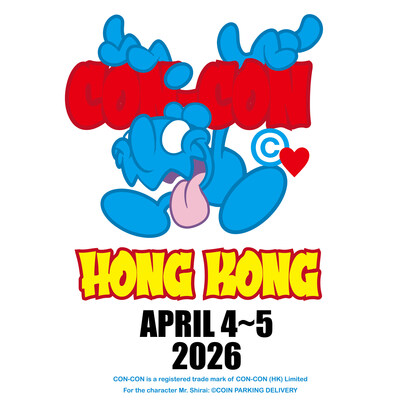
The logo of CON-CON® HONG KONG 2026 features COIN PARKING DELIVERY’s popular character, Mr. Shirai. A hybrid of dinosaur and alien, Mr. Shirai symbolises the power and vision of combining distinct eras and styles. This approach aligns perfectly with CON-CON® HONG KONG 2026’s mission to fuse various cultural IPs, inspire creativity and foster transformation. As the event’s logo, Mr. Shirai raises the CON-CON® logo in dance, perfectly embodying CON-CON® HONG KONG 2026’s vibrant goals. In addition to the logo, other COIN PARKING DELIVERY’s creation will be showcased across the 2-day extravaganza.
CON-CON® HONG KONG 2026
|
“CON-CON® HONG KONG 2026″ Event Details
|
|
Event Date:
|
April 4-5, 2026 (Saturday & Sunday)
|
|
Event Location:
|
AsiaWorld‑Expo, Hong Kong
Halls 3, 6 & 8 (Exhibition) and Halls 9 & 11 (Music Festival)
|
|
Ticket Prices#:
|
2-day pass HK$2,288 (Music Festival + Exhibition)
【April 4】HK$1,288 (Music Festival + Exhibition)
【April 4】HK$788 (Music Festival + Exhibition)
【April 4】HK$228 (Exhibition Only)
【April 5】HK$1,288 (Music Festival + Exhibition)
【April 5】HK$788 (Music Festival + Exhibition)
【April 5】HK$228(Exhibition Only)
|
|
Ticket Link:
|
https://con-con.asia/en/klook20260210.aspx
|
|
On-Sale Date & Time:
|
11:15 AM on February 11, 2026
|
|
Ticket terms and conditions, along with further details regarding participating IPs, artists and brands at CON-CON® HONG KONG 2026, will be announced in due course. Please stay tuned to our official social media channels for the latest updates.
#Terms and Conditions: Details will be announced by the Organizer in due course. The Organizer reserves the right to amend, change, or cancel the Event without prior notice.
|
About CON-CON® HONG KONG
CON-CON® HONG KONG 2026 is solely invested by Medialink Group Limited and fully conceived and organized by its wholly owned subsidiary, CON-CON (HK) Limited. It is the first mega IP flagship festival in Hong Kong created for a global audience. “CON-CON” stands for Convention for Connection and is designed as a cross-sector platform with intellectual property (“IP”) at its core, fostering collaboration and cultural exchange.
CON-CON® HONG KONG 2026 brings together the Group’s licensed IP portfolio with new partners across different industries, blending cross-over entertainment and cultural exchange to showcase the latest IP content and pop culture trends. The Event features a wide range of formats, including concerts, stage talks and panel discussions, fan meet-and-greet sessions, and new product launches, aiming to redefine the traditional convention experience.
Planned as an annual flagship event, CON-CON® HONG KONG 2026 will debut in Hong Kong with the intention to progressively expand across Asia. The Event is dedicated to celebrating IP and pop culture, ACG culture, and cross-over collaborations between renowned IPs and brands. It will take place from April 4 to 5, 2026 (Saturday to Sunday) at AsiaWorld-Expo, located at Hong Kong International Airport.
CON-CON®: https://www.con-con.asia/
CON-CON® on Facebook: https://www.facebook.com/conconhk2026
CON-CON® on Instagram: https://www.instagram.com/conconhk2026
CON-CON® on Xiaohongshu: 搜尋「CON-CON HK」
CON-CON® on WeChat: CON-CON HK
About Medialink Group Limited
Medialink Group Limited (Stock Code: 2230.HK) is a leading intellectual property (IP) management company headquartered in Hong Kong, with business in Greater China, Japan and Southeast Asia, actively promoting cultural exchanges through its IP, bring high-quality entertainment to the whole of Asia.
Founded in 1994, its business mainly focuses on content distribution and brand licensing, and is also involved in content production, distribution arrangements and animation product development. The Group invests and cooperates closely with media content licensors to distribute media content related to animation, variety shows, TV dramas, animated and live-action movies. At the same time, it also obtains copyright licensing from various brand licensors in the Asia-Pacific region, including merchandising rights and location-based entertainment rights and promotion rights.
The Group has its own animation brand, its various Ani-One® YouTube channels (including Ani-One® Asia which is Asia-focused, Ani-One® 中文官方頻道 which is run in Chinese, and other South East Asia channels – Ani-One® Thailand, Ani-One® Philippines, Ani-One® Vietnam, Ani-One® Indonesia and Ani-One® India) have more than 10 million subscribers and more than 2.4 billion views. In addition, the Group also owns two channels broadcasting Asia-produced animations, Ani-Mi®, and the e-commerce platform Ani-Mall®, selling animation products and exclusive anime boutique items.
Medialink®: https://www.medialink.com.hk
Medialink® on YouTube: https://www.youtube.com/@MedialinkHK
Medialink® on Facebook: https://www.facebook.com/medialinkhk
Medialink® on Instagram: https://www.instagram.com/medialinkhk
Ani-Mall®: https://www.ani-mall.asia
Medialinkfilms on Facebook: https://www.facebook.com/MedialinkFilms
Medialinkfilms on Instagram: https://www.instagram.com/medialinkfilms
Whateversmiles®: https://www.whateversmiles.com



 https://news.airbnb.com/ms