Home Blog Page 1492

Vietnam Endorses To Lam to Stay in Top Job

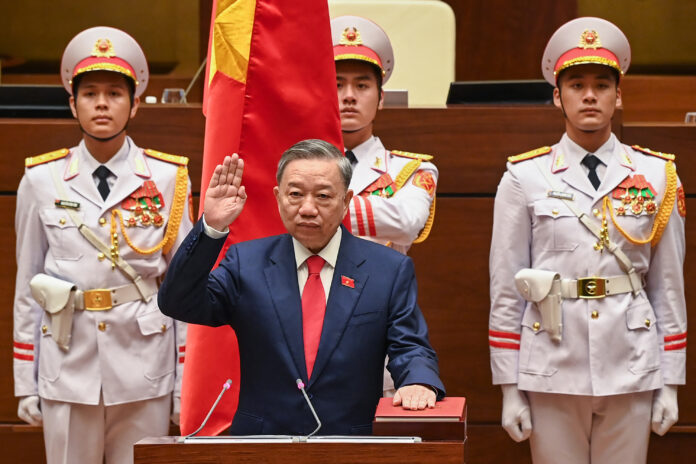
To Lam takes his oath as Vietnam's President during the National Assembly's summer session in Hanoi on May 22, 2024. Vietnam's rubber stamp parliament voted in public security minister To Lam as the country's new president on May 22, after a major anti-corruption campaign forced his predecessor to resign. (Photo by Dang ANH / AFP)

AFP – Vietnam’s Communist Party on 23 December endorsed General Secretary To Lam to remain in the top job for the next five years, according to two sources briefed on a meeting where senior officials agreed a slate of candidates to be announced at the party congress in January.

Lam, who became party chief after the death of his predecessor in August 2024, has enacted reforms described by officials as “a revolution”, slashing the bureaucracy and cracking down on corruption as he seeks to boost economic growth.

“No change. The party chief remains in his position to ensure stability,” a source briefed on the meeting told AFP.

A second source confirmed he will continue as general secretary and also be nominated to serve simultaneously as president, as Chinese President Xi Jinping has done.

“On behalf of those entrusted with the nomination to the (party) Central Committee and leadership positions for the next term… we would like to thank the Central Committee, the Politburo, and the Secretariat for their trust in assigning us this task,” Lam said in a speech Tuesday, appearing to thank delegates for nominating him.

“We will continue to work together in unity and with a high sense of responsibility and efficiency, meeting the expectations of the Party and the People.”

The leadership decisions must be finalized at the party congress which runs from 19 to 25 January, when key policy plans will also be outlined for the next five years.

Radical Reform

Lam, who served briefly as president in 2024, stepped up as the top leader two weeks after the death of former General Secretary Nguyen Phu Trong last year.

Lam’s rise to the top job followed a long career with the public security ministry, which deals with the monitoring of dissent and surveillance in Vietnam.

In his short tenure, he has accelerated administrative reforms and announced vast infrastructure investments, aiming to meet aggressive growth targets that underpin the party’s claim to legitimacy.

The reforms saw the number of government ministries and agencies slashed from 30 to 22.

State media, the civil service, the police and the military all faced cuts.

Roughly 147,000 people were made redundant or took early retirement as Hanoi sought to streamline bureaucracy and boost the economy.

Lam also pushed to reduce the country’s 63 provincial and city administrations to just 34.

The reforms to the structure of government follow a sprawling, high-profile anti-corruption campaign in recent years.

The drive has swept up dozens of business leaders and senior government figures, including two presidents and three deputy prime ministers since 2021.

The radical reforms piloted by Lam come after a long period in which change came slowly, with the government emphasising stability and calm to build a reputation for predictability and court foreign investors.


© Agence France-Presse

United States Reviews Ambassadorial Assignments, With Laos Among Affected Countries

More than 4,000 Lao nationals are among the over 1.4 million individuals in the United States with final deportation orders but not currently detained
US President Donald Trump speaks to journalists in the Oval Office of the White House in Washington, DC, on January 30, 2025. (Photo by ROBERTO SCHMIDT / AFP)

The United States is recalling nearly 30 career diplomats from ambassadorial and senior embassy positions worldwide as part of a broader effort by the Trump administration to reshape Washington’s diplomatic presence abroad.

According to US media reports citing State Department officials, chiefs of mission in at least 29 countries were informed last week that their assignments would end in January. The diplomats were originally appointed during the previous US administration and had continued serving into President Donald Trump’s second term before receiving notice of their recall.

Laos is among six countries in Asia where ambassadorial positions are affected, alongside the Philippines and Vietnam in Southeast Asia. Africa has seen the largest number of changes, followed by Asia, Europe, the Middle East, South and Central Asia, and the Western Hemisphere.

US officials said the diplomats are not being dismissed from the foreign service but will return to Washington for reassignment if they choose. Ambassadors serve at the discretion of the US president, and while terms often last three to four years, changes can occur at any time.

Officials said the administration aims to ensure overseas missions align with President Trump’s “America First” policy priorities.

For Laos, the potential leadership change comes as the two countries continue cooperation across areas including development assistance, health, education, and people-to-people exchanges.

Any transition at the embassy level could temporarily affect diplomatic engagement as new appointments or interim arrangements are put in place.

The Laotian Times sought clarification from the US Embassy in Laos, which did not comment and directed inquiries to Washington.

At the time of publication, no official announcement had been made locally regarding the timing or scope of any changes at the US Embassy in Laos.

2025 China International Gold Market Annual Conference Highlights Sanya’s Growing Role in Global Gold Industry Development

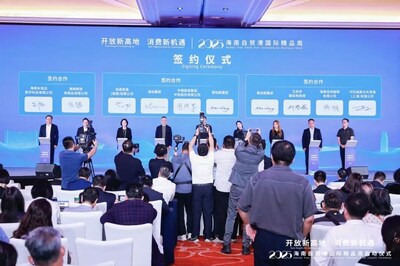
SANYA, China, Dec. 24, 2025 /PRNewswire/ — On December 11, the 2025 China International Gold Market Annual Conference convened in Sanya, Hainan, attracting more than 500 representatives from gold producers, retailers, trading enterprises, industry associations, financial institutions, research bodies, and international organizations. The event served as a high-level platform connecting government, industry, and enterprises to advance globally oriented development.

At the opening ceremony, Yan Diyong, Secretary of the Party Committee of the China Gold Association, noted that Sanya is rapidly emerging as a new frontier for investment and entrepreneurship in the gold industry. Leveraging distinctive policy advantages and strategic geographic positioning, the city is accelerating the development of key platforms such as the gold and jewelry industrial park, promoting deeper integration across industrial and supply chains, and enhancing overall industry capacity. These efforts position Sanya as an important gateway for the internationalization of China’s gold sector.

During the conference, Sanya implemented a series of targeted initiatives to translate event-driven engagement into tangible investment outcomes. Meanwhile, through policy briefings, thematic discussions, and on-site inspections, participating delegates were provided with a comprehensive view of Sanya’s investment environment and development prospects, fostering substantive connections between enterprises and the city.

During policy briefings, officials from the Sanya Investment Promotion Bureau outlined policy scope, application processes, and implementation mechanisms. The briefings clarified available investment incentives and reinforced market confidence, with participating companies noting strong alignment between the policy framework and their development needs.

Field visits further enhanced engagement. Delegates toured locations including the Sanya Yazhou Bay Science and Technology City and the Sanya Central Business District, gaining first-hand insights into the city’s business environment, industrial layout, and progress in platform and infrastructure development.

Industry leaders also shared strategic perspectives during the conference. Zou Laichang, Deputy Secretary of the Party Committee, Vice Chairman, and President of Zijin Mining Group Co., Ltd., stated that, supported by the policy advantages of the Hainan Free Trade Port, Zijin Mining is investing in the establishment of an international business headquarters in Sanya and developing a gold-themed park. He emphasized the company’s continued commitment to principles of openness, collaboration, and mutual benefit, alongside the promotion of green, low-carbon, safe, and sustainable development in the gold industry. Zijin Mining also plans to seize opportunities to expand gold deep-processing operations, trade, and international market activities in Hainan, deepening global cooperation and contributing to both industry advancement and the construction of the Hainan Free Trade Port.

As the Hainan Free Trade Port advances toward island-wide special customs operations, Sanya is increasingly positioned to serve global gold markets. Preferential tax policies and cross-border trade facilitation, combined with the city ‘ s established gold and jewelry industry base, are accelerating supply chain integration and attracting high-quality enterprises. The launch of the Shanghai Gold Exchange’s gold storage warehouse in Sanya marked a key milestone, filling a critical gap in Hainan’s gold infrastructure. Looking ahead, Sanya aims to better align domestic and international demand with local industry development, expand capabilities in gold research, design, and bonded processing, and leverage policies tied to international tourism consumption and offshore duty-free shopping to foster new consumption scenarios.

With an open and inclusive approach supported by efficient, pragmatic measures, Sanya continues to attract high-quality enterprises and contribute to the high-quality development of the Hainan Free Trade Port. The city is also set to host upcoming events, which are expected to further consolidate industry resources in Sanya and drive sustained, high-quality growth across related sectors.


Woodfibre LNG Marks 2025 as a Year of Construction Progress, Environmental Stewardship and Community Partnership

SINGAPORE – Media OutReach Newswire – 24 December 2025 – Woodfibre LNG recently marked 2025 as a year of significant progress across construction, environmental protection and community partnerships, as the project moved deeper into its development phase toward delivering responsibly produced Canadian liquefied natural gas to global markets.

Over the past year, the project advanced from planning into visible, on-the-ground execution. Major construction milestones included the pouring of foundations for key modules, continued progress on marine piling, and further implementation of modular construction techniques designed to reduce on-site footprint while accelerating delivery timelines.

These advancements were achieved through close collaboration with project partners, suppliers and contractors, and in partnership with the Sḵwx̱wú7mesh Úxwumixw (Squamish Nation).

In 2025, Woodfibre LNG, a member of the RGE group of companies founded by Sukanto Tanoto, continued to operate its floatel workforce accommodation solution, designed to minimise pressure on local housing and community services. As of November, two floatels were in active operation, providing high-quality, safe and comfortable living conditions for the project workforce while supporting construction efficiency.

Environmental protection remained a central focus throughout the year. The project’s Marine Mammal Monitoring Programme, which includes hydroacoustic monitoring, exclusion zones and shore-based observation posts, delivered measurable outcomes by enabling real-time operational decisions, including pauses to marine activities when marine mammals entered exclusion areas.

In parallel, remediation of legacy materials from the former pulp mill site continued, with hundreds of thousands of tonnes of historical waste removed. These efforts have contributed to improving site conditions for both local communities and marine and terrestrial ecosystems in Howe Sound.

Woodfibre LNG’s Operator Training Programme, delivered in partnership with the Squamish Nation Training and Trades Centre and the British Columbia Institute of Technology (BCIT), progressed throughout the year. The programme’s first cohort of graduates transitioned into full-time roles, supporting the development of long-term, skilled local employment opportunities linked to the project.

Through its Community Partnership Programme (CPP), Woodfibre LNG continued to invest in local communities across the Sea-to-Sky corridor. In 2025, the programme surpassed $1 million in total grants since its inception, supporting initiatives in sports, healthcare, emergency services, arts and culture, and youth development.

Luke Schauerte, CEO of Woodfibre LNG, said, “2025 has been a year of significant progress for Woodfibre LNG. We are proud of what our team and partners have accomplished together and look forward to building on this momentum in the year ahead.”

With more than half of the project’s development now complete, Woodfibre LNG remains focused on advancing construction safely and responsibly, while maintaining strong partnerships with Indigenous communities, local stakeholders and regulators.

As the project looks ahead to 2026, Woodfibre LNG continues its work toward delivering lower-carbon, responsibly produced Canadian energy to international markets.

Hashtag: #RGE #PacificEnergy #PacificCanbriamEnergy #WoodfibreLNG #LNG #environment #partnerships #LNG #liquefiednaturalgas #energy #sustainability

The issuer is solely responsible for the content of this announcement.

About Woodfibre LNG

The Woodfibre LNG Project is owned by Woodfibre LNG Limited Partnership, owned 70 per cent by Pacific Energy Corporation (Canada) Limited and 30 per cent by Enbridge Inc. The Woodfibre LNG facility is being built on the site of the former Woodfibre pulp mill site, which is located about seven kilometres southwest of Squamish, B.C. Woodfibre LNG will source its natural gas from Pacific Canbriam Energy, a Canadian company with operations in Northeastern British Columbia. Pacific Canbriam is an industry leader in sustainable natural gas production. Woodfibre LNG and Pacific Canbriam Energy are subsidiaries of Pacific Energy Corporation Limited. Woodfibre LNG is the first industrial project in Canada to recognise a non-treaty Indigenous government, Sḵwx̱wú7mesh Úxwumixw (Squamish Nation), as a full environmental regulator.

Hakka Medicine Goes Global: Jiaying Pharmaceutical Launches the Global Promotion Plan for Hakka Medicine in Hong Kong

HONG KONG, Dec. 24, 2025 /PRNewswire/ — Recently, Guangdong Jiaying Pharmaceutical Co., Ltd. held the “First Hakka Medicine Historical and Cultural Symposium” and the “Jiaying Hakka Medicine – Double-ingredient Throat Wind Relief Powder Product Promotion Conference” in Hong Kong SAR. Centered on the theme of “Bringing Hakka Medicine to Global Hakka People,” the conference brought together authoritative experts in traditional Chinese medicine from the Chinese mainland and Hong Kong SAR, renowned figures from cultural circles, and representatives of pharmaceutical enterprises. Participants engaged in in-depth discussions on the inheritance and innovation of Hakka medicine culture and strategies for its internationalization, actively promoting the further integration of Hakka medicine into the global health system.

Li Neng, Chairman of Jiaying Pharmaceutical, stated that Hakka medicine is a distinctive medical system formed through the integration of traditional medical theories from the Central Plains and local southern wisdom, carrying the shared cultural memory and health wisdom of more than 100 million Hakka people worldwide. He noted that Hakka medicine is not only a practical medical system characterized by “the integration of northern and southern traditions, equal emphasis on prevention and treatment, and the combination of theory and practice”, but also embodies the spirit of tenacity, pragmatism, innovation, and change of the Hakka people.

Dr. Kamchung Li, Chairman of the World Hakka Business Association, introduced the status quo of development of traditional Chinese medicine culture in Hong Kong SAR and analyzed the advantages of promoting the internationalization of traditional Chinese medicine in Hong Kong SAR.

During the discussion session of the “Hakka Medicine Historical and Cultural Symposium,” Professor Au Ching Tung, Director of the Chinese Medicine and Culture Research Center at Technological and Higher Education Institute of Hong Kong SAR, elaborated on “Research, Investigation, Application, and Development of Hakka Herbal Medicine.” Professor Peng Jian, Professor at Hunan University of Chinese Medicine and Research Fellow of the Hunan Provincial Research Institute of Culture and History, delivered a presentation entitled “Ge Hong and Hakka Medical Culture”, systematically introducing the cultural connotations and contemporary value of the development of Hakka medicine. Yao Qin, Research Fellow, Chief Physician, Master’s Supervisor, and Deputy Director of the Institute of Literature and Information Research at the Hunan Academy of Chinese Medicine, Chen Hubiao, Professor of the School of Chinese Medicine and Head of the Department of Chinese Medicine at Hong Kong Baptist University, Peng Zhibiao, President of the University of Hong Kong Chinese Medicine Alumni Association, Luo Xiaohai, Executive Vice President of the Greater Bay Area Branch of the World Hakka Business Association and Chairman of Jiaxin Biotechnology (Macao) Co., Ltd., Ma Chao, eighth-generation inheritor of Wu Jutong, author of Systematic Differentiation of Warm Diseases and Course Director of the Institute for China Business of The University of Hong Kong, and You Yongping, President of Jiaying Pharmaceutical, among other guests, conducted in-depth discussions on topics including the development of the big health industry, intellectual property development, policy alignment mechanisms, systematic literature research, new media communication strategies, and international clinical collaboration. The on-site exchanges were lively, fully reflecting the strong expectations and high level of commitment shared by stakeholders in Hong Kong SAR and the mainland to advancing Hakka medicine onto the international stage.

At the Jiaying Hakka Medicine – Double-ingredient Throat Wind Relief Powder Product Promotion Conference, You Yongping, President of Jiaying Pharmaceutical, released the In-Depth Analysis of Hakka Medicine Sales Policy and Globalization Plan of Jiaying Pharmaceutical. From multiple perspectives, including product culture, brand revitalization, and market models, he provided a detailed exposition of the application value and development prospects of Double-ingredient Throat Wind Relief Powder in global health scenarios. Senior researcher Wu Lang delivered a keynote report entitled “Product Analysis of Hakka Medicine Double-ingredient Throat Wind Relief Powder”, systematically analyzing the product in terms of formulation, pharmacology, and indications, thereby further deepening the understanding of the Hong Kong medical and pharmaceutical community regarding Hakka Medicine Double-ingredient Throat Wind Relief Powder.

Zheng Jiaju, Chairman of RIH Limited, representing Hong Kong’s pharmaceutical business sector, stated that the two sides will jointly advance three key areas of cooperation in the future: first, optimizing distribution channels to further expand Hakka medicine’s coverage of community pharmacies and household users; second, strengthening brand building and deepening the dissemination of Hakka medicine culture; and third, promoting product innovation and exploring product designs with Hong Kong characteristics, achieving a win-win goal of cultural inheritance and market expansion.

At the event, Li Neng, Chairman of Jiaying Pharmaceutical, and Jia Hongbo, Chairman of the Global Value Investment Association and Director of the Hong Kong International Chinese Medicine Institute, jointly signed a strategic cooperation agreement. The two parties agreed to rely on the Hong Kong platform to carry out international cooperation, resource coordination, and transformation of outcomes. During the discussion session, participants conducted in-depth exchanges on topics such as the “Hakka Medicine Globalization Plan.” Wong Kwong-fai, Chief Chairman of the Hong Kong Chinese Medicine Industry Association, Hu Nanning, Chairman of Hoi Yin Tong Group Limited, Csaryne Wan, General Manager of Medichine International (HK) Limited, and Luo Xiaohai, Executive Vice President of the Greater Bay Area Branch of the World Hakka Business Association and Chairman of Jiaxin Biotechnology (Macao) Co., Ltd., offered feasible suggestions from multiple perspectives, including product promotion, differentiated competition, and Hong Kong SAR and Macao SAR policies, for the internationalization, professionalization, and branding of Double-ingredient Throat Wind Relief Powder.

Looking back, Hakka medicine carries the cultural memory of the Hakka people and the wisdom of traditional Chinese medicine. Looking ahead, we anticipate that Hakka medicine will take Hong Kong as a window to the world and contribute Hakka wisdom to human health. Jiaying Pharmaceutical will take “Double-ingredient Throat Wind Relief Powder” as a fulcrum and uphold the core philosophy of “inheriting tradition without being bound by antiquated contents, innovating without departing from the roots.” It will serve not only as an emotional bond and guardian of health connecting global Hakka communities, but also as a cultural vehicle for conveying the wisdom of Hakka medicine to the world, demonstrating the unique value and contemporary vitality of traditional Chinese medicine on the global stage of health governance and cultural exchange.


Sobot Shines in G2 Winter 2026: A New Benchmark in AI Customer Service

Enable “Anywhere, Anytime” Customer Engagement with Sobot Omnichannel AI and Scenario-Based AI

SINGAPORE, Dec. 24, 2025 /PRNewswire/ — Sobot ranked in 252 reports and earned 32 badges in G2 reports for Winter 2026, including 7 leader badges. The strong performance implies Sobot’s great progress in improving customer experience, especially since the launch of its “AI-First” strategy.

Sobot’s Five-AI System Delivers Seamless and Connected Customer Engagement

As customer interactions become increasingly frequent and complex, businesses are turning to AI to support customer engagement across multiple channels and scenarios. In response, Sobot introduced its “Five-AI” system earlier this year, comprising Omnichannel AI, Scenario-Based AI, Multi-Faceted AI, Generative AI and Secure AI.

Among these features, Omnichannel AI and Scenario-Based AI form the foundation, addressing the most pressing challenges in modern customer engagement. A study shows that companies employing an omnichannel strategy enjoy 90% higher customer retention rates and 18.86% higher customer engagement rates, highlighting the significance of connected, scenario-driven AI solutions.

Sobot AI: 90% Higher Retention, 18.9% More Engagement

The rising trends well align with Sobot’s “Five-AI” system. Beyond providing basic AI features, Sobot is deeply rooted in real-world applications, designed to meet the demands of multiple industries, particularly retail and ecommerce.

Sobot Omnichannel AI Enables Customer Connection at Every Touchpoint

A G2 reviewer shared how Sobot helps in addressing their challenges: “Our agents used to struggle with switching between channels, but Sobot’s omnichannel solution changed that. It unifies our website, apps, social media, email and phone support into one platform powered by strong AI. Designed to solve ecommerce issues like product recommendations, order tracking, returns, refunds and more, it feels built for how ecommerce really works.”

Sobot Omnichannel AI seamlessly integrates with self-owned websites, major ecommerce platforms, email, live chat and mainstream social media platforms like Facebook, Instagram, WhatsApp and beyond. Besides these online messaging channels, Sobot also supports the voice channel, extending AI-powered customer service to phone interactions.

Sobot unifies all these channels into a consolidated workbench, eliminating data silos and facilitating customer service agents’ operation. By delivering seamless and context-aware customer experience across every channel, Sobot’s Omnichannel AI directly responds to the needs highlighted in G2 reviews, thus showing its critical role in Sobot’s strong performance.

Sobot Scenario-Based AI Supports Every Stage of the Customer Journey

While offering essential AI features to ensure smooth daily operations, Sobot never stops in advancing its AI customer contact system. Having served over 10,000 customers from diverse industries, Sobot has proposed Scenario-Based AI—an AI customer contact system designed to adapt to the issues of specific business environments, especially in fast-moving sectors like retail and ecommerce.

Sobot Scenario-Based AI covers the full lifecycle of ecommerce customer engagement:

  • Pre-sales: Respond to 24/7 inquiries instantly, converting browsers into buyers.
  • In-purchase: Make personalized recommendations, increasing sales volume and revenue.
  • After-sales: Handle delivery, return and refund issues, improving customer satisfaction and loyalty.
  • Retention & Growth: Use AI insight and tailored promotions to attract repeat purchases, completing a closed-loop journey that leads customers back to pre-sales stage.

Beyond ecommerce, Sobot Scenario-Based AI also supports real-world applications across industries like healthcare, finance, education and more industries, adapting to different customers’ needs. A CX leader from an ecommerce company shared on G2:”Sobot’s AI customer contact solution helps us support customers throughout the purchasing journey, and continues to perform well during peak periods like promotions or holidays. Its flexibility and versatility have impresses us greatly.”

Sobot’s CEO Explains How the Five-AI System Enables Customer-Centric Engagement

“Instead of letting customers struggle to find businesses, we help businesses meet customers where they are.” said Xu, CEO of Sobot. “To make this possible, we designed our Five-AI system—comprising Omnichannel AI, Scenario-Based AI, Multi-Faceted AI, Generative AI, and Secure AI—to support seamless and context-aware customer engagement across all channels and stages of the customer journey. And it turns out to take effect.”

Guided by this vision, Sobot ensures businesses can deliver consistent, personalized, and efficient interactions even during peak periods, while adapting to evolving customer needs. The impact of this customer-centric approach is also reflected in Sobot’s G2 recognition, reinforcing why users across industries continue to validate and recommend Sobot’s solutions.

For more information, please visit https://www.sobot.io/.

Nova Technology Expands into Hong Kong with Next-Generation AI Products

HONG KONG and SHANGHAI, Dec. 23, 2025 /PRNewswire/ — Nova Technology (Wuxi) Co., Ltd. (“Nova Technology”), a leading insurance AI technology company in China, announced its official entry into the Hong Kong market through Nova Technology International Limited (“Nova International”).

The company is bringing its AI-powered solutions in underwriting, claims management, and insurance risk analytics to insurers in Hong Kong and beyond. By leveraging next-generation AI technologies, Nova Technology enables insurers to achieve significant efficiency gains across core functions including risk management, business growth, and claims operations, while enhancing overall customer experience.

As one of Asia’s leading international financial and insurance hubs, Hong Kong hosts a large concentration of multinational insurers and regional headquarters. With a well-established regulatory regime and its position as a gateway to global markets, insurers in Hong Kong set particularly high standards when selecting technology partners, especially with regard to the compliance, stability, and domain expertise of AI solutions applied to core business operations.

Nova Technology is a technology company focused on the application of generative AI in the insurance industry. Built on years of expertise across the insurance and healthcare sectors, the company has developed and continuously refined proprietary insurance knowledge bases and vertical models, and has deployed multi-agent AI solutions across core areas including risk management, business growth, and claims operations.

For the Hong Kong market, Nova Technology has localized its core AI products, established a Hong Kong–specific medical knowledge graph, and further enhanced its multi-agent AI systems to deliver end-to-end intelligent capabilities for insurers operating in Hong Kong.

In underwriting, Nova Technology’s AI agents enable insurers to automate decision-making with high accuracy. In claims, AI-powered agents efficiently handle critical tasks including document and image classification, medical record extraction, coverage validation, claims calculation, and embedded risk controls. With accuracy exceeding manual processing, these capabilities enable claims decisions to be automated at scale. In risk management, the solutions provide intelligent detection and real-time monitoring of abnormal behaviors and potential fraud risks, helping insurers strengthen claims security while maintaining robust regulatory compliance.

As a leading insurance AI technology company in China, Nova Technology has developed a robust insurance-specific knowledge base and established a broad network of strategic partnerships with medical and related service institutions across the country. This foundation provides comprehensive knowledge and data support for the reliable application of AI in insurance use cases, while also underpinning the rollout of the company’s AI solutions in Hong Kong.

Nova Technology stated that selecting Hong Kong as a strategic step in its international expansion is driven by the city’s well-established insurance market and insurers’ growing need for scalable AI applications across core business functions. Looking ahead, the company will continue to enhance the localization of its products to align with Hong Kong’s regulatory requirements and insurers’ operational needs, while collaborating closely with local insurers, industry bodies, and ecosystem partners to explore wider applications of AI in international insurance markets.

Founded in 2018, Nova Technology leverages technological innovation to drive the intelligent transformation of the insurance industry. As of June 30, 2025, the company has served 99 insurance companies, including eight of the top ten insurers in China by premium income in 2024, delivering AI-powered solutions across underwriting, claims management, and full-stack risk analytics.


New Opportunities in Southeast Asia’s Digital Shift: Thailand Emerges as the New ASEAN’s AI Hub


BANGKOK, THAILAND – Media OutReach Newswire – 24 December 2025 – As global attention remains fixed on the AI race, Thailand is now carving out a new identity as an emerging “AI Hub for Association of Southeast Asian Nations (ASEAN).” The government is steadily advancing its “Thailand 4.0” initiative, positioning the digital economy as the key driver of national transformation.

The expansion of AI and data centers (DCs) in Thailand is driving several transformative trends:

  • Changing data traffic patterns. As DCs multiply in Bangkok, Chonburi, and beyond, Thailand is evolving from a traditional data “transit point” into a regional “convergence hub.” East-west digital traffic is accelerating, with Thai DC clusters increasingly meeting the computing demands of Southeast Asia and the broader Asia-Pacific.
  • Optimized data routing. Data flows that once relied on submarine cables via Hong Kong and Singapore are gradually shifting to land-based digital corridors linking China, Laos, and Thailand. This route reduces data transmission latency from southwestern China to Southeast Asia.
  • Elevated business expectations. Demand is shifting beyond “sufficient bandwidth” toward “high-quality experience.” Thailand sits in a “latency sweet spot” for key Asia-Pacific markets, with latencies to Singapore, Vietnam, and Malaysia falling within an optimal range—a crucial advantage for latency-sensitive sectors like autonomous driving, telemedicine, and fintech.

New opportunities inevitably bring new challenges, and Thailand also addresses the following three challenges:

1. Massive traffic impacting existing networks: Compared with mature hubs like Singapore, Thailand has insufficient international submarine cables. A large volume of cross-border data still needs to be transmitted through detours. Meanwhile, as DC investments continue to accelerate, traffic will keep rising. Analysis shows that by 2029, Thailand’s DC capacity may reach 2000 MW, with cross-region traffic surging to 630 Tbps. The current network architecture is no longer capable of supporting such heavy traffic.

2. Latency advantages not fully realized: Despite its geographic advantages, Thailand’s network latency performance has yet to reach its full potential. Routes to key markets, like China, still require third-party transit. What’s more, traditional network scheduling lacks intelligent route selection capabilities, making it difficult to provide deterministic assurance for latency-sensitive services like financial transactions and real-time AI interactions.

3. Potential risks in network reliability: Thailand’s network reliability faces structural challenges. Single points of failure have previously caused hours-long interruptions to critical services, directly undermining enterprise users’ confidence.

To overcome these challenges, Thailand can take a systematic approach to upgrading its digital infrastructure, aiming to build next-generation AI-ready networks.

1. Building ultra-high-bandwidth “sea-land” connectivity. By actively introducing new submarine cables, Thailand can significantly enhance its connectivity with the Asia-Pacific region and the world. Meanwhile, accelerating the construction and expansion of key terrestrial cable routes—such as China-Laos-Thailand and Thailand-Malaysia-Singapore—will transform Thailand’s geographic advantage into a tangible connectivity advantage.

2. Optimizing network routes to create a regional low-latency core. Strengthening the Kunming-Laos-Thailand terrestrial cable route will continuously reduce transmission latency between China and Thailand, meeting the needs of real-time applications. In addition, the introduction of autonomous networks will enable automatic selection of the optimal, shortest route, shifting from “best effort” to “deterministic low latency.”

3. Designing a “never-interrupted” high-resilience architecture. Deploying active-active DC networks with millisecond-level switchover capabilities ensures the continuity of core services. Meanwhile, AI-driven intelligent O&M can reduce fault detection and diagnosis from hours to minutes.

Thailand’s booming AI and DC industries are driving rapid growth in regional and cross-border business demand. In this trend, network infrastructure construction centered on DCs is the core engine that drives AI transformation, propelling Thailand toward its vision of becoming the new AI hub for ASEAN.

Hashtag: #huawei

The issuer is solely responsible for the content of this announcement.