Home Blog Page 1628

Luang Namtha Welcomes Nearly 1.3 Million Tourists in 2025, Surpassing Expectations

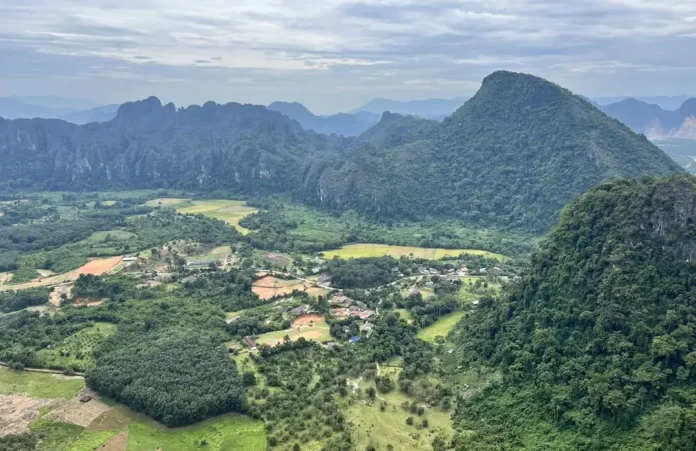
Kayaking in nothern Laos ' Laung Namtha Province. ({Photo credit: Luang Namtha News)

Luang Namtha Province has marked a successful year for tourism in 2025, welcoming a total of 1,290,192 visitors both international and domestic, an increase of 2.86 percent compared to the same period of 2024.

Somsawat Namintha, Deputy Head of the Department of Culture and Tourism of Luang Namtha Province, reported that among these visitors, 970,760 tourists entered via international checkpoints and 136,410 via the Laos-China Railway.

A major factor driving the province’s rise in tourist numbers was a series of vibrant cultural festivals. 

These included the Akha Swing Festival, Hmong New Year, Rocket Festival, and Boat Racing Festivals in Nalae and Viengphoukha districts, which drew both domestic and international visitors and generated over USD 40 million in revenue.

Key highlights of 2025 also featured the Forest Trekking and Boat Trip Festival in the Nam Ha National Protected Area, which promoted sustainable tourism and environmental conservation. In addition, Luang Namtha enhanced its international profile by participating as the “City of Charm” at the 22nd China-ASEAN Expo 2025 in Nanning, China, in September.

In addition, the province earned two ASEAN-standard awards for excellence in Community-Based Tourism (CBT) and public sanitation. Strategic projects included designating the Luang Namtha Paddy Fields as a cultural and tourism site.

Currently, Luang Namtha has 433 tourism business units, with total investment exceeding LAK 504 billion (about USD 23 million ). Provincial authorities have focused on inspecting and regulating services, particularly improving the central provincial market and ensuring compliance with standards to guarantee service quality.

Looking ahead, the province aims to attract 1,441,568 visitors in 2026, generating around USD 45 million in revenue, while continuing to enhance sustainable tourism development.

Asian Development Bank Approves Funds for Forestry Restoration Project in Laos

Forest Landscapes and Local Livelihoods in Lao PDR - (Picture by AllTrails)

The Asian Development Bank (ADB) has approved USD 10 million in funding for the Responsible Forestry Project Phase I in Laos. The package includes a USD 5 million concessional loan from ADB’s ordinary capital resources and a USD 5 million grant.

The project aims to tackle forest degradation, enhance climate resilience, and support the livelihoods of forest-dependent communities in Bolikhamxay, Khammouane, and Vientiane Capital.

ADB emphasized that public funding alone is insufficient to reverse the damage, highlighting the need for increased private investment in forest restoration, tree planting, and conservation-focused ecotourism.

Phase I will focus on identifying existing challenges and preparing technical and feasibility studies for Phase II. It will also promote collaboration among relevant stakeholders to develop commercial plantations and conservation initiatives.

The project is expected to strengthen institutional capacity and create opportunities for local communities to participate in forestry activities while benefiting economically from sustainable forest management.

Forests cover approximately 62 percent of Laos and provide employment for more than 65 percent of the workforce. However, unsustainable practices have caused widespread degradation, resulting in economic losses estimated at nearly 19 percent of the country’s gross domestic product each year.

Laos Section of Laos-China 500kV Power Interconnection Reaches 80 Percent Completion

This photo is used for representational purpose only.

The Lao section of the Laos-China 500-kilovolt (kV) power interconnection project has reached 80 percent completion, one of the country’s most important cross-border energy infrastructure projects in northern Laos.

Vilaxay Xayluangsy, a technical officer from Electricité du Laos Transmission Company Limited (EDL-T) under the Construction Department, confirmed the milestone during an interview with Lao state media on 19 December at Namor 3 Power Station in Namor district, Oudomxay Province.

The project is being developed in two phases. EDL-T is responsible for the Lao section, while China Southern Power Grid (CSG) manages the Chinese section, which includes a 145-kilometer, 500kV transmission line from Xishuangbanna Dai Autonomous Prefecture to the Lao border.

This interconnection is expected to support major renewable energy developments in northern Laos, including the 1,000-megawatt solar power project in Oudomxay Province, which was inaugurated on 13 December. Phase I of the solar facility is projected to generate 1.7 billion kilowatt-hours annually, with electricity transmitted to China’s Yunnan Province through the new interconnection.

Beyond these bilateral benefits, the project will enhance power system stability, facilitate clean energy exports, and strengthen Laos’ electricity connections with neighboring countries, including Thailand, Vietnam, Cambodia, and Myanmar.

Once completed, the Lao government said the Laos-China 500kV interconnection will be a cornerstone in its plan to position the country as a regional clean energy hub in the Lancang-Mekong region.

Project Background

Construction of the Lao section began in late February 2025, following an official launch ceremony in Vientiane Capital. The project is expected to be completed by April 2026, with full operations scheduled to commence later that year.

The Lao section encompasses Oudomxay and Luang Namtha provinces and includes construction of a new 500kV substation in Namor district. 

This substation will connect to Xishuangbanna in Yunnan Province, China, via a 183.5-kilometer cross-border transmission line.

Once operational, the interconnection will enable two-way power assistance of up to 1.5 million kilowatts and facilitate transmission of approximately 3 billion kilowatt-hours of clean electricity annually, enough to power millions of households for an entire year.

Georgian Railway Modernization Project Officially Put into Operation, Adding a New Highlight to the Belt And Road Initiative

TBILISI, Georgia, Dec. 25, 2025 /PRNewswire/ — On December 25th, Beijing time, Georgian Railway Modernization Project constructed by China Railway 23rd Bureau Group Co., Ltd., is officially put into operation. After 13 years of hard work, this major achievement of China–Georgia cooperation under the Belt and Road Initiative has injected strong impetus into the transportation upgrade and economic development of Georgia, and also demonstrated the outstanding capabilities of Chinese infrastructure enterprises in the overseas railway market.

Georgian Railway Modernization Project Officially Put into Operation, Adding a New Highlight to the Belt And Road Initiative

The railway is located in central Georgia, starting from the city of Zestaponi and ending in the city of Khashuri, with a total length of 43.911 kilometers. It serves as the “main artery” for transportation between the east and west of the country. The project involves the upgrading and renovation of existing lines as well as the construction of new ones, covering multiple fields such as line design, civil engineering construction, power supply, communication systems, and station facilities. The construction was particularly challenging due to the complex geological conditions, with key tasks such as tunnel excavation, high slope embankment protection, and bridge beam installation all faced with significant obstacles. The construction team of China Railway 23rd Bureau Group Co., Ltd. adopted a “lean and efficient” management model, flexibly adjusted the construction plans, deepened cooperation with local enterprises, and relied on technological innovation to overcome a series of technical difficulties. They strictly adhered to safety standards throughout the process to ensure the smooth progress of the project.

During the construction period, the project management actively fulfilled its social responsibilities, providing employment for approximately 1,000 local workers. This not only has helped local people increase their income but also enabled them to acquire professional skills through technical training, which allows them to participate in and witness the development and changes of their hometowns.

This project is the largest railway project newly built and successfully put into operation in Georgia. As an important part of the “Trans-Caspian International Transport Corridor”, the official operation of the project is of great significance for enhancing the overall transportation capacity of Georgian railways, promoting logistics transportation between China and Europe, and driving regional economic development. The average travel efficiency from Tbilisi, the capital of Georgia, to the western Black Sea port thus will increase by 37%, and the annual freight capacity will double. This will not only promote the industrial upgrading of Georgia and the development of the regions along the line but also strengthen the trade connection and cooperation with neighboring countries.

Cross-Border Email Becomes an Operational Imperative: How Coremail Helps Thailand Enterprises Navigate Global Communication Challenges

BANGKOK, Dec. 25, 2025 /PRNewswire/ — As enterprises across Thailand and Southeast Asia accelerate their global presence, email reliability is no longer just an IT metric, it is the lifeline of day-to-day operations.

Many growing organizations face similar challenges. Legitimate business emails are often delayed or rejected due to IP blacklisting, disrupting daily operations. Efforts to build in-house overseas relay infrastructure frequently bring high costs but limited gains, as static routing cannot adapt to congestion, outages, or submarine cable disruptions. Meanwhile, cross-border phishing and malicious emails are increasingly sophisticated, bypassing basic filters and creating heightened security and compliance risks.

Intelligent Overseas Relays Address Both Stability and Security

To bridge this gap, Coremail, a global leader in secure email solutions, offers its Secure Email Relay. By deploying intelligent forwarding nodes across multiple regions, Coremail ensures that mission-critical data reaches its destination regardless of network volatility.

“Email remains the backbone of international business,” said Leihua Chen, CEO of Coremail. “By stabilizing overseas delivery and strengthening protection against external threats, we aim to help organizations operate more smoothly and support their regional expansion.”

Resilient Global Routing for Stable Cross-Border Delivery

With more than 50 smart relay nodes deployed worldwide, Coremail dynamically selects optimal delivery paths for each email. Traffic is automatically rerouted away from congested regions or disrupted nodes, ensuring fewer bounce-backs, lower latency, and consistent delivery across markets.

Intelligent SDN–DNS Routing for Higher Efficiency and Lower Costs

Powered by patented SDN routing and DNS-based link matching, Coremail optimizes routing decisions based on destination and message type. This enables faster, more predictable cross-border delivery while lowering the operational cost and complexity of maintaining in-house relay infrastructure.

CAC Anti-Spam Engine: 99.8% Filtering Accuracy for Overseas Threats

To address rising cross-border security risks, Coremail’s CAC cloud anti-spam engine blocks up to 99.8% of spam and phishing attempts originating overseas, while maintaining a false-positive rate below 0.02%. This strengthens the security posture of existing email platforms and helps protect enterprise IP reputations.

Today, more than 20,000 enterprises worldwide use Coremail’s Secure Email Relay to address cross-border email challenges. For organizations operating across multiple markets, reliable and secure email delivery is increasingly recognized as essential infrastructure for sustaining growth and managing operational risk.

For more information, please visit: www.coremail.co.th

Life-space’s Patented Strain LPB27 Featured in Nature Supplement, Highlighting World-Class R&D Strength

KUALA LUMPUR, Malaysia, Dec. 25, 2025 /PRNewswire/ — The Nature supplement highlights research exploring the potential of LPB27 and Bifidobacterium breve 207-1 in supporting digestive and metabolic health. Both strains have already been successfully integrated into multiple Life-space products and are highly favored by consumers globally.

The inclusion of Life-space’s proprietary strains in a Nature publication underscores the brand’s robust scientific capabilities. Currently, the Life-space Global Microbiome Center manages an end-to-end research ecosystem encompassing strain isolation, genome sequencing, in vitro testing, and animal studies.

A Decade of Expertise in Microbiome

With over 10 years of experience in probiotic R&D, Life-space remains committed to a consumer-centric approach. The brand focuses on personalized health needs across the entire life cycle—developing targeted probiotic solutions for infants, children, adults, seniors, and women during pregnancy and lactation.

Building a Full-Link R&D System with a Global Talent Pool

The scientific team at the Life-space Global Microbiome Center comprises experts from world-class universities and authoritative institutions, including the University of Aberdeen, Wageningen University, Sun Yat-sen University, the Chinese Academy of Sciences, and IFREMER (French Research Institute for Exploitation of the Sea).

Collaborating with over 50 international research organizations and leading strain suppliers, Life-space ensures that every step—from strain screening and functional validation to production—is rooted in rigorous science to guarantee product efficacy and safety.

From functional strains and formula combinations to sensory evaluation, raw material control, dosage form innovation, and “Live-bac” packaging technology, Life-space has constructed a comprehensive R&D infrastructure. In the highly competitive probiotic industry, such deep vertical integration remains a rare competitive advantage.

Multi-Dimensional Innovation Reaches New Heights

Life-space has achieved significant milestones in proprietary strain development, including multiple PCT international patents and the industrial application of “star” strains. In terms of product innovation, the brand has launched high-survival tablets and synergistic formulas, with numerous technical achievements published in authoritative international journals.

Zhe Xiaolei, Head of R&D at the Life-space Global Microbiome Center, stated:

“We have successfully commercialized several self-developed strains. Among them, LPB27 is a flagship strain capable of high-activity colonization and repairing the intestinal basement membrane.”

The recognition by Nature is a testament to Life-space’s years of specialized dedication to probiotics. Moving forward, Life-space will continue to leverage its full-link scientific research system to build a technical moat, consistently safeguarding consumer health worldwide.


Caliway’s Fat Reduction Drug Candidate CBL-514 Completes U.S. FDA IND Submission for Phase 2 Clinical Study in Weight Management, Expanding Development Combined with GLP-1RA-Based Weight-Loss Therapies

  • Caliway has completed submission of an Investigational New Drug (IND) application to the U.S. Food and Drug Administration (FDA) for a Phase 2 clinical study of CBL-514 for weight management (CBL-0201WR Phase 2).
  • The study will evaluate CBL-514 in combination with Zepbound® (Eli Lilly) in subjects with obesity or overweight.
  • Efficacy endpoints include changes in abdominal subcutaneous fat volume (measured by MRI) and changes in body weight.
  • The study design incorporates a long-term follow-up period after discontinuation of tirzepatide, focusing on key parameters relevant to long-term weight management.

NEW TAIPEI CITY, Dec. 25, 2025 /PRNewswire/ — Caliway Biopharmaceuticals (TWSE: 6919) today announced that it has completed the submission of an Investigational New Drug (IND) application to the U.S. FDA for a Phase 2 clinical study of its world’s first large-area localized fat reduction drug candidate, CBL-514, for the weight management indication. This submission accelerates the clinical development of CBL-514 in combination with GLP-1R agonist (GLP-1RA) therapies and expands the Company’s R&D footprint in the global weight management field.

CBL-0201WR is a randomized, placebo-controlled Phase 2 study to be conducted at multiple centers in the United States. The study is expected to enroll approximately 120 subjects with obesity (BMI > 30) or overweight (BMI > 27) with comorbidities.

The study will evaluate the efficacy, safety, and tolerability of CBL-514 in combination with Zepbound® (tirzepatide, a dual GLP-1/GIP receptor agonist, Eli Lilly). Following discontinuation of both tirzepatide and CBL-514, subjects will undergo longitudinal follow-up to assess abdominal subcutaneous fat changes, body weight changes, fat mass and body composition–related parameters.

Efficacy endpoints include changes in abdominal subcutaneous fat volume measured by MRI and changes in body weight. The study will also collect body composition data using DEXA (dual-energy X-ray absorptiometry), including body fat percentage, visceral fat, and muscle mass. To reduce bias, MRI and DEXA data will be read and analyzed in a blinded and independent manner by a third-party CRO before subsequent statistical analyses are performed.

In recent years, GLP-1RA weight-loss drugs have seen rapid adoption, driving significant growth in the global weight management market. International focus is shifting from achieving large-magnitude weight reduction toward greater fat reduction, post-discontinuation weight maintenance, body composition improvement, and long-term, healthy weight management outcomes.

Current GLP-1RA therapies primarily achieve weight loss through appetite suppression. Clinical evidence indicates that, while these therapies can substantially reduce body weight, they mainly shrink adipocyte size and do not reduce adipocyte number. Their effects on abdominal subcutaneous fat reduction also remain limited. Moreover, during treatment, profound appetite suppression induces a prolonged negative energy balance, triggering compensatory mechanisms and the intrinsic “memory” of adipocytes to restore their size. Once appetite returns after treatment discontinuation, these shrunken adipocytes may preferentially re-accumulate energy, undergo rapid enlargement and expansion, and be accompanied by increased visceral fat accumulation and deterioration of metabolic indicators, including insulin resistance.

Consequently, after discontinuing treatment, patients may experience weight regain alongside worsening metabolic parameters and adverse changes in body composition. This creates a dual challenge of weight rebound and body composition deterioration, which may offset the health benefits achieved during the weight loss period and has emerged as a key unresolved challenge in weight management.

CBL-0201WR is designed to address these unmet needs. In the study, CBL-514 will be added after 8 weeks of tirzepatide monotherapy, with six combination administrations. After the treatment period ends, subjects will be assessed at multiple time points during follow-up. The study will evaluate abdominal subcutaneous fat, body weight changes, fat mass (including total subcutaneous fat and visceral fat), and body composition–related parameters, providing important reference data for subsequent clinical and product development.

For the weight management application, CBL-514 acts not only through selective induction of adipocyte apoptosis, directly targeting adipocytes, but also, based on completed studies, has been shown to inhibit adipogenesis and promote fat metabolism. Distinct from GLP-1RA therapies that primarily regulate appetite and energy intake, CBL-514 may offer a novel mechanism of action and potential complementarity when studied in combination. 

Data from multiple animal studies have demonstrated that CBL-514, whether used alone or in combination with GLP-1RA therapies, has the potential to improve fat composition and support weight maintenance. The latest animal study results were presented on December 14 at the 25th Annual Congress of the Taiwan Medical Association for the Study of Obesity (TMASO 2025), held jointly with the 9th Japan–Korea–Taiwan Symposium on Obesity. The study, titled “Combination CBL-514 and Tirzepatide Synergistically Enhances Adiposity Reduction and Maintains Weight Loss After Tirzepatide Withdrawal,” was delivered as an oral presentation by Dr. Tzu-Jung Chou of National Taiwan University Hospital Hsinchu Branch, and was highlighted as one of the featured presentations at this year’s TMASO meeting, attracting attention from both academic and industry communities.

According to market data, cumulative sales of tirzepatide reached approximately USD 24.8 billion in the first three quarters of 2025. Morgan Stanley Research projects that the global weight-loss drug market could reach approximately USD 150 billion by 2035, representing a compound annual growth rate of around 25 percent. These projections highlight the significant market opportunity for differentiated weight management therapies with innovative mechanisms and long-term management capabilities.

About CBL-514

CBL-514, a 505(b)(1) and first-in-class small-molecule drug developed by Caliway, is the world’s first injectable lipolysis drug that induces adipocyte apoptosis to reduce subcutaneous fat in targeted areas with no systematic safety risks identified and well tolerated. 

To date, 10 clinical trials with a total of 544 subjects have been completed with all efficacy and safety endpoints met.

CBL-514 is being developed across multiple indications, including reduction of subcutaneous fat (non-surgical localized fat reduction), moderate-to-severe cellulite, and weight management. CBL-514D, the same active pharmaceutical ingredients (APIs) but under different formulation, is being studied for additional indications such as Dercum’s disease and more.

About Caliway Biopharmaceuticals

Caliway Biopharmaceuticals (Caliway) is a clinical-stage biopharmaceutical company driven to breakthrough drug discovery of novel small-molecule therapeutics. Listed on the Taiwan Exchange (TWSE-6919), Caliway aims to become an innovative pharmaceutical leader in aesthetic medicine and other diseases. For more information, please visit: https://www.caliwaybiopharma.com/en/

Media Contact
ir@caliwaybiopharma.com

Disclaimer

This article and related information on this site contain forward-looking statements. The forward-looking information requires the Company to make numerous assumptions and is subject to inherent risks, uncertainties, and other factors that are beyond the control of the Company which may cause actual results, performance or achievements to be materially different from future results, performance or achievements expressed or implied by such forward-looking statements. The Company undertakes no obligation to timely inform, update, or revise the information on this site if circumstances should change.