Home Blog Page 195

Digital Entertainment Leadership Forum 2026 AI Reimagining Entertainment with Infinite Wonders


HONG KONG SAR – Media OutReach Newswire – 19 August 2026 – The annual Digital Entertainment Leadership Forum 2026 (DELF 2026), organised by Cyberport, will be held from 28 to 30 August 2026 at Cyberport. Under the theme “The Dreamatic Circus” DELF 2026 brings together creators, experts and industry leaders to explore how artificial intelligence (AI) is unleashing boundless creativity and redefining digital entertainment and content creation experiences.

Over the three-day event, more than 60 distinguished leaders and professionals from the technology, entertainment and creative sectors in Hong Kong, the Chinese Mainland and around the world will discuss how AI, immersive technologies and cutting-edge innovations are reshaping content creation and entertainment experiences. As AI continues to lower the barriers to creation, the content industry is rapidly evolving from content production toward the development of the IP economy. This year’s forum will focus on how AI empowers creators and enterprises to build globally competitive original intellectual properties (IPs), while examining how Cyberport’s AI infrastructure, innovation ecosystem and international network can help transform innovative ideas into commercialised products, brands and globally recognised IPs, further strengthening Hong Kong’s position as a leading digital entertainment and IP innovation hub in Asia.

Dr Rocky Cheng, Chief Executive Officer of Cyberport, said: “Artificial intelligence is reshaping the cultural and creative industries, opening up unprecedented opportunities for creators, businesses and society. DELF 2026 brings together technology, creativity and business to foster cross-sector collaboration, advance original content creation, support IP incubation and accelerate commercial applications. Leveraging its AI infrastructure, industry ecosystem and global partnership network, Cyberport will continue to support innovative enterprises and original IP creators in seizing the opportunities of the AI era and expanding into international markets.”

Today, Cyberport also hosted a special panel discussion titled “From AI Creation to Global IP: New Opportunities for the Entertainment Industry,” bringing together industry experts to explore emerging opportunities in content creation, IP incubation and commercialisation in the age of AI. Moderated by Ir Eric Chan, Chief Public Mission Officer of Cyberport, the discussion featured Mr Frankie Tam, Creative Director of Ultra Instinct Limited; Ms Polly Yeung, Chief Executive Officer of Gudo Inc.; and Ms Louie Cheng, Director of AI Education and OPC Entrepreneurship Incubation at FizzDragon. Panellists agreed that AI is not only significantly enhancing content creation efficiency but is also accelerating the transition of the content industry into the era of the IP economy, creating broader commercial and international development opportunities for Hong Kong’s original IPs.

Ir Eric Chan, Chief Public Mission Officer of Cyberport, said: “AI is unlocking unprecedented creative possibilities and injecting fresh momentum into Hong Kong’s cultural and creative industries. As the industry enters a new phase of transformation, our focus should go beyond encouraging the creation of original content. We must also help promising IP develop long-term value, progressing from creative ideas to practical applications, and from individual works to recognised brands. Cyberport will continue to advance its public mission by connecting technology, creativity, talent and industry resources, empowering more local creators and enterprises to harness AI and turn Hong Kong’s creativity into market-ready outcomes with international potential.”

Over the three days, the forum will feature discussions on a wide range of topics, including AI collaboration, IP ecosystem development, the cultural and creative economy, smart cities, and future living. Speakers and representatives from organisations such as the University of Southern California (USC), The Hong Kong Academy for Performing Arts, TVB Plus, GGWP, Mei Ah Entertainment, and Xi’an XR Film Industry Base will share insights on how AI is driving innovation, commercialisation and globalisation across the creative industries.

In addition, the interactive experience zone will feature four themed areas and more than 35 experiential activities, showcasing diverse digital entertainment and smart living scenarios powered by AI, immersive technologies and other advanced innovations.

The four themed zones include:

  • Arts & Culture – featuring the immersive interactive art exhibition Another World: RADIANCE, Cyberport’s original immersive cultural exhibition The Reveries of Ancient Egypt, Hong Kong’s first XR 6D experience Harbour Dreams: Hong Kong XR Adventure, and the complete VR experience Versailles: The Lost Gardens of the Sun King VR experience.
  • Digital Entertainment – showcasing innovative projects including Nikopicto’s interactive skateboard experience SkateAway Circus, TVB Music Money Monster System, and the FizzDragon AI Short Drama Creation Platform.
  • Smart Living & Business – featuring products such as Genesis One’s 3D & AI Smart Fashion Platform, allowing visitors to experience how technology is transforming everyday life.
  • Robotics & Drones – presenting consumer robotics innovations such as combat robots and AI interactive smart vehicles developed by Jin Technology, alongside the “Charting the Future: eVTOL Inaugural Test Flight,” highlighting the latest developments in interactive technology, the low-altitude economy and smart mobility.

To encourage visitors to explore the diverse digital entertainment experiences, DELF 2026 will launch a special “Play-to-Earn” campaign that combines gamification and rewards. Participants can collect stamps by completing designated tasks across the four themed zones and redeem gifts, while those who complete all challenges will have a chance to receive limited-edition merchandise from the Hong Kong original animation IP Another Worlds.

The event will also feature AI interactive workshops under the Cyberport Academy: DELF 2026 – AI Cultural & Creative Micro-Academy, where participants can learn creative skills such as concept art design and video production. In addition, the event will feature a special movie screening programme showcasing a Mars-themed AIGC sci-fi short drama from Singapore, selected works from the 3rd AI-assisted animation production support scheme, and 2nd HKUST AI Film Festival. Complemented by a live performance from popular K-pop band XODIAC and an indoor drone cirque, the programme will deliver an immersive experience that brings together artificial intelligence, digital entertainment and creative technology.

For more information about DELF 2026 and the speaker lineup, please visit: https://delf.cyberport.hk.

Please click HERE to download the high-resolution press photos.

Photo 1: Dr Rocky Cheng, Chief Executive Officer of Cyberport (centre); Ir Eric Chan, Chief Public Mission Officer of Cyberport (third from right); Mr Terence Leung, Curator of the Digital Entertainment Leadership Forum at Cyberport (second from left); Mr Frankie Tam, Creative Director of Ultra Instinct Limited (second from right); Ms Polly Yeung, Chief Executive Officer of Gudo Inc. (first from right); and Ms Louie Cheng, Director of AI Education and OPC Entrepreneurship Incubation at FizzDragon (first from left), posed for a group photo at the DELF 2026 press conference, previewing the forum to be held at Cyberport from 28 to 30 August and highlighting a series of exciting upcoming programmes and activities.
Photo 2: Dr Rocky Cheng, Chief Executive Officer of Cyberport, said that AI is reshaping the cultural and creative industries, opening up unprecedented opportunities for creators, businesses and society. Leveraging its AI infrastructure, industry ecosystem and global partnership network, Cyberport will continue to support innovative enterprises and original IP creators in seizing the opportunities of the AI era and expanding into international markets.
Photo 3: Ir Eric Chan, Chief Public Mission Officer of Cyberport (first from left), moderates the panel discussion “From AI Creation to Global IP: New Opportunities for the Entertainment Industry,” joined by Mr Frankie Tam, Creative Director of Ultra Instinct Limited (second from left); Ms Polly Yeung, CEO of Gudo Inc. (second from right); and Ms Louie Cheng, Director of AI Education and OPC Entrepreneurship Incubation at FizzDragon (first from right), discussing how AI is reshaping content creation and driving the growth of the IP economy.
Photo 4: Mr Terence Leung, Project Curator, Digital Entertainment Leadership Forum,

Cyberport, introduces the key highlights of DELF 2026 to the media.

Photo 5: Mr Terence Leung, Curator of the Digital Entertainment Leadership Forum at Cyberport (second from left); Mr Frankie Tam, Creative Director of Ultra Instinct Limited (first from right); Ms Polly Yeung, Chief Executive Officer of Gudo Inc. (first from left); and Ms Louie Cheng, Director of AI Education and OPC Entrepreneurship Incubation at FizzDragon (second from right), posed for a group photo with “Gudo” (centre), a character from Another World, at the DELF 2026 press conference.
Photo 6 – 11: Multiple booths on display at the DELF 2026 press conference, including Genesis ONE (photo 6), HTC HK Limited (photo 7), Jin Technology Limited (photo 8), Gudo Inc (photo 9), FizzDragon (photo 10) and Hong Kong Blind Union (photo 11).

Hashtag: #DELF #Cyberport

The issuer is solely responsible for the content of this announcement.

About Hong Kong Cyberport

Wholly owned by the Hong Kong Special Administrative Region (HKSAR) Government, Cyberport is Hong Kong’s digital tech hub and AI accelerator, with a vision to empower industry digitalisation and intelligent transformation, to promote digital economy and AI development, and to foster Hong Kong to be an international AI, innovation and technology (I&T) hub. Cyberport gathers over 2,400 companies, including 29 listed companies and 10 unicorns. One-third of onsite companies’ founders come from 28 countries and regions, while Cyberport companies have expanded to over 35 global markets.

Cyberport, with Hong Kong’s largest AI Supercomputing Centre and AI Lab as the engine, has been building the AI ecosystem with industry-leading AI companies and over 500 AI and data science start-ups. Through development of tech clusters, namely AI, data science, blockchain and cybersecurity, Cyberport empowers industries across smart city and government, banking and finance, digital entertainment, culture and tourism, healthcare, education and training, property management, construction, transportation and logistics, green environment and more, while hosting Hong Kong’s largest FinTech community. Commissioned by the HKSAR Government, Cyberport has implemented proof-of-concept and sandbox schemes, subsidisation for digital tech adoption, industry tech training and start-up incubation, to drive technology R&D, translation and commercialisation, thus propelling digital transformation and intelligent upgrade across industry and society.

Also as “State-level Scientific and Technological Enterprise Incubator” and Hong Kong’s key incubator, Cyberport supports entrepreneurs with funding and office space, extensive networks of enterprises, investors, technology corporations and professional services for business growth and expansion to Chinese Mainland and overseas markets, all-round facilitation for landing in Hong Kong, talent attraction and cultivation, ready as a launchpad to take start-ups in any stages of development to the next level.

For more information, please visit .

Sino Biopharmaceutical Limited Unveils New Global Brand, SBP Group, to Accelerate International Expansion

HONG KONG, Aug. 19, 2026 /PRNewswire/ — Sino Biopharmaceutical Limited (HKEX: 01177), a leading innovation-driven pharmaceutical company in China, announced the launch of its new global brand, SBP Group, during its interim results meeting. SBP stands for Science, Breakthroughs and Patients: Science is where the company starts; breakthroughs are what it pursues; patients are why it does what it does. This philosophy aligns with the Company’s mission, “Science for a Healthier World.”

The unified identity reflects the Company’s strategic evolution from a leading domestic biopharmaceutical company into a global innovator. This transformation is advancing on two fronts: product globalization, by building a global pipeline of innovative assets through in-house R&D and acquisition; and business globalization, through global partnerships and direct commercial expansion in key international markets. Supported by continued investment in global talent, organizational capabilities and infrastructure, the Company aims to bring innovative medicines to more patients worldwide.  

“2026 marks the first year of executing our globalization strategy, and we have made strong progress,” said Ms. Theresa Tse, Chairwoman of the Board. “SBP Group is committed to working with global partners to accelerate the global development and availability of innovative medicines from China and bring cutting-edge therapies from around the world to China. Leveraging our AI-driven, fully integrated R&D platform, we aim to advance breakthroughs at the frontiers of science, with the ultimate goal of benefiting more patients and improving human health.”

To date, the Company has completed four out-licensing transactions with MNCs, with aggregate upfront payments exceeding US$1 billion and a total potential deal value of more than US$7 billion, alongside over 30 M&A, licensing and strategic partnership transaction. 2026 key transactions include (i) the exclusive licensing to Sanofi of rovadicitinib, a first-in-class dual JAK/ROCK inhibitor, in a transaction valued at up to US$1.53 billion; and (ii) the exclusive licensing to AstraZeneca of TQC3721, an inhaled PDE3/4 inhibitor for COPD, in a transaction valued at up to US$1.9 billion.

About SBP Group

Sino Biopharmaceutical Limited (HKEX: 01177), referred to herein as “SBP Group”, is a leading innovation-driven pharmaceutical company in China. The Company has end-to-end capabilities across full value chain, including R&D, manufacturing and commercialization. Its product portfolio covers a wide range of biologics and small molecule drugs, with a strong leadership position across four core therapeutic areas: oncology, liver/cardiometabolic diseases, respiratory/autoimmune diseases, and surgery/analgesia.

TOYO Co., Ltd Announces Unaudited Second Quarter and First Half 2026 Financial Results

TOKYO, Aug. 19, 2026 /PRNewswire/ — TOYO Co., Ltd (Nasdaq: TOYO) (OTC: TOYWF) (“TOYO,” “we” or the “Company”), a solar solution company, today announced its unaudited financial results for the second quarter of 2026 and the six months ended June 30, 2026.

First Half 2026 Financial Highlights

  • 2.6 GW of solar cells delivered, an increase of 62.5% year-over-year
  • 191.5 MW of solar modules delivered; module production capacity had not yet come online in the first half of 2025
  • Revenues of $261.0 million, an increase of 87.6% year-over-year
  • Net income of $45.8 million, compared to $2.5 million in the first half of 2025, an increase of 1,731.6% year-over-year
  • EBITDA (Non-GAAP) of $82.1 million, compared to $21.5 million in the first half of 2025, an increase of 282.3% year-over-year
  • Adjusted EBITDA (Non-GAAP) of $82.3 million, compared to $22.8 million in the first half of 2025, an increase of 260.2% year-over-year
  • Adjusted Net Income (Non-GAAP) of $46.0 million, compared to $3.9 million in the first half of 2025, an increase of 1,090.6% year-over-year
  • Earnings per share, basic and diluted, of $1.21 and $1.20, respectively, compared to $0.08 in the first half of 2025
  • Raised approximately $52.6 million in aggregate net proceeds from a registered direct offering and at-the-market offerings during the first half of 2026

“We are very pleased with our first-half 2026 results, which reflect the continued strength of our global manufacturing platform and the growing demand we’re seeing across our markets,” said Takahiko Onozuka, Chairman and CEO of TOYO. “Following the recent policy movement, we do expect an impact on our second-half results, though the magnitude is not yet certain, as we are currently in discussion with the Department of Commerce on a framework that would help address it. We will provide further updates as more clarity emerges.”

“TOYO supports building a secure, competitive American solar supply chain, and we’re putting capital behind it,” said Rhone Resch, Chief Strategy Officer of TOYO. “That includes our integrated solar manufacturing campus in Humble, Texas, in the greater Houston area, comprising our 2 GW solar module facility and the new 1.5 GW advanced heterojunction (HJT) solar cell facility on the same site. We are working with the Department of Commerce on an investment offset that would support this buildout while keeping cell supply available to U.S. solar module makers. TOYO remains committed to growing U.S. solar manufacturing, supporting American jobs, and building a secure, non-FEOC (Non-Foreign Entity of Concern) supply chain.”

Recent Developments

  • Registered Direct Offering: On June 25, 2026, the Company closed a registered direct offering with certain institutional investors for gross proceeds of $50.0 million and net proceeds of approximately $47.1 million.
  • At-the-Market Offering: As of June 30, 2026, the Company had raised approximately $5.5 million in net proceeds from at-the-market offerings under its at-the-market equity program with Roth Capital Partners, LLC and H.C. Wainwright & Co., LLC.
  • Russell Index Inclusion: Effective following the June 2026 annual reconstitution, TOYO was added to the Russell 3000® Index and the Russell Microcap® Index.
  • CFO Transition: Effective July 1, 2026, Yasunari Harada was appointed Chief Financial Officer, succeeding Taewoo (Raymond) Chung who resigned effective June 30, 2026.
  • Section 45X Tax Credit Eligibility: Toyo Solar Texas LLC expects to qualify for Section 45X Advanced Manufacturing Production Credits for the tax year 2025, based on a third-party tax compliance analysis announced on July 21, 2026.
  • Houston-Area Module Capacity Expansion: Construction of the Company’s second 1 GW solar module production line at its Humble, Texas facility, in the greater Houston area, is nearing completion, with production expected to begin in September 2026. Once operational, this will bring TOYO’s total solar module manufacturing capacity at that site to approximately 2 GW.
  • HJT Cell Manufacturing Line: TOYO’s previously announced 1.5 GW advanced HJT solar cell manufacturing line — a $357 million investment, located on the same Humble, Texas site as the Company’s solar module plant — is progressing on schedule. TOYO reaffirms that the line will enter pilot production no later than the first quarter of 2028.
  • Section 232 Polysilicon Determination: TOYO welcomed the Section 232 determination of the Trump Administration on polysilicon, reaffirming TOYO’s $357 million HJT facility investment in Humble, Texas.

Unaudited Second Quarter 2026 Results

Revenues for the second quarter of 2026 were approximately $118.2 million, an increase of 35.0% from $87.6 million in the same period in 2025, primarily reflecting approximately $31.7 million of solar module sales contributed during the second quarter by the Company’s newly operational module facility in Texas.

Cost of revenues was approximately $81.2 million for the second quarter of 2026, compared to $69.3 million for the same period in 2025.

Gross profit was approximately $37.0 million for the second quarter of 2026, an increase of 102.2% compared to $18.3 million for the same period in 2025. Gross margin improved to 31.3% for the second quarter of 2026 from 20.9% in the second quarter of 2025.

Total operating expenses increased to approximately $14.4 million for the second quarter of 2026 from $7.3 million for the same period in 2025.

  • Selling and marketing expenses were $1.6 million for the second quarter of 2026, compared to $2.1 million for the same period in 2025.
  • General and administrative expenses were $12.8 million for the second quarter of 2026, compared to $5.3 million for the same period in 2025.

Income from operations was approximately $22.6 million for the second quarter of 2026, compared to $10.9 million for the same period in 2025.

Net income was approximately $17.4 million for the second quarter of 2026, compared to $6.2 million for the same period in 2025.

Net income attributable to TOYO’s shareholders was $17.4 million for the second quarter of 2026, compared to $6.7 million for the same period in 2025.

Earnings per share, basic and diluted, for the second quarter of 2026 were $0.46 and $0.45, respectively, compared to $0.16 for both basic and diluted in the same period in 2025.

Unaudited First Half 2026 Results

Revenues for the six months ended June 30, 2026 were approximately $261.0 million, an increase of 87.6% from $139.1 million in the same period in 2025. The increase was primarily driven by higher solar cell and solar module revenue, including a 153.9% increase in sales to end customers in the United States, which represented $210.5 million, or approximately 80.7%, of first-half revenue.

Cost of revenues was approximately $176.2 million for the first half of 2026, compared to $116.0 million for the same period in 2025.

Gross profit was approximately $84.7 million for the first half of 2026, an increase of 267.0% compared to $23.1 million for the same period in 2025. Gross margin improved to 32.5% for the first half of 2026 from 16.6% in the first half of 2025, primarily reflecting expanded production capacity and improved production efficiencies.

Total operating expenses increased to approximately $25.9 million for the first half of 2026 from $13.4 million for the same period in 2025.

  • Selling and marketing expenses were $3.6 million for the first half of 2026, compared to $2.5 million for the same period in 2025.
  • General and administrative expenses were $22.3 million for the first half of 2026, compared to $10.9 million for the same period in 2025, primarily reflecting the scale-up of operations at the Company’s Houston module facility and increased headcount to support growth.

Income from operations was approximately $58.8 million for the first half of 2026, an increase of 507.9% compared to $9.7 million for the same period in 2025.

Net income was approximately $45.8 million for the first half of 2026, compared to $2.5 million for the same period in 2025.

Net income attributable to TOYO’s shareholders was $45.8 million for the first half of 2026, compared to $3.5 million for the same period in 2025.

Earnings per share, basic and diluted, of $1.21 and $1.20, respectively, compared to $0.08 in the first half of 2025.

For the six months ended June 30, 2026, the Company generated cash from operations of $61.4 million and incurred capital expenditures of $27.8 million.

As of June 30, 2026, the Company had $123.4 million in cash and restricted cash (including non-current restricted cash), compared to $58.9 million as of December 31, 2025. As of June 30, 2026, cash and cash equivalents were $103.5 million, with $6.6 million in current restricted cash and $13.4 million in non-current restricted cash, primarily securing letters of credit and bank facilities.

Business Outlook

“The current dynamic policy environment presents both challenges and opportunities for our business. We are in constructive discussions with the Department of Commerce on the Section 232 framework, and we are working toward a favorable outcome that would limit impact on our results — though we will not know the final terms until those discussions conclude,” said Takahiko Onozuka, Chairman and CEO of TOYO.

“We remain confident in the underlying strength of our business, and we continue to execute on our U.S. manufacturing strategy. Our second module production line at our Humble, Texas campus in the greater Houston area is on track to begin production in September, bringing total module capacity there to approximately 2 GW, while our 1.5 GW HJT cell facility on that same site is progressing on schedule and we reaffirm that it will enter pilot production no later than the first quarter of 2028. Together, these investments mark real progress toward a larger, increasingly integrated U.S. manufacturing platform built to meet growing demand for high-performance solar products,” said Takahiko Onozuka, Chairman and CEO of TOYO.

“The recent Section 232 proclamation reinforces the importance of this strategy. We believe TOYO’s module operations, planned HJT capacity, use of American polysilicon, and broader non-FEOC supply chain align closely with the Trump Administration’s onshoring goals. While near-term implementation details remain uncertain, we view the policy direction as supportive of TOYO’s long-term position in the U.S. market,” said Rhone Resch, Chief Strategy Officer of TOYO.

Conference Call

TOYO will host a webcast and conference call to discuss its second quarter and first half 2026 results on August 19, 8:30 am ET. A live webcast and slide presentation will be available on TOYO’s investor relations website in the “Events” section at investors.toyo-solar.com.

The dial-in numbers for the conference call are expected to be:

  • Participant Toll-Free Dial-In Number: (800) 715-9871
  • Participant Toll Dial-In Number: +1 (646) 307-1963
  • Japan – Tokyo: +81.3.4578.9081
  • Conference ID: 4590776

Live Webcast: https://events.q4inc.com/attendee/998298548

Exchange Rate Information

This announcement contains translations of certain Vietnamese Dong (“VND”) amounts into U.S. dollars solely for the reader’s convenience. The VND exchange rate for balance sheet items, except for equity accounts, was VND 26,311 to US$1.00, the exchange rate as of June 30, 2026. Translations related to items in the statements of operations and comprehensive income and statements of cash flows from VND to U.S. dollars are made at a rate of VND 26,250 to US$1.00, the average exchange rate for the six months ended June 30, 2026. The Company makes no representation that the VND or U.S. dollar amounts referenced could be converted into U.S. dollars or VND, as the case may be, at any particular rate or at all.

About TOYO Co., Ltd.

TOYO is a solar solutions company that is committed to becoming a full-service solar solutions provider in the global market, integrating the upstream production of wafers and silicon, midstream production of solar cells, downstream production of photovoltaic modules, and potentially other stages of the solar power supply chain. TOYO is well-positioned to produce high-quality solar cells at a competitive scale and cost.

Forward-Looking Statements

This press release includes “forward-looking statements” within the meaning of the “safe harbor” provisions of the United States Private Securities Litigation Reform Act of 1995. Forward-looking statements may be identified by the use of words such as “estimate,” “plan,” “project,” “forecast,” “intend,” “will,” “expect,” “anticipate,” “believe,” “seek,” “target” or other similar expressions that predict or indicate future events or trends or that are not statements of historical matters. These forward-looking statements include, but are not limited to, statements regarding the expected growth of TOYO, the expected order delivery of TOYO, TOYO’s construction plan of manufacturing facilities, and strategies of building up an integrated value chain in the U.S. These statements are based on various assumptions, whether or not identified in this press release, and on the current expectations of TOYO’s management and are not predictions of actual performance.

These statements involve risks, uncertainties, and other factors that may cause actual results, activity levels, performance, or achievements to materially differ from those expressed or implied by these forward-looking statements. Although TOYO believes that it has a reasonable basis for each forward-looking statement contained in this press release, TOYO cautions you that these statements are based on a combination of facts and factors currently known and projections of the future, which are inherently uncertain. In addition, there are risks and uncertainties described in the documents filed by TOYO from time to time with the Securities and Exchange Commission (the “SEC”). These filings may identify and address other important risks and uncertainties that could cause actual events and results to differ materially from those contained in the forward-looking statements.

TOYO cannot assure you that the forward-looking statements in this press release will prove to be accurate. These forward-looking statements are subject to several risks and uncertainties, including, among others, the outcome of any potential litigation, government or regulatory proceedings, the sales performance of TOYO, and other risks and uncertainties, including but not limited to those included under the heading “Risk Factors” of the filings of TOYO with the SEC. There may be additional risks that TOYO does not presently know or that TOYO currently believes are immaterial that could also cause actual results to differ from those contained in the forward-looking statements. In light of the significant uncertainties in these forward-looking statements, nothing in this press release should be regarded as a representation by any person that the forward-looking statements set forth herein will be achieved or that any of the contemplated results of such forward-looking statements will be achieved. The forward-looking statements in this press release represent the views of TOYO as of the date of this press release. Subsequent events and developments may cause those views to change. However, while TOYO may update these forward-looking statements in the future, there is no current intention to do so except to the extent required by applicable law. You should, therefore, not rely on these forward-looking statements as representing the views of TOYO as of any date subsequent to the date of this press release. Except as may be required by law, TOYO does not undertake any duty to update these forward-looking statements.

Contact Information

For TOYO Co., Ltd.
IR@toyo-solar.com 

Crocker Coulson
Email: crocker.coulson@aumadvisors.com 
Tel: (646) 652-7185

Non-GAAP Measures

Some of the financial information and data contained in this press release, such as EBITDA, Adjusted EBITDA and Adjusted Net Income, have not been prepared in accordance with U.S. generally accepted accounting principles (“GAAP”). TOYO believes these non-GAAP measures of financial results provide useful information to management and investors regarding certain financial and business trends relating to TOYO’s financial condition and results of operations. TOYO’s management uses these non-GAAP measures for trend analysis and for budgeting and planning purposes. TOYO believes that the use of these non-GAAP measures provides an additional tool for investors to evaluate projected operating results and trends, as well as compare TOYO’s financial measures with those of other similar companies, many of which also present similar non-GAAP financial measures to investors.

Management of TOYO does not consider these non-GAAP measures in isolation or as an alternative to financial measures determined in accordance with GAAP. The principal limitation of these non-GAAP financial measures is that they exclude significant expenses such as share-based compensation and changes in fair value of contingent consideration and income that are required by GAAP to be recorded in TOYO’s financial statements. In addition, they are subject to inherent limitations as they reflect the exercise of judgments by management about which expenses and income are excluded or included in determining these non-GAAP financial measures. You should review TOYO’s audited and unaudited financial statements filed with the SEC and not rely on any single financial measure to evaluate TOYO’s business, results of operations and financial condition.


TOYO Co., Ltd
UNAUDITED CONDENSED CONSOLIDATED STATEMENTS OF INCOME
AND COMPREHENSIVE INCOME
(Currency expressed in United States Dollars (“US$”), except for number of shares)

For the Three Months Ended
June 30,

For the Six Months Ended
June 30,

2026

2025

2026

2025

Revenues from related parties

$

21,536,529

$

14,566,338

$

57,494,243

$

25,087,488

Revenues from third parties

96,648,366

72,996,313

203,464,110

114,019,674

Revenues

118,184,895

87,562,651

260,958,353

139,107,162

Cost of revenues – related parties

(20,885,274)

(9,126,165)

(49,360,863)

(17,983,523)

Cost of revenues – third parties

(60,333,330)

(60,151,456)

(126,870,001)

(98,037,375)

Cost of revenues

(81,218,604)

(69,277,621)

(176,230,864)

(116,020,898)

Gross profit

36,966,291

18,285,030

84,727,489

23,086,264

Operating expenses

Selling and marketing expenses

(1,564,629)

(2,074,792)

(3,572,021)

(2,530,879)

General and administrative expenses

(12,846,480)

(5,268,587)

(22,330,242)

(10,878,506)

Total operating expenses

(14,411,109)

(7,343,379)

(25,902,263)

(13,409,385)

Income from operations

22,555,182

10,941,651

58,825,226

9,676,879

Other expenses

Interest income (expenses), net

278,102

(1,197,987)

(507,158)

(1,777,036)

Other expenses, net

(1,392,802)

(392,200)

(2,932,052)

(759,865)

Changes in fair value of contingent consideration 
     payable

—

(941,764)

—

(1,341,794)

Total other expenses, net

(1,114,700)

(2,531,951)

(3,439,210)

(3,878,695)

Income before income taxes

21,440,482

8,409,700

55,386,016

5,798,184

Income tax expenses

(4,030,918)

(2,191,989)

(9,565,248)

(3,296,448)

Net income

17,409,564

6,217,711

45,820,768

2,501,736

Less: net loss attributable to noncontrolling 
     interests

—

(502,522)

—

(965,275)

Net income attributable to TOYO Co., Ltd.’s
     shareholders

$

17,409,564

$

6,720,233

$

45,820,768

$

3,467,011

Other comprehensive loss

Foreign currency translation adjustment

(15,395)

(1,195,959)

(45,244)

(1,675,148)

Comprehensive income

$

17,394,169

$

5,021,752

45,775,524

826,588

Less: net loss attributable to noncontrolling 
     interests

—

(502,522)

—

(965,275)

Comprehensive income attributable to TOYO
     Co., Ltd.’s shareholders

$

17,394,169

$

5,524,274

45,775,524

1,791,863

Weighted average number of ordinary share 
     outstanding– basic

38,193,043

34,480,116

37,937,402

34,040,373

Earnings per share – basic

$

0.46

$

0.16

$

1.21

$

0.08

Weighted average number of ordinary share 
     outstanding – diluted

38,535,995

34,480,116

38,116,031

34,040,373

Earnings per share – diluted

$

0.45

$

0.16

$

1.20

$

0.08


TOYO Co., Ltd
UNAUDITED CONDENSED CONSOLIDATED BALANCE SHEETS
(Currency expressed in United States Dollars (“US$”), except for number of shares)

June 30,
2026

December 31,
2025

   ASSETS

   Current Assets

Cash

$

103,467,022

$

51,634,374

Restricted cash

6,576,827

714,245

Accounts receivable, net

15,406,535

11,253,459

Accounts receivable – related parties

—

494,695

Prepayments

10,075,305

25,407,080

Prepayments – a related party

—

72,264

Inventories, net

132,128,202

79,986,077

Other current assets

4,570,761

2,282,883

Total Current Assets

272,224,652

171,845,077

Non-current Assets

Restricted cash, non-current

13,375,915

6,511,407

Long-term prepaid expenses

6,747,346

6,834,162

Deposits for property and equipment

3,826,052

776,627

Property and equipment, net

206,577,123

220,648,149

Right of use assets

33,966,220

34,354,338

Deferred tax assets

36,044

178,107

Other non-current assets

820,781

285,954

Total Non-current Assets

265,349,481

269,588,744

Total Assets

$

537,574,133

$

441,433,821

LIABILITIES AND SHAREHOLDERS’ EQUITY

Current Liabilities

Short-term bank borrowings

$

25,674,455

$

30,648,493

Accounts payable

63,065,077

52,376,724

Accounts payable – related parties

3,068,695

3,269,212

Contract liabilities

49,327,830

27,592,381

Contract liabilities – related parties

64,715,769

80,348,303

Income tax payable

24,779,716

15,386,467

Due to related parties

11,090

62,328,287

Other payable and accrued expenses

8,219,614

15,415,684

Lease liabilities, current

3,534,017

2,867,727

Long-term bank borrowings, current portion

—

5,471,119

Total Current Liabilities

242,396,263

295,704,397

   Lease liabilities, non-current

34,028,802

34,474,040

Due to a related party, non-current

51,362,654

–

Total Non-current Liabilities

85,391,456

34,474,040

Total Liabilities

327,787,719

330,178,437

Commitments and Contingencies (Note 16)

Shareholders’ Equity

Ordinary shares (par value $0.0001 per share, 500,000,000 shares authorized, 42,718,948 
     shares and 37,758,997 shares issued as of June 30, 2026 and December 31, 2025, and
     42,718,948 shares and 36,712,040 shares outstanding as of June 30, 2026 and December 31,
     2025, respectively)

4,272

3,671

Additional paid-in capital

81,534,872

28,779,967

Statutory reserves

100,000

—

Retained earnings

135,697,152

89,976,384

Accumulated other comprehensive loss

(7,549,882)

(7,504,638)

Total Shareholders’ Equity

209,786,414

111,255,384

Total Liabilities and Shareholders’ Equity

$

537,574,133

$

441,433,821


TOYO Co., Ltd
UNAUDITED CONDENSED CONSOLIDATED STATEMENTS OF CASH FLOWS
(Currency expressed in United States Dollars (“US$”)

For the Six Months Ended
June 30,

2026

2025

Net cash provided by operating activities

$

61,439,429

$

40,045,122

Cash flows from investing activities:

Purchase of property and equipment

(27,780,462)

(47,128,016)

Advances made to a related party

—

(67,393)

Net cash used in investing activities

(27,780,462)

(47,195,409)

Cash flows from financing activities:

Capital injection from shareholders

—

4,000,000

Proceeds from issuance of ordinary shares in connection with a registered direct
     offering

47,054,065

—

Proceeds from issuance of ordinary shares in connection with ATM

5,546,541

—

Proceeds from short-term bank borrowings

25,640,403

22,755,361

Repayment of short-term bank borrowings

(30,602,649)

(15,780,809)

Repayment of long-term bank borrowings

(5,479,664)

(7,051,681)

Proceeds of borrowings from a related party

—

22,725,000

Repayment of borrowings to a related party

(11,000,000)

—

Net cash provided by financing activities

31,158,696

26,647,871

Effect of exchange rate changes on cash and restricted cash

(257,925)

20,838

Net increase in cash and restricted cash

64,559,738

19,518,422

Cash and restricted cash at beginning of period

58,860,026

17,149,389

Cash and restricted cash at end of period

$

123,419,764

$

36,667,811

Supplemental cash flow information

Cash paid for interest expense

$

1,671,463

$

748,698

Cash paid for income tax

$

18,430

$

—

Noncash investing and financing activities

Operating lease right-of-use assets obtained in exchange for operating lease
     liabilities

$

1,230,418

$

1,863,841

Payables related to purchase of property and equipment

$

21,931,470

$

19,328,018

Issuance of ordinary shares to settle contingent consideration payable

$

$

5,958,794


   Reconciliation of cash and restricted cash to the consolidated balance sheets:       

June 30,
2026

December 31,
2025

Cash

$

103,467,022

$

51,634,374

Restricted cash

6,576,827

714,245

Restricted cash, non-current

13,375,915

6,511,407

Total Assets

$

123,419,764

$

58,860,026


Reconciliation of GAAP to Non-GAAP Measures** (Stated in US dollars)

 For the six months ended

June 30, 2026

June 30, 2025

Reconciliation of Non-GAAP Measures

Net income

$45,820,768

$2,501,736

Income tax

$9,565,248

$3,296,448

Interest expenses

$507,158

$1,777,036

Depreciation and amortization

$24,523,769

$12,310,919

Amortization of right-of-use assets

$1,638,620

$1,514,384

Amortization of long-term prepaid expenses

$81,811

$83,575

EBITDA (Non-GAAP)

$82,137,374

$21,484,098

Adjustments

Share-based compensation

$154,900

$18,000

Changes in fair value of contingent consideration

–

$1,341,794

Adjusted EBITDA (Non-GAAP)

$82,292,274

$22,843,892

Reconciliation of Non-GAAP Net Income Operations

Net income

$45,820,768

$2,501,736

Share-based compensation

$154,900

$18,000

Changes in fair value of contingent consideration

–

$1,341,794

Adjusted Net Income (Non-GAAP)

$45,975,668

$3,861,530


51WORLD Unveils Two Embodied AI Products and Reveals Aerospace Strategy from Low Altitude to Deep Space

BEIJING and SHENZHEN, China, Aug. 19, 2026 /PRNewswire/ — On August 18, 51WORLD, a Hong Kong-listed company (stock code: 6651.HK), held its “Physical AI Master Plan 2030” launch event. At the event, the company introduced two core products: AperData, an embodied data infrastructure, and AperOne, an embodied application platform. 51WORLD also disclosed for the first time a three-tier aerospace strategy covering “low-altitude, space and deep space,” laying out a full-stack business footprint that stretches from ground-based operations to outer space.

AperData: An Integrated Hardware-Software Data infrastructure that Turns Embodied Data Standards into Measurable Metrics

One of the embodied AI sector’s biggest bottlenecks today is data scarcity, compounded by the lack of a unified, practical standard for data quality. Industry estimates suggest that leading embodied-AI companies need about 1 million hours of high-quality data each year, while they can generate only a little over 100,000 hours internally, leaving a supply gap of roughly 10x.

AperData is positioned as a data infrastructure for embodied AI. It targets the shortage of training and validation data with a collection system that closes the loop from data capture to model training, improving both collection precision and efficiency.

At the event, 51WORLD announced a strategic joint venture with Union Image to focus on embodied data infrastructure. The debut product suite includes AperEgo and AperOS, an integrated hardware-software collection system that creates an end-to-end loop from data capture through training.

The first-generation product is available immediately, with an introductory price of RMB 5,100 per set. On the hardware side, AperEgo is a head-mounted collection device that can be worn by operators at work sites. It supports synchronized multi-sensor data acquisition, preliminary edge-side processing and filtering, and both task-based and opportunistic collection modes. On the software side, AperOS provides a full-lifecycle data loop and can deliver standardized trainable datasets. It supports cloud or private deployment, while the open platform supports customization and secondary development.

After raw captured data is processed through AperEgo x AperOS, the delivered data can reach 99% physical consistency in trajectory, while efficiency can improve by more than 10x compared with traditional teleoperation at the same cost.

51WORLD also released a five-year roadmap for AperData. In 2026, it plans to mass-produce the first-generation head-mounted data-collection kit and complete toolchains for baseline data annotation and quality inspection. From 2027 to 2029, the hardware side will gradually add multimodal full-body data-collection suits with force feedback and haptic gloves, lightweight wireless collection devices, and high-precision dexterous-hand collection terminals. On the software side, it will build a multimodal data-fusion platform spanning vision, force and pose; an AI-powered automatic annotation and scene-generation engine; and a simulation-enhanced data loop. By 2030, AperData aims to realize a fully automated data factory, a data engine for embodied foundation models, a globally distributed collection network, and adaptation kits for multiple robotic embodiments.

AperOne: A Five-Stage, Full-Chain Closed Loop that Brings Robots into Real World

If AperData addresses the supply of data, AperOne tackles the industry’s last-mile problem: enabling robots to truly take up work in real environments.

The robotics industry has long faced a gap between flawless lab performance and faltering operations in complex field environments. The underlying challenge is that real-world scenarios are highly complex and the cost of trial is high. AperOne is positioned as an embodied-application closed-loop OS platform. It builds a complete loop across reconstruction, training, evaluation, deployment and operations, addressing the difficulty of robot deployment and low fault tolerance.

The solution has already been validated in both general-purpose and specialized scenarios, including parks, venues, shopping centers, power stations, mines and factories. In a general-purpose setting, a national-level conference center used digital twins and spatial intelligence to support centimeter-level spatial computation and layout planning in seconds, enabling robots to conduct autonomous inspection, reception, and multi-agent cooperative moving, arrangement and setup of tables and chairs. In a specialized setting, a leading smart factory in Southwest China used digital twin reconstruction and a unified command screen to support robot inspection and monitoring of hazardous sources, gas and dust simulation, confined-space reconnaissance, pipeline-corridor inspection, and emergency coordination.

From parks to power stations and from shopping centers to mines, AperOne is moving embodied AI from “able to demo” to “able to work,” and is validating a standardized path for scaled real-world deployment.

51WORLD has already formed partnerships with leading vendors including Deep Robotics, Galbot, Sevnce Robotics, Beijing Innovation Center of Humanoid Robotics, Gausium Robotics, GigaAI, Yimu Technology, BeingBeyond and SEER Robotics. Together, the companies aim to help hundreds of millions of embodied robots enter the physical world by 2030.

Aerospace Strategy: Extending the Boundaries of Physical AI from Low-Altitude Airspace to Deep Space

Another major highlight of the event was 51WORLD’s first disclosure of its three-tier aerospace strategy covering “low-altitude, space and deep space,” extending the application boundary of Physical AI from the ground to deep space.

At the low-altitude layer, 51WORLD is working with Insta360 to build a digital airspace simulation and test-flight assurance platform for low-altitude aircraft, enabling every eVTOL takeoff to be rehearsed first in the digital world. At the space layer, it is partnering with Huantian Wisdom around the collection of high-precision satellite remote-sensing data and the reconstruction of “physics-ready” data assets, and the two parties jointly customized the world’s first commercial remote-sensing satellite designed specifically for Physical AI training and simulation applications: Earth Clone Star “ECS-1.” At the deep-space layer, 51WORLD is collaborating with the Deep Space Exploration Lab to move Mars and lunar exploration missions into the digital world, enabling advance simulation and mission rehearsal for deep-space tasks.

Overall, 51WORLD has built a three-layer Physical AI capability stack. Upstream, it works with chip and compute partners to build an industry foundation. At the middle layer, its closed-loop capabilities around “model + simulation + data” provide the core support. Downstream, it covers multiple application scenarios including autonomous driving, embodied AI and aerospace exploration. This full-stack system not only supports 51WORLD’s own business implementation, but is also gradually becoming common infrastructure for the broader Physical AI industry.

51WORLD’s Physical AI strategic blueprint toward 2030 is also clear: starting in 2015, the company has gradually built a product and business matrix that extends from autonomous driving to embodied AI and then to aerospace exploration, with addressable market opportunities moving from the hundreds-of-billions scale to the trillions. As this strategy is implemented, 51WORLD’s platform value and valuation framework are likely to be reassessed.

About 51WORLD

Beijing 51WORLD Digital Twin Technology Co., Ltd. (51WORLD, Stock Code: 6651.HK), founded in February 2015, is China’s first core infrastructure enterprise for “Physical AI” listed on the capital market. With the vision of “cloning the Earth’s 510 million square kilometers,” the company is dedicated to building a bridge between the digital and physical worlds.

In terms of industry standards development, 51WORLD’s 51Sim business has continued to participate in ASAM-related standardization work since 2018, taking an in-depth role in the formulation and evolution of core standards including OpenSCENARIO, OpenMATERIAL 3D and Test Specification.

In terms of financial performance, according to 51WORLD’s 2026 interim results announcement, for the six months ended June 30, 2026, the company recorded revenue of approximately RMB124 million, up 129.8% year on year; gross profit of approximately RMB55.39 million, up 150.3% year on year; and a 25.5% year-on-year narrowing of loss for the period. Among its businesses, 51Sim revenue grew 545.2% year on year, with its revenue contribution rising from 14.8% in the same period last year to 41.4%, making it a core growth engine for the company.

IBM Connects Its First Modular Cryogenic Systems in Milestone Toward Fault-Tolerant Quantum Computing

  • New cryogenic quantum fridges designed to link hundreds of quantum chips.
  • Cooled to below 15 millikelvin, more than 180 times colder than deep space, the build out marks a step forward in the engineering required for future quantum computers.
  • Advances IBM’s quantum roadmap to deliver the world’s first fault-tolerant quantum computer in 2029.

YORKTOWN HEIGHTS, N.Y., Aug. 19, 2026 /PRNewswire/ — IBM (NYSE: IBM) today announced it has successfully joined and cooled down two cryogenic modules into a single environment. The new architecture is designed to scale into the modular, shared, and ultra-cold system required to link hundreds of quantum chips into a more powerful quantum computer capable of solving large problems. Its deployment is a milestone on IBM’s path to delivering IBM Quantum Starling in 2029, which is expected to be the world’s first fault-tolerant quantum computer and will integrate advances across error correction, processor design, decoding, and systems engineering.


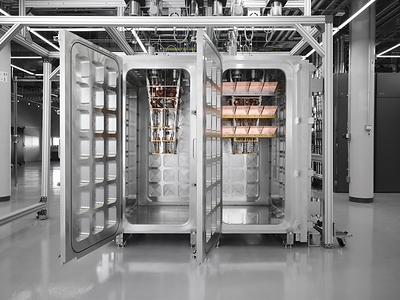
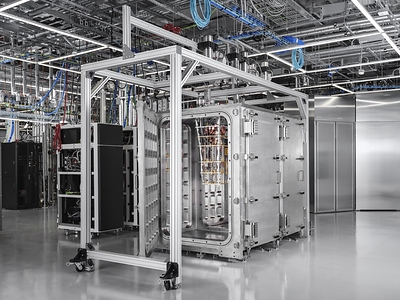
IBM’s scalable and modular cryogenic system to support fault-tolerant quantum computing. (Credit: IBM)

Combined, the first two operational modules stand more than 8 feet tall and 8 feet wide, and initial tests demonstrated they can jointly cool down to 4 Kelvin (the temperature of liquid helium) in under 5 days, reaching a final temperature of below 15 millikelvin shortly after. Each module’s vacuum enclosure offers up to 12 times more wiring space than the most widely used IBM quantum systems, enabling more chip-to-chip connections both within and between modules.

IBM’s new box-shaped design allows modules to connect in a tight row and use this larger space to directly link quantum processors with IBM’s “L-coupler” technology. L-couplers connect separate quantum chips together to share information, communicate, and operate as part of a larger quantum computer.

By 2027, IBM’s quantum roadmap plans to use L-couplers to link multiple processors into a larger quantum computer with at least 1,000 programmable qubits, which are qubits that can be directly used to perform computations. Towards this goal, IBM will install IBM Quantum Nighthawk processors into the cryogenic modules later this year to expand operational performance testing. At the time Starling is delivered, IBM plans for each cryogenic module to house thousands of qubits.

IBM’s plans for Starling were introduced last year with a new error correction code that dramatically reduces the physical resources required for fault tolerance. Since then, the company’s progression has remained on course, including the demonstration of core hardware components and breakthroughs in efficient error-correction decoding.

“Bringing fault-tolerant quantum computers to industries depends on several fundamental advances,” said Jay Gambetta, Director of IBM Research and IBM Fellow. “The successful connection and operation of these cryogenic modules signals a leap forward in that direction and will accelerate our progress alongside continued innovation in quantum hardware, software, and algorithms.”

IBM expects its scalable cryogenic modules to help speed its pace of innovation. For example, three essential components of IBM Quantum System Two’s environment are built into the new architecture, but now in a way that allows each part to be independently tested, improved, and rapidly iterated.

The delivery of these new cryogenic quantum modules is further evidence that IBM is systematically delivering against its quantum roadmap, solving another one of the major hurdles required to accelerate its path to fault-tolerant quantum computing.

About IBM

IBM is a leading provider of global hybrid cloud and AI, and consulting expertise. We help clients in more than 175 countries capitalize on insights from their data, streamline business processes, reduce costs and gain the competitive edge in their industries. Thousands of governments and corporate entities in critical infrastructure areas such as financial services, telecommunications and healthcare rely on IBM’s hybrid cloud platform and Red Hat OpenShift to affect their digital transformations quickly, efficiently and securely. IBM’s breakthrough innovations in AI, quantum computing, industry-specific cloud solutions and consulting deliver open and flexible options to our clients. All of this is backed by IBM’s long-standing commitment to trust, transparency, responsibility, inclusivity and service. Visit www.ibm.com for more information.

Media contacts:

Dave Mosher
IBM
dave.mosher@ibm.com

Erin Angelini
IBM
edlehr@us.ibm.com 

IBM’s scalable and modular cryogenic system to support fault-tolerant quantum computing. (Credit: IBM)

IBM’s scalable and modular cryogenic system to support fault-tolerant quantum computing. (Credit: IBM)

So-Young to Report Second Quarter 2026 Financial Results on August 31, 2026

BEIJING, Aug. 19, 2026 /PRNewswire/ — So-Young International Inc. (NASDAQ: SY) (“So-Young” or the “Company”), the leading aesthetic treatment platform in China connecting consumers with online services and offline treatments, today announced that it will report its financial results for the second quarter ended June 30, 2026, before U.S. markets open on August 31, 2026.

So-Young’s management will hold an earnings conference call on Monday, August 31, 2026, at 7:30 AM U.S. Eastern Time (7:30 PM on the same day, Beijing/Hong Kong Time). Dial-in details for the earnings conference call are as follows:

International:

Mainland China:

US:           

Hong Kong:   

Passcode:      

+1-412-902-4272

4001-201203

+1-888-346-8982

 +852-800-905945

So Young

A telephone replay will be available two hours after the conclusion of the conference call through 23:59 U.S. Eastern Time, September 7, 2026. The dial-in details are:

International:

US:

Passcode:      

+1-412-317-0088

 +1-855-669-9658

1697226

Additionally, a live and archived webcast of this conference call will be available at http://ir.soyoung.com.

About So-Young International Inc.

So-Young International Inc. (Nasdaq: SY) (“So-Young” or the “Company”) is the leading aesthetic treatment platform in China connecting consumers with online services and offline treatments. The Company provides access to aesthetic treatments through its online platform and branded aesthetic centers, offering curated treatment information, facilitating online reservations, delivering high-quality treatments, and developing, producing and distributing optoelectronic medical equipment and injectable products. With its strong brand recognition, digital reach, affordable treatments and efficient supply chain, So-Young is well-positioned to serve its audience over the long term and grow along the medical aesthetic value chain.

For more information, please contact:

So-Young

Investor Relations
Ms. Mona Qiao
Phone: +86-10-8790-2012
E-mail: ir@soyoung.com

Christensen

Ms. Joanna Quan
Phone: +86-10-5900-1548
E-mail: sy@christensencomms.com 

10Life Test: Airline Add-On Travel Insurance Priced by Airfare — Same Coverage, Premiums Differ by up to 34%


Key findings: 10Life found that premiums for the same airline embedded travel insurance plan ranged from HK$859 to HK$1,153 for the same route and trip duration, a 34% difference. Every HK$1,000 increase in airfare was associated with an increase of around HK$22 in the add-on premium, while similar coverage via an insurance comparison platform cost around HK$262, about one-quarter of the airline’s highest quote.

HONG KONG SAR – Media OutReach Newswire – 19 August 2026 – Adding travel insurance when booking a flight is a common practice among many Hong Kong travellers. However, the latest test by 10Life’s Research and Data Analytics team found that the same coverage may not always come at the same price.

Using the profile of one Hong Kong adult traveller, 10Life compared airline embedded travel insurance for a 14-day Hong Kong to New York trip across two departure dates and three economy fare classes, covering six scenarios in total. Each scenario involved the same travel insurance plan, coverage level, coverage details and benefit limits. Despite this, premiums ranged from HK$859 to HK$1,153, with the highest quote 34% higher than the lowest.

Table 1: Six quotes for the same travel insurance plan for a 14-day Hong Kong to New York trip, ranked by premium

Return airfare Travel insurance premium Difference vs. lowest premium Fare class Departure date
HK$9,131 HK$859 — Light 15 to 28 October
HK$10,631 HK$892 +4% Essential 15 to 28 October
HK$12,531 HK$935 +9% Flexi 15 to 28 October
HK$19,411 HK$1,087 +27% Light 17 to 30 August
HK$20,461 HK$1,110 +29% Essential 17 to 30 August
HK$22,361 HK$1,153 +34% Flexi 17 to 30 August

Note: The premium difference is calculated against the lowest premium among the six tested scenarios, at HK$859. Test conditions: one adult traveller, single return trip, destination New York (John F. Kennedy International Airport), 14-day trip. Test and data update date: 6 August 2026. All amounts are in Hong Kong dollars. Premium amounts and percentages are calculated based on the relevant premiums and rounded to the nearest whole number. Premiums and quotes may change from time to time. Actual prices should be based on the relevant page shown at the time of purchase or booking.

1. Premiums appear to move with airfare, rather than being priced solely by coverage
Across the six tested scenarios, higher airfares were consistently associated with higher add-on travel insurance premiums. 10Life’s analysis found an almost linear relationship between airfare and premium: for every HK$1,000 increase in airfare, the add-on travel insurance premium rose by around HK$22.

Travel insurance premiums should generally be priced according to factors such as trip duration, destination, traveller age and coverage details, as these are the factors that typically determine risk. For the same departure date, destination and trip duration, the likelihood of an accident or medical claim should not increase simply because the airfare is higher.

It is also worth noting that higher fare classes usually offer more flexible change, cancellation or refund arrangements, which could theoretically reduce part of the trip cancellation risk. However, in the test, premiums for higher fare classes increased instead of decreasing. During the booking process, consumers may not easily notice these fluctuations in the travel insurance premium.

2. Other purchase channels did not show similar price fluctuations, with premiums up to 77% lower
10Life also reviewed two travel insurance products in the market offering similar coverage, referred to here as Product A and Product B. The findings showed that, whether purchased directly through an insurer’s website or via an insurance comparison platform, premiums were generally calculated based on trip details, such as destination, trip duration and traveller age. They did not appear to vary according to airfare.

Table 2: Premium comparison across different purchase channels for a 14-day Hong Kong to New York trip

Purchase channel Premium Does the premium vary with airfare?
Product A purchased through an insurance comparison platform HK$262 No observed fluctuation
Product A purchased through an insurer’s website HK$287 No observed fluctuation
Product B purchased through an insurance comparison platform HK$442 No observed fluctuation
Product B purchased through an insurer’s website HK$553 No observed fluctuation
Airline booking page add-on HK$859 to HK$1,153 Fluctuation observed

Note: Quotes for products purchased directly through insurer websites and insurance comparison platforms were based on travel insurance products with similar coverage. Product names, quote sources and key benefit limits are set out in the appendix. Test conditions are the same as Table 1. All amounts are in Hong Kong dollars and rounded to the nearest whole number. Coverage scope, benefit limits, claim conditions and exclusions may vary between products. Consumers should read the policy terms carefully before purchasing. Product A refers to MSIG iTravel Go Plan B; Product B refers to HSBC TravelSurance Worldwide Basic Plan. Quotes from the insurance comparison platform were obtained from the 10Life platform.

The airline booking page’s highest quote was HK$1,153, while Product A, which offers similar coverage, was quoted at HK$287 on the insurer’s website and HK$262 through an insurance comparison platform — approximately 75% and 77% lower respectively. Even compared with the airline booking page’s lowest quote of HK$859, Product A was still approximately 67% and 70% lower through the two channels.

Product B showed a similar trend. It was quoted at HK$553 on the insurer’s website and HK$442 through an insurance comparison platform, which were approximately 52% and 62% lower than the airline booking page’s highest quote, and approximately 36% and 49% lower than its lowest quote. Unlike the airline booking page, quotes from insurer websites and comparison platforms did not appear to vary according to airfare, suggesting that the convenience of one-click add-on may come at a higher cost.

3. 10Life view: Convenience should not come at the expense of pricing transparency
Airlines have increasingly separated flight-related charges, with services such as seat selection, baggage and ticket changes priced individually. Consumers can usually understand these differences because the service itself varies.

Dexter Ng, Head of Research and Data Analytics at 10Life, said: “Consumers generally understand why seat selection or baggage fees may differ, because the service itself is different. But if it is the same travel insurance plan, with the same coverage and the same benefit limits, the premium should not rise simply because the airfare is higher. In our test, the same coverage rose from HK$859 to HK$1,153 across different booking scenarios, a difference of nearly HK$300. From a consumer perspective, pricing the same insurance coverage based on airfare is difficult to justify.”

10Life believes that when the same insurance plan is priced differently across fares or booking scenarios without a clear explanation, consumers may find it difficult to judge whether the premium is reasonable. This lack of transparency is unfair to consumers. The key question is simple: should travel insurance premiums be based on the coverage provided, or on the price of the flight ticket?

4. Three travel insurance tips from 10Life

  1. Compare other purchase channels before adding travel insurance
    Before confirming a one-click travel insurance add-on, consumers can take 30 seconds to open another tab and check similar products on insurer websites or insurance comparison platforms. Consumers may find plans with similar, or even better, coverage at a lower premium. In 10Life’s test, the premium difference could amount to several hundred Hong Kong dollars.
  2. A higher premium does not necessarily mean better coverage
    When choosing a plan, consumers should compare key benefit limits, including medical expenses, trip cancellation, baggage and personal accident coverage. They should also read the claim conditions and exclusions carefully.
  3. A higher airfare does not necessarily mean more expensive travel insurance is needed
    Trip cancellation cover is usually subject to a fixed benefit limit, meaning a higher airfare does not automatically result in a higher payout. Consumers should compare the actual benefit limit against their ticket cost, and review exclusions carefully, especially if the trip involves family travel, self-driving, diving, skiing, cruise holidays or other activities that may be subject to specific conditions.

Travellers who are unsure how to choose travel insurance may use the Travel Insurance Recommendation Tool for an initial comparison. By answering a few questions, the system can help match suitable travel insurance products based on destination, trip type and potential risks. Travellers may also use an insurance comparison platform to compare premiums, coverage scope, claim conditions and key terms across different products, helping them understand the coverage clearly before purchasing.

Travel insurance comparison: https://www.10life.com/en/products/travel
Travel insurance recommendation tool: https://www.10life.com/en/products/travel/recommend

About the Study
This test used the profile of one Hong Kong adult traveller and compared the same travel insurance plan recommended on the booking page of the same airline. Using a 14-day Hong Kong to New York trip as an example, the test covered two departure dates and three economy fare classes, resulting in six scenarios in total. All quotes were obtained based on one adult traveller taking a single return trip. 10Life did not test all airlines in the market. The results reflect only the airline, route and scenarios tested. Full data is available from 10Life upon request.

Reference Materials

Appendix 1: Comparison of key travel insurance benefit limits

Key benefit limit Airline booking page add-on plan Product A: MSIG iTravel Go Plan B Product B: HSBC TravelSurance Worldwide Basic Plan
Medical expenses HK$1,000,000 HK$1,000,000 HK$1,000,000
Personal accident HK$500,000 HK$500,000 HK$800,000
Trip cancellation HK$20,000 HK$25,000 HK$25,000
Travel delay HK$2,500 HK$2,000 HK$2,000
Baggage delay HK$1,000 HK$500 HK$1,000
Personal belongings HK$10,000 HK$15,000 HK$8,000

Note: The above table sets out only the maximum benefit limits for selected key coverage items and does not represent the full coverage of each product. Coverage scope, claim conditions, exclusions, item sub-limits and compensation calculation methods may vary between products. Consumers should read the policy terms carefully before purchasing. Benefits such as travel delay and baggage delay may be subject to delay duration, per-incident limits or specific claim conditions, and may not be directly comparable based solely on the total benefit limit. All amounts are in Hong Kong dollars. The information was compiled based on publicly available product information and test results. Data update date: 6 August 2026. Actual coverage, premiums and final underwriting results should be subject to the information shown on the purchase page, the relevant policy terms and the insurer’s final approval.

Notes

  1. Test conditions: one adult traveller, single return journey, destination New York, John F. Kennedy International Airport, with a trip duration of 14 days. The test covered two departure dates and three economy fare classes, resulting in six scenarios in total.
  2. Data from the airline booking page test was collected and updated on 6 August 2026. Comparison data for products purchased directly through insurer websites and insurance comparison platforms was also collected on 6 August 2026.
  3. Airline travel insurance premiums and plan information were obtained from tests conducted on the airline booking page. The airfare referenced in this release includes fuel surcharges, taxes and other charges.
  4. The comparison products purchased directly through insurer websites and insurance comparison platforms. Product A refers to MSIG iTravel Go Plan B; Product B refers to HSBC TravelSurance Worldwide Basic Plan. Quotes from the insurance comparison platform were obtained from the 10Life platform.
  5. All amounts are in Hong Kong dollars. Premium amounts and percentages are calculated based on the relevant premiums and rounded to the nearest whole number.
  6. The comparison was made based on products with similar coverage. However, coverage scope, benefit limits, claim conditions and exclusions may vary between products. Consumers should read the policy terms carefully before purchasing.
  7. The premiums, discounts and quoted prices above may change from time to time and may vary depending on purchase time, purchase channel, trip details and policy terms. Actual prices and final coverage should be subject to the information shown on the purchase and booking pages, the relevant insurer’s published information and final approval.
  8. This study was conducted by 10Life’s Research and Data Analytics team.

Hashtag: #10Life

The issuer is solely responsible for the content of this announcement.

About 10Life

is a one-stop insurance comparison platform committed to bringing fair insurance to life. Founded by insurance professionals, 10Life combines technology with a human-centered approach to bring fair products, fair sales and fair claims to Hong Kong.

10Life pioneered insurance product ratings, enabling consumers to compare premiums, coverage scope, key terms and actuarial ratings across different insurance products, and purchase selected plans online according to their needs. The 10Life team also includes insurance advisers who provide professional advice based on customer needs, while independent claims specialists focus on claims support, helping policyholders obtain fair compensation.

10Life’s services cover insurance comparison, purchase and claims support, with the goal of helping consumers “buy right insurance and get fair payout”.

For more information about 10Life, or to compare different types of insurance, please visit: 10life.com

FAWCAR Opens Vientiane Showroom, Launches Two SUVs in Lao Market

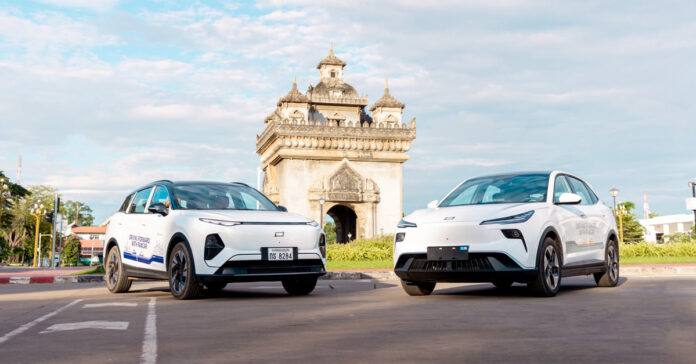
FAWCAR has launched the JOYEE S04 electric SUV and JOYEE S08 plug-in hybrid SUV in Laos. The new models are now available in Vientiane, with nationwide distribution planned. (Photo supplies)

On 17 August, Delong Auto opened its FAWCAR showroom in Vientiane and launched two vehicles into the Lao market: the JOYEE S04, an electric SUV, and the JOYEE S08, a plug-in hybrid SUV.

Bounvanh Vilavong, Head of the Office of the Ministry of Industry and Commerce, and Yang Zhiyong, Chairman of the Inspection Committee of Delong Auto Group, as a distributor for FAWCAR in Laos, attended the event along with guests, influencers, and media representatives.

The launch extends FAWCAR’s expansion into ASEAN, backed by manufacturing from China FAW. The company built both models for Lao road and weather conditions and will use the Laos-China Railway to transport vehicles and parts, aiming to shorten delivery times for buyers.

FAWCAR priced the JOYEE S04 at USD 22,500 for a 445km-range version and USD 23,800 for a 565km-range version. The SUV runs on a Jigull electric drive system rated at 88 percent efficiency. Its battery uses High-molecular Carbon Nanocoating technology and has passed 169 safety tests covering fire, seawater immersion, and underbody impacts. The cabin includes a panoramic glass roof, a 14.6-inch control screen, L2 driving assistance, and a 360-degree camera.

The JOYEE S08 costs USD 24,800 and pairs a fuel engine with an electric motor. 

It runs up to 200 kilometers on electric power alone, supports 2C fast charging, and reaches up to 1,500km on a full battery and tank. The SUV carries a water-resistant battery, a full driver-assistance system, a continuous 360-degree camera, 33 storage points, and seats upholstered in Ganoderma mushroom leather. FAWCAR ranks it fourth among the world’s top 10 best-selling hybrid vehicles.

To test both models under local conditions, the FAWCAR team began a 1,500 kilometers drive from Vientiane to Phnom Penh, Cambodia. The S04 is running urban and suburban routes within Laos, while the S08 is covering the cross-border stretch into Cambodia.

FAWCAR said it will expand distribution from Vientiane to nationwide coverage as demand for new energy vehicles grows in Laos.

The showroom is located in Dongnasok Tai Village, Sikhottabong district, Vientiane Capital. 

Contact info:

Phone: 020 9538 7666.

Facebook page: @Delong Auto ເຕີຫລົງ ອໍໂຕ້