Home Blog Page 2420

Databricks Announces Data Intelligence for Cybersecurity

The only unified platform for AI agent systems, enabling more accurate, real-time response against AI-driven threats

SAN FRANCISCO, Sept. 30, 2025 /PRNewswire/ — Databricks, the Data and AI company, today launched Data Intelligence for Cybersecurity to help organizations defend against modern and AI-driven threats with more accuracy, stronger governance and greater flexibility. Data Intelligence for Cybersecurity seamlessly integrates with enterprises’ existing security stacks, unifying all data and leveraging an open partner ecosystem so security teams can fully harness the power of AI — spotting risks earlier, understanding the full context of an attack and responding with greater speed. Building on this foundation, Databricks Agent Bricks enables enterprises to build AI apps and agents that not only accurately analyze their data but also take safely-governed actions across every step of the security workflow.

Data fragmentation forces risky tradeoffs for security teams
Cyberattacks are becoming more advanced and widespread as attackers adopt AI. At the same time, many organizations struggle to use AI to respond effectively because of generic models and fragmented data, leading to slower responses, limited visibility and overall higher risk. Data Intelligence for Cybersecurity solves these challenges for customers and provides real-time intelligence with broad visibility and rich context about the organization, built on Databricks’ Lakehouse architecture. This enables security teams to detect hidden threats and respond quickly and effectively to increasingly sophisticated attacks.

Data Intelligence for Cybersecurity: Unified, AI-driven threat intelligence in real time

  • Use AI agents for security at scale with Agent Bricks: Agent Bricks allows security teams to build and deploy production-ready AI agents with greater speed, accuracy and precision in handling threats.
  • Conversational security and insights for everyone: With intuitive dashboards, AI-powered natural language search and real-time analytics, Databricks provides security experts and non-technical leaders alike with instant security insights to address emerging threats.
  • Unify your security data foundation: Databricks’ industry-leading Lakehouse architecture pulls together enterprise data across every system for the most comprehensive view of the attack surface, free from legacy SIEM limitations and vendor lock-in.

“With Data Intelligence for Cybersecurity, Databricks is making data and AI every organization’s strongest defense strategy,” said Omar Khawaja, VP of Security and Field CISO at Databricks. “Security teams can now gain a more accurate, governed and flexible approach to building AI agents that proactively combat today’s modern and  AI-based threats.”

Empowering cybersecurity teams
Leading customers have already transformed their security operations with Data Intelligence for Cybersecurity, reporting significant gains in detection speed, threat investigation and cost reduction:

  • Arctic Wolf operates one of the largest data platforms in cybersecurity, processing over 8 trillion security events weekly while rapidly advancing AI-driven innovation to protect customers against current and evolving threats.
  • Barracuda Networks transformed its detection engineering, with Databricks enabling a 75% reduction in daily processing and storage costs, real-time alerting in under 5 minutes, and empowering engineers to innovate on new threats instead of managing infrastructure.
  • Palo Alto Networks unified fragmented security data and accelerated AI-powered threat detection features by 3x, resulting in reduced operational costs and real-time security insights across its global cloud ecosystem.
  • SAP Enterprise Cloud Services processes threats faster than ever, reducing engineering time by 80% and increasing rule deployment speed over 5x – resulting in gains in speed, visibility, cost savings and full control over its data.

Databricks’ partner ecosystem 
With this release, Databricks is also introducing partner integrations with leading providers, including Abnormal AI, Accenture Federal, ActiveFence, Alpha Level, Arctic Wolf, BigID, DataBahn, DataNimbus, Deloitte, Entrada, Obsidian Security, Panther, PointGuard AI, Rearc, SPLX, Theom, Varonis, and ziggiz, extending the power of Databricks and helping customers drive unified, measurable outcomes in their cybersecurity defense strategies.

  • “We’re accelerating integration with partners like Databricks to help co-engineer new standards for federal cybersecurity and secure AI. The fusion of Databricks’ Data Intelligence Platform with our deep federal expertise, delivers an advantage for cyber defenders. This is how we modernize at the speed of AI and win the data war in the federal space.” – Amanda Satterwhite, Cyber Practice Lead at Accenture Federal Services
  • “Cybersecurity is increasingly a data challenge, shaped by the scale, speed, and diversity of telemetry across modern environments. The Aurora Platform processes over 8 trillion security events each week, and Databricks is part of the foundation that allows us to unify and analyze this data in real time— enabling Arctic Wolf to scale the platform, accelerate AI innovation, and expand our AI-powered SOC to deliver faster threat detection, more reliable protection, and outcomes that security teams can trust.” – Dan Schiappa, President, Technology and Services at Arctic Wolf
  • “Enterprises are at a crossroads where cybersecurity must keep pace with the speed of evolving threats. Partnering with Databricks demonstrates what’s possible when AI-native pipelines converge with a modern data intelligence platform. This is not just an integration—it’s the blueprint for the next era of security operations. We see security data not as something to simply store, but as a strategic resource to harness—unlocking real-time insights that drive faster, smarter decisions.” – Aditya Sundararam, Chief Product Officer at DataBahn
  • “It’s critical for businesses to integrate advanced data intelligence into cybersecurity strategies. Our alliance with Databricks helps enable organizations to fully utilize AI-driven insights, helping them transform their security operations to meet the challenges of today’s digital landscape. Together, we are paving the way for a more secure and resilient future.” – Adnan Amjad, US Cyber leader at Deloitte
  • “Every organization has unique security needs and data architectures. This partnership with Databricks gives our customers unprecedented choice and flexibility—whether you’re cloud-native or hybrid, we’re meeting you where you are and giving you the tools to scale security operations on your terms.” – William Lowe, CEO at Panther
  • “Securing the massive datasets that fuel AI is a challenge and a necessity. Organizations rely on Databricks for scalable analytics and Varonis to continuously discover, classify, and protect sensitive data. With our integration, we have streamlined access governance and real-time threat detection across the Databricks Data Intelligence Platform. Companies can gain end-to-end visibility and proactive data security for their critical business data with Varonis and Databricks.” — David Bass, EVP of Engineering and CTO at Varonis.

To learn more, visit the Databricks blog and the Data Intelligence for Cybersecurity solutions and resources pages.

About Databricks
Databricks is the Data and AI company. More than 20,000 organizations worldwide — including Block, Comcast, Condé Nast, Rivian, Shell and over 60% of the Fortune 500 — rely on the Databricks Data Intelligence Platform to take control of their data and put it to work with AI. Databricks is headquartered in San Francisco, with offices around the globe and was founded by the original creators of Lakehouse, Apache Spark™, Delta Lake, MLflow, and Unity Catalog. To learn more, follow Databricks on X, LinkedIn and Facebook.

Contact: Press@databricks.com

Neurophet Publishes Clinical Validation Results of ‘Neurophet AQUA’ in Annals Academy of Medicine Singapore

– Clinical study conducted at the Dementia Research Centre, Nanyang Technological University, Singapore, involving Southeast Asian participants

– Expert level accuracy, while significantly reducing analysis time for white matter hyperintensity and gray matter volume

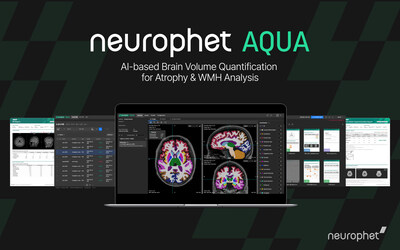
SEOUL, South Korea, Sept. 30, 2025 /PRNewswire/ — Neurophet (Co-CEOs Jake Junkil Been and Donghyeon Kim), an artificial intelligence (AI) solution company for brain disorders diagnosis and treatment, announced on the 30th that the results of a clinical study validating the clinical efficacy of its brain neurodegeneration imaging analysis software, Neurophet AQUA, in patients with mild cognitive impairment and dementia have been published in the international journal Annals Academy of Medicine Singapore.

Neurophet AQUA is a brain neurodegeneration imaging analysis software.

The clinical study was conducted from April 2022 to July 2023 at the Dementia Research Centre of the Lee Kong Chian School of Medicine, Nanyang Technological University, Singapore. A total of 90 adults from a community-based cohort in Singapore participated in the study, including 30 healthy individuals, 40 patients with mild cognitive impairment, and 20 patients with dementia.

To evaluate the clinical efficacy of Neurophet AQUA, the research team analyzed white matter hyperintensities (WMH) and gray matter volume of the participants. The results showed a strong correlation between the analyses performed by Neurophet AQUA and expert medical assessments for WMH (ρ=0.66, p<0.0001). In addition, Neurophet AQUA demonstrated a high correlation with existing automated tools (LST, CAT12), with correlation coefficients ranging from ρ=0.84 to 0.85 (p<0.0001).

Through gray matter volume analysis, the research team confirmed significant atrophy in the hippocampus and posterior cingulate cortex of patients with dementia and meaningfully distinguished the progression from cognitively normal → mild cognitive impairment → dementia. Gray matter segmentation was completed within five minutes, with greatly improved efficiency compared to conventional assessments. Notably, the combined analysis of gray matter and white matter hyperintensities was completed within 20 minutes, showing improvement over traditional methods that typically require several hours.

These findings suggest that Neurophet AQUA can help clinicians establish dementia diagnoses and treatment strategies more rapidly and objectively in clinical practice. With its faster and more accurate MRI analysis compared to conventional methods, Neurophet AQUA is expected to serve as a valuable tool for dementia diagnosis and monitoring in real-world medical scene.

Donghyeon Kim, Co-CEO of Neurophet, said, “This study demonstrated the clinical validity of Neurophet AQUA in a patient cohort from Singapore. It marks an important milestone proving that Neurophet’s technology can be trusted in global clinical practice. Moving forward, we will lead efforts to advance early diagnosis of dementia and establishing personalized treatment strategies for patients.”

Meanwhile, Neurophet signed a supply agreement last month with the National University of Singapore (NUS) and Singapore General Hospital (SGH) for its PET (Positron Emission Tomography) image quantification software, Neurophet SCALE PET.

About Neurophet

Neurophet specializes in developing solutions for diagnosis support, treatment guides, and treatment devices targeting brain disorders based on cutting-edge artificial intelligence (AI) technology. The company was founded in 2016 by Co-CEOs Jake Junkil Been and Donghyeon Kim, who developed the next-generation neuro-navigation system.

Major products include brain MRI analysis software “Neurophet AQUA”, PET Image Quantitative Analysis Software “Neurophet SCALE PET”, Brain imaging treatment planning software for electric and magnetic brain stimulation “Neurophet tES/TMS LAB”, Alzheimer’s Disease treatment prescription and monitoring software “Neurophet AQUA AD” for tracking treatment efficacy and side effects, and Multiple Sclerosis image analysis software “Neurophet AQUA MS”.

Neurophet has set its top priority to helping patients suffering from brain disorders. Based on expertise in neuroscience, Neurophet will continue to challenge and grow to explore the human brain’s health and pioneer solutions for brain diseases with AI technology.


MinIO Introduces Iceberg Tables in AIStor, Unifying Enterprise Data for AI

New capability establishes MinIO as the on-prem Exascale AI Data Store for secure, sovereign, scalable Enterprise AI

REDWOOD CITY, Calif., Sept. 30, 2025 /PRNewswire/ — MinIO, the leading exascale object store for Enterprise AI Data, today announced the addition of native Apache Iceberg support to its flagship AIStor offering via a powerful new Tables feature. By integrating the Iceberg Catalog API directly into MinIO AIStor, MinIO is helping enterprises unlock more value from AI on their own terms with an AI Data Store that brings together structured and unstructured data under a single, open standard. 

While Iceberg has emerged as the de facto standard for enterprise AI and analytics, resolving years of format fragmentation, it has traditionally been considered primarily a tool for analytics on structured data – until now. With AIStor’s native Iceberg implementation, enterprises can now unify all their structured and unstructured data – whether tables, transactions, images, audio and more – into a single, coherent fabric. The resulting foundation strengthens the efficacy of AI workloads from analytics to agentic AI, because AI can now act on all enterprise knowledge, not just a subset.

Enterprises sit on massive volumes of data, but turning it into AI value has been costly and complex. Iceberg is the new standard, yet managed cloud services drive up expenses and on-prem solutions with external catalog services create operational headaches. By embedding Iceberg natively, AIStor Tables makes data fluent, fast, and AI-ready, removing layers of cost and complexity from data and infrastructure management while ensuring consistency, security, and scale.

As the only object-native on-premises object store with the Apache Iceberg REST catalog built-in, AIStor unifies tabular and object data to power agentic AI and lakehouse analytics. Just as MinIO brought the Amazon S3 experience to every data center, MinIO is now doing the same for Iceberg with AIStor Tables—making the enterprise AI standard available at scale, on premises. MinIO designed the Tables feature to address the challenges exascale AI customers face today in building Iceberg-powered workloads as well as repatriating such workloads from the cloud to cut costs while strengthening privacy, sovereignty, and control.

“Data is the currency of AI, but enterprises are struggling with its enormous scale and variation,” said AB Periasamy, co-founder and co-CEO of MinIO. “Iceberg is the clear standard for enterprise AI data. The challenge is that most on-prem implementations make it harder than it needs to be, requiring separate catalog databases and extra layers of infrastructure that add cost and operational risk. By building Iceberg directly into AIStor, we take away that complexity and give enterprises a simple, scalable foundation for AI. This not only lowers costs and speeds progress, but also ensures AI can reach its full potential because all data is AI data.”

With its native Iceberg Catalog API, MinIO AIStor Tables transforms how enterprises use data, confidently breaking away from the limits of traditional storage and enabling AI to scale without compromise. This will unlock key breakthroughs for scalable Enterprise AI, including:

  • A Unified View of the Business: Bringing together structured and unstructured data into a single Iceberg-based foundation, ensuring AI has access to all enterprise knowledge for more accurate insights and decisions.
  • Seamless Ecosystem Fit: Built on open standards, AIStor Tables works out of the box with existing tools and query engines including Spark, Trino, Dremio, and Starburst, protecting past investments while accelerating new AI initiatives.
  • Reduced Risk and Faster Time to Value: Native design eliminates separate catalog service infrastructure, security models, and management overhead of traditional Iceberg deployments, so enterprise AI scales more efficiently.
  • Complete Sovereignty with Savings: Runs in the private cloud to keep sensitive data secure and compliant, while reducing dependency on hyperscalers and lowering long term AI infrastructure costs

The introduction of AIStor Tables reflects MinIO’s broader evolution from object storage to AI Data Store pioneer. In the new AI economy, data strategy defines leadership. MinIO gives enterprises the tools to unify, govern, and accelerate their data fabric, on premises, at any scale. This transforms AIStor from an object store into the foundational AI Data Store that agentic AI demands, unifying years of siloed data into a single, governable platform.

AIStor Tables is available immediately in tech preview.

Resources:

About MinIO:
MinIO is the data foundation for enterprise AI. Built for exascale performance and limitless scale, MinIO AIStor delivers a secure, sovereign, and AI-ready data store that spans from edge to core to cloud. With billions of downloads and adoption across the Fortune 100 and 500, MinIO is redefining how organizations and government agencies store, manage, and mobilize all of their data in the AI era. MinIO is backed by Jerry Yang’s AME Cloud Ventures, Dell Technologies, General Catalyst, Index Ventures, Intel Capital, Softbank Vision Fund 2 and others.

Media Contact:
Tucker Hallowell
MinIO@inkhouse.com

Starring AI: Vidu Q2 Brings Performances to Life

ShengShu Technology launches the Vidu Q2 model with breakthroughs in nuanced emotional expression, smarter cinematography, faster generation, and enhanced prompt understanding.

SINGAPORE, Sept. 30, 2025 /PRNewswire/ — ShengShu Technology, a global leader in multimodal generative AI, today announced Vidu Q2 model, the latest evolution of its flagship video generation platform. The launch marks a defining moment: AI that doesn’t just generate video. It performs. With precise emotion generation and smarter cinematography, the new model elevates AI to the role of a true performer.

“Vidu Q2 delivers a new formula for creative efficiency, combining greater agility, smarter cinematography, and faster generation, each amplifying the others to achieve a significant advancement,” said Yihang Luo, CEO of ShengShu Technology. “Most importantly, Vidu Q2 gives AI the ability to perform with human-level realism. This breakthrough extends expressive power into film, short-form drama, advertising, and beyond.”

Genuine Human-Like Acting

What sets Vidu Q2 apart is its ability to capture emotions precisely: from fleeting smiles to furrowed brows and subtle micro-expressions that resonate on screen. AI-generated characters can now truly “act”, displaying expressive energy and warmth previously achievable only with human performers and costly motion-capture systems. This leap sets a new benchmark in AI-generated video, bringing unprecedented depth and realism to every performance.

With its expanded range of motion and fluidity, Vidu Q2 generates action scenes that move naturally, free from stiffness or stutter. Every frame carries a natural sense of energy and authenticity, transforming robotic movements into performances with human-like liveliness.


Master of Camera Work

Beyond expression and motion, Vidu Q2 elevates cinematography with its unique push-pull camera technique. This innovation allows seamless shifts between wide panoramic views and intimate close-ups, empowering creators to tell stories using the visual language of professional filmmakers.

With versatile options ranging from steady framing to dynamic movement, every sequence achieves professional cinematic quality, transforming camera work from a technical add-on into a central element of AI-generated storytelling.

Enhanced Prompt Understanding

Another major advance is semantic precision. With an enhanced ability to follow instructions, Vidu Q2 reduces the uncertainty that often frustrates creators. Concepts entered as text prompts are now captured with striking accuracy, minimizing revisions and accelerating the creative process. This reliability allows professionals and newcomers alike to focus on ideas rather than troubleshooting outputs. It’s a crucial step toward making generative video a mainstream creative tool.

More Flexible, Much Faster

Functionality has also been expanded to meet the diverse needs of creators. Vidu Q2 introduces flexible clip durations ranging from two to eight seconds, giving users freedom to produce everything from quick, eye-catching social snippets to compact narrative micro-dramas.

For speed, users can choose between two distinct modes:

  • Flash Mode: Generates results in about 20 seconds, enabling rapid experimentation.
  • Cinematic Mode: Delivers richer detail, texture, and visual fidelity, ideal for professional-grade storytelling.

Together, these features expand the creative canvas while keeping efficiency at the heart of the experience.

The release of Vidu Q2 underscores ShengShu Technology’s fast-moving innovation in generative AI. Since Vidu 1.5 pioneered the world’s first breakthrough in multi-entity consistency, the company has advanced rapidly. Vidu 2.0 achieved record-breaking ten-second generation speeds. Vidu Q1 introduced cinematic transitions and delivered the industry’s first high-fidelity sound effects generation, followed by the Q1 Reference-to-Image update, which enabled seamless compositing of up to seven images. Each milestone expands the boundaries of what AI video can achieve.

ShengShu Technology has already built a strong foundation with enterprise clients across the internet, advertising, film, media, education, and gaming, partnering with leading companies globally. Vidu is now trusted by over 30 million users, as well as thousands of developer teams, enterprises, and partners across more than 200 countries and regions through its MaaS platform. With Vidu Q2, ShengShu moves into a new phase of expressive, emotionally intelligent video generation, marking an important step toward the mainstream use of AI video in global industries.

To learn more about Vidu, visit www.vidu.com 

Vidu API is available at platform.vidu.com. 

About ShengShu Technology

Founded in March 2023, ShengShu Technology is a world-leading artificial intelligence company, specializing in the development of Multimodal Large Language Models. Driven by innovation, the company delivers cutting-edge MaaS and SaaS products that revolutionize creative production by enabling smarter, faster, and scalable content creation. With its flagship video generation platform Vidu, ShengShu Technology’s solutions have reached more than 200 countries and regions around the world, spanning fields including interactive entertainment, advertising, film, animation, cultural tourism, and more.

EVOLVE MVMT Launches Wearable to Track Shock Absorption for Runners

Revolutionary running tech offers real-time insights into step quality, injury risk, and performance.

BYRON BAY, Australia, Sept. 30, 2025 /PRNewswire/ — EVOLVE MVMT has launched the world’s first wearable designed specifically to measure shock absorption and step quality for runners on Kickstarter. Unlike traditional wearables that track pace, distance, or heart rate, EVOLVE MVMT focuses on how well the body absorbs impact – a critical factor in both injury prevention and performance.

The device is now available on Kickstarter at a special early bird price of US$199, a 60% discount off the future retail price of US$499

The campaign hit a major milestone, reaching full funding in just 4 minutes. Within the first few days, EVOLVE MVMT has already surpassed 350% of its original goal, proving strong demand for smarter running insights.

“As a Sports Physician, I know how relevant shock absorption is. EVOLVE MVMT will be invaluable, from injured patients to recreational runners and professional athletes.”
– Dr. Bob Sallis, Sports Physician, Professor Emeritus, Kaiser Permanente; Medical Consultant, LA Clippers & LAFC

From city streets to mountain trails, EVOLVE MVMT delivers real-time, actionable feedback to help runners stay injury-free and perform at their best. Whether you’re a beginner or elite athlete, the device provides game-changing metrics:

  • Shock Absorption & Injury Risk – Understand how your body handles impact
  • Running Efficiency – Track cadence, stride quality, and speed optimization
  • Fatigue Detection – Monitor physical and mental fatigue in real time
  • Footwear Effectiveness – Compare shoes with measurable data
  • Terrain Analysis – See how different surfaces affect performance

EVOLVE MVMT straps to the ankle and pairs via Bluetooth with smartphones, smartwatches, or tablets. It also works offline, storing data for post-run analysis. During runs, vibration and light alerts provide instant feedback to correct form. The companion app displays step-by-step breakdowns for deeper insights after each session.

The device is now available on Kickstarter at a special early bird price of US$199, a 60% discount off the future retail price of US$499.

About EVOLVE MVMT
EVOLVE MVMT combines science, sports medicine, and wearable innovation to help athletes of all levels move smarter, train better, and reduce injury risk.

Kickstarter Page: https://www.kickstarter.com/projects/evolvemvmt/evolve-mvmt-the-next-generation-in-wearable-technology
Instagram: @evolvemvmt_

Qiong-Tai Economic and Trade Cooperation Exchange: Hopes for Taiwan Businesses to Achieve Mutual Benefits and Win-Win Outcomes by Aligning with Hainan Free Trade Port

HAIKOU, China, Sept. 30, 2025 /PRNewswire/ — On September 27, Sun Yafu, Vice President of the Association for Relations Across the Taiwan Straits (ARATS), delivered a speech at the “2025 Qiong-Tai Economic and Trade Cooperation Exchange.” He expressed that Taiwan companies are welcome to leverage the significant opportunities presented by the comprehensive advancement of Chinese modernization, actively integrate into the new development paradigm, and participate in high-quality development. Especially on the promising land of the Hainan Free Trade Port construction, he hopes that Taiwan businesses and enterprises can fully leverage their distinctive strengths in areas such as precision agriculture, high-end manufacturing, technological innovation, healthcare, modern finance, and cultural tourism. By closely aligning with Hainan’s development plans, they can identify new growth points and achieve mutual benefit and win-win outcomes.

At the Conference of 2025 Qiong-Tai Economic and Trade Cooperation Exchange

Sun Yafu also pointed out that the mainland economy is sustaining healthy development, with the fundamentals of its long-term improvement remaining unchanged. The advantages of a super-sized market, a complete industrial system, and growing innovative capabilities inject stability and certainty into world economic development.

Xu Shubo, Chairman of the General Association of Taiwan Chambers of Commerce, also stated in his speech that Hainan and Taiwan have strong industrial complementarity. He looks forward to establishing a regularized cooperation mechanism through this exchange to promote practical cooperation.

The “2025 Qiong-Tai Economic and Trade Cooperation Exchange,” hosted by the Economic Bureau of the Taiwan Affairs Office of the State Council, the Taiwan Affairs Office of the Hainan Provincial Government, the Haikou Municipal People’s Government, among other units, was held in Haikou City on September 27, serving as an important platform for economic and trade exchanges and cooperation between Hainan and Taiwan.

Study: Trust in GenAI surges globally despite gaps in AI safeguards

Organizations building trustworthy AI are 60% more likely to double ROI of AI projects, underscoring the high cost of ignoring responsible practices

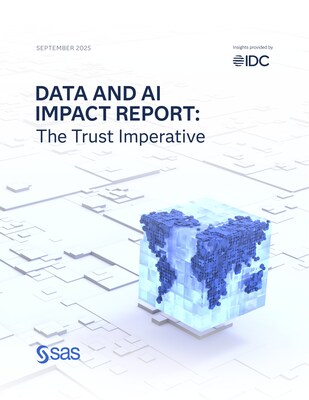
CARY, N.C., Sept. 30, 2025 /PRNewswire/ — SAS, a global leader in data and AI, today unveiled new research that explores the use, impact and trustworthiness of AI. The IDC Data and AI Impact Report: The Trust Imperative, commissioned by SAS, found that IT and business leaders report having greater trust in generative AI than any other form of AI.

Per new SAS and IDC study, trust in GenAI surges globally despite gaps in AI safeguards.

The global research exploring AI use and adoption also found that only 40% are investing to make AI systems trustworthy through governance, explainability and ethical safeguards, even though organizations prioritizing trustworthy AI are 60% more likely to double ROI of AI projects. Paradoxically, among those reporting the least investment in trustworthy AI systems, GenAI (e.g., ChatGPT) was viewed as 200% more trustworthy than traditional AI (e.g., machine learning), despite the latter being the most established, reliable and explainable form of AI.

“Our research shows a contradiction: that forms of AI with humanlike interactivity and social familiarity seem to encourage the greatest trust, regardless of actual reliability or accuracy,” said Kathy Lange, Research Director of the AI and Automation Practice at IDC. “As AI providers, professionals and personal users, we must ask: GenAI is trusted, but is it always trustworthy? And are leaders applying the necessary guardrails and AI governance practices to this emerging technology?”

Learn more at today’s LinkedIn Live panel moderated by Nicholas Thompson, CEO of The Atlantic and featuring SAS, Deloitte and a guest speaker from IDC.

Access the full research report here: http://sas.com/ai-impact.

The research draws on a global survey of 2,375 respondents conducted across North America, Latin America, Europe, the Middle East and Africa, and Asia Pacific. Participants included a balanced mix of IT professionals and line-of-business leaders, offering perspectives from both technology and business functions. 

Emerging AI technologies evoke most trust
Overall, the study found the most trusted AI deployments were emerging technologies, like GenAI and agentic AI, over more established forms of AI. Almost half of respondents (48%) reported “complete trust” in GenAI, while a third said the same for agentic AI (33%). The least trusted form of AI is traditional AI – less than one in five (18%) indicated complete trust.

Even as they reported high trust in GenAI and agentic AI, survey respondents expressed concerns, including data privacy (62%), transparency and explainability (57%), and ethical use (56%).

Meanwhile, quantum AI is picking up confidence quickly, even as the technology to execute most use cases has yet to be fully realized. Almost a third of global decision makers say they are familiar with quantum AI, and 26% report complete trust in the technology, despite real-world applications still in the early stages.  

Lagging AI guardrails weaken AI impact … and ROI
The study showed a rapid rise in AI usage – particularly GenAI, which has quickly eclipsed traditional AI in both visibility and application (81% vs. 66%). This has sparked a new level of risks and ethical concerns.

Across all regions, IDC researchers identified a misalignment in how much organizations trust AI versus how trustworthy the technology truly is. Per the study, while nearly 8 in 10 (78%) organizations claim to fully trust AI, only 40% have invested to make systems demonstrably trustworthy through AI governance, explainability and ethical safeguards.

The research also showed a low priority placed on implementing trustworthy AI measures when operationalizing AI projects. Among respondents’ top three organizational priorities, only 2% selected developing an AI governance framework, and less than 10% reported developing a responsible AI policy. However, deprioritizing trustworthy AI measures may be preventing these organizations from fully realizing their AI investments down the road.

Researchers divided survey respondents into trustworthy AI leaders and trustworthy AI followers. Leaders invested the most in practices, technologies and governance frameworks to make their AI systems trustworthy – and appear to be reaping rewards. Those same trustworthy AI leaders were 1.6 times more likely to report double or greater ROI on their AI projects.

Lack of strong data foundations and governance stall AI
As AI systems become more autonomous and deeply integrated into critical processes, data foundations also become more important. The quality, diversity and governance of data directly influence AI outcomes, making smart data strategies essential to realizing benefits (e.g., ROI, productivity gains) and mitigating risks. 

The study identified three major hurdles preventing success with AI implementations: weak data infrastructure, poor governance and a lack of AI skills. Nearly half (49%) of organizations cite data foundations that are not centralized or nonoptimized cloud data environments as a major barrier. This top concern was followed by a lack of sufficient data governance processes (44%) and a shortage of skilled specialists within their organization (41%).

Respondents reported the No. 1 issue with managing the data used in AI implementations to be difficulty in accessing relevant data sources (58%). Other leading concerns included data privacy and compliance issues (49%) and data quality (46%).

“For the good of society, businesses and employees – trust in AI is imperative,” said Bryan Harris, Chief Technology Officer at SAS. “In order to achieve this, the AI industry must increase the success rate of implementations, humans must critically review AI results, and leadership must empower the workforce with AI.”

About SAS
SAS is a global leader in data and AI. With SAS software and industry-specific solutions, organizations transform data into trusted decisions. SAS gives you THE POWER TO KNOW®.

SAS Innovate 2026 – a one-of-a-kind experience for business leaders, technical users, and SAS partners – is coming April 27–30, 2026 in Grapevine, Texas. Visit the SAS Innovate website for more information and to save the date!

SAS and all other SAS Institute Inc. product or service names are registered trademarks or trademarks of SAS Institute Inc. in the USA and other countries. ® indicates USA registration. Other brand and product names are trademarks of their respective companies. Copyright © 2025 SAS Institute Inc. All rights reserved.

Editorial Contacts:

Jennifer James

Julia Norton

jennifer.james@sas.com 

julia.norton@sas.com

919-531-0858

919-531-4661

www.sas.com/news


Tungray Reports Unaudited 2025 First Half Results, Revenue Up 37% and Returns to Profitability

Total Revenues Increased by 37.0% YoY to $7.4 million
Operating Income Increased to $0.3 million from –$0.9 million
Net Income Increased to $0.5 million from –$0.8 million

SINGAPORE, Sept. 30, 2025 /PRNewswire/ — Tungray Technologies Inc (“Tungray” or the “Company”), a global Engineer-to-Order (ETO) company, today reported its unaudited financial results for the six months ended June 30, 2025.

First Half 2025 Financial Highlights

  • Total revenues for the six months ended June 30, 2025 increased by 37.0% to $7.4 million, compared to $5.4 million in the same period of 2024.
  • Gross margin for the six months ended June 30, 2025 was 48.6%, compared to 46.7% for the same period in 2024.
  • Operating income for the six months ended June 30, 2025, was $0.3 million, compared to an operating loss of $0.9 million for the same period in 2024.
  • Net income for the six months ended June 30, 2025, was $0.5 million, compared to net loss of $0.8 million for the same period in 2024.

Recent Developments and Strategic Highlights: Tungray Drives Revenue Growth and Reduces Costs

Revenue Enhancement: 
To drive sales growth, the Company is exploring potential horizontal strategic partnerships to access new, high-value capabilities.

These initiatives include:

    • Introducing new lines of business through potential partnerships with existing companies.
      • Utilizing the “market-for-tech” model to leverage Singapore’s hub position for regional business expansion.
      • Exploring technologies and services such as standardized manufacturing of medical components, and contract repair work for aviation components, such as aircraft engine fan blades and turbines. 
    • Enhancing sales and market penetration by hiring a dedicated business-focused market and sales manager. This initiative will focus on:
      • Increasing market penetration of non-printer related markets in the Southeast Asia (SEA) region.
      • Focusing primarily on the semiconductor, automotive and non-printer related consumer product sectors.

Cost-Cutting Measures:
The Company has implemented targeted cost control actions aimed at reducing expenses, enhancing operational efficiency, and renegotiating supplier contracts.

These actions include:

    • Identifying and utilizing high-trade volume suppliers.
    • Leveraging volume to negotiate favorable rates for common-use components.

Management Commentary

Mr. Wanjun Yao, Chairman and Chief Executive Officer of Tungray, commented, “We achieved solid top line growth during the first half of the year with revenue up 37.0% reaching $7.4 million compared to the same period last year. Despite rising raw material and labor costs, our gross margin showed material improvement with gross margin of 48.6% in the first half of the year, compared with 46.7% in the same period last year. This 190 basis points improvement combined with leverage opportunities in our business model helped drive our return to profitability with net income of $0.5 million in the first half of the year, compared with a net loss of $0.8 million in the same period last year.”

“During the first half of 2025, we invested $0.5 million in R&D, an increase of 6.2% compared to the same period of 2024, demonstrating continued commitment to innovation as we target high-growth areas such as automation equipment, semiconductor-related solutions, and mechatronics. In Singapore, we advanced modularization of equipment components to reduce variance-related costs and rolled out after-sale service initiatives that reinforce our customer-first approach. In addition, we increased R&D in highly automated equipment to meet growing demand. In the mechatronics segment, we benefitted from increased orders linked to rising demand for automotive refrigerators in new energy vehicles (NEVs) during the first half of 2025.”

“We will continue to allocate resources strategically to ensure long-term product and technology advancement. These initiatives not only support near-term competitiveness but also lay the foundation for sustainable growth. We believe our efforts will enhance Tungray’s market presence, create new revenue streams, and deliver greater value for our shareholders as market conditions improve.”

Mr. Henry Guo, Chief Financial Officer of Tungray, commented, “To remain competitive amidst pricing pressure, we are implementing aggressive cost-cutting measures and pursuing operational efficiencies. At the same time, we are expanding our revenue base by developing higher-margin products, strengthening partnerships, and pursuing new market opportunities.”

“In the longer term, we believe our business strategies should continue to fuel Tungray’s top-line growth and margin expansion.”

First Half 2025 Financial Results

Total Revenues

Our total revenues increased by 37.0% to $7.4 million for the six months ended June 30, 2025, compared to $5.4 million for the six months ended June 30, 2024.

  • Revenues from customized products increased by $0.8 million, or 18.4%, compared to the same period in 2024, primarily driven by the sales increase of a major customer during the period.
  • Revenues from standardized products increased by $1.2 million, or 130.6%, compared to the same period in 2024, primarily increased orders driven by rising demand for automotive refrigerators used in new energy vehicles (NEVs) during the first half of 2025. This growth demonstrates the Company’s ability to respond to emerging market needs and capitalize on industry trends.

Cost of Revenues

Total costs increased by 32.0% to $3.8 million for the six months ended June 30, 2025, compared to $2.9 million for the six months ended June 30 2024. 

  • The cost of revenues for customized products rose by $0.3 million, or 10.4% compared to the same period ended June 30, 2024, in line with the revenue increase.
  • The cost of revenues for standardized products increased by $0.7 million, or 139.6% compared to the same period ended June 30, 2024, corresponding with the revenue increase.

Gross Profit

Gross profit was $3.6 million for the six months ended June 30, 2025, up from $2.5 million for the six months ended June 30, 2024. Gross margin was 48.6%, compared to 46.7% for the same period last year. The improvement in gross profit was mainly driven by revenue growth that outpaced cost increases.

  • Gross profit for customized products was $2.7 million for the six months ended June 30, 2025, an increase of 27.7% as compared to $2.1 million for the six months ended June 30, 2024. Gross margin for customized products was 50.4% for the six months ended June 30, 2025, as compared to 46.7% for the six months ended June 30, 2024.
     
  • Gross profit for standardized products was $0.9 million for the six months ended June 30, 2025, an increase of 120.2% as compared to $0.4 million for the six months ended June 30, 2024. Gross margin for standardized products was 44.3% for the six months ended June 30, 2025, and 46.4% for the six months ended June 30, 2024.

Operating Expenses

Total operating expenses were $3.3 million for the six months ended June 30, 2025, compared to $3.5 million for the prior year period, representing a 4.1% decrease.

  • Selling expenses increased by 16.3% to $349.0 thousand for the six months ended June 30, 2025, compared to $300.1 thousand for the six months ended June 30, 2024. The increase was mainly due to an increase of salary expenses and travel related expenses for business expansion.
  • General and administrative expenses decreased by 8.0% to $2.5 million from $2.7 million for the six months ended June 30, 2024, reflecting tighter cost management. 
  • R&D expenses increased by 6.2% to $475.0 thousand, compared to $447.2 thousand for the same period of last year. The increase was consistent with the R&D plan the Company previously set out.

Income (Loss) from operations

Income from operations was $0.3 million for the six months ended June 30, 2025, compared to loss from operations of $0.9 million for the six months ended June 30, 2024.

Other Income, net

Total other income was $0.2 million for the six months ended June 30, 2025 and 2024.

Income tax expense

Income tax expense decreased by approximately $94.9 thousand, or 75.2%, from $126.2 thousand for the six months ended June 30, 2024 to $31.3 thousand for the six months ended June 30, 2025.

Net Income (Loss)

Net income was $0.5 million for the six months ended June 30, 2025, compared to net loss of $0.8 million for the six months ended June 30, 2024.

About Tungray Technologies Inc

Tungray Technologies Inc is an Engineer-to-Order (ETO) company that provides customized industrial manufacturing solutions to original equipment manufacturers (OEMs) in the semiconductors, printers, electronics, and home appliances industries. With research, development and manufacturing bases in Singapore and China, Tungray designs, develops, and delivers a wide range of industrial products ranging from customized manufacturing machineries, direct drive and linear direct current motors, to induction welding equipment. As an ETO company with more than two decades of experience, Tungray takes pride in its ability to deliver quality customized industrial solutions that fulfil its customers’ unique needs and specifications. For more information, visit the Company’s website at http://tungray.com/. 

Forward-Looking Statements

All statements other than statements of historical fact in this announcement are forward-looking statements. These forward-looking statements involve known and unknown risks and uncertainties and are based on current expectations and projections about future events and financial trends that the Company believes may affect its financial condition, results of operations, business strategy and financial needs. Investors can identify these forward-looking statements by words or phrases such as “may,” “will,” “expect,” “anticipate,” “aim,” “estimate,” “intend,” “plan,” “believe,” “potential,” “continue,” “is/are likely to” or other similar expressions. The Company undertakes no obligation to update forward-looking statements to reflect subsequent occurring events or circumstances, or changes in its expectations, except as may be required by law. Although the Company believes that the expectations expressed in these forward-looking statements are reasonable, it cannot assure you that such expectations will turn out to be correct, and the Company cautions investors that actual results may differ materially from the anticipated results and encourages investors to review other factors that may affect its future results in the Company’s registration statement and in its other filings with the SEC.

For more information, please contact:

Investor Relations:
Bill Zima
Email: tungray@icrinc.com


Tungray Technologies Inc and Subsidiaries

Unaudited Condensed Consolidated Balance Sheets

(Stated in U.S. Dollars, except for share data, or otherwise noted)

As of
30-Jun-25

As of
31-Dec-24

ASSETS

CURRENT ASSETS

Cash

$     8,534,954

$     8,968,814

Restricted cash

–

503,544

Accounts and notes receivable, net

3,345,278

2,393,902

Accounts receivable – related parties

333,996

327,556

Inventories, net

2,348,620

2,206,329

Prepayments, net

724,373

726,991

Prepayments – related parties, net

1,601,838

3,815,321

Other receivables and other current assets, net

340,983

507,523

Other receivables – related parties

1,131,174

320,447

Total current assets

18,361,216

19,770,427

NON-CURRENT ASSETS

Prepaid expenses and deposits

76,753

79,088

Prepayment for land use right

–

1,987,685

Long-term investment

209,392

205,499

Operating right-of-use assets and land use rights

3,368,272

1,411,033

Finance right-of-use assets

214,493

221,847

Intangible assets, net

129,392

59,148

Deferred tax assets

32,884

–

Property and equipment, net

6,469,929

6,173,176

Total non-current assets

10,501,115

10,137,476

Total assets

28,862,331

29,907,903

LIABILITIES AND SHAREHOLDERS’ EQUITY

CURRENT LIABILITIES

Accounts payable

1,809,327

1,359,244

Accounts payable – related parties

163,837

79,988

Contract liabilities

2,967,980

6,115,315

Accrued expenses and other payables

1,143,049

1,450,005

Other payables – related parties

371,146

338,453

Current portion of banking facilities

94,432

80,588

Short-term loans – banks

697,973

–

Current portion of operating lease liabilities

187,752

184,201

Current portion of operating lease liabilities – related party

76,950

168,551

Current portion of finance lease liabilities

64,740

123,762

Taxes payable

552,987

703,264

Total current liabilities

8,130,173

10,603,371

OTHER LIABILITIES

Banking facilities

1,217,800

1,161,174

Operating lease liabilities

624,863

692,329

Operating lease liabilities – related party

156,787

190,752

Deferred revenue

97,870

–

Total other liabilities

2,097,320

2,044,255

Total liabilities

10,227,493

12,647,626

COMMITMENTS AND CONTINGENCIES

SHAREHOLDERS’ EQUITY

Class A ordinary shares ($0.0001 par value; 400,000,000 and 400,000,000
shares authorized as of June 30, 2025 and December 31, 2024, respectively;
11,793,485 and 11,793,485 shares issued and outstanding as of June 30,
2025 and December 31, 2024, respectively)

1,179

1,179

Class B ordinary shares ($0.0001 par value; 100,000,000 and 100,000,000
shares authorized as of June 30, 2025 and December 31, 2024, respectively;
4,560,000 and 4,560,000 shares issued and outstanding as of June 30, 2025
and December 31, 2024, respectively)

456

456

Additional paid-in capital

3,135,124

3,135,124

Retained earnings

15,600,685

15,050,543

Statutory reserves

248,761

248,761

Accumulated other comprehensive loss

(116,634)

(1,012,187)

Total Tungray Technologies Inc shareholders’ equity

18,869,571

17,423,876

NONCONTROLLING INTERESTS

(234,733)

(163,599)

TOTAL EQUITY

18,634,838

17,260,277

Total liabilities and equity

$   28,862,331

$   29,907,903


Tungray Technologies Inc and Subsidiaries

Unaudited Condensed Consolidated Statements of Income (Loss) and Comprehensive Income (Loss)

(Stated in U.S. Dollars, except for share data, or otherwise noted)

For the six months ended

June 30,

2025

2024

Revenue – products

$     7,445,174

$     5,435,786

Revenue – related party

205

–

Total revenues

7,445,379

5,435,786

Cost of revenue – products

3,824,129

2,897,866

Cost of revenue – related party

209

–

Total cost of revenues

3,824,338

2,897,866

Gross profit

3,621,041

2,537,920

Operating expenses:

Selling expenses

349,032

300,122

General and administrative expenses

2,516,927

2,735,835

Research and development expenses

474,959

447,234

Total operating expenses

3,340,918

3,483,191

Income (Loss) from operations

280,123

(945,271)

Other income

Other income, net

205,095

172,687

Lease income – related party

9,803

9,855

Financial income, net

8,619

44,262

Total other income, net

223,517

226,804

Income (Loss) before income taxes

503,640

(718,467)

Income tax expense

(31,270)

(126,219)

Net income (loss)

472,370

(844,686)

Less: net loss attributable to noncontrolling interests

(77,772)

(30,679)

Net income (loss) attributable to Tungray Technologies Inc

550,142

(814,007)

Net income (loss)

472,370

(844,686)

Foreign currency translation adjustment

902,191

(629,472)

Comprehensive income (loss)

1,374,561

(1,474,158)

Less: comprehensive loss attributable to noncontrolling interests

(71,134)

(30,679)

Total comprehensive income (loss) attributable to Tungray Technologies Inc

1,445,695

(1,443,479)

Weighted average number of common shares outstanding – basic and diluted

16,353,485

15,539,074

Earnings (Loss) per common share – basic and diluted

0.03

(0.05)