APIA, Samoa, Sept. 25, 2025 /PRNewswire/ — Phemex, the most efficient crypto exchange, has launched a fully redesigned Phemex Blog aimed at providing richer insights and a more intuitive reading experience for its global community. The platform refresh reflects Phemex’s commitment not only to trading innovation but also to delivering timely, high-quality knowledge that empowers its users.
Phemex Revamps Blog to Deliver Deeper Insights and Enhanced Reader Experience
The new Blog introduces curated article recommendations, streamlined navigation, and a modern interface that emphasizes clarity and accessibility. Content is now organized into several core sections: Market Insights, covering industry developments and project trends; Phemex Products, offering updates and feature highlights; Research, delivering in-depth market and trading analysis; Leadership, showcasing perspectives from Phemex experts; Events, summarizing key moments from global gatherings; and PR, sharing official company announcements. Together, these sections create a structured resource designed to help readers make more informed decisions.
A key part of the revamp is its upgraded visual identity. Cleaner layouts, refined color schemes, and modern typography aim to reduce friction and improve readability. Functional improvements complement these design updates: each article now features a Table of Contents and concise summary to give readers a quick overview, while related-article recommendations and tags allow seamless exploration of connected themes. These features ensure that users can discover, consume, and revisit relevant content more efficiently.
Phemex CEO Federico Variola described the redesign as aligned with the exchange’s broader philosophy: “Just as we focus on optimizing capital efficiency in trading, we also want to optimize how our users access information. The new Blog makes insights more structured and accessible, enabling our community to navigate markets with greater clarity and confidence.”
The blog revamp follows the recent launch of the newly designed Phemex Academy, which focuses more on structured learning. Together, they create a comprehensive ecosystem for learning, from foundational education to advanced market perspectives.
About Phemex Founded in 2019, Phemex is the most efficient crypto exchange trusted by over 6 million traders worldwide. The platform offers spot and derivatives trading, copy trading, and wealth management products that combine seamless functionality with institutional-grade security. Known for its reliability and innovative edge, Phemex stands out for prioritizing user experience and transparency in an industry where trust is essential.
PARIS, Sept. 25, 2025 /PRNewswire/ — Vestiaire Collective, the leading global platform for pre-loved luxury fashion, launches the first report dedicated to men’s circular fashion, a key part of its strategy to expand menswear with a dedicated category. This marks a decisive step in Vestiaire Collective’s mission to accelerate fashion’s circular future by putting men at the heart of resale. The report offers an exclusive deep dive into men’s luxury resale, revealing how men shop and sell pre-loved fashion, highlighting classic brands and cult pieces, and mapping global menswear trends. It shows resale is no longer niche but redefining how men consume luxury.
Rapid category growth: The men’s assortment has expanded 88% in three years, making it one of the platform’s fastest-growing segments.
A new mindset in luxury: 70% of men purchase with resale potential in mind, showing fashion as personal expression and smart investment.*
“Menswear has become one of our fastest-growing segments, reflecting a fundamental shift: men now intentionally participate in luxury resale, valuing exclusivity, accessibility at better prices, and investment potential. This launch reinforces our multi-category strategy to capture this market opportunity,” says Maximilian Bittner, CEO.
Menswear at the Forefront Through a New Category Since 2009, Vestiaire Collective has pioneered luxury resale. Now, with its dedicated menswear experience, it strengthens its global position across womenswear, accessories, shoes, watches, jewellery, and menswear.
Menswear opens resale to a fast-growing, younger audience: 59% of male customers are Millennials or Gen Z, versus 50% of women. This confirms men as key drivers of circular fashion’s next wave.
Insights into a Growing Market Shaping Men’s Luxury Style The report, The Future of Resale: Menswear Edition, reveals men embrace resale for three reasons:
Value: 74% cite good deals and affordability.
Exclusivity: Rare, unique, limited editions like Balenciaga’s AW2021 “Armor” gloves and Audemars Piguet Royal Oak Double Balance in yellow gold, all on the platform. Sustainability: 39% cite environmental benefits; 70% care for items knowing they might resell them, making wardrobes circular assets.
Highlights shaping men’s resale:
Most viewed: Louis Vuitton bags and Rolex watches
Rising brands: Ami (+300%), Zegna (+260%), Jean Paul Gaultier (+200%)**
Top sold: Jackets, sneakers, sweaters – staples of the modern male wardrobe.
NEW YORK, Sept. 25, 2025 /PRNewswire/ — Today, on the occasion of New York Climate Week, Global Fashion Agenda (GFA) has launched the Fashion CEO Agenda 2025, a strategic resource for leaders of fashion brands and retailers, designed to guide immediate action to future-proof businesses while advancing towards a net-positive fashion industry by 2050.
Published at a pivotal mid-decade reflection point – with less than five years remaining to meet the UN Sustainable Development Goals and scientists warning of only three years left to alter the trajectory of global warming – the report comes as the industry faces turbulence, from economic volatility and deregulation to escalating climate and social crises.
The updated agenda urges executives to take action according to its long-standing five-priority sustainability framework – Respectful and Secure Work Environments, Better Wage Systems, Resource Stewardship, Smart Material Choices, and Circular Systems. For the first time, the 2025 edition introduces Priority Accelerators: Innovation, Capital, Courage, Incentives, and Regulation. These build on the themes discussed at Global Fashion Summit: Copenhagen Edition this year, positioned as critical levers that cut across all five priorities, enabling systemic change at speed and scale.
The Fashion CEO Agenda 2025 is structured in two clear parts: Part one presents overarching ambitions for the fashion sector that demand collective action across stakeholders, while part two outlines the immediate, short-term, practical steps brands and retailers can take today to advance those ambitions.
The 2025 edition builds upon the ambitions first presented in the 2023 Fashion CEO Agenda which were developed through years of stakeholder engagement and validated by GFA and the UN Environment Programme’s global Fashion Industry Target Consultation. Two years on, these ambitions remain central to industry-wide progress. For 2025, they’ve been re-evaluated in consultation with leading multi-stakeholder initiatives and experts to ensure continued ambition, impact, and relevance. The scope now expands to further urgent priorities such as fair and ethical treatment of migrant workers and empowering workers through inclusive automation and reskilling, with a firm focus on the need for transformation that benefits both the planet and its communities.
To support implementation, GFA has also released new complementary materials including a practical toolkit guiding companies to credible existing industry tools, guidelines, and programmes, as well as a presentation deck that fashion leaders can adapt internally to educate teams. These resources are designed to help leaders embed the Fashion CEO Agenda into company strategies and communicate effectively throughout their organisations.
Federica Marchionni, CEO of Global Fashion Agenda, said: “Climate change is the defining certainty in an uncertain global world, impacting all lives and communities. The investments needed to future-proofbusinesses will keep increasing and the cost of inaction will inevitably become greater than the investments needed to address it. This year’s Fashion CEO Agenda provides leaders with a clear path to embed sustainability at the heart of corporate strategy, supported by enabling conditions that make bold action both possible and necessary.”
The Fashion CEO Agenda 2025 and supporting resources are freely available for download here.
Fewer than 5% of eligible patients worldwide receive cochlear implants today
Hearing loss is the largest modifiable risk factor for dementia, linked to approximately 8% of global cases — more than hypertension, obesity, smoking, or depression
ST. PAUL, Minn., Sept. 25, 2025 /PRNewswire/ — iotaMotion, Inc., the leader in robotic-assisted insertion systems for cochlear implantation, today announced it surpassed 1,000 clinical procedures utilizing the iotaSOFT® Insertion System. This milestone underscores growing adoption of the first and only FDA market authorized robotic-assisted cochlear implant insertion system in the United States. The system provides surgeons with enhanced precision, consistency and control to one of the most delicate steps in cochlear implant (CI) surgery.
The iotaSOFT® Robotic-Assisted Cochlear Implant Insertion System advances surgery beyond the limits of the human hand with slow, consistent, and controlled electrode insertion to preserve delicate intracochlear structures. Shown with the drive unit guiding the array, iotaSOFT is FDA-authorized for patients 12 years and older, expanding access as fewer than 5% of 60M eligible patients worldwide receive implants.
Now in its second full year of commercialization, iotaSOFT has been adopted in more than 30 leading cochlear implant centers nationwide, as well as an active pre-market clinical study site in Zurich, Switzerland.
“Cochlear implantation is one of the most transformative surgeries in medicine, yet for decades this critical step, electrode array insertion, has relied solely on the limits of the human hand,” said Mike Lobinsky, CEO of iotaMotion. “With iotaSOFT, we are advancing CI surgery beyond human capability. By standardizing insertion and expanding access to the latest technology, we are not only empowering surgeons but also breaking down patient barriers like fear of surgery, opening the door for millions who could benefit.”
Closing the Hearing Loss Treatment Gap
According to the World Health Organization (WHO), more than 430 million people worldwide experience disabling hearing loss, including more than 60 million individuals with severe or greater impairment, the population most likely to benefit from cochlear implants. Yet adoption remains strikingly low, with fewer than 5% of eligible patients worldwide receiving an implant.
Research highlights several factors driving this gap, including fear of losing residual hearing, lack of awareness about candidacy, emotional hesitancy to give up natural hearing and unrealistic expectations of outcomes. Combined with low global implant uptake, these barriers leave millions untreated despite being clinically eligible.
At the same time, hearing loss has been identified as the largest modifiable risk factor for dementia, accounting for about 8% of global cases — more than hypertension, obesity, smoking, or depression, TheLancet reported in 2020.
The iotaSOFT Insertion System directly addresses these barriers and concerns by enabling electrode array advancement with robotic consistency and control beyond the human hand. Studies and surgeon feedback confirm the system reduces insertion force and variability, helping to reduce trauma, preserve delicate cochlear structures, and improve patient confidence.
A 2025 study in The Laryngoscope, titled Robotic-Assisted Electrode Array Insertion Improves Rates of Hearing Preservation, found that 85% of patients in the robotic-assisted insertion group maintained hearing preservation at one year, compared with 71% in the manual insertion group, according to Khan et al.
“The iotaSOFT System was developed with one clear goal: to provide enhanced control and precision during one of the most critical steps of cochlear implant surgery,” said Marlan Hansen, MD, chief medical officer of iotaMotion. “Reaching 1,000 clinical procedures is an important inflection point for both our company and the broader CI field as we demonstrate the value of robotic-assisted approaches in preserving delicate structures of the cochlea.”
Surgeons Report Improved Precision and Consistency
The iotaSOFT Insertion System has been integrated into both academic and private practice settings with consistently positive results.
“This technology allows me to perform electrode array insertions with even greater precision and consistency, case after case,” said Michael Seidman, MD, an otologic surgeon at AdventHealth Celebration in Florida. “iotaSOFT has become an integral part of my practice and offers real value in limiting inner ear trauma for my patients.”
“As our cochlear implant program nears its 100th iotaSOFT insertion, I’ve seen firsthand the benefits of a steady, controlled advancement of the electrode array,” added Eric Kraus, MD, an otologic surgeon at Atrium Health Wake Forest Baptist. “The system brings a level of precision that’s simply not possible with manual technique alone.”
As iotaMotion advances, the company remains committed to partnering with hearing health professionals worldwide to expand access to the benefits of robotic-assisted cochlear implantation.
About iotaMotion
iotaMotion, Inc. is a medical technology company based in St. Paul, Minnesota, dedicated to advancing cochlear implant surgery beyond human capability through robotic-assisted solutions. Its flagship technology, the iotaSOFT® Insertion System, is designed to preserve delicate intracochlear structures through a slow and consistent electrode array insertion. The system is commercially available in the United States and under clinical investigation in other global markets.
iotaMotion— the leader in robotic-assisted insertion systems for cochlear implantation and maker of the iotaSOFT® Insertion System, the first and only FDA market authorized robotic-assisted insertion system, indicated for patients 12 years and older.
HANGZHOU, CHINA – Media OutReach Newswire – 25 September 2025 – From September 25 to 29, Hangzhou, capital city of east China’s Zhejiang Province, will play host to the 4th Global Digital Trade Expo. As the world’s gaze turns to eastern China, the city is using this premier digital trade gathering to paint a vivid picture of the “AI +” era.
Official picture of the 4th Global Digital Trade Expo
Drawing over 1,700 exhibitors from around the globe, more than 70 Fortune 500 companies, and upwards of 30 international organizations, this expo is far more than a convergence of goods and services. It stands as a full-fledged “AI plus digital trade” ecosystem feast, weaving technology into daily life both within and beyond the exhibition halls.
Spanning 155,000 square meters, the venue features one main “future technology arena” and seven thematic exhibition zones, all working in harmony. Over 100 groundbreaking innovations—making their first appearance in China, Asia, or even the world—will take center stage. Visitors will get answers to pressing questions: How is generative AI reshaping content creation? How does multi-modal sensory interaction push the boundaries of user experience?
The 32,000-square-meter AI exhibition zone is undoubtedly the star attraction. Clearly segmented into four sections—embodied intelligence, intelligent agents, digital merchants, and large models—it brings together over 330 AI enterprises, including all members of Hangzhou’s renowned “Six Little Dragons” (leading local AI firms).
AI elements permeate every corner in the exhibition. More than 80 robots will even step into the role of performers: they’ll showcase their agility through dancing, musical performances, and boxing matches, while also proving their mettle in practical scenarios like emergency rescue and security patrols. This lets attendees tangibly feel the diverse potential of AI.
The digital entertainment zone is a vibrant fusion of culture and technology. Home to 218 exhibitors specializing in emerging cultural products, it will debut over 10 new offerings, from online games and web dramas to web novels.
The ultra-high-definition trailer for Black Myth: Zhong Kui will deliver a visual spectacle; the design drafts and peripheral art of Black Myth: Wukong will offer a glimpse into the creators’ original vision; and most notably, the No. 25 Yulin Grottoes—recreated using AI by Zhejiang Conservatory of Music and Dunhuang Culture & Tourism Group—will “come alive” as digital art. This reimagining of millennia-old murals sparks endless wonder about the fusion of traditional culture and modern technology.
Beyond the expo grounds, Hangzhou has fully embraced the AI carnival vibe.
In Yuhang future sci-tech city, the “Six Little Dragons” exhibition hall lets visitors immerse themselves in the innovative energy of local AI enterprises. The Liangzhu digital habitat lounge offers a taste of how digital tech blends with cultural heritage, while the Qiantang BRICS center showcases cutting-edge trends in AI-powered industries. On the streets of Yuhang future sci-tech city, unmanned delivery vehicles weave nimbly through traffic, drones hover above analyzing traffic data, and quadruped robots silently stand guard over urban safety. AI has long integrated into daily life, serving as the city’s invisible assistant.
What’s more exciting is the deep synergy between the expo and top industry summits—including Apsara Conference, NetEase Future Conference, and West Lake Conference. Cross-referral of exhibitors boosts the flow of high-quality resources; mutual guidance of business clients unlocks continuous cooperation opportunities; and integrated events spark fiery exchanges of ideas. All this drives AI technology from lab theories to production-line applications, and ultimately onto the global market stage.
Behind this grand event lies Hangzhou’s years of dedicated work in AI. As a national pilot zone for the innovative development of next-generation AI and a pioneer zone for AI application, the city has long crafted a strategic policy framework. The Hangzhou implementation plan for building an AI industry development highland (2025 edition) outlines 17 measures and 20 policies focused on computing power, industry, and applications. Districts across the city have aligned their efforts around specialized AI sectors, laying a rock-solid foundation for AI growth.
Nearly 700 core AI enterprises have taken root here: DEEP Robotics specializes in embodied intelligence, advancing the deep integration of AI and robotics; Unitree Technology confronts technical bottlenecks head-on, leading alliances to drive industry progress; Alibaba has ramped up investment in intelligent computing clusters, empowering thousands of industries with “AI + Cloud”; and Hangzhou Chicheng Technology has built an industrial intelligence platform to support the digital transformation of manufacturing.
Universities and research institutions are equally pivotal: Westlake University attracts top talent and strengthens basic research; Zhejiang University has established a comprehensive AI talent development system; and Nanhu Brain-Computer Interface Institute accelerates the commercialization of research outcomes. Together, they infuse steady intellectual momentum into AI innovation.
Today, Hangzhou has emerged as a standout hub in the global AI landscape. The Wall Street Journal recently highlighted the city’s AI development, noting that Hangzhou is now “at the forefront” of China’s push to lead in AI.
“Hangzhou is now in full swing for preparing for the Digital Trade Expo,” said Yao Gaoyuan, mayor of Hangzhou, extending an invitation to global guests at a recent press conference.
The 4th Global Digital Trade Expo is not just a showcase of Hangzhou’s AI and digital trade achievements—it will also offer Hangzhou insights for the integrated development of global digital trade and AI. As the expo opens its doors, this innovative, dynamic city awaits the world to witness the captivating moment when AI and digital trade take center stage together.
The issuer is solely responsible for the content of this announcement.
SAN BERNARDINO, Calif., Sept. 25, 2025 /PRNewswire/ — Locksley Resources Limited (ASX: LKY; OTCQB: LKYRF) announced the appointment of Kerrie Matthews as Chief Executive Officer (CEO) and Danny George as Chief Operating Officer (COO) of the company. The appointments are newly-created positions and significantly strengthen the company’s executive leadership team at a pivotal time as Locksley advances the Desert Antimony Mine in Mojave. The two bring skill sets that can lead the company as it accelerates downstream processing and fast-tracks its mine-to-market solutions for antimony in the U.S. More information is available here: https://cdn-api.markitdigital.com/apiman-gateway/ASX/asx-research/1.0/file/2924-02998095-6A1285815&v=c2533a54e2514fb77a8f93f84db686e1125273e9
Kerrie Matthews, new Chief Executive Officer of Locksley Resources
“The combined backgrounds of these two individuals in critical minerals, major project delivery and contract mining enable Locksley to address one of the most pressing US supply constraints: the absence of large-scale commercial antimony processing capacity,” said Pat Burke, chairman of Locksley. “Their appointments significantly enhance our executive capability at a pivotal moment for Locksley, supporting our strategy to transform the historic Desert Antimony Mine into a modern, fully integrated mine-to-market supply chain for 100% Made in America Antimony.”
Ms. Matthews is a highly accomplished executive leader with more than two decades of experience delivering significant and capital-intensive projects in the resources and infrastructure sectors. She has held leadership roles in the execution of BHP’s US$3.8 billion South Flank Project and Iluka’s A$1.8 billion Eneabba Rare Earths Refinery, Australia’s first fully integrated rare earths refinery. She brings extensive expertise in governance, stakeholder alignment, cost optimization and regulatory engagement, alongside her proven record of aligning large scale projects with both commercial and government priorities.
Mr. George is an experienced senior executive with a global background spanning all phases of project execution across mining, energy and infrastructure. His past experience includes major projects with WSP, Fortescue, Mineral Resources, Thyssenkrupp and Ausenco, working with leading companies such as Vale, BHP and Hancock Prospecting. His track record includes copper and lithium concentrators, iron ore and coal export facilities, as well as emerging technology projects in hydrogen and green iron. His technical breadth and expertise in rapid project delivery, capital efficiency and large-scale project execution provide Locksley with the operational discipline and agility required to advance the Desert Antimony Mine project on an accelerated schedule.
The company also announced that Julian Woodcook has resigned as technical director to focus on his Managing Director role at Viking Mines Ltd. He has been instrumental in the rapid advancement of the Company’s Mojave Project and will continue to offer strategic guidance to the company in a technical consulting capacity.
Locksley Resources (https://www.locksleyresources.com.au) is an Australian-based explorer focused on critical minerals and base metals, with assets in both the U.S. and Australia. The company is actively advancing its U.S. Asset, the Mojave Project, in California, targeting rare earths elements (REE) and antimony (The Desert Antimony Mine). The company also has a strategic collaboration with Rice University to develop DeepSolv™ for domestic processing of North American antimony. This agreement is a cornerstone of Locksley’s U.S. Critical Minerals and Energy Resilience Strategy to accelerate “mine-to-market” deployment of antimony in the U.S.
Joint venture will focus on accelerating quantum capability and value by integrating quantum resources and talent on a digital platform.
SINGAPORE and TOKYO, Sept. 25, 2025 /PRNewswire/ — SC Ventures by Standard Chartered Bank, which builds and invests in breakthrough ventures in and beyond banking, together with Fujitsu, a leading developer of quantum software and hardware, are set to join forces on September 25 to incubate Project Quanta. The project will integrate multiple software and hardware technologies to provide clients a platform to rapidly explore, develop and integrate quantum computing and quantum-inspired applications.
The joint venture will leverage Fujitsu’s expertise in quantum computing R&D and software-and-algorithm development as well as insights gained through the development of its superconducting quantum computer. It will bring this expertise together with SC Ventures’ venture building prowess and deep insights into financial institutions to accelerate the development of quantum use cases, intellectual property, resources and value.
In this platform, in addition to the development environment, it provides pre-built algorithms in areas such as fraud detection, risk simulations, derivative pricing, and credit decision, enabling users to develop their own algorithms. We also provide access to data and backend hardware, allowing users to test their algorithms.
This project will utilize Fujitsu’s quantum computing technology. Fujitsu has been developing quantum computing capabilities through both software and hardware advancements utilizing multiple joint research initiatives. Based on the collaboration with RIKEN, Fujitsu is currently developing a 1,000-qubit superconducting quantum computer, scheduled to begin operation in fiscal 2026.
Looking ahead, the company is also planning the development of a plus-10,000 qubit (250 logical qubit) superconducting quantum computer by fiscal 2030.
World Robotics 2025 Report by International Federation of Robotics released
FRANKFURT, GERMANY – Newsaktuell – 25 September 2025– The new World Robotics 2025 statistics on industrial robots showed 542,076 robots installed in 2024 – more than double the number 10 years ago. Annual installations topped 500,000 units for the fourth straight year. Asia accounted for 74% of new deployments in 2024, compared with 16% in Europe and 9% in the Americas.
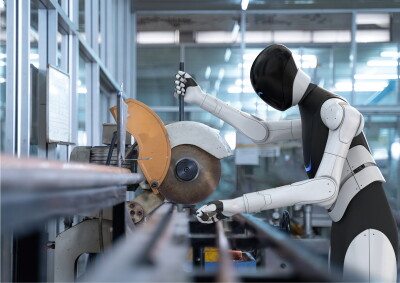
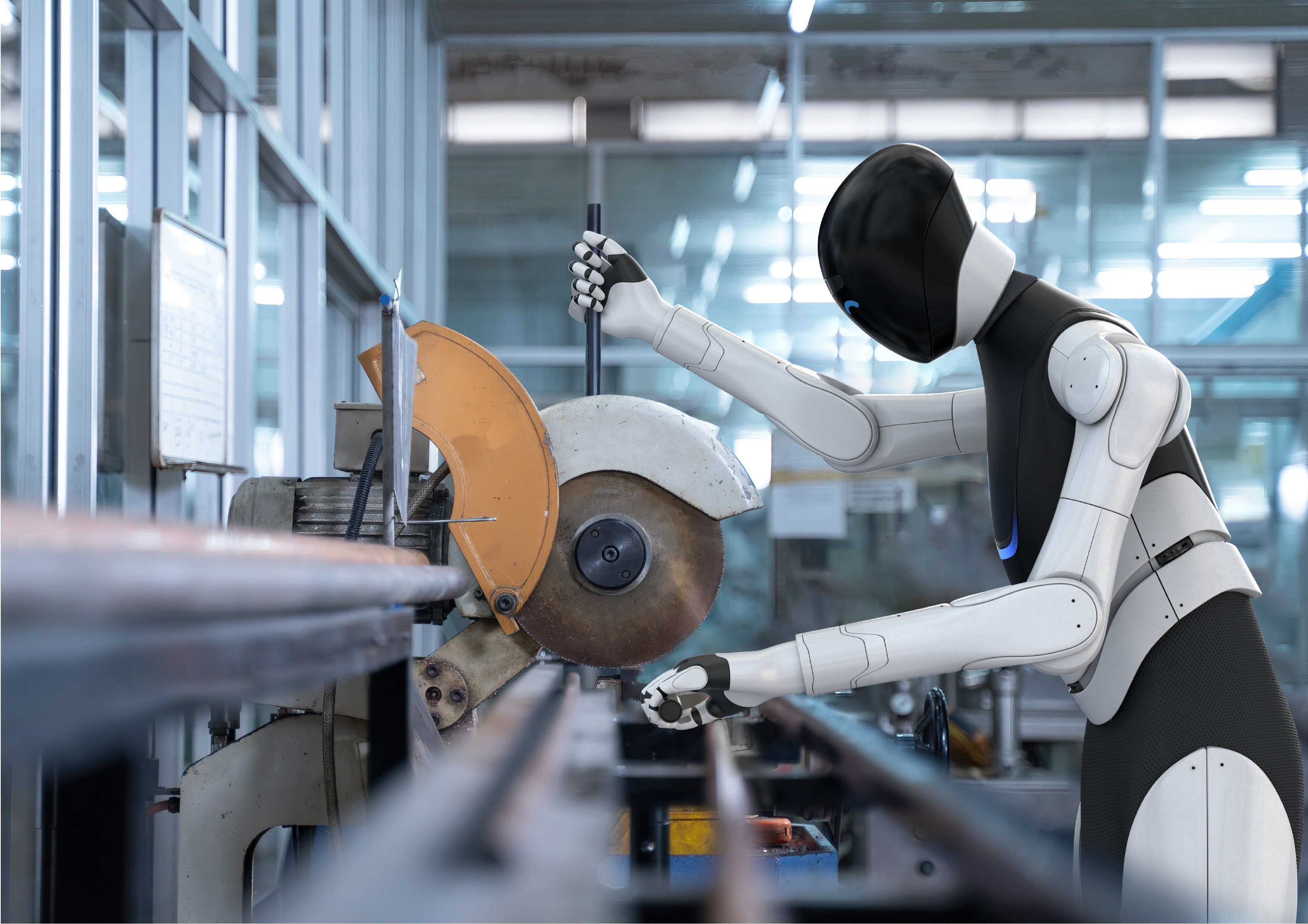
Humanoids are considered to be the next big thing in robotics: China, the world’s largest market for industrial robots, has set out specific targets for its plans to mass-produce humanoids. Meanwhile, tech companies in the US and Europe are announcing significant funding. The vision is to create general-purpose robots based on human motion mechanics. What are the trends, opportunities, and potential limitations of humanoids? The International Federation of Robotics has released a new positioning paper that provides valuable insights. About the POSITION PAPER Humanoid Robotby IFR: Free download at https://ifr.org/papers/download
“The new World Robotics statistics show 2024 the second highest annual installation count of industrial robots in history – only 2% lower than the all-time-high two years ago,” says Takayuki Ito, President of the International Federation of Robotics. “The transition of many industries into the digital and automated age has been marked by a huge surge in demand. The total number of industrial robots in operational use worldwide was 4,664,000 units in 2024 – an increase of 9% compared to the previous year.”
Asia, Europe and the Americas – overview
China is by far the world’s largest market in 2024, representing 54% of global deployments. The latest figures show that 295,000 industrial robots have been installed – the highest annual total on record. For the first time, Chinese manufacturers have sold more than foreign suppliers in their home country. Their domestic market share climbed to 57% last year, up from about 28% over the past decade. China’s operational robot stock exceeded the 2 million mark in 2024, the largest of any country. As robotics in China is opening up new markets, there is no indication that robot demand in China will decrease. There is still a lot of potential in Chinese manufacturing for 10% growth on average each year until 2028.
Japan maintained its position as the second-largest market for industrial robots, with 44,500 units installed in 2024 – a slight 4% decrease. The country’s operational stock rose by 3%, with 450,500 units now in use. Demand for robots will grow slightly by lower single-digit rates in 2025. It will then accelerate to a medium single-digit rate on average in the next few years.
The market in the Republic of Korea installed 30,600 units in 2024 – down 3%. Annual installations had been trending sideways of around 31,000 units since 2019. The country is the fourth largest robot market in the world in terms of annual installations in 2024, after the United States, Japan, and China.
India continues to grow with a record of 9,100 units installed in 2024 – up 7%. The automotive industry was the strongest driver with a market share of 45%. In terms of annual installations, India ranks sixth worldwide, one place up behind Germany.
Europe
Industrial robot installations in Europe fell 8% to 85,000 units in 2024, still the second largest number recorded in history. 80% of all European robot installations took place in the European Union (67,800 units). Robot demand in Europe benefited from the nearshoring trend. The annual average growth rate from 2019 to 2024 was +3%.
Germany is the largest robot market in Europe and the fifth-largest in the world. Installations fell 5% to 26,982 units in 2024, which is the second-best result recorded after the record year of 2023. This represents a 32% market share of the annual total in Europe. The number of installations in Italy, the second largest European market, fell by 16% to 8,783 units. Spain is now in third place (5,100 units), with a strong demand from the automotive industry. France (4,900 units) moved down to fourth place, with a 24% decrease.
In the UK, industrial robot installations were down 35% to 2,500 units in 2024. The record number of 3,800 units in 2023 was a one-off peak, driven by the “super-deduction” tax credit program, which ended after the first quarter of 2023. Installation counts moved sideways with some cyclicity over the past decade. Robot installations in the UK rank 19th worldwide in 2024.
The Americas
Robot installations in the Americas exceeded 50,000 units for the fourth year in a row: 50,100 units were installed in 2024, down 10% below the level reached 2023.
The United States, the largest regional market, accounted for 68% of installations in the Americas in 2024. Robot installations were down by 9% to 34,200 units. The United States imports most of its robots from Japan and Europe, with few domestic suppliers. However, there are numerous domestic robot system integrators implementing robotic automation solutions.
Total installations in Mexico reached 5,600 units in 2024, a decrease of 4%. The automotive industry remained the key customer of industrial robots in Mexico, accounting for 63% of the installations in 2024.
In Canada, robot installations declined by 12% to 3,800 units. Installation figures in Canada largely depend on automotive investment cycles. The share of the car industry was 47% in 2024.
Outlook
The OECD and the IMF expects global growth in a range of 2.9% to 3.0% in 2025 and 2.9% and 3.1% in 2026. However, geopolitical tensions, violent conflicts in Eastern Europe and the Middle East, and trade disruptions are exerting their negative impact on the global economy.
The robotics industry is not immune to global macroeconomic conditions, but there is no indication that the overall long-term growth trend will come to an end any time soon. While regional trends vary substantially, the aggregate global trajectory remains positive. Globally, robot installations are expected to grow by 6% to 575,000 units in 2025. By 2028, the 700,000-unit mark will be surpassed.
The issuer is solely responsible for the content of this announcement.
About IFR
The International Federation of Robotics is the voice of the global robotics industry. IFR represents national robot associations, academia, and manufacturers of industrial and service robots from over twenty countries: www.ifr.org
The IFR Statistical Department provides data for two annual robotics studies:
World Robotics – Industrial Robots: This unique report provides global statistics on industrial robots in standardized tables and enables national comparisons to be made. It presents statistical data for around 40 countries broken down into areas of application, customer industries, types of robots and other technical and economic aspects. Production, export and import data is listed for selected countries. It also offers robot density, i.e. the number of robots per 10,000 employees, as a measure for the degree of automation.
World Robotics – Service Robots: This unique report describes marketable products, tasks, challenges and new developments by service robots application. The report includes the results of the annual IFR service robot survey on global sales of professional and consumer service robots and an industry structure analysis including a full list of all service robot producers known to the IFR. The study is jointly prepared with the robotics experts of Fraunhofer IPA, Stuttgart.












 www.ifr.org
 LinkedIn
 YouTube

