Home Blog Page 3295

OutSystems Unveils Agent Workbench to Accelerate Enterprise AI Innovation

OutSystems Agent Workbench empowers organizations to create custom AI agents that streamline operations, elevate experiences, and grow revenue 

SINGAPORE, July 16, 2025 /PRNewswire/ — OutSystems, a leading AI-powered low-code development platform, today announced the Early Access Program for OutSystems Agent Workbench. Agent Workbench enables enterprises to create and orchestrate intelligent agents for any use case—and across any department, workflow, or data—with enterprise-grade security and control. Delivered on OutSystems trusted platform, Agent Workbench makes it easier than ever for pragmatic leaders to innovate at speed and orchestrate human-AI collaboration.

“Organizations are excited by the promise of AI and agentic systems, but are struggling with endless pilots and ungoverned tool sprawl while the business impact stalls. Legacy systems, siloed data, fragmented AI tools, and complex AI development cycles are slowing progress,” said Woodson Martin, CEO of OutSystems. “We built Agent Workbench to make it possible to unlock custom agents as a true business enabler—not an experiment.”

With everything organizations need to create and scale enterprise-grade agents, OutSystems Agent Workbench simplifies the transformation of existing business applications, workflows, and tools into intelligent, agentic systems that can reason, plan, and act.

IT teams can embed agentic AI into enterprise-wide operations without disrupting current workflows or rearchitecting core systems—accelerating adoption and time to value. From connecting to custom AI models to creating and orchestrating agents that work across all enterprise applications and data, Agent Workbench makes AI a driver of enterprise innovation. With Agent Workbench, organizations of any size can:

  • Build and scale AI agents that work across the entire enterprise effortlessly and safely for real-time goal interpretation, option evaluation, and decision-making, while controlling tool sprawl through a single platform.
  • Seamlessly integrate with custom AI models or leading third-party providers like Azure OpenAI and AWS Bedrock to centralize control over AI and data access, decrease cost, and enable multi-vendor utilization.
  • Ground AI agents with a unified data fabric that connects to diverse enterprise data sources, such as existing OutSystems 11 data and actions, relational databases, data lakes, knowledge retrieval systems like Kendra and Azure AI Search, and even agent memory of past interactions, to ensure accurate and context-rich responses across workflows.
  • Orchestrate multi-agent workflows where agents dynamically adjust process flows based on an understanding of all enterprise systems, with real-time context, reasoning, and decisions to tackle complex tasks—whether working in parallel, sequentially, or hierarchically. This enables collaborative task execution, escalation handling, and human intervention when necessary.
  • Monitor agent performance enterprise-wide with real-time logging, error tracing, and built-in guardrails to ensure transparent, reliable decision-making. Gain full visibility into how AI agents operate at every step—making it easy to audit, troubleshoot behavior, and prevent hallucinations, while building trust through explainability and control.

Sign up for the  OutSystems Agent Workbench Early Access Program here. OutSystems Agent Workbench will be generally available later this year. To learn more, visit the OutSystems Agent Workbench page.

About OutSystems 

OutSystems is a leading AI-powered low-code development platform, empowering IT leaders with a better way to build the software that matters most. The OutSystems platform helps companies develop, deploy, and maintain mission-critical applications by unifying and automating the entire software lifecycle. With OutSystems, organizations leverage gen AI to deliver software instantaneously, adapt faster to changing requirements, and reduce technical debt by building on a future-proof platform. Helping customers achieve their business goals by addressing key strategic initiatives, OutSystems delivers production software up to 10x faster than traditional development. Recognized as a leader by analysts, IT executives, business leaders, and developers around the world, global brands trust OutSystems to tackle their impossible projects and turn their big ideas into software that moves their business, people, and the world forward. Founded in 2001, the company’s network spans more than 800,000 community members, over 500 partners, and active customers in 75+ countries across 21 industries. Learn more at www.outsystems.com.

Akeso Announces First Patient Enrolled in the Phase III Trial(AK112-312/HARMONi-GI6)of Ivonescimab for First-Line Treatment of Advanced Metastatic Colorectal Cancer

HONG KONG, July 16, 2025 /PRNewswire/ — Akeso, Inc. (9926.HK) (“Akeso” or the “Company”) is pleased to announce that the first patient has been successfully enrolled in the registration Phase III clinical trial (AK112-312/HARMONi-GI6) of ivonescimab in first-line treatment for advanced metastatic colorectal cancer (mCRC).

This randomized, controlled, multi-center Phase III clinical trial for first-line treatment of mCRC is one of the company’s key initiatives to address the significant unmet clinical need worldwide with ivonescimab.

Colorectal cancer remains the third most common cancer globally and the second leading cause of cancer-related deaths. In 2022, over 1.9 million new cases were reported, with approximately 904,000 deaths. Of these, about 95% of mCRC cases are classified as microsatellite stable (MSS) or proficient mismatch repair (pMMR), which traditionally show poor responses to immunotherapy and the tumors are often referred to as an “immune desert.”

For first-line treatment of MSS/pMMR-type mCRC, which represents up to 95% of cases, several PD-1/L1 inhibitors have been explored in multiple international studies. However, the efficacy has been limited, and as of now, no first-line immunotherapy has been approved globally for patients with pMMR/MSS-type mCRC.

Chemotherapy combined with targeted therapies (such as bevacizumab, cetuximab, etc.) remains the standard first-line treatment for mCRC, though its overall efficacy is limited, with a five-year survival rate for advanced patients of less than 20%. Bevacizumab is the most well-established and clinically impactful treatment in the mCRC space. It is also one of the core indications of bevacizumab.

At the 2024 European Society for Medical Oncology (ESMO) Congress, Professor Yanhong Deng from the Sixth Affiliated Hospital of Sun Yat-sen University, presented promising Phase II efficacy data of ivonescimab in combination with chemotherapy for first-line treatment of MSS/pMMR-type mCRC.

The combination of ivonescimab with FOLFOXIRI demonstrated compelling anti-tumor activity in this hard to treat patient population, with an overall response rate (ORR) of 81.8% and a disease control rate (DCR) of 100%. After a median follow-up of 9 months, the median progression-free survival (mPFS) was not reached, with a 9-month PFS rate of 81.4%. Regardless of KRAS/BRAF mutation status, patients can benefit from ivonescimab combination therapy.

The results published at the 2024 ESMO suggest that ivonescimab may offer a significant improvement over existing treatment options for MSS/pMMR mCRC patients. The Phase III trial AK112-312/HARMONi-GI6 can potentially further validate the clinical benefits of ivonescimab in this setting, offering a novel first-line immunotherapy treatment option for patients with advanced mCRC.

Forward-Looking Statement of Akeso, Inc.

This announcement by Akeso, Inc. (9926.HK, “Akeso”) contains “forward-looking statements”. These statements reflect the current beliefs and expectations of Akeso’s management and are subject to significant risks and uncertainties. These statements are not intended to form the basis of any investment decision or any decision to purchase securities of Akeso. There can be no assurance that the drug candidate(s) indicated in this announcement or Akeso’s other pipeline candidates will obtain the required regulatory approvals or achieve commercial success. If underlying assumptions prove inaccurate or risks or uncertainties materialize, actual results may differ materially from those set forth in the forward-looking statements.

Risks and uncertainties include but are not limited to, general industry conditions and competition; general economic factors, including interest rate and currency exchange rate fluctuations; the impact of pharmaceutical industry regulation and health care legislation in P.R.China, the United States and internationally; global trends toward health care cost containment; technological advances, new products and patents attained by competitors; challenges inherent in new product development, including obtaining regulatory approval; Akeso’s ability to accurately predict future market conditions; manufacturing difficulties or delays; financial instability of international economies and sovereign risk; dependence on the effectiveness of the Akeso’s patents and other protections for innovative products; and the exposure to litigation, including patent litigation, and/or regulatory actions.

Akeso does not undertake any obligation to publicly revise these forward-looking statements to reflect events or circumstances after the date hereof, except as required by law.

About Akeso

Akeso (HKEX: 9926.HK) is a leading biopharmaceutical company committed to the research, development, manufacturing and commercialization of the world’s first or best-in-class innovative biological medicines. Founded in 2012, the company has created a unique integrated R&D innovation system with the comprehensive end-to-end drug development platform (ACE Platform) and bi-specific antibody drug development technology (Tetrabody) as the core, a GMP-compliant manufacturing system and a commercialization system with an advanced operation mode, and has gradually developed into a globally competitive biopharmaceutical company focused on innovative solutions. With fully integrated multi-functional platform, Akeso is internally working on a robust pipeline of over 50 innovative assets in the fields of cancer, autoimmune disease, inflammation, metabolic disease and other major diseases. Among them, 24 candidates have entered clinical trials (including 15 bispecific/multispecific antibodies and bispecific ADCs. Additionally, 7 new drugs are commercially available, and 2 new drugs with 2 new indications are under regulatory review for approval. Through efficient and breakthrough R&D innovation, Akeso always integrates superior global resources, develops the first-in-class and best-in-class new drugs, provides affordable therapeutic antibodies for patients worldwide, and continuously creates more commercial and social values to become a global leading biopharmaceutical enterprise.

For more information, please visit https://www.akesobio.com/en/about-us/corporate-profile/ and follow us on Linkedin.

JSRPM Leverages AI and Advanced Machining to Counter Tariff Pressures

DONGGUAN, China, July 16, 2025 /PRNewswire/ — Amid mounting pressures from the ongoing U.S.–China tariff conflict, Chinese manufacturers are accelerating their digital transformation to remain competitive. Leading the charge is JSRPM , a precision machining and prototyping company that has integrated artificial intelligence into its manufacturing workflows through its platform www.jsrpm.com. With a focus on CNC machining, milling, rapid prototyping, and surface finishing, JSRPM is proving that technological innovation can overcome global trade headwinds.

Recent tariffs—some exceeding 100%—on critical exports like mechanical parts and electronics have disrupted traditional cost structures. In response, JSRPM has implemented AI to optimize production across key processes. AI now powers real-time adjustments to tool paths in CNC machines, predictive maintenance for milling and turning equipment, and intelligent quality control using vision inspection systems. These technologies have reduced defect rates by over 30% and cut lead times for custom parts by 25%, even for complex components involving multi-axis machining, EDM, or post-processing finishes like anodizing and polishing.

JSRPM’s AI tools also streamline front-end workflows, including automated quoting from 3D CAD files and dynamic scheduling of machining jobs. These capabilities allow the company to deliver high-quality metal and plastic components with shorter turnaround times, helping clients maintain continuity in their global supply chains—particularly those adopting “China+1” sourcing strategies.

Aligned with China’s “Made in China 2025″ initiative, JSRPM is building smart, connected factories that bridge physical production with digital intelligence. Its hybrid model of traditional machining excellence plus AI-driven control positions it as a trusted partner for industries such as robotics, automotive, medical devices, and electronics.

About JSRPM
JSRPM is a Dongguan-based smart manufacturing enterprise specializing in CNC precision parts, rapid prototyping, and custom machining solutions. Through www.jsrpm.com, the company provides global clients with fast, reliable, and AI-enhanced manufacturing services—from 3-axis to 5-axis machining and from low-volume prototyping to scalable production.

Contact
Gloria: Doris.wu@js-rapid.com
WeChat: +86 189 2585 8912
Address: 102, Building 2, No.1, South Jizhi Road, Dongguan City

TIER IV unveils end-to-end architecture for Level 4+ autonomy: To be demonstrated across 50 locations nationwide

TOKYO, July 16, 2025 /PRNewswire/ — TIER IV, the pioneering force behind the world’s first open-source software for autonomous driving, has developed an end-to-end architecture for Level 4+ autonomy, where no human intervention is present even in previously unencountered scenarios. Starting in early 2026, the architecture will be introduced gradually in mobility services at 50 locations across Japan as part of a large-scale demonstration to evaluate its real-world performance and capabilities.

Publicly available via Autoware*, open-source software for autonomous driving championed by TIER IV, the newly developed architecture applies diffusion model-based machine learning to a sequence of driving tasks, including prediction of surrounding objects and generation of vehicle trajectories. This allows the system to imitate human-like driving behavior, even in highly complex scenarios such as obstacle avoidance or turning at busy intersections. In parallel, rule-based components are integrated to ensure high interpretability and operational stability. This hybrid approach combines the adaptability of learning-based methods with the reliability of deterministic logic, positioning the architecture as a practical and promising foundation for Level 4+ autonomy.

To accelerate model development, TIER IV is taking advantage of Autoware’s modular architecture and simulation environment to automatically generate large-scale synthetic training data. Combined with real-world data, this approach has resulted in the efficient construction of high-performance models with both scalability and reliability.

TIER IV will continue to expand its training datasets and enhance model performance to further improve the robustness of the architecture. A variety of data-centric AI models will also be explored and integrated to ensure adaptability across a wide range of use cases, from privately owned cars to commercial vehicles for mobility and logistics services. Through the development of Level 4+ autonomy, TIER IV aims to help tackle major challenges in Japan, including the revitalization of regional communities and strengthening of industrial competitiveness.

*Autoware is a registered trademark of The Autoware Foundation.

About TIER IV

TIER IV stands at the forefront of deep tech innovation, pioneering Autoware, the world’s first open-source software for autonomous driving. Harnessing Autoware, we build scalable platforms and deliver comprehensive solutions across software development, vehicle manufacturing, and service operations. As a founding member of the Autoware Foundation, we are committed to reshaping the future of intelligent vehicles with open-source software, enabling individuals and organizations to thrive in the evolving field of autonomous driving.

Media Contact
pr@tier4.jp

ArkBio’s Ziresovir Included into Pediatric RSV Drug Priority List by WHO

SHANGHAI, July 16, 2025 /PRNewswire/ — In the newly released “Paediatric drug optimization for respiratory syncytial virus (PADO-RSV) meeting report” by Global Accelerator for Paediatric formulations (GAP-f), the World Health Organization (WHO) host network, ziresovir (10mg) has been included in the PADO-RSV priority list. Ziresovir, developed by Shanghai Ark Biopharmaceutical Co., Ltd. (“ArkBio”), is the first and only RSV antiviral drug to be included in the list. This is the first time WHO has included an anti-RSV drug developed from China in the paediatric drug optimization priority list.

Filling a Global Gap: Ziresovir Leads RSV Antiviral Development

RSV is the leading pathogen of lower respiratory tract infections (LRTIs) in infants and young children globally, causing approximately 33 million cases of LRTIs, 3.6 million hospitalizations, and 101,400 deaths annually, with 97% of deaths occurring in low- and middle-income countries (LMICs). Despite the severe threat, current specific treatment options for RSV are extremely limited, and there is a clinical urgent need for safe, effective, and child-appropriate innovative drugs. The “Paediatric drug optimization for respiratory syncytial virus (PADO-RSV)” project initiated by WHO/GAP-f aims to systematically review the global R&D pipeline, clarify R&D priorities, and promote the development and accessibility of RSV prevention and treatment tools more suitable for the paediatric population. With its clear clinical value, child-friendly design, and good safety profile, ziresovir becomes the only product in the antiviral drug category selected for the PADO-RSV priority list, demonstrating its huge potential in the paediatric RSV treatment globally.

WHO pointed out in the report that ziresovir’s research results are of great significance to the global RSV treatment field and recommended conducting diverse clinical studies in broader populations to further verify its applicability and effectiveness.

ArkBio will actively respond to WHO’s advice with a plan to expand ziresovir’s clinical development in other countries and regions. By collaborating with international scientific institutions and public health organizations, ArkBio aims to rapidly advance the drug’s global registration and accessibility. Simultaneously, ArkBio is deeply aware of the importance of global public health, particularly concerned about the challenges faced by low- and middle-income countries. The company will formulate drug accessibility plans specifically for these countries to ensure ziresovir can be supplied at reasonable prices globally wherever it is needed, contributing to the prevention and treatment of RSV infection.

“ArkBio has a mission to ‘help patients inspire and thrive'”, Dr. Jim Wu, CEO of ArkBio, stated. “The inclusion of ziresovir in the WHO PADO-RSV priority list is not only an affirmation of the years of effort by ArkBio scientists, but also an inspiration for our corporate mission. The recognition of ziresovir would allow us to expedite its global development and realize the potential on the global stage. We will ensure the innovation can not only benefit patients in China but the very needed patients worldwide. This is not just our goal but our social responsibility. ArkBio will strive to contribute more to address global public health issues.”

About GAP-f

GAP-f stands for the Global Accelerator for Paediatric Formulations Network. Hosted by WHO, it operates throughout the drug development lifecycle to accelerate the research, development, and dissemination of optimized pediatric formulations. Identifying priorities is the first step toward a targeted R&D approach. Establishing a priority list of the most urgently needed pediatric formulations is crucial, as it helps focus the efforts and resources of researchers and suppliers on specific dosage forms and formulations that address children’s most critical needs.

About PADO

PADO stands for Paediatric Drug Optimization. It is a WHO’s legally binding international priority (based on WHA69.20 resolution) that accelerates the development of high-demand pediatric drugs by building consensus among regulators, funders, and manufacturers. It aims to identify priority products for R&D and define their ideal characteristics. It has been successfully implemented in areas including human immunodeficiency virus (HIV), hepatitis C, tuberculosis, COVID-19, antibiotics, neglected tropical diseases, and childhood cancers. These initiatives demonstrate that, against the backdrop of a fragmented and small pediatric drug market, such efforts hold potential and deliver tangible impacts in accelerating access to optimized formulations.

About Ziresovir

Ziresovir is a novel small-molecule RSV fusion (F) protein inhibitor. It binds to the pre-F protein conformation of the virus and prevents viral entry into human cells. Ziresovir can also suppress RSV viral transmission by blocking cell-to-cell fusion through the formation of “syncytia”, a characteristic event of RSV infection of host cells. It is the first oral anti-RSV drug that has completed a phase 3 pivotal clinical study with positive results. The phase 3 results have been published in The New England Journal of Medicine and The Lancet Child & Adolescent Health. Ziresovir has received Breakthrough Therapy designation by the National Medical Products Administration (NMPA) of China.

About ArkBio

ArkBio is a global biotech company focused on developing innovative therapeutics for respiratory, infectious, and pediatric diseases. Founded in 2014, it has built core technology platforms and a differentiated R&D pipeline through in-house R&D efforts and external collaboration. Key drug assets include ziresovir (AK0529), the first direct-acting RSV antiviral with positive pivotal phase III results, and Azstarys (AK0901), an FDA-approved ADHD therapeutic drug.

ArkBio has established strategic partnerships with several multinational pharmaceutical companies and academic institutes, including Roche, Genentech, the Scripps Research Institute, the Institute of Microbiology of Chinese Academy of Sciences, domestic and international biotechnology companies, as well as venture capital institutions.

For more information, please visit: www.arkbiosciences.com
Investor Inquiries: IR@arkbiosciences.com

AbbVie’s 10th ‘Week of Possibilities’ Unites Employees Across Asia for Community Impact

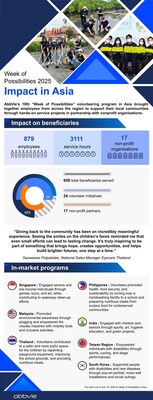
–          880 AbbVie employees across 7 markets volunteered over 3,000 hours to support vulnerable groups.
–          Over 650 individuals benefited from 24 volunteer initiatives, delivered in partnership with 17 community organisations across the region.

SINGAPORE, July 16, 2025 /PRNewswire/ — AbbVie employees in Asia participated in the tenth Week of Possibilities (WOP), the AbbVie Foundation’s annual global volunteering programme, held in June and July. This unites our employees around the world with a single purpose to serve our local communities. 

880 employees across Singapore, Malaysia, Thailand, the Philippines, India, Taiwan region, and South Korea came together to engage in services tailored to the needs of their local communities through volunteer initiatives. Projects focused on supporting vulnerable groups, children, seniors, and individuals with health and social vulnerabilities.

“Our people power the change we want to see in the world. Through Week of Possibilities, we’re proud to stand alongside our partners across Asia to support the communities we live and work in, especially those who are often overlooked. Whether it’s helping children, seniors, people with disabilities, or protecting our environment, every action brings us closer to a more equitable, healthier future,” said Peggy Wu, Vice President, Asia, AbbVie.

In Thailand, employees focused on supporting students in a rural community with limited resources by rebuilding unsafe classrooms, providing lunches, and donating essentials. In the Philippines, volunteers contributed to food rescue efforts, preparing meals for communities with unmet needs and hosting a special Kasama Ka programme to raise awareness around food security and sustainability. The India team led a month-long series of engagements: organising a sports day for children experiencing homelessness in Mumbai, visiting a senior home for musical games and companionship, conducting art-based environmental workshops with children from low-income communities in Bangalore, and running a personal hygiene session at a children’s home in Delhi.

In Taiwan region and Malaysia, inclusive events such as stage performances, craft-making, and cycling activities empowered individuals with disabilities through confidence-building experiences. In Korea, employees supported people with disabilities through community outings, pop art portraits, and eco-friendly installations at care facilities. In Singapore, employees fostered social connections with seniors and vulnerable individuals through creative activities and heritage tours, while also supporting environmental sustainability through waterways clean-ups.

“We are deeply impressed by the passion and dedication of AbbVie volunteers, who actively participated and joyfully accompanied the disabled. This companionship brings not only encouragement but also respect and acceptance. Every time the volunteers cheer for the disabled, they help our foundation in promoting a more friendly treatment for people with disabilities,” said Li Shu Yu, staff member of the Eden Social Welfare Foundation, Taiwan.

Together, the WOP initiatives in Asia spanned healthcare, education, elderly support, environmental protection, and disability inclusion, reflecting the diverse needs of communities and the breadth of AbbVie’s commitment. At the heart of every activity was a shared belief that health equity starts with local action and that everyone has equal access to the opportunity to thrive.

Claire Chin, Area Head, Regulatory Affairs, AbbVie, shared, “June has always been my favourite month of the year at AbbVie. This year’s theme for AbbVie’s week of possibilities is advancing health equity. A lot of people might think of health equity as hospital visits and other charitable events. But in developed countries like Singapore, we tend to take our clean environment for granted. Before we consider advanced technologies and treatment options to support health, we have to first fulfil the basic human needs of hygiene, good health, and a good environment. To me, that’s where we can start to work towards creating a healthy living environment for each of us.”

Launched in 2014, AbbVie’s Week of Possibilities has grown into a cornerstone of the company’s global culture, engaging employees in voluntary actions and an annual celebration of giving back. Powered in part by the AbbVie Foundation, the initiative rallies employees worldwide to volunteer and make a meaningful impact in the communities where they live and work.

You can view images of AbbVie’s Week of Possibilities volunteer initiatives in Asia here.

AbbVie employees across Asia marked the 10th “Week of Possibilities” by partnering with non-profits to support local communities and advance health equity.

Learn more about AbbVie’s Week of Possibilities at www.abbvie.com/givesback and AbbVie’s ongoing commitment to local communities in its 2024 ESG Action Report.

About AbbVie
AbbVie’s mission is to discover and deliver innovative medicines and solutions that solve serious health issues today and address the medical challenges of tomorrow. We strive to have a remarkable impact on people’s lives across several key therapeutic areas including immunology, oncology, neuroscience and eye care – and products and services in our Allergan Aesthetics portfolio. For more information about AbbVie, please visit us at www.abbvie.com. Follow @abbvie on LinkedIn, Facebook, Instagram, X (formerly Twitter), and YouTube..

About the AbbVie Foundation
The AbbVie Foundation is a 501(c)(3) nonprofit working to drive transformative change in communities worldwide so that everyone can live their healthiest life. We are committed to advancing health equity through innovative, community-led partnerships and through our employee impact programs around the world. For more information, please visit www.abbviefoundation.org.


PHASE Scientific Expands INDICAID® Respiratory Portfolio with Exclusive U.S. Launch of Novel FebriDx® Test

  • FebriDx® is a first-in-class rapid test that differentiates between bacterial and non-bacterial respiratory infections, offering significant potential to address critical unmet needs in patient care by enabling more informed antibiotic use and aiding in the reduction of antimicrobial resistance.
  • Introduction of FebriDx will enhance PHASE Scientific’s INDICAID® portfolio and strengthen its leadership in point-of-care respiratory diagnostics.
  • Partnership underscores PHASE Scientific’s proven commercial execution in the U.S. market with its extensive nationwide clinical network, building upon its strengths in R&D innovation.

GARDEN GROVE, Calif., July 16, 2025 /PRNewswire/ — PHASE Scientific, a fast-growing biotech company known for its science-driven innovation and commitment to improving healthcare outcomes, today announced that it has entered into an exclusive U.S. distribution agreement with Lumos Diagnostics for FebriDx®, a rapid point-of-care (POC) test that aids in the diagnosis of bacterial acute respiratory infection and differentiation from non-bacterial etiology in approximately 10 minutes using a single drop of blood.

With strong product differentiation, FDA 510(k) clearance, and an anticipated CLIA waiver application within the next three months, FebriDx® is poised to transform how clinicians diagnose and manage respiratory infection.

FebriDx® will become part of PHASE Scientific’s INDICAID® portfolio – a trusted brand for high-quality, accessible rapid diagnostics. The partnership marks a significant milestone in PHASE’s commercial expansion in the United States, building upon a nationwide network of urgent care centers, clinics, and healthcare providers and a proven track record of distributing over 100 million INDICAID® tests.

“We are thrilled to partner with Lumos, a company that shares our commitment to shaping the future of healthcare through innovation and collaboration, and support them with our scalable go-to-market strength in North America,” said Dr. Ricky Chiu, Founder and CEO of PHASE Scientific. “A powerful complement to our INDICAID® respiratory portfolio, FebriDx® is a first-in-class diagnostic that perfectly aligns with our mission to bring fast, actionable diagnostics to the frontlines of care. We are confident this will unlock synergistic opportunities, further advancing our impact on antimicrobial stewardship and clinical decision-making across the U.S. As we continue to expand the INDICAID® brand, we remain dedicated to strengthening our leadership in point-of-care solutions, empowering clinicians, and improving access to high-quality healthcare.”

Doug Ward, CEO of Lumos Diagnostics, commented, “This distribution agreement reflects a pivotal moment in Lumos’ evolution. We look forward to working with the PHASE Scientific team to ensure that FebriDx® secures adoption in the U.S. market, delivering tangible clinical and financial value to the broader healthcare system. This agreement also validates the value of the FebriDx® technology and provides a clear pathway to the U.S. market, which we expect will accelerate rapidly should we receive a grant for CLIA waiver from the FDA.

Transforming Respiratory Infection Diagnosis

FebriDx® fills this diagnostic gap with a rapid, point-of-care test that uses a unique combination of C-reactive protein (CRP) and Myxovirus resistance protein A (MxA) biomarkers to aid in the diagnosis of bacterial from non-bacterial respiratory infections after 10 minutes. Its lateral flow format requires only a fingerstick blood sample and has been validated in a pivotal clinical study and demonstrated good diagnostic performance that can, in turn, improve diagnostic confidence and antibiotic stewardship decisions.

By enabling faster, more informed treatment decisions, FebriDx® supports more targeted care in busy patient settings – currently including urgent and emergency care. A CLIA waiver study is progressing well, with anticipated study completion and application submission expected within the next three months. This would expand access to FebriDx® across a broader range of outpatient environments, representing a market opportunity of approximately US$1.5 billion.

Driving Antimicrobial Stewardship

FebriDx® plays a critical role in aiding in addressing the global threat of antimicrobial resistance (AMR), which continues to strain public health systems and drive avoidable costs. By providing rapid, actionable results at the point of care, FebriDx® helps reduce unnecessary antibiotic prescribing – a key contributor to AMR – and improves clinical workflows by supporting more accurate triage and treatment.

Clinical studies have demonstrated that integrating FebriDx® can lead to reduced antibiotic use, lower healthcare costs, and better patient outcomes. Its unique ability to guide appropriate prescribing makes it a valuable tool in everyday patient care.

Strengthening U.S. Market Presence

This agreement represents a major step in PHASE Scientific’s strategy to reinforce its dual strengths in R&D innovation and commercial execution, as well as accelerate its leadership in the U.S. diagnostics market. Known for its proprietary PHASIFY™ technology and innovation pipeline in cancer and infectious disease diagnostics, PHASE Scientific is now demonstrating its scalable go-to-market strength in North America.

About PHASE Scientific

PHASE Scientific International Limited (“PHASE Scientific”) is a fast-growing biotech company with a mission to inspire a new state of health through innovative diagnostics and healthcare solutions. With operations in the U.S., mainland China, and Hong Kong SAR, PHASE delivers novel diagnostic tools and services for cancer and infectious diseases using proprietary technologies, empowering better disease detection, diagnosis, and management.

PHASE Scientific’s products and services have received certifications from the U.S. Food and Drug Administration (FDA), the European Union CE, and regulatory agencies in various countries, providing over 100 million testing products and services in more than 30 countries worldwide.

PHASE Scientific has recently completed a US$34 million Series A funding round, representing the largest Series A raise in Asia’s diagnostic technology sector since 2019. Other supporters include Gates Foundation, and US governmental agencies National Science Foundation and National Institutes of Health. For more information, please visit phasescientific.com.

About FebriDx®

FebriDx® is a unique, rapid point of care test that helps clinicians differentiate between bacterial and non-bacterial acute respiratory infections through a simple fingerstick blood sample after 10 minutes.

By aiding clinicians make faster, better decisions at the point-of-care, FebriDx® has the potential to improve patient outcomes, reduce unnecessary antibiotic prescriptions, and lower overall healthcare costs – all while addressing the urgent global challenge of antimicrobial resistance (AMR).

About Lumos Diagnostics

Lumos Diagnostics specializes in rapid and complete point-of-care diagnostic test technology to help healthcare professionals more accurately diagnose and manage medical conditions. Lumos offers customized assay development and manufacturing services for point-of-care tests and proprietary digital reader platforms. Lumos also directly develops, manufactures, and commercializes novel Lumos-branded point-of-care tests that target infectious and inflammatory diseases.

For more information visit lumosdiagnostics.com.

Media Contact

PHASE Scientific
pr@phasesci.com

FGS Global
PhaseSci@fgsglobal.com

Global Times: Xi’s vision of a people-centered city guides China’s urban development

BEIJING, July 16, 2025 /PRNewswire/ — “Cities should be built by the people and for the people”; “a city should not only have high-rise buildings, and it must also show enough concern for how people can lead a better life”; “urban development should allow people to see the mountains, see the water, and remember their homesickness”; “we must understand, respect and adapt to the laws of urban development, adopt a correct guiding philosophy, and do a solid job in city planning and governance.” Since the 18th National Congress of the Communist Party of China, the Party Central Committee with Comrade Xi Jinping at its core has fully recognized the critical role of cities in China’s economic and social development, cultural heritage and the improvement of people’s livelihoods. It has continuously strengthened the Party’s leadership over urban affairs, upheld the principle that cities should be built by and for the people, and forged a path of urban development with Chinese characteristics.

Staying true to the essence of a people-centered city

“People-centered development must be carried out in urban construction, and cities must be built for the people.” Urban development follows a natural and historical process governed by its own logic. “Respect the laws of urban development” – this is a fundamental approach advocated by Xi in guiding city development.

“Urbanization and economic development complement and reinforce each other”; “urban development is a process where rural populations gather in cities and agricultural land is transformed into construction land in proportion”; “urban planning and construction must prioritize historical and cultural preservation, avoid short-termism, and reject large-scale demolition and construction”; “city size should match the carrying capacity of local resources and the environment” – these observations reflect the core of the people-centered urban development vision.

A city belongs to its people, and its construction must always adhere to a people-centered approach, with the goal of enhancing the well-being of its residents. At the Central Urbanization Work Conference in December 2013, Xi stated: “The idea of making life more comfortable for the people must be embedded in every detail of urban planning and construction.” In November 2020, at a grand gathering celebrating the 30th anniversary of the development and opening-up of Shanghai’s Pudong, Xi further emphasized: “Urban construction must prioritize livability for the people and reserve the best resources for them.”

Improving livability through balanced planning of production, daily life and ecology is one of the “Five Coordinations” Xi has outlined for urban development. Creating a quality living environment has always been a central goal in urban work.

Having a home is the foundation of livability. While working in Fujian Province, Xi vigorously promoted housing improvement initiatives such as the “Comfort Housing Project,” which significantly enhanced urban living conditions. Xi published a signed article in Fujian Daily entitled “Properly Handling Eight Relationships in Urban Development,” in which he systematically explained that “urban construction and renewal is a complex social system project that must be future-oriented while grounded in present needs.”

Improving the livability of urban development requires not only ensuring adequate housing, but also pursuing ecological livability.

Recently, Baiyangdian Lake in Xiong’an New Area, North China’s Hebei Province, saw the discovery of a new bird species, the Eastern crowned warbler.

As of May 2024, the number of wild bird species in the area had increased to 296 – 90 more than before the New Area was established.

In January 2019, while visiting the Xiong’an planning exhibition center, Xi remarked that “the site was chosen specifically to protect Baiyangdian, not harm it. The city and the lake should complement and enhance each other.”

With boats gliding across the lake and people strolling through the scenery, the balanced harmony between the new city and the wetlands reflects a model of coexistence between humanity and nature.

“In the past, cities were preoccupied with building roads, bridges, tunnels and transportation infrastructure. Today, every city is prioritizing ecological restoration and green development – this is a welcome shift.”

“Coordinate space, scale and industrial structure to enhance the overall effectiveness of urban work”; “coordinate planning, construction and management to improve systemic governance”; “coordinate reform, technology and culture to ensure sustainable development;” “coordinate production, life and ecology to enhance urban livability”; “coordinate efforts from government, society and citizens to boost participation” – the “Five Coordinations” reflect both epistemological insight and methodological guidance. They show a profound understanding of the laws of urban development and a clear people-centered value orientation:

“To do a good job in urban work, we must respond to new trends, new demands and new expectations. We must uphold a people-centered development philosophy and ensure cities are built for the people. This is the starting point and ultimate goal of our work in cities.”

Embarking on a sound path of urban development 

We should “improve the level of new-type urbanization and chart a path for urban development with Chinese characteristics.” Urbanization is the path toward modernization. To achieve urbanization in a developing country like ours, with a population of more than 1.4 billion, is “unprecedented in human history.” Our national conditions – a large urban population and strong resource constraints – determine that we cannot follow the old path of Western urban development.

At the Central Urban Work Conference held in December 2015, Xi creatively proposed improving the level of new-type urbanization and charting a path for urban development with Chinese characteristics. What is a path for urban development with Chinese characteristics? Its essence lies in the concept of a people-centered city.

Basic public services are closely related to the interests of the people. To chart a sound path for urban development with Chinese characteristics and promote the building of a people-centered city, we must focus on solving the most pressing, immediate and practical issues that concern the people as well as continuously improve the equalization and quality of public services.

To promote the equalization of basic public services, how should some fundamental relationships be handled? Xi’s concept of a people-centered city provides a “key” that contains scientific dialectics. For example, regarding the relationship between large cities and small- to medium-sized cities, he pointed out the need to strengthen connectivity between megacities and small-sized and medium-sized cities. “We should also promote equitable access to basic public services in small- and medium-sized cities – particularly in education and healthcare – and make small and medium-sized cities more attractive to people,” said Xi.

In recent years, jointly with Beijing and Tianjin, Hebei Province has established multiple regional medical centers operated at the national level, allowing the public to enjoy consultations with experts from the two cities at their doorsteps. More than 300 primary and secondary schools from Beijing and Tianjin have cooperated in schooling with Hebei, expanding access to quality educational resources… Basic public services have become more equal and more accessible, providing solid support for coordinated regional development.

Another example is the relationship between local residents and migrant populations. Solving people-related issues is the key to promoting new-type urbanization. To enable migrant workers to win urbanite status and to strive to enhance the quality and ability of migrant workers’ integration into cities are tasks that must be addressed in our promotion of urbanization.

“A city should not only have high-rise buildings, and it must also show enough concern for how people can lead a better life. Socialism with Chinese characteristics is about achieving common prosperity.” The general secretary earnestly said, “It is a must to act on the principle that a city should be built by the people and for the people, continuously meet residents’ diversified and varied needs for housing, and ensure that migrant workers can come and stay here, enjoy a secure life and have their own careers.”

Grasping the priorities of urban governance

“In urban governance, we must focus on urban management and services, continuously improving both.” Urban work is complex and multifaceted; it is a systematic project. Providing meticulous urban management and good public services for the people is at the core of urban work. Xi has repeatedly stated that when assessing a city, the first aspect to consider is its urban plan. A scientific plan yields the greatest benefit, while planning errors result in the biggest waste, and frequent plan changes are the greatest taboo.

Nowadays, the world is changing rapidly, both above and below ground. A forest three kilometers away, a woodland one kilometer away, and a park just 300 meters away are gradually becoming a reality. Facilities such as the “15-minute living circle,” community canteens, and smart elderly care stations are being developed to benefit the public. Starting from a “blank slate,” the “City of the Future” is growing and evolving.

During his time working in Fuzhou, Xi presided over “Fuzhou City’s 20-Year Economic and Social Development Strategic Vision,” which systematically planned the goals, steps, layout and key points of the three-year, eight-year and 20-year economic and social development of Fuzhou, bringing significant changes to the city. In the preface, Xi wrote, “Today, we stand at the source of creating the future.” Xi said we should enhance precision and effectiveness in governance with meticulous care, patience and ingenuity, much like doing embroidery.

Xi’s metaphor of “embroidery” embodies a scientific methodology that emphasizes comprehensive consideration and systematic policy implementation.

Meticulous governance needs to begin with practical matters related to homes and the small issues in our daily lives, effectively bridging the “last mile” in serving the community. Grassroots affairs are quite complex; how can we achieve tangible results through meticulous efforts? Xi provides an answer: “Urban governments should shift from being ‘rowers’ to ‘helmsmen,’ managing urban affairs and shouldering social responsibilities together with the market, enterprises and citizens.” “We need to stimulate the vitality of the entire society, involving the public in discussions about their own matters and encouraging everyone to participate in collective issues.” He also emphasizes “integrating whole-process people’s democracy into the modernization of urban governance.”

In Beijing, innovative practices such as “immediate response to complaints” have been explored, with the government service hotline “12345” utilizing last year’s demand big data to identify the most pressing pain points in people’s livelihoods and governance bottlenecks. In Shenzhen, Longhua District has established “neighborhood discussion halls” and organized “tea gatherings” to address public demands and opinions.

What kind of support does intelligence offer? Strengthening digital empowerment.

Chongqing, as the city with the largest jurisdiction area and population in China, encompasses a large metropolis, vast rural areas, extensive mountainous regions and significant reservoir areas. Its vast and complex operational system tests the level of modern governance.

In April 2024, Xi visited Chongqing’s “city brain” at the city’s digital urban operation and governance center. Here, various urban indicators such as water, electricity, bridges, tunnels, railways and pipelines are all connected, enabling intelligent perception of urban operational risks and assisting in urban management decision-making.

Inheriting the soul of urban culture

“People should cherish historical and cultural heritage as treasuring their own lives.” In ancient times, people said, “All things have different characteristics, but they all know how to protect their roots.” “History and culture are the soul of a city and people should cherish historical and cultural heritage as treasuring their own lives.” Protecting the city’s cultural heritage and preserving Chinese cultural genes are of great importance to Xi.

In the late 1980s and early 1990s, there was a high level of enthusiasm for urban “development” and “demolition and reconstruction” in Fuzhou, a city located on the southeast coast. The former residence of Lin Juemin, a renowned revolutionary hero, in Sanfangqixiang (Three Lanes and Seven Alleys), an ancient block in downtown Fuzhou, was due to be razed to the ground to give way to a development project. At this crucial moment, a member of the Fuzhou municipal committee of the Chinese People’s Political Consultative Conference wrote a letter to Xi, then the new Party chief of Fuzhou. Upon hearing the news, Xi immediately moved to postpone the demolition.

“We must protect, repair and make good use of the city’s cultural relics in our hands. Not only should we prevent them from being damaged, but also help them flourish and pass them on to future generations.” Xi’s remarks at a meeting on cultural relics protection were awakening.

After 30 years, Sanfangqixiang once again welcomed its old friend who cherishes it. In 2021, Xi took a walk and inspected the Nanhou Street and Langguan Alley, and visited the former residence of scholar Yan Fu, stressing the importance of cherishing ancient buildings, old houses and old blocks as well as treating them with respect.

New and old, demolition and reservation, all test historical foresight. From Guangzhou’s Yongqingfang to Shanghai’s Huangpu River, from Chaozhou Ancient City to Pingyao Old Street, Xi’s important speeches have pointed out the direction and put forward requirements for the continuation of the historical heritage of cities.

A nation needs a national spirit, and a city also needs an urban spirit. Today, 767,000 immovable cultural relics, 143 national historical and cultural cities, nearly 800 Chinese historical and cultural towns and villages, nearly 1,300 historical and cultural blocks, and 68,000 historical buildings constitute a rich carrier for inheriting China’s excellent traditional culture, allowing cities to retain memories and people to remember their homesickness.