Home Blog Page 339

Pudu Robotics Highlights Its “One Brain, Multiple Embodiments” Physical Agent at WAIC 2026

SHANGHAI, July 17, 2026 /PRNewswire/ — Pudu Robotics, the global leader in commercial service robotics, today hosted its Pudu AI Technology Briefing on the opening day of the 2026 World Artificial Intelligence Conference (WAIC) in Shanghai. During the event, the company shared the latest progress of its “One Brain, Multiple Embodiments” technology architecture, offering an in-depth look at its Physical Agent architecture while presenting the PUDU D7, its industrial-grade semi-humanoid robot, in its first offline public showcase.

As Embodied AI moves from research to large-scale commercial deployment, the industry’s next challenge is no longer developing more capable AI models, but building a continuous loop that connects technology, products, commercial deployment, and real-world data. Ranked No. 1 globally in both revenue and shipment volume for commercial service robots, Pudu Robotics is leveraging its large-scale real-world deployment to accelerate the development of Physical AI.
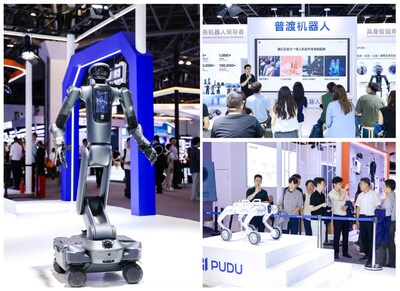
Pudu Robotics at WAIC 2026

Robots Are Bringing AI into the Physical World

Recent advances in large language models, multimodal foundation models, and AI agents have enabled AI to evolve from generating content to understanding increasingly complex tasks. As capabilities in perception, reasoning, planning, and execution continue to mature, AI is extending beyond digital environments into the physical world.

According to Frost & Sullivan’s 2025 Global Embodied Intelligence and Commercial Service Robot Independent Market Research Report, the rapid advancement of foundation models and AI agents is accelerating AI’s transition from content generation to real-world task execution. Equipped with perception, mobility, interaction, and manipulation capabilities, robots have become one of the most critical hardware platforms in the era of Physical AI.

The report highlights that commercial service robots covering delivery, cleaning, and guiding scenarios directly address industry pain points such as rising labor costs and operational inefficiencies, providing the practical foundation for immediate, large-scale commercial deployment.

One Brain, Multiple Embodiments: A Unified Platform for Robotics

As embodied AI advances toward commercialization, the industry faces several common challenges, including the availability of real-world data, engineering and manufacturing capabilities, sustainable commercial deployment, and global scalability. To address these challenges, Pudu Robotics continues to advance its “One Brain, Multiple Embodiments” technology philosophy, enabling different robot forms to share the same underlying intelligence through a unified model and software architecture.

“By building a unified intelligence foundation, we enable different robot forms to share the same ‘brain,’ allowing robotics to evolve from standalone intelligence to a platform-based intelligence ecosystem,” said Shawn Wu, General Manager of the General Embodied AI Product Line at Pudu Robotics.

Building a Three-Layer Architecture for Platform-Level Intelligence

Under this philosophy, Pudu has developed a three-layer Physical Agent architecture. Together, these layers enable robots to complete the full operational loop of perception, understanding, planning, execution, and feedback in real-world environments.

  • Robot Body Layer: Multiple Robot Forms for Different Tasks

The robot body layer serves as AI’s physical interface with the real world. Pudu continues to develop multiple product forms tailored to diverse scenario demands, including specialized, semi-humanoid, and humanoid robots. Different forms handle distinct tasks: specialized robots tackle high-frequency, highly standardized tasks; semi-humanoid robots operate in complex industrial and commercial environments; and humanoid robots explore open-ended human-robot collaboration.

  • System Layer: PuduAgent OS as the Intelligent Operating System

Serving as the central intelligence hub connecting models, skills, and robot bodies, Pudu introduced PuduAgent OS. Utilizing interactive Visual-Language-Models (VLM), long/short-term memory modules, and safety guardrails, it manages task comprehension, planning, experience accumulation, and safe operation. Its core value lies in allowing diverse robot forms to share the same “brain,” enabling cross-body and cross-scenario skill migration by reusing existing capabilities through a unified system.

  • Skill Layer: PuduFM Enables Robots to Understand and Act

The skill layer determines what robots are capable of doing in the physical world. Pudu’s embodied intelligence foundation model, PuduFM features a physical VLM module, a Physics Intuition Model (PIM), and action-expert modules to provide the robot with real-world understanding, reasoning, and execution capabilities. Unlike traditional robots that rely on pre-programmed rules, PuduFM aims to empower robots to understand environments, predict outcomes, autonomously plan tasks, execute actions, and continuously optimize based on feedback.

PUDU D7 Makes Its First Offline Appearance

As an important example of the “One Brain, Multiple Embodiments” philosophy, PUDU D7 made its first offline public appearance at WAIC 2026.

Powered by the PuduFM, PUDU D7 supports payloads of up to 14 kg and an operating height of 2 meters, enabling complex tasks such as material handling, high-reach picking, and warehouse logistics, making it highly adaptable for real-world applications across manufacturing, warehousing, and retail environments.

From service delivery and commercial cleaning to industrial delivery and general embodied AI, Pudu Robotics continues to expand both the range of robot forms and application scenarios supported by its unified intelligence platform, turning the vision of “One Brain, Multiple Embodiments” into practical deployments.

From Product Leadership to Platform Intelligence

According to Frost & Sullivan’s latest 2025 report, Pudu Robotics leads the global commercial service robotics industry in revenue and shipments, ranks first among Chinese commercial service robotics companies by overseas market share, and holds the top position globally in commercial cleaning robotics revenue.

As the robotics industry enters a new stage of development, Pudu Robotics is building on more than a decade of experience in commercial robotics to transform real-world operational data into continuously evolving embodied intelligence. The company is extending its expertise in technology, products, and commercialization into a unified AI platform that supports multiple robot forms.

About Pudu Robotics

Pudu Robotics, a global leader in the commercial service robotics sector, is dedicated to empowering easier work and better lives through AI and robotics, with a vision of building a global intelligent robotics infrastructure that serves 10 billion people worldwide.

Pudu Robotics has developed key core technologies and components, including robotic joint modules and motion controllers, and has filed more than 1,900 patent applications worldwide. Built on three core technologies—Embodied Navigation, Embodied Manipulation, and Embodied Interaction—Pudu Robotics has pioneered a “One Brain, Multiple Embodiments” architecture, establishing a comprehensive product portfolio that includes specialized, semi-humanoid, and humanoid robots.

Currently, Pudu offers four major product lines: service delivery, commercial cleaning, industrial delivery and general embodied AI. Its solutions are widely deployed across industries such as retail, hospitality, manufacturing, real estate and property services, healthcare, entertainment and sport, education, and public services.

To date, Pudu Robotics has shipped over 130,000 units globally, with a presence in more than 85 countries and regions.
TenPay Global Deepens Singapore Remittance Ecosystem Partnerships as Demand for Digital Transfers Grows

 Private screening of “Dear You” traces the evolution of remittance from traditional Qiaopi to digital transfers via Weixin

SINGAPORE, July 17, 2026 /PRNewswire/ — TenPay Global, Tencent’s cross-border payment platform, brought together remittance partners in Singapore, including DBS Bank, Panda Remit and Western Union, to discuss improvements to the cross-border remittance user experience and ways to strengthen collaboration across the partner ecosystem. The exchange was held on July 12 alongside a private screening of the film “Dear You.”

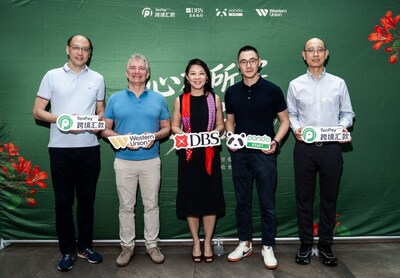
From left to right: Wenhui Yang, CEO of TenPay Global (Singapore); Brian Reaves, Country Director (Singapore, Malaysia, and Indonesia), Western Union; Diane Chang, Executive Director, Consumer Banking Group at DBS Bank; Marco Jin, Business Development Director, Panda Remit; Royal Chen, Vice President of Tencent Financial Technology

Taking the film’s theme of “Qiaopi” as its starting point, the event traced the evolution of cross-border remittance from the traditional practice of sending money and family letters together to today’s digital services. In the past, Qiaopi was both a remittance and a family letter, carrying not only financial support but also news and words of care between relatives separated by distance. Today, recipients can receive remittances through Weixin, the same app they use to message family and friends, making digital remittance a modern-day form of “Qiaopi.” Supported by digital technology and a global network of partners, funds sent home can now arrive in as little as one minute.

Ms P’ing Lim, Regional Head, Ecosystems & Cross Border Payments, Consumer Banking Group, DBS Bank, said: “Stories like Dear You remind us that while the way we send money has evolved, its purpose remains unchanged – to help people stay connected to the people and places that matter most. As a bank that has served generations of Singaporeans, we understand the important role that cross-border payments play in supporting families, businesses and everyday life across borders. Together with our partners including TenPay Global, we remain committed to building one of Asia’s most connected cross-border payments ecosystems, making it faster, simpler and more secure for customers to remit, pay and transact seamlessly across the region.”

Marco Jin, Business Development Director of Panda Remit, said: “Panda Remit has enjoyed a long-standing partnership with TenPay Global, becoming the first remittance partner to enable direct transfers into Weixin since 2021. Our partnership has consistently been at the forefront of innovation, with Panda Remit pioneering multiple first-to-market capabilities together with TenPay Global, including the launch of the Panda Remit Weixin Mini Program, delivering a seamless & secure remittance experience. We look forward to continuing to innovate together and bringing even greater value to users worldwide.”

Vince Tallent, Senior Vice President and Head of APAC, Western Union, said: “As customer expectations continue to evolve, the strategic partnership with TenPay Global reflects Western Union’s commitment to putting customers at the center of everything we do, bringing together our global cross-border money movement capabilities with the innovation and reach of the Weixin ecosystem. Since launching our co-branded flagship store in Singapore’s Chinatown in 2025, we have continued to enhance the remittance experience and create more seamless ways for customers to move money across borders and stay connected to the people and opportunities that matter most.”

Royal Chen, Vice President of Tencent Financial Technology, said: “Cross-border remittance moves funds, but more than that, it connects people through the everyday care they show one another. In the past, a single ‘Qiaopi’ could take months to complete its round trip. Today, technology enables 24/7 cross-border remittance, with funds arriving in as little as one minute, directly to Weixin — an experience as simple as sending a message.”

“TenPay Global’s cross-border remittance platform currently partners with more than 60 major international banks and remittance institutions, supporting remittances to China from over 150 countries and regions. TenPay Global will continue to collaborate closely with banks, remittance institutions and fintech partners to strengthen its cross-border remittance network, so users can securely send care and support to their families through a familiar and intuitive way,” he added.

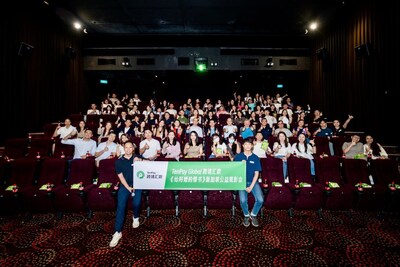
Representatives from TenPay Global, DBS Bank, Panda Remit and Western Union, together with invited guests, at the Dear You private screening and exchange event in Singapore.

From Qiaopi to digital remittance, the way people send money has changed, but the desire to stay connected with family remains the same. The event also formed part of TenPay Global’s ongoing efforts to strengthen collaboration with its Singapore partners and jointly engage and give back to user community. Many long-time cross-border remittance users also joined the event, sharing their own remittance stories and taking part in the on-site activities. At the event, an interactive “Words From Afar” corner invited guests to collect a commemorative “Ping An Pi,” or “letter of peace,” write a message to family and friends back home, and post it through an on-site mailbox. Guests could also use Weixin to scan a QR code and generate a personalized, AI-powered “digital Qiaopi,” providing an interactive way to experience how the remittance journey has evolved.


About TenPay Global

TenPay Global is Tencent’s cross-border payment platform, comprising a network of licensed financial institutions under Tencent. By connecting the Weixin ecosystem, global payment partners, and international users and scenarios, TenPay Global provides end-to-end payment solutions for cross-border remittances, consumption, and commerce. Backed by years of industry experience and a robust risk management framework, TenPay Global delivers world-class standards in system reliability, fund security, and regulatory compliance. Official Website: TenPay Global

BOE attends UNESCO Global Conference of the International Decade of Sciences for Sustainable Development in Paris

PARIS, July 17, 2026 /PRNewswire/ — The 2026 Global Conference of the International Decade of Sciences for Sustainable Development (IDSSD) is taking place from July 15 to 17 at UNESCO Headquarters in Paris. As the first Chinese technology company to be a strategic partner of the IDSSD, BOE not only provides technical support for the Conference but also participates in high-level roundtables and the STEM education side event. Notably, it has curated the “Open Next Earth” technology-themed exhibition. This marks a major step on its global journey as it deepens integration into the global science governance system, making China’s voice heard on the UN stage. During the conference, BOE also attended the awards ceremony for the African Edition of the Science Club Challenge 2026 and presented the gold award.

At the final plenary on July 16, BOE shared insights on how science can play a more pivotal role in the future. The company will elevate the role through three key transformations: from project delivery to capacity building, from technology provision to ecosystem development, and from one-off investment to long-term commitment. The goal is to bridge geographical divides via STEM education and create equitable innovation opportunities for youth worldwide. BOE also attended the parallel thematic session on STEM education on the same day, sharing practical experiences on key topics like the scaling of STEM education and the long-term value of tech industry engagement in STEM education. The session also saw the launch of the Global Engagement Network for Science (GENS), an initiative to connect science clubs across 56 countries to build inclusive, high-impact communities that support all young learners.

The “Open Next Earth” exhibition centered on BOE’s sustainability brand “ONE” showcases deep integration of cutting-edge display technology with global sustainable development. In the digital culture zone, with the aid of 8K restoration technology, the millennium-old Dunhuang mural The Nine-Colored Deer: Jataka of the Deer King is rendered in exquisite detail on a 110-inch 8K UHD display from BOE. Next to this, visitors can enjoy an immersive mixed reality experience inspired by the masterpiece Along the River During the Qingming Festival painted by the Ming dynasty artist Qiu Ying (c. 1494–1552). The green energy zone features BOE’s perovskite solar backpacks and foldable photovoltaic panels, demonstrating a low-carbon pathway to integrating green technology into everyday scenarios. The STEM education achievements zone presents the collaborative journey and key milestones since BOE’s partnership with UNESCO began in 2024, underscoring a leap from isolated empowerment efforts to ecosystem co-creation.

By integrating innovative technological capabilities with the global science governance system, BOE has established a replicable and scalable model of cooperation. This offers a China solution to the global STEM education ecosystem that combines strategic vision and practical implementation. BOE will continue working with UNESCO and global partners and leveraging display technology and digital innovation to expand and deepen inclusive STEM education and contribute more to global sustainable development.

BRICS Competition Authorities Establish Task Force to Study Global Grain Trade


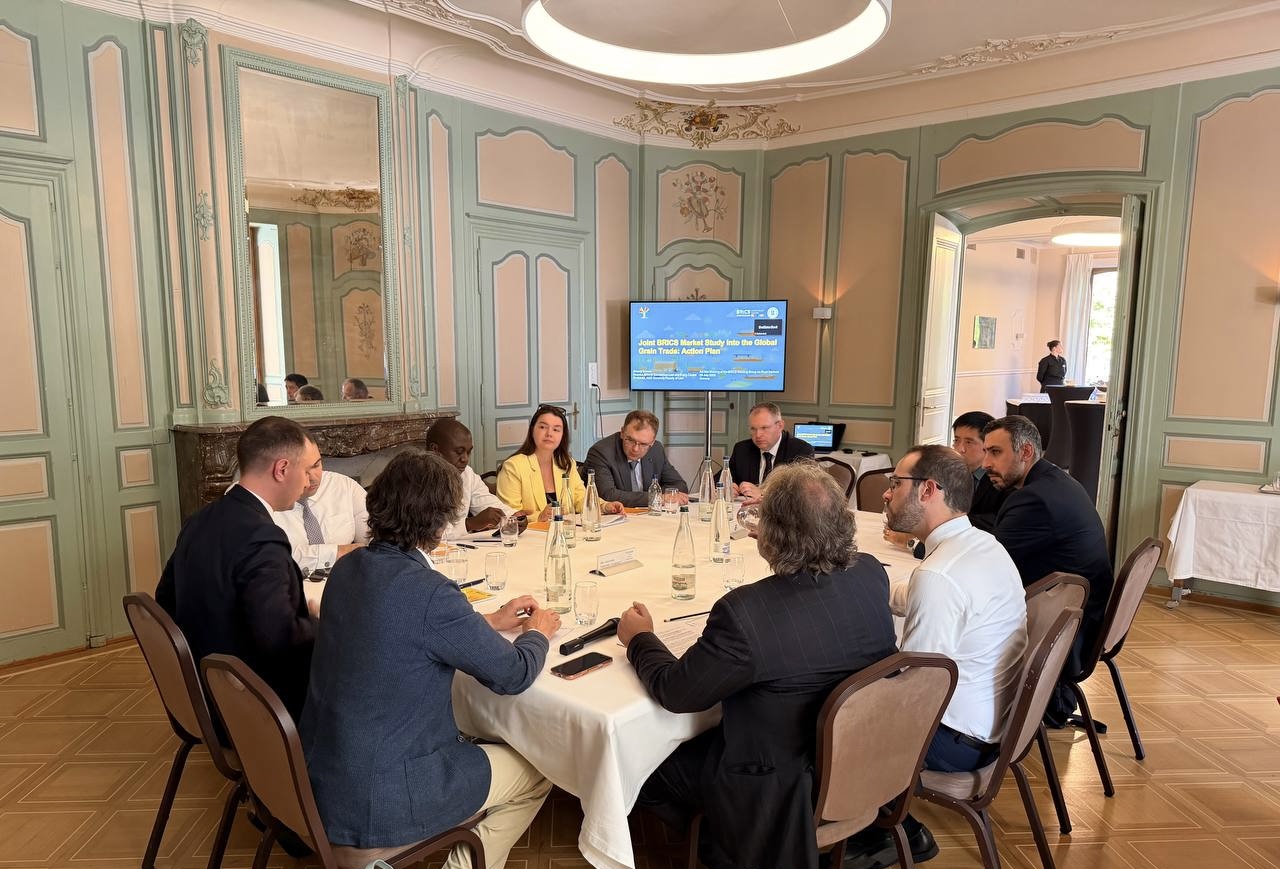
GENEVA, SWITZERLAND – Media OutReach Newswire – 17 July 2026 – Competition authorities from BRICS countries have established a task force to conduct a joint sector inquiry into the global grain trade, marking a new step in cooperation on competition policy across international agricultural markets.

b69d099e-39ab-42c4-9f47-f232057b4072.jpg

The decision was announced during the discussion “Competition Development in Global Grain Trade: Joint Efforts of BRICS Countries”, organized by the BRICS Competition Law and Policy Centre on the sidelines of the 23rd Session of the UNCTAD Intergovernmental Group of Experts on Competition Law and Policy in Geneva.

The event included a closed meeting of BRICS competition authorities and a public panel featuring researchers, academics and representatives of international organizations.

Discussions focused on competition in global grain markets, the growing influence of financialization and digitalization across agricultural value chains, and policy tools to improve market transparency. Participants also reviewed the findings of a joint report prepared by the BRICS Competition Centre and UNCTAD (link: https://www.bricscompetition.org/ru/grainreport) , first presented at the 9th BRICS International Competition Conference in Cape Town in 2025.

A coordinated market study

The central outcome of the meeting was the establishment of a BRICS task force that will coordinate a joint sector inquiry into global grain trade within the framework of the BRICS Working Group on Food Markets.

The task force will be co-chaired by Diogo Thomson, President of Brazil’s Administrative Council for Economic Defense (CADE), and Mahmoud Momtaz, Chairperson of the Egyptian Competition Authority (ECA).

Thomson welcomed the initiative and proposed making competition in global grain trade a key topic at the next BRICS International Competition Conference, scheduled to take place in Brazil in 2027.

“Brazil is the only jurisdiction that has launched an investigation into digital grain trading platforms such as Covantis. I therefore strongly welcome this sector inquiry, which will help us better understand the impact of digitalization across grain supply chains and the risks it may create for competition. I also support using the BRICS Competition Centre as the coordination platform for this work,” he said.

Momtaz said one of the main conclusions of the BRICS-UNCTAD report was the significant role speculative activity plays in global grain markets.

“One of the key findings of the report presented by the BRICS Competition Centre is the extent to which speculative factors influence global grain trade. The most effective response is greater market transparency. We should not accept a situation where farmers receive only a small share of the value they create while consumers in Egypt pay excessively high prices for bread. Where does this margin accumulate, and who ultimately benefits from it? These are the questions our sector inquiry should answer,” he said.

He also proposed that the task force develop a common AI-powered price monitoring tool covering BRICS grain markets.

“Such a tool would provide the information needed for market analysis and become an important complement to the joint sector inquiry,” Momtaz added.

From analysis to policy recommendations

Hardin Ratshisusu, Deputy Commissioner of the Competition Commission of South Africa, said the study should contribute to the implementation of the BRICS Grain Exchange initiative endorsed by BRICS leaders in the Kazan Declaration (2024) and the Rio de Janeiro Declaration (2025).

“The proposal to establish a BRICS Grain Exchange should become one of the key recommendations of the sector inquiry as an innovative mechanism for restoring competition in global grain trade. Our objective is not merely to identify market problems but to develop practical recommendations that can ultimately be submitted to the leaders of our countries,” he said.

Alexey Ivanov, Director of the BRICS Competition Law and Policy Centre, said competition authorities should play a central role in designing the institutional framework of the future exchange.

“The BRICS Grain Exchange should not become another formal institution. It must serve as a practical mechanism for improving competition and market transparency. Competition authorities are uniquely positioned to identify the institutional features that will allow the exchange to achieve these objectives,” he said.

Growing international role

Frédéric Jenny, Chairmanof the OECD Competition Committee, said the initiative demonstrated the growing international role of BRICS competition authorities.

“This project illustrates how BRICS competition authorities are becoming drivers of the global competition agenda. In the past, they largely followed the lead of developed jurisdictions. That is no longer the case. There are very few examples worldwide of such close cooperation between competition authorities. This applies not only to joint market studies, but also to enforcement cooperation and competition advocacy. Rather than acting individually, you have found both the mechanisms and the political will to work together,” Jenny said.

The task force will now begin developing the methodology and work plan for the joint inquiry. Its findings are expected to provide policy recommendations aimed at strengthening competition, improving transparency in global grain trade, and supporting future BRICS initiatives in agricultural markets.

Hashtag: #BRICSCompetition

The issuer is solely responsible for the content of this announcement.

3TREES Sets Guinness World Record: The Largest Coatings Showroom — Grand Opening of 3TREES Quality Homes Technology Experience Center

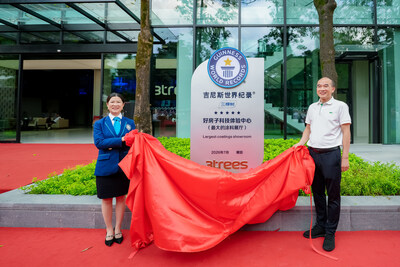
PUTIAN, China, July 17, 2026 /PRNewswire/ — On July 16, SKSHU Paint Co., Ltd. (“3TREES”) held a grand opening ceremony for its Quality Homes Technology Experience Center at the corporate headquarters in Putian, Fujian, officially winning the Guinness World Record for the largest coatings showroom. Hong Jie, Chairman and CEO of 3TREES, and official Guinness World Records Adjudicator Luo Qiong jointly unveiled the plaque of this nearly 20,000-square-meter immersive complex, attracting nearly 1,000 partners, employees and guests from all walks of life.


Renovated from a two-decade-old idle factory with 3TREES green coating materials, the venue sets a replicable benchmark for urban renewal and industrial tourism. It retains original industrial textures while adopting innovative eco-materials and smart construction techniques, forming a livelihood project that improves residents’ sense of happiness. Developed by a global expert design team for nearly one year, the four-story hall integrates brand display, cultural inheritance and real-scene experience, covering all industrial chain solutions of retail, engineering, industrial coatings and traditional lacquer.


The first floor focuses on consumer-side healthy home renovation; the second displays B-end urban renewal and intelligent construction systems; the third floor features an art museum showcasing 8,000-year-old Chinese lacquer intangible heritage; the fourth offers a lifestyle experience zone. Its core “Instant Renovation for Immediate Move-in” solution realizes fast, low-cost space upgrading without large-scale demolition.


During the ceremony, the record fully highlights outstanding Chinese brand power, presenting a new model combining green smart manufacturing and spatial aesthetics to the globe. Adhering to the mission of building better homes and cities, 3TREES’ landmark center redefines global standards for coating exhibition spaces. Going forward, the brand will push coordinated development of product quality and industry services, accelerate domestic substitution of high-end industrial coatings, and continuously create healthier living spaces for people.

3Trees Contact:
email: info@3treespaint.com   
whatsapp:Nina Lin +86 15860082171

Singapore Tourism Board and Traveloka Renew Partnership to Welcome More Southeast Asian and Australian Travellers to Singapore

The fourth agreement since 2019 deepens co-branded campaigns and data-led destination marketing across Indonesia, Malaysia, Thailand, Vietnam and Australia.

SINGAPORE, July 17, 2026 /PRNewswire/ — To drive the next phase of tourism growth, the Singapore Tourism Board (STB) and Traveloka yesterday signed a Memorandum of Understanding to promote Singapore as a preferred destination for travellers across five key source markets: Indonesia, Malaysia, Thailand, Vietnam and Australia.

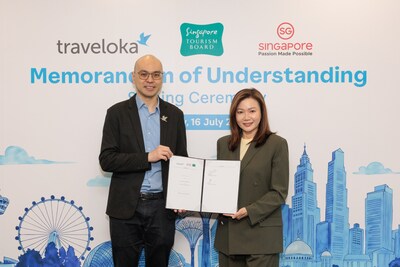
Melissa Ow, Chief Executive, Singapore Tourism Board, and Albert, Co-founder, Traveloka, signing a Memorandum of Understanding to solidify a partnership to promote Singapore as a preferred destination in Indonesia, Malaysia, Thailand, Vietnam and Australia. (Credits: Traveloka)

The agreement extends a longstanding partnership through agreements signed in April 2019, May 2022 and January 2024. For the first time, it has expanded to include Australia – a key source market for both organisations – as well as events marketing to leverage Singapore’s position as a leading hub for live entertainment. 

Under the partnership, STB and Traveloka intend to collaborate across four areas: co-branded tactical campaigns spotlighting Singapore on Traveloka’s platform; destination storytelling that helps travellers discover what to see and do; travel tied to Singapore’s vibrant events calendar; and the exchange of aggregated, privacy-safe travel insights that help STB sharpen how Singapore is marketed in each source market. Traveloka’s role is to put its regional reach and consumer insight to work behind Singapore’s destination ambitions.

Aligned with STB’s broader ‘We Don’t Wait For Fun‘ campaign, the co-branded campaigns will target two priority traveller segments – visitors in the early stages of their careers, and families with kids – encouraging them to seize the moment for a Singapore getaway.

“This renewal reflects the importance of Southeast Asia and Australia, as well as the strength of our longstanding partnership with Traveloka,” said Ms Melissa Ow, Chief Executive, Singapore Tourism Board. “Traveloka’s reach, combined with its deep understanding of how travellers in this region discover and book, makes it a strategic partner in our efforts to grow high-yield visitation and ensure Singapore remains a destination worth returning to, time and again.”

Mr Albert, Co-founder, Traveloka says, “Singapore is one of the most-loved destinations among our travellers, and demand across our markets continues to grow. Our role is to be a trusted enabler, bringing the audience, the insight and the all-in-one booking experience that help STB tell Singapore’s story to the right travellers. After more than half a decade working together, this renewal is a sign of the trust we’ve built.”

The collaboration also looks ahead to newer ways of working. Both parties will develop seasonal promotions aligned to Singapore’s events calendar, and explore how data-driven insight and emerging AI tools can support destination storytelling and content discovery, within agreed data-governance and privacy safeguards. As a data-driven platform, Traveloka sees this as part of how modern destination marketing will be done across the region.

About the Singapore Tourism Board

The Singapore Tourism Board (STB) is the lead development agency for tourism, one of Singapore’s key economic sectors. Together with industry partners and the community, we shape a dynamic Singapore tourism landscape. We bring the Passion Made Possible brand to life by differentiating Singapore as a vibrant destination that inspires people to share and deepen their passions.

More: www.stb.gov.sg or www.visitsingapore.com | Follow us: STB LinkedIn, STB Facebook or STB Instagram

About Traveloka

Traveloka is Southeast Asia’s leading all-in-one travel tech platform, bringing flights, hotels, activities, travel insurance, and eSIM together in a single app. Founded in 2012, Traveloka now operates across Australia, Indonesia, Japan, Malaysia, the Philippines, Singapore, South Korea, Thailand, and Vietnam. With over 140 million app downloads, Traveloka was named Best Travel App at the Sensor Tower APAC Awards. With access to over 2 million hotels worldwide and 24/7 live chat support, Traveloka’s mission is to make travel more accessible and enjoyable for everyone across the region and beyond.

Follow us: Traveloka LinkedIn

VinFast VF 8: Blending Business and Family Leisure in an Electric SUV

Today’s premium SUVs are expected to do more than ever before. For EVs, that expectation increasingly extends beyond the drive itself to the ownership experience that comes with it.


DUBAI, UNITED ARAB EMIRATES – Media OutReach Newswire – 17 July 2026 – There’s a reason premium SUVs remain the vehicle of choice across much of the Middle East. People here spend a lot of time in their cars, commuting between cities, shuttling between meetings, while thinking nothing of driving hundreds of kilometers over a long weekend.

VinFast VF 8: Blending Business and Family Leisure in an Electric SUV

A vehicle is where conference calls are taken between appointments, where children fall asleep in the back seat on the drive home, and where many of the ordinary moments of daily life quietly unfold. That is also why buyers in the region tend to value both performance and convenience, rather than simply paying for horsepower or a premium badge.

Electric vehicles have made those decisions even more nuanced. Not long ago, conversations about EVs were largely centered on battery size, driving range and charging times. Those questions still matter, but increasingly, buyers also demand a clear picture of their post-delivery ownership experience, specifically requiring convenient charging, straightforward servicing, and long-term support.

Viewed through that lens, perhaps the most interesting thing about the VinFast VF 8 isn’t any single specification. Rather, it is the way the company has approached the ownership experience around it.

Designed by the legendary Italian design house Pininfarina, the all-electric D-segment SUV combines premium styling with everyday practicality. With up to 493 km of NEDC driving range and up to 402 horsepower through its dual-motor AWD system, the VF 8 is equally at home navigating city traffic or tackling longer journeys across the region. Its spacious cabin, Level 2 driver assistance technologies and 15.6-inch infotainment display are designed with comfort in mind, whether the journey lasts twenty minutes or two hours.

In the UAE, buyers also benefit from a 10-year vehicle warranty, a 10-year unlimited-mileage battery warranty, 24/7 roadside assistance and five years of free maintenance up to 100,000 km. These benefits strike at the heart of the EV ownership experience, especially for first-time buyers. Running low on charge before an important meeting or worrying about finding support on a long drive are precisely the kinds of concerns that can make consumers hesitate about making the switch.

Globally, VinFast has been investing heavily in the ecosystem surrounding its vehicles. Earlier this year, the company signed agreements with 29 international aftersales partners as part of its plan to expand its global service network to more than 1,100 workshops across North America, Europe, the Middle East and Asia during 2026. The initiative includes globally standardized technician training alongside software updates, battery inspections and technical support throughout the ownership journey.

In the UAE, VinFast works with Al Tayer Motors to provide local aftersales support while continuing to strengthen its regional service network through experienced local partners. Earlier this year, the company also signed an MoU with PlusX Electric, a DEWA-approved charging provider, to complement its charging ecosystem with portable charging pods, on-demand mobile charging and emergency roadside charging services.

In many ways, the Middle East’s EV market is still writing its next chapter. Buyers have more choices than ever before, but expectations are rising just as quickly. Developing a competitive electric SUV addresses only part of the equation; ensuring a seamless ownership experience may ultimately prove equally decisive.

Hashtag: #VinFast

The issuer is solely responsible for the content of this announcement.

Laos Detains 42 Thai Nationals in Savannakhet Online Gambling Raid

Lao authorities detained 42 Thai nationals. Kaysone Phomvihane City, Savannakhet Province, Laos. 16 July 2026. (Photo: Savannakhet Police)

Lao authorities detained 42 Thai nationals on 16 July after raiding a warehouse in Savannakhet Province allegedly being used to operate illegal online gambling websites.

The raid took place at around 1:30 PM in Nalao village, Kaysone Phomvihane City, after police received reports from local residents that a group of foreigners had rented the warehouse and were running online gambling operations around the clock.

During the operation, police detained 42 Thai nationals and seized numerous desktop computers and mobile phones believed to have been used in the operation.

Authorities said they are continuing to investigate the network to identify additional suspects and others linked to the operation.

The raid is the latest in a series of gambling-related crackdowns across Laos, particularly in provinces along the Thai border.

In June, authorities in Savannakhet detained 161 Vietnamese nationals during a raid on a resort in Sepon district, where police uncovered an illegal gambling operation involving cockfighting, card games, and dice betting. Officers seized 49 passports, 69 mobile phones, more than VND 2.1 billion (approximately USD 80,000) in cash, as well as laptops, safes, money-counting machines, CCTV server equipment, gambling tables, and playing cards.

Just weeks earlier, on 13 May, police detained 102 Thai nationals during raids on three locations in Kaysone Phomvihane City. The suspects were later handed over to Thai authorities at the First Lao–Thai Friendship Bridge on 21 May.

A similar operation was carried out in neighboring Bolikhamxay province later that month, where Lao authorities deported 106 Thai nationals after uncovering another alleged online gambling operation in Paksan district. The group was transferred to Thai police at the Fifth Lao–Thai Friendship Bridge on 27 May.

A similar case also emerged in the capital.

On 17 July, Vientiane authorities handed over 20 Thai nationals to Thailand after arresting them at an apartment in Sisattanak district on suspicion of operating an online gambling website.