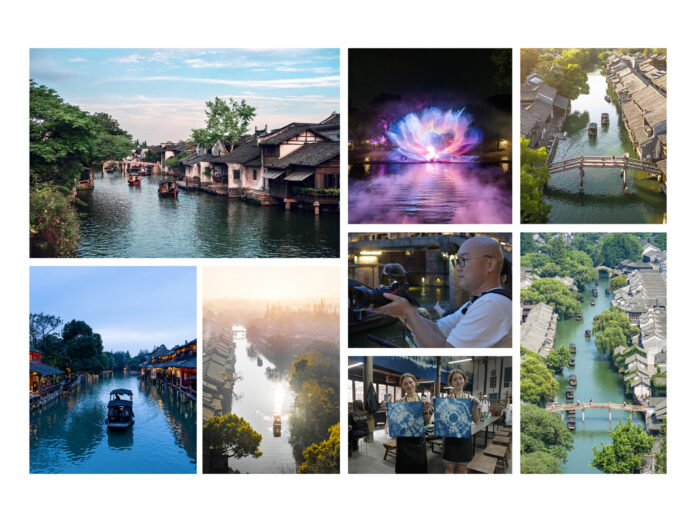
TONGXIANG, CHINA – Media OutReach Newswire – 9 November 2025 – From August to September 2026, South Korean actress Kim Hee-sun and Korean influencers visited Wuzhen, Zhejiang Province, experiencing traditional crafts, boat rides and water town life. Their social media posts drew attention to the “Wuzhen route,” introducing the 1,300-year-old town to travelers from South Korea and Southeast Asia.
The trend began with Kim Hee-sun’s visit, followed by Korean creators exploring boat rides, heritage workshops, Xizha’s night scenery and waterfront breakfasts. Their experiences offered international audiences a glimpse into traditional Chinese culture and Wuzhen’s charm.
Why Wuzhen? Located in Jiaxing, Zhejiang Province, it is among China’s first designated Historic and Cultural Towns, a national 5A tourist attraction and the permanent host of the World Internet Conference Wuzhen Summit. Its canals, stone bridges and traditional houses embody Jiangnan’s water town scenery. Dongzha preserves local customs, while Xizha offers nighttime sightseeing, waterfront accommodation and resort facilities. The Wuzhen Theatre Festival and Mu Xin Art Museum connect heritage with contemporary culture. Connections to Shanghai and Hangzhou make Wuzhen accessible to international visitors.
For Korean creators, Wuzhen offers more than scenery. Visitors can explore traditional craftsmanship at blue calico dyeing workshops and Yida Silk Workshop, sample local pastries such as gusao bing and dingsheng gao, and watch Dongzha’s boat-based martial arts and high-pole performances. These experiences bring local traditions to life.
Traditional sculling boats capture Wuzhen’s unhurried rhythm, gliding past whitewashed houses, stone bridges and waterfront homes. Mornings bring tea gatherings and floating markets; afternoons invite visits to Lingshui Residence and Zhaoming Academy. At dusk, Xizha’s illuminated canals create a peaceful setting before an overnight stay at a waterfront guesthouse.
Growing Korean interest also reflects changing travel preferences. With easier travel between China and South Korea, visitors increasingly seek cultural immersion, relaxation and longer stays. Wuzhen has improved international card payments, currency exchange and multilingual services. Travelers are moving beyond sightseeing toward experiencing everyday local life, supported by the town’s heritage and hospitality facilities.
From celebrity visits to social media sharing, the “Wuzhen route” offers East Asian urban travelers a chance to slow down. Whether enjoying a boat ride, traditional craft or waterfront overnight stay, visitors from Korea and beyond are invited to discover China’s water town lifestyle. Come to Wuzhen and spend a day at your own pace.
Hashtag: #Wuzhen
The issuer is solely responsible for the content of this announcement.
Real-World Experience Meets the Demands of Crisis Response In anesthesia practice, a crisis can develop within moments. An airway emergency, severe bleeding, or sudden cardiovascular instability demands more than individual knowledge: teams must assess the situation, communicate clearly, coordinate roles, and act decisively while keeping patient safety at the centre.
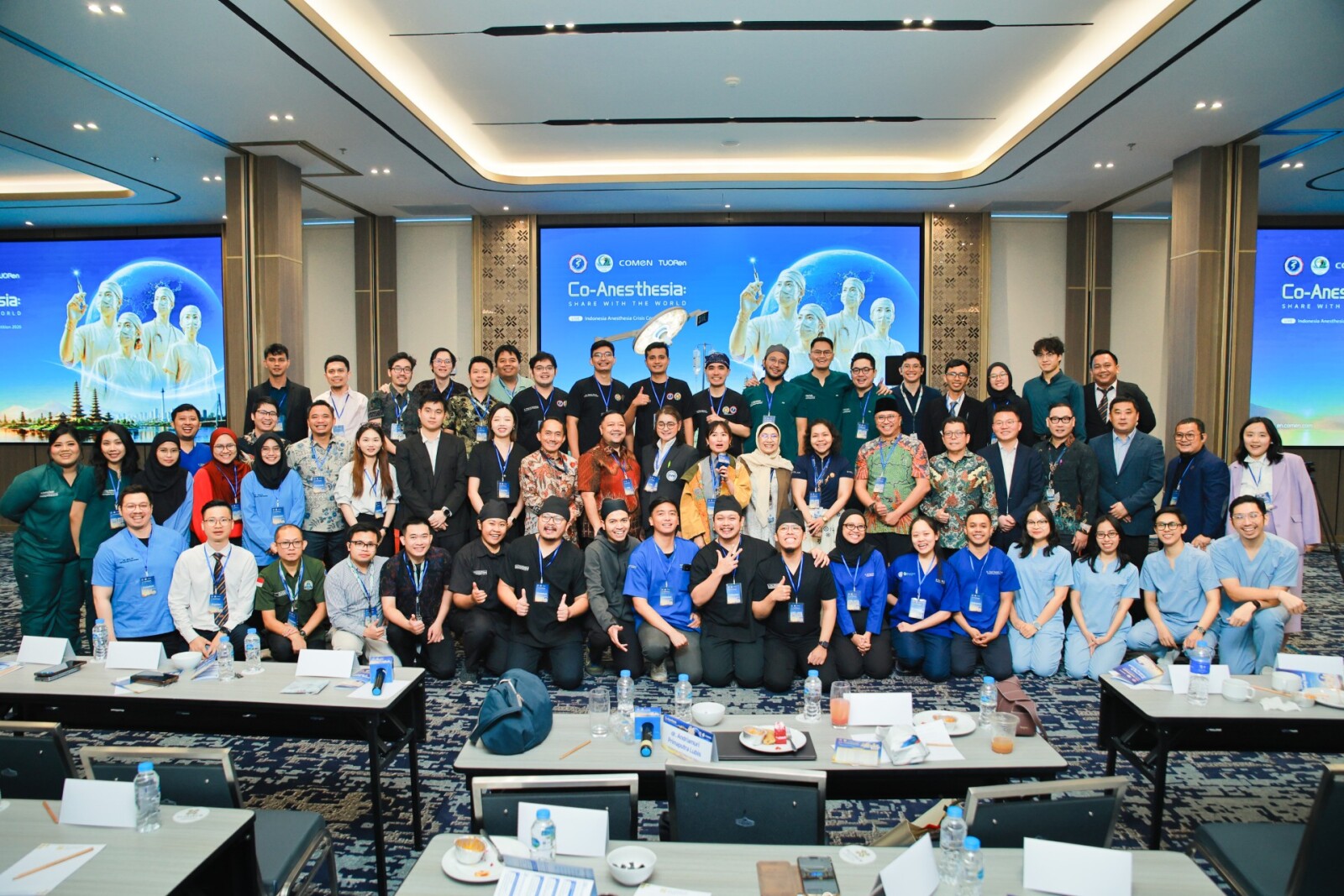
Against this clinical backdrop, nine finalist teams representing major teaching hospitals, referral centres, and regional anesthesia services across Indonesia brought experience from diverse perioperative and critical-care settings to the stage. From case presentation to live simulation and debriefing, the teams demonstrated how they would identify priorities, interpret evolving clinical information, and coordinate their response when a crisis disrupts routine practice. The finalists were:
ARISE-UI — RS Cipto Mangunkusumo
ThinkTank Team— RSUP Dr. M. Djamil Padang
Balinesthesia 1— RSUP Prof Dr. IGNG Ngoerah Denpasar 1
Code Blue Studio— RS Prof dr Chairuddin Panusunan Lubis
Anestesi Unpad— RSUP Dr. Hasan Sadikin Bandung
GAMA-CITO— RSUP Dr. Sardjito
Aremanest UB — RSUD Saiful Anwar Malang
Balinesthesia 2— RSUP Prof Dr. IGNG Ngoerah Denpasar 2
IAC Anestesi Unsoed— RSUD Margono Soekarjo
From Expert Assessment to Shared Professional Learning The live final was guided by a distinguished panel of anesthesia and intensive care experts from Indonesia and the Philippines. Their combined clinical, educational, and professional experience brought depth to the evaluation, which considered broad dimensions including case design, clinical management, technical and non-technical performance, patient safety, and the educational value of debriefing.
Following the final assessment, IAC Anestesi Unsoed from RSUD Margono Soekarjo emerged as the national champion and will advance to the planned 2027 Asia Grand Final in Malaysia. The value of the final extended beyond the ranking. Through observation, expert feedback, and professional discussion, the live format enabled participants and observers to compare approaches to the same underlying pressures, examine the role of leadership and teamwork, and exchange practical perspectives on crisis response. This is the central purpose of simulation-based competition: to turn demanding scenarios into a shared learning experience that can inform future practice.
Building the Next Stage of Collaboration During the event, Comen Medical and PERDATIN signed a Memorandum of Understanding on strategic cooperation in medical education, simulation-based training, and academic exchange. The MOU provides a framework for the two parties to explore future collaboration in areas such as simulation-based learning programmes, hands-on workshops, continuing education activities, and professional exchange, with specific initiatives to be developed through separate agreements and work plans.
More than a competition, CO-Anesthesia connects real clinical experience with structured simulation and cross-border exchange. Following the Indonesia final, competitions in India, and the Philippines will continue the series, extending its focus on team readiness and professional learning across more anesthesia communities.
The issuer is solely responsible for the content of this announcement.
About Comen Medical
Comen Medical, founded in 2002, is a research-driven enterprise committed to independent innovation. For over two decades, the company has been dedicated to the fields of life support, medical imaging, and informatization, while continuously expanding into in-vitro diagnostics (IVD) and large-scale surgery. For more information, please visit https://en.comen.com/.
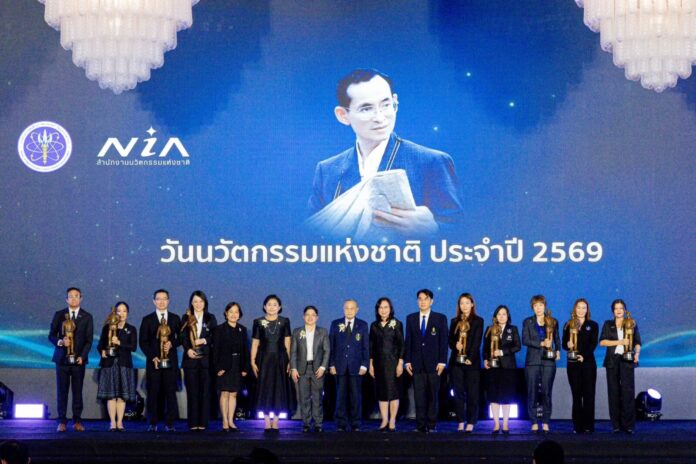
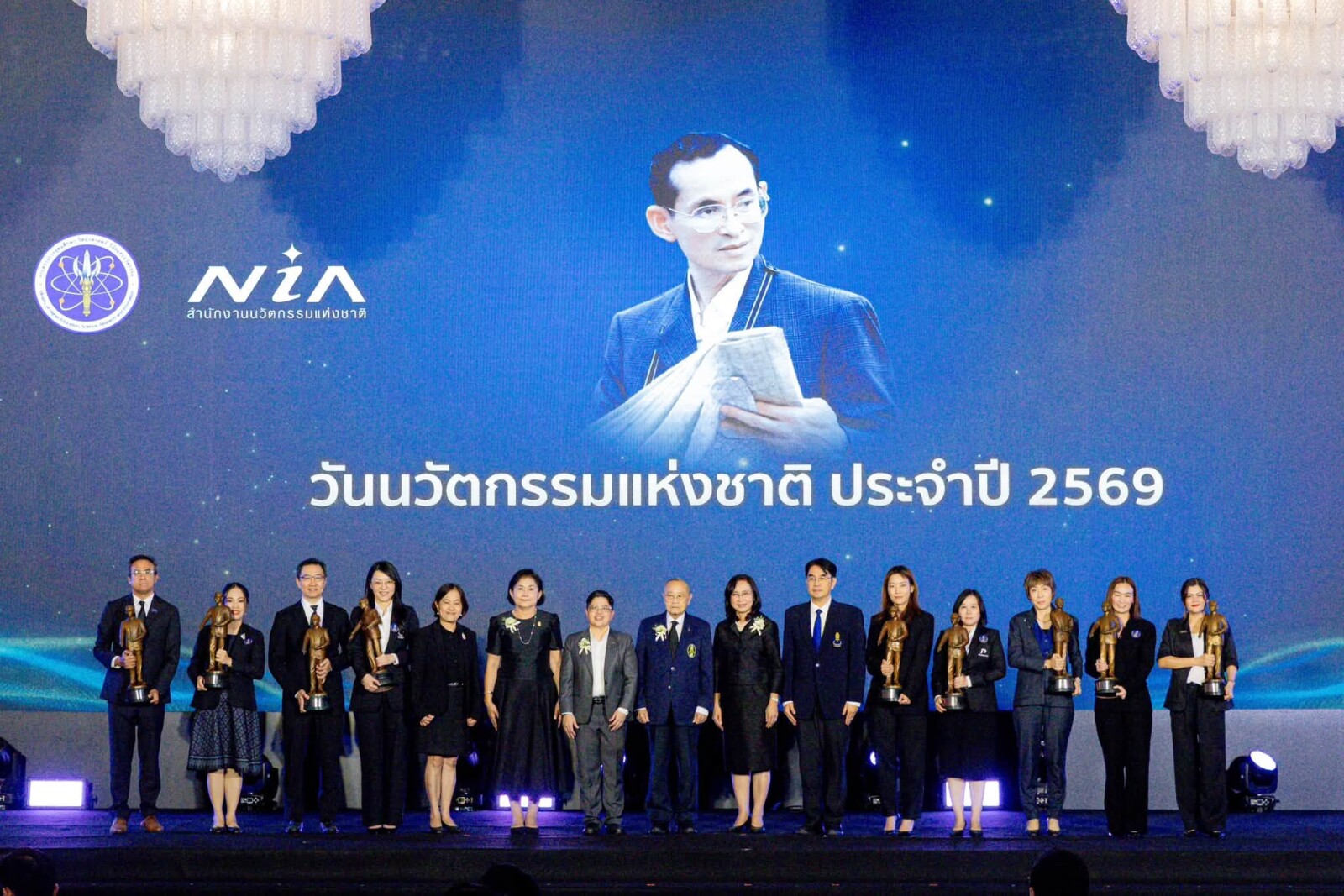
BANGKOK, THAILAND – Media OutReach Newswire – 9 November 2026 – The Ministry of Higher Education, Science, Research and Innovation (MHESI), through the National Innovation Agency (Public Organization) (NIA), hosted the annual National Innovation Day 2026 awards ceremony. The event honors and commemorates the extraordinary innovation visionary, His Majesty King Bhumibol Adulyadej The Great (Rama IX)—revered as the “Father of Thai Innovation”—whose royal initiative, the Klaeng Din (soil aggravation) project, demonstrated pioneering resource management. During the ceremony, the NIA announced the winners of the prestigious National Innovation Awards, celebrating outstanding Thai innovators and forward-thinking organizations across the public, private, and academic sectors whose contributions generate tangible value for institutions, society, and the nation. Concurrently, the ceremony featured the presentation of the Innovation Thailand Awards and the Thai Rice Innovation Awards, both longstanding collaborative initiatives spearheaded by the NIA.
Dr. Krithpaka Boonfueng, Executive Director of the National Innovation Agency (NIA), said that National Innovation Day remains an essential annual forum dedicated to commemorating the royal grace, genius, and enduring innovation legacy of King Bhumibol Adulyadej The Great. The Ministry of Higher Education, Science, Research and Innovation strongly believes that human capital is the cornerstone of building an innovation-driven society. Consequently, the NIA prioritizes workforce upskilling across all generations alongside deploying technology and innovation to mitigate inequality, expand economic opportunities, enhance quality of life, and sharpen national competitiveness. This mission accelerates Thailand’s transition from a mere consumer of technology into a prolific creator of high-value innovation. The event serves not only as a platform to recognize trailblazers, but also as a catalyst to foster widespread awareness, stimulate active technology adoption, showcase Thai ingenuity on the world stage, and collectively advance Thailand toward becoming a sustainable “Innovation Nation.”
“The National Innovation Awards represent the highest distinction in Thailand’s innovation landscape. They celebrate Thai innovators whose pioneering work delivers clear, measurable value to the country, sparking pride and creative momentum across all sectors while elevating our national image as an emerging Innovation Nation,” stated Dr. Krithpaka. “Now in its 22nd year, the competition reflects a rapid leap forward in domestic innovation capability, keeping pace with an evolving global landscape. Historically, more than 6,736 submissions have entered the awards, with over 370 projects recognized, collectively generating an economic, social, and environmental impact valued at over 138 billion baht.”
Dr. Krithpaka highlighted three winning innovations from the 2026 National Innovation Awards that exemplify success across economic, social, and environmental dimensions, underscoring Thai entrepreneurs’ capacity to combine deep technology with commercial viability:
1. BUZZEBEES: Elevating CRM through AI to Boost Marketing Efficiency and Business Growth Developed by Buzzebees Co., Ltd., this end-to-end customer relationship management (CRM) and online engagement platform secured first prize in the Economic category (Large and Medium Enterprise division). Powered by advanced AI algorithms, the platform streamlines customer data management, consumer behavior analytics, and precision-targeted marketing campaigns. It empowers enterprises to connect with target demographics accurately, retain customer bases, and unlock new revenue streams.
The comprehensive suite encompasses loyalty and points-redemption programs, payment and order management workflows tailored for SMEs and restaurants, and e-commerce channel operations, alongside targeted digital media and affiliate marketing powered by a vast influencer and Key Opinion Leader (KOL) network. By leveraging real-time business diagnostics and automated campaign personalization, the platform can deploy fully functional solutions within just five business days—a 20-fold reduction in turnaround time compared to traditional development cycles that often require up to 100 days.
Currently, BUZZEBEES supports over 500 enterprise platforms, more than 1,500 SME and merchant networks, and an aggregate user base exceeding 200 million consumer and distributor accounts. Notable deployments include Tops’ personalized loyalty platform, which serves over 210,000 active users and has processed more than 40 million reward redemptions. In 2025, the company generated over 2 billion baht annually in gross merchandise value (GMV) through international affiliate channels, saved domestic corporations over 600 million baht annually by replacing reliance on foreign enterprise software, posted 2.964 billion baht in total revenue, and created an average of 260 local tech jobs annually.
2. INSPECTRA MMG: Deep-Learning AI for Mammography Analysis Enhancing Breast Cancer Screening Developed by Perceptra Co., Ltd., INSPECTRA MMG captured first prize in the Social category (Large and Medium Enterprise division). The diagnostic-support AI system assists radiologists in interpreting screening mammograms, specifically targeting the diagnostic complexities posed by dense breast tissue—a characteristic prevalent among Asian women that frequently obscures underlying lesions in standard screenings.
Trained on a proprietary dataset of more than 400,000 mammographic images from Thai cohorts, INSPECTRA MMG detects subtle indicators of malignancy to assist clinical decision-making. Deployed in Thai clinical settings for over three years across more than 220,000 processed patient cases, the tool reduces radiologists’ workloads, optimizes diagnostic throughput, and democratizes access to early cancer detection in medically underserved provinces. Validation data submitted by the company demonstrates an impressive Cancer Detection Rate of 97%, validating AI’s efficacy as a clinical decision-support asset while maintaining physician oversight as the ultimate diagnostic authority. Looking ahead, Perceptra plans to expand outreach via mobile mammography screening units for remote communities, implement an annual software-as-a-service (SaaS) subscription model to fund continued R&D, and scale operations into broader Southeast Asian healthcare markets.
3. MyraShell Aroma: Upcycling Marine Shell Waste into Sustainable Luxury Bio-Materials Developed by Manee Mongkol Gems Factory Co., Ltd., “MyraShell Aroma – Sea of Love” won top honors in the Environmental category (Micro & Small Enterprise, and Social Enterprise division). The initiative upcycles discarded green mussel shells sourced from coastal fishing communities into high-value decorative bio-materials under circular economy principles, effectively curbing coastal waste while establishing sustainable secondary income streams for local artisanal fishers.
The innovation isolates nacre (mother-of-pearl) and calcium carbonate fractions from marine shells, formulating them with bio-based binding polymers and precision engineering techniques into durable, aesthetically sophisticated materials suitable for fine jewelry and luxury decor. MyraShell Aroma features a calibrated micro-porous surface that absorbs and disperses fragrances ambiently without electricity, designed for repeated aromatic refills.
The company has expanded its portfolio under the MyraShell and MyraGem brands to supply interior panels, lighting fixtures, and architectural finishes to luxury five-star hospitality brands. Manee Mongkol Gems collaborates with the Chonburi Fisheries Association and the Sawang Pratheep Community Enterprise for ethical raw material sourcing, complete with origin-traceability protocols, and partners with Kasetsart University on material validation with research grant backing from the NIA. The breakthrough gained international acclaim at Milan Design Week at Superstudio Events in Milan, Italy, where the team exhibited a 3×3-meter “Sea of Love” feature wall. Capitalizing on sustainable luxury storytelling, the company is actively expanding its direct export channels across Italy, Germany, France, and Hong Kong.
Supporting Broader Innovation Ecosystems Alongside the flagship honors, the ceremony presented accolades across complementary specialized initiatives:
The 22nd National Innovation Awards: Organized directly by the NIA to honor impact across five dedicated pillars: Economy, Society, Environment, Innovation Communicator, and Innovative Organization. The 2026 edition drew 437 competitive submissions.
The 26th Innovation Thailand Awards: Co-organized with the Science Society of Thailand under the Patronage of His Majesty the King, this initiative fosters youth-led innovation and guides intellectual property toward viable commercialization across two academic tiers: Higher Vocational/Undergraduate and Vocational/Secondary levels (attracting 494 entries).
The 18th Thai Rice Innovation Awards: Co-hosted with the Thai Rice Foundation under Royal Patronage to incentivize high-value product transformation and process innovation across the rice value chain. Awards were conferred across Industrial and Community Enterprise categories, drawing 82 submissions.
Serving as the nation’s “Focal Conductor,” the NIA continues to align with domestic and international partners through its core Groom – Grant – Growth – Global framework. This integrated strategy aims to expand Thailand’s cohort of market-ready innovation-driven enterprises (IDEs), catalyze economic value creation, and fortify national competitiveness to firmly cement Thailand’s standing as an internationally recognized Innovation Nation.
Hashtag: #NIA
The issuer is solely responsible for the content of this announcement.
TOKYO, JAPAN – Media OutReach Newswire – 9 November 2026 – TORRAS (楽創未来株式会社), a mobile accessory brand, has released the USBC charger ‘FlashEye Dot’. FlashEye Dot is a smart charger that detects the iPhone model and battery status to deliver appropriate charging power. It shows the device model name, charging output and remaining battery level on its display in real time. It offers up to 45W USBC output. It can charge an iPhone 17 Pro up to 50% in around 20 minutes and is also compatible with iPad and MacBook Air. Equipped with GaN and ToraIce lowtemperature charging protection technology, it regulates temperature during charging and features over-current, over-voltage and overheating protection. Its 45° angled display auto-rotates based on the charger’s orientation. Tapping the top of the Dot triggers fun facial expressions on screen. The product comes with an 18-month warranty starting from the date of purchase.
Note: iPhone 18 supports fast charging but does not work with the model detection function.
Hashtag: #TORRAS
The issuer is solely responsible for the content of this announcement.
Vientiane-based agency joins One Asia Communications as regional leaders examine how artificial intelligence is reshaping brand discovery, reputation and trust.
Vientiane-based agency joins One Asia Communications as regional leaders examine how artificial intelligence is reshaping brand discovery, reputation and trust.
Laos has joined One Asia Communications (OAC), a regional network of independent communications agencies spanning 13 Asian markets, with Vientiane-based RDK Group representing the country.
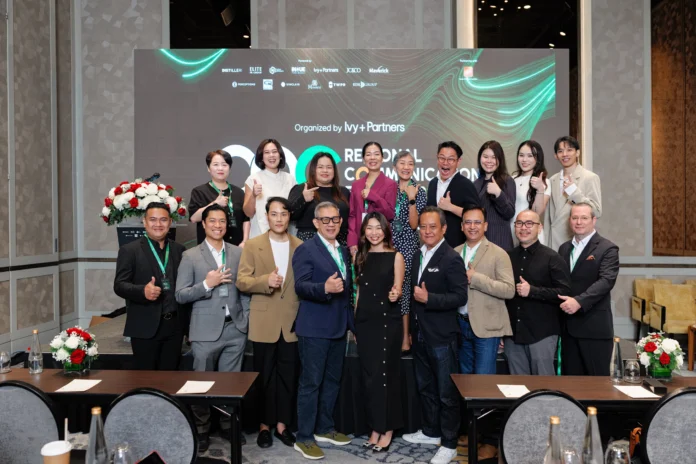
The membership was introduced at the inaugural OAC Regional Communications Forum, held on November 5, 2026, in Ho Chi Minh City, Vietnam, bringing together brand and communications professionals from across Asia to examine the growing influence of artificial intelligence on the industry.
Led by RDK Group Senior Partner Aditta Kittikhoun, the company’s participation establishes a new connection between Laos’ marketing and communications industry and a wider regional network of independent agencies.
OAC connects locally established agencies across Asia, allowing members to retain their independent operations and market expertise while collaborating on cross-border projects and international client requirements.
The network’s approach reflects the growing importance of combining regional reach with an understanding of individual markets, particularly as businesses increasingly seek to engage audiences across different cultural and linguistic environments.
AI Visibility is Not the Same as Trust
The OAC forum, hosted by Ivy+Partners with OAC as network partner, focused on how businesses can move beyond AI-driven brand discovery to build credibility, trust and relevance.
Under the theme Found by AI, Chosen by Humans: Rethinking Communications Strategy in Asia, discussions explored how generative artificial intelligence is changing the ways consumers discover, evaluate and interact with brands.
One emerging consideration is Generative Engine Optimisation (GEO), an approach that seeks to improve how brands appear in AI-generated responses and recommendations.
However, appearing in an AI-generated answer does not necessarily mean a brand is accurately represented or trusted.
Ivy Nhi Chau, CEO of Ivy+Partners in Vietnam, highlighted during the forum that reputation is shaped not only by what audiences encounter online but also by stakeholder relationships and real-world experiences.
The discussion also examined the growing volume of AI-generated content and the risk that businesses could prioritize production speed and visibility at the expense of distinctive messaging and meaningful audience engagement.
Ong Hock Chuan, Chair of the OAC Network and Managing Partner at Maverick Indonesia, noted that AI visibility and GEO can help brands understand how they appear in AI-driven discovery, but that visibility data becomes valuable only when it informs decisions about brand positioning, content and communications priorities.
The broader message was that technology can help businesses become more discoverable, but building a credible and trusted reputation requires a much wider approach.
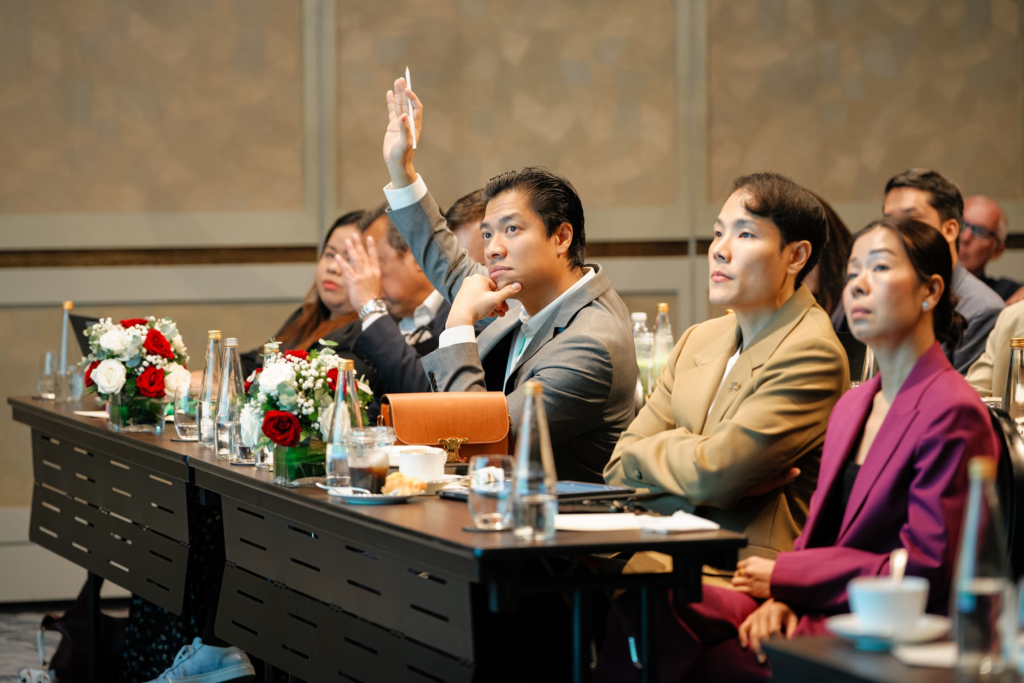
Aditta Kittikhoun, Senior Partner at RDK Group, shares insights on Laos’ evolving digital media landscape during the OAC Regional Communications Forum 2026 in Ho Chi Minh City, Vietnam.
Regional Communications Require Local Understanding
Another key theme was the challenge of developing communications strategies across Asia’s diverse markets.
While businesses increasingly seek regional reach, the forum highlighted that successful communications cannot simply rely on translating messages or applying a uniform strategy across countries.
Languages, cultural references, media environments, consumer behaviours and stakeholder expectations vary considerably across the region.
A message that resonates with audiences in Vietnam, for example, may require a different approach to achieve the same relevance and credibility in Laos, Thailand, Indonesia or Japan.
For international brands operating across multiple markets, regional consistency must therefore be balanced with local knowledge and cultural understanding.
For RDK Group, this is also where its experience in Laos’ evolving media and digital landscape offers a distinctive contribution to the network.
“RDK Group brings a somewhat different perspective to the OAC network because we operate at the intersection of media and communications. We have decades of collective experience in media, and we are not only an agency advising clients on how to communicate with audiences but also involved in creating, publishing and distributing content ourselves. That gives us a first-hand understanding of the relationship between platforms, publishers, audiences and brands. We are also deliberate about maintaining a clear distinction between our media operations and our agency work,” said Kittikhoun.
He pointed to Laos’ experience with social media as an example of how technology can fundamentally reshape an entire information ecosystem.
His postgraduate research at the University of Oxford examined Facebook’s role in Laos’ online media ecosystem and how, in a relatively short period of digital development, the platform evolved into something approaching the country’s de facto internet infrastructure.
For many people, Facebook became not just a social network, but a primary gateway through which they accessed news, information, businesses and public discourse.
“Today, we are potentially witnessing the emergence of another gatekeeper. AI systems are increasingly becoming intermediaries between people and information, influencing what gets discovered, how it is presented and which voices gain visibility. The parallels are worth paying attention to. We have spent years learning how to navigate platform algorithms and their influence on the media ecosystem; we now need to understand what happens when AI begins performing that gatekeeping function,” he added.
Kittikhoun said RDK Group hopes to bring this perspective to OAC while learning from the different experiences of its partners across Asia.
Connecting Laos to Regional Opportunities
Established in 2015, RDK Group is a Vientiane-based full service marketing, media, research and communications group offering services spanning strategic communications, public relations, digital marketing, media investments, market research, translation, and event management.
Through OAC, RDK Group will connect with independent agency partners across Asia, creating opportunities to collaborate on international campaigns, share industry expertise and support clients seeking to navigate multiple Asian markets.
The membership also provides an avenue for Lao businesses and organizations to access regional expertise, while enabling international companies to draw on RDK Group’s hyperlocal knowledge, media experience and communications capabilities when engaging audiences in Laos.
As artificial intelligence continues to reshape how information is produced, distributed and discovered, the discussions at the inaugural OAC Regional Communications Forum highlighted the continuing importance of human judgement, cultural understanding and trusted relationships.
For Laos, joining the network represents another connection to an increasingly interconnected Asian communications industry, where international collaboration and local expertise will remain central to how businesses build their brands and engage audiences.
Editor’s Note: This article was contributed by RDK Group. Views and information presented are those of the contributing organization.
The province signed an MOU with Agoda on November 6 to attract domestic and international visitors in connection with World Youth Day 2027
SINGAPORE, Nov. 9, 2026 /PRNewswire/ — Chungnam Province is partnering with digital travel platform Agoda to attract domestic and international visitors ahead of World Youth Day 2027, a major international youth event that South Korea will be hosting for the first time.
World Youth Day is one of the largest gatherings of young people in the world. Its 2027 edition will take place in Seoul from August 3 to 8 and is expected to draw about 500,000 registered participants — including roughly 400,000 from 190 countries and 100,000 from within South Korea[1]. The partnership aims to leverage the occasion to draw international and domestic visitors to Chungnam and build wider awareness of the province’s tourism offerings through Agoda’s global network.
On November 6, the provincial government signed a memorandum of understanding with Agoda at the Provincial Government Office’s situation room. Attendees included Governor Park Soo-hyun and Jay Lee, Agoda’s representative for Northeast Asia.
Under the agreement, the two parties will cooperate on:
Joint integrated marketing campaigns in key global markets through Agoda’s website, mobile app and other platform channels.
Joint planning and development of themed tourism products tailored to individual markets in connection with World Youth Day.
Strengthening the global competitiveness of Chungnam’s tourism brand.
Promoting Chungnam’s tourist attractions and accommodation facilities globally and driving online sales, helping local accommodation providers reach international travelers.
Analyzing tourism demand and sharing marketing results.
In particular, the parties plan to leverage Agoda’s global platform reach and market insights to develop tourism marketing campaigns tailored to the needs and preferences of international visitors traveling to Korea for World Youth Day 2027.
Through the agreement, the province expects to expand domestic and international promotion through Agoda’s platform, raise awareness of Chungnam as a tourism destination, and translate that awareness into actual visits. It also expects the partnership to help local tourism businesses expand their online sales channels and strengthen their global marketing capabilities.
“World Youth Day is an excellent opportunity to introduce Chungnam’s appeal to young people around the world,” Governor Park said. “Together with Agoda, we will work to make Chungnam a destination that travelers worldwide want to visit and help the province’s tourism industry achieve tangible results.”
Jay Lee, Senior Director, North Asia at Agoda said: “World Youth Day offers a powerful opportunity to put Chungnam on the global travel map and inspire a new generation to discover more of Korea. By connecting travelers with places to stay, cultural attractions and practical travel information on Agoda, we aim to make Chungnam a compelling part of their journey. This partnership supports our broader ambition to help travelers discover Korea beyond its major destinations and bring the benefits of tourism to more local communities.”
Following the signing, the province plans to recruit accommodation operators and encourage participation from a diverse range of properties, taking into account accommodation demand and property types across its cities and counties.
In the first half of 2027, the province also plans to hold regional workshops for participating accommodation businesses and facility operators to share information on World Youth Day accommodation demand and operational arrangements, and to gather feedback from participants.
Drawing on the accommodation recruitment and survey results, as well as feedback from the workshops, the province will secure the accommodation needed during World Youth Day and develop detailed operational plans.
From Gwangju-Jeonnam food culture to distinctive local brands, American travelers encounter everyday life in Korea
GWANGJU, South Korea, Nov. 9, 2026 /PRNewswire/ — Gwangju’s Dongmyeong-dong is drawing attention from American tourists as a destination combining regional food culture, distinctive cafes, and local brands.
Much like Williamsburg in Brooklyn, New York, where distinctive cafes, independent brands, and artists’ creative spaces come together, Dongmyeong-dong is a district that adds a youthful sensibility to the region’s own culture. With local brands and varied food in one place, it offers American tourists the familiar pleasure of exploring alleys alongside Korea’s own way of life.
Dongmyeong-dong was selected for the ‘Glocal Commercial District Project’, led by the Ministry of SMEs and Startups of Korea and the Korea Small Enterprise and Market Service (SEMAS). A glocal commercial district adds global competitiveness to a region’s unique character and culture to attract domestic and international visitors.
In this year’s glocal commercial districts, Americans ranked first among the six main countries in foreign foot traffic in Dongmyeong-dong. This district, which keeps drawing American visitors, combines Gwangju-Jeonnam’s rich food culture with young creators’ sensibility. With many restaurants and cafes, visitors can stroll the alleys and find food and spaces suited to their tastes.
Dongmyeong-dong offers more than food. Browsing distinctive local brand stores, workshops, and shops, visitors encounter the products and lifestyle Koreans enjoy today. Spaces reflecting local creators’ individuality add to its charm.
(Left) The entrance to the Dongmyeong-dong Cafe Street; (Right) The night view of the Asia Culture Center (ACC)
The Glocal Commercial District Project is expanding this appeal. Developing the whole district into a ‘K-Local Brand Stage’, it connects local brands in food, cafes, and crafts with foreign travelers. Global payment, tax-free services, and tourism products also make visits more convenient.
Through alleys where regional food culture and local brands blend, Dongmyeong-dong offers American tourists a new travel experience of Korea. Enjoying meals, coffee, and shopping, they can get close to Gwangju-Jeonnam’s regional character and everyday Korean life.
SEMAS, which supports local commercial district growth and tourism, is a public institution of Korea that strengthens small business owners’ and traditional markets’ competitiveness and contributes to economic development.
This year, six districts were selected: Gwangju’s Dongmyeong-dong, Gyeongju’s Hwangridan-gil, Daegu’s Gyodong, Sokcho’s Seorak Rodeo, Yeongju’s Octopus 1955, and Jeju’s Seogwipo Central Commercial District.
AI sector in 2026: 3 billion AI users, half of consumers AI shopping, 8 in 10 buyers in leading sectors on AI agents, $2.7 trillion in AI spending
VANCOUVER, BC, Nov. 9, 2026 /PRNewswire/ — GreenCore Solutions Corp. (GSC) today announced it is rebranding as WeFetch.ai, a maker of artificial intelligence (AI) software for AI shopping, with 84 million barcodes across 70 countries live for AI agent shopping by consumers, retailers and brands.
The 2025 to 2026 review:
Business.
2025: 1 in 10 large companies had AI agents at work (KPMG).
Today: 8 in 10 buyers in leading sectors are on AI agents (G2).
People.
2025: ChatGPT had 300 million weekly users (OpenAI).
Today: AI exploded to 3 billion people using it monthly, 1 in 3 people on earth (DataReportal).
Retail.
2025: zero. No major retailer had opened its store to AI agents.
Today: Walmart and others run Model Context Protocol (MCP) gateways for AI agents shopping.
Compute.
2012: businesses are paying for cloud compute.
Today: a dollar of agentic compute buys 30,000 times more power.
Shopping.
2025: zero. No one was shopping inside an AI.
Today: half of consumers shop with AI (53%, McKinsey).
Manufacturers.
2025: 1-to-2 in 10.
Today: at 2 in 10.
What we saw
The turn came in November 2025, when Anthropic released Claude Opus 4.5. GSC’s management team recognized a confluence of events:
massive new compute available to business without the traditional costs;
new AI agents doing software tasks on their own;
a market to serve consumers, retail and brands with GSC’s core consumer goods expertise.
AI commerce has arrived, and it relies on gtinfetch.ai or similar AI software products to execute reliable transactions over x402, the new financial system’s payment protocol.
What we designed
One record for every product an AI agent might buy, keyed on the barcode, the Global Trade Item Number (GTIN). It answers only when the sources agree, and says “unknown” rather than guess. Around that record, a door for each party in AI shopping:
Brands: to see whether their products are in the AI’s answer.
Shoppers: to check the AI picked the right product.
AI agents: to turn a shopper’s words into the right barcode.
Technology teams: to build on the record directly.
It offers a promotional and paid per answer model over x402.
What we built
WeFetch.ai, the barcode fetch system for AI agents. It answers for 84 million products in 70 countries, with 3.5 million points of sale on its own record, and includes:
triggerfetch for brands;
shopfetch for shoppers;
matchfetch for AI agents;
gtinfetch, the record itself.
It is AI native, and works with ChatGPT, Claude, Gemini, Grok, Mistral, Perplexity and Muse. Every answer is signed.
“I am pleased to announce to shareholders that we moved early into the AI agent market,” said Matthew Keddy, Chief Executive Officer. “In the 11 months of 2026, AI reached 3 billion users, and 8 in 10 buyers in leading sectors went to AI agents. Those companies broke from the trendline. The 2 in 10 manufacturers still starting out are 4 times behind, 2 to 5 years back, and facing a specialist gap. In this market, behind stays behind: customers have moved to trading through AI agents, and the laggards lose value and velocity.”
“We read the same signals everyone else had, and we acted. We treated the arrival of AI agents as a fiduciary matter for our shareholders; doing nothing would have been the mistake. We called it with the 8 in 10. The 2 in 10 stood still and watched. Today, we lead. With WeFetch, millions of AI agents can work with our barcode (GTIN) algorithm in real time, every transaction checked twice and recorded in our Record of Cleared Orders (RCO). Structural change this deep rarely happens in under 12 months. We saw it coming, we built for it, and we got it right.”
WeFetch.ai operations, Q4 2026
37 AI agents run the company’s operations.
Live on Microsoft Azure across 18 regions, agentic dataset improved nightly.
Backed up on Amazon Web Services (AWS) in Paris, France.
A standby on AWS switches on in a minute if a data center goes down.
Every order cleared leaves a signed receipt, its Record of Cleared Orders (RCO).
The market: Gartner forecasts $2.7 trillion in AI spending in 2026. McKinsey projects that AI agents will orchestrate $3 trillion to $5 trillion in global commerce by 2030, up to $1 trillion of it in US retail. Every one of those AI agent purchases needs the right barcode.
About WeFetch.ai
WeFetch.ai is AI software for AI shopping, with products for shopping, retail and brands. Powered by gtinfetch.ai, WeFetch.ai is headquartered in Vancouver, Canada.



 https://en.comen.com/