HONG KONG, Nov. 4, 2026 /PRNewswire/ — CL Workshop Group Limited (NASDAQ: NWGL) (the “Company”), a global forestry company that focuses on the timber and wood products industry, today announced that it will change the ratio (the “ADS Ratio”) of its American Depositary Shares (“ADSs”) to Class A ordinary shares, par value US$0.001 per share, from one (1) ADS representing eight (8) Class A ordinary shares to one (1) ADS representing six hundred and forty (640) Class A ordinary shares, effective November 6, 2026 (the “ADS Ratio Change”). For the Company’s ADS holders, the ADS Ratio Change will have the same effect as a one-for-eighty (80) reverse split.
The Class A ordinary shares of the Company will not be affected by the ADS Ratio Change. No ordinary shares will be issued or cancelled in connection with the ADS Ratio Change, and holders of the Company’s ordinary shares will be unaffected by the new ADS Ratio.
The ADSs are expected to continue trading on a split-adjusted basis on the Nasdaq Capital Market under the existing ticker symbol “NWGL,” effective at the open of business on November 6, 2026 (the “Effective Date”), subject to Nasdaq confirmation. The new CUSIP number will be 63903R205.
ADS holders holding through DTC or the Direct Registration System will not be required to take any action. No fractional ADSs will be issued, and any fractional entitlements will be settled in cash, after deduction of applicable taxes, fees and expenses.
About CL Workshop Group Limited
CL Workshop Group Limited is a global forestry company offering a broad line of wooden products, including logs, decking, flooring and sawn timber, primarily through its worldwide sales network.
Forward-Looking Statements
This press release contains forward-looking statements as defined by the Private Securities Litigation Reform Act of 1995. All forward-looking statements, expressed or implied, in this release are based only on information currently available to us and speak only as of the date on which they are made. Investors can find many, but not all, of these statements by the use of words such as “approximates,” “believes,” “hopes,” “expects,” “anticipates,” “estimates,” “projects,” “intends,” “plans,” “will,” “would,” “should,” “could,” “may” or other similar expressions in this release. Except as otherwise required by applicable law, we disclaim any duty to publicly update any forward-looking statement to reflect events or circumstances after the date of this release.
These statements are subject to uncertainties and risks, including, but not limited to, uncertainties related to market conditions, and other factors discussed in our filings with the SEC.
Although the Company believes that the expectations expressed in these forward-looking statements are reasonable, it cannot assure you that such expectations will turn out to be correct, and the Company cautions investors that actual results may differ materially from anticipated results and encourages investors to review other factors that may affect its future results in the Company’s filings with the SEC. Additional factors are discussed in the Company’s filings with the SEC, which are available for review at www.sec.gov. The Company undertakes no obligation to publicly revise these forward-looking statements to reflect events or circumstances that arise after the date hereof.
For investor and media inquiries, please contact:
CL Workshop Group Limited Name: Wang Hong Title: CFO Email: nwglwh@163.com
CHICAGO, Nov. 4, 2026 /PRNewswire/ — Thoughtworks, a global technology consultancy that integrates design, engineering and AI to drive digital innovation, today released volume 35 of itsTechnology Radar, a biannual report informed by the organization’s experiences with clients.
In developing this edition, the Technology Radar team observed that as agents are handed larger, longer-running tasks, the hardest engineering challenges increasingly lie beyond interactions with the model itself: securing the environment in which agents operate, deciding what they can access, establishing meaningful human oversight and controlling the cost of running them.
One indication of this focus is where the Radar makes its strongest recommendations. The 11 practices and technologies placed in its Adopt ring, which include techniques such as agent sandboxing and threat modeling, signal the growing importance of the safeguards needed to run AI reliably in production and underline the need to act now.
Earlier editions of the Radar traced the growing capabilities of AI in software engineering, and volume 34 examined the friction and risks of using it at scale. Volume 35 turns to managing those risks as adoption grows. Its themes span the systems that govern agent behavior, the role of human judgment and the infrastructure that determines cost and reliability.
“Not long ago, the question we heard from clients was how fast agents could write code. Now it’s whether anyone can trust, review and afford what they produce,” said Rachel Laycock, chief technology officer at Thoughtworks. “Models will keep improving, but lasting value will go to the organizations that invest in the engineering and oversight around them.”
This edition’s themes explore what it takes to build and manage the system around the model:
Harness engineering at scale: The environment around an AI agent, including its prompts, tools, memory, guardrails and feedback loops, is becoming a product in its own right, with owners, versions and dependencies. As a growing ecosystem of plugins and supporting tools takes shape, organizations must treat the harness as an engineered system, with appropriate evaluation, security, access controls and ongoing maintenance.
Putting more agents to work, without losing human judgment: Developers are increasingly running multiple agent sessions in parallel and delegating longer-running tasks, including unattended overnight builds. But as agents produce more work, human review and software delivery pipelines can become bottlenecks. The Radar cautions against “human in the loop theater,” where approval becomes a ritual rather than a meaningful check, and encourages teams to assess their review capacity before scaling agent use.
Beyond frontier models: Proprietary frontier models are no longer the obvious default for every task. Open-weight models have narrowed the gap for many workloads and offer additional deployment options, including running within an organization’s own infrastructure. The Radar cautions against defaulting to a frontier model for every task, encouraging teams to choose models deliberately based on task requirements, cost, privacy and operational considerations.
The economics of running AI at scale: The cost of AI extends well beyond model pricing. Routing, batching, storage, networking and scheduling all influence the economics of running AI workloads in production. Much of the innovation needed to make AI economically sustainable lies deeper in the technology stack, where models, GPUs, storage and networks are managed as programmable resources through a common platform layer.
Together, these findings point to a broader shift in enterprise AI: realizing its potential requires more than access to capable models. Organizations must build the engineering practices, infrastructure and human oversight needed to operate agents responsibly at scale.
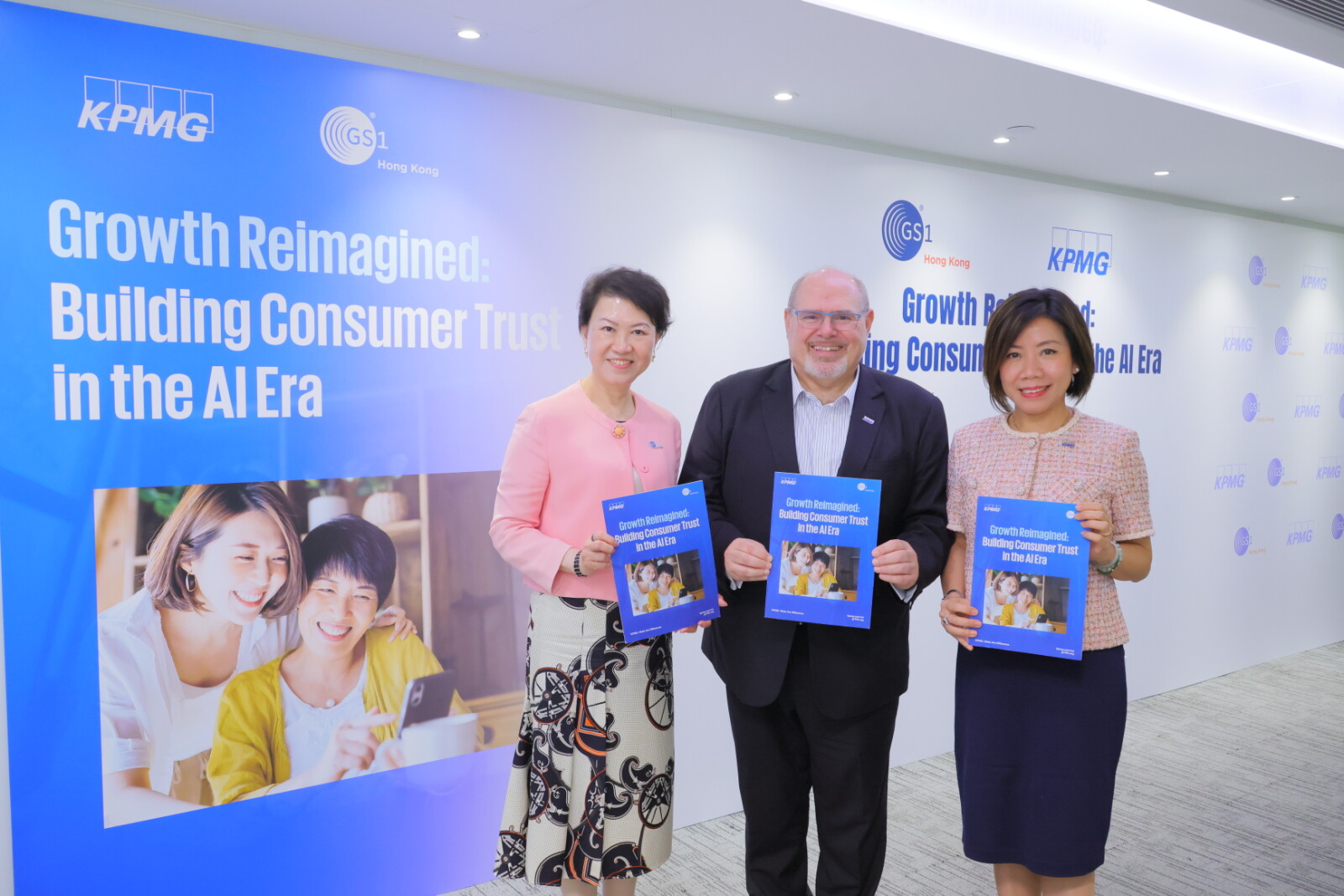
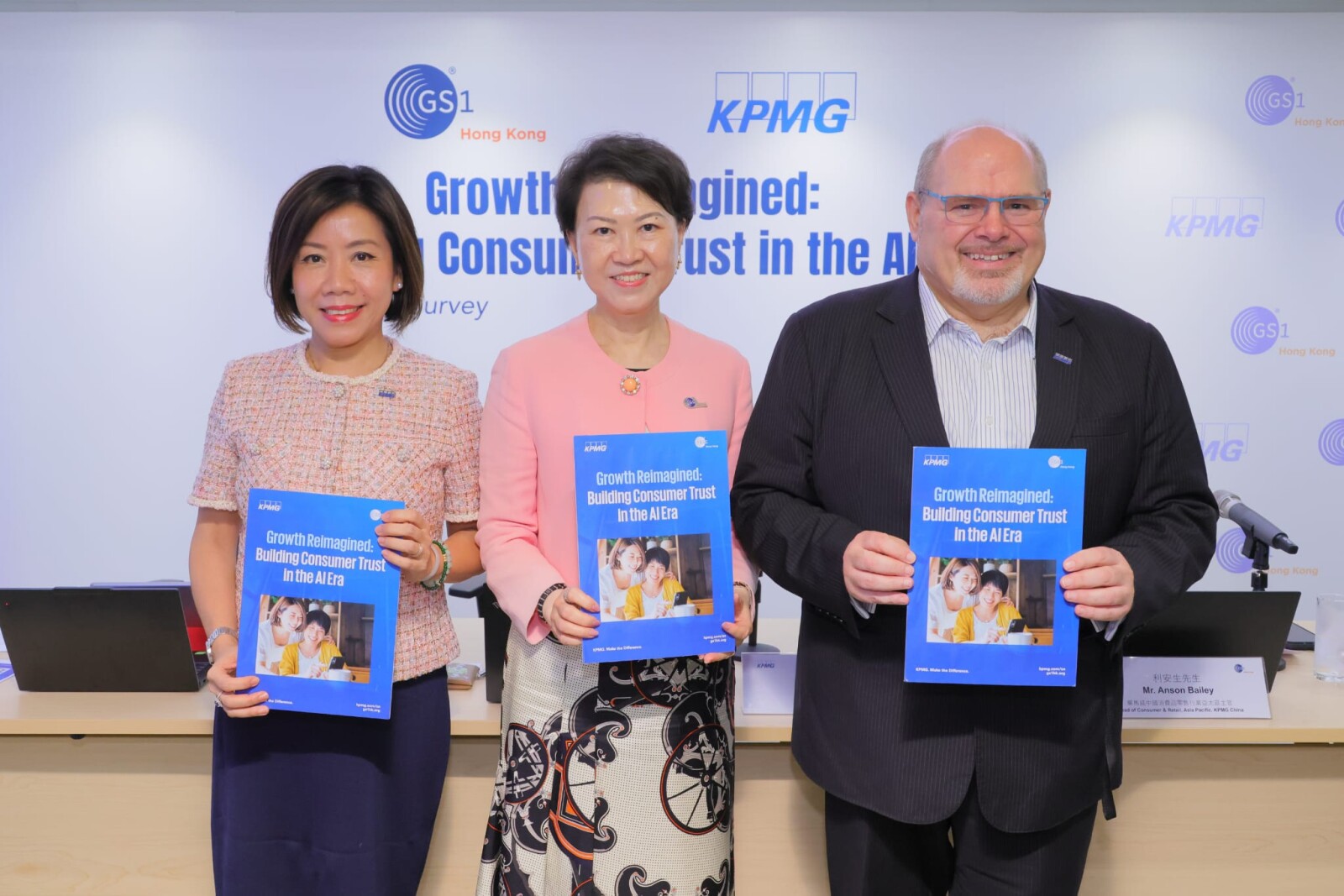
New research from KPMG China and GS1 Hong Kong highlights three key priorities for retailers: building trust in AI, delivering market-specific strategies for the growing silver economy, and strengthening brand confidence across Hong Kong and other cities in the Greater Bay Area
HONG KONG SAR – Media OutReach Newswire – 4 November 2026 – Consumer confidence in artificial intelligence is rising across Hong Kong and other cities in the Greater Bay Area (GBA), but new research from KPMG China and GS1 Hong Kong shows that retailers will need markedly different strategies to convert that confidence into growth. While consumers in other GBA cities show greater openness to personalised experiences and Chinese Mainland brands, Hong Kong consumers place more emphasis on value for money.
The Growth Reimagined: Building Consumer Trust in the AI Era report identifies three themes which have emerged as a roadmap for future growth:
Trusted AI builds consumer confidence: AI can enhance personalisation and speed up service delivery, but privacy, accuracy, transparency and a human touch will determine consumer adoption.
Silver shoppers diverge by market: To capture the growing silver economy, brands must prioritise price in Hong Kong, and brand reputation and engaging experiences in other GBA cities.
The low-cost-only label no longer fits Chinese Mainland brands: Their advances in quality and innovation are forcing competitors to rethink where future brand advantage will come from.
AI trust is rising but a transparency gap persists, creating new opportunities for growth
Trust in AI has risen significantly since last year’s survey. In Hong Kong, 48% of consumers now trust AI at least somewhat, up from 28%, while trust in other GBA cities has increased from 59% to 76%. Yet growing trust has not translated into the same willingness to share personal data: just 10% of Hong Kong consumers who trust AI are comfortable doing so, compared with 32% in other GBA cities.
The difference in AI trust between Hong Kong and other GBA cities is particularly pronounced among silver shoppers, defined in the report as consumers aged above 55. Just 38% of Hong Kong silver shoppers trust AI, compared with 76% in other GBA cities, underscoring the challenge retailers face in building AI confidence among older Hong Kong consumers.
To bridge this gap, retailers in Hong Kong need to demonstrate clear value before asking consumers to share more data, while providing transparency and control over how their data is used. Consumer confidence should extend across the entire retail journey: from payment and product authenticity to returns and customer support. AI should help consumers find what they need more easily, while maintaining accuracy, fairness and access to human support.
Anna Lin, Chief Executive, GS1 Hong Kong, says: “AI is increasingly shaping how consumers discover and evaluate products, and it tends to recommend those backed by data it can readily interpret and trust. Businesses with trusted, standardised product data that is structured for machines to understand and use and traceable to an identifiable source will be best positioned to earn consumer confidence and influence future purchasing decisions.”
The silver economy is not a single consumer market
Across all age groups, value remains a priority for 73% of Hong Kong consumers, compared with 45% in other GBA cities.
When asked to describe their shopping style, 57% of silver shoppers in Hong Kong identify primarily as value shoppers, compared with only 23% in other GBA cities, where brand reputation, at 37%, and shopping experience, at 27%, emerge as their leading considerations.
The findings suggest that age alone is not enough to define the silver shoppers. Retailers looking to capture the opportunities created by the region’s ageing population will need to understand how expectations differ by market, and develop propositions that reflect those differences.
Alice Yip, Partner, Head of Consumer & Retail, Hong Kong SAR, KPMG China, says: “Growth in the silver economy depends on recognising that shoppers’ priorities differ across markets. Hong Kong’s silver shoppers prioritise competitive prices, while those in other GBA cities place greater emphasis on brand reputation and shopping experiences. Capturing this opportunity involves understanding what matters locally and tailoring the retail offer accordingly, rather than treating the silver economy as one uniform market.”
Chinese Mainland speed raises the stakes for Hong Kong and global brands
Chinese Mainland brands are emerging as a stronger force in innovation and speed. In other GBA cities, that progress is already reflected in consumer perceptions: 64% choose them for value for money, 58% for safety and reliability and 50% for brand reputation.
In Hong Kong, however, they are still seen primarily through the lens of value. While 81% of consumers choose Chinese Mainland brands for value for money, fewer cite safety and reliability (39%), higher quality (33%) or brand reputation (31%). Their next opportunity is to turn Chinese Mainland speed and improving quality into stronger brand confidence.
Hong Kong brands retain a clear advantage in trust. Consumers in Hong Kong (74%) and other GBA cities (61%) cite safety and reliability as the leading reason for choosing Hong Kong brands. Among Hong Kong consumers, preference for Hong Kong brands is particularly strong in airlines (78%) and food and beverages (71%).
But trust cannot be taken for granted. As Chinese Mainland brands strengthen their safety and reliability credentials, Hong Kong brands will need to combine their reputation for reliability with greater innovation, sharper value and faster execution.
Anson Bailey, Head of Consumer & Retail, Asia Pacific, KPMG China, says: “Any brand that still sees Chinese Mainland competitors as a low-cost threat is looking in the rear-view mirror. Chinese Mainland speed is now producing better products, sharper design and faster innovation at a scale few markets can match. The real shift is that Chinese Mainland brands are learning to build brand equity at the same pace as they have built scale through value and speed. This is increasingly influencing who can win – not only in the GBA, but in consumer markets worldwide.”
Hashtag: #KPMG #GS1HongKong
The issuer is solely responsible for the content of this announcement.
About KPMG
KPMG in China has offices located in 31 cities with over 14,000 partners and staff, in Beijing, Changchun, Changsha, Chengdu, Chongqing, Dalian, Dongguan, Foshan, Fuzhou, Guangzhou, Haikou, Hangzhou, Hefei, Jinan, Nanjing, Nantong, Ningbo, Qingdao, Shanghai, Shenyang, Shenzhen, Suzhou, Taiyuan, Tianjin, Wuhan, Wuxi, Xiamen, Xi’an, Zhengzhou, Hong Kong SAR and Macau SAR. It started operations in Hong Kong in 1945. In 1992, KPMG became the first international accounting network to be granted a joint venture licence in the Chinese Mainland. In 2012, KPMG became the first among the “Big Four” in the Chinese Mainland to convert from a joint venture to a special general partnership.
KPMG is a global organisation of independent professional services firms providing Audit, Tax and Advisory services. KPMG is the brand under which the member firms of KPMG International Limited (“KPMG International”) operate and provide professional services. “KPMG” is used to refer to individual member firms within the KPMG organisation or to one or more member firms collectively.
KPMG firms operate in 138 countries and territories with more than 276,000 partners and employees working in member firms around the world. Each KPMG firm is a legally distinct and separate entity and describes itself as such. Each KPMG member firm is responsible for its own obligations and liabilities.
About GS1 Hong Kong
GS1 Hong Kong is the local chapter of GS1®, a global, not-for-profit data standards organisation represented in over 120 countries. Through globally recognised standards such as GTIN (barcodes), we enable businesses to identify, capture and share trusted data across physical and digital supply chains, helping them accelerate digital transformation, access global markets, strengthen supply chain resilience and efficiency, and advance transparency, safety and sustainability.
Building on global data standards, GS1 Hong Kong provides solutions including ezTRADE for B2B data exchange, ezTRACK for supply chain traceability, and 1QR, powered by GS1 Digital Link, connecting 2D barcodes to rich product information such as certifications and sustainability data.
The trusted data infrastructure also supports emerging business needs, from trade finance to Scope 3 emissions reporting and ESG compliance. In an AI-driven economy, we provide the foundation for high-quality data that is accurate, visible, linkable, searchable, shareable and traceable.
GS1 Hong Kong supports close to 8,000 corporate members across 20 sectors, including retail and consumer goods, food and beverage, healthcare, apparel and footwear, logistics and ICT.
As Singapore steps up heritage preservation, 28-year Halal-certified caterer Lavish Dine puts Peranakan cuisine centre stage with its SG61 Island Collection, bringing Tok Panjang and hawker-rooted flavours to weddings, corporate events and community celebrations to keep culinary traditions alive.
SINGAPORE – Media OutReach Newswire – 4 November 2026 – Singapore’s inaugural SG Heritage Business Scheme has renewed attention on the survival of long-running local trades. Against this preservation push, Lavish Dine Catering shows how catering can keep labour-intensive Nyonya cooking commercially active by serving it at scale across contemporary celebrations.
Between 2015 and 2025, Singapore’s F&B sector grew 42% amid openings and closures, intensifying pressure on labour-intensive cuisines. Amid this churn, Lavish Dine scales Peranakan cooking for events, retaining hand-ground rempah and slow-cooking techniques across its catering, while the SG61 Island Collection extends that approach to preserve local food heritage through a catering experience.
Taking Peranakan Heritage Beyond the Restaurant
Singapore’s F&B churn has also pushed heritage preservation higher on the agenda. In February 2026, the Ministry of Trade and Industry reaffirmed efforts to preserve local heritage in F&B, including support for established operators and curated food experiences. For Lavish, that preservation happens through continued use, keeping Peranakan cooking on event menus and in front of new audiences.
“Peranakan cuisine holds a special place in our hearts because its recipes carry so much history and meaning. For nearly three decades, we have had the privilege of bringing these flavours to events across Singapore. To us, the best way to honour this heritage is to keep sharing it. Every catered occasion is a chance to introduce these dishes and the stories behind them to new generations and communities, so they can continue to live on,” said Richie Ling, Director, Lavish Dine Catering.
Lavish’s SG61 Island Collection exemplified this, tracing Singapore’s culinary story from Tok Panjang traditions to hawker classics. Its Peranakan catering menus remain available for events across Singapore.
The issuer is solely responsible for the content of this announcement.
About Lavish Dine Catering Pte Ltd:
Established in 1998, Lavish Dine Catering Pte Ltd provides premium catering for corporate events, weddings, private celebrations and other occasions in Singapore. Its work combines bespoke menus, themed presentation and interactive dining experiences. Guided by its “Redefining Catering” philosophy, Lavish explores culinary innovation and sustainable practices.
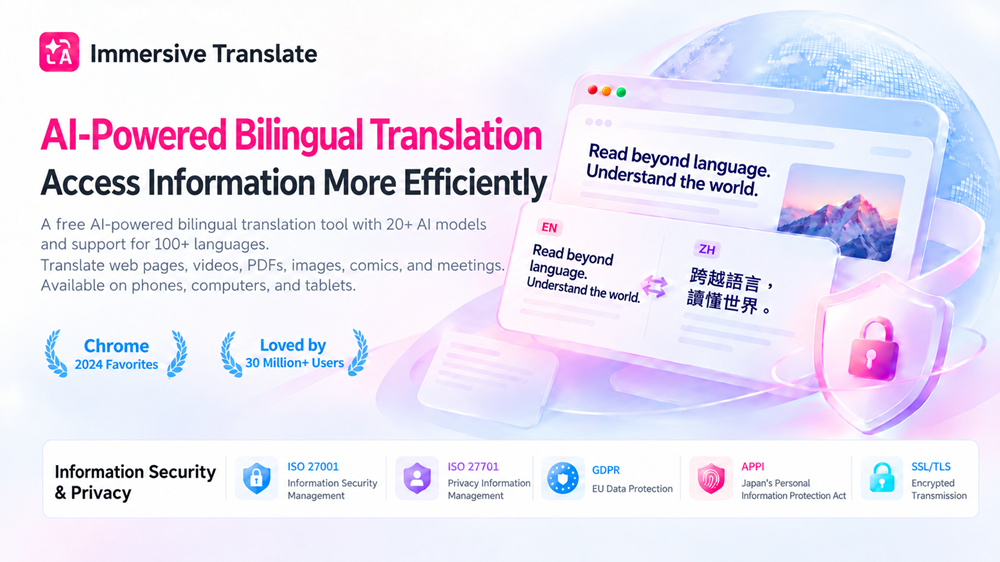
TAIPEI, TAIWAN – Media OutReach Newswire – 4 November 2026 – Immersive Translate, the next-generation AI translation tool, today announced that it has officially surpassed 30 million users worldwide. The company also announced that it has achieved two international certifications, ISO/IEC 27001:2022 for Information Security Management Systems and ISO/IEC 27701:2019 for Privacy Information Management Systems, making it one of the few AI translation tools to hold both security and privacy certifications. From system architecture to internal management, Immersive Translate has passed rigorous assessment against international standards, so every translation each user performs is backed by third-party-verified data protection.
Immersive Translate Surpasses 30 Million Users Worldwide and Achieve ISO Certifications for Security and Privacy.
As AI Translation Becomes Part of Everyday Life, Data Security Is Key to Choosing a Translation Tool
With the rise of generative AI, translation software is no longer used just to look up words or read foreign-language news. Professionals use it to handle emails and contracts with overseas clients, researchers use it to read large volumes of foreign-language papers, students use it to prepare reports, and corporate teams rely on real-time translation to communicate in international meetings. The wider the range of uses, the more sensitive the content users hand over to translation software, whether unpublished business documents, personal correspondence, or back-end data from internal corporate systems. The more private the information a translation tool handles, the more users care about where their data goes. Security and privacy have become core criteria for users evaluating AI translation tools.
“As AI becomes ever easier to use, users entrust us with their private emails and work documents not only because of the quality of our results, but because they trust us,” said Immersive Translate. “For us, security and privacy are the foundation of every product feature, and a responsibility we owe to our users.”
Immersive Translate Passes Comprehensive Technical and Management Assessments to Earn Dual International Security and Privacy Certifications
The two international certifications Immersive Translate has earned provide dual protection for user data, covering both information security and personal privacy. ISO/IEC 27001 is the globally recognized standard for information security management, ensuring that data is protected from unauthorized access and tampering and remains available at all times. ISO/IEC 27701 builds on ISO 27001 with requirements specifically governing the processing of personal data, and is aligned with the EU General Data Protection Regulation (GDPR). Both certifications were audited clause by clause by an independent third-party body, covering both technical safeguards and organizational management, and are subject to annual review.
In addition to its dual ISO certifications, Immersive Translate’s data processing also complies with two major international privacy laws: the EU General Data Protection Regulation (GDPR) and Japan’s Act on the Protection of Personal Information (APPI). Widely regarded as the world’s strictest data protection regulation, the GDPR safeguards users’ rights to data portability and to be forgotten, and requires data processing to be open and transparent. The APPI governs the collection, use, and cross-border transfer of personal data to protect the rights of data subjects. With hundreds of thousands of users in both Europe and Japan, Immersive Translate sees compliance with local regulations as more than a legal requirement: it ensures that users in every market enjoy the same high standard of privacy protection.
On the technical side, Immersive Translate encrypts all data in transit using HTTPS (SSL/TLS) and strictly enforces the principle of least privilege, ensuring that only authorized personnel have access. Its servers are equipped with 24/7 monitoring and alerting, critical data is backed up regularly, and a disaster recovery plan is in place to minimize the risk of data loss and service disruption.
On the organizational side, Immersive Translate has a dedicated information security team and has established a security management framework covering access control and incident response, with security assessments built into every feature development and system change. All employees also receive regular security training, so data protection is practiced in every aspect of day-to-day operations.
What’s Next for 30 Million Users
Since its launch, Immersive Translate has built a large user base with its pioneering side-by-side bilingual web translation. By placing the translation directly beneath the original text, it lets users keep the context of the source while reading foreign-language content, without switching back and forth between windows. This design, built around how people actually read, has driven steady user growth. Today, Immersive Translate is trusted by over 30 million users worldwide, including students, researchers, professionals, and multinational corporate teams.
As user needs have become more diverse, Immersive Translate has expanded beyond Website Translation to PDF and document translation, Video Subtitle Translation for YouTube and Netflix, real-time Online Meeting Translation for Zoom, Google Meet, and Microsoft Teams, YouTube livestream translation, Image Translation, and Comic & Manga Translation. It is integrated with multiple top-tier AI translation models, including ChatGPT, DeepL, Gemini, and Claude, and supports translation between more than 100 languages. Unlike traditional single-engine translators, its multi-engine integration lets users choose the best translation for each situation, enabling accurate, fluent cross-language communication and understanding.
Hashtag: #ImmersiveTranslate
The issuer is solely responsible for the content of this announcement.
About Immersive Translate
Immersive Translate is a next-generation AI translation tool available on computers, phones, and tablets, trusted by over 30 million users across all platforms. It helps users break through language barriers and connect with a wider world. With its system-wide translation feature, users can translate text in any app without copying and pasting, including popular platforms such as WhatsApp, Instagram, Telegram, Discord, and Slack. Immersive Translate pioneered AI-powered side-by-side bilingual web translation, with a vertical bilingual layout that delivers a better experience for translating and reading foreign-language web pages. The product is integrated with multiple top-tier AI translation models, including ChatGPT, DeepL, DeepSeek, Gemini, Claude, Qwen, and Kimi, supporting translation between more than 100 languages with accurate, fluent results. The web version also offers a range of advanced features, including Video Subtitle Translation (YouTube, Netflix), real-time Online Meeting Translation (Zoom, Meet, Teams), Image Translation, Comic & Manga Translation, and PDF Translation. Immersive Translate holds the ISO/IEC 27001:2022 and ISO/IEC 27701:2019 international information security and privacy certifications, and complies with international privacy regulations including the EU GDPR and Japan’s APPI.
This photo is used for representational purpose only.
Village authorities along the Nam Vaen and Nam Xam rivers have told residents to stop using river water after two rare earth mining ponds in Houaphanh burst on the night of 1 November and released chemical wastewater into the Nam Vaen River.
According to the 3-November notice, residents of Meuangvaen, Nakao, and Nakhoun villages must suspend all water use until officials finish inspections and issue further notices.
As of 4 November, provincial authorities and the Ministry of Industry and Commerce had not identified the chemicals released or explained why the ponds in Thabpheung village burst.
The Nam Vaen flows through Thabpheung village before joining the Nam Xam River. The Nam Xam continues east across the border into Vietnam, where it is known as the Chu River, and eventually empties into the Gulf of Tonkin. Unlike rivers in the Mekong basin, the Nam Xam flows east towards Vietnam rather than south into the Mekong.
Thabpheung is in Xam Neua district and part of an area where several rare earth mining projects are underway.
In June 2022, officials opened a 5-square-kilometer mining and processing project and a separate 45-square-kilometer exploration project. Other project sites are in Outhai and Sopxay villages in Houamuang district.
Similar Complaints in 2024
Residents of Teuam village and nearby communities in Houaphanh raised similar concerns in early 2024, reporting chemical pollution in the Taboun and Man streams.
They alleged that the Laos-China Rare Mineral Development Company North 2 Limited had discharged chemicals into a river, and they voiced outrage over the effects on fish and livestock.
Provincial authorities launched an investigation and collected water samples. The then- Ministry of Energy and Mines ordered a temporary halt to mining until water quality improved.
In April 2024, a group of affected villages said on Facebook that chemicals leaked into the Taboun and Man streams from 22 February 2024 and reached the Vaen and middle Xam rivers, affecting the livelihoods of people in 36 villages.
The group said fish, cattle, and buffalo died and villagers developed severe skin rashes.
It also said mining continued despite the ministry’s suspension notice dated 6 March 2024.
Calls for Tighter Oversight
Concerns about the environmental impact of rare earth mining have continued this year. On 6 October, Houaphanh National Assembly member Soyphet Thongsombath told the Assembly that some existing projects were still harming the environment and residents’ daily lives.
She called on authorities to review exploration and survey projects and stop approving new ones.
Less than a month later, the ponds in Thabpheung village burst, raising fresh concerns for communities that rely on the rivers.
Authorities have yet to identify the chemicals released or explain what caused the ponds to burst.
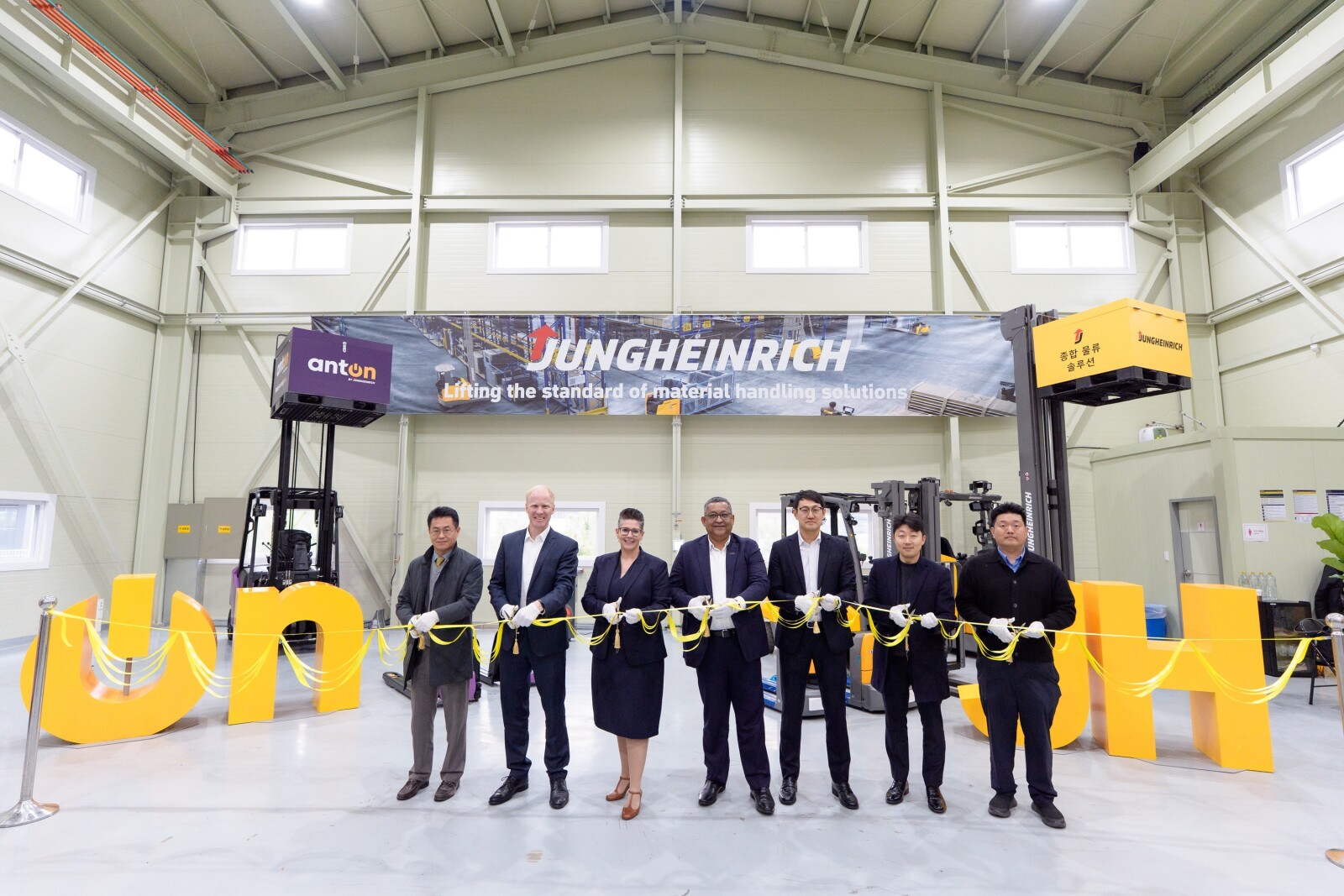
SEOUL, SOUTH KOREA– Newsaktuell – 4 November 2026 – Jungheinrich has officially launched a new direct sales company in South Korea last week. With the new country unit near Seoul, the Group is represented directly in the South Korean market for the first time, operating through its own sales organisation. The establishment of Jungheinrich Korea marks a further step by the company towards expanding its presence in the strategically important Asia-Pacific region and pursuing its international growth strategy.
Nadine Despineux, Chief Sales Officer (third from the left), at the official opening of Jungheinrich’s new direct sales subsidiary in South Korea. / Jungheinrich
Jungheinrich has been operating in South Korea via a dealer network for more than 20 years. With its new direct sales organisation, the company is strengthening these long-standing local partnerships and offering customers more direct access to its comprehensive portfolio of products, services and material handling solutions.
Nadine Despineux, Chief Sales Officer, Jungheinrich AG, says: “Jungheinrich Korea brings our Strategy 2030+ to life: within the ‘Global Expansion’ strategic focus area, we aim to position Jungheinrich even more globally and, in particular, to grow outside Europe. The Asia-Pacific region is one of our key focus regions in this regard, and Korea represents a significant next step.Together with our long-standing partners, we aim to be closer to our customers and to develop our business locally in a sustainable manner.“
The new country unit will serve customers in South Korea’s logistics and manufacturing sectors, a market with strong growth potential, where e-commerce, labour shortages and rising safety requirements are increasing the need for sustainable, electrified and automated solutions. Through direct sales and its established partner network, Jungheinrich can address a broader range of customer requirements, offering the premium Jungheinrich brand and “AntOn by Jungheinrich” as a reliable, cost-effective option.
With the launch of Jungheinrich Korea, Jungheinrich builds on years of experience in the market and underlines its long-term commitment to South Korea and the wider Asia-Pacific region. Across this region, Jungheinrich is represented through eight country units and more than 14 partner countries, supported by dedicated Key Account and After Sales teams.
Hashtag: #Jungheinrich
The issuer is solely responsible for the content of this announcement.


 www.gs1hk.org



 https://www.lavish.com.sg/
 https://www.linkedin.com/company/lavishdinesg/
 https://www.facebook.com/lavishdinesg/
 https://www.instagram.com/lavishdine