Home Blog Page 552

imin Surpasses $2 Billion in Cumulative Transaction Volume, Accelerating Expansion as a Lifestyle Social Platform

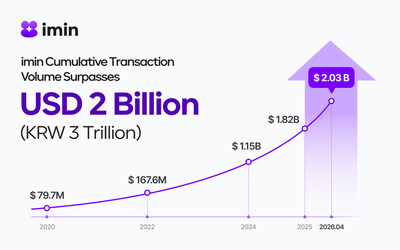
Rebranding drives broader user adoption as personalized fund management structure pushes cumulative transaction volume beyond KRW 3 trillion (USD 2.03 billion)

SEOUL, South Korea, April 16, 2026 /PRNewswire/ — Twave, the company behind the social platform imin, announced today that imin has surpassed KRW 3 trillion (approximately USD 2.03 billion) in cumulative transaction volume. The company said the milestone reflects the combined impact of a growing user base and continued service advancement.

imin Surpasses $2 Billion in Cumulative Transaction Volume, Accelerating Expansion as a Lifestyle Social Platform

Following its recent rebranding, Twave has strengthened imin’s brand identity while expanding its user base on the foundation of stable service operations. Building on this momentum, the company aims to further evolve imin into a social platform that extends across a broader range of lifestyle needs.

At the core of imin is its “Stage” model — a group-based structure in which users can participate in collective funding arrangements designed around shared financial goals. Through this system, users can choose how to manage and deploy funds based on their individual objectives and circumstances, whether for targeted savings, planned spending, or yield-oriented participation.

According to the company, this flexible structure addresses a broad spectrum of user needs, serving both those seeking timely access to funds and those focused on disciplined and stable financial management. Twave said this user-centric experience has been a key driver behind imin’s transaction growth.

Leveraging the purpose-driven funds and user behavior data generated on the platform, Twave is also expanding B2B partnerships across a range of sectors, including finance, travel, and commerce. The company added that conversion rates into partner services have reached as high as 96%.

Service reliability remains another core strength. Twave said it has maintained a low delinquency rate of 0.22% through its advanced alternative credit assessment system and user protection mechanisms, which have helped build long-term user trust.

“Surpassing KRW 3 trillion in cumulative transaction volume is the result of the trust our users have placed in us,” said Jaejun Seo, CEO of Twave. “We will continue to expand B2B partnerships across industries such as travel and commerce, and grow imin into a platform that delivers meaningful value to both users and partners.”

About Twave(https://www.twave.co.kr/)

Twave is the operator of imin, a social platform built around user-driven financial participation and lifestyle-linked services. Through its flexible Stage-based structure, imin enables users to engage in funding experiences tailored to their goals while creating new opportunities for partnership across multiple industries.

Southeast Asia Blockchain Week Returns to Bangkok for Its Third Edition

SEABW 2026 convenes May 20–21 at True ICON Hall, ICON SIAM, as Southeast Asia enters a defining phase in digital asset development.

BANGKOK, April 16, 2026 /PRNewswire/ — Southeast Asia Blockchain Week (SEABW) officially returns to Bangkok from May 18 to 24, 2026. Organized by global Web3 venture capital Hashed and its innovation lab ShardLab—operating under a strategic partnership with SCBX, Thailand’s leading financial technology group—SEABW is the premier blockchain conference in the region. The third edition gathers global Web3 leaders, institutional investors, and policymakers to shift the industry narrative from speculation to real-world integration.

Southeast Asia Blockchain Week (SEABW) 2026 convenes May 20–21 at True ICON Hall, ICON SIAM, as Southeast Asia enters a defining phase in digital asset development.

SEABW 2026 will center around five core themes: The Regulatory Frontier, Institutional Verticalization, RWA 2.0, The Agentic Economy, and The Base Layer Imperative. Hojin Kim, CEO of ShardLab, emphasized the strategic importance of this year’s agenda:

“By 2026, Southeast Asia has evolved into a global ‘Powerhouse of Value,’ where the boundaries between institutional finance and everyday consumer applications are disappearing. At ShardLab, we see the region leading a massive shift where Agentic AI and on-chain infrastructure are no longer invisible technologies, but the very tools empowering millions of users in their daily lives. SEABW 2026 is designed to be the ultimate meeting ground for the visionaries bringing Web3 to the masses, bridging cutting-edge protocols with the real-world experiences of the world’s most vibrant digital population.”

Why Bangkok? Why Now?

Southeast Asia has transitioned from a retail interest hub to a global leader in institutional infrastructure. Thailand is currently setting the regional standard; the Thai SEC’s approval of crypto ETFs, regulated futures trading on TFEX, and capital gains tax exemptions signal a market in active integration. With the Bank of Thailand’s programmable payment sandbox and formal approval of major stablecoins, the market is anchored by leading institutions like SCBX.

Highlighting this milestone, SCBX has joined SEABW 2026 as the Main Sponsor. This partnership underscores the deep integration of digital assets into Thailand’s financial core and reinforces SCBX’s commitment to leading the convergence of traditional finance and the on-chain economy.

What’s New at SEABW 2026?

The 2026 program focuses on high-quality engagement. While the Main Stage addresses industry-defining questions, the Exhibition and Spotlight Stage gives builders direct access to an institutional audience. The “Play to Build” hackathon will take developers from concept to product, culminating in a Demo Day for investors.

A defining feature is the Exclusive Institutional Roundtables, connecting funds, infrastructure players, and regulators in closed-door sessions to build cross-border partnerships. Furthermore, to broaden ecosystem access, General Admission is free for the 2026 edition, while curated private programs remain reserved for senior participants and partners.

SEABW 2026 returns at a moment when Southeast Asia’s role in global digital finance is more central than ever. Join us this May in Bangkok to define the future of value.

Mark Your Calendars:

For press inquiries: media@seablockchainweek.org

RIKEN Scales Quantum-Supercomputing in Japan with Quantinuum System Upgrade

Quantinuum’s H2 quantum computer to expand the scope and accuracy of pharmaceutical and materials science research using the Reimei-Fugaku hybrid compute platform

TOKYO, April 16, 2026 /PRNewswire/ — Quantinuum, a leading quantum computing company, today announced that RIKEN, Japan’s premier national research institute, has procured its System Model H2 quantum computer to scale the capability of “Reimei-Fugaku,” a hybrid quantum-supercomputer platform in Japan.  

The Reimei-Fugaku platform represents the frontier of computing technology. Launched in the spring of 2025, it combines Quantinuum’s “Reimei” quantum system with RIKEN’s “Fugaku,” one of the world’s fastest supercomputers—more formally known as a high-performance computing (HPC) system.

Now, the hybrid compute platform is getting a substantial upgrade. Earlier this month, Quantinuum delivered its H2 system to RIKEN’s research facility near Tokyo, where assembly is already underway to replace its predecessor, System Model H1, which Reimei has been based on to date. The newer-generation, 56-qubit system is engineered for high-fidelity operations that can reduce time-to-solution, enable larger workloads, and support higher-value applications.  

Technology leaders see hybrid compute systems as a practical way to overcome the limits of classical HPC. By combining the significant data-processing power of HPC with a quantum computer’s ability to model complex molecules and materials, researchers could be enabled to solve specialized mathematical problems that are impractical for classical systems to handle alone. 

Researchers have already demonstrated this potential using the current Reimei-Fugaku platform. In a workflow with relevance potentially extending to future pharmaceutical applications, they successfully simulated biomolecular reactions at an accuracy that would be infeasible for HPC to achieve in isolation.

With multiple studies in chemistry and materials science already underway on the platform, this H2 upgrade is expected to accelerate research and unlock even more complex scientific discoveries across disciplines.

Dr. Mitsuhisa Sato, Division Director of the Quantum-HPC Hybrid Platform Division, RIKEN Center for Computational Science, said: “Since its installation in February 2025, Reimei H1 has been widely used by JHPC-quantum users and has delivered significant results, thanks to its high fidelity and flexible qubit connectivity. The upgrade to H2 is exactly what we have been eagerly anticipating, and with its 56 qubits, we expect it to play a key role in demonstrating quantum advantage through quantum–HPC hybrid computing.”

Dr. Rajeeb Hazra, President and CEO of Quantinuum, said: “We believe RIKEN’s decision to continue adopting Quantinuum systems to meet its ambitious objectives is a validation of our technology roadmap and a reflection of the success of our valued partnership. With Quantinuum and RIKEN’s combined leadership in quantum and HPC, respectively, we expect to continue pushing the boundaries of computing to address some of the most critical and complex challenges facing science and industry today.”

This development reflects the continued progress of Quantinuum and RIKEN’s collaboration to advance quantum-HPC hybrid infrastructure in Japan. Quantinuum intends to continue working with the country’s research community to accelerate real-world use cases and contribute to the growth of its quantum ecosystem.

About RIKEN

RIKEN, a National Research and Development Agency, is Japan’s leading national comprehensive research institution renowned for high-quality research in a diverse range of scientific disciplines. Founded in 1917, initially as a private research foundation, RIKEN has grown rapidly in size and scope, today encompassing a network of world-class research centers and institutes across Japan.

About Quantinuum

Quantinuum is a leading quantum computing company offering a full-stack platform designed to make quantum computing deployable in real-world environments. The company has commercially deployed multiple generations of quantum systems built on the well-established QCCD architecture, which it has implemented with novel designs and capabilities to achieve the industry’s highest accuracy levels based on average two-qubit gate fidelity.[i] Quantinuum has active engagements with market leaders across pharmaceuticals, material science, financial services, and government and industrial markets.

The company has a global workforce of approximately 700 employees, including top scientists and researchers. Over 70% of its technology team hold PhDs. Quantinuum’s headquarters is in Broomfield, Colorado, with additional facilities across the United States, United Kingdom, Germany, Japan, and Singapore. 

For more information, please visit www.quantinuum.com

[i] As of December 31, 2025.

Anycubic Showcases Next-Generation 3D Printing Lineup at RAPID+TCT 2026, Highlighting Multicolor FDM and Large-Format Resin Innovation

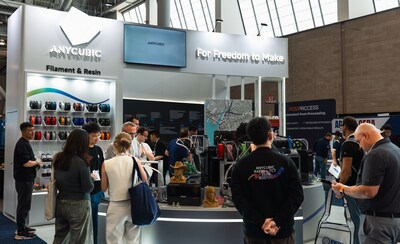
BOSTON, April 16, 2026 /PRNewswire/ — Anycubic, a global manufacturer of desktop 3D printers and materials, presented its latest product lineup at RAPID+TCT 2026 (Booth #1035), held April 14–16 at the Boston Convention & Exhibition Center.

Anycubic Showcases Large-format New Product Lineup in Rapid + TCT 2026

Building on strong pre-show momentum and continued third-party media validation across its product portfolio, Anycubic’s booth saw sustained engagement throughout the event, with multicolor FDM and large-format resin workflows drawing particularly strong attention from makers, creators, and advanced users.

Across its FDM and resin lineup, Anycubic’s recent releases have received coverage from outlets including CNET, TechRadar, and Tom’s Hardware, highlighting improvements in usability, print consistency, and multicolor workflow integration across its desktop systems. This pre-existing media momentum carried into RAPID+TCT 2026, where live demonstrations and finished print samples became a central focus of visitor engagement at the booth.

Kobra X: Entry-Level Multicolor, Built-In from the Start

First debuted at Formnext 2025, the Kobra X drew consistent crowd traffic at the RAPID+TCT booth, driven by live multicolor demonstrations and sample output quality. Media coverage has highlighted its accessibility and integrated design, with Tom’s Hardware describing it as “an excellent, entry-level four-color printer,” and TechRadar calling it “a feature-packed option that’s perfect for beginners and enthusiasts.”

Kobra X is designed for users entering multicolor printing without external color systems or complex setup. Its second-generation architecture integrates four filament channels directly into the printhead, shortening the molten filament path to approximately 30 mm—reducing color-switching time by 30–50% and lowering purge waste by a similar margin in internal testing.

Photon P1 Max: Large-Format Resin Expanding a Proven Platform

The Photon P1 Max extends the Photon lineup into larger-format use cases, building on the reception of the Photon P1, which has been positively reviewed by media including Tom’s Hardware for its consistent print quality and ease of use in desktop resin workflows. The larger-format model builds on this established foundation, drawing steady attention from studio users and small-batch creators at the show.

Positioned within a prosumer desktop setup, it offers an 18.3L build volume supporting models up to 300 mm tall, along with a 1.9L thermal-controlled resin vat for more stable viscosity during longer print sessions. A 14-inch 12K screen (11520 × 8640 px) with 24.8 × 24.8 μm square pixels enables consistent detail across the full build area. Dual connectivity (Wi-Fi + Ethernet) supports flexible integration across different setups, while app-based monitoring enables remote workflow management throughout the printing process.

Kobra S1 Max Combo: Scaling an Established Multicolor Ecosystem

As Anycubic’s most advanced FDM system, the Kobra S1 Max Combo builds on the Kobra S1 series, which has been covered by outlets including CNET and TechRadar for its balance of speed, usability, and multicolor capability. The S1 Max expands this platform into a larger-format system with extended material capacity, attracting strong interest from experienced users and creators at the booth.

The system features a 350 × 350 × 350 mm³ build volume, a 65°C heated chamber, 350°C hotend, and 120°C heated bed, supporting engineering materials including PC, PA, ABS, and carbon-fiber composites. Paired with up to four ACE 2 Pro modules, it enables up to 16-color printing, with integrated filament drying and moisture control features for extended multi-material workflows.

Alongside the three headline systems, additional new machines including the Photon P1, Kobra S1 Combo, Kobra 4, and Kobra 3 Max Combo also attracted notable visitor interest throughout the show.

Advancing the Desktop-to-Workflow Continuum

Anycubic‘s RAPID+TCT 2026 exhibit reflects the company’s continued evolution across both FDM and resin categories, driven by increased automation, broader material compatibility, and more capable desktop systems. Across the lineup, the focus remains on extending desktop 3D printing into more reliable and flexible real-world workflows.


PMET Launches Relationship with Koch Technology Solutions to Advance Value-Added Caesium Chemicals from Shaakichiuwaanaan

MONTREAL, April 16, 2026 /PRNewswire/ — April 16, 2026 – Sydney, Australia

Koch Technology Solutions, part of Koch Inc., to evaluate advanced processing pathways for PMET’s globally significant caesium resource

Highlights

  • Strategic caesium testwork program launched with Koch Technology Solutions, a division of Koch Inc. – one of the largest privately held companies in the United States.
  • The testwork program aims to convert Shaakichiuwaanaan caesium-rich pollucite concentrates into various high-value caesium chemical products.
  • The program will evaluate Koch Technology Solutions’ innovative recovery techniques, using proprietary methods for caesium chemicals production.
  • This strategic approach provides a potential pathway into critical US industrial supply chains for defense, space, energy and advanced electronics.
  • Founded in 1940, Koch Inc. operates in sectors including refining, chemicals, energy and technology, with over 120,000 employees globally.
  • The program supports the potential development of a new high-margin product stream from Shaakichiuwaanaan alongside lithium, building commercial momentum following PMET’s caesium discovery.
  • Following the publication of its caesium Resource, PMET has continued to explore both commercial and supply chain pathways aimed at maximizing the discovery’s value.

PMET CEO, President, and Managing Director Ken Brinsden comments: “Shaakichiuwaanaan hosts what we believe to be the most significant caesium discovery globally, marked both by incredible scale and high grades – and this program represents a major step towards unlocking its full commercial potential. Working with Koch Technology Solutions provides access to industry expertise, including demonstrated capabilities in critical minerals, and a portfolio of innovative processing technologies.

“Importantly, this initiative will allow us to explore pathways to produce high-value caesium chemicals, which could ultimately position PMET as a cornerstone supplier to critical industries including defence, aerospace, energy and advanced technologies. 

“Through this program, PMET furthers its exposure to the significance of critical minerals in the key U.S. market, providing us with an opportunity to capture substantially greater value from this rare and strategically important discovery by working alongside a US industry participant,” added Mr. Brinsden. 

Garrett Krall, Critical Minerals Business Leader at Koch Technology Solutions says: “This program brings together the distinct strengths of KTS and PMET to advance an innovative approach in critical minerals extraction. The project reflects the kind of challenge that KTS is uniquely positioned to solve, by applying our process technology and technical expertise alongside PMET to advance an approach to help unlock the value of an important critical mineral supply base.”

PMET Resources Inc. (the “Company” or “PMET”) (TSX: PMET) (ASX: PMT) (OTCQX: PMETF) (FSE: R9GA) is pleased to announce the commencement of a strategic testwork program with Koch Technology Solutions (“KTS”), a division of leading US conglomerate Koch Inc., to evaluate advanced processing pathways for caesium chemicals derived from pollucite concentrates at its 100%-owned Shaakichiuwaanaan Project, in the James Bay region of Quebec, Canada.

In addition to being one of the largest lithium-tantalum pegmatite Mineral Resources1 and lithium pegmatite Mineral Reserves2 globally, the Shaakichiuwaanaan Property also hosts the world’s largest in-situ pollucite-hosted caesium pegmatite Mineral Resource, with 0.69 Mt at 4.40% Cs2O (Indicated) and 1.70 Mt at 2.40% Cs2O (Inferred). The CV13 Pegmatite, host to the caesium Mineral Resource, is located ~3 km along trend from the CV5 Pegmatite, which is situated approximately 13 km south of the regional Trans-Taiga Road and powerline infrastructure corridor, and is accessible year-round by road (Figure 1).

Pollucite mineralization (the host mineral for caesium) occurs in multiple zones within the CV13 Pegmatite – Vega, Rigel, and Helios (Figure 2). Drilling to date has demonstrated remarkable scale and grade, with mineralization remaining open in several areas (see news release March 18, 2026). This unique endowment positions the Company as a potential future leader in the supply of caesium – one of the rarest and most strategically important critical minerals globally.

The testwork program with KTS has been developed as part of a strategic relationship that has evolved following the Company’s investigations of the caesium industry, commercial engagement, and research. The program will leverage KTS’s demonstrated capabilities in engineering, development and commercialization of critical minerals extraction technologies to produce a range of value-added caesium chemical compounds. 

___________________________

1 The Consolidated MRE (CV5 + CV13 pegmatites), which includes the Rigel and Vega caesium zones, totals 108.0 Mt at 1.40% Li2O, 0.11% Cs2O, 166 ppm Ta2O5, and 66 ppm Ga, Indicated, and 33.4 Mt at 1.33% Li2O, 0.21% Cs2O, 155 ppm Ta2O5, and 65 ppm Ga, Inferred, and is reported at a cut-off grade of 0.40% Li2O (open-pit), 0.60% Li2O (underground CV5), and 0.70% Li2O (underground CV13). A grade constraint of 0.50% Cs2O was used to model the Rigel and Vega caesium zones. Effective Date is June 20, 2025 (through CV24-787). Mineral Resources are not Mineral Reserves as they do not have demonstrated economic viability. Mineral Resources are inclusive of Mineral Reserves.

2 Probable Mineral Reserve of 84.3 Mt at 1.26% Li2O at the CV5 Pegmatite with a cut-off grade is 0.40% Li2O (open-pit) and 0.70% Li2O (underground). Underground development and open-pit marginal tonnage containing material above 0.37% Li2O are also included in the statement. The Effective Date is September 11, 2025. See Feasibility Study news release dated October 20, 2025.

The proposed testwork program – to be executed over approximately the next four months – is expected to create pathways for the conversion of Shaakichiuwaanaan pollucite concentrates to various value-added caesium chemical compounds.

The Company is motivated to consider caesium value-added chemical production (with key partners) to determine the best pathway to unlock maximum value from its globally significant caesium resource and the pollucite concentrates (host mineral for caesium) that could be produced at site.

Figure 1: Shaakichiuwaanaan Resources and the CV13 Pegmatite (caesium).

About Koch Technology Solutions

Koch Technology Solutions is a leader in technology licensing, delivering operating efficiency and capital productivity for licensees deploying the technologies in our portfolio. With a global network and rich history of domain experience and expertise, KTS gains additional strength from its position within Koch Engineered Solutions (KES). This backing enhances the ability to partner with companies developing chemical process technologies, create attractive licensing solutions for commercial deployment, and bring the next generation of technologies to the market.

About Koch Inc.

Koch Inc. is one of the largest privately held companies in the world, headquartered in Wichita, Kansas, with annual revenues that have exceeded US$125 billion. It owns a diverse group of companies involved in manufacturing, agriculture, pulp and paper, packaging, consumer products, building materials, glass, automotive components, refining, renewable energy, chemicals and polymers, electronics, software, network solutions, health care technology, engineered technology, project services, recycling, supply chain and logistics, commodities trading, real estate, and investments. Since 2003, Koch companies have invested more than $190 billion in growth and improvements. With a presence in more than 50 countries, Koch companies employ about 120,000 people worldwide, with nearly half of those in the United States. For more news and information, visit www.kochinc.com.  

Figure 2: Drill hole result highlights at the CV13 Pegmatite (caesium).

Next Steps

The testwork program developed in partnership with Koch Technology Solutions is anticipated to occur over approximately the next four months, after which preliminary process pathways are expected to have been developed to produce value-added caesium chemicals from Shaakichiuwaanaan pollucite concentrates.

In parallel, and building on the relationship developed with Koch Inc the Company will continue to assess both potential future products and their interplay with the downstream caesium market. This will include product pathways in industrial sectors like the oil and gas, catalysts, and pharmaceuticals industries.

Further investigations are also underway for the potential utilization of caesium value-added products for the emerging terrestrial solar panel industry, where next-generation panels can include caesium to enhance energy generation efficiency.

At CV13, exploration and resource development will continue as part of the Company’s proposed 2026 drill campaign to further delineate and expand upon the previously announced discoveries at Vega, Rigel, and Helios. An updated Mineral Resource Estimate for the caesium zones, incorporating all the drilling through 2025, is anticipated to be announced in the second half of 2026.

Qualified/Competent Person

The technical and scientific information in this news release that relates to the Mineral Resource  Estimate and exploration results for the Company’s properties is based on, and fairly represents, information compiled by Mr. Darren L. Smith, M.Sc., P.Geo., who is a Qualified Person as defined by National Instrument 43-101 – Standards of Disclosure for Mineral Projects (“NI 43-101”), and member in good standing with the Ordre des Géologues du Québec (Geologist Permit number 01968), and with the Association of Professional Engineers and Geoscientists of Alberta (member number 87868). Mr. Smith has reviewed and approved the related technical information in this news release.

Mr. Smith is an Executive and Vice President of Exploration for PMET Resources Inc. and holds common shares, Restricted Share Units (RSUs), Performance Share Units (PSUs), and options in the Company.

The information in this news release that relates to the Mineral Reserve Estimate and Feasibility Study is based on, and fairly represents, information compiled by Mr. Frédéric Mercier-Langevin, Ing. M.Sc., who is a Qualified Person as defined by NI 43-101, and member in good standing with the Ordre des Ingénieurs du Québec. Mr. Mercier-Langevin has reviewed and approved the related technical information in this news release.

Mr. Mercier-Langevin is the Chief Operating and Development Officer for PMET Resources Inc. and holds common shares, RSUs, PSUs, and options in the Company.

About PMET Resources Inc.

PMET Resources Inc. is a pegmatite critical mineral exploration and development company focused on advancing its district-scale 100%-owned Shaakichiuwaanaan Property located in the Eeyou Istchee James Bay region of Quebec, Canada, which is accessible year-round by all-season road and proximal to regional hydro-power infrastructure.

In late 2025, the Company announced a positive lithium-only Feasibility Study on the CV5 Pegmatite for the Shaakichiuwaanaan Property and declared a maiden Mineral Reserve of 84.3 Mt at 1.26% Li2O (Probable)3. The study outlines the potential for a competitive and globally significant high-grade lithium project targeting up to ~800 ktpa spodumene concentrate using a simple Dense Media Separation (“DMS”) only process flowsheet. Further, the results highlight Shaakichiuwaanaan as a potential North American critical mineral powerhouse with significant opportunity for tantalum and caesium in addition to lithium.

The Project hosts a Consolidated Mineral Resource4 totalling 108.0 Mt at 1.40% Li2O and 166 ppm Ta2O5 (Indicated) and 33.4 Mt at 1.33% Li2O and 155 ppm Ta2O5 (Inferred), and ranks as a top ten lithium pegmatite globally in size. Additionally, the Project hosts the world’s largest pollucite-hosted caesium pegmatite Mineral Resource at the Rigel and Vega zones with 0.69 Mt at 4.40% Cs2O (Indicated), and 1.70 Mt at 2.40% Cs2O (Inferred).

For further information, please contact us at info@pmet.ca or by calling +1 (604) 279-8709, or visit www.pmet.ca. Please also refer to the Company’s continuous disclosure filings, available under its profile at www.sedarplus.ca and www.asx.com.au, for available exploration data.

This news release has been approved by

KEN BRINSDEN”                                                        

Kenneth Brinsden, President, CEO, & Managing Director

___________________________

3 See Feasibility Study news release dated October 20, 2025. Probable Mineral Reserve cut-off grade is 0.40% Li2O (open-pit) and 0.70% Li2O (underground). Underground development and open-pit marginal tonnage containing material above 0.37% Li2O are also included in the statement. Effective Date of September 11, 2025.

4 The Consolidated MRE (CV5 + CV13 pegmatites), which includes the Rigel and Vega caesium zones, totals 108.0 Mt at 1.40% Li2O, 0.11% Cs2O, 166 ppm Ta2O5, and 66 ppm Ga, Indicated, and 33.4 Mt at 1.33% Li2O, 0.21% Cs2O, 155 ppm Ta2O5, and 65 ppm Ga, Inferred, and is reported at a cut-off grade of 0.40% Li2O (open-pit), 0.60% Li2O (underground CV5), and 0.70% Li2O (underground CV13). A grade constraint of 0.50% Cs2O was used to model the Rigel and Vega caesium zones. The Effective Date is June 20, 2025 (through drill hole CV24-787). Mineral Resources are not Mineral Reserves as they do not have demonstrated economic viability. Mineral Resources are inclusive of Mineral Reserves.

Disclaimer for Forward-Looking Information

This news release contains “forward-looking statements” and “forward-looking information” within the meaning of applicable securities laws.

All statements, other than statements of present or historical facts, are forward-looking statements. Forward-looking statements involve known and unknown risks, uncertainties and assumptions and accordingly, actual results could differ materially from those expressed or implied in such statements. You are hence cautioned not to place undue reliance on forward-looking statements. Forward-looking statements are typically identified by words such as “aims to”, “to be”, “plan”, “development”, “growth”, “continued”, “intent”, “expectations”, “emerging”,  , “anticipated”, “potential”, “ability”, “additional”,  “prospects”,  “estimated”, , “target”, “believes”, “next steps”, “underway” or variations of such words and phrases or statements that certain actions, events or results “may”, “could”, “would”, “might” or “will” be taken, occur or be achieved. 

Forward-looking statements include, but are not limited to, statements concerning the ability to convert caesium-rich pollucite concentrates into various high-value caesium chemical products, the existence of a potential pathway into critical US industrial supply chains for defense, space, energy and advanced electronics, the ability to support the potential development of a new high-margin product stream from Shaakichiuwaanaan alongside lithium, the ability to unlock the full commercial potential of Shaakichuwaanaan caesium discovery, the ability to produce value-added caesium chemicals from Shaakichiuwaanaan pollucite concentrates, the potential for future products and their interplay with the downstream caesium market and the potential utilization of caesium value-added products for the emerging terrestrial solar panel industry, where next-generation panels can include caesium to enhance energy generation efficiency.

Forward-looking statements are based upon certain assumptions and other important factors that, if untrue, could cause actual results to be materially different from future results expressed or implied by such statements. There can be no assurance that forward-looking statements will prove to be accurate. Key assumptions upon which the Company’s forward-looking information is based include, without limitation,  the accuracy of reserve and resource estimates, the classification of resources and the assumptions on which the reserve and resource estimates are based, long-term demand for lithium (spodumene), tantalum (tantalite), and caesium (pollucite)  supply, and that exploration and development results continue to support management’s current plans for Property development.

Forward-looking statements are also subject to risks and uncertainties facing the Company’s business, any of which could have a material adverse effect on the Company’s business, financial condition, results of operations and growth prospects. Readers should review the detailed risk discussion in the Company’s most recent Annual Information Form filed on SEDAR+, for a fuller understanding of the risks and uncertainties that affect the Company’s business and operations.

Although the Company believes its expectations are based upon reasonable assumptions and has attempted to identify important factors that could cause actual actions, events or results to differ materially from those described in forward-looking statements, there may be other factors that cause actions, events or results not to be as anticipated, estimated or intended. There can be no assurance that forward-looking information will prove to be accurate. If any of the risks or uncertainties mentioned above, which are not exhaustive, materialize, actual results may vary materially from those anticipated in the forward-looking statements.

The forward-looking statements contained herein are made only as of the date hereof. The Company disclaims any intention or obligation to update or revise any forward-looking statements, whether as a result of new information, future events or otherwise, except to the extent required by applicable law. The Company qualifies all of its forward-looking statements by these cautionary statements.

Competent Person Statement (ASX Listing Rules)

The information in this news release that relates to the Feasibility Study (“FS”) for the Shaakichiuwaanaan Project, which was first reported by the Company in a market announcement titled “PMET Resources Delivers Positive CV5 Lithium-Only Feasibility Study for its Large-Scale Shaakichiuwaanaan Project” dated October 20, 2025 (Montreal time) is available on the Company’s website at www.pmet.ca, on SEDAR+ at www.sedarplus.ca and on the ASX website at www.asx.com.au. The production target from the Feasibility Study referred to in this news release was reported by the Company in accordance with ASX Listing Rule 5.16 on the date of the original announcement. The Company confirms that, as of the date of this news release, all material assumptions and technical parameters underpinning the production target in the original announcement continue to apply and have not materially changed.

The Mineral Resource and Mineral Reserve Estimates in this release were first reported by the Company in accordance with ASX Listing Rules 5.8 and 5.9 in market announcements titled “World’s Largest Pollucite-Hosted Caesium Pegmatite Deposit” dated July 20, 2025 (Montreal time) and “PMET Resources Delivers Positive CV5 Lithium-Only Feasibility Study for its Large-Scale Shaakichiuwaanaan Project” dated October 20, 2025 (Montreal time) and are available on the Company’s website at www.pmet.ca, on SEDAR+ at www.sedarplus.ca and on the ASX website at www.asx.com.au. The Company confirms that, as of the date of this news release, it is not aware of any new information or data verified by the competent person that materially affects the information included in the relevant announcement and that all material assumptions and technical parameters underpinning the estimates in the relevant announcement continue to apply and have not materially changed. The Company confirms that, as at the date of this announcement, the form and context in which the competent person’s findings are presented have not been materially modified from the original market announcement.

The Exploration Results in this release were first reported by the Company in accordance with ASX Listing Rule 5.7 in market announcements dated March 18, 2026, and are available on the Company’s website at www.pmet.ca, on SEDAR+ at www.sedarplus.ca and on the ASX website at www.asx.com.au. The Company confirms that, as of the date of this news release, it is not aware of any new information or data verified by the competent person that materially affects the information included in the relevant announcement. The Company confirms that, as at the date of this announcement, the form and context in which the competent person’s findings are presented have not been materially modified from the original market announcement.

Olivier Caza-Lapointe, Head, Investor Relations, T: +1 (514) 913-5264, E: ocazalapointe@pmet.ca

Photo – https://laotiantimes.com/wp-content/uploads/2026/04/pmet_resources_inc__pmet_launches_relationship_with_koch_technol-1.jpg
Photo – https://laotiantimes.com/wp-content/uploads/2026/04/pmet_resources_inc__pmet_launches_relationship_with_koch_technol-2.jpg
Photo – https://laotiantimes.com/wp-content/uploads/2026/04/pmet_resources_inc__pmet_launches_relationship_with_koch_technol.jpg


Elliott Management Statement on Daikin Industries, Ltd.

LONDON, April 16, 2026 /PRNewswire/ — Elliott Investment Management L.P. and Elliott Advisors (UK) Limited (“Elliott”), which advise funds that together have a significant investment in Daikin Industries, Ltd. (“Daikin” or the “Company”), today issued the following statement:

Elliott’s significant investment in Daikin reflects our belief that the Company’s market-leading businesses and impressive track record of long-term growth are materially undervalued by the market. We believe that Daikin’s upcoming medium-term management plan (“MTMP”) offers an opportunity for the Company to address the root causes of this undervaluation by announcing concrete measures to expand margins, improve shareholder returns and review its portfolio of non-core businesses. We are committed to working constructively with the Company to deliver an ambitious, credible MTMP that helps Daikin close the performance and valuation gaps to its peers.

About Elliott

Elliott Investment Management L.P. (together with its affiliates, “Elliott”) manages approximately $79.8 billion of assets as of December 31, 2025. Founded in 1977, it is one of the oldest funds under continuous management. The Elliott funds’ investors include pension plans, sovereign wealth funds, endowments, foundations, funds-of-funds, high net worth individuals and families, and employees of the firm. Elliott Advisors (UK) Limited is an affiliate of Elliott Investment Management L.P.

Media Contacts:

London
Stijn van de Grampel
Elliott Advisors (UK) Limited
T: +44 20 3009 1061
svdgrampel@elliottadvisors.co.uk

New York
Stephen Spruiell
Elliott Investment Management L.P.
T: +1 (212) 478-2017
sspruiell@elliottmgmt.com

Tokyo
Brett Wallbutton
Ashton Consulting
T: +81 (0) 3 5425-7220
b.wallbutton@ashton.jp

Kiwa PVEL Releases Major Update to PV Module Product Qualification Program to Better Address Module Breakage

NAPA, Calif., April 16, 2026 /PRNewswire/ — Kiwa PVEL, the independent lab for quality and reliability testing of solar photovoltaic (PV) modules, today announced a significant update to its photovoltaic (PV) module Product Qualification Program (PQP). The revisions directly address some of the fastest‑growing concerns for the global solar industry, including the rise of field failures related to spontaneous glass breakage, frame structural failures, and increasingly severe hail events.

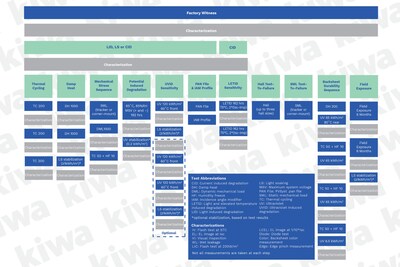
Kiwa PVEL's 2026 PQP Test Program
Kiwa PVEL’s 2026 PQP Test Program

“Across the industry, we continue to see increasing instances of spontaneous glass breakage in the field,” said Tristan Erion-Lorico, Vice President of Sales and Marketing at Kiwa PVEL. “As manufacturers have pushed toward larger modules and thinner materials, these sudden breakage events have made it clear that more rigorous and statistically meaningful testing is needed. Our updated PQP now uses higher sample sizes and test‑to‑failure methodologies to better assess module durability.”

New Test-to-Failure Methods Improve Module Breakage Insights

A key feature of the updated PQP is the introduction of test‑to‑failure (TTF) protocols for both static mechanical load (SML) and hail testing. The new SML-TTF complements the PQP’s existing Mechanical Stress Sequences (MSS) by quantifying the dominant failure mode and achievable maximum load for each module design submitted for PQP testing. It also expands the test sample quantity to five additional SML-TTF samples, on top of the two MSS samples.

The Hail‑TTF protocol replaces the previous Hail Stress Sequence (HSS) in the PQP. The updated hail test increases the sample size to five modules and focuses on impact locations in the areas most prone to breakage, such as edges, corners, and junction box regions. Hail‑TTF greatly improves repeatability and comparability across manufacturers and glass suppliers, by escalating hail diameters until failure occurs, providing buyers with more quantifiable breakage thresholds.

Kiwa PVEL has also updated its PQP sample production witness process to more systematically verify critical frame and glass dimensions in factories, further reducing uncertainty related to material and assembly variability.

Updated Stabilization Processes

As n‑type technologies become dominant in the PV market, testing labs have encountered increased measurement uncertainty driven by metastability mechanisms. Kiwa PVEL’s team spent the past years quantifying these effects and identified three distinct forms of metastability that can distort post‑test performance measurements:

  • Slow dark‑storage degradation following Damp Heat testing
  • Accelerated dark‑storage degradation following UV exposure and field exposure
  • Potentially recoverable PID‑polarization degradation following voltage stress

To counter these effects, the updated PQP introduces final stabilization steps, including short doses of full‑spectrum light soaking and UV‑light soaking, after UVID, Field Exposure, Damp Heat, and PID testing. These steps ensure that post‑test flash measurements more accurately reflect true module behavior in the field.

Other PQP Updates

Several other refinements further enhance the PQP’s relevance for modern day modules:

  • Reduced LID sample size from 17 to 10 modules, justified by low and consistent LID values in recent years.
  • Allowance for pre‑test current induced preconditioning (in addition to outdoor and indoor light‑soaking) to speed testing and improve scheduling flexibility.
  • Streamlined UVID sequencing, eliminating the interim UV60 characterization in favor of a continuous 120 kWh/m2 exposure, with an option to extend up to 360 kWh/m2 for BOMs that show higher UVID susceptibility.
  • Updated energy ratings following IEC61853-3/4 methodology, leveraging our high accuracy PAN and IAM testing data.

“Regularly iterating on the PQP makes it the most relevant test plan for today’s module technologies and failure modes,” said Kevin Gibson, Managing Director at Kiwa PVEL. “These updates allow module manufacturers to better showcase product reliability and performance on their current offerings. The new PQP also ensures that solar buyers receive meaningful, statistically robust and actionable data.”

For more information, please visit kiwa.com/pvel/pqpv12. 

About Kiwa PVEL
Kiwa PVEL is the leading reliability and performance testing lab for downstream solar project developers, financiers, and asset owners around the world. As part of the larger Kiwa Group, Kiwa PVEL’s integrated services for the solar supply chain offer technical solutions for mitigating risk, optimizing financing and improving solar and energy storage systems performance throughout the project lifecycle.

Since 2012, Kiwa PVEL’s Product Qualification Program (PQP) has been globally recognized for replacing assumptions about PV module performance with quantifiable metrics. Related data and consulting services offered by Kiwa PVEL provide vital procurement intelligence to a network of downstream solar buyers. Visit kiwa.com/pvel and kiwa.com/solar to learn more.

Contact:
Ashley Fallon
Head of Marketing
ashley.fallon@kiwa.com


Shanghai’s INS LAND Crowned China’s Best Club in DJ Mag’s Top 100, Ranks #3 in Asia and #12 Worldwide

SHANGHAI, April 16, 2026 /PRNewswire/ — INS Land, a multi-story nightlife and entertainment complex in the heart of Shanghai, ranks No.12 in the 2026 Top 100 Clubs poll by DJ Mag. The achievement marks the highest ranking by a Chinese club and positions INS Land as the third highest-ranked venue in Asia in 2026.

INS Land ranks No.12 in DJ Mag's Top 100 Clubs 2026, claiming the title of China's best club and ranking #3 in Asia.
INS Land ranks No.12 in DJ Mag’s Top 100 Clubs 2026, claiming the title of China’s best club and ranking #3 in Asia.

In its debut year on the list, INS Land is Asia’s highest new entrant—a sign of its rapid global rise and second worldwide. The annual ranking, publicly voted by electronic music fans worldwide, is widely regarded as a key benchmark in global nightlife culture.

“This is an incredible achievement for our venue for China’s entertainment industry,” said Leo Liu, the Partner and Head of Global Business at INS Land.

 “As our first year participating, we are proud to stand alongside some of the world’s most established clubs. INS Land is more than a party destination—it has become a cultural landmark in Shanghai. We continuously reinvent the space with new concepts, and last November, it was the afterparty for Tomorrowland’s first China show.”

“As we celebrate our third year, we look ahead to updating the space with new concepts and expanding across Asia. Together with our partner Hero Esports, we aim to bring innovative and immersive experiences to audiences in China and beyond,” said Leo Liu.

Approaching its third anniversary on June 16, INS Land has redefined nightlife with its ‘club cluster’ concept. The venue brings together nine distinct clubs within a single building, each dedicated to different music genres and immersive environments. From electronic and hip-hop to live performances, the space offers a dynamic experience under one roof.

Beyond nightlife, INS Land has become a cultural landmark, integrating music, design, dining, and social experiences. The venue also played a destination for major esports launch events like the Hero Esports’ Asian Champions League and the official afterparty destination for Tomorrowland’s first edition in China. These partnerships further highlight INS Land’s global cultural connections and dedication to bringing exciting global concepts to China.

INS Land, together with its partners at Hero Esports—Asia’s largest esports organization—continues to expand  entertainment and youth culture.

Looking forward, INS Land plans to accelerate its expansion, launching sister venues in major Asian cities while continuing to push the boundaries of next-generation entertainment experiences.