Home Blog Page 5669

KPMG Global Economic Outlook H1 2022: Geopolitical uncertainty to lower growth prospects, increase inflationary pressures

SINGAPORE – Media OutReach – 6 April 2022 –

  • Russia-Ukraine war to lower global growth prospects and increase inflationary pressures
  • Central banks’ change in policy stance could add to markets’ volatility
  • On-going geopolitical uncertainties could see further disruptions to production and trade

KPMG GLOBAL ECONOMIC OUTLOOK H1’2022

The on-going conflict in Ukraine is set to lower global growth prospects and increase inflationary pressures across the world, according to the latest KPMG Global Economic Outlook.

The bi-annual report provides economic forecasts and analysis from the global organization’s team of economists in territories and regions throughout the world.

The latest edition, covering H1’2022, warns progress on global issues including public health and climate change has slowed as political and business leaders grapple with the broad implications of the war in Ukraine.

While Russia and Ukraine together represent a relatively small part of the world economy, both countries account for a large share of global energy exports, as well as exports of a range of metals, food staples and agricultural inputs. Together, Russia and Ukraine account for almost a third of global wheat exports.

Inflation on a high exacerbates central banks’ dilemma

The global economy emerged from the COVID-19 recession with higher public debt and as central banks raise interest rates, the servicing cost of sovereign debt also increases, making it particularly challenging for emerging countries whose debt is denominated in an appreciating US dollar. With policymakers and many businesses still reeling from the consequences of the pandemic, they are less ready to counter another significant economic shock.

Yael Selfin, Chief Economist at KPMG in the UK, said:

“As we continue to emerge from the restrictions imposed by the pandemic, one of the major concerns has been the rise in inflation across many parts of the world. The conflict between Russia and Ukraine has further intensified these pressures. Our analysis found that global inflation could average between 4.5%-7.7% this year and between 2.9%-4.3% in 2023, depending on how the crisis evolves. The change in central banks’ stance to address rising inflationary pressures, especially the Fed’s, could add volatility to markets as they adjust to a new policy direction. Going forward, the world economy will have to navigate a difficult period ahead under a cloud of geopolitical uncertainty. Businesses and households will be hoping for the best but should plan for potential ongoing disruptions and uncertainty.”

Global growth outlook

The outlook for the next two years will depend on how the conflict between Russia and Ukraine evolves. With so much uncertainty at present, KPMG’s Global Economic Outlook has developed three scenarios to examine the prospects for the world economy:

  • The main scenario assumes that world oil prices will be US$30 higher than their path prior to the escalation of the crisis, while gas prices will be 50% higher across Europe. It also incorporates a 5% rise in global food prices.
  • A more severe scenario looks at the potential impact with world oil prices US$40 higher together with a 100% rise in gas prices for Europe and 50% rise in gas prices for the rest of the world. This downside scenario also assumes a 10% rise in global food prices. Both scenarios incorporate a 23% rise in average metal prices and a 4% increase in the cost of agricultural inputs. They also include higher investment risk premia and additional government spending in Europe.
  • The report’s upside scenario looks at the possible outcome should the conflict resolve sooner than anticipated, with prices returning to early February levels and production and trade flows restored.

The report’s analysis found that global GDP growth could range between 3.3%-4% this year and between 2.5%-3.2% in 2023, depending on the scenario. Risks to KPMG’s forecast are currently skewed to the downside. It is possible to envisage that the conflict between Russia and Ukraine escalates beyond the report’s downside scenario, with cuts to energy supplies for example causing a significant disruption to production in parts of Europe. The COVID-19 pandemic is still causing shutdowns in major economies such as China, and a new wave could undo the progress in easing global supply chain blockages.

Paul Kent, Partner, Advisory at KPMG in Singapore, said:

“Many ASEAN countries, including Singapore, have signalled their intent to accelerate economic recovery as they move towards an endemic COVID-19 phase. However, as KPMG’s 2022 Global Economic Outlook report has indicated, growth will likely be tempered due to immediate challenges such as the impact of the Russia-Ukraine conflict, higher commodity prices, the latest Omicron wave in China and rising global interest rates. Meanwhile, inflation rates are trending upwards across the ASEAN region, though they remain relatively low by global standards. An exception is Singapore, with inflation currently at a nine-year high of 4 per cent. All eyes will be on the Singapore government’s delicate dance in tackling the rising costs for households and businesses, while ensuring that the economy remains competitive.”

ASEAN growth outlook

Inflation is picking up across the ASEAN region in part driven by the easing of Monetary Policy during the pandemic. But unlike other parts of the world, momentum in prices is still relatively low – consumer price inflation in Indonesia, Malaysia, Thailand and Vietnam is currently sitting between 2% and 3%. Fiscal supports through the pandemic were generally smaller, resulting in a slower recovery in domestic demand and more muted local inflationary pressures. However, Singapore – where government support has been more significant – is an exception, with inflation currently at a high of 4%, not seen since 2013.

The recent rises in food and fuel prices will impact the region. A significant portion of wheat imports (to Indonesia and Philippines in particular) are sourced from Russia and Ukraine. Additionally, agriculture in the region is also heavily reliant on Russia and Belarus for potassic fertiliser. The adverse impacts of higher fuel prices are, however, partially offset in commodity-producing economies such as Indonesia and Malaysia through higher government revenues.

The Russian-Ukrainian conflict is also set to disrupt manufacturing supply chains, as a result of shortages in key inputs such as neon and semi-finished iron and steel, which are essential for the production of chips (neon) and cars, machinery and electronics (steel).

In some countries, such as Indonesia and Singapore, attention has started to shift towards fiscal consolidation with the announcement of tax increases as initial signs of economic recovery emerge. This will slow growth momentum going through H2 2022 and 2023, as will the exhausting of the easy wins from re-opening, which will take the pace of growth in many countries back towards long-run trend rates.

Gary Reader, Global Head of Clients and Markets at KPMG, commented:

“Before the outbreak of war in Ukraine, different territories and regions were at different stages of their post-COVID-19 economic recovery, and that is reflected in the analysis from our Chief Economists. But, while GDP forecasting varies, there are a number of clear, consistent themes and threats facing the planet. Armed conflict may currently be restricted to Eastern Europe, but it’s already having far-reaching consequences for all nations.

“Supply chain issues have moved from a post-covid issue to a major immediate threat, with potential shortages in natural gas, metals and grains, among many others. While shortages will impact every territory, we anticipate a disproportionate impact on some of the world’s poorest places and people, compounding long-term challenges for the planet’s collective recovery. Meanwhile, inflation looks set to become a major theme for everyone, raising the threat of a worldwide cost-of-living crisis. Economic forecasting is not a perfect science, but what KPMG’s Global Economic Outlook does do is shine a light on the path ahead, providing a degree of guidance in an increasingly difficult journey.”

Read and download KPMG’s Global Economic Outlook report here.

About KPMG’s Global Economic Outlook

KPMG’s Global Economic Outlook provides bi-annual economic forecasts, produced by macroeconomics teams across KPMG’s global network using a suite of external and in-house models capturing the main inter-relationships in the world economy. As with all forecasts, these are subject to considerable uncertainty and the outturn may differ significantly.

About KPMG International

KPMG is a global organization of independent professional services firms providing Audit, Tax and Advisory services. KPMG is the brand under which the member firms of KPMG International Limited (“KPMG International”) operate and provide professional services. “KPMG” is used to refer to individual member firms within the KPMG organization or to one or more member firms collectively.

KPMG firms operate in 145 countries and territories with more than 236,000 partners and employees working in member firms around the world. Each KPMG firm is a legally distinct and separate entity and describes itself as such. Each KPMG member firm is responsible for its own obligations and liabilities.

KPMG International Limited is a private English company limited by guarantee. KPMG International Limited and its related entities do not provide services to clients.

#KPMG

The issuer is solely responsible for the content of this announcement.

Dachser revenue exceeds EUR 7 billion for the first time

2021 was an exceptional year: Increases in volume and high freight rates generated record growth; 78.3 percent jump in air and sea freight

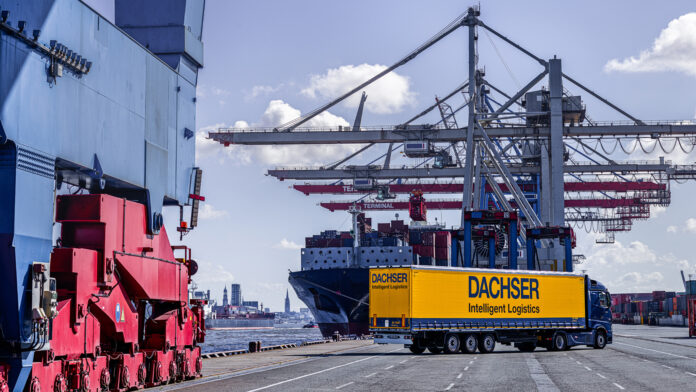
KEMPTEN, GERMANY – Media OutReach – 6 April 2022 – In the 2021 financial year, Dachser increased its consolidated revenue by 26.0 percent to EUR 7.1 billion. After the lockdown-driven lateral detour of the previous year, the logistics provider is back on a dynamic growth track. The positive outcome for 2021 is due to organic growth in shipments and tonnage of 6.3 percent, or 7.7 percent at the Group level. High freight prices, caused by the shortage of load capacity experienced by all carriers, set the seal on this jump in revenue.

2021 was an exceptional year for Dachser

“There’s no question that 2021 was exceptional in many ways, with some extreme challenges to overcome,” says Dachser CEO Burkhard Eling. “It was marked by Brexit, the COVID-19 pandemic, and global supply chains pushed to breaking point, all of which caused great uncertainty among our customers. Even in this situation, we managed to offer logistics solutions while still maintaining a high level of quality and service. In this way, we strengthened ties with customers and pursued targeted expansion of business, especially with our major accounts. This was an extraordinary achievement, where the difficult conditions meant that our teams had to give their all.”

Business development in detail

Dachser’s Road Logistics business field—which comprises the transport and warehousing of industrial and consumer goods (European Logistics) and food (Food Logistics)—increased its revenue by 12.3 percent to EUR 4.99 billion in 2021. After lockdowns across southern Europe in 2020 led to a 2.2 percent drop in revenue, the result represents a significant increase—even over the pre-COVID year 2019.

The European Logistics business line raised its revenue by an impressive 13.1 percent to EUR 3.92 billion. Following several years of stagnation, the number of shipments increased significantly by 6.8 percent to 72.0 million; tonnage went up by even more, 8.5 percent, to 30.0 million. All regional business units—Germany, North Central Europe, France & Maghreb, and Iberia—recorded double-digit increases in revenue. Despite COVID-related restrictions for restaurants and hotels in Germany, the acquisition of new customers ensured that the Food Logistics business line achieved revenue growth of 9.8 percent. This is the first time the business line surpassed one billion, achieving revenue of EUR 1.07 billion.

In 2021, air and sea freight business was characterized by supply chain disruptions, a shortage of freight capacity, and correspondingly high rates. As a consequence of this development, the Air & Sea Logistics business field was able to achieve record revenue growth of 78.3 percent. Shipments handled rose by 9.1 percent and tonnage jumped 20.9 percent. One particular success was the further expansion of air freight charters to a network of regular transports between Asia, Europe, and North America. Dachser completed a total of 230 charters in 2021. “Reliably available freight capacity gives customers planning certainty—and that was the key to our success in 2021. In addition, we were able to feed goods arriving from overseas directly into our own European overland transport network for distribution and delivery, which proved to be very advantageous,” Eling explains.

Strategic and future-oriented action

Volatility and challenges continue to shape the marketplace in 2022. The war in Ukraine is causing extreme human suffering, and will also leave deep marks on the global economy. Then there are the record energy and fuel costs, the further exacerbation of the driver shortage, and persistent disruptions to global supply chains. This last is caused in part by further outbreaks of COVID-19 such as happened recently in China and Hong Kong. “We must accept that we’re in for yet another year in which maintaining supply chains will require crisis management, flexibility, and resilience,” Eling says.

Nevertheless, Dachser is also providing for the future by investing in logistics facilities, digital technologies, and equipment. After investing around EUR 100 million in 2021, the company plans to spend some EUR 200 million in 2022. “This includes lighthouse projects such as our fully automated high-bay storage warehouse in Memmingen. Featuring 52,000 pallet spaces, this facility will open in October,” Eling explains. “At the same time, we’re also making substantial investments in digitalization, climate protection, and especially in our employees—after all, logistics is and will always be a business run by people for people.” In 2021, Dachser hired some 1,000 new employees worldwide, and around 2,200 young people are currently doing an apprenticeship at Dachser locations across the globe. Dachser’s high equity ratio of approximately 60 percent provides strong support for the company’s investment policy.

Overview of revenue:

Net revenue (in EUR millions) 2021
(provisional)
2020 Change in 2021
vs. 2020
Road Logistics 4,992 4,444 +12.3%
European Logistics 3,918 3,465 +13.1%
Food Logistics 1,074 979 +9.8%
Air & Sea Logistics 2,074 1,163 +78.3%
Group 7,066 5,608* +26.0%

*Rounding difference

About Dachser

Headquartered in Germany, Dachser is one of the world’s leading logistics providers. Using its own in-house developed IT-systems, the company incorporates transport, warehousing, and value-added services to provide comprehensive supply chain solutions. Thanks to some 31,800 employees at 376 locations all over the globe, Dachser generated consolidated net revenue of approximately EUR 7.1 billion in 2021. The same year, the logistics provider handled a total of 83.6 million shipments weighing 42.8 million metric tons. The logistics service provider is represented by its own country organizations in 42 countries. In Asia, there are branch offices in 43 locations across 12 Business Areas. Its Asia Pacific Regional Head Office is located in Hong Kong.

For more information about Dachser, please visit

#Dachser

The issuer is solely responsible for the content of this announcement.
Airline’s April Fools Tweet An Illegal Affront to Thai King, Lawyer Claims

Vietjet April Fool's prank

Thai Vietjet tweeted an April Fool’s prank which unfortunately may lead to criminal charges in the Kingdom.

Aon: Managing Risk and Capitalising Opportunities in Connected Asia

SINGAPORE – Media OutReach – 6 April 2022 – Aon plc (NYSE: AON), a leading global professional services firm, has published the 2022 Asia Market Review, Aon’s ninth annual publication on the risk management and mitigation landscape in Asia. The report reveals insights on the key market-shaping forces of 2022 drawn from Aon’s long-running analysis based on the industry’s leading sources of data.

The report explores:

  • An overview of what to expect from the economic recovery and reopening of the diverse Asian markets.
  • Insights from Aon’s business leaders in key areas such as transaction liabilities, trade credit and intellectual property to help risk managers protect against balance sheet volatility; and
  • Ways organisations from various industries can reduce the total cost of risk for their business.

Download the report here: 2022 Asia Market Review

Below are a few insights from the report:

Mergers & Acquisitions Transaction Liability

  • As pharmaceuticals, renewable energy, technology and biotechnology markets continue to attract investors, claims activity is likely to increase.
  • Although M&A pricing will increase in relation to Warranty & Indemnity (W&I), premium rates are expected to stabilise somewhat in the new financial year.

Intellectual Property

  • New analytics tools, artificial intelligence (AI) and machine learning are available to help risk managers leverage their IP assets as collateral in borrowing, so as to benefit from a non-dilutive, competitively priced source of capital.
  • In 2022, a significant expansion in lending capacity for the IP market is expected, with increasing demand from borrowers.

Trade Credit

  • Inflation will lead to tightening monetary policy. Leveraged, weaker companies may struggle with increased finance costs.
  • Insolvencies are forecasted to increase by 15 percent to 30 percent globally in 2022, as government support tapers.

Digital Economy

  • Global supply chain disruptions and unprecedented increases in technology adoption caused major chip shortages, which are likely to continue into 2022.
  • Increased investment in AI, automation and 5G deployment is likely, even as global supply chain challenges persist.
  • Many digital economies will permanently adopt remote working or a hybrid model, which will help with the tech talent crunch.

Financial Institutions

  • Deployment increased in credit insurance for project finance transactions aimed at sustainability-linked projects.
  • Larger banks will continue to focus on the impact of climate change on lending portfolios, investment strategies, regulatory reporting, shareholder expectations and broader stakeholder communications in their keynote messaging.

Human Capital Risk

  • There will be a greater need for companies to deploy lead analytics to understand their workforce and implement programmes that build workforce agility and resilience.
  • Although companies are maintaining flexibility as they bring employees back on site, determining the right working model is a multifaceted process based on various factors.

Health (Medical Trend Rates)

  • Medication-related expenses experienced some of the largest inflationary increases.
  • The normalisation in utilisation patterns, emerging mental/musculoskeletal health risks and the potential for a greater COVID-19 cost burden will fall on the private sector. This will require employers to carefully analyse their medical plans and employee needs, as cost pressures increase.

Employee Wellbeing and Wealth Solutions

  • Linking employee financial wellbeing to existing employee benefits drove perceived value.
  • Foregrounded by volatile investment markets and rising inflation, monetary policies and regulatory settings will tighten, having impact on bond yields and employer pension accounting liabilities.
  • Life expectancies will continue to increase due to wealth and healthcare improvements, as will above-inflation healthcare costs.

As traditional industry borders fall away in 2022, ecosystems and the digital platforms that enable them will continue to influence the future of business. Having an impact in the New Better will no longer be about offering the right product, but about advice and holistic solutions that will give organisations greater clarity and confidence.

About Aon

(NYSE: AON) exists to shape decisions for the better — to protect and enrich the lives of people around the world. Our colleagues provide our clients in over 120 countries and territories with advice and solutions that give them the clarity and confidence to make better decisions to protect and grow their business.

Follow Aon on and . Stay up-to-date by visiting the and sign up for News Alerts .

#Aon

The issuer is solely responsible for the content of this announcement.

Aon: Managing Risk and Capitalising Opportunities in Connected Asia

SINGAPORE – Media OutReach – 6 April 2022 – Aon plc (NYSE: AON), a leading global professional services firm, has published the 2022 Asia Market Review, Aon’s ninth annual publication on the risk management and mitigation landscape in Asia. The report reveals insights on the key market-shaping forces of 2022 drawn from Aon’s long-running analysis based on the industry’s leading sources of data.

The report explores:

  • An overview of what to expect from the economic recovery and reopening of the diverse Asian markets.
  • Insights from Aon’s business leaders in key areas such as transaction liabilities, trade credit and intellectual property to help risk managers protect against balance sheet volatility; and
  • Ways organisations from various industries can reduce the total cost of risk for their business.

Download the report here: 2022 Asia Market Review

Below are a few insights from the report:

Mergers & Acquisitions Transaction Liability

  • As pharmaceuticals, renewable energy, technology and biotechnology markets continue to attract investors, claims activity is likely to increase.
  • Although M&A pricing will increase in relation to Warranty & Indemnity (W&I), premium rates are expected to stabilise somewhat in the new financial year.

Intellectual Property

  • New analytics tools, artificial intelligence (AI) and machine learning are available to help risk managers leverage their IP assets as collateral in borrowing, so as to benefit from a non-dilutive, competitively priced source of capital.
  • In 2022, a significant expansion in lending capacity for the IP market is expected, with increasing demand from borrowers.

Trade Credit

  • Inflation will lead to tightening monetary policy. Leveraged, weaker companies may struggle with increased finance costs.
  • Insolvencies are forecasted to increase by 15 percent to 30 percent globally in 2022, as government support tapers.

Digital Economy

  • Global supply chain disruptions and unprecedented increases in technology adoption caused major chip shortages, which are likely to continue into 2022.
  • Increased investment in AI, automation and 5G deployment is likely, even as global supply chain challenges persist.
  • Many digital economies will permanently adopt remote working or a hybrid model, which will help with the tech talent crunch.

Financial Institutions

  • Deployment increased in credit insurance for project finance transactions aimed at sustainability-linked projects.
  • Larger banks will continue to focus on the impact of climate change on lending portfolios, investment strategies, regulatory reporting, shareholder expectations and broader stakeholder communications in their keynote messaging.

Human Capital Risk

  • There will be a greater need for companies to deploy lead analytics to understand their workforce and implement programmes that build workforce agility and resilience.
  • Although companies are maintaining flexibility as they bring employees back on site, determining the right working model is a multifaceted process based on various factors.

Health (Medical Trend Rates)

  • Medication-related expenses experienced some of the largest inflationary increases.
  • The normalisation in utilisation patterns, emerging mental/musculoskeletal health risks and the potential for a greater COVID-19 cost burden will fall on the private sector. This will require employers to carefully analyse their medical plans and employee needs, as cost pressures increase.

Employee Wellbeing and Wealth Solutions

  • Linking employee financial wellbeing to existing employee benefits drove perceived value.
  • Foregrounded by volatile investment markets and rising inflation, monetary policies and regulatory settings will tighten, having impact on bond yields and employer pension accounting liabilities.
  • Life expectancies will continue to increase due to wealth and healthcare improvements, as will above-inflation healthcare costs.

As traditional industry borders fall away in 2022, ecosystems and the digital platforms that enable them will continue to influence the future of business. Having an impact in the New Better will no longer be about offering the right product, but about advice and holistic solutions that will give organisations greater clarity and confidence.

About Aon

(NYSE: AON) exists to shape decisions for the better — to protect and enrich the lives of people around the world. Our colleagues provide our clients in over 120 countries and territories with advice and solutions that give them the clarity and confidence to make better decisions to protect and grow their business.

Follow Aon on and . Stay up-to-date by visiting the and sign up for News Alerts .

#Aon

The issuer is solely responsible for the content of this announcement.

Aon: Managing Risk and Capitalising Opportunities in Connected Asia

SINGAPORE – Media OutReach – 6 April 2022 – Aon plc (NYSE: AON), a leading global professional services firm, has published the 2022 Asia Market Review, Aon’s ninth annual publication on the risk management and mitigation landscape in Asia. The report reveals insights on the key market-shaping forces of 2022 drawn from Aon’s long-running analysis based on the industry’s leading sources of data.

The report explores:

  • An overview of what to expect from the economic recovery and reopening of the diverse Asian markets.
  • Insights from Aon’s business leaders in key areas such as transaction liabilities, trade credit and intellectual property to help risk managers protect against balance sheet volatility; and
  • Ways organisations from various industries can reduce the total cost of risk for their business.

Download the report here: 2022 Asia Market Review

Below are a few insights from the report:

Mergers & Acquisitions Transaction Liability

  • As pharmaceuticals, renewable energy, technology and biotechnology markets continue to attract investors, claims activity is likely to increase.
  • Although M&A pricing will increase in relation to Warranty & Indemnity (W&I), premium rates are expected to stabilise somewhat in the new financial year.

Intellectual Property

  • New analytics tools, artificial intelligence (AI) and machine learning are available to help risk managers leverage their IP assets as collateral in borrowing, so as to benefit from a non-dilutive, competitively priced source of capital.
  • In 2022, a significant expansion in lending capacity for the IP market is expected, with increasing demand from borrowers.

Trade Credit

  • Inflation will lead to tightening monetary policy. Leveraged, weaker companies may struggle with increased finance costs.
  • Insolvencies are forecasted to increase by 15 percent to 30 percent globally in 2022, as government support tapers.

Digital Economy

  • Global supply chain disruptions and unprecedented increases in technology adoption caused major chip shortages, which are likely to continue into 2022.
  • Increased investment in AI, automation and 5G deployment is likely, even as global supply chain challenges persist.
  • Many digital economies will permanently adopt remote working or a hybrid model, which will help with the tech talent crunch.

Financial Institutions

  • Deployment increased in credit insurance for project finance transactions aimed at sustainability-linked projects.
  • Larger banks will continue to focus on the impact of climate change on lending portfolios, investment strategies, regulatory reporting, shareholder expectations and broader stakeholder communications in their keynote messaging.

Human Capital Risk

  • There will be a greater need for companies to deploy lead analytics to understand their workforce and implement programmes that build workforce agility and resilience.
  • Although companies are maintaining flexibility as they bring employees back on site, determining the right working model is a multifaceted process based on various factors.

Health (Medical Trend Rates)

  • Medication-related expenses experienced some of the largest inflationary increases.
  • The normalisation in utilisation patterns, emerging mental/musculoskeletal health risks and the potential for a greater COVID-19 cost burden will fall on the private sector. This will require employers to carefully analyse their medical plans and employee needs, as cost pressures increase.

Employee Wellbeing and Wealth Solutions

  • Linking employee financial wellbeing to existing employee benefits drove perceived value.
  • Foregrounded by volatile investment markets and rising inflation, monetary policies and regulatory settings will tighten, having impact on bond yields and employer pension accounting liabilities.
  • Life expectancies will continue to increase due to wealth and healthcare improvements, as will above-inflation healthcare costs.

As traditional industry borders fall away in 2022, ecosystems and the digital platforms that enable them will continue to influence the future of business. Having an impact in the New Better will no longer be about offering the right product, but about advice and holistic solutions that will give organisations greater clarity and confidence.

About Aon

(NYSE: AON) exists to shape decisions for the better — to protect and enrich the lives of people around the world. Our colleagues provide our clients in over 120 countries and territories with advice and solutions that give them the clarity and confidence to make better decisions to protect and grow their business.

Follow Aon on and . Stay up-to-date by visiting the and sign up for News Alerts .

#Aon

The issuer is solely responsible for the content of this announcement.

Hang Lung Injects a Further RMB 3 Million into the “Hang Lung COVID-19 Relief Fund 2.0” in Support of Pandemic Countermeasures on the Mainland

HONG KONG SAR AND SHANGHAI, CHINA – Media OutReach – 6 April 2022 – The COVID-19 situation continues in many cities on the Mainland, making the pandemic countermeasures more challenging. Hang Lung Properties announced a further injection of RMB 3 million into the “Hang Lung COVID-19 Relief Fund 2.0” in support of anti-epidemic measures including the provision of health protection items and other daily necessities for Mainland cities most affected by COVID-19. Concrete relief measures include a donation of RMB 2 million to the Shanghai Charity Foundation, and targeted support to contain the spread of the virus in Jing’an and Xuhui Districts.

HL1.jpg
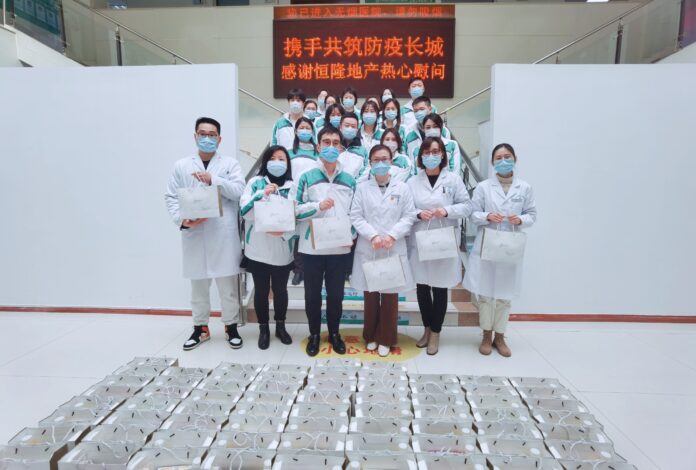
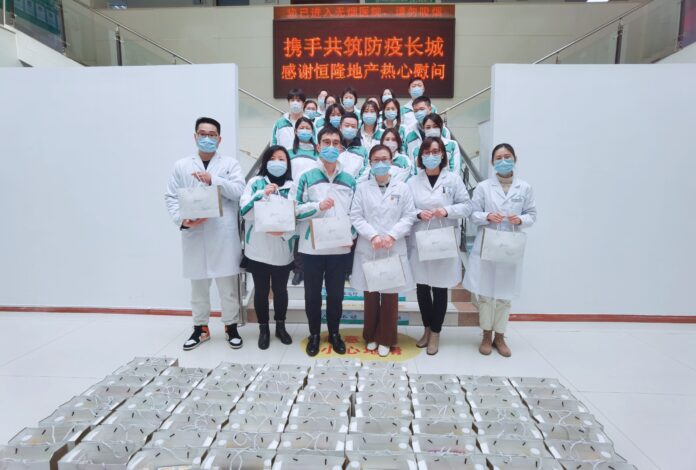
Hang Lung As One Volunteer Teams pass on gestures of their heartfelt appreciation, expressed in the form of caring gift packs, to frontline pandemic fighters and community workers

HL2.jpg
Hang Lung is holding online interactive sessions for the children of frontline pandemic workers to enrich their lives with genuine care

Mr. Weber Lo, Chief Executive Officer of Hang Lung Properties, said, “We are closely monitoring the ongoing pandemic situation on the Mainland and actively supporting the government’s measures to further its “dynamic zero-COVID” policy in the battle against COVID-19, doing whatever we can to safeguard the health and wellbeing of the public. It is hoped that, with this new injection of funds into our ‘COVID-19 Relief Fund 2.0’, we can provide focused and targeted support to pandemic countermeasures on the Mainland.”

Since the establishment of the “Hang Lung COVID-19 Relief Fund” in 2020, together with the current donation, Hang Lung has been donating more than RMB 20 million and providing targeted support for urgent public pandemic countermeasures and for the most severely affected in our community across Hong Kong and the Mainland, including the disbursal of RMB 6 million for the establishment and operation of Leishenshan Hospital in Wuhan in 2020, donation of HK$ 6 million for financing the HKSAR government’s operation of “mobile cabin hospitals” earlier this year, as well as providing health protection materials and daily necessities for frontline workers engaged in pandemic relief-related community services, underprivileged families, lone elderly, and so on, with the aim of easing their financial difficulties.

In addition, our local Hang Lung As One Volunteer Teams continue to provide their unwavering support through ground-level community action. In the first quarter of 2022, the Volunteer Teams across Hang Lung’s Mainland projects took the initiative to express their warmest care and highest respect for frontline pandemic fighters. They have also been actively engaged in initiatives to support the most vulnerable in the community, giving of their time and energy to sincerely reach out to the needy through activities such as live online interactive sessions for the children of frontline pandemic workers, to promote physical and mental wellbeing.

About Hang Lung Properties

Hang Lung Properties Limited (stock code: 00101) creates compelling spaces that enrich lives. Headquartered in Hong Kong, Hang Lung Properties develops and manages a diversified portfolio of world-class properties in Hong Kong and the nine Mainland cities of Shanghai, Shenyang, Jinan, Wuxi, Tianjin, Dalian, Kunming, Wuhan and Hangzhou. With its luxury positioning under the “66” brand, the company’s Mainland portfolio has established its leading position as the “Pulse of the City”. Hang Lung Properties is recognized for leading the way in enhanced sustainability initiatives in real estate as it pursues sustainable growth by connecting customers and communities.

At Hang Lung Properties – We Do It Well.

For more information, please visit .

#HangLungProperties

The issuer is solely responsible for the content of this announcement.

Hang Lung Injects a Further RMB 3 Million into the “Hang Lung COVID-19 Relief Fund 2.0” in Support of Pandemic Countermeasures on the Mainland

HONG KONG SAR AND SHANGHAI, CHINA – Media OutReach – 6 April 2022 – The COVID-19 situation continues in many cities on the Mainland, making the pandemic countermeasures more challenging. Hang Lung Properties announced a further injection of RMB 3 million into the “Hang Lung COVID-19 Relief Fund 2.0” in support of anti-epidemic measures including the provision of health protection items and other daily necessities for Mainland cities most affected by COVID-19. Concrete relief measures include a donation of RMB 2 million to the Shanghai Charity Foundation, and targeted support to contain the spread of the virus in Jing’an and Xuhui Districts.

HL1.jpg
Hang Lung As One Volunteer Teams pass on gestures of their heartfelt appreciation, expressed in the form of caring gift packs, to frontline pandemic fighters and community workers

HL2.jpg
Hang Lung is holding online interactive sessions for the children of frontline pandemic workers to enrich their lives with genuine care

Mr. Weber Lo, Chief Executive Officer of Hang Lung Properties, said, “We are closely monitoring the ongoing pandemic situation on the Mainland and actively supporting the government’s measures to further its “dynamic zero-COVID” policy in the battle against COVID-19, doing whatever we can to safeguard the health and wellbeing of the public. It is hoped that, with this new injection of funds into our ‘COVID-19 Relief Fund 2.0’, we can provide focused and targeted support to pandemic countermeasures on the Mainland.”

Since the establishment of the “Hang Lung COVID-19 Relief Fund” in 2020, together with the current donation, Hang Lung has been donating more than RMB 20 million and providing targeted support for urgent public pandemic countermeasures and for the most severely affected in our community across Hong Kong and the Mainland, including the disbursal of RMB 6 million for the establishment and operation of Leishenshan Hospital in Wuhan in 2020, donation of HK$ 6 million for financing the HKSAR government’s operation of “mobile cabin hospitals” earlier this year, as well as providing health protection materials and daily necessities for frontline workers engaged in pandemic relief-related community services, underprivileged families, lone elderly, and so on, with the aim of easing their financial difficulties.

In addition, our local Hang Lung As One Volunteer Teams continue to provide their unwavering support through ground-level community action. In the first quarter of 2022, the Volunteer Teams across Hang Lung’s Mainland projects took the initiative to express their warmest care and highest respect for frontline pandemic fighters. They have also been actively engaged in initiatives to support the most vulnerable in the community, giving of their time and energy to sincerely reach out to the needy through activities such as live online interactive sessions for the children of frontline pandemic workers, to promote physical and mental wellbeing.

About Hang Lung Properties

Hang Lung Properties Limited (stock code: 00101) creates compelling spaces that enrich lives. Headquartered in Hong Kong, Hang Lung Properties develops and manages a diversified portfolio of world-class properties in Hong Kong and the nine Mainland cities of Shanghai, Shenyang, Jinan, Wuxi, Tianjin, Dalian, Kunming, Wuhan and Hangzhou. With its luxury positioning under the “66” brand, the company’s Mainland portfolio has established its leading position as the “Pulse of the City”. Hang Lung Properties is recognized for leading the way in enhanced sustainability initiatives in real estate as it pursues sustainable growth by connecting customers and communities.

At Hang Lung Properties – We Do It Well.

For more information, please visit .

#HangLungProperties

The issuer is solely responsible for the content of this announcement.