
Home Blog Page 6

iFAST Hong Kong and J.P. Morgan Asset Management Partner to Expand Discretionary Portfolio Solutions for Wealth Advisers


HONG KONG SAR – Media OutReach Newswire – 8 September 2026 – iFAST Financial (HK) Ltd (“iFAST Hong Kong”), a wholly-owned subsidiary of iFAST Corporation Ltd, today announced an expansion of its Discretionary Portfolio Management Solutions (DPMS) lineup in Hong Kong with the launch of two new portfolios powered by J.P. Morgan Asset Management (“JPMAM”), with the portfolios officially available to wealth advisers and their clients from August 2026.

(From left) Supreet Bhan, Head of Hong Kong Intermediary Business, J.P. Morgan Asset Management; and Glory Lau, General Manager, Platform Services, iFAST Financial HK

The collaboration underscores iFAST Hong Kong’s commitment to its Business-to-Business (B2B) partners, giving wealth advisers and their clients access to a professionally managed investment solution that saves time and broadens choice.

“Partnering with J.P. Morgan Asset Management allows us to bring institutional expertise to advisers and their clients here in Hong Kong. By outsourcing alpha generation through our DPMS, advisers can focus on nurturing trusted client relationships while delivering comprehensive financial planning.” said Ms Glory Lau, General Manager, Platform Services of iFAST Hong Kong.

The DPMS advised by JPMAM leverages JPMAM’s comprehensive range of active ETFs globally, giving investors access to active management at a lower cost.

“Our approach to active investing is grounded in extensive global research and a disciplined asset allocation process that’s been tested across market cycles. By partnering with iFAST, we’re making our leading actively managed ETF capabilities and portfolio solutions available to iFAST’s clients in Hong Kong. We look forward to helping iFAST’s clients pursue long-term objectives through the model portfolios striving for diversification, robustness across market cycles, and more consistent outcomes,” said Yuejue Jin, Asia Head of Multi-Asset Solutions, J.P. Morgan Asset Management.

Empowering Advisers, Enhancing Client Experience

The new DPMS portfolios give wealth advisers using iFAST Hong Kong platform greater choice and flexibility to align client portfolios with specific goals and risk profiles, while removing much of the administrative workload that typically consumes adviser and client time. Beyond asset allocation advisory services, JPMAM also provides investment insights and trainings, adding to iFAST Hong Kong’s adviser enablement ecosystem of exclusive content, courses, and events.

Hashtag: #iFAST #JPMAM #Business #Finance


The issuer is solely responsible for the content of this announcement.

About iFAST Corporation Ltd.

iFAST Corporation Ltd. (“iFAST Corp”, Stock code: AIY) is a digital banking and wealth management platform, with assets under administration (AUA) of S$36.13 billion as at 30 June 2026. Incorporated in 2000 in Singapore and listed on the SGX-Mainboard in December 2014, the Group is also present in Hong Kong, Malaysia, China, the UK and the US.

The Group’s B2B platforms serve more than 980 financial advisory companies, financial institutions, banks and internet companies with over 15,300 wealth advisers across its markets. The Group offers access to over 29,600 investment products including mutual funds, bonds, stocks, ETFs, and insurance products, as well as services including wealth management solutions, online discretionary portfolio management services, banking services, pension administration, trust services, research and investment seminars, fintech solutions, banking, and investment administration and transaction services.

iFAST Corp entered the Hong Kong market in 2007. iFAST Financial (HK) Limited is a fintech wealth management platform and a wholly-owned subsidiary of iFAST Corp. iFAST Financial (HK) Limited holds Type 1, 4, and 9 licences issued by the Securities and Futures Commission (SFC) and is a registered Mandatory Provident Fund (MPF) Intermediary under the Mandatory Provident Fund Schemes Authority (MPFA).

The Group’s mission statement is, “To help investors around the world invest globally and profitably”.

For more information, please visit or

Luang Prabang Economy Grows Despite Sharp Drop in Tourists

Luang Prabang Scores Silver for Sustainable Tourism 2025–2027
Luang Prabang busy street (photo credit: Wander Laos)

Luang Prabang’s economy grew 3.9 percent in the first half of 2026, even as one of its biggest economic drivers, tourism, took a major hit.

The province recorded just over 1 million tourist arrivals in the first six months of the year, down by 884,775 from the same period in 2025.

Yet the broader economy continued to grow, reaching LAK 11.67 trillion (USD 520 million), more than half of the province’s annual target, according to figures presented by provincial authorities on 3 September.

Services led the expansion, while industry, handicrafts and agriculture also posted growth. Agriculture and forestry remained the backbone of the provincial economy, accounting for nearly 43 percent of output.

The Laos-China Railway has also become an increasingly important part of economic activity. Around 1.3 million passenger trips were recorded in Luang Prabang during the first half of the year, while more than 564,000 tonnes of goods moved into and out of the province.

Provincial authorities said the railway has made it easier to move people and goods, while connecting Luang Prabang more closely with other parts of Laos and regional markets.

The growth comes as Laos as a whole recorded 5 percent economic growth during the first half of 2026, according to Ministry of Finance figures.

Tourism is a Different Story

Tourism, however, is a much less positive picture.

While Laos welcomed 2.59 million international visitors in the first six months of the year, a 9.9 percent increase from the same period in 2025, the growth has been uneven.

Almost 58 percent of the increase came in January, when arrivals jumped 30.7 percent. Take January out of the picture and growth drops to just 5.1 percent.

Much of the increase also came from neighboring countries. Visitors from nearby markets accounted for 81.6 percent of all arrivals and around 71 percent of the overall increase. Thailand and China alone added nearly 174,000 visitors.

Meanwhile, visitors from the wider Asia-Pacific region declined, largely because arrivals from South Korea fell 33.2 percent.

Luang Prabang is a different story. Tourist numbers have fallen sharply, but the provincial economy still grew in the first half of the year.

Trying To Bring Visitors Back

Provincial authorities are now looking at ways to make Luang Prabang more attractive to visitors by upgrading tourism sites and services.

The province is also revising its conservation plan for the UNESCO-listed World Heritage site. The updated plan has been submitted to UNESCO’s Bangkok office.

For the rest of the year, authorities are also turning their attention to tax collection, with plans to expand the tax base and bring more businesses into the formal system.

Convenience stores, restaurants, cafes, hotels and guesthouses will be among those targeted. Authorities also plan to keep a closer eye on electronic tax invoices and receipts to improve collection and reduce revenue losses, state media reported.

Media’s future tense in AI-driven world

BEIJING, Sept. 7, 2026 /PRNewswire/ — This is an op-ed from China Daily.

Philip K. Dick’s 1969 novel Ubik imagined a door that demands payment before opening — a fantasy then, but eerily prescient in today’s AI-driven world. While Elon Musk predicts AI will bring global abundance, for traditional media that abundance has already arrived — with devastating consequences.

The question is no longer whether AI changes media, but what role professional journalism can play when information is plentiful, yet truth, context and reality grow scarce.

Dick’s own life — overlooked, depressed and penniless — belied his extraordinary foresight. In The Man in the High Castle, he imagined alternate realities. Today, personalized algorithms, misinformation and AI-generated content make such alternate realities all too real.

Yet Dick’s vision also offers hope through an unexpected link with the ancient Chinese I Ching (Book of Changes). Both suggest reality is not fixed, but a pattern of ever-shifting possibilities. The I Ching asks not “What will happen?” but “What situation am I in, and how should I respond to its changing pattern?” That, arguably, is precisely the role media must adopt in the AI age: providing orientation, credibility and meaning when information itself has lost its scarcity and economic value.

Not all sci-fi is dystopian. Isaac Asimov’s Three Laws of Robotics embodied faith that humans could impose rules on technology — yet today’s AI race is far more complex. Gene Roddenberry’s Star Trek imagined a moneyless, post-scarcity civilization; AI may be bringing that closer, just as Google’s free search and maps once upended the world.

So where does this leave traditional media? In a Dickian dystopia, media could become a modern-day I Ching — helping people navigate uncertainty, distinguish illusion from reality, and make informed choices when no single truth prevails. In a Roddenberry-esque future, media could guide humanity on how to live wisely with AI-driven abundance.

The practical challenge remains: financing itself in the first scenario and inspiring itself in the second. As Dick warned in The Man in the High Castle, humanity’s “destiny lies in the hands of a few men.” We can only hope some of them are traditional media editors.

USI Launches AI Smart Camera Solution to Accelerate Smart Manufacturing

NANTOU, Sept. 8, 2026 /PRNewswire/ — USI today announced its next-generation AI Smart Camera solution, a comprehensive edge AI and vision platform that empowers manufacturers to accelerate digital transformation through AI-driven quality inspection, process automation, logistics optimization, and smart factory initiatives.

Moving beyond conventional camera hardware, USI’s AI Smart Camera integrates a high-performance, low-power edge computing platform, high-resolution imaging technology, and proprietary AI vision software to deliver real-time image analysis and actionable insights at the edge. Designed for modern manufacturing environments, the solution enables automated inspection, early defect detection, and faster, more consistent quality decisions. By reducing inspection costs, improving production efficiency, and enhancing product quality, it helps manufacturers accelerate their transition toward smarter and more autonomous production operations.

For manufacturers, the journey to AI-powered vision extends beyond object detection and defect identification. Success depends on turning AI from a proof-of-concept project into a production-ready solution that delivers consistent performance, scales efficiently, and seamlessly adapts to evolving manufacturing requirements.

USI addresses this challenge with an integrated AI Smart Camera platform that supports the complete AI development lifecycle—from data collection and dataset generation to model training and deployment. Its no-code/low-code AI model training platform further simplifies development, enabling customers to develop and deploy vision applications with greater efficiency and less dependence on specialized AI expertise.

Key features of USI AI Smart Camera include:

  • Real-Time Edge AI Processing: Performs image analysis and AI inference at the edge, enabling fast visual decisions and timely responses without relying solely on centralized computing.
  • High-Quality Imaging for Industrial Inspection: Combines a high-resolution, low-lux-capable camera module with powerful Edge AI computing to support demanding inspection and machine vision applications.
  • Faster AI Deployment: Integrates hardware, embedded software, and AI vision development tools into a production-ready platform, helping customers shorten development cycles and accelerate the transition from proof of concept to production.
  • Flexible AI Vision Applications: Supports object detection, defect identification, OCR, key-part positioning and tracking, assembly verification, product classification, and operation behavior detection and analysis.
  • Seamless Integration with Industrial Environments: Ruggedized design with industrial-grade interfaces, including Ethernet, Power over Ethernet (PoE), HDMI, and MicroSD, ensuring seamless compatibility with existing equipment, machine vision systems, and automation platforms.

By automating visual inspection and defect identification, the AI Smart Camera can reduce reliance on manual QA operations while improving inspection consistency. Its real-time visual intelligence can also provide actionable data to help manufacturers quickly identify process deviations, reduce defect rates, and lower production costs. The platform can further serve as an intelligent visual decision layer for automated production, providing real-time visual guidance and feedback to robotic systems. This enables manufacturers to move beyond inspection automation toward more responsive and autonomous production processes.

“Demand for AI-powered vision applications is growing rapidly across the manufacturing sector. Today’s manufacturers are seeking more than just camera hardware. They need complete, end-to-end solutions that can be deployed quickly and deliver measurable business value,” said Justin Chang, Director of the Vertical Mobility Solution Center at USI. “By combining advanced Edge AI capabilities with our integrated vision platform, we enable customers to accelerate the adoption of smart manufacturing, quality inspection, and industrial automation applications. Our solution helps bring AI from proof of concept to production faster and more efficiently.”

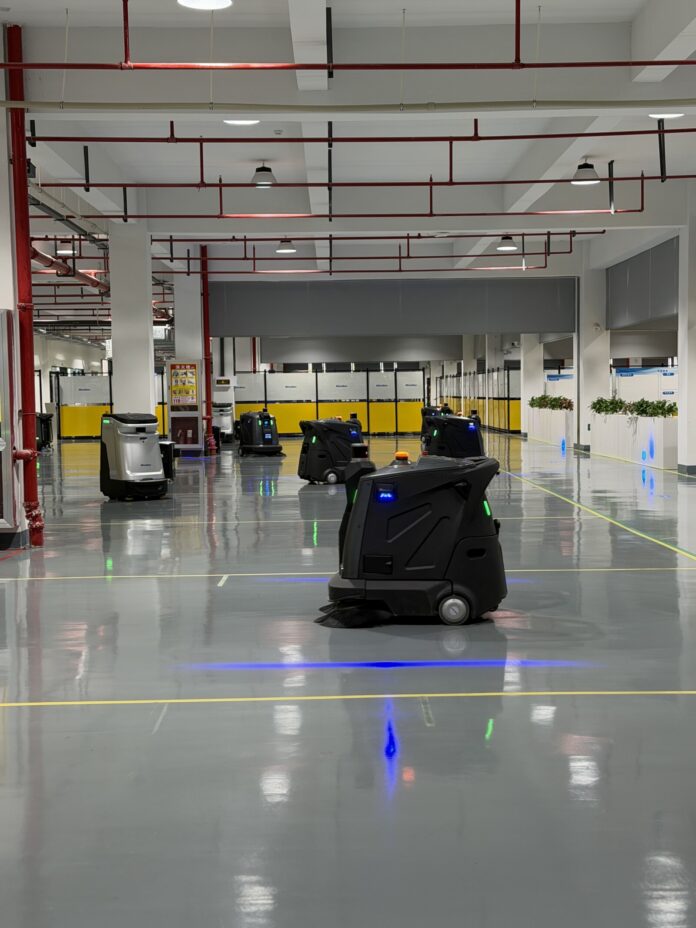
As a global ODM partner, USI combines expertise in product design, manufacturing, and Edge AI integration to deliver complete solutions tailored to customer requirements. The AI Smart Camera is already deployed within USI’s own manufacturing operations, providing a production-proven reference platform for industrial AI vision applications.

Building on this experience, USI can customize AI vision solutions around customers’ specific production environments and business requirements, helping shorten development time, reduce implementation risks, and accelerate their smart manufacturing journey.


LX Pantos Successfully Completes Complex Defense Logistics Project for Advanced Weapons

SEOUL, South Korea, Sept. 8, 2026 /PRNewswire/ — LX Pantos (President & CEO: Lee Yong-ho) announced on September 8 that it had completed a cross-border defense logistics project for advanced weapons.

The project transported air-to-air missiles (AAMs) from France to Korea for the Republic of Korea Marine Corps’ Marine Attack Helicopter (MAH) program, led by the Defense Acquisition Program Administration (DAPA). LX Pantos carried out the project for Korea Aerospace Industries (KAI).

*An air-to-air missile (AAM) is a guided missile launched from an aircraft in flight to engage an airborne target.

The AAMs for the MAH were shipped by European defense contractor M and transported from Châteauroux Airport in France to Incheon International Airport aboard a charter flight arranged by LX Pantos. They were then delivered by road to a Republic of Korea Marine Corps unit in Pohang.

LX Pantos deployed a dedicated charter aircraft, with the missiles carried as the sole cargo to ensure safety and security. The shipment was classified as Class 1 explosives, Division 1.2, Compatibility Group E, and the missiles were subject to the highest levels of security control.

Air transportation of dangerous goods such as defense materials is a highly specialized operation that must comply with both the International Air Transport Association (IATA) Dangerous Goods Regulations and relevant national aviation safety requirements.

During the operation, LX Pantos secured overflight clearances from 14 countries across Europe, the Middle East and Asia and coordinated multimodal transport through its global network, including European subsidiaries.

LX Pantos has been expanding its defense logistics business since receiving an “Excellent” rating in a 2024 security assessment by Korea’s Defense Counterintelligence Command.

It has also attained Assessment Level 3 (AL3), the highest level under Trusted Information Security Assessment Exchange (TISAX), demonstrating its ability to meet stringent global information security requirements.

An LX Pantos official said the project demonstrated the company’s advanced safety, security and logistics expertise, adding that LX Pantos will continue to support global defense customers and strengthen its role in the defense logistics market.

  • About LX Pantos

Established in 1977, LX Pantos is a leading global logistics provider headquartered in Korea. It delivers comprehensive logistics solutions across sea, air, rail, and contract logistics through a worldwide network spanning more than 40 countries.

Learn more about LX Pantos online and follow it on LinkedIn.

Republic of Korea Marine Corps Marine Attack Helicopter (MAH) in flight


New agentic AI platform sounds death knell for manual presentation tools

Sembly AI launches Sembly 3.0 in biggest evolution since 2019

SYDNEY, Sept. 8, 2026 /PRNewswire/ — Today, Sembly AI launches Sembly 3.0, an agentic AI platform that transforms an organisation’s documents, meetings, and CRM content into finished, fully branded presentations, proposals, case studies and reports in minutes in over 45 languages.

L-R Gil Makleff, Chief Executive Officer, Co-Founder of Sembly AI and Artem Koren, Chief Product & Technology Officer, Co-Founder of Sembly AI

The launch marks the company’s biggest evolution since it was founded in 2019, repositioning Sembly as an “AI execution layer” for businesses. It turns everyday business knowledge into the finished materials companies use to sell, deliver and communicate.

Users simply need to specify their goal (eg, “Sell my services”) and the client’s website, then watch Sembly get to work: pulling information from business materials, deriving appropriate branding, researching the customer, and producing a bespoke on-brand pitch deck.

“Prompts make people think about how to talk to AI. But dialogue lets them focus on what they want to accomplish,” said Gil Makleff, CEO and co-founder of Sembly AI. “That makes creating business documents faster and more efficient, turning time saved into real business impact.”

“Manually creating presentations is a thing of the past,” said Artem Koren, Chief Product & Technology Officer and co-founder of Sembly AI. “Business materials are the substrate of decision-making: they are how companies communicate, persuade and decide. Sembly 3.0 changes how they are made entirely.”

“Your customers want to hear how you serve them in their specific world and their specific situation, and Sembly makes that possible for every customer,” Koren added. “With Sembly 3.0, your results are as good as how clearly you can state your goal. That’s all you’re limited by.”

Early users of Sembly 3.0 report saving two to three weeks of work on reports and presentations that traditionally pass through multiple hands before they are delivery-ready.

Heorhii Tulchyi, Chief Technology Officer at market research company, Bell & Holmes, is one of those early users of Sembly 3.0.

He said: “Sembly has fundamentally changed how I prepare presentations and client communications. It has saved my team and me weeks of work and dramatically accelerated how we turn ideas and information into polished deliverables. I haven’t seen anything else on the market quite like it.”

Sembly 3.0 is available from today at www.sembly.ai.

Lion Announces Plan to Implement ADS Ratio Change

SINGAPORE, Sept. 8, 2026 /PRNewswire/ — Lion Group Holding Ltd. (“Lion” or “the Company”) (NASDAQ: LGHL), operator of an all-in-one trading platform that offers a wide spectrum of products and services, today announced that it plans to change the ratio of its American Depositary Shares (“ADSs”) to its Class A ordinary shares (the “ADS Ratio”), par value US$0.0000001 per share, from the current ADS Ratio of two hundred ninety-two thousand and five hundred (292,500) Class A ordinary shares, to a new ADS Ratio of one (1) ADS to five million eight hundred and fifty thousand (5,850,000) Class A ordinary shares (the “ADS Ratio Change”). The Company anticipates that the ADS Ratio Change will be effective on or about September 10, 2026 (the “Effective Date”).

For the Company’s ADS holders, the change in the ADS Ratio will have the same effect as a one-for-twenty reverse ADS split. On the Effective Date, registered holders of company ADSs held in certificated form will be required on a mandatory basis to surrender their certificated ADSs to the depositary bank for cancellation and will receive one (1) new ADS in exchange for every twenty (20) existing ADSs then-held. Holders of uncertificated ADSs in the Direct Registration System (“DRS”) and in The Depository Trust Company (“DTC”) will have their ADSs automatically exchanged and need not take any action. The exchange of every twenty existing ADSs for one (1) new ADS will occur automatically, with existing ADSs being cancelled and new ADSs being issued by the depositary bank on the Effective Date.

Lion’s ADSs will continue to be traded under the ticker symbol “LGHL” on the Nasdaq Capital Market. No fees will be charged to ADS holders, for both certificated or uncertificated ADSs, in connection with the exchange of existing ADSs for new ADSs.  No fractional new ADSs will be issued in connection with the change in the ADS Ratio. Instead, fractional entitlements to new ADSs will be aggregated and sold by the depositary bank and the net cash proceeds from the sale of the fractional ADS entitlements (after deduction of fees, taxes and expenses) will be distributed to the applicable ADS holders by the depositary bank. The ADS Ratio Change will have no impact on Lion’s underlying Class A ordinary shares, and no Class A ordinary shares will be issued or cancelled in connection with the ADS Ratio Change.

As a result of the change in the ADS Ratio, Lion’s ADS trading price is expected to increase proportionally, although the Company can give no assurance that the ADS trading price after the ADS Ratio Change will be equal to or greater than twenty (20) times the ADS trading price before the change.

About Lion Group Holding Ltd.

Lion Group Holding Ltd. (Nasdaq: LGHL) operates an all-in-one, state-of-the-art trading platform that offers a wide spectrum of products and services, including (i) total return service (TRS) trading, (ii) contract-for-difference (CFD) trading, and (iii) Over-the-counter (OTC) stock options trading. Additional information may be found at http://ir.liongrouphl.com.

Forward-Looking Statements

This press release contains, “forward-looking statements” within the meaning of Section 21E of the Securities Exchange Act of 1934, as amended. These forward-looking statements are made under the “safe harbor” provisions of the U.S. Private Securities Litigation Reform Act of 1995. Lion’s actual results may differ from their expectations, estimates and projections and consequently, you should not rely on these forward-looking statements as predictions of future events. Words such as “expect,” “estimate,” “project,” “budget,” “forecast,” “anticipate,” “intend,” “plan,” “may,” “will,” “could,” “should,” “believes,” “predicts,” “potential,” “might” and “continues,” and similar expressions are intended to identify such forward-looking statements. These forward-looking statements include, but are not limited to, statements about: Lion’s goals and strategies; our ability to retain and increase the number of users, members and advertising customers, and expand its service offerings; Lion’s future business development, financial condition and results of operations; expected changes in Lion’s revenues, costs or expenditures; competition in the industry; relevant government policies and regulations relating to our industry; general economic and business conditions globally and in China; and assumptions underlying or related to any of the foregoing. Lion cautions that the foregoing list of factors is not exclusive. Lion cautions readers not to place undue reliance upon any forward-looking statements, which speak only as of the date made. Lion does not undertake or accept any obligation or undertaking to release publicly any updates or revisions to any forward-looking statements to reflect any change in its expectations or any change in events, conditions or circumstances on which any such statement is based, subject to applicable law. Additional information concerning these and other factors that may impact our expectations and projections can be found in Lion’s periodic filings with the SEC, including Lion’s Annual Report on Form 20-F for the fiscal year ended December 31, 2025. Lion’s SEC filings are available publicly on the SEC’s website at www.sec.gov.

Contacts

Lion Group Holding Ltd.
Tel: +65 8877 3871
Email: ir@liongrouphl.com 

Hiring Intentions Strengthen Across APME as Net Employment Outlook Reaches +33% for Q4 2026, ManpowerGroup Survey Finds

  • The seasonally adjusted Net Employment Outlook (NEO) for Q4 2026 in Asia Pacific and the Middle East (APME) stands at +33%, improving by five points quarter-over-quarter and four points year-over-year.
  • The Information sector (+42%) reports the strongest NEO in Q4 2026, while Hospitality (+20%) reports the weakest NEO among sectors.
  • Most employers report hiring timelines are unchanged (40%) or faster (31%) than in 2025, with better targeting of candidates (27%) cited as the leading driver.
  • Early-career hiring remains resilient across APME, with 45% of employers increasing hiring over the past year, more than double the proportion reporting a decline (18%), while 36% report no change.

SINGAPORE, Sept. 8, 2026 /PRNewswire/ — Hiring intentions strengthened across APME heading into Q4 2026. Most employers also report filling vacancies at the same speed or faster than a year ago, according to the latest ManpowerGroup Employment Outlook Survey.

Q4 2026 ManpowerGroup Employment Outlook Survey, APME Key Findings

The survey of 12,794 employers across 11 APME countries and territories found that 46% plan to increase headcount in the coming quarter, 13% anticipate a decrease in staffing levels, while 40% expect no change.

Hiring sentiment improved across APME markets in Q4 2026, with most markets reporting quarter-over-quarter increases. India (+54%) continues to report the strongest hiring Outlook in the region, and globally, followed by UAE (+41%) which records the region’s strongest quarter-over-quarter improvement, rising 24 points from Q3 2026. Meanwhile, Japan (+7%) reports the most cautious Outlook in the region.

“The stronger Outlook across APME reflects employers’ continued focus on growth and transformation,” said François Lançon, Regional President, Asia Pacific & Middle East, ManpowerGroup. “Organizations are creating jobs as they expand, pursue new growth opportunities, and build the capabilities needed to keep pace with technological change. Increasingly, hiring decisions are being shaped by what businesses need to deliver now and to stay competitive next.”

View the full results: https://www.manpower.com.sg/en/meos-apme

About ManpowerGroup

ManpowerGroup® (NYSE: MAN), the leading global workforce solutions company, helps organizations transform in a fast-changing world of work by sourcing, assessing, developing, and managing the talent that enables them to win. Our expert family of brands – Manpower, Experis, and Talent Solutions – creates substantially more value for candidates and clients across more than 70 countries and territories and for more than 75 years.