SUNCITY BECAME SUMMIT ASCENT’S PARENT COMPANY TdC ADJUSTED EBITDA TURNED POSITIVE IN 2H 2020 AS A RESULT OF SOLID LOCAL RUSSIAN BUSINESSES IN MASS & ELECTRONIC GAMING DIVERSIFY INTO THE PHILIPPINES
HONG KONG SAR – Media OutReach – 23 March 2021 – SUMMIT ASCENT HOLDINGS LIMITED (“Summit Ascent”, the “Group” or “Company”) (Hong Kong Stock Exchange code: 102) today reported results for the six months and twelve-month periods for the year ended 31 December 2020. All amounts are expressed in HKD unless otherwise stated.
2H & FULL YEAR ANNUAL 2020 RESULTS HIGHLIGHTS:
Summit Ascent: Suncity has Every Reason to Back Up Summit Ascent as Suncity is now the Parent Company of Summit Ascent
- Summit Ascent became a subsidiary of Suncity Group Holdings Limited (“Suncity”, HKEx: 1383) since October 2020, and Suncity is dedicated to help Summit Ascent’s businesses as Suncity now owns 69.66% of Summit Ascent
- Summit Ascent increased holdings of Tigre de Cristal to approximately 77.5%, from previously 60% since November 2020
- Full Year Group Total Revenue of HK$211.2 million, down 60% year-on-year
- Full Year Profit Attributable to Owners of the Company of HK$10.0 million, down 88% year-on-year
Tigre de Cristal: Solid Local Mass & Electronic Gaming Businesses when Borders were Closed; Adjusted EBITDA Turned Positive in 2H 2020; Cost-Cutting Initiative in Place
- Tigre de Cristal recorded a decent recovery in mass and electronic gaming businesses in 2H
- Full Year Net Revenue from gaming operations of HK$202.9 million, down 58% year-on-year
- Full Year Total Gross Gaming Revenue (“GGR”) of HK$249.7 million, down 69% year-on-year
- Full Year negative Adjusted EBITDA of HK$14.7 million, compared to a positive Adjusted EBITDA of HK$214.8 million in 2019
- 2H Adjusted EBITDA of HK$7.4 million, down 93% year-on-year and turned from negative Adjusted EBITDA of HK$22.1 million in 1H to positive
- Average Hotel occupancy was 12% during weekends and 19% during weekdays in 2020
Balance Sheet: Solid and Liquid Balance Sheet; Zero Gearing
- As at 31 December 2020, bank balances and cash were at HK$1,562.3 million
- The Group had no outstanding bank borrowing throughout the year; Gearing ratio was 0%
2H & FULL YEAR ANNUAL 2020 RESULTS HIGHLIGHTS (cont’d):
Development Update: Tigre de Cristal Phase I upgrade ready; Phase II Planning & Design on its Way; Diversifying into the Philippines
- Tigre de Cristal Phase I upgrade ready – Brand-new Suncity VIP room, restaurants and a new private club are now ready;
- Phase II planning & design on its way – minor delays due to COVID-19; Continue development works with Phase II
- Diversifying into the Philippines – Invest in one of the fastest -growing Asian gaming jurisdictions in Asia, the Philippines, through the investment in 6% coupon convertible bonds in SunTrust
A Letter from Mr. Chau Cheok Wa, Chairman
Dear fellow Summit Ascent shareholders,
COVID-19 has undoubtedly been the biggest disruptor to our business when a number of governments have issued entry restrictions, visa suspensions and quarantine measures for travellers and Tigre de Cristal was required to suspend its operation temporarily for almost 4 months last year. 2020 was far from perfect, yet, I am grateful to the Russian government’s swift and decisive actions taken to protect the citizens during the pandemic. I could not have expressed my gratitude enough for the joint efforts of the Russian government, the local Primorsky Krai government, the medical and research staff as well as the citizens of Vladivostok, who cooperated to comply with the hygiene and anti-epidemic measures. Without them, Tigre de Cristal would not have been allowed to resume operation in July 2020. Safety is of paramount importance to us, and we will deliver all necessary precautionary measures recommended by the authorities to ensure a worry-free entertainment experience for our guests.
Amidst the doom and gloom, we remain focused on executing operationally while vigorously managing our costs. Since the implementation of the Group-wide cost-cutting initiative, we have realised savings without significantly impacting our service quality or making large scale redundancies. While Tigre de Cristal delivered a full-year negative Adjusted EBITDA of HK$14.7 million in 2020, I am glad to report a silver lining – Since the reopening in mid-July, not only did Tigre de Cristal manage to breakeven on a month-on-month basis, it also delivered a positive Adjusted EBITDA in the second half of 2020, thanks to strong local demand for high-quality entertainment and hospitality services. Electronic gaming and mass table volumes have almost returned to the pre-pandemic levels, a testament that confirms my belief that Summit Ascent is worth investing for the long-term because Tigre de Cristal is an integrated resort well-loved by both local Russians and tourists. In addition, I am also pleased to report a Net Profit Attributable to Owners of the Company of HK$10.0 million, though primarily non-cash in nature, it sets a good start for Summit Ascent’s future development.
Since October 2020, Summit Ascent became a subsidiary of Suncity Group Holdings Limited (“Suncity”, stock code: 1383), which holds approximately 69.66% of Summit Ascent. Now being the parent company, Suncity has every reason to back up Summit Ascent to ensure that it can leverage on the resources under the Suncity umbrella. I am also pleased to announce that a new Direct VIP business will be set up, tapping into the nearby Korean, Japanese and Southeast Asian markets. On one hand, this new business could help Summit Ascent achieve vertical integration, a move to boost returns in the high-roller market. On the other hand, Summit Ascent is backed by a team of sophisticated professionals with years of experiences in the gaming sector that lends a helping hand on credit risk management.
Though the Tigre de Cristal Phase II development progress has been inevitably affected by the COVID-19 outbreak, our team is busy working together to reimagine the brand-new, awe-inspiring Phase II. Not only will Phase II triple the number of the existing hotel rooms and double the number of its existing gaming facilities, it will also encompass novel non-gaming entertainment ideas such as a state-of-the-art heated swimming pool allowing indoor pool-side parties with virtual reality and e-sports concepts to happen all-year-round. Guests will also be treated with the finest wine and European cuisine, fusing with Asian favourites that our Asian guests love best. Together, we will make Tigre de Cristal the shiniest gem in North Asia yet to be uncovered.
Geopolitically, I am pleased to see that the Russian and the Chinese governments continue to maintain sublime business relationships – the Belt and Road Initiative, the Siberia Gas Pipeline Project, the Eurasian High-Speed Railway as well as the Russian government’s direction to set up Vladivostok as the Northeast Asian hub, all of these have created unprecedented favourable business environment for Summit Ascent. Through unfaltering commitment to develop future phases of Tigre de Cristal, we fully endorse the Russian government’s ambition to create an iconic tourist destination in the Far East whilst creating thousands of new jobs in the region.
I am also thrilled to introduce the opportunity for Summit Ascent to diversify and participate in the development of another fast-growing gaming jurisdiction in Asia, through the investment of convertible bonds in a 51%-owned subsidiary of Suncity, Suntrust Home Developers, Inc. (“SunTrust”), where Summit Ascent may have the option to become a direct shareholder of SunTrust when the Westside City Project in the Philippines comes to fruition. Westside City Project will be the unequalled integrated resort in Manila in terms of its design, scale and connectivity throughout the entire Entertainment City. Tigre de Cristal in North Asia, together with Suncity’s other strategic investments in integrated resorts in South and Southeast Asia, form a portfolio of integrated resorts in alliance. All eyes await when the international borders may reopen, as I am confident that with Suncity chipping in, Tigre de Cristal will leap like a tiger and dazzle a crystal in the near future.
Finally, I would like to extend my gratitude to our Russian team, our Hong Kong team, our directors, our staff, our shareholders, our suppliers, our investment partners and our customers for going through a tough 2020. We are prepared to ride the tide together, forging ahead for many more years to come.
Mr. Alvin Chau Cheok Wa
Chairman
SUMMIT ASCENT HOLDINGS LIMITED
Hong Kong, 23 March 2021
Market Review
In Russia, the Russian Federal Government stopped all tourist arrivals from 16 March 2020[1] with limited international flights resumed only until July. The issuance of tourist visas, including visas in the form of an electronic document, has also been temporarily suspended. Until December, borders were open to only 14 countries. All non-essential businesses were mandated to close from 28 March 2020 and were allowed to be reopened gradually later. Russia’s GDP declined by 3.1%[2] year-on-year in 2020. Net inflows of foreign direct investment (FDI) was US$1.4 billion in 2020, down 95% year-on-year. In 2020, total tourism arrivals in Primorye decreased 86% year-on-year to 132,228[3]. The Russian Federation has begun COVID-19 vaccinations in Moscow in December 2020, and has already approved mass use in other cities including Vladivostok, where Tigre de Cristal is located.
Group Financial Results
Revenue and Segment Reporting
The Group operates only in one operating and reportable segment, i.e. the gaming and hotel operations in the IEZ Primorye of the Russian Far East. Almost all non-current assets of the Group are located in the Russian Federation. Accordingly, the Group does not present separate segment information other than entity-wide disclosures.
Revenue of the Group, comprising revenue from gaming operations and hotel operations, was HK$211.2 million in 2020, down 60% compared to HK$532.8 million in 2019. Such decline was primarily due to the temporary suspension of the gaming operations of Tigre de Cristal in the second quarter of 2020 and the number of foreigners visiting our property plummeted after governments of various countries have issued travel restrictions, visa suspensions and quarantine measures for travellers due to the COVID-19 pandemic.
Adjusted EBITDA of Tigre de Cristal
Adjusted EBITDA generated by Oriental Regent, a 77.5% owned subsidiary of the Company operating our integrated resort in the Russian Far East, Tigre de Cristal, is used by management as the primary measure of operating performance of our gaming and hotel operations, which is a non-IFRS financial measure and defined by the Company as Earnings Before Interest, Income Tax, Depreciation and Amortization, and excluding Company corporate expenses and the non-cash items such as unrealized exchange differences and fair value gains or losses on financial instruments.
In the first half of 2020, the Group recorded a negative Adjusted EBITDA of HK$22.1 million, mainly due to the temporary suspension of operations of Tigre de Cristal from 28 March 2020. In the second half of 2020, Tigre de Cristal reported a turnaround after its resumption of operations on 16 July 2020 and generated a positive Adjusted EBIDTA of HK$7.4 million, which offsetting partially the negative figure in the first half year and resulting in a negative Adjusted EBITDA of HK$14.7 million for the full year 2020.
Gaming Operations
Tigre de Cristal recorded Gross Gaming Revenue of HK$249.7 million in 2020, down 69% year-on-year. Our Gross Gaming Revenue (“GGR”), represented the amount of money players wagered minus the winning payouts to them, before commissions rebated, discounted or complimentary products and services provided and redeemable points earned under the loyalty programs, consisted of the following:
|
|
Share of
|
|
|
|
Share of
|
|
|
2020
HK$’000
|
|
GGR
%
|
|
2019
HK$’000
|
|
GGR
%
|
|
Rolling chip business
|
52,171
|
|
20.9%
|
|
441,260
|
|
54.2%
|
|
Mass table business
|
92,679
|
|
37.1%
|
|
185,145
|
|
22.7%
|
|
Electronic gaming business
|
104,886
|
|
42.0%
|
|
188,290
|
|
23.1%
|
|
Total GGR
|
249,736
|
|
100.0%
|
|
814,695
|
|
100.0%
|
|
|
|
|
|
|
|
|
|
Rolling chip business
Our rolling chip business primarily targets foreign players. The table below sets forth the key performance indicators of our rolling chip business in 2020 on a quarterly basis.
|
(HK$’million)
|
|
Q1 2020
|
Q2 2020
|
Q3 2020
|
Q4 2020
|
FY2020
|
FY2019
|
|
|
Rolling chip volume
|
|
1,167
|
25
|
100
|
63
|
1,355
|
15,215
|
|
|
Gross win
|
|
47
|
3
|
2
|
–
|
52
|
441
|
|
|
Less: Rebate
|
|
(31)
|
(1)
|
(2)
|
–
|
(34)
|
(319)
|
|
|
Net win after rebate
|
16
|
2
|
–
|
–
|
18
|
122
|
|
Gross win rate%
|
4.03%
|
12%
|
2%
|
0%
|
3.84%
|
2.90%
|
|
Daily average number of tables opened
(Note)
|
15
|
5
|
5
|
4
|
8
|
22
|
Note: Excluding the period of suspension from 28 March to 13 April and 22 April to 15 July 2020.
Rolling chip volume (measured as the sum of all non-negotiable chips wagered and lost by players) at Tigre de Cristal was HK$1.4 billion in 2020, representing a decrease of 91% compared to 2019. Net win after all commissions rebated directly or indirectly to customers from rolling chip business decreased by 85% to HK$18 million in 2020, compared to HK$122 million in 2019. Gross win rate percentage(represented the ratio of gross win to rolling chip volume) increased from 2.90% in 2019 to 3.84% in 2020.
Mass table business
Our mass table business targets both the foreign tourists and the local market. The table below sets forth the key performance indicators of our mass table business in 2020 on a quarterly basis.
|
(HK$’million)
|
|
Q1 2020
|
Q2 2020
|
Q3 2020
|
Q4 2020
|
FY2020
|
FY2019
|
|
Mass table drop
|
|
136
|
5
|
105
|
116
|
362
|
751
|
|
Net win
|
|
33
|
1
|
21
|
27
|
82
|
174
|
|
Net win rate %
|
|
24.3%
|
20%
|
20%
|
23.3%
|
22.7%
|
23.2%
|
|
Daily average number of tables opened (Note)
|
24
|
17
|
23
|
23
|
23
|
27
|
Note: Excluding the period of suspension from 28 March to 13 April and 22 April to 15 July 2020.
Mass table drop (measured as the sum of gaming chips purchased or exchanged at the cages) decreased by 52% to HK$362 million in 2020, compared to HK$751 million in 2019. Net win from mass table business decreased by 53% to HK$82 million in 2020, compared to HK$174 million in 2019. Net win rate percentage (represented net win as a percent of mass table drop) decreased slightly from 23.2% in 2019 to 22.7% in 2020.
Electronic gaming business
Our electronic gaming business primarily targets the local Russian market. The table below sets forth the key performance indicators in 2020 on a quarterly basis.
|
(HK$’million)
|
|
Q1 2020
|
Q2 2020
|
Q3 2020
|
Q4 2020
|
FY2020
|
FY2019
|
|
Electronic gaming volume
|
|
782
|
28
|
664
|
743
|
2,217
|
3,404
|
|
Net win
|
|
39
|
2
|
32
|
30
|
103
|
186
|
|
Net win rate %
|
|
5%
|
7.1%
|
4.8%
|
4%
|
4.6%
|
5.5%
|
|
Daily average number of electronic gaming machine deployed (Note)
|
317
|
157
|
234
|
285
|
277
|
336
|
Note: Excluding the period of suspension from 28 March to 13 April and 22 April to 15 July 2020.
Electronic gaming volume (measured as the total value of electronic gaming credits wagered by players) was HK$2.2 billion in 2020, decreased by 35% compared to HK$3.4 billion in 2019. The electronic gaming business recorded net win of HK$103 million, down 45% compared to HK$186 million in 2019. The net win rate percentage decreased to 4.6% in 2020 from 5.5% in 2019. The average number of electronic gaming machines deployed decreased by 18% to 277 in 2020, compared to 336 in 2019.
Hotel Operations
Revenue from hotel operations, being largely dependent on foreign guests, decreased to HK$8.3 million in 2020 or by 84% compared to 2019. Average hotel occupancy rates dropped substantially to 12% (2019: 88%) during weekends and 19% (2019: 63%) during weekdays in 2020.
Development Update
Tigre de Cristal, Russia

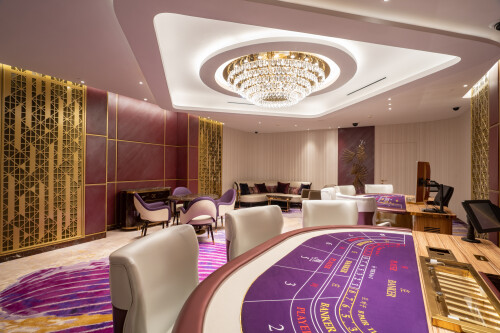
Tigre de Cristal Phase I upgrade has already been completed. A brand-new Suncity VIP room has been already set up and is now operational. A new authentic hotpot restaurant and a new club are opened to welcome guests.
Phase II planning and construction are well underway except minor delays due to COVID-19. When Phase I & II are both running, Tigre de Cristal will triple in its number of rooms, and double in number in its gaming facilities.
Westside City Project, Philippines
Through investing in the convertible bonds in Suntrust Home Developers, Inc. (“SunTrust”), Summit Ascent has exposure to the Westside City Project in the Philippines. The main design has already been completed. Piling works in Westside City Project has also been completed. Megawide has been appointed as the main contractor in Manila, the Philippines for the Westside City Project. Construction works at the site is going on at full steam. Westside City Project is expected to be ready in 2023.
When all phases of Westside City Project are ready, it will consist of:
- Approximately 400 gaming tables
- Over 1,200 electronic gaming machines
- Over 450 five-star hotel rooms
- Approximately 1,000 car park spaces
- Pool club & leisure club etc.
Westside City Project will be integrated with the shopping malls, theatres, restaurants, and shopping streets, etc. to be built by Suncity’s partner Westside / Travellers. They will also build additional hotel rooms, a shopping mall, a Grand Opera House, restaurants, a theatre district and an additional of approximately 2,000 car park spaces.
Selected Major Awards
|
Awards
|
Institution
|
|
TIGRE DE CRISTAL, RUSSIA
|
|
Corporate Travel Awards 2020
(Hotel Resort of the Year)
|
CEO Today Magazine
|
|
Winner of the XVI Business Prize of Primorsky Krai (Company of the Year 2019)
|
Zolotoy Rog
|
|
Top 5 nominees of “Russia’s Leading Resort 2019”
|
World Travel Awards
|
Outlook
We believe that the COVID-19 outbreak to a certain extent will continue to impact all parts of the Group’s operations in the near future. On the bright side, we are pleased to witness the start of the vaccination programme for our staff members in Tigre de Cristal in the Russian Federation. We are also confident that the vaccination will be rolled out worldwide before long and people around the globe will no longer be restricted by quarantine, flight or visa constraints.
We remain positive to our business environment on the long-term. After becoming the Company’s largest shareholder in 2019, Suncity has assisted Tigre de Cristal in upgrading its hardware and facilities as well as its software and service standards. Going forward, in addition to the existing rolling chip business, Tigre de Cristal will strive to introduce a brand-new Direct VIP segment using Suncity’s network and expertise. The success of this segment will ride on Tigre de Cristal’s proximity to the Japanese and Korean markets, as these two markets are relatively untapped in Northern Asia, and the up-and-running of Tigre de Cristal Phase II in full scale, which will triple the current number of guest rooms, and double the number of gaming tables and electronic gaming machines.
Through the investment in the SunTrust convertible bonds, the Group is diversifying into the Philippines gaming market, one of the fastest-growing Asian gaming jurisdictions. When the Main Hotel Casino is completed, the integrated resort will be running at a similar scale as the other operators currently in Entertainment City Manila. Based on Suncity’s successful experience in the gaming industry, we are confident that Westside City Project will be one of the best integrated resorts in the Philippines in terms of facilities, design and amenities.
In the meantime, during the COVID-19 pandemic, the Group has implemented a stringent cost control programme across the board. For instance, split shifts and flexible working hours were implemented in Tigre de Cristal, still without significantly affecting customer experience. The Group continues to proceed at full speed on the development of Tigre de Cristal Phase II but the continual impact of the COVID-19 has affected the progress of the pre-construction phase, including design, procurement of construction materials, and tendering. We are currently targeting an opening of the first stage of Tigre de Cristal Phase II in 2023. When the pandemic is over, the Group will be well-positioned to capture the long-awaited recovery in the high-quality entertainment demand in Asia and can benefit from revenge spending by virtue of the strengthened synergy developed among the Suncity group of companies and the Group’s access to Suncity’s proprietary customer database.
The Group continues to remain optimistic in the sector in the very long term.
[1] Russia Federal Agency for Tourism
[2] Federal Office for State Statistics
[3] The Border Service of the Federal Security Service of the Russian Federation
About Summit Ascent Holdings Limited (HKEx stock code: 102)
Summit Ascent Holdings Limited (“Summit Ascent”) is a subsidiary of Suncity Group Holdings Limited (HKEx stock code: 1383). Summit Ascent holds 77.5% in Tigre de Cristal, currently one of the largest integrated resorts located in the Primorye Integrated Entertainment Zone of the Russian Far East. Situated midway from the Vladivostok International Airport to Vladivostok city, the administrative centre of the Russian Far East, Tigre de Cristal is ideally located geographically in the heart of Northeast Asia.
Summit Ascent holds a gaming license granted by the Russian government for an indefinite period, and Tigre de Cristal has opened for business since late 2015, offering a broad range of gaming options on a 24/7 basis. Tigre de Cristal has been certified as a five-star hotel with retail offerings, food and beverage outlets, private club, and named “Russia’s Leading Resort” by World Travel Awards.
For more information about Summit Ascent, please visit https://www.saholdings.com.hk/eng/












 https://www.youtube.com/channel/UCeLmn_QNAqs4hLqoTtS3sXw
 https://www.facebook.com/bnookproperty
 https://www.instagram.com/bnookproperty/
