Home Blog Page 6333

Laos is World’s Greenest Country

Among Asian countries, Laos has the highest percentage of forest area at 92.1 percent of the total area of the country. On the other hand, India, Bangladesh, Mongolia and Pakistan are among those with the least forest area.

Bhutan (81.5), Brunei (79.7) and South Korea (63.7) are also among Asian countries that have a sizable proportion of land occupied by forests. Malaysia and Indonesia also have significant proportions of forested land.

Asia-Pacific has lost around 10 million hectares of forest between 1990 and 2005 over the past 15 years, according to data from the Asian Development Bank.
Àμâ
The graphic shows the proportion of land area covered by forest in 2015.


Source: The Korea Herald

Temporary River Footbridge in Luang Prabang Sustains Damage

A temporary wooden footbridge in Viengkham district, Luang Prabang province, has been damaged during heavy rain, meaning children are unable to cross the river to get to school.

Deputy Governor of Viengkham district, Mr Sayphone Chanthoumma, told Vientiane Times the authorities have warned people not to cross the footbridge until further notice because the structure is not sufficiently stable to support weight.

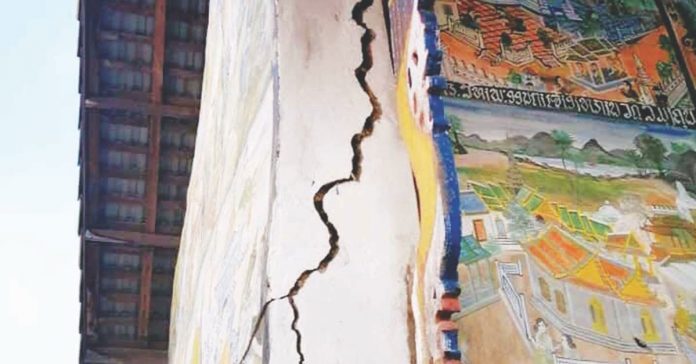
The heavy rain occurred on November 11, causing the Xaeng river to rise. The strong currents saw trees, branches and other debris flowing downstream, some of which lodged on the bridge supports, compromising the structural integrity of the bridge.

Classes at the local school have been suspended temporarily as children are unable to cross the bridge.

Local officials and villagers are pressing for stronger bridges for use by local communities to cross the river, especially schoolchildren, Mr Sayphone said.

Repairs will be easier now that the river level has dropped and it is estimated they will be finished this week, meaning classes can resume as normal.

The temporary footbridge was built to replace the one that collapsed in Vangbay village a few weeks ago. It can carry only 15-20 people at a time and is about 100 metres long and one metre wide.

Mr Sayphone said local communities cooperated well in helping to build the bridge and volunteered to cut down trees to source the wood.

It is expected that it will be used until the next wet season and residents will build a new one every year until more permanent structures can be built. District authorities plan to build a concrete bridge to replace the wooden footbridge that collapsed, Mr Sayphone said. We have submitted plans to provincial authorities and have received authorisation to go ahead with the work but have yet to finalise a start date.

The old bridge collapsed recently, sending 52 people who were on it at the time into the river below.

Two children drowned and the rest had to be rescued from the water.

The bridge was installed in 2013 but was not opened to the public at that time because some aspects of construction were found to be substandard.

After these problems were addressed, the bridge opened for use in 2015, mainly by people living along both sides of the river in Vangbay village.


Source: Vientiane Times

Free HIV/AIDS Treatment Centre Opens in Vientiane

The Ministry of Health recently opened a new unit to treat people living with HIV/AIDS at Mittaphab Hospital in Vientiane.

The unit comprises patients’ rooms, a laboratory, a counselling room, a pharmacy and other facilities.

The unit’s primary focus is to provide patients with advice on sexually transmitted infections, HIV/AIDS, reproductive health, and other related issues.

Director of the Centre for HIV/AIDS/STI, Dr Bounpheng Philavong, said at the opening ceremony the unit plans to distribute information on the risks of HIV to the public.

The unit also plans to run awareness campaigns, which especially target young people, with an added focus on adolescents and sex workers. They will be invited to participate in various activities to help them better understand HIV and AIDS.

Some 11,000 people are estimated to carry the HIV infection in Laos. Fully 7,000 of them have not received treatment and 100 have recently died. Over 4,000 people living with HIV, including 227 children, have received treatment with antiretroviral drugs.

We believe the alarming increase in the rate of HIV infection is due to the fact more people are becoming aware of the dangers of the disease and are turning up at clinics and hospitals for testing, Dr Bounpheng said.

According to the Centre for HIV/AIDS/STI in Vientiane, there are 10 units that treat HIV/AIDS free of charge, including two units in Vientiane at Setthathirath and Mitthaphab Hospitals, in addition to clinics in the provinces of Khammuan, Savannakhet, Champassak, Luang Prabang, Luang Namtha, Bokeo and Huaphan.

According to UNAIDS, at the end of 2010, an estimated 34 million people were living with HIV globally, including 3.4 million children under the age of 15.

There were 2.7 million new HIV infections across the globe in 2010, including 390,000 among children over 15 years of age.

Globally, the annual num ber of newly infected peop le with HIV continues to decline, although there is stark regional variation. In Sub-Saharan Africa, where most of the newly infected people live, an estimated 1.9 million people became infected in 2010.


Source: Vientiane Times

Children’s Hospital Marks Fifth Anniversary

The Children’s Hospital in Vientiane hopes to be a fully-fledged modern facility by 2025, providing all patients with top quality service.

Speaking at a ceremony on Friday to mark the hospital’s fifth anniversary, its Director Dr Sommanikhone Phangmanixay said the hospital has a specific plan to develop an increasingly broad range of services from now until 2025.

The hospital aims to provide all forms of paediatric service and there will be clinics offering specific treatments. Staff will be able to treat serious illnesses and transfer patients if necessary. Improvements will be made to the radiology, X-ray, and pharmacy departments as well as to equipment, while nursing skills will be upgraded to match those in the region. Another goal is for the hospital to become a training centre for medical students and health officials at all levels.

In addition, the hospital aims to provide a comfortable environment for all patients and their relatives.

Dr Sommanikhone said that over the past five years, the number of people visiting the hospital has increased every day. About 600 people were admitted overnight each month and about 200 people were treated in outpatient clinics each day. In addition, about 150 people were treated in the intensive care unit each day. The Children’s Hospital opened in 2011, with 70 beds. Its construction was funded by the government of the Republic of Korea. Today it employs 118 medical staff and has 18 divisions and four units, specialising in surgery, allergies, blood diseases, cancer and children’s development.

Minister of Health Associate Professor Dr Bounkong Syhavong and other officials also attended the anniversary celebration.


Source: Vientiane Times

Almsgiving Draws Crowds

Thousands of people gathered yesterday morning to give alms to monks at the That Luang esplanade, in a traditional ritual that is a highlight of the annual festival to pay homage to the That Luang stupa.

Devotees dressed in traditional costume eagerly made their way to the esplanade carrying food and offerings, then looked for a comfortable spot to sit while waiting for the almsgiving to begin.

The almsgiving ceremony was also attended by President Bounnhang Vorachit, Prime Minister Thongloun Sisoulith and other government officials.

People carried various traditional items to show their veneration for the Pha That Luang, or Grand Stupa.

Most were residents of Vientiane including foreigners living in Laos but people from the provinces and visitors also enjoyed taking part in and observing the rituals. Monks and novices from around the country were present in large numbers to receive the offerings.

After giving alms, people gathered to eat traditional festival dishes such as khaopoun, khaomao, khaolarm, and chicken soup.

The almsgiving ceremony is a major part of the last day of the That Luang festival but is followed by other activities including a game of Lao-style hockey in the afternoon and a colourful candlelight procession in the evening, which brings the festival to a close.

The That Luang festival is one of biggest and most colourful events in Laos and people nationwide look forward to taking part.

The annual festival takes place over three days and always ends on the 15th full moon day of the 11th lunar month (in November). This year the festival was officially observed from November 12-14, but the celebrations always start a few days before.

The festival comprises a succession of events to pay respect to the stupa and to honour King Xaysetthathirath.

This year the popular wax castle procession took place at That Luang temple on November 13, with the almsgiving, tikhy match and candlelight procession being held on November 14.

The festival had the added attraction of celebrating the stupa’s 450th anniversary and the success of the fourth That Luang restoration project.

This meant that all the activities carried extra meaning, and Laos’ ancient culture and traditions were magnificently portrayed.

Also a prominent feature of the event were the many stalls selling locally made products, including agricultural produce, and handicrafts. There was also an exhibition of a traditional village and some colourful cultural performances.

One visitor, Ms Khamphuang from Xaysettha district, said she was very happy to take part in the almsgiving because it was a fine tradition and a very meaningful activity.

“I came here with my children today and we are very happy because we can make merit and share in this special occasion with thousands of other people. This year the festival is more interesting than in previous years because the country’s traditions have been highlighted. It’s also special because it’s the 450th anniversary of the original construction of the stupa. Everyone, including me, is very much enjoying it. I come to give alms here every year and this year I have taken part in a lot of other activities as well. I think we should continue to hold the festival in the traditional way next year because it’s good to preserve our customs,” she added.

Pha That Luang, or great sacred stupa, was originally built during the reign of King Xaysetthathirath in the middle of the 16th century. The stupa is located in That Luang village, Xaysettha district.

It has long been the national symbol and is one of the most important monuments in Laos. It is a sacred site because people believe the stupa enshrines a relic of the Lord Buddha. It is also among the most significant tourist attractions and features some of the oldest archaeology in Vientiane and the country.

It is a religious and cultural centre that can teach people about Laos’ unique ancient culture, architecture and history. It is the centre of Lao culture and solidarity, and the centre of Buddhist faith in Laos.


Source: Vientiane Times

Lao, US Organisations Ink Deal on Joint Development Project

The Office of the Lao Front for National Construction and the Centre for Lao-American International Development will work jointly to improve education, health and labour skills after signing a Memorandum of Understanding (MoU) on cooperation.

The two parties also agreed to exchange information and promote goods production in a bid to reduce poverty among communities in remote areas who have few opportunities.

The MoU was signed yesterday by the Head of Office of the Lao Front for National Construction, Mr Khanonglith Sisomboun, and President of the Centre for Lao-American International Development, Mr Chageyang.

The agreement is the basis of the two parties’ partnership in drawing up the Master Plan for Cooperation.

Under the agreement, the two parties will appoint a Steering Committee comprising personnel from both organisations, which will draft and conclude the master plan and projects.

The two parties agreed that the Coordination Office would manage the implementation of the master plan and projects. The coordination office or representative office of the Centre for Lao-American International Development in Laos will recruit voluntary staff as appropriate.

The Office of the Lao Front for National Construction will coordinate with the Lao agencies concerned to organise the coordination office.

After the completion of the Master Plan, all assets, materials, equipment, vehicles and other items will be handed over to the Office of the Lao Front for National Construction.

This office will be in charge of processing immigration documents for overseas personnel involved in the projects.

It will facilitate residential and work permits and arrange for the exemption of import duty on equipment needed to implement the Master Plan, including by Steering Committee members and volunteers from the Centre for Lao-American International Development. The office will also arrange for the exemption of taxes and duty on all materials, equipment and vehicles need for the implementation of the Master Plan.

The Lao Front for National Construction is a political body that is charged with unifying and educating Lao people of all ethnic groups, classes, religions, and ages, as well as Lao expatriates, aiming to create a unified force to carry out the task of national protection and development.

The Centre for Lao-American International Development is a non-profit social organisation, established for the purposes of charity, education and science. It is eligible for tax and customs duty exemption under the United States’ internal revenue law.


Source: Vientiane Times

Gov’t Launches Hotline for Citizens to Voice Concerns

The government yesterday launched the hotline number 1516 to connect with members of the public in a move that will enable ordinary people to provide recommendations regarding government performance.

The Prime Minister’s Office issued a notice yesterday informing the public about the launch, saying it was done following the advice of Prime Minister Thongloun Sisoulith.

Observers welcomed the move, but stressed it is equally important to ensure the issues people raise are taken seriously and addressed in a timely and efficient manner.

The Prime Minister’s Office said the hotline welcomes members of the public to comment on the government’s performance.

Several state bodies currently operate hotlines, encouraging citizens to raise issues or concerns and seek explanations and solutions from the relevant bodies.

A few years ago, the National Assembly (NA) launched its own hotline (156), which operates during ordinary sessions twice a year.

The hotline has received upwards of 1,000 calls during debate sessions, following which the Assembly invites the agencies responsible to clarify issues raised by the callers.

Minister of Natural Resources and Environment, Mr Sommad Pholsena, told the NA recently his ministry has set up a hotline (1514), which will be operational soon. People can directly raise concerns related to the operation of the ministry through the hotline.

Ms Khemmani, from the Ministry of Industry and Commerce, recently told the NA that on June 7, 2016, the ministry also set up a hotline (1510) to enable members of the public to inform them about trade-related issues.

Since opening the hotline in June, at least 62 calls have been made informing the ministry about problems ranging from the sale of out-of-date foods, unreasonably high electricity bills, public transport scams, and internet problems.

In addition, on August 26, 2016, the Ministry of Public Security opened its own hotline (1191) as part of the Police Command Centre Project to enable members of the public to inform police about crimes and other social issues, thereby easing the process of investigation and more efficiently addressing security issues.

People who wish to report emergency matters or are in need of assistance from police officers can call the hotline free of charge.


Source: Vientiane Times

Breeders Abandon Tilapia Farms

Most fish farmers in Vientiane and the province of Champassak have stopped raising tilapia (panin) after being unable to compete with the low market price offered by Chinese fish farmers.

Last week the few remaining tilapia farmers in Vientiane said they would discontinue the business after selling their existing stock.

One man who used to raise tilapia told Vientiane Times that most of the fish cages were on the Nam Ngum river in Xaythany district.

“Most of the cages owned by local people are now empty and abandoned,” he said.

He explained that it cost about 15,800 kip to produce one kilogramme of fish, but Chinese breeders in Vientiane were selling the fish for 10,000-14,000 kip per kg, and sometimes 9,500 kip.

There used to be about 80 families raising tilapia in Vientiane, and about 18 or 20 tonnes of fish were sold daily in markets in Vientiane and the provinces, but now most of these fish farmers have given up.

The Chinese raising fish on the Nam Ngum river are operating illegally because they haven’t registered their fish farms according to Lao regulations.

The former fish farmer said the Chinese rented out land along the river and then built fish cages alongside.

The National Assembly’s Committee on Economic Technology and the Environment has reported to the Assembly’s ongoing debate session that complaints are being made about too many fish cages being kept by foreigners in Vientiane and Champassak province.

The committee also said these cages were scattered around Vientiane and Champassak province, which was a violation of the rules.

Scores of Chinese reportedly farm tilapia on the Nam Ngum river, but one local breeder known as Mr Alo owns 1,000 cages and this massive supply of fish is causing a glut on the market.

The Chinese began raising tilapia in Vientiane in 2007 and the number of fish farms is growing each year.

The anonymous fish farmer said the Vientiane authorities told local breeders they would try to resolve the problem, but they did not.

Popular opinion has it that if local people stop farming tilapia, this will mean the Chinese will have no competitors and will then sell their fish for a high price.


Source: Vientiane Times