Cesalatamig is Currently Being Evaluated in Phase 1/2 Studies in the United States (NCT06635785) and in China (CTR20253261)
Fast Track Designation Supports Expedited Development of Cesalatamigfor Non-small Cell Lung Cancer (NSCLC) that Progressed after Concurrent or Sequential PD-(L)1-targeted Immunotherapy and Platinum-based Chemotherapy
ROCKVILLE, Md., Sept. 16, 2026 /PRNewswire/ — OncoC4 Inc., a late clinical-stage biopharmaceutical company developing novel medicines for cancer and neurodegenerative diseases, today announced that the U.S. FDA has granted Fast Track Designation to its PD-1/VEGF bispecific antibody cesalatamig (also known as AI-081) for the treatment of patients with NSCLC whose disease has progressed following concurrent or sequential PD-(L)1-targeted immunotherapy and platinum-based chemotherapy.
“This designation reflects the clinical safety and efficacy signals we have seen in our global Phase 1/2 trials, BiPAVE-001 US and BiPAVE-001 China,” said Dr. Yang Liu, Co-founder, Chief Executive Officer and Chief Scientific Officer of OncoC4. “We are rapidly advancing to registrational phase 3 development in PD-(L)1-refractory or resistant NSCLC and other indications”.
The global BiPAVE-001 Phase 1/2 trials are designed to evaluate the safety, efficacy and pharmacokinetics of cesalatamig in patients with advanced cancer. Part A is Phase 1 dose escalation and expansion study. Part B is the Phase 2 dose optimization studies consisting of multiple cohorts evaluating the safety and clinical activities of cesalatamig either as monotherapy or in combination therapy with standard of care or novel agents. The trials are being conducted at more than 50 clinical sites across the United States and China, with majority of the patients enrolled from the United States.
About cesalatamig
Cesalatamig is a differentiated PD-1/VEGF bispecific antibody with high affinity for PD-1 and more than 40-fold higher affinity for VEGF than bevacizumab-based bispecific PD-(L)1/VEGF inhibitors. As a result, cesalatamig shows best-in-class potential with a stronger cooperative interaction that favors its action in a PD-1 and VEGF-rich tumor microenvironment. Cesalatamig also has more effective Fc-silencing modifications to avoid the depletion of PD-1 positive effector T cells.
About OncoC4
Based in Rockville, Maryland, OncoC4 is a privately held, late clinical-stage biopharmaceutical company that is actively engaged in the discovery and development of novel biologics for the treatment of cancer and immunological diseases. OncoC4’s pipeline features assets with first-in-class and best-in-class potential targeting both novel and well-validated targets across oncology and immunological diseases. Among them, cesalatamig is a wholly owned and highly differentiated PD-1/VEGF bispecific antibody currently undergoing rapid global clinical development in multiple oncology indications. ONC-841 is a first-in-class anti-SIGLEC-10 antibody currently in a Phase 2 trial for oncology indications and a Phase 1 trial for neurodegenerative diseases. OncoC4 has a strategic collaboration with BioNTech to co-develop gotistobart (BNT316/ONC-392), a tumor microenvironment-selective Treg depletion candidate targeting CTLA-4, in multiple solid tumor indications, including an ongoing pivotal clinical trial in squamous non-small cell lung cancer.
HONG KONG, Sept. 16, 2026 /PRNewswire/ — PhotonPay, a next-generation financial operating system, today introduced its collaboration with Luban, the one-stop international marketing platform under BlueFocus Media.
How Luban Accelerated Global Ad Spend Processing by 4x with PhotonPay
Client Overview
As an all-in-one global marketing platform under BlueFocus Media, Luban empowers over 60,000 small and medium-sized businesses (SMBs) to scale internationally.
Moving beyond basic account setups, Luban provides strategic campaign management across major platforms including Meta, Google, and TikTok. Its client portfolio spans e-commerce, digital entertainment, and gaming across mature Western markets and high-growth regions like Southeast Asia and Latin America.
The Challenge: Capital Bottlenecks in Ad-Tech
For Luban’s fast-growing SMB clients, running global ad campaigns requires constant budget adjustments. Scaling these operations exposed critical bottlenecks in cross-border financial workflows:
Lack of USD Accounts: Many emerging brands lack corporate USD bank accounts, making it difficult to pay global media platforms directly.
FX Losses and Taxes: Operating in local currencies while settling in USD created conversion losses of around 1% alongside heavy local tax burdens in emerging markets.
Settlement Delays: Traditional cross-border wire transfers took up to two business days. In digital ad buying, delayed funding leads to paused ads, missed traffic windows, and lower conversion rates.
“As short-form drama companies, gaming businesses, and brands accelerate their global expansion, advertising fund management demands greater speed, flexibility, and automation. An effective payment partner must do more than move money—it must serve as critical infrastructure connecting global fund flows with real-time campaign delivery.” — Tammy, Head of Business at Luban
To support its high-volume ad ecosystem, Luban partnered with PhotonPay to build a faster, localized financial engine.
Connecting Local Payments to Global Ad Networks
Luban embedded PhotonPay’s financial infrastructure directly into its operational network. This integration transformed how clients move and manage their marketing budgets.
Using multi-currency accounts, Luban allowed clients to pay directly in their local currencies. PhotonPay handled the back-end USD conversions at competitive rates. Crucially, this setup replaced delayed bank transfers with automated, real-time fund allocations, ensuring ad budgets moved at the exact speed of live campaign optimizations.
Minute-Level Budget Shifts: Capitalizing on Peak Season Traffic
An independent e-commerce brand aimed to scale its ad spend during Black Friday to drive sales in mature markets. Luban designed a tailored media strategy using Meta for precise audience targeting and TikTok short videos to boost conversions. The campaign delivered strong front-end results, generating a 2.5x increase in overall impressions, a 1.8x boost in daily order volume, and a 25% improvement in overall ROI.
To sustain this momentum during the promotion, the brand had to adjust budgets dynamically based on real-time sales. They needed a way to rapidly withdraw funds from average-performing ad accounts back into a central wallet and reallocate them instantly to high-converting campaigns.
Powered by PhotonPay’s unified fund management platform, the brand successfully executed online transfers with minute-level automated top-ups. This financial infrastructure accelerated capital flow efficiency by three to four times. Furthermore, optimized exchange rates saved approximately 1% in secondary conversion losses. This seamless backend support fully protected the client’s profit margins and enabled their high-speed scaling during the critical peak season.
Local Currency Collecting, Global Ad Buying: Scaling in High-Growth Regions
The gaming and short-drama sectors have become massive export industries, particularly in regions like Latin America and Southeast Asia. These campaigns rely on high-frequency, continuous user acquisition.
One of Luban’s digital entertainment clients was monetizing entirely in local currencies like the Brazilian Real (BRL), but was required to buy global ad inventory in USD. Standard remittance channels created multiple currency conversion steps and extra local fees.
By leveraging PhotonPay’s local collection capabilities, Luban structured a streamlined pipeline. The client deposited local currency directly into local accounts, while the system automatically converted the funds and topped up USD ad accounts. This localized approach cut settlement times to under half a day and stripped out over 10% in operational and tax costs, keeping their user acquisition engine running smoothly.
“PhotonPay is more than a service provider; they are a strategic partner who truly understands the ad-tech ecosystem. Their deep grasp of ad funding challenges, combined with an agile team, helped us transform how we handle client budgets. We have significantly improved our capital turnover and guaranteed uninterrupted ad delivery.” — Tammy, Head of Business at Luban
Building the Next Era of Ad-Tech Infrastructure Together
As global marketing grows more dynamic, capital management must adapt to multi-currency, high-frequency operations. Luban and PhotonPay are expanding their collaboration beyond basic transaction processing. The two teams are currently connecting automated treasury management dashboards and deepening API integration.
As Luban advances its “All in AI” strategy across ad buying and content production, PhotonPay is tailoring its underlying financial infrastructure to match. Together, Luban connects global marketing networks while PhotonPay powers global capital flows, providing international businesses with a reliable, borderless foundation for growth.
About PhotonPay
PhotonPay is a stablecoin-powered financial operating system built for global infrastructure. Designed for modern enterprises, PhotonPay enables businesses to send, receive, convert, and settle funds across both fiat and stablecoin rails through a single, compliance-first integration, spanning 200+ countries and territories.
Luban is a one-stop global marketing services platform launched by BlueFocus. Working with more than 20 leading international media platforms, including Google, Meta, and TikTok for Business, Luban provides integrated services spanning media resource aggregation, cross-platform data analytics, and advertising asset and payment management. It also offers professional training led by experienced industry practitioners to help businesses improve their global marketing performance.
To date, Luban has helped more than 60,000 businesses launch and grow in international markets.
Funding for Anderon to help scale and expand access to quantum wafer technology
ALBANY, N.Y., Sept. 16, 2026 /PRNewswire/ — Today, Anderon LLC (“Anderon”), an IBM (NYSE: IBM) company, announced the finalization of a $1 billion award under the CHIPS and Science Act with the U.S. Department of Commerce (the “Department”). The award will accelerate Anderon’s R&D efforts to advance the nation’s quantum wafer manufacturing capabilities.
The logo of Anderon, a new standalone IBM company, and quantum wafer. (Credit: IBM)
Announced in May under a letter of intent between the Department and IBM, Anderon operates a state-of-the-art 300-millimeter pure-play quantum wafer foundry, backed by an additional $1 billion investment from IBM. Headquartered in Albany, New York, the new venture serves the quantum industry as a pure-play foundry, offering quantum wafer manufacturing to customers across the ecosystem.
“This agreement with the Department of Commerce strengthens our ability to deliver the manufacturing scale the quantum industry needs,” said Mukesh Khare, CEO, Anderon. “We’re building a foundation that will let quantum move from research breakthroughs to real-world impact.”
“IBM’s quantum roadmap requires a manufacturing foundation that can scale at the pace our work demands,” said Jay Gambetta, Director, IBM Research & IBM Fellow. “Anderon’s focus on wafer fabrication gives us exactly that and strengthens our ability to execute and accelerate progress toward the next era of quantum computing.”
Anderon offers specialized wafers supporting high-performance superconducting qubit arrays, quantum input/output signaling, and readout signal chain components, foundational capabilities that support a range of quantum architectures. It plans to expand to other quantum modalities in the future.
The company has already achieved a significant operational milestone, with the first quantum wafers now running through its manufacturing facility. This early production activity demonstrates the company’s ability to quickly translate advanced pre-production research into commercial-grade quantum wafer technologies.
Quantum computing has the potential to drive breakthroughs across industries, from advanced materials and chemistry to optimization and cybersecurity. As the technology matures toward large-scale commercial applications, scalable manufacturing will be critical to realizing its full potential. Anderon will provide an advanced manufacturing foundation which is needed to produce quantum wafers at production scale to accelerate innovation, strengthen domestic supply chains, and support the continued growth of a robust quantum ecosystem.
About Anderon Anderon is the world’s most advanced pure-play quantum foundry, built to accelerate the future of the quantum industry. Customers gain access to a production-scale 300mm fab purpose-built for quantum processors. Anderon’s best-in-class wafer fabrication is enabled by proven quantum IP, a highly skilled workforce, and billions in prior site investment. Visit anderon.com for more information.
About IBM
IBM is a leading provider of global hybrid cloud and AI, and consulting expertise. We help clients in more than 175 countries capitalize on insights from their data, streamline business processes, reduce costs and gain the competitive edge in their industries. Thousands of governments and corporate entities in critical infrastructure areas such as financial services, telecommunications and healthcare rely on IBM’s hybrid cloud platform and Red Hat OpenShift to affect their digital transformations quickly, efficiently and securely. IBM’s breakthrough innovations in AI, quantum computing, industry-specific cloud solutions and consulting deliver open and flexible options to our clients. All of this is backed by IBM’s long-standing commitment to trust, transparency, responsibility, inclusivity and service.
A picture of the 2026 Luang Prabang Boat Racing Festival. (Photo supplied)
The 2026 Luang Prabang Boat Racing Festival has wrapped up, bringing communities together for another season of racing, tradition, and celebration.
For generations, boat racing has brought villages and families together. Long before the boats reach the river, communities come together to repair and decorate their boats, prepare ceremonies, share meals, and welcome family members home.
This year, Namkhong, through HEINEKEN Lao Brewery’s collaboration with Luang Prabang authorities, helped bring some of these stories to life through a storytelling and livestream initiative.
The stories featured boats that have carried generations of memories, from community-built boats that have raced for decades to sister boats carved from a single tree.
Boat racing also shares the same values at the heart of Namkhong’s heritage: togetherness, friendship, and community. Its iconic racing boat logo shows people sharing the journey, while the brand’s “Sabai Moment” message is about taking time to reconnect and enjoy the people around us.
Across Laos, boat racing season is about more than the race itself. It is about families coming home, villages working together, and traditions being passed from one generation to the next.
The 2026 Luang Prabang Boat Racing Festival has ended, but the stories behind it remain. For generations, boat racing has brought villages and families together, with communities preparing boats, ceremonies, and meals long before race day.
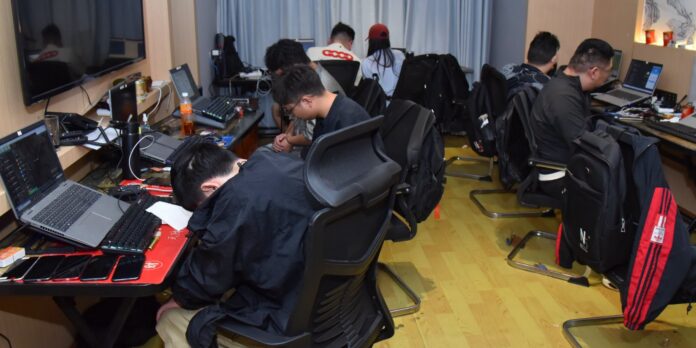
A picture of a few of suspects arrested on a 6 September raid at Yuzhou Smart Hotel in Nongviengkham Village, Xaythany District, where officers detained 43 people. (Photo by Lao Security News)
Lao authorities arrested 167 people in eight raids targeting online scams and illegal gambling across Vientiane Capital during the first half of September, with dozens detained in operations at a hotel, restaurant and rented houses.
The latest raid took place on 12 September, when officers searched two rented houses in Nongtha Neua Village, Chanthabouly District, and Phonngern Village, Hadxayfong District, according to security media.
Thirteen people were arrested, including 12 Chinese nationals and one Lao national. Police also seized electronic devices, two handguns, 1,494 suspected methamphetamine pills and other items.
The arrests came after a 6 September raid at Yuzhou Smart Hotel in Nongviengkham Village, Xaythany District, where officers detained 43 people, including 41 Chinese nationals and two Hong Kong nationals.
On 5 September, officers also arrested two people, a Lao national and a South Korean national, during an illegal gambling raid at a restaurant in Phonsinuan Village, Sisattanak District.
Together, the three raids added 58 people to the 109 arrested in four earlier operations reported at the start of September, bringing the month’s total to 167.
Authorities said investigations are continuing.
Nationwide Crackdown
The arrests in Vientiane are part of a wider crackdown on cybercrime, online scams and illegal gambling across Laos.
Authorities have detained at least 6,200 suspects linked to such activities since the start of 2026.
Prime Minister Sonexay Siphandone said nearly 4,500 suspects from 25 nationalities had been arrested during the first half of the year.
Around 1,000 more people were detained in July, while major operations in August led to another hundreds more arrests.
Officials say they are continuing to investigate the networks behind the operations.
Response by KK Chiu, International Director, Chief Executive, Greater China, Cushman & Wakefield:
Optimising the Housing Ladder and Improving Living Conditions
We welcome the Government’s commitment to increase housing supply, shorten the Composite Waiting Time for public rental housing and further strengthen the housing ladder. The adoption of a long-term housing supply framework comprising 40% public rental housing, 30% subsidised sale housing and 30% private housing, together with the delivery of approximately 196,000 public housing units over the next five years, will provide a clearer housing and homeownership pathway for different income groups.
We believe that increasing the supply of subsidised sale housing and enhancing the housing ladder will help more public housing tenants progress towards homeownership, accelerate housing mobility and enable families with genuine housing needs to gain access to public housing more quickly.
We support the Government’s efforts to increase public housing supply, continue the Light Public Housing programme and implement the Basic Housing Units regime in an orderly manner to phase out substandard subdivided units. This approach is consistent with our long-held view that increasing housing supply is the fundamental solution to improving inadequate housing conditions. With the Government targeting the resolution of substandard subdivided units in domestic buildings by 2030, we expect living conditions for grassroots households to improve progressively.
Urban Renewal Incentives
We support the Government’s more flexible approach to urban renewal, including transferable plot ratio arrangements and measures to unlock redevelopment potential. These initiatives will help enhance market participation, accelerate renewal in areas with pressing redevelopment needs and contribute to overall housing supply growth. We recommend the Government provide clearer guidance on application requirements and further streamline cross-departmental approval procedures to facilitate implementation.
Advancing the Yacht Economy
We welcome the Government’s continued efforts to promote the yacht economy. Beyond increasing marina berth supply and enhancing supporting infrastructure, we believe it is equally important to further facilitate cross-boundary initiatives, allowing greater mobility of yachts within the Greater Bay Area and fostering regional collaboration.
As more superyachts and high-net-worth visitors arrive in Hong Kong, demand is expected to rise across luxury tourism, hospitality, food and beverage, retail, marine services and waterfront commercial facilities, helping unlock the economic potential of Hong Kong’s coastline and island resources. At the same time, Hong Kong has the potential to develop a more comprehensive marine industry ecosystem encompassing yacht repair and maintenance, refitting services and specialised professional services. The development of a holistic marine services value chain will further strengthen Hong Kong’s competitiveness as a regional and international yachting hub.
Response by John Siu, Managing Director, Hong Kong, Cushman & Wakefield:
Planning Ahead for AI and Data Centre Infrastructure
We welcome the Government’s commitment to accelerate the development of the Sandy Ridge Data Facility Cluster, which is expected to provide computing power equivalent to 36 times Hong Kong’s current capacity by 2032, alongside a HK$1 billion injection into the Artificial Intelligence Subsidy Scheme. These initiatives will provide important support for the development of Hong Kong’s artificial intelligence and data centre sectors, further strengthening the city’s position as a regional digital and innovation hub.
However, with rapid advancements in artificial intelligence, large language models and cloud computing, demand for computing power is expected to grow significantly in the coming years. We believe that, in addition to planning data centre sites, the Government should proactively review long-term requirements for power supply, electricity grid capacity and related infrastructure. As AI adoption becomes more widespread, access to reliable power and supporting infrastructure will be a key factor in maintaining Hong Kong’s competitiveness as a technology and data centre hub.
We support the Government’s stated direction of pursuing “high-efficiency computing power, stable electricity supply and low-carbon transition”. Looking ahead, we recommend that the Government regularly review future demand for land, power supply and supporting infrastructure arising from the growth of artificial intelligence and data centre activities, particularly within the Northern Metropolis and other strategic development areas. A coordinated approach to computing, energy and digital infrastructure planning will help attract more data centre operators and technology companies to Hong Kong, while supporting the city’s long-term development as a regional hub for data and artificial intelligence.
Response to the Budget 2026/2027 by Rosanna Tang,Deputy Managing Director, Head of Research, Hong Kong, Cushman & Wakefield:
Clear Industry Positioning for the University Towns
We welcome the Government’s efforts under Hong Kong’s First Five-Year Plan to further define the positioning of the three university towns in the Northern Metropolis University Town, and are encouraged by its strategy to promote synergy among the university towns, the San Tin Technopole and surrounding industry parks. As the only city in the world with five universities ranked among the global top 100, Hong Kong possesses a strong foundation in higher education and research. At the same time, the San Tin Technopole is set to become a key innovation and technology hub. The complementary strengths of these two pillars, both geographically and strategically, provide a solid foundation for building a globally competitive innovation ecosystem in Hong Kong.
We are particularly encouraged by the Government’s emphasis on integrated industry-academia-research collaboration. The university towns should not be viewed merely as educational developments, but as strategic platforms for research commercialisation, international talent attraction and the cultivation of emerging industries. Closer collaboration among universities, research institutes, innovation and technology enterprises and industry parks will help establish a complete innovation value chain covering talent development, scientific research, technology transfer and industrial implementation.
In addition, the Plan proposes approximately 300 hectares of educational facilities as the core of the university towns, connected with adjacent strategic industry areas, distinctive conservation areas, sports and cultural facilities, and surrounding communities, bringing the overall development footprint to more than 1,000 hectares. Such a large-scale integrated education and industry development model is rare in Hong Kong’s urban planning history and clearly demonstrates the Government’s long-term vision of creating a knowledge-based city cluster and an international education hub in the Northern Metropolis.
Attracting Signature Industry Projects and Anchor Institutions to Enhance the Northern Metropolis’ Global Appeal
We welcome the Government’s efforts to establish differentiated industry positioning through the three university towns, while integrating key development nodes such as the San Tin Technopole, the Hong Kong Park of the Hetao Shenzhen-Hong Kong Science and Technology Innovation Co-operation Zone, the Hung Shui Kiu Industry Park and Ta Kwu Ling. This provides a clearer direction for industrial development in the Northern Metropolis and helps address long-standing market concerns regarding overlapping functions and unclear district positioning.
As highlighted in our previous research, we believe the next critical stage for the Northern Metropolis will be its ability to attract influential anchor institutions and leading enterprises. By bringing together universities, research institutes and industry leaders, Hong Kong can foster the clustering of businesses, talent and capital, gradually forming industry clusters with scale and international competitiveness. Hong Kong should also capitalise on its common law system, international financial centre status, intellectual property protection framework and global talent network by focusing on high value-added segments such as research and testing, intellectual property management, fundraising and listing activities, and international accreditation services. This will help Hong Kong establish an irreplaceable role within the Greater Bay Area industrial value chain.
Beyond strategic industries, we believe the Northern Metropolis could also explore internationally recognised and iconic industry projects to further enhance its global profile and attractiveness. For example, the Government may consider developing initiatives around new energy vehicles, smart mobility and advanced technologies, while exploring the feasibility of internationally recognised racing events, testing facilities or technology R&D platforms, such as those associated with Formula One. By leveraging motorsport-related economic activities and innovation-led development, Hong Kong could attract international automotive manufacturers, mobility technology companies and research institutions to establish regional headquarters, R&D centres or testing facilities in the city. This would in turn support the growth of engineering, intelligent transport, advanced manufacturing, tourism, hospitality, retail and convention and exhibition industries, further enriching the Northern Metropolis industrial ecosystem.
Accelerating Land Supply While Advancing Industries and Infrastructure in Parallel
We note that Hong Kong’s First Five-Year Plan proposes a significant acceleration in land and housing supply within the Northern Metropolis. Residential completions are expected to increase substantially from approximately 11,000 units during 2021/22 to 2025/26 to around 70,000 units during 2026/27 to 2030/31. Over the same period, the supply of “spade-ready sites” will rise from approximately 120 hectares to around 900 hectares, representing an increase of around 7.5 times. These figures demonstrate that the Northern Metropolis is transitioning from a planning and land formation phase to a new stage characterised by large-scale development, industrial implementation and population intake.
However, we believe the success of the Northern Metropolis should not be measured solely by the volume of land or housing delivered. As substantial residential, innovation and technology, and industrial sites come on stream, the focus should gradually shift from land supply to city-building. The Government should ensure the coordinated delivery of railway and cross-boundary infrastructure networks, industry parks, commercial facilities, public services and community amenities, while accelerating the introduction of leading enterprises and strategic industries to create sufficient, high-quality employment opportunities and achieve a genuine jobs-housing balance.
In particular, we believe the Northern Metropolis should be driven by industry-led development, with the San Tin Technopole, the Hetao Shenzhen-Hong Kong Science and Technology Innovation Co-operation Zone, the university towns and major industry parks serving as key growth engines. This would create a virtuous cycle in which industry attracts population, population supports consumption, and consumption drives urban development. Only through the coordinated growth of industry, talent, infrastructure and communities can the Northern Metropolis evolve from a large-scale land development project into a modern metropolitan district integrating industry, education, living and international exchange.
Response by Tom Ko, Executive Director, Head of Capital Markets, Hong Kong of Cushman & Wakefield:
New Opportunities for Student Accommodation Market
We welcome the Government’s initiatives to deepen Hong Kong’s development as an international hub for post-secondary education through the “Hong Kong: Your World-class Campus” campaign, expanded global student recruitment efforts and the extension of the Immigration Arrangements for Non-local Graduates pilot arrangement to graduates from Greater Bay Area campuses of Hong Kong universities. These initiatives will further enhance Hong Kong’s attractiveness to overseas students and talent while reinforcing the “Study in Hong Kong” brand.
We are encouraged by the continued progress of the Hostels in the City Scheme. The scheme has already received 41 confirmed applications, providing approximately 10,800 bed spaces and demonstrating strong market confidence in the long-term growth of Hong Kong’s education sector.
The scheme has opened up a new supply channel for converting commercial buildings into student accommodation. At a time when hotel conversion opportunities are becoming more limited as tourism continues to recover, it provides an alternative pathway for investors while helping unlock the value of underutilised commercial assets and meet rising demand for student housing. As the Government prepares to tender the first dedicated student hostel site, we believe purpose-built student accommodation will gradually emerge as a distinct and scalable asset class within Hong Kong’s real estate market.
To further increase supply, we recommend that the Government continue reviewing and refining approval procedures for student hostel conversions. Greater flexibility and streamlined processes, while maintaining appropriate safety and operating standards, would encourage wider market participation and support Hong Kong’s ambition to become a leading international education destination.
The issuer is solely responsible for the content of this announcement.
About Cushman & Wakefield
Cushman & Wakefield (NYSE: CWK) is a leading global commercial real estate services firm for occupiers and investors with approximately 53,000 employees in over 350 offices and nearly 60 countries. In Greater China, a network of 23 offices serves local markets across the region. In 2025, the firm reported revenue of $10.3 billion across its core services of Valuation, Consulting, Project & Development Services, Capital Markets, Project & Occupier Services, Industrial & Logistics, Retail, and others. Built around the belief that Better never settles, the firm receives numerous industry and business accolades for its award-winning culture. For additional information, visit www.cushmanwakefield.com.hk or follow us on LinkedIn (www.linkedin.com/company/cushman-&-wakefield-greater-china).
Jarinyagon Chantawannakul and Wai Yan Phyo Oo from the Chinese University of Hong Kong has been named the Hong Kong winner of the James Dyson Award 2026 for DUALVein, a portable Intravenous insertion learning system. By leveraging AI, the HK$3,000 device drastically undercuts expensive market alternatives to solve a global healthcare crisis, tackling the 40% failure rate of first-time IV injections [1].
This year’s runners-up include Stairio, a stairwell inspection robot, and Musec, a wearable music interaction device.
All three inventions will progress to the international stage of the James Dyson Award, for a chance to win £30,000
HONG KONG SAR – Media OutReach Newswire – 16 September 2026 – Intravenous (IV) insertion is one of the most commonly performed clinical procedures, yet its global failure rates remain alarmingly high. Nearly 40% of first IV attempts fail, causing unnecessary bruising, pain, and repeated needle sticks for millions of patients globally. Today, Jarinyagon Chantawannakul and Wai Yan Phyo Oo from the Chinese University of Hong Kong (CUHK) have been crowned the national winners of the James Dyson Award 2026 for a solution that aims to end this trial-and-error approach: DUALVein, a low-cost, AI-guided near-infrared (NIR) vein-imaging device that helps nursing and medical students accurately find veins across all skin tones, even without expert supervision.
Recognising the urgent need for accessible medical innovation, the James Dyson Award—which forms part of a wider commitment by Sir James Dyson to demonstrate the power of engineers to solve the world’s problems—champions accessible solutions like DUALVein.
The Invention
DUALVein Newly-trained nurses operating without guidance achieve only a 56.28% accuracy rate in IV insertions[1]. Existing vein finders on the market have largely failed to bridge this training gap; they either offer a limited field of view with no direct guidance, or they rely on expensive optics that cost upwards of HK$15,000.
To address this, the CUHK team designed DUALVein to project patients’ veins directly onto the skin in real time using AI segmentation and an 850nm NIR LED array. The device illuminates the hand using two combined methods: transillumination (light passing through tissue) and reflectance (light bouncing off it). Because each mode is independently adjustable, DUALVein is uniquely equipped to work reliably across diverse anatomies and light, medium, and dark skin tones.
Crucially, by utilizing AI instead of expensive optical hardware, DUALVein costs roughly HK$3,000—a fraction of the cost of current market alternatives. Furthermore, it is the only option that pairs its hardware with a built-in software platform, acting as a comprehensive self-learning tool to guide students from beginner theory straight through to physical IV practice.
The inspiration for the project struck after a medical professional revealed to Jarinyagon that standard vein finders are simply too expensive for many hospitals to adopt, leaving staff to rely purely on skill built through repeated practice. In under-resourced clinics lacking enough senior nurses to supervise trainees, students receive little hands-on guidance, leading to painful trial-and-error learning directly on real patients.
This sparked a rigorous two-year iterative design process to create a viable, affordable alternative. The team built four main functional prototypes, crafting non-functional testing models before finalizing each major version. These iterations underwent extensive real-world evaluation: early models were tested on 15 volunteers to validate the near-infrared principles, while later versions were evaluated by around 60 medical and nursing students from Thailand and Hong Kong.
Jarinyagon said: “Winning the James Dyson Award is a powerful validation that this is a problem worth solving. This recognition gives us the crucial momentum to push DUALVein out of the lab and into the hands of the frontline nurses and under-resourced hospitals who need it most.”
Brian Hu, Judge for the 2026 James Dyson Award and Head of Electronics at Dyson said, “DUALVein stands out because it is a brilliant idea to leverage near-infrared technology and AI to solve a genuine, real-life clinical issue. By building multiple prototypes and continuously refining their device based on user feedback, they perfectly showcase Dyson’s core engineering mindset of problem-solving through relentless design, testing, and iteration. This accessible solution has the potential to make a positive impact on the healthcare industry by improving training standards and reducing patient discomfort.”
DUALVein takes home £5,000 (approx. HK$53,000) from the James Dyson Award national prize to support these next steps in commercialisation, which include shifting from 3D-printed PLA to injection-molded housing to further reduce costs for mass scaling.
The Runners-Up Stairio The first runner-up, Stairio, modernizes costly and tiring high-rise stairwell patrols. Instead of relying on manual checks that lack visual evidence of hazards, Stairio introduces a compact robot that clips to and travels along existing handrails. Equipped with cameras and AI-assisted cloud software, it automatically flags cleanliness issues, physical obstructions, and maintenance defects, making building operations significantly safer and more accountable.
Musec The second runner-up, Musec, reimagines the modern music listening experience. To transform passive listening into a deeply interactive and immersive journey, the team developed an innovative wearable sleeve. By seamlessly blending gesture recognition, touch controls, and haptic feedback, Musec empowers users to interact with music through physical movement. Users can trigger sounds and feel real-time vibrations, effectively turning their own bodies into part of the musical performance. This breakthrough design offers music lovers and dancers a profoundly active and physical way to experience sound.
All three inventions will progress to the next stage of the James Dyson Award, with the international Top 20 shortlist to be announced in October, selected by a global team of Dyson engineers, and the global winners in November, chosen by Sir James Dyson.
James Dyson Award The James Dyson Award is an international design competition which inspires and celebrates the next generation of design engineers. Now in its 21st year, the Award has supported more than 400 problem-solving inventions with over £1.5m in prize money. It operates across 28 countries and regions and is run by the James Dyson Foundation, Sir James Dyson’s engineering-education charity.
James Dyson Foundation The James Dyson Foundation, established in the UK in 2002, now supports design, technology and engineering education programmes not only in the UK but also in countries around the world, including the United States, Japan, Singapore, the Philippines and Malaysia. To date, James Dyson and the James Dyson Foundation have donated more than £155 million to charitable causes. This includes a £12 million donation to establish the Dyson School of Design Engineering at Imperial College London, an £8 million donation to support the creation of the Dyson Centre for Engineering Design and the James Dyson Building at the University of Cambridge and finally, a £7.8 million donation to fund Malmesbury Primary School’s STEAM Centre and expansion project.
[1] Review article: Peripheral intravenous catheter insertion in adult patients with difficult intravenous access: A systematic review of assessment instruments, clinical practice guidelines and escalation pathways. https://pmc.ncbi.nlm.nih.gov/articles/PMC9804581/. [2] Factors determining success and the cost of materials used in securing intravenous access in an emergency setting: A prospective observational study. https://pubmed.ncbi.nlm.nih.gov/37716174/.
The issuer is solely responsible for the content of this announcement.
James Dyson Award
NOTES TO EDITORS
The James Dyson Award forms part of a wider commitment by Sir James Dyson, to demonstrate the power of engineers to solve the world’s problems. The competition has supported more than 400 inventions with prize money and a chance to gain global media exposure, and is run by the James Dyson Foundation.
ABOUT THE COMPETITION
The brief. Design something that solves a problem. This problem may be a frustration that we all face in daily life, or a global issue. The important thing is that the solution is effective and demonstrates considered design thinking. Unlike other competitions, participants are given full autonomy over their intellectual property.
The process. Entries are judged first at the national level by a panel of external judges and a Dyson engineer. Each operating market awards a national winner and two national runners-up. From these winners, a panel of Dyson engineers then select an international shortlist of 20 entries. The top 20 projects are then reviewed by Sir James Dyson who selects his global winners.
The 2026 prizes
Global winners, chosen by Sir James Dyson, each receive a prize of £30,000.
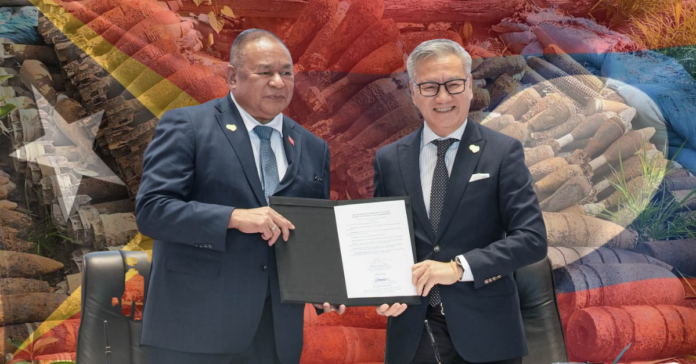
A picture of Foreign Minister Bendito dos Santos Freitas (left) signed the Declaration of Accession with Lao Deputy Prime Minister and Foreign Minister Thongsavanh Phomvihane (right) during the treaty’s Third Review Conference. (Photo the government of Timor-Leste)
Timor-Leste has taken a formal step toward joining the Convention on Cluster Munitions, signing a declaration of accession in Vientiane on 15 September during the treaty’s Third Review Conference.
Foreign Minister Bendito dos Santos Freitas signed the Declaration of Accession, and handed to Lao Deputy Prime Minister and Foreign Minister Thongsavanh Phomvihane.
The move comes as representatives from nearly 100 countries gather in Laos, which remains one of the world’s most heavily contaminated countries with unexploded ordnance from the Vietnam War era in the 70s.
Signing the declaration does not yet make Timor-Leste a member of the Convention. The country will become a full member after depositing an instrument of accession with the UN Secretary-General.
The Convention bans the use, production, stockpiling and transfer of cluster munitions. It also requires member states to destroy stockpiles, clear contaminated areas, educate communities about the risks and assist people affected by the weapons.
Timor-Leste’s UXO Legacy
Timor-Leste supported the development of the Convention in 2008 but did not sign it. The country remained outside the treaty for years despite supporting its goals. Landmine and Cluster Munition Monitor cited limited resources and other priorities as reasons for the delay.
In the last reported incident, in 2011, two civilian men were killed and another was critically injured while handling unexploded ordnance.
For people living in countries affected by explosive remnants of war, the danger can continue long after fighting ends. Unexploded weapons can remain in the ground for decades, posing risks to people farming, working or traveling through contaminated areas.








 www.cushmanwakefield.com.hk
 www.linkedin.com/company/cushman-&-wakefield-greater-china


 James Dyson Award
 @jamesdysonaward
 @jamesdysonaward
 @jamesdysonaward
 James Dyson Award
 youtube.com/jamesdysonfoundation