Home Blog Page 690

THIS BEER BRAND DIDN’T FILM COMMERCIALS, IT PRINTED THEM

SINGAPORE, April 2, 2026 /PRNewswire/ — For decades, beer ads have belonged to the big guys, million-dollar productions, glossy beaches and celebrity cameos that cost more than a craft brewery makes in a year. For independent brewers like Brewlander, it was never a fair fight. Until now.
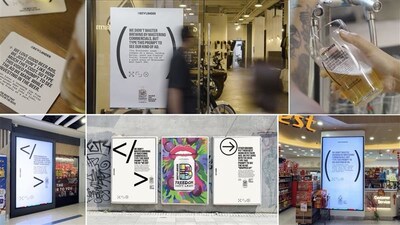
Brewlander Ads
Brewlander Ads

With the rise of text-to-video AI like Sora and Qwen 2.5, the rules have changed. Today, anyone with a keyboard can make an epic film without spending a cent. So Brewlander decided to do just that.

To show how Brewlander is the beer that invests in the beer, the brand didn’t film commercials, it printed them. Posters, billboards, magazines, all featuring detailed AI prompts that anyone could type in to instantly generate over-the-top beer ads. The kind of ads independent brewers were never supposed to afford.

Examples included:

“Surfers ride black sea horses through an underwater world of neon coral reefs, past glowing jellyfish, raising their ice-cold Brewlanders.”

“A colossal Brewlander bottle floats in a galaxy of bubble-planets and star-balls.”

To make it even more rewarding, fans who generated their own Brewlander ads received exclusive discounts on the beer.

At the end of the day, the message was a brilliant move: Brewlander doesn’t invest in million-dollar commercials, it invests in what matters: the beer itself.

About Brewlander

Brewlander was born out of John’s passion for homebrewing (and his online moniker on brewing forums), and we’ve kept that homebrew tradition of having fun and pushing the envelope well alive.

Back in 2016, John and a few friends came up with a wild idea: to make his award-winning brews available to the wider public. Taking a leap of faith, he gave up his day job and plunged headfirst into the project with the mission to challenge the status quo of Asia’s beer scene, while putting Singaporean brews on the world beer map.

Brewlander splashed onto Singapore’s craft beer scene on 14 March 2017, launching to glowing response from the local beer community and the media as Singapore’s first gypsy brewer.

About BLKJ Havas

BLKJ Havas is a creative company that engineers marketing moments for brands in culture, entertainment and media. It prides itself as the un-advertising agency – because people hate advertising, and we love people.

Now more than 8 years in business, the agency is amongst the most awarded and successful in the region. It is currently ranked the #1 Agency in Singapore, #8 in Asia by Campaign Brief THE WORK 2024. It is Spikes Asia 2024’s Singapore Agency of the Year, and Top 10 APAC Agency of the Year.

Its strong regional and Singapore client roster includes Reckitt, JLL, JBL Harman, Great Eastern, Land Transport Authority of Singapore, Republic of Singapore Air Force, Singapore Tourism Board, Ministry of Education Singapore, IMDA and more.

For more, check out: blkjhavas.agency

Alibaba Unveils Qwen3.6-Plus to Accelerate Agentic AI Deployment for Enterprises and Alibaba’s AI Applications

New model brings advanced agentic coding and refined reasoning to real-world deployment

HANGZHOU, CHINA – Media OutReach Newswire – 2 April 2026 – Alibaba has released Qwen3.6-Plus, the latest iteration of its flagship series of large language models, delivering a significant advancement in agentic coding, as well as multimodal perception and reasoning. Qwen3.6-Plus is designed to empower the latest market demand to shift towards agentic AI: building models that move beyond passive assistance to ones capable of autonomously navigating complex, repository-level engineering and real-world visual environments.

The latest Qwen 3.6-Plus model will be integrated into Alibaba’s ecosystem, including Wukong, an AI-native enterprise platform that automates complex business tasks using multiple AI agents, and Qwen App, Alibaba’s flagship AI application.

While the Qwen series established a strong foundation for the development of AI solutions, Qwen3.6-Plus is optimized for the “capability loop”—the ability to perceive, reason, and act within a single workflow. By incorporating developers’ feedback, the model offers a stable, production-ready framework designed to bridge the gap between initial code concepts and deployed products.

In frontend website development and repository-level engineering, Qwen3.6-Plus autonomously plans, tests, and iterates on code to deliver production-ready solutions. By managing the full execution loop from objective breakdown to final refinement, the model functions as an end-to-end partner in the development lifecycle.

To support complex, repository-level engineering, Qwen3.6-Plus provides a 1-million-token context window by default. Across a broad set of benchmarks, Qwen3.6-Plus demonstrates strong performance across agentic coding and multimodal reasoning capabilities.

Qwen3.6-Plus’ strategic advancement in multimodal reasoning, moves beyond simple recognition toward sophisticated analysis and decision-making. The model is engineered to integrate cross-modal information to solve complex challenges, including high-density document parsing, physical-world visual analysis, and long-form video reasoning.

This progress also extends to visual coding, where the model interprets visual designs and prototypes to generate functional code, effectively bridging the gap between perception and execution. The model can now interpret user interface screenshots, hand-drawn wireframes, or product prototypes and instantly generate functional frontend code.

To ensure practical utility, Qwen3.6-Plus has been optimized for the stability and precision required in professional business environments. It delivers high-accuracy performance in instruction following, complex text recognition, and fine-grained visual perception. These improvements make the model a reliable solution for demanding real-world scenarios—such as retail intelligence and automated inspections—where consistent, multi-step task execution is necessary to move AI from experimental pilots into broad production.

Users can access and deploy the model through Model Studio, Alibaba Cloud’s AI development platform, and experience it through Qwen Chat. For integrated development, it is compatible with leading third-party coding assistants—including OpenClaw, Claude Code, and Cline—enabling automated, context-aware workflows that translate complex project requirements into functional code.

In addition, Alibaba will continue to support the open-source community with selected Qwen3.6 models in developer-friendly sizes.

Hashtag: #AlibabaGroup

The issuer is solely responsible for the content of this announcement.

About Alibaba Group

Alibaba Group is a global technology company focused on e-commerce and cloud computing. We enable merchants, brands and retailers to market, sell and engage with consumers by providing digital and logistics infrastructure, efficiency tools and vast marketing reach. We empower enterprises with our leading cloud infrastructure, services and work collaboration capabilities to facilitate their digital transformation and grow their businesses.

Caliway Selected to Present Preclinical Data on CBL-514 in Combination with GLP-1R Therapy at the American Diabetes Association’s 2026 Scientific Sessions

  • Preclinical research on Caliway’s fat reduction drug candidate CBL-514 in combination with GLP-1R-based weight-loss therapies has been selected for presentation at the American Diabetes Association’s 2026 Scientific Sessions.
  • The presentation will be delivered by W. Timothy Garvey, MD, a globally recognized authority in obesity and metabolic medicine and a scientific advisor to Caliway.
  • The American Diabetes Association’s Scientific Sessions is one of the world’s largest and most influential scientific meetings in diabetes and obesity, and the American Diabetes Association’s Standards of Care are widely regarded as a global clinical standard.
  • Selection for presentation at the American Diabetes Association’s Scientific Sessions, one of the leading flagship scientific meetings in diabetes, obesity, and metabolism, reflects the research direction and application potential of CBL-514 in combination with GLP-1R-based weight-loss therapies, and has gained strong recognition from international experts in metabolism.
  • Caliway also plans to engage face-to-face with global experts, academics, and multinational pharmaceutical companies during the meeting to further strengthen its global strategic development.

TAIPEI, April 2, 2026 /PRNewswire/ — Caliway Biopharmaceuticals (TWSE: 6919), a clinical-stage biopharmaceutical company advancing innovative small-molecule therapies in aesthetic medicine, metabolic diseases, and other unmet medical needs, announced that the latest preclinical data on its first-in-class large-area localized fat reduction drug candidate, CBL-514, in combination with GLP-1R-based therapies, has been selected for presentation at the 2026 Scientific Sessions of the American Diabetes Association®(ADA), one of the leading flagship scientific meetings in diabetes, obesity, and metabolism worldwide. Caliway’s research has also been selected for presentation at both ECO, the European Congress on Obesity, and the ADA’s two premier scientific meetings in obesity and metabolism in Europe and the United States. This highlights the research direction of CBL-514 in combination with GLP-1R-based weight-loss therapies, including its potential complementary value in metabolic parameters, and reflects strong recognition and attention from international experts in metabolism.

The ADA’s 2026 Scientific Sessions will be held from June 5 to June 8, in New Orleans, Louisiana, U.S. The presentation will be delivered by W. Timothy Garvey, MD, a globally recognized authority in obesity and metabolic medicine and a scientific advisor to Caliway. Dr. Garvey is Professor of Endocrinology and Obesity Medicine at the University of Alabama at Birmingham (UAB). He has long been engaged in the fields of obesity, metabolic disease, and cardiometabolic risk, and has made important contributions to multiple U.S. clinical guidelines related to obesity and metabolism. He is highly regarded in the global weight management field. In addition, Dr. Garvey has also been invited to serve as a scientific advisor to multiple multinational pharmaceutical companies, including Eli Lilly and Novo Nordisk. His role as the presenter further enhances Caliway’s visibility and representation as it expands from localized fat reduction into the global obesity and metabolic medicine field.

The title of the selected abstract is:

“Combination of Tirzepatide with CBL-514 an Adipocyte-Apoptosis Agent Improves Weight Loss Durability and Adipose Tissue Remodeling in Diet-Induced Obese Rats.”

The ADA is an internationally authoritative non-profit medical organization. Its annual Standards of Care in Diabetes are widely regarded as a global clinical standard. The ADA Scientific Sessions is also one of the world’s largest and most influential scientific meetings in diabetes, bringing together more than 12,000 researchers and clinicians, including physicians, nurses, endocrinologists, cardiologists, registered dietitian nutritionists, and others. It serves as a premier global platform for presenting cutting-edge basic research and new drug development progress.

Vivian Ling, CEO of Caliway, stated, “The selection of Caliway’s research on CBL-514 in combination with GLP-1R-based weight-loss therapies for presentation at one of the world’s largest medical meetings in obesity and diabetes, with a globally influential KOL such as Dr. Garvey serving as the presenter, reflects continued recognition of the Company’s research direction in obesity and metabolism by the global professional community. It also highlights the potential value and international competitiveness of CBL-514 in key focus areas of global obesity medicine, including improving weight-loss durability and optimizing adipose tissue remodeling.”

In addition to presenting the latest scientific progress at the meeting, Caliway will also actively take this opportunity to meet face-to-face with global experts in obesity and metabolism, as well as multinational pharmaceutical companies, to further expand and deepen the global development strategy and collaboration opportunities for CBL-514.

About CBL-514
CBL-514, a 505(b)(1) and first-in-class small-molecule drug developed by Caliway, is the world’s first injectable lipolysis drug that induces adipocyte apoptosis to reduce subcutaneous fat in targeted areas with no systemic safety risks identified and good tolerability.

To date, 10 clinical trials with a total of 544 subjects have been completed with all efficacy and safety endpoints met.

CBL-514 is being developed across multiple indications, including reduction of subcutaneous fat (non-surgical localized fat reduction) and moderate-to-severe cellulite. CBL-514D, the same active pharmaceutical ingredients (APIs) but under different formulation, is being studied for additional indications such as Dercum’s disease and more.

About Caliway Biopharmaceuticals
Caliway Biopharmaceuticals (Caliway) is a clinical-stage biopharmaceutical company driven to breakthrough drug discovery of novel small-molecule therapeutics. Listed on the Taiwan Exchange (TWSE-6919), Caliway aims to become an innovative pharmaceutical leader in aesthetic medicine and other diseases. For more information, please visit: https://www.caliwaybiopharma.com/en/

Media Contact
ir@caliwaybiopharma.com

Disclaimer
This article and related information on this site contain forward-looking statements. The forward-looking information requires the Company to make numerous assumptions and is subject to inherent risks, uncertainties, and other factors that are beyond the control of the Company which may cause actual results, performance or achievements to be materially different from future results, performance or achievements expressed or implied by such forward-looking statements. The Company undertakes no obligation to timely inform, update, or revise the information on this site if circumstances should change.

IBM Announces Strategic Collaboration with Arm to Shape the Future of Enterprise Computing

Collaboration aims to advance new technologies that expand infrastructure choice while preserving mission-critical environments

ARMONK, N.Y., April 2, 2026 /PRNewswire/ — IBM (NYSE: IBM) today announced a strategic collaboration with Arm to develop new dual‑architecture hardware that helps enterprises run future AI and data intensive workloads with greater flexibility, reliability, and security.

IBM Corporation logo.

IBM’s leadership in system design, from silicon to software and security, has helped enterprises adopt emerging technologies with the scale and reliability required for mission‑critical workloads. As AI moves deeper into core business operations, IBM continues to invest in hardware platforms such as the Telum II processor and Spyre Accelerator, which are designed to bring AI from experimentation into everyday enterprise use.

Through this collaboration, IBM and Arm aim to extend this track record of innovation by combining IBM’s enterprise leadership in systems reliability, security, and scalability with Arm’s own leadership in power‑efficient architecture, workload enablement expertise, and broad software ecosystem, to build flexible and scalable computing platforms for the future.

“As enterprises scale AI and modernize their infrastructure, the breadth of the Arm software ecosystem is enabling these workloads to run across a broader range of environments,” said Mohamed Awad, Executive Vice President, Cloud AI Business Unit, Arm. “Our collaboration with IBM builds on this progress, extending the Arm ecosystem into mission-critical enterprise environments and giving organizations greater flexibility in how they deploy and scale these workloads.”

“This collaboration is a natural extension of IBM’s leadership in hardware and systems innovation,” said Tina Tarquinio, Chief Product Officer, IBM Z and LinuxONE. “It continues IBM’s pattern of anticipating enterprise needs well ahead of market inflection points—developing capabilities early so clients are prepared as new workloads and business models emerge. Our aim is to expand software choice and improve system performance while maintaining the reliability and security our clients expect.”

“Enterprise infrastructure is entering a new phase where flexibility, workload portability, and ecosystem reach are becoming just as critical as performance and reliability. As AI and data-intensive applications reshape requirements, organizations are looking for platforms that can evolve without forcing disruptive tradeoffs,” said Patrick Moorhead, Founder, CEO, and Chief Analyst at Moor Insights & Strategy. “What IBM and Arm are signaling here is a meaningful step toward that future that could broaden how enterprises think about deploying and scaling modern workloads. While the full implications will take time to unfold, it’s clear this reflects a deeper level of investment in long-term platform innovation and ecosystem expansion than we typically see at this stage.”

A Collaboration Designed for What’s Next
The collaboration is focused on three key areas. First, the companies are exploring how to expand virtualization technologies that allow Arm®-based software environments to operate within IBM’s enterprise computing platforms. This work is designed to expand software compatibility and further streamline how developers and enterprises bring Arm applications into mission-critical environments.

Secondly, enterprise infrastructure must support high-availability operations, as well as security and local data sovereignty requirements. IBM and Arm are exploring new ways to support the performance and efficiency demands of modern workloads, including AI and data intensive applications. The work includes enabling enterprise systems to recognize and execute Arm applications, with the goal of helping Arm-based environments align with the reliability, security, and operational requirements enterprises need.

Finally, the collaboration is focused on long term ecosystem growth. By creating shared technology layers between platforms, IBM and Arm aim to open the door to broader software ecosystems and greater flexibility in how applications are deployed and managed. This approach could give enterprises more choice, positioning them to adopt new applications and architectures while continuing to leverage their existing investments.

“IBM’s defining role in shaping enterprise infrastructure spans decades, showcasing the breadth and commitment required to support our clients’ most intensive and sensitive workloads,” said Christian Jacobi, Chief Technology Officer and IBM Fellow, IBM Systems Development. “This moment marks the latest step in our innovation journey for future generations of our IBM Z and LinuxONE systems, reinforcing our end-to-end system design as a powerful advantage.”

Statements regarding IBM’s future direction and intent are subject to change or withdrawal without notice, and represent goals and objectives only.

About IBM
IBM is a leading provider of global hybrid cloud and AI, and consulting expertise. We help clients in more than 175 countries capitalize on insights from their data, streamline business processes, reduce costs and gain the competitive edge in their industries. Thousands of governments and corporate entities in critical infrastructure areas such as financial services, telecommunications and healthcare rely on IBM’s hybrid cloud platform and Red Hat OpenShift to effect their digital transformations quickly, efficiently and securely. IBM’s breakthrough innovations in AI, quantum computing, industry-specific cloud solutions and consulting deliver open and flexible options to our clients. All of this is backed by IBM’s long-standing commitment to trust, transparency, responsibility, inclusivity and service. Visit www.ibm.com for more information.

Media contact:

Bethany McCarthy
IBM
bethany@ibm.com

SonicWall Reframes Annual Research Around SMB Protection Outcomes, Reveals the Seven Deadly Sins in 2026 Cyber Protect Report

New Report Finds Serious, Actionable Attacks Rose More Than 20% as SMBs Face Growing Threat from Increasingly Precise, AI-Enabled Adversaries


SINGAPORE – Media OutReach Newswire – 2 April 2026 – SonicWall today announced the release of the 2026 SonicWall Cyber Protect Report, marking a landmark reframing from traditional threat reporting in favor of the protection outcomes that matter most to business leaders. At the heart of the report is a sobering finding: most SMBs aren’t failing because of sophisticated attacks. They’re failing because of seven predictable, preventable gaps that SonicWall has named the Seven Deadly Sins of Cybersecurity.

The 2026 report continues to draw on data from SonicWall’s global network of more than one million security sensors to reveal a threat landscape that is growing more precise and more relentless. Some key statistical findings include:

  • High and medium severity attacks surged 20.8% to 13.15 billion hits. Attackers aren’t striking more often, they’re striking smarter.
  • Automated bots now generate more than 36,000 vulnerability scans per second, accounting for more than half of all internet traffic. Bad bot traffic alone has surged to 37% of all global internet traffic.
  • IoT attacks climbed 11% to 609.9 million hits; Log4j alone generated 824.9 million IPS hits in 2025, four years after disclosure.
  • Identity, cloud, and credential compromise account for 85% of actionable security alerts. The stolen password, not the zero-day, is the attacker’s weapon of choice.
  • SMBs bear a disproportionate ransomware burden: 88% of their breaches involved ransomware in 2025, more than double the rate seen at large enterprises.

“SonicWall data reveals attacks are getting faster, and in some instances, they’re getting a little more sophisticated,” said Michael Crean, SVP and GM of Managed Security Services at SonicWall. “But the vast majority of the attacks that we’re seeing and investigating are basic fundamentals that continue to be missed. The danger isn’t that AI isn’t working; it’s that we’re using it as an excuse not to do the things we already know we should.”

The 2026 SonicWall Cyber Protect Report is the first in the company’s history to be built around protection outcomes rather than threat statistics alone. In preparing this year’s research, SonicWall identified seven recurring patterns, dubbed the Seven Deadly Sins that consistently define the difference between resilience and exposure across SMB breach investigations, security assessments, and incident reviews.

The Seven Deadly Sins of Cybersecurity

Rather than attributing breach risk to exotic or emerging attack methods, the 2026 Protect Report identifies seven operational failures that appear repeatedly across investigations and that remain largely preventable. The Seven Deadly Sins are:

  1. Ignoring the Fundamentals — Weak authentication, unpatched systems, and excessive admin privileges remain the primary attack surface.
  2. False Confidence — Believing you’re too small to be targeted, overestimating control effectiveness, and assuming resilience without testing it create dangerous blind spots.
  3. Overexposed Access — Overly permissive rules, flat networks, and implicit trust after authentication give attackers an unobstructed path once inside.
  4. Reactive Security Posture — Without 24/7 monitoring and proactive threat hunting, attackers set the timeline. The average breach goes undetected for 181 days.
  5. Cost-Driven Security Decisions — Deferring investment based on short-term budget pressure creates costs that arrive later — with interest. A single SMB breach can exceed $4.91 million when downtime and recovery are included.
  6. Reliance on Legacy Access Models — VPNs that authenticate once and grant broad network access remain one of the most exploited entry points in enterprise security. VPN CVEs grew 82.5% over the analyzed period.
  7. Chasing Hype Over Execution — Buying the latest tools without deploying them completely, and expecting technology to compensate for process gaps, is its own form of vulnerability. Tools don’t create outcomes — execution does.

“The organizations that suffer the most are not failing because of sophisticated attacks, they’re failing because of predictable, preventable gaps,” Crean continued. “SMBs are the backbone of the U.S. economy, representing 99% of all U.S. businesses and nearly half of private sector employment. Protecting them protects entire communities. That’s why this report is designed around protection outcomes, not just threat statistics.”

Commenting on the findings, Debasish Mukherjee, Vice President of Sales, APJ at SonicWall said, “This year’s report reflects what we are consistently seeing across APJ, SMBs continue to be impacted by gaps in fundamental security practices that are both predictable and preventable. By reframing our research around protection outcomes, SonicWall aims to help organizations move beyond threat awareness to action, focusing on the areas that directly reduce risk. As attackers become more precise and increasingly AI-enabled, closing these gaps will be critical for SMBs across the region to strengthen resilience and make more informed decisions.”

In keeping with SonicWall’s partner-first mission, the 2026 Cyber Protect Report is designed to equip MSPs and MSSPs with the data and language needed for strategic conversations with SMB decision-makers, translating technical threat intelligence into business risk that leaders can act on.

The SonicWall 2026 Cyber Protect Report makes one thing clear: the gap between protected and exposed rarely comes down to technology. It comes down to execution. For the SMBs and the MSPs and MSSPs who protect them, this report is designed to close that gap with data, clarity, and a road map for what to do next.

To learn more about SonicWall and download the complete 2026 SonicWall Cyber Protect Report, please visit sonicwall.com/threat-report.
Hashtag: #SonicWall

The issuer is solely responsible for the content of this announcement.

ANGEL Unveils Smart Water Purification Solutions for the Foodservice Industry, Driving Safe Water Use and Operational Efficiency


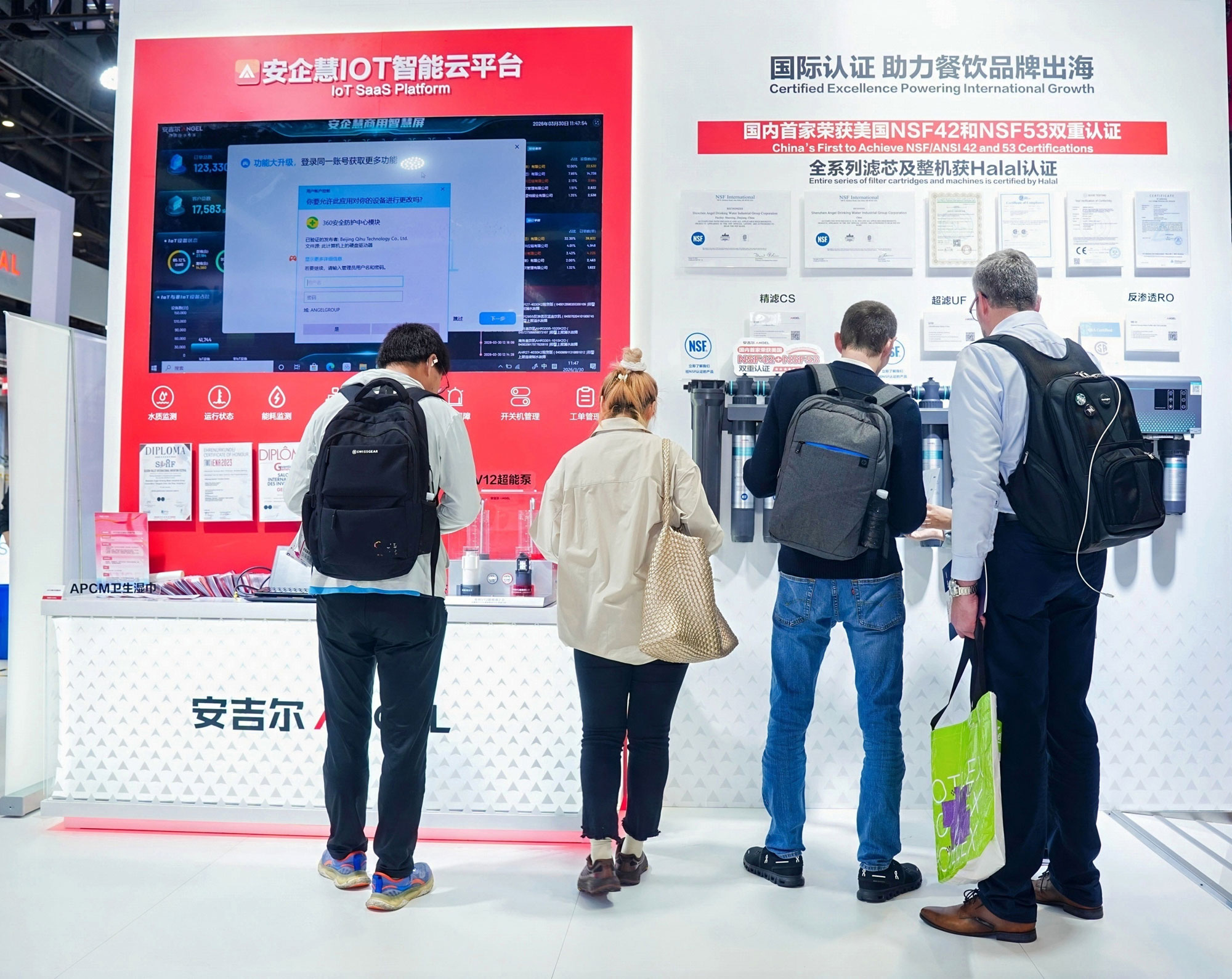
SHANGHAI, CHINA – Media OutReach Newswire – 2 April 2026 – As the foodservice industry continues to expand and consumer awareness of health rises, water safety has become a critical concern. Water quality directly affects food flavour, equipment performance and food safety, while also driving demand beyond basic drinking water toward scenario-based, high-capacity solutions.

At the HOTELEX 2026 held on 30 March, ANGEL introduced its latest smart water purification solutions for the foodservice sector. Powered by advanced technologies, these solutions aim to upgrade industry water standards, helping businesses ensure food safety and achieve high-quality growth.

1

Addressing Diverse Needs with Tailored, Full-Scenario Solutions

With the rapid growth of chain operations and large-scale catering formats, water usage requirements have become increasingly diverse. Standardised products are no longer sufficient. ANGEL has responded by developing customised solutions across multiple scenarios, including convenience stores, beverage shops and restaurants, enabling operators to improve efficiency, reduce costs and enhance product quality.

For convenience stores, where space is limited and demand is high, ANGEL introduced the J3752 reverse osmosis water purifier. Featuring replaceable filter cartridges and a bypass design, it ensures continuous 24-hour high-volume water supply while reducing maintenance costs by over 40%. Its wall-mounted design fits compact spaces, and an integrated IoT system enables centralised multi-store management.

For beverage shops, ANGEL offers integrated solutions that combine customised water quality with efficient tea preparation. In high-hardness regions, the J3753 reverse osmosis water purifier delivers 1,600 GPD capacity and a fast flow rate of 4L/min, with dual RO membranes for enhanced purification. In low-hardness areas, the J3710 microfiltration system uses a triple-cartridge design to optimise water quality, ensuring consistent taste and flavour.

For restaurants with high water demand and a need for efficiency, ANGEL provides flexible configurations based on local water conditions. In high-hardness areas, the R series RO systems offer up to 2,400 GPD output with dual pumps and filters for stable, high-frequency use. In low-hardness regions, the C series microfiltration systems deliver long-lasting taste quality with a high flow rate of up to 25L/min, requiring no electricity and producing zero wastewater, significantly reducing operating costs.

2

Reliable Water Quality, Consistent Experience

ANGEL’s solutions are backed by strong product performance and international certifications, providing reliable water quality support for foodservice brands. ANGEL has already partnered with leading brands including TOMORO Coffee, Cotti Coffee and Haidilao. Looking ahead, the company will continue to innovate and refine its solutions to meet evolving industry needs, supporting foodservice brands worldwide in delivering consistent quality and achieving sustainable growth.

Hashtag: #ANGEL

The issuer is solely responsible for the content of this announcement.

About ANGEL

Founded in 1987, Shenzhen Angel Drinking Water Industrial Group Corporation (ANGEL) is committed to becoming a global leader in water purification and drinking water solutions through continuous innovation. Over the past three decades, the company has delivered safe, healthy, and thoughtfully designed water solutions to consumers worldwide.

ANGEL holds 11 internationally recognized certifications, including NSF, UL, TÜV, SGS, CSA, and Halal, meeting standards for quality, safety, and environmental responsibility.

From China’s Market Leader to Global Partner: Xiaodu AI Hotel Solutions Expands into Southeast Asia

SHANGHAI, April 2, 2026 /PRNewswire/ — Xiaodu Technology, an AI hardware subsidiary of Baidu that serves over 54 million households in China, has announced strategic international expansion. The company will introduce its “AI+Hotel” solutions into Southeast Asia, with Thailand and Singapore identified as its initial target markets.

Xiaodu’s expansion into Southeast Asia builds on its strong track record in the domestic market. In China, the company commands a 90% share of the smart hotel segment, with its solutions deployed in over 2,600,000 rooms across 90,000 hotel properties. It now aims to bring this proven model to mid-to-high-end international hotel chains, as well as Chinese hospitality brands expanding overseas.

The “AI+Hotel” solution is powered by a multilingual ecosystem designed to enhance four key aspects:

  • In-Room Control: Voice-enabled management of climate, lighting, and entertainment systems
  • Guest Services: Automated handling of guest requests, including room service and concierge support
  • Information Access: Instant access to hotel services, amenities, and local travel information
  • Operational Efficiency: Backend tools that streamline workflows, improve staff productivity, and reduce operational costs

In response to increasingly complex global data regulations, the company has also implemented robust data privacy and compliance measures, along with localized account systems, to ensure full alignment with international standards.

As digital transformation reshapes the hospitality industry, Xiaodu is positioning itself as a trusted AI partner committed to the future of travel. By integrating Xiaodu’s AI-powered solutions, hotels can reduce their environmental footprint through advanced energy management, while simultaneously optimizing service delivery to achieve greater operational efficiency and enhanced guest satisfaction.

Contact : Email: Dumo@baidu.com

OutSystems Introduces Agentic Systems Engineering to Power Governed, Open Enterprise AI

The OutSystems Enterprise Context Graph and next-generation Mentor enable enterprises to build, modernize, and govern mission-critical agentic systems on a single secure, unified platform

SINGAPORE, April 2, 2026 /PRNewswire/ — OutSystems, a leading AI development platform, today announced Agentic Systems Engineering, a new approach to AI development designed to help organizations build, manage, and evolve governed agentic systems for the enterprise. 

AI development is radically transforming how software is built and the role of developers. As agents generate code faster than ever, there has been an explosion of new tools, but this isn’t leading to higher quality software or more coherent architectures. Further compounding the issue are legacy systems that restrain innovation and require even more complex data management and integration.

OutSystems Agentic Systems Engineering is a different approach. It addresses the technical complexity and fragmented architectures of modern enterprises that are often difficult to reason over. By developing the rich context and guardrails agents require, it ensures the delivery of reliable, secure, and compliant systems.

At the center of this approach is the OutSystems Enterprise Context Graph.  Drawing on more than two decades of software development centered on business intent rather than code alone, the Enterprise Context Graph extends the OutSystems unique contextual architecture with the dynamic tooling that agents need to work effectively across complex systems.

By providing a high-fidelity and real-time understanding of the enterprise architecture – enterprise apps and agents, workflows, data, and their interconnected dependencies – the Enterprise Context Graph is the platform advantage that enterprises need to realize the power of agentic technologies in their business.

“AI is creating more change, across more tools and surfaces, than ever before—but enterprises still need that change to be governed, secure, and production-ready,” said Woodson Martin, CEO of OutSystems. “Agentic Systems Engineering is our answer to that challenge. With the Enterprise Context Graph and the next generation of Mentor, OutSystems gives organizations the context, connection, and control they need to use agentic tools across complex systems and deliver real enterprise outcomes.”

Powered by the Enterprise Context Graph, the next generation of OutSystems Mentor delivers Agentic Systems Engineering directly within the OutSystems platform. Now with a highly conversational application generation and in-IDE (Integrated Development Environment) experience, Mentor enables teams to build and evolve complex systems with built-in architectural coherence and token efficiency. It transforms developers into highly productive architects.

Defining the shift towards an open ecosystem, enterprise context and governance isn’t just for OutSystems agents – it’s a requirement for every agent operating in today’s business environment. With Agentic Systems Engineering and the Enterprise Context Graph, developers will be able to use any agentic tool to inspect, extend, and build on the OutSystems platform.  

This enables teams to safely contribute to enterprise software development, whether building with Mentor, through the Studio IDE, or with agentic coding tools such as Claude Code, OpenAI Codex or Cursor. Regardless of the environment, agents will operate within a shared enterprise context and guardrails that ensure secure, compliant, and production-ready systems. This provides enterprises with the flexibility of an open ecosystem with the operational confidence of a unified, governed architecture.

OutSystems expects to open an early access program to customers in the second quarter of 2026.

Early customer implementations are showcasing the real-world impact of Agentic Systems Engineering.

ACM to Adopt OutSystems Mentor as its Primary AI Development Companion

AllianceCorp Manufacturing (ACM), a global leader in manufacturing technology, is exploring OutSystems Mentor as its core AI partner to drive innovation across the semiconductor and e-mobility sectors. Working iteratively with Mentor, ACM’s professional developers can instantly build data models, UI screens, and server actions while ensuring all code aligns with enterprise best practices. A primary use case, ACM is using Mentor to extract specific data, such as title blocks and geometric tolerances, from 2D CAD drawings via an AI agent. With Mentor, all steps and relationships are clearly described, making it easier to onboard a new developer into the project.

To learn more about OutSystems Agentic Systems Engineering, click here.  

About OutSystems

OutSystems is a leading AI Development Platform built for the enterprise. Global organizations trust OutSystems to rapidly build mission-critical apps and agents, modernize legacy processes with agentic systems, and govern their entire AI portfolio across complex regulatory environments, all on a unified platform.

OutSystems is consistently recognized as a leader in enterprise software development by Gartner, IDC, and Forrester, and ranked #1 in Customer Satisfaction by users on G2. Business leaders, IT executives and developers choose OutSystems to accelerate internal innovation without compromising reliability and security.

Founded in 2001, the OutSystems ecosystem includes more than 85 million end users, over 600 partners, and thousands of active customers in 75+ countries across 20+ industries. Learn more at www.outsystems.com