A picture of raid in Nam Mo village, Anouvong district, where the Kesana Herchalern company was extracting alluvial gold on 8 June 2026. (Photo by Lao Security News)
The State Inspection Authority has seized 77 kilograms of raw gold ore across eight provinces, targeting unauthorized mining operations operating along major riverbanks.
State Inspection Authority President Vansay Phongsavanh revealed the findings on 29 October during a resource management meeting. Inspections include 23 targeted locations, uncovering illegal extraction involving 18 companies and arresting 188 workers, both Lao and foreign nationals.
Authorities also confiscated heavy equipment from the sites, including 38 excavators, 20 dredging boats, two wheel loaders, a dump truck, water pumps, and industrial gold-filtering screens.
The report follows instructions from President Thongloun Sisoulith during the Central Committee’s extraordinary plenary session on 1 October, where he called for urgent action against unauthorized mineral extraction, illegal logging, and broader natural resource exploitation.
A Wave of Regional Crackdowns
Although central authorities did not explicitly name the eight provinces covered in the report, the meeting follows a series of local enforcement actions across the country this year.
The latest raids happened in Sangthong District, Vientiane in late September and early October, where authorities seized 23 excavators at hidden gold mining sites.
On 15 October, Vang Vieng’s Nam Song River was reportedly muddy despite clear skies. While authorities have yet to confirm the cause, a similar outbreak in June was traced to unauthorized upstream iron ore mining by Daochalearn Mineral Processing.
In September, Xaysomboun also reported identified four companies allegedly involved in unauthorized alluvial gold mining. Similar gold mining investigations and raids have unfolded across Luang Prabang, Xieng Khouang, and Savannakhet, signalling a country-wide push to hold illegal operators accountable and restore regulatory order to the mining sector.
In the news release, JIN JIANG HOTELS (MALAYSIA) TO INTRODUCE SOUTHEAST ASIA’S FIRST RENJOY HOTEL IN DESAR, issued 30-Oct-2026 by Jin Jiang Hotels (Malaysia) over PR Newswire, we are advised by the company that the original version contained incorrect spelling introduced by PR Newswire during transmission. The complete, corrected release follows, with additional details at the end:
JIN JIANG HOTELS (MALAYSIA) TO INTRODUCE SOUTHEAST ASIA’S FIRST RENJOY HOTEL IN DESARU
SAND & SANDALS DESARU BEACH RESORT & SPA TO BE REIMAGINED AS A DESIGN-LED BEACHFRONT DESTINATION UNDER THE RENJOY HOTEL BRAND
JOHOR BAHRU, Malaysia, Oct. 30, 2026 /PRNewswire/ — Jin Jiang Hotels (Malaysia) announces its plans to introduce Southeast Asia’s first RENJOY HOTEL in Desaru, Johor, following a hotel management agreement signed with Techvance Hotel & Resort, the hospitality arm of Techvance Group.
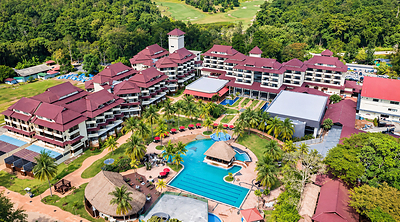
Overview of the upcoming new Renjoy Hotel Desaru
Under the agreement, the existing Sand & Sandals Desaru Beach Resort & Spa will be refreshed and rebranded as Renjoy Hotel Desaru, bringing the brand’s resort hospitality concept to Malaysia’s beachfront market.
By combining Techvance’s local development expertise with Jin Jiang Hotels’ international network, operating capabilities, and brand ecosystem, the partnership aims to enhance the property’s appeal to domestic and international leisure and corporate travellers.
Malaysia’s tourism sector continues to demonstrate encouraging growth, recording 42.2 million international visitor arrivals in 2025, including same-day visitors, representing an 11.2% year-on-year increase[1]. China remained a key source market, contributing approximately 4.7 million visitor arrivals, up 25.1% from 2024.[2]
Johor is well-positioned to benefit from this positive momentum. According to Tourism Johor[3], the state welcomed 10.63 million overnight tourists in 2025, comprising 7.38 million domestic and 3.25 million international tourists. The state’s hospitality sector also expanded, with 34,986 hotel rooms recorded in 2025[4], representing a 9.4% year-on-year increase. Building on this growth, the state government is targeting 12 million tourists[5] under the Visit Johor Year 2026 campaign. This favourable outlook provides a strong foundation for Jin Jiang Hotels (Malaysia) to introduce Renjoy Hotel Desaru, further strengthening its presence in Malaysia’s growing leisure and hospitality market.
Positioned in the upper-midscale segment, RENJOY HOTEL is guided by the belief that a distinctive hospitality experience should be rooted in local culture and reflect the destination’s unique character. Rather than following a standardised design template, each property draws inspiration from its surrounding landscape and cultural identity.
Renjoy Hotel Desaru will bring this philosophy to a beachfront setting. The transformation will gradually focus on refreshed guest rooms, new dining experiences and upgraded resort facilities, while preserving the beachfront character guests already know and love. The hotel will be supported by the operating standards, brand ecosystem, and membership and reservation platform of Jin Jiang Hotels (Malaysia), helping to balance contemporary comfort with local hospitality.
“This project marks an important step in introducing RENJOY HOTEL to Southeast Asia and in broadening our presence in Malaysia’s resort sector,” said Li Xun, the Regional General Manager of Jin Jiang Hotels in Malaysia and Indonesia.“Desaru’s beachfront setting provides a strong foundation for the brand. Together with Techvance, we look forward to bringing RENJOY HOTEL’s design philosophy and service standards to the destination while preserving the local character that makes the property distinctive.”
“Our partnership with Jin Jiang Hotels (Malaysia) marks a new chapter for Sand & Sandals and our hospitality business,” said Dato’ Edward Lau, Managing Director, Techvance Group.“We selected a partner whose international network and operating expertise complement our local knowledge and vision for the property. Through this transformation, we aim to enhance the resort experience, strengthen its market positioning and create long-term value while retaining the hospitality our guests know.”
Malaysia remains an important market for Jin Jiang Hotels, supported by tourism demand, regional connectivity and opportunities for internationally branded hotel developments and conversions. Alongside Renjoy Hotel Desaru, Jin Jiang Hotels (Malaysia) looks forward to welcoming 7 Days Premium Hotel at Tanjung Malim, which is expected to open in the first half of 2027. Together, the two projects reflect the company’s steady growth across different market segments and help lay the groundwork for continued expansion in the region.
ABOUT JIN JIANG HOTELS (MALAYSIA)
Jin Jiang Hotels (Malaysia) is the Malaysian arm of Jin Jiang Hotels, China’s largest hotel group and the world’s second-largest by room count. Listed on the Shanghai Stock Exchange (600754.SH / 900934.SH), Jin Jiang Hotels has established a diversified brand portfolio spanning economy to luxury, with a presence across more than 50 countries and regions. As of 30 June 2026, Jin Jiang Hotels operated 14,404 hotels with 1,393,084 guest rooms.
Jin Jiang Hotels (Malaysia) is committed to expanding Jin Jiang’s diversified hotel brands and operations in Malaysia, working closely with local property owners, investors and business partners to introduce hospitality offerings that cater to domestic and international travellers.
Through strategic partnerships, local market expertise and established hotel operating capabilities, Jin Jiang Hotels (Malaysia) aims to strengthen its market presence, expand its hotel portfolio and deliver hospitality experiences tailored to local needs, supporting the group’s broader growth strategy across Southeast Asia.
Overseas customer base doubles amid triple-digit growth in demand for AI products and services. Tencent previews upcoming Hy4 model releases and expands its enterprise AI portfolio.
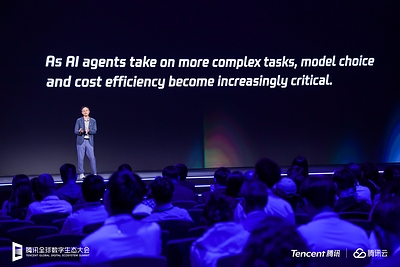
SHENZHEN, China, Oct. 30, 2026 /PRNewswire/ — Tencent today unveiled the enterprise capabilities of its AI office productivity agent, WorkBuddy and previewed the upcoming general release of its Hy4 model and Hy4 Flash at the 2026 Tencent Global Digital Ecosystem Summit. Tencent Cloud’s active overseas customer base has also doubled over the past year, while international demand for its AI products and services has grown by triple digits.
Dowson Tong, Senior Executive Vice President of Tencent and CEO of the Cloud and Smart Industries Group, said, “AI is creating new opportunities for businesses, but its real value comes when it can be applied to everyday operations and adopted at scale. At Tencent Cloud, we’re bringing together our AI models, tools such as WorkBuddy and cloud infrastructure to help more businesses put AI to work, building on their strengths and unlocking new opportunities for growth.”
Since launching in March, WorkBuddy has handled over nine billion task requests, with adoption spanning more than 50 industries and 50% of China’s top 500 enterprises. Its growing ecosystem now includes over 50,000 developers and partners and more than 200,000 skills, bringing AI capabilities into everyday business workflows at scale.
Hy4 Set to Deliver Stronger Performance on Complex, Real-World Tasks
Tencent co-designs models with its AI products and applications to achieve practical AI. Tencent announced that the general release of Hy4 is coming soon, with enhanced performance on long-horizon and real-world productivity tasks, raising reasoning efficiency and introducing visual understanding for the first time.
Tencent is also preparing Hy4 Flash, a cost-effective model that carries over Hy4’s visual understanding and agentic capabilities.
Enterprises can access Hy models alongside leading third-party models through Tencent Cloud TokenHub, a unified platform with a single API. They can choose models based on performance and cost, and manage access, usage, governance and billing in one place.
WorkBuddy Brings AI into Everyday Enterprise Workflows
Tencent is expanding WorkBuddy for international enterprises. The agent connects with widely used messaging applications and enterprise systems, so teams can complete tasks within the tools they already use. Customers can choose the AI model that best fits each task, and built-in security controls support enterprise use.
Tencent has launched CodeBuddy, WorkBuddy, Miora, the Agent Development Platform (ADP), MAGIC AI and Agent Runtime internationally, enabling Chinese and international teams to collaborate on the same AI workbench.
In China, Tencent also introduced Buddy One, a cross-application collaboration system that lets WorkBuddy coordinate tasks across Tencent’s office applications and specialized business agents.
Overseas Customer Base Doubles as Partnerships Deepen
Tencent Cloud now serves customers in more than 150 countries and regions, and deeper partnerships with leading local enterprises increasingly drive its growth. Tencent Cloud’s active overseas customer base has doubled over the past year, while its AI business in the international market has achieved triple-digit growth, driven by strong demand to deploy agentic solutions. In addition, nine out of ten Chinese internet companies expanding globally use Tencent Cloud.
In Southeast Asia, Tencent Cloud helped Indonesian telecoms operator XLSMART migrate more than 1,000 microservices and is exploring broader cloud and AI collaboration with Telkomsel and Indosat. In Thailand, CP AXTRA is working with Tencent Cloud to modernise operations across supply chain management, finance and other functions. In Hong Kong and Macau, where customers include Hung Fook Tong and Fusion Bank, Tencent Cloud’s business has grown steadily for seven consecutive years.
In Japan and South Korea, Tencent Cloud works with companies including Kakao, Com2uS, Gokko and Pokekara. In Europe, payments provider iyzico and Eastern European e-commerce platform eMAG have migrated workloads to Tencent Cloud, with ongoing collaboration in big data and AI. In Brazil, Extreme Digital Solutions (EDS) and Positivo work with Tencent Cloud to deliver PalmAI and other cloud-based solutions to local businesses.
At the summit, Tencent Cloud announced new partnerships with Alsaif Gallery, Hoolive, OmniOps and TruKKer in the Middle East, and with Infosys Solusi Terpadu and Central Retail Digital in other markets. With Central Retail Digital, it is exploring how AI agents can strengthen competitiveness and drive innovation in retail.
Infrastructure and Ecosystem Expand to Meet Global Demand
To meet growing international demand, Tencent Cloud expanded its infrastructure capacity in 2026 across locations including Frankfurt, Osaka, Riyadh, Malaysia, Mexico and Thailand. Its global infrastructure now spans 25 cloud regions and 70 availability zones. Over the next year, Tencent Cloud will expand its footprint further across Asia, the Middle East, Europe and the Americas.
Tencent Cloud supports public, dedicated, private and hybrid environments to meet different deployment needs. With Tencent Cloud Enterprise (TCE), enterprises can bring the full-stack capabilities of public cloud into environments they control, modernising for cloud and AI-native operations while retaining control over sensitive data and critical workloads.
The summit also welcomed the founding cohort of the Tencent Cloud Fellow Program, which brings together technology and industry leaders to exchange expertise and share practical experience in AI adoption. Through continued investment in technology, infrastructure and ecosystem partnerships, Tencent Cloud aims to help enterprises worldwide turn advances in AI into practical business value.
About Tencent Cloud
Tencent Cloud, one of the world’s leading cloud companies, is committed to creating innovative solutions to resolve real-world issues and enabling digital transformation for smart industries. Through our extensive global infrastructure, Tencent Cloud provides businesses across the globe with stable and secure industry-leading cloud products and services, leveraging technological advancements such as cloud computing, Big Data analytics, AI, IoT, and network security. It is our constant mission to meet the needs of industries across the board, including the fields of gaming, media and entertainment, finance, healthcare, property, retail, travel, and transportation.
BEIJING, Oct. 30, 2026 /PRNewswire/ — Sohu.com Limited (NASDAQ: SOHU), a leading Chinese online media platform and game business group, will report its third quarter 2026 unaudited financial results on Monday, November 9, 2026, before U.S. market hours.
Sohu’s management team will host a conference call on the same day at 7:30 a.m. U.S. Eastern Time, November 9, 2026 (8:30 p.m. Beijing/Hong Kong time, November 9, 2026) following the quarterly results announcement.
Conference Call Preregistration
Participants can register for the conference call by clicking here, you will be led to the conference registration website. Upon registration, each participant will receive details for the conference call, including dial-in numbers and a unique access PIN. Please dial in 10 minutes before the call is scheduled to begin.
The live webcast and archive of the conference call will be available on the Investor Relations section of Sohu’s website at https://investors.sohu.com/.
About Sohu
Sohu.com Limited (NASDAQ: SOHU) was established by Dr. Charles Zhang, one of China’s internet pioneers, in the 1990s. Sohu operates one of the leading Chinese online media platforms and also engages in the online game business in the Chinese mainland. Sohu has built one of the most comprehensive matrices of Chinese language web properties, consisting of Sohu News App, Sohu Video App, the mobile portal m.sohu.com, the PC portal www.sohu.com, and the online games platform www.changyou.com/en/.
As a mainstream media platform with social features, Sohu is indispensable to the daily life of millions of Chinese, providing to a vast number of users a network of web properties and community based products, which offer a broad array of content, such as news and information, in the form of text, picture, video, and live broadcasting. Sohu also attracts users to actively engage in content generation and distribution, and actively interact with each other on the platform. Sohu’s online game business is conducted by its subsidiary Changyou, which develops and operates a diverse portfolio of PC and mobile games, such as the well-known Tian Long Ba Bu (“TLBB”) PC and Legacy TLBB Mobile.
Trinasolar to unveil its latest Australia-exclusive Full Black solar module at All Energy Australia 2026, alongside advanced battery storage and robotics solutions.
MELBOURNE, Australia, Oct. 30, 2026 /PRNewswire/ — Black is back at All Energy Australia, with global solar and energy storage leader Trinasolar set to unveil its latest Vertex S+ G3 Full Black solar module (NEG10R.25Z), combining premium aesthetics with next-generation performance for Australian rooftops.
Trinasolar Vertex S+ G3 Full Black solar module, introduced for the Australian market at All Energy Australia 2026
The Australian-exclusive module marks the return of Trinasolar’s popular all-black offering, combining its distinctive design with next-generation TOPCon 3.0 technology, in response to strong demand from Australian homeowners, businesses and installers for high-performance solar that doesn’t compromise on appearance.
Delivering up to 510W of power output and 24.4% efficiency, the Vertex S+ G3 features advanced n-type i-TOPCon Ultra technology, low-voltage design and a sleek full-black finish and lightweight dual-glass construction, backed by a 25-year product warranty.
“Black is back with more power, greater efficiency and next-generation solar technology,” said Edison Zhou, Head of Australia, New Zealand and Pacific Islands at Trinasolar. “The Vertex S+ G3 combines the premium all-black design customers want with the performance and reliability they expect from Trinasolar.”
Beyond the rooftop: Integrated energy solutions
Trinasolar also launches its C&I Integrated Engineering & Solutions, providing end-to-end project support, including project-specific engineering, system optimisation and selective components sourcing. The offering draws on Trinasolar’s decades of technological expertise across solar modules, mounting and tracking systems, and battery energy storage solutions (BESS).
Australia is selected as the launch market, as the expansion of the Small-scale Renewable Energy Scheme (SRES) on 1 October 2026 to qualifying solar installations above 100 kW and up to 1 MW creates new opportunities for commercial and industrial (C&I) solar.
As C&I projects increasingly integrate solar, battery storage and energy management technologies, Trina Solutions provides tailored support through close consultation with a dedicated team, leveraging global engineering experience to address immediate priorities and anticipate future needs.
Businesses and developers can benefit from integrated energy solutions, while EPCs and system integrators can leverage Trinasolar’s technologies and expertise to complement their existing capabilities for end-to-end project execution.
Trinasolar will also showcase its wider solar and energy storage portfolio, reinforcing its position as an integrated energy solutions provider. This includes the 6.25MWh Elementa 3, Trina Storage’s flagship utility-scale battery energy storage system, highlighting itsFrom Cell to Grid approach, combining advanced DC technology with AC-side integration capabilities.
TrinaTracker’s BUILDEX module installation robot will also be on display, highlighting its potential to address the evolving needs of Australia’s utility-scale solar market. Featuring adaptive leveling of up to 17 degrees, AI-powered vision and LiDAR sensing, BUILDEX is well suited to projects with varied terrain and demanding construction requirements. TrinaTracker aims to help Australian solar developers improve construction efficiency, reduce labor-intensive work and enhance on-site safety.
SINGAPORE, Oct. 30, 2026 /PRNewswire/ — Great Place To Work® Singapore held its annual awards gala yesterday evening, recognising 55 organisations across Micro, Small, Medium and Large categories, marking a record number of awardees to date for Best Workplaces in Singapore. The awards ceremony, held at Pan Pacific Singapore, was attended by about 400 leaders, executives, and employees from Great Place To Work Certified™ companies. The event was graced by Mr Foo Cexiang, Minister of State for Manpower and Energy, Trade and Industry.
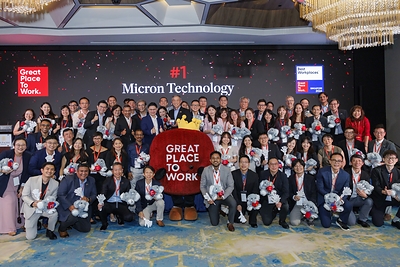
Micron Technology’s team on stage at the Best Workplaces in Singapore 2026 receiving the #1 Best Workplace award in the Large Category
The Best Workplaces in Singapore™ 2026, themed The New “Business As Usual”, recognises companies that are setting new benchmarks for workplace culture, employee experience and trust in today’s evolving work landscape. The list is based on confidential employee feedback gathered through the Great Place To Work® Trust Index™ Survey, which was sent to 94,373 employees across Singapore in 2026.
Supporting caregivers pays off for Singapore’s Best Workplaces
Singapore has become a super-aged society with 21.4% of citizens aged 65 and above. At the same time, Prime Minister Lawrence Wong announced at the 2026 National Day Rally an additional 8 to 12 days of annual childcare leave for parents of children aged 12 and below. Together, these developments bring a growing workplace challenge into focus: if we support caregivers, who bears the cost?
Great Place To Work®‘s 2026 Singapore insights report, The Caregiver Dividend, examines how Singapore’s Best Workplaces support caregivers without sacrificing performance. Caregiving is now a norm in the workforce, with 68% of employees surveyed responsible for the care or financial support of children, elders, or both.
The findings suggest that supporting caregivers is not simply an employee benefit, it can also strengthen business outcomes. Across the six key outcomes measured by the Great Place To Work® Trust Index™ Survey — Agility, Customer Service, Extra Effort, Innovation Culture, Recruitment/Advocacy and Retention Intention — caregivers at Best Workplaces who feel well supported report stronger levels of extra effort, customer service and intention to stay.
That support also acts as a talent signal. 84% of caregivers in Best Workplaces would strongly endorse their employer to family and friends, as compared to 46% in Typical Workplaces. The difference goes beyond offering more support. Best Workplaces build the trust, coordination and manager capability that make support credible, even when caring responsibilities put pressure on a team. In 693 comments from employees in Typical Workplaces, the most common concerns centered on manager empathy, working hours, flexible work and workload pressure.
With eldercare emerging as a pressure point, workplaces will increasingly feel the strain as Singapore’s population ages. Those caring for elders in Typical Workplaces report just 41% on their willingness to provide extra effort, the lowest of any group, against 79% in large Best Workplaces. Employers that provide equal support for eldercare and childcare will be better positioned to meet the evolving needs of Singapore’s workforce, while building a culture where employees can perform at their best across different stages of life.
Singapore-headquartered organisations secure top rankings in Singapore’s Best Workplaces™ List 2026
Singapore-headquartered organisations feature strongly in the Medium category this year. JustCo rises to #1 from #4 in 2025, with Capella Hotels and Resorts (#4), STTGDC (#18) and Singapore Land Group (#19) also ranked.
Hilton (#4) and Capella Hotels and Resorts (#4) were recognised as Legends for being on the list for 5 consecutive years.
Category leaders: Best Workplaces™ in Singapore 2026
Category
#1
#2
#3
Large (>1000 employees)
Micron Technology
DHL
Marriott International
Medium
(100-999 employees)
JustCo
Booking.com
AbbVie
Small
(30-99 employees)
TC Acoustic
Cloudera
ABP Securite
Micro
(10-29 employees)
Cryptoknight Academy
Lancia Consult
Exotic Office Solutions
Please refer to the annexe for the full list of Best Workplaces™ in Singapore 2026.
Ms Evelyn Kwek, Managing Director, Great Place To Work® ASEAN and ANZ said, “Every organisation on this list earned its place by what its own people say, and that is a harder test than any policy audit. Best Workplaces stand apart in the everyday mechanics of management: who covers the work, how a manager checks in, and whether flexibility can be used without suspicion. Singapore’s labor market will only tighten as the population ages. The employers who master those mechanics will keep the experienced people everyone else is trying to hire.”
DHL retains #2 Best Workplace in Singapore in the Large category. Mr Praveen Gregory, CEO, DHL Global Forwarding, Singapore, Malaysia & Indonesia said, “This recognition is particularly meaningful given the uncertainty and challenges businesses have faced over the past year. Through it all, our people have remained resilient, focused and united, demonstrating the strength of our culture across DHL Group. Being ranked #2 on Singapore’s Best Workplaces is a powerful reflection of the people-centric culture we have built together across DHL’s business units, and the trust, support and sense of purpose our employees experience every day. We are proud that our people recognise DHL as a place where they feel valued, connected and empowered to do their best work.”
Annexe: Full Ranking of Best Workplaces™ in Singapore 2026
This photo is used for representational purpose only.
The Ministry of Industry and Commerce has revoked the import licences of six vehicle-importing companies, immediately barring them from importing four-wheel vehicles. A notice issued on 14 October did not give a reason for the decision.
The ministry named GMS Trading, Shacman Truck Laos, Zaha Trust Trading & Service, PA Trading Import-Export Sole Co., Ltd, Sunny Machinery Sole Co., Ltd, and Hongfa Chalernyoun.
The six companies can no longer import vehicles in any four-wheel category. However, those wishing to resume imports can submit the required documents to the ministry’s Foreign Trade Department for approval.
Petrol and Diesel Imports Already Restricted
The licence revocations come as Laos tightens restrictions on petrol- and diesel-powered vehicles. A separate government ban on these imports took effect on 1 June and remains in place until the end of 2026.
The ban aims to encourage the shift to cleaner vehicles, reduce reliance on fossil fuels, and support the development of charging infrastructure. Exemptions apply to several categories, including passenger transport vehicles, machinery, trucks used for specific production and development projects, and specialised professional vehicles.
Previous Import Restrictions
The latest decision follows earlier restrictions on vehicle imports. In July 2024, the ministry stopped accepting new applications for vehicle import-export licences until the end of that year.
A month later, it temporarily suspended imports of light motor vehicles valued at more than USD 50,000, including SUVs, sedans, vans, and pickup trucks. The measure aimed to ease pressure on foreign currency reserves, narrow the trade deficit, curb imports of substandard vehicles, and control inflation.
Ridger Delivers MUX Private AI Deployment to Shum Wong & Co., Solicitors in Hong Kong
SINGAPORE – Media OutReach Newswire – 30 October 2026 – Ridger, an AI infrastructure company, today announced the official delivery of its MUX private AI solution to Shum Wong & Co., Solicitors in Hong Kong. The solution features MIMO, the world’s first AI-native storage system, making Shum Wong & Co., Solicitors the first law firm in Hong Kong Northern Metropolis to deploy it.
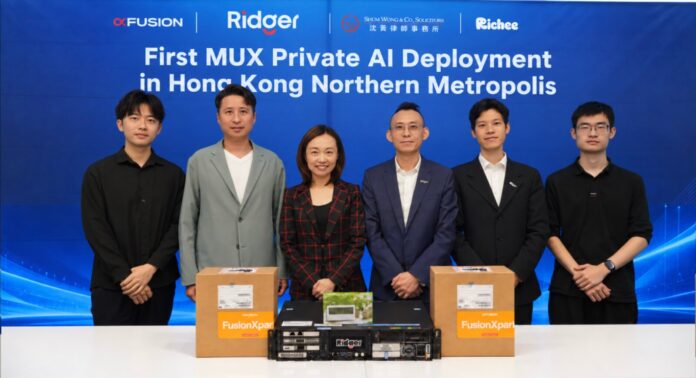
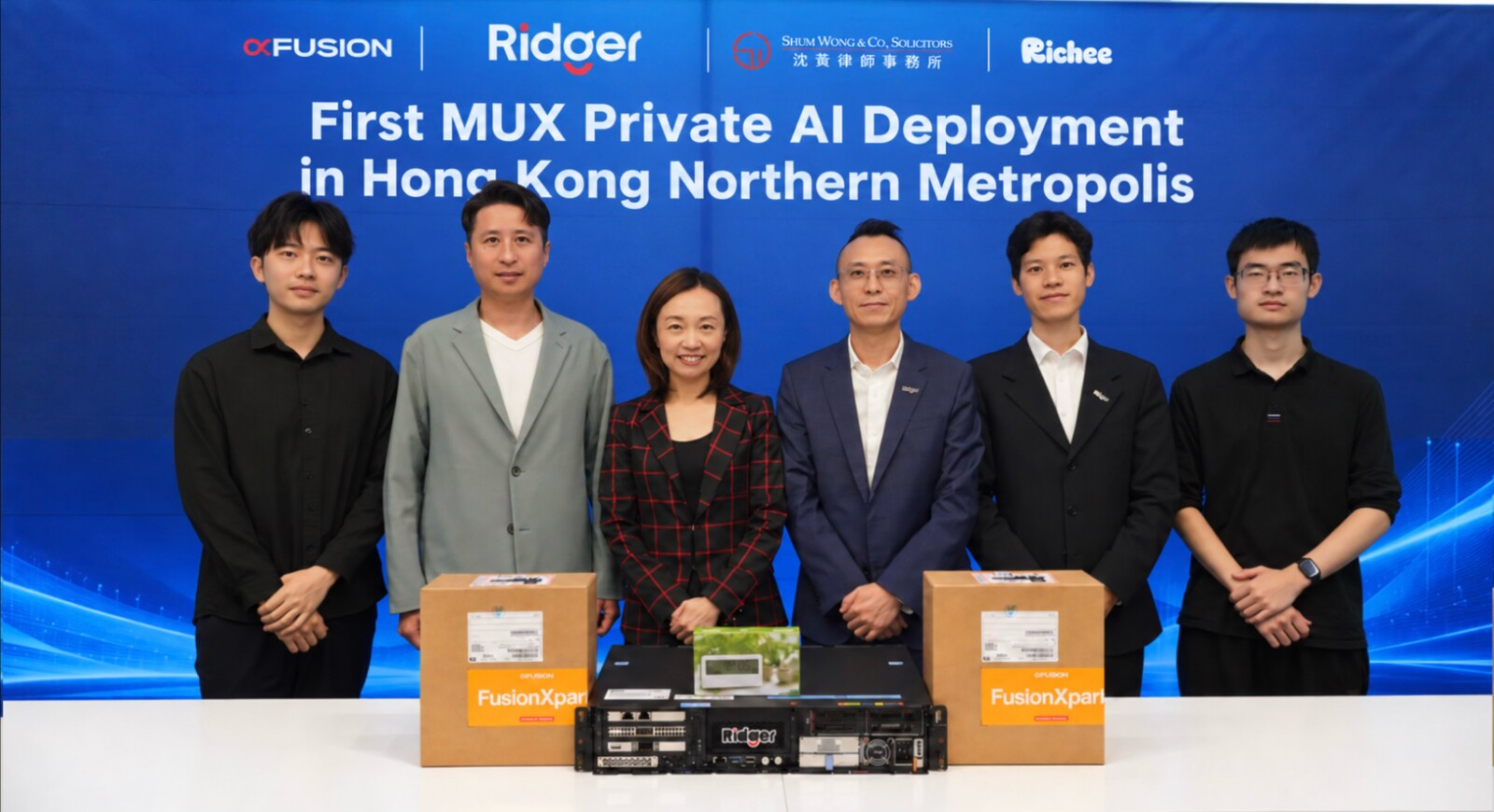
Representatives from Ridger, Shum Wong & Co., Solicitors, xFusion, and Richee at the delivery ceremony for the first MUX private AI deployment in Hong Kong Northern Metropolis.
Representatives from Ridger, Shum Wong & Co., Solicitors, xFusion, and Fadada’s RicheeAI team attended the delivery ceremony. During the event, Ridger presented the firm with the “Global AI Pioneer Law Firm” certificate in recognition of its forward-looking investment in private AI infrastructure.
The solution brings together AI-native storage and compute infrastructure, a dedicated large language model (LLM) environment, and AI applications tailored to legal workflows. Operating entirely within the firm’s own security perimeter, it marks a significant step toward enabling Hong Kong’s legal profession to harness the productivity of generative AI while safeguarding client data and meeting compliance requirements.
About the Deployment
In space-constrained Hong Kong, Ms. Careen H.Y. Wong, Founding Partner of Shum Wong & Co., Solicitors and Vice President of The Law Society of Hong Kong, set aside room in the Firm’s latest office in the Northern Metropolis for a standard equipment rack, ready for on-premise AI. It is more than a space decision: it reflects her view of the future of legal services—that while harnessing AI to improve efficiency, a firm must retain control of its data and technology boundaries, so that sensitive materials are always properly protected.
Under the engagement, Ridger built a privately owned, independently operable AI foundation for Shum Wong & Co., Solicitors, comprising high-performance storage and data infrastructure optimized for AI workloads, together with a dedicated LLM platform over which the client retains full control of model weights and the inference environment. The platform supports use cases including contract review and risk flagging, legal research and case-law retrieval, large-scale document review in due diligence, drafting and multilingual translation of legal documents, and internal Knowledge Base question answering. It also provides role-based access control, tiered permissions, comprehensive audit trails and content provenance to meet enterprise-grade governance requirements.
Called MUX, the private solution lets the firm begin with no barrier and without capital-intensive build-out or a dedicated server room, scaling on demand; it natively supports Hong Kong’s common law system and integrates seamlessly with existing systems such as email, document management and calendar, embedding AI into lawyers’ daily work. MUX can be ordered directly through Ridger’s website (https://ridger.tech), out of the box.
The delivery reflects the collaboration of legal expertise, AI infrastructure, compute platforms and industry applications: Shum Wong & Co., Solicitors defined the requirements for data confidentiality and on-premise deployment from its actual practice; Ridger provided the end-to-end MUX solution and led its design and integration; xFusion supplied the FusionXpark local AI compute platform and technical support; and Fadada provided the Richee Legal AI Agent Platform, leveraging specialized AI agents and skills to support lawyers in their daily work and improve workflow efficiency. Ridger notes that while an AI model determines capability for a moment, AI infrastructure determines long-term competitiveness.
Why Private AI Matters for the Legal Sector
1. Safeguarding client confidentiality and legal professional privilege
Client materials, transaction documents and dispute information handled by law firms are protected by legal professional privilege (LPP) and strict professional duties of confidentiality. Disclosure to third parties—including public cloud services—may be treated as a waiver of privilege, causing it to be lost and the materials to become disclosable in subsequent proceedings. Private deployment keeps storage, processing and inference entirely within the firm’s own environment, with no disclosure to external providers, preserving privilege and confidentiality at source.
2. Embedding data sovereignty and regulatory compliance
The solution aligns with Hong Kong’s Personal Data (Privacy) Ordinance (Cap. 486) and is designed with reference to the Privacy Commissioner’s “Checklist on Guidelines for the Use of Generative AI by Employees” and the “Model Framework on AI: Personal Data Protection,” as well as The Law Society of Hong Kong’s 2024 position paper on the impact of AI on the legal profession and the Manifesto on “Legal Ethical Code of Conduct Regarding the Deployment of AI.” It embeds the principles of lawfulness, transparency, traceability, interpretability, security and appropriate human oversight into a unified AI governance framework.
For a firm handling cross-border work, the same private environment also addresses the requirements of the major jurisdictions: for Mainland China, it aligns with the Personal Information Protection Law, the Data Security Law and data-export mechanisms such as security assessments and standard contracts; for Europe, it maps to the EU General Data Protection Regulation (GDPR) and standard contractual clauses; for the United States, it meets the confidentiality and competence duties under the ABA Model Rules of Professional Conduct and Formal Opinion 512 on generative AI. Because data always remains within the firm’s own perimeter, the firm can confidently meet local data-confidentiality and regulatory expectations wherever its clients are based.
3. Eliminating the hidden risk of “shadow AI”
Where a firm offers no convenient, approved AI tool, individual lawyers may turn to consumer-grade public chatbots for work, creating “shadow AI” that sits outside IT and compliance visibility—unapproved, unlogged and unaudited, with unknown data flows and no clear accountability. MUX channels that demand into a single, visible, auditable controlled environment, giving lawyers the efficiency they want while bringing every use under the institution’s governance and oversight.
4. Keeping institutional knowledge within the firm
The case law, templates and practical know-how accumulated by a firm are core competitive assets. A private platform continuously refined on the firm’s own corpus keeps these assets within the institution and compounds their value over time, rather than depositing them with an external vendor.
5. Ensuring control and business continuity
Private deployment insulates the firm from external API changes, model versioning, service outages or shifts in vendor strategy, giving it full control over capabilities, upgrade timing, cost and availability — a foundation for durable, long-term AI adoption.
Executive Quotes
“For industries built on trust and confidentiality, such as the law, the value of AI should never come at the price of data sovereignty,” said Ray Hu, General Manager Asia-Pacific Region of Ridger. “Private deployment lets a firm turn generative AI into auditable, governable and sustainable productivity without crossing confidentiality lines. We are proud to set this benchmark with Shum Wong & Co., Solicitors”
Ray Hu, General Manager Asia-Pacific Region, Ridger
“In Hong Kong, office space is scarce and precious, but data sovereignty is worth setting aside a place for. Building our own AI infrastructure lets us embrace AI while always safeguarding our clients’ trust and the boundaries of our profession.”
The issuer is solely responsible for the content of this announcement.
Ridger Company Limited
Ridger is a technology company focused on data and storage infrastructure for the AI era. The company provides private, high-performance AI infrastructure and solutions that enable enterprises to deploy and run large models and AI applications within their own security perimeter. Through its proprietary storage and data management technologies, Ridger helps clients safeguard data sovereignty, security and compliance while fully realizing the business value of artificial intelligence.







 https://ridger.tech
 https://www.linkedin.com/company/ridger/

