Home Blog Page 774

Advancing citizen-first public services through AI and digital transformation

BARCELONA, Spain, March 25, 2026 /PRNewswire/ — A news report from SmartCitiesWorld

With governments worldwide turning to AI-driven digital transformation, Huawei took centre stage to explore how integrated platforms, data intelligence and “chat‑to‑process” innovations are reshaping service delivery, boosting efficiency and raising satisfaction across the public sector.

Governments across the world are under growing pressure to deliver faster, more accessible and more transparent services for citizens. Driven by ageing populations, rising citizen expectations and budget constraints, administrations are having to rethink how public services are designed and delivered – and AI-enabled digital solutions are helping their cause.

Together, these challenges, plus their potential solutions, were a central focus at the Global AI+ Public Service Summit, held by Huawei Government Public Services Digitalization BU during Mobile World Congress Barcelona 2026 (MWC). During the Summit, public sector leaders, technology experts and policymakers gathered to discuss how digitalization and AI can transform government services and improve the daily lives of citizens.

As Saeed Xia, President of Huawei Global Public Service BU, explained during the Summit at MWC, the scale of the challenge is global. “Governments worldwide face fragmented portals, limited online services, long processing times, and poor experiences due to data silos, lack of integration, and weak digital-intelligent capabilities,” he said.
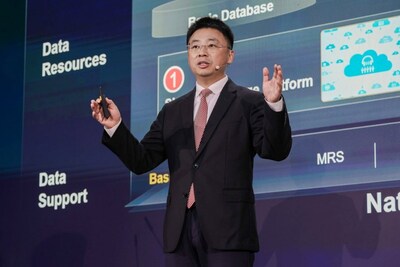
Huawei's Saeed Xia presents onstage at MWC 2026
Huawei’s Saeed Xia presents onstage at MWC 2026

These structural barriers have real consequences for citizens, such as long waiting times, repetitive paperwork and complex administrative processes. These issues can undermine trust and reduce satisfaction with public services, which is why addressing these issues has become a central pillar of national digital transformation strategies.

Digital government as a strategic priority

Digital government programmes are designed not only to improve service delivery but also to strengthen governance, reduce costs and increase transparency. 

According to Xia, these efforts are about more than simply adopting new technologies: “Digital transformation of government is a global imperative, with three core goals – boosting international influence and economic growth, modernising governance to cut costs and build trust, and improving public services to raise citizen satisfaction.” 

Citizens increasingly expect convenient, personalised public services available on mobile devices at any time, moving away from traditional, bureaucratic approaches. To achieve this, governments must move beyond isolated digital projects and instead build integrated platforms that connect departments, data and services. 

A blueprint for AI-driven public services

During the Summit, Huawei unveiled its Global Public Service Solution, designed to support governments in building intelligent, citizen-centred service systems. 

The solution provides a blueprint for how countries can modernise public service delivery using digital infrastructure, data platforms and AI-powered applications. At its core is an architecture built on the idea of “1 digital foundation + 1 intelligent platform + N industry applications”, with the goal to create a service environment that is seamless, efficient and accessible across multiple channels. 

An illustration of the architecture of Huawei's Global Public Service Solution
An illustration of the architecture of Huawei’s Global Public Service Solution

Xia described the vision as one where public services become truly citizen-first: “The ideal public service is people-oriented, efficient and transparent. It provides 24/7 one-stop services across channels, with online-offline integration, paperless and single-visit completion,” he said. 

This model aims to simplify the citizen experience by enabling users to access multiple services through unified portals, mobile apps, kiosks or service centres. Instead of navigating multiple agencies and forms, citizens can complete complex processes through a single digital interface.

Huawei’s approach also focuses heavily on data integration and AI capabilities. The architecture includes a service platform for online service delivery, a data platform for secure data management and governance, and an AI platform capable of supporting applications such as natural language processing, digital assistants and automated approvals.

AI and the emergence of “chat-to-process” services

Governments are increasingly using AI-powered chatbots, voice assistants and automated verification tools to speed up routine interactions and improve service delivery.

Huawei envisions “chat-to-process” services, enabling citizens to complete administrative tasks simply by interacting with an AI interface. This streamlines government interactions – citizens can state their needs in natural language instead of dealing with forms or websites. Public administrations also benefit from reduced manual work and faster approvals – with Huawei estimating this can raise citizen satisfaction and management efficiency by about 30 per cent.

One example comes from Shenzhen, where the government’s iShenzhen app includes an intelligent AI assistant which supports enquiries and queries related to more than 50 topics across 4,000 common public services for citizens – including childbirth and adoption, social security and human resources, work safety, establishment and alteration of enterprises, and more. 
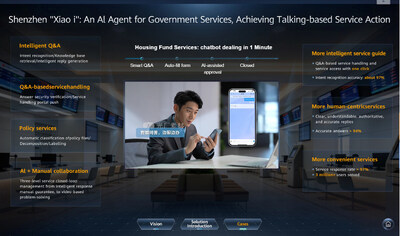
A look at how Shenzhen's AI chatbot supports citizen outcomes
A look at how Shenzhen’s AI chatbot supports citizen outcomes

Known as Shenxiao i, the assistant features capabilities for intelligent Q&A, chatting and handling, and intelligent policy services. Its intention recognition rate – its ability to understand the purpose or goal of an enquiry – is around 97 per cent, with a response rate of more than 97 per cent, and accuracy of response over 94 per cent. Altogether, this drastically reduces the time it takes for citizens to find answers to their queries. Previously, for example, citizens needing to know which documents they’d need to set up a newborn child’s medical insurance would have needed to call a hotline. Now, the answer can be obtained in seconds through the iShenzhen app.

Shenzhen Longgang as a global demonstration site

To illustrate how AI-powered public services can work in practice, Huawei and the Shenzhen Longgang Government Service Center have jointly launched the Shenzhen Longgang AI+ Public Service Global Demonstration Site.

The initiative showcases how digital platforms and AI technologies can transform service delivery across multiple levels of government. The demo site integrates services across district, street, community and campus levels to illustrate what a seamless administrative experience is like, combining intelligent service systems with integrated approval processes.

The project is designed to show how digital transformation can reduce waiting times and simplify citizen interactions. For example, the system’s intelligent customer service platform uses large language models to integrate hotlines, service counters and self-service resources. Integrating these allows citizens to access support through their preferred channels while ensuring consistent responses.

The platform has achieved a hotline connectivity rate of 98 per cent to date, while AI-powered verification systems have pushed approval accuracy to more than 95 per cent. These results illustrate the potential for AI to transform everyday government services, from licensing and permits to social services and administrative requests.

Toward citizen-first government services

Through discussion at Global AI+ Public Service Summit at MWC, and Huawei’s latest releases and announcements, it’s clear that successful public service reform must start with the needs of citizens.

Technology can enable new capabilities, but its real value lies in improving everyday interactions between citizens and government institutions. During the Summit, Xia emphasised that the ultimate objective of digital government is to make public services simpler, faster and more accessible. Huawei’s approach focuses on creating what it describes as “anytime, one-stop, proactive public service” systems – platforms that allow citizens to complete services efficiently while enabling governments to operate more intelligently.

For governments facing growing demands and limited resources, this approach can play a crucial role in maintaining trust and improving public service outcomes. At the same time, the challenge will be ensuring that innovation remains aligned with public needs.

It is beyond doubt that AI and digital platforms are playing increasingly important roles in shaping the future of government, but the guiding principle behind their adoption must remain clear. As Xia concluded during the Summit, with a reminder drawn from democratic tradition, the purpose of government services ultimately remains unchanged – to serve the people. 

Arrow Global launches Arrow Global Insurance

Arrow unlocks a new institutional investment opportunity by extending its private credit and real assets platform into specialty insurance

LONDON, March 25, 2026 /PRNewswire/ — Arrow Global Group (“Arrow”), a leading pan-European investment manager specialising in private credit and real estate, today announces the launch of Arrow Global Insurance (“AGI”), a new business vertical designed to capture institutional investment opportunities across the insurance value chain.

Zach Lewy, Chief Executive Officer and Chief Investment Officer of Arrow Global Group

AGI has been established as a strategic extension of Arrow’s existing investment platform, enabling the Group to deploy its underwriting, structuring and capital management expertise into the insurance market. The platform is focused exclusively on specialist, non-catastrophe insurance lines where outcomes depend on deep analysis, bespoke risk assessment and disciplined capital allocation. It does not operate in climate, life or consumer insurance markets.

AGI brings together origination, underwriting and investment within a single, integrated structure. By controlling key elements of the insurance value chain, including underwriting and risk-bearing capital at scale, Arrow is able to capture multiple sources of return, including underwriting margin, fee income and investment returns on insurance premiums, creating a scalable, capital-efficient opportunity set for its investors, supported by substantial institutional capital from inception.

AGI focuses on property, casualty and specialty insurance, initially including after-the-event insurance, contingent and transactional risks, credit risks and surety products. These lines support complex legal and financial activities that are often underserved by traditional insurers and are increasingly relevant to corporate and private capital participants seeking greater certainty and more effective risk transfer.

As part of the platform, in 2024 Arrow founded a new managing general agent, Toremis Specialty (“Toremis”), part of Legatus Group, to underwrite identified legal and transactional risks. Toremis’ insurance capacity is supported by a reinsurer, Halldora Re Ltd (“Halldora Re”), founded in 2025 by Arrow and capitalised by institutional investors and funds managed by Arrow. Halldora Re has been assigned a Financial Strength Rating of A- (Excellent) and a Long-Term Issuer Credit Rating of a- (Excellent) by AM Best, with a stable outlook. AM Best cited Halldora Re’s very strong balance sheet strength, conservative investment strategy, limited business risk profile and appropriate enterprise risk management framework, providing independent validation of the platform’s robustness.

AGI actively seeks out products in fragmented markets characterised by bespoke risk analysis, limited competition and constrained underwriting capacity. Arrow’s long-standing experience in complex credit, litigation-related assets and real estate allows it to originate and underwrite these risks and structure solutions with agility and flexibility often beyond that of traditional insurers. This local specialist expertise, applied in complex and fragmented markets, underpins a strategy designed to generate attractive margins and returns on equity. For Arrow’s investors, this creates access to differentiated return streams that are largely uncorrelated with traditional credit and equity markets.

Zach Lewy, Chief Executive Officer and Chief Investment Officer of Arrow Global Group, said:

“Arrow Global Insurance provides opportunities for our investors to access the global specialty insurance market by utilising Arrow’s expertise. This is a fragmented market with growing demand for specialist risk solutions, and we believe that controlling the value chain allows us to generate attractive returns through a highly aligned and efficient operating network.”

Dan Adams, Managing Director and Head of Insurance at Arrow Global Group, added:

“The opportunity in specialty insurance lies in embracing complexity. We have built the AGI model to do this at scale, combining technical expertise, underwriting agility and institutional capital. The AM Best rating for Halldora Re validates the strength of the platform and supports our ability to grow responsibly alongside our investors.”

Arrow Global Group

Founded in 2005, Arrow Global is a leading European alternative asset manager with a vertically integrated investment model across private credit and real estate. Arrow owns 25 best-in-class asset management and servicing platforms, enhancing operational efficiency and maximising asset value across market cycles.

With key European regulatory licences, Arrow manages approximately €125 billion in third-party AUM, with a track record of over €14 billion invested over the past 20 years. The company operates across Western Europe, with headquarters in London and offices in major financial centres including Paris, Milan, Madrid, Berlin, Amsterdam, Dublin, Luxembourg, and Lisbon.

For more information, visit www.arrowglobal.net

Dan Adams, Managing Director and Head of Insurance at Arrow Global Group


DeepL Voice preferred by 96% of professional linguists, outpacing leading competitors in spoken translation speed and accuracy

New study reveals DeepL Voice delivers higher-quality translations and more stable live captions in meetings across 14 language combinations, compared to Google Meet, Microsoft Teams and Zoom

COLOGNE, Germany, March 25, 2026 /PRNewswire/ — DeepL, a global AI product and research company, today reveals results from an independent benchmark study evaluating the quality and stability of real-time AI-translation and captions for meetings across widely used collaboration platforms; Google Meet, Microsoft Teams and Zoom.

As real-time multilingual meetings become routine for global teams, enterprises increasingly rely on AI voice technology to support collaboration, customer negotiations and cross-border decision-making.

Commissioned by DeepL and carried out independently by Slator – the leading source of research and market intelligence for translation, localization, interpreting, and language AI – the study finds that DeepL Voice achieves the highest scores for both translation quality and caption stability, outperforming built-in caption translation tools available in Google Meet, Microsoft Teams and Zoom.

In high-stakes settings – from sales discussions and supplier negotiations to internal strategy meetings – even minor translation errors or unstable captions can significantly slow momentum, create confusion or undermine critical business decisions. As global business accelerates, AI-driven translation is no longer a convenience feature, it has become essential infrastructure. The strength of that infrastructure depends on two critical factors: the quality of AI translation and the stability of live captions.

Key findings include:

  • DeepL Voice leads translation quality in human evaluation, achieving a 96.4/100 quality score for DeepL Voice for Zoom and 96.3/100 for DeepL Voice for Teams, compared with 87–89 across other evaluated platforms.
  • DeepL Voice significantly reduces high-severity errors, lowering the rate of critical or major translation errors by 76% on average versus other platforms.
  • DeepL Voice produces fully passing translated segments 79% of the time, compared with 42% across competing tools.
  • DeepL Voice improves caption stability, earning stability scores of 88.6/100 (DeepL Voice for Zoom) and 85.8/100 (DeepL Voice for Teams) in Slator’s automated frame-level analysis.
  • DeepL Voice reduces caption churn (on-screen rewrites/flicker) by 37.6% on average versus Microsoft Teams and 54.7% on average versus Zoom.
  • Across all blind evaluations, DeepL Voice is preferred by 96% of professional linguists benchmarking the solutions.

“Language AI is becoming the core infrastructure for how global businesses operate. In that context, accuracy and stability aren’t features, they’re requirements,” said Jarek Kutylowski, CEO of DeepL. “This independent benchmark shows DeepL Voice delivering on both and at a level that sets a new standard for real-time communication. When professional linguists overwhelmingly prefer one solution, it’s a clear signal of where the market is heading.”

“We looked beyond basic accuracy scores and focused on the ‘human’ side of AI captioning: readability, fluency, and stability. We didn’t just want to know if the words were right at the end; we wanted to see how they behaved while a person was trying to read them. That meant evaluating both linguistic quality and how captions behave on screen and that’s where we can clearly see a new benchmark being set by DeepL,” said Alex Edwards, Head of Consulting, Slator.

Why stability matters as much as accuracy
Slator’s report finds that even when translations are broadly accurate, frequent caption rewrites can interrupt comprehension and reduce usability in real-world meetings. To reflect how captions appear to end users, Slator measured stability using frame-by-frame analysis of rendered captions on screen, capturing flicker, oscillation and rewriting behavior over time.

Methodology
Slator commissioned 28 professional linguists to conduct a blind evaluation of AI-translated captions across 14 language combinations (7 into English, 7 from English). The report benchmarks standard, out-of-the-box caption translation settings in Google Meet, Microsoft Teams and Zoom, and compares them with DeepL Voice for Microsoft Teams and DeepL Voice for Zoom, including product features available to end users (such as glossaries and recognition of spoken terms). Slator states that its conclusions are independent and that it retained full editorial control over methodology and findings.

Looking ahead to April
These findings are released ahead of DeepL’s global spring launch on 16 April 2026, when the company will unveil major updates to DeepL Voice alongside expanded capabilities in translation automation and cross-platform collaboration.

About DeepL
DeepL is a global AI company building the language infrastructure that powers global business. More than 200,000 business teams and millions of individuals use DeepL’s Language AI platform to communicate globally, collaborate and operate across languages in real time. By combining breakthrough AI models with enterprise-grade security and privacy, DeepL enables organizations to work seamlessly across markets and cultures. Founded in 2017 by CEO Jarek Kutylowski, DeepL now has more than 1,000 employees and is backed by leading investors including Benchmark, IVP and Index Ventures. Learn more at www.deepl.com.

About Slator
Slator is the leading source of research and market intelligence for translation, localization, interpreting, and language AI. Slator’s Consulting practice is a trusted partner to enterprise buyers, language technology platforms, and language solutions integrators looking for independent industry analysis.

The full report is available here.

Logo – https://laotiantimes.com/wp-content/uploads/2026/03/deepl_logo.jpg 

Blockchain.com Opens Malta Office to Anchor European Operations

The new office strengthens Blockchain.com’s presence in Malta as the company scales regulated retail and institutional services across Europe

VALLETTA, Malta, March 25, 2026 /PRNewswire/ — Blockchain.com announced today the official opening of its Malta office, marking the next step in the company’s European expansion and its long-term commitment to building regulated digital asset infrastructure across the region.

The new office will serve as a strategic hub for Blockchain.com’s operations across Europe following the company securing its Markets in Crypto Assets (MiCA) license from the Malta Financial Services Authority (MFSA). The license enables Blockchain.com to passport regulated crypto brokerage services across the European Economic Area under the EU’s first comprehensive digital asset regulatory framework.

“We didn’t pick Malta by accident. Malta has taken a thoughtful and forward-looking approach to digital asset regulation,” said Nic Cary, Co-founder and Vice Chairman at Blockchain.com. “At Blockchain.com, we’ve spent over a decade building a brand of trust and integrity, and we’re bringing that same professional-grade standard to users across Europe. This office represents our commitment to building trusted, compliant infrastructure for the crypto market.”

Blockchain.com’s Malta office will support a range of functions including regulatory engagement, operational development, and retail client services across the European market. The company will soon launch its institutional business, partnering with some of the region’s leading licensed firms.

Blockchain.com operates in more than 70 jurisdictions worldwide. Since 2011, Blockchain.com has processed over $1.2 trillion in crypto transactions, created more than 90 million wallets, and verified over 40 million users. As a global crypto brokerage, Blockchain.com provides individuals and institutions with secure access to digital assets while maintaining a strong commitment to compliance, transparency and security.

About Blockchain.com
Blockchain.com is connecting the world to the future of finance. The global leader in crypto services helping millions across the globe access cryptocurrency. Since its inception in 2011, Blockchain.com has earned the trust of more than 90 million wallets and over 40 million verified users, and has facilitated over $1.2 trillion in crypto transactions. Visit Blockchain.com for more information.

Media Contact: press@blockchain.com

HyperLeap Debuts in Europe at LogiMAT 2026, Accelerating Global Expansion

SUZHOU, China and STUTTGART, Germany, March 25, 2026 /PRNewswire/ — HyperLeap, a global innovator in intelligent logistics automation, made its European debut at LogiMAT 2026 in Stuttgart, Germany, marking a key milestone in HyperLeap’s global expansion strategy and reinforcing its commitment to delivering advanced robotic solutions worldwide.

HyperLeap @ LogiMAT2026,Hall 1, booth 1GA220

Europe’s logistics sector is facing increasing pressure to maximize space utilization and sorting capacity. Traditional systems such as large cross-belt sorters often require significant floor space and high upfront investment. HyperLeap’s new AI-driven, modular, and robotic sorting solution addresses these challenges with enhanced flexibility, strong scalability, and faster ROI.

“Europe is a pivotal market for the next phase of our global growth,” said Vincent Chen, General Manager of HyperLeap. “By expanding internationally, we aim to bring HyperLeap’s AI-driven robotics solutions to worldwide, helping partners improve efficiency while addressing key challenges such as limited space, labor shortages, and growing SKU complexity.”

Driving Intelligent Automation for Future Logistics

HyperSort solution integrates several core components, including the HyperPick Arm, HyperBot /AGV, and HyperWall putwall. As a unified system capable of running multiple operations simultaneously — such as order sorting, parcel sorting, and returns sorting — it supports a wide range of environments, including e-commerce fulfillment centers, B2B retail warehouses, and express distribution hubs. Designed for rapid deployment and reliable performance, the system simplifies sorting workflows while maximum sorting efficiency.

HyperLeap also adopts an industry-focused approach, designing solutions tailored to the operational needs of different sectors. By deploying only the capabilities required for each business scenario, the company aims to improve efficiency while reducing unnecessary complexity.

Showcasing Innovation at Global Logistics Events

HyperLeap is currently exhibiting at LogiMAT 2026 (Booth 1GA20), and will also participate in upcoming logistics exhibitions in 2026:

KoreaMAT — South Korea | Booth 10F113, Hall 9 | March 31–April 3
Kansai LogiX — Japan | Booth A5-32, Hall 5 | April 8–10

Visitors can meet HyperLeap experts and experience live demonstrations on site.

About HyperLeap

HyperLeap develops AI-driven robotic solutions designed to enable flexible, efficient, and safe logistics operations. Through partnerships with global collaborators and local distributors, the company is building a worldwide network while providing localized sales and technical support. This approach enables HyperLeap to serve customers globally while expanding regional partnerships and project deployments.

Website: www.hyperleap.com.cn/en
LinkedIn: www.linkedin.com/company/suzhouhyperleaptechnology
Email: sales@hyperleap.com.cn, pr@hyperleap.com.cn 

SenseTime Group Reports Record High Revenue of Over RMB 5 billion in 2025; Second Half EBITDA Turns Positive


HONG KONG SAR – Media OutReach Newswire – 25 March 2026 – SenseTime (the “Company”; Stock Code: 0020) announced its annual results for 2025. For the full year, total revenue rose 33% year-on-year to more than RMB 5 billion, reaching a new record high and marking the fastest growth in three years. Net loss narrowed by 58.6% year-on-year, while adjusted net loss declined for a fourth consecutive half‑year period, with the pace of year‑on‑year reduction accelerating. EBITDA for the second half of 2025 reached RMB 380 million, turning positive for the first time since listing.

The Company has successfully transitioned from a technological investment phase into a period of sustainable and accelerated growth. During the reporting period, its endogenous growth momentum continued to strengthen, alongside improved capital efficiency and resilient cash flow generation. Trade receivables collection rose to a record RMB 4.87 billion. Operating cash flow recorded a positive net inflow in the second half of 2025, marking the first such achievement since listing.

Looking ahead, the Company plans to launch a new foundational model based on its second-generation NEO architecture in the second quarter of this year. The model is expected to deliver a further step in efficiency and cost-effectiveness, enabling the broad deployment of agentic AI applications.

Dr. Xu Li, Chairman of the Board and Chief Executive Officer of SenseTime, said: “We firmly believe that the deep integration of language and vision represents the most effective path to pushing the boundaries of artificial intelligence. Built on our innovative NEO architecture, we have achieved unified understanding and generation, while exploring a new ‘Scaling Law’ for multimodal intelligence. These technological breakthroughs, together with the deep integration of agentic AI, will unlock new application possibilities and enable a new generation of vertical use cases. While continuing to drive innovation in core technologies, SenseTime has delivered dual growth in both revenue and EBITDA, demonstrating strong growth resilience and operational efficiency across the industry, and is steadily advancing towards high-quality development.”

Continuously rolling out native multimodal large models, “efficiency enhancement + cost reduction” drives accelerated commercial growth

In 2025, SenseTime continued to invest in cutting-edge R&D, delivering breakthrough progress across large-model architecture innovation, training paradigms, inference efficiency, and spatial understanding, while maintaining its leading position in China.

The performance of the SenseNova multimodal large model continues to improve steadily, maintaining long-term leadership across multiple authoritative benchmarks. The Company has successively released and open-sourced the SenseNova-SI Spatial Intelligence Model. In a comprehensive evaluation incorporating several internationally recognized spatial intelligence benchmarks, SenseNova-SI delivered outstanding results, ranking first globally among peer models. In parallel, the open-source Kairos-SenseNova became the first embodied native world model to achieve integrated multimodal understanding, generation, and prediction. In December 2025, SenseTime also unveiled and open-sourced NEO, an fundamentally new native multimodal model architecture. NEO achieves state-of-the-art performance comparable to industry peers of a similar scale while requiring only one-tenth of the training data and computing power. Together, these breakthroughs redefined model training paradigms and inference efficiency, marking SenseTime’s entry into a new phase in its pursuit of deep multimodal integration

Leveraging the leading capabilities of its SenseNova multimodal large model, SenseTime has established a robust, scalable and replicable B2B business model. By applying a comprehensive framework that assesses task complexity and fault tolerance, the Company is able to unlock the closed-loop value of AI agents across strategic use cases, including office productivity, finance, marketing, and content generation. Its customer base spans a broad range of industries, encompassing automotive, smart devices, consumer goods, Internet services, embodied intelligence, financial services, education and healthcare.

Meanwhile, SenseTime has continued to make progress in developing a new generation of AI-native consumer applications. The Kapi product series has successfully built a user base numbering in the tens of millions, underscoring the strong growth potential of AI-native applications and demonstrating the Company’s ability to embed advanced AI technologies into everyday life.

SenseCore: Deeper coordination between computing infrastructure and model R&D unlocks international commercial potential

As the core technological pillar of its “Infrastructure – Model – Application” strategy, SenseCore achieved a significant transition in 2025, converting technological strengths to a fully developed industrial closed loop. During the year, it supported nearly one million model R&D tasks, effectively unlocking the full chain from underlying hardware to top-level applications, and from software stacks to model adaptation. Notably, the LightX2V World Model Inference System delivered breakthrough performance on domestic hardware, outperforming leading overseas chips.

SenseCore accelerated collaboration across China’s domestic technology ecosystem, positioning itself as a key chain master within industry. It partnered with more than a dozen chip makers, including Huawei Ascend, Hygon and Cambricon, to launch the SenseCore Computing Power Mall. SenseCore has since become a core partner of leading research institutes, Internet giants, pan-entertainment groups, embodied-intelligence robotics firms and large-model unicorns, and has also launched China’s first overseas Chinese-led computing cluster in Saudi Arabia.

As of the release of this result announcement, the total operational computing scale of SenseCore had reached 40,400 PetaFLOPS (FP16).

CV 2.0 records first‑ever net profit and positive cash flow; “X” Businesses gains strong recognition from external investors

SenseTime’s Computer Vision (CV; Visual AI) business is transitioning from a technology investment phase into a period of large-scale commercial returns. During the reporting period, CV 2.0 achieved profitability for the first time and generated positive cash flow for a second consecutive year, emerging as a key driver of the Company’s revenue growth and cash-flow improvement. SenseTime has maintained the leading position in China’s CV market for nine consecutive years. Internationally, clients across Southeast Asia, Northeast Asia and the Middle East continued to repurchase CV products and services, while interest increased from clients in South America, Europe and other regions, forming a replicable, scalable “Chinnovation” model for global expansion.

In 2025, SenseTime firmly advanced its “1+X” strategy, establishing a highly efficient collaborative system in which the core platform (the Company) provides foundational capabilities, while ecosystem partners compete and scale within targeted verticals. This marked a strategic shift from standalone business expansion towards the multiplication of ecosystem-wide value. Ecosystem enterprises incubated by SenseTime made steady progress in financing during the year, attracting strong interest from external investors including Internet giants, leading venture capital firms and industrial funds. Notably, the edge AI chip and intelligent driving business successfully completed financing rounds and were subsequently spun off to operate independently.

Looking ahead to 2026, the Company believes it is well positioned to compete in the critical phase of the global AI industry. It will continue to deepen its native multimodal architecture, reinforcing its global leadership in the integration of native multimodal large models and spatial intelligence. Meanwhile, the Company plans to capitalize on opportunities in the merging agentic AI market, targeting rapid growth in both user scale and commercial value. The Company will also accelerate the adaptation of domestic Chinese chips, further reduce large-model inference costs, and enhance product competitiveness through superior cost-performance. Within its Visual AI business, it will leverage both domestic and international growth engines to drive large-scale expansion and establish a global benchmark for intelligent industries. In parallel, the Company will continue to advance its “1+X” strategy to capture incremental returns arising from the accelerating intelligent transformation of vertical industries.

Hashtag: #SenseTimeGroup

The issuer is solely responsible for the content of this announcement.

About SenseTime

SenseTime is a leading AI software company focused on creating a better AI-empowered future through innovation. We are committed to advancing the state of the art in AI research, developing scalable and affordable AI software platforms that benefit businesses, people and society as a whole, while attracting and nurturing top talents to shape the future together.

With our roots in the academic world, we invest in our original and cutting-edge research that allows us to offer and continuously improve industry-leading AI capabilities in universal multimodal and multi-task models, covering key fields across perception intelligence, natural language processing, decision intelligence, AI-enabled content generation, as well as key capabilities in AI chips, sensors and computing infrastructure.

SenseTime’s business spans generative AI, vision AI, and innovative businesses. Through high-efficiency, low-cost, and scalable AI innovation and deployment, we complete the commercial value loop and lead the industrialization of artificial intelligence. Built with strategic foresight, our next-generation AI infrastructure, SenseCore, integrates computing power, algorithms, and platforms. Based on this foundation, SenseTime’s ‘SenseNova’ large model and R&D system can enable general AI tasks at a low cost. In addition, SenseTime continues to lead the vision AI market. Leveraging years of accumulated expertise in vision AI and empowered by cutting-edge multimodal large models, our SenseFoundry platform provides more stable and efficient vision AI support across diverse industries globally.

SenseTime advocates for a philosophy of “balanced development” in AI ethics and actively participates in the formulation of industry, national, and international standards related to data security, privacy protection, AI ethics, and sustainable AI. It has established close collaboration with multiple institutions in the Chinese Mainland and multilateral organizations to promote the sustainable and ethical development of AI. SenseTime’s Code of Ethics for Sustainable AI Development was included in the United Nations’ “Resource Guide on AI Strategies”, and its related research and practices have been repeatedly recognized by international partners.

SenseTime Group Inc. has successfully listed on the Main Board of the Stock Exchange of Hong Kong Limited (HKEX). We have offices in markets including Hong Kong, Shanghai, Beijing, Shenzhen, Chengdu, Hangzhou, Xi’an, Singapore, Bangkok, Kuala Lumpur, Riyadh, Abu Dhabi, Dubai, and Seoul, among others, as well as a presence in Germany, Thailand, Indonesia and the Philippines. For more information, please visit SenseTime’s or , , and pages.

Alliance Laundry Systems Introduces Stax-X Laundry Solution in Laos

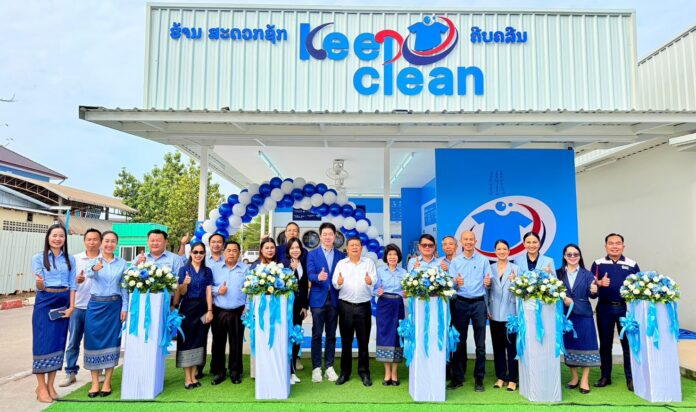
An opening of small company namely Keep Clean using Starx-X washer-dryer solution offering them a space-efficient and improving usability and maintenance access. (Photo by ERA Communications)

Alliance Laundry Systems (ALS) has introduced its Stax-X stacked washer-dryer solution in Laos, Myanmar, and Cambodia, targeting small and medium-sized enterprises (SMEs) and first-time investors in the self-service laundry sector.

Designed for compact retail spaces, Stax-X combines commercial-grade washing and drying functions in a vertical configuration. The system incorporates brands including Speed Queen, Huebsch, IPSO, and Primus, and is equipped with a management platform that supports programmable cycles, pricing flexibility, and operational controls.

The launch comes amid growing interest in small business and secondary income opportunities across Southeast Asia. SMEs account for a significant share of businesses in the region and play a key role in employment and economic activity, according to regional development data.

Eddie Tay, Senior Sales Director in Asia Pacific at Alliance Laundry Systems, said the product is designed to support entrepreneurs seeking efficient and scalable business models. He noted that compact solutions are increasingly important as operators look to maximise limited retail space.

Self-service laundry businesses have gained traction in recent years due to relatively low staffing requirements and steady demand. The Stax-X system is positioned to support this segment by offering a space-efficient solution with features aimed at improving usability and maintenance access.

The machines are available in 13kg and 23kg capacity variants and are designed for durability and reduced downtime. Features include a compact design, simplified access for servicing, and an integrated washer-dryer system that eliminates the need to transfer loads between machines.

Stax-X is now available through ALS’s authorised distributor network in the region, both SSN30 and SSN50 models come with pricing aligned to Southeast Asian markets.

Authorities Crack Down on Illegal Fuel Sales Across Sekong, Attapeu, Champasak Amid Ongoing Shortages

Fuel shortage queues March 2026. (Image used for representational purposes only)

Authorities across Sekong, Attapeu, and Champasak provinces have stepped up efforts to address illegal fuel sales as ongoing shortages and price hikes continue to affect local communities.

On 24 March, Sekong authorities issued warnings to 24 vendors for illegally selling fuel in bottles, following complaints from residents. These vendors, located in Lamarm and Thateng districts, were found to be reselling fuel outside official gas stations, a practice that breaks national regulations.

Authorities have emphasized that repeat offenders could face fines of up to LAK 45 million (approximately USD 2,100).

In response to these illegal activities, trade inspection teams from the provincial Department of Industry and Commerce, along with district offices, have been conducting regular checks.

Officials stressed that gas stations are prohibited from selling fuel in bottles, and fuel must only be pumped directly into vehicles. This measure aims to reduce safety risks and curb illegal resale.

Attapeu

In neighboring Attapeu, authorities have also cracked down on businesses that sell fuel above official prices or fail to meet regulatory standards.

On 23 March, officials announced that offenders could face fines, and repeat violations could lead to the confiscation of fuel supplies or business license suspensions. The government is urging the public to report any illegal fuel sales, including roadside bottle sales, to curb the ongoing problem.

Champasak

Meanwhile, in Champasak Province, the authorities fined LAK 50 million (USD 2,327) three fuel stations in Paksong district for overcharging customers on 14 March.

These measures are part of a national effort to stabilize the country’s fuel supply and protect residents from exploitation during the ongoing crisis, which has been exacerbated by disruptions in global fuel markets linked to the Middle East conflict.

Authorities continue to monitor fuel sales closely to ensure that pricing and safety regulations are strictly adhered to across Laos.