Home Blog Page 856

TIER IV and Isuzu advance autonomous transit with deployment of Level 4 buses powered by NVIDIA DRIVE Hyperion

TOKYO, March 17, 2026 /PRNewswire/ — TIER IV, Inc. (headquartered in Shinagawa, Tokyo, Japan; Founder and CEO: Shinpei Kato; hereinafter TIER IV) and Isuzu Motors Limited (headquartered in Yokohama, Kanagawa, Japan; President and COO: Shinsuke Minami; hereinafter Isuzu) have announced the deployment of Level 4 autonomous buses, leveraging NVIDIA DRIVE Hyperion*1 computing platform, in Isuzu ERGA electric and diesel models. These next-generation autonomous transit vehicles will feature NVIDIA DRIVE AGX Thor system-on-chip*2 on the NVIDIA DRIVE Hyperion platform for essential safety and performance redundancy.

Timed to coincide with NVIDIA GTC 2026, the premier global AI conference held March 16-19 in San Jose, California, this announcement marks a major step toward TIER IV’s and Isuzu’s ambition to safely and scalably deploy autonomous transit. This effort combines TIER IV’s Level 4 software stack based on Autoware*3, open-source software for autonomous driving, Isuzu’s advanced bus platforms, and NVIDIA’s AI compute, to create Level 4 autonomous buses optimized for high-capacity public transit.

“This collaboration marks a definitive milestone for autonomous transit,” said Shinpei Kato, founder and CEO of TIER IV. “By fusing Isuzu’s legendary engineering with NVIDIA’s Thor AI compute, we have built an unmatched foundation for Level 4 transit driven by Autoware. Unveiling this Level 4 autonomous bus deployment at NVIDIA GTC 2026 proves that when you combine world-class hardware with the power of the Autoware ecosystem, safe and scalable public transit is no longer a goal – it is a reality.”

“Our partnership with TIER IV and NVIDIA represents a significant leap in commercial vehicle intelligence,” said Hiroshi Sato, Senior Executive Officer and Vice President, Engineering Division of Isuzu. “Deploying Level 4 autonomous driving on both our ERGA EV and diesel models ensures that we provide versatile, sustainable, and highly efficient solutions for any fleet. We are bringing Isuzu’s world-renowned reliability to the autonomous age, ensuring safe and high-performance transit at scale.”

“The transition to highly automated commercial transport demands fail-operational, high-performance computing without compromise,” said NVIDIA Vice President of Automotive Rishi Dhall. “TIER IV and Isuzu are frontrunners in the public transit vertical, utilizing NVIDIA DRIVE AGX Thor on the DRIVE Hyperion platform in the Isuzu ERGA to power TIER IV’s Autoware-based Level 4 software stack. Their scalable solution addresses critical real-world needs, such as Japan’s national driver shortage, while delivering the operational rigor necessary for essential public services.”

*1 A complete, production-ready autonomous driving development platform and reference architecture that combines a standardized sensor suite, high-performance AI computing, and a robust software stack to accelerate the development and deployment of autonomous vehicles.
*2 An automotive-grade system-on-chip that delivers up to 2,000 TFLOPS of performance, with ASIL-D compliance and redundancy for superior safety.
*3 Autoware is a registered trademark of the Autoware Foundation.

CONTACT: pr@tier4.jp

Viva Biotech Accelerates AI-Driven Drug Discovery and Advance the ‘Lab-in-the-Loop’ with NVIDIA

SHANGHAI, March 17, 2026 /PRNewswire/ — Monday, March 16th at 1:30 PM PT, Viva Biotech (01873.HK) optimizes the Proteina-Complexa model in advancing the design of mini-binders targeting ActRIIA, a receptor critical in muscle wasting and lean mass imbalance, aiming to accelerate the discovery of novel therapeutics with AI-driven designs with NVIDIA technology.

The collaboration highlights Viva Biotech’s “Lab-in-the-Loop” workflow, combining de novo computational design with high throughput protein production and biophysical evaluation to design ActRIIA binders. This integrated approach demonstrates how in silico predictions with real-world experimental validations can expedite drug discovery, showcasing the effectiveness of NVIDIA BioNeMo and Viva Biotech’s AI-driven integrated drug discovery platform in optimizing drug candidates.

As part of this effort, Viva Biotech leverages its AI technique for sequence selection and provide valuable feedback to improve the original Proteina-Complexa model. This iteration led to more efficient and targeted mini-binder designs. Guided by AI-driven insights, we successfully explored previously uncharted chemical space and significantly enhanced design specificity, achieving these advances at a fraction of the cost and time compared with conventional drug candidate nomination processes. For further details, please refer to the project paper: https://research.nvidia.com/labs/genair/proteina-complexa/.

As a leading contract research organization (CRO) that specializes in AI-driven drug discovery (AIDD) and structure-based drug discovery (SBDD), Viva Biotech combines computational modeling, generative AI, and extensive wet lab capabilities to accelerate the discovery of small molecules, antibodies, peptides, fusion proteins, PROTACs, molecular glues, and RNA-targeting compounds. Looking ahead, Viva Biotech will further strengthen its AI algorithm development and leverage its AI platform in drug discovery and development. The company will continue to enhance its process to deliver high-quality, impactful solutions for its partners as a leading force in the AI-driven drug discovery era.

MTEL extends partnership with Compax leveraging MVNE platform to drive multi-country growth

VIENNA, March 17, 2026 /PRNewswire/ — MTEL, a multi-country Mobile Virtual Network Operator (MVNO) active in Austria, Germany and Switzerland and part of the Telekom Srbija Group, together with Compax, a leading provider of BSS/OSS and MVNE platform solutions, announce the extension of their successful long-term partnership for another five years. The partnership extension is realized via I-Solution, the MVNE partner of MTEL, who continues to collaborate closely with Compax on the delivery and evolution of the MVNE platform and associated services. Built on the multi-tenancy, multi-MVNO and multi-country capabilities provided by the Compax MVNE platform, the solution leverages a dedicated mobile core deployment integrated with multiple host network operators across the respective countries. The solution portfolio consists of a fully branded, customized web and e-commerce portal, mobile self-care applications, advanced real-time charging and rating capabilities, flexible product and offer management for complex prepaid and postpaid scenarios, standardized open APIs enabling integration with external partner systems such as CRM platforms, as well as a point-of-sale solution for MTEL retail shops across the three countries.

MTEL customers benefit from tailor-made mobile services enabled by policy-driven voice routing across VoLTE (IMS) and circuit-switched domains, secure and managed SMS services incorporating SMS firewall and anti-fraud mechanisms and optimized international connections between the DACH region and multiple countries in South-Eastern Europe. The solution also supports customer-specific service and business process flows, allowing flexible adaptation of commercial offers, service behavior, and lifecycle management to meet diverse consumer and enterprise requirements. Additionally, digital TV content from the region is also accessible.

“Our partnership with Compax and I-Solution is a cornerstone of our international strategy. By extending this collaboration for another five years, we are doubling down on our commitment to innovation and growth across the DACH region. This highly flexible MVNO/MVNE platform empowers us to bridge the gap between Central and South-Eastern Europe, offering our customers a seamless digital lifestyle and connectivity that truly knows no borders.”, said Stefan Božić, CEO of MTEL.

“We are very proud to continue our successful partnership with MTEL. The team at MTEL gets what their clients need and is determined to serve their growing customer base across Europe with excellent service. At Compax, we share this spirit and have found it inspiring to work with the MTEL team.”, said Werner Kohl, CEO of Compax.

About MTEL

MTEL operates as an MVNO/FVNO and OTT provider in Austria, Switzerland and Germany. For more information, visit www.mtel.at

About Compax

Compax is a leading BSS/OSS software provider for the telecommunications industry. Its business software suite covers the full spectrum required to cover areas such as DSL, FTTH, MVNO and related industries. Learn more at www.compax.com

Contact  (Compax)

Stephan Berger, +4369916805180, stephan.berger@compax.com

Gorilla Technology & Yotta Sign Landmark AI Infrastructure Deal, Establishing Major Position in India’s Sovereign AI Buildout

– Agreement includes an AI infrastructure deployment in India of approx. 640 high-performance servers with more than 5,000 GPUs for AI workloads

– This deployment is expected to contribute more than $500 million in revenue over the next five years

London, United Kingdom – Newsfile Corp. – March 16, 2026 – Gorilla Technology Group Inc. (NASDAQ: GRRR) (“Gorilla” or the “Company”), a global solution provider in Security Intelligence, Network Intelligence, Business Intelligence, IoT technology and data centres, today announced that it has signed binding agreements with Yotta Data Services Private Limited (“Yotta”) to deploy GPU infrastructure in India of approximately 640 high-performance NVIDIA HGX B200 servers with more than 5,000 GPUs for AI workloads.


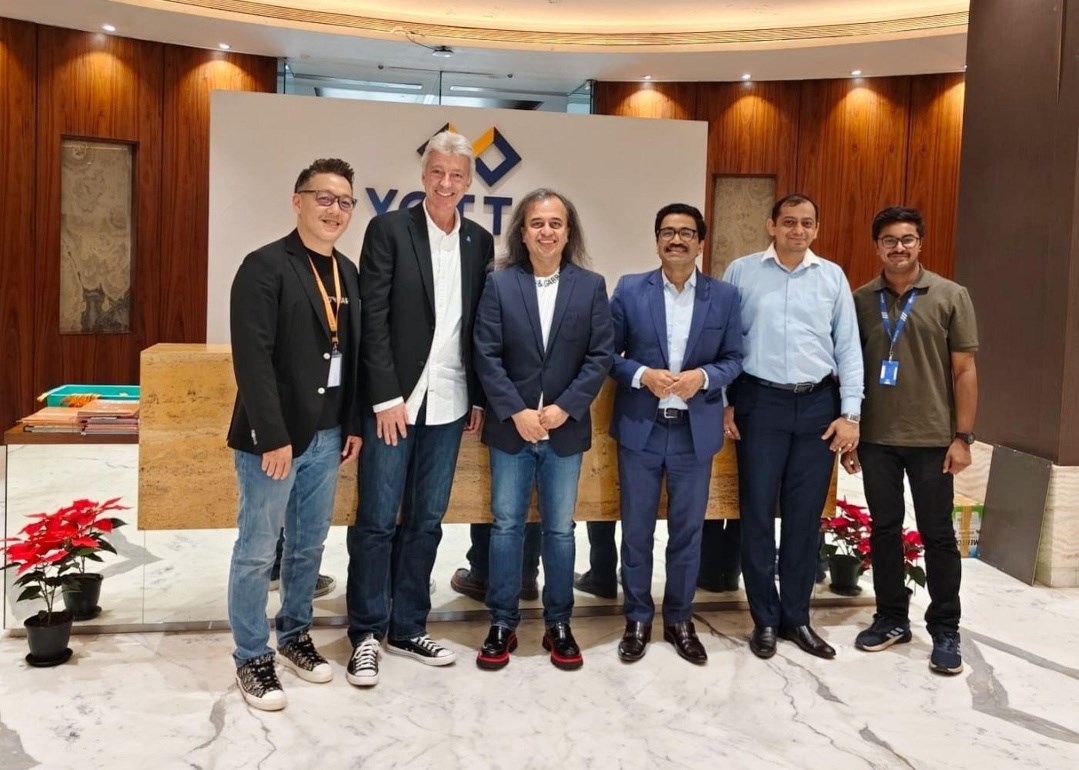
Executives from Gorilla Technology and Yotta Data Services during partnership meetings in Navi Mumbai, India. Pictured (left to right): Jackie Wang, General Manager, Asia, Gorilla Technology; Thomas Sennhauser, CTO for Infrastructure, Gorilla Technology; Jay Chandan, Chairman & CEO, Gorilla Technology; Sunil Gupta, Co-Founder & CEO, Yotta Data Services; and Saurabh Bharat, CFO, Yotta Data Services. Source: Gorilla Technology.

To view an enhanced version of this graphic, please visit:
https://images.newsfilecorp.com/files/10783/288663_09e11825a4c2383e_001full.jpg

Based on the executed agreements and current commercial assumptions, Gorilla expects this deployment to contribute more than $500 million in revenue for the Company over the next five years.

The agreements establish Gorilla as a key infrastructure partner to Yotta1, supporting high-performance AI compute deployments across India. Gorilla will provide GPU infrastructure, under a long-duration commercial model, while Yotta will implement and operate the GPUs in accordance with NVIDIA Reference Architecture (RA) at its Uptime Tier IV NM1 Data Centre in Navi Mumbai and deliver AI compute services including hyperscale GPU clusters, bare-metal GPUs, virtual machines, AI lab workstations, serverless GPUs and AI model end-points to enterprises and government customers.

Yotta is one of India’s most visible digital infrastructure platforms and is well positioned as a leading provider of hyperscale data centres, sovereign cloud and AI compute. Yotta operates two significant hyperscale campuses: a Greater Noida facility currently scalable to 250 MW and a Navi Mumbai campus with a roadmap scaling up to 2 GW. Beyond pure capacity, Yotta also provides a vertically integrated platform that spans the entire technology stack from specialized data centre engineering and green energy sourcing to managed services, cloud, and high-performance GPU compute.

Yotta has also been empanelled under the IndiaAI Mission and NVIDIA has described it as India’s first Reference Platform NVIDIA Cloud Partner2 and among only six globally in that category. Yotta has established a long-term platform capable of scaling beyond one million GPUs within the next three to five years as India’s AI ecosystem accelerates.

With India scaling AI at national speed, the market is expected to reach US$17 billion by 20273, with 25% to 35% annual growth, backed by more than US$1.1 billion of IndiaAI Mission funding, the deployment of 38,000 GPUs and a government view that AI could contribute US$1.7 trillion to India’s economy by 20354. For Gorilla, this is an opportunity be part of India’s sovereign AI buildout through Yotta, which has publicly committed 9,216 advanced GPUs to that national effort.

Jay Chandan, Chairman & CEO of Gorilla Technology, said
: “This is a defining step for Gorilla. India is one of the world’s most important AI growth markets, where sovereign ambition, hyperscale compute demand and real infrastructure deployment are accelerating together. By signing up with Yotta, we are placing Gorilla directly into India’s AI infrastructure buildout with a partner that brings scale, credibility and execution. This deployment alone is expected to contribute more than $500 million over five years, and we are working with Yotta to identify additional projects where we can collaborate.”


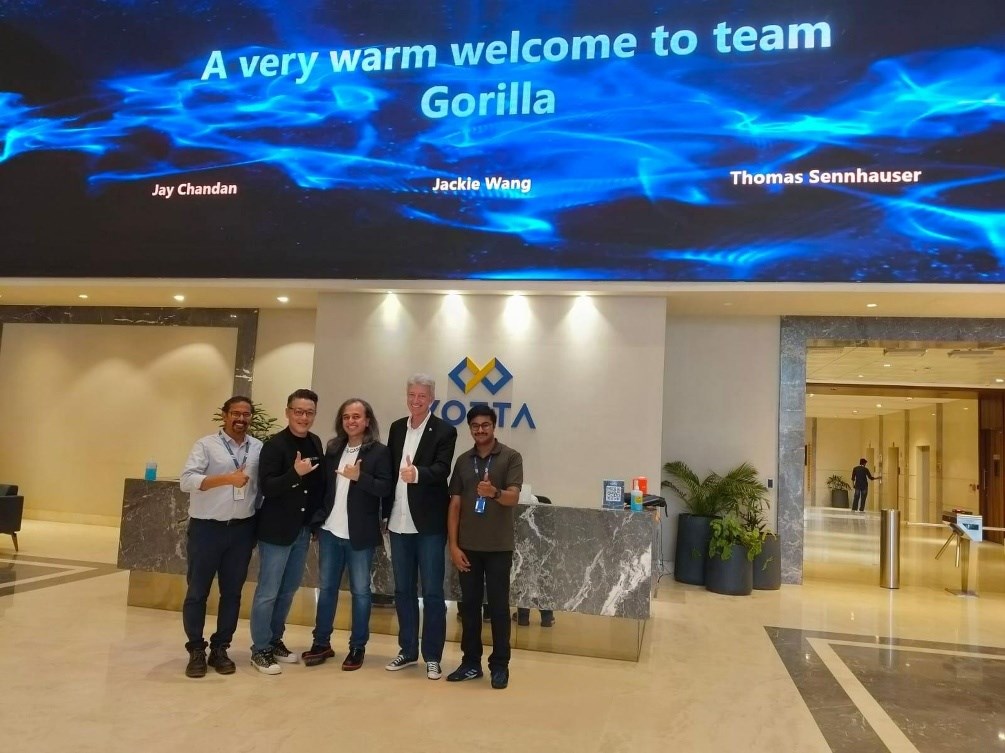
Gorilla Technology leadership team visiting Yotta’s data centre campus in Navi Mumbai, India as part of discussions supporting large-scale GPU infrastructure deployment for AI workloads. Source: Gorilla Technology.

To view an enhanced version of this graphic, please visit:
https://images.newsfilecorp.com/files/10783/288663_09e11825a4c2383e_003full.jpg

Sunil Gupta, Co-Founder & CEO of Yotta, said: “India’s AI ambition will be built on access to serious compute, serious infrastructure and partners that can execute at scale. Yotta has built its Shakti Cloud platform to serve that need through sovereign AI infrastructure designed for India’s next wave of enterprise, public sector and national AI demand, as well as serving global GPU compute demand from India. We believe Gorilla brings strong complementary capability in GPU infrastructure and commercial execution, and we see this collaboration as an important step in scaling AI capacity in India. In Gorilla, we see a long-term infrastructure partner, who shall help us realise the vision of enabling large scale GPU deployment in India over next three years to meet the AI needs of India, APAC, Middle East as well as Global South.”

Thomas Sennhauser, Chief Technology Officer for Infrastructure of Gorilla Technology, added:
“This is a major milestone that validates both our infrastructure model and our ability to execute at scale with serious counterparties. We are now embedding Gorilla into a live, sovereign AI infrastructure buildout with a partner that has real operating depth, real technical capability and real market reach. From an infrastructure standpoint, this gives us a meaningful platform to deploy, manage and expand high-performance AI capacity in one of the most important growth markets in the world.”

Gorilla and Yotta are also exploring a broader deployment pathway that could extend well beyond this project, including the potential deployment of more than 5,000 additional servers, over the next year or so. This collaboration is intended to support growing AI infrastructure demand in India and may also create opportunities for wider strategic cooperation, including potential data centre development initiatives in Thailand.

About Gorilla Technology Group Inc.
Headquartered in London U.K., Gorilla is a global solution provider in Security Intelligence, Network Intelligence, Business Intelligence, IoT technology and data centres. We provide a wide range of solutions, including Smart City, Network, Video, Security Convergence and IoT, across select verticals of Government & Public Services, Manufacturing, Telecom, Retail, Transportation & Logistics, Healthcare and Education, by using AI and Deep Learning Technologies.

Our expertise lies in revolutionizing urban operations, bolstering security and enhancing resilience. We deliver pioneering products that harness the power of AI in intelligent video surveillance, facial recognition, license plate recognition, edge computing, post-event analytics and advanced cybersecurity technologies. By integrating these AI-driven technologies, we empower Smart Cities to enhance efficiency, safety and cybersecurity measures, ultimately improving the quality of life for residents.

For more information, please visit our website: Gorilla-Technology.com

About Yotta Data Services
Yotta Data Services is a sovereign cloud infrastructure and platform services provider, offering cloud, AI cloud, data center hosting, connectivity, media tech and cybersecurity services; managed applications; and a wide range of managed IT services. Yotta operates its cloud regions at its hyperscale data center parks in Panvel (Navi Mumbai) and Greater Noida (Delhi NCR). Yotta’s homegrown, open-source-based, feature-rich Sovereign hyperscale cloud, Yntraa, is MeitY empanelled (VCC and GCC) and is also deployed in large government-owned CSPs on a white labelled / PPP model. In addition, Yotta has launched Shakti Cloud, a cutting-edge platform that leverages advanced AI capabilities, providing enterprises with a comprehensive suite of AI services, including AI labs, AI workspaces, Shakti Studio – AI Inference platform and access to NVIDIA’s NIM services, alongside Kubernetes clusters with GPU resources. Yotta is the only NVIDIA Cloud Partner (NCP) across the APAC region to be part of the NVIDIA Exemplar cloud initiative and is one of only six Reference Architecture Platform NCPs across the world.

Yotta has won numerous accolades and certifications, including RBI’s cybersecurity framework and localization framework, ISO 27017 for the protection of personal information in public cloud, ISO 27701 for Privacy Information Management (PIMS), PCI-DSS, SOC2-Type 2, and SOC3.

For more information, visit www.yotta.com.

Forward-Looking Statements
This press release contains “forward-looking statements” within the meaning of the “safe harbor” provisions of the Private Securities Litigation Reform Act of 1995. Gorilla’s actual results may differ from its expectations, estimates and projections and consequently, you should not rely on these forward-looking statements as predictions of future events. Words such as “expect,” “estimate,” “project,” “budget,” “forecast,” “anticipate,” “intend,” “plan,” “may,” “will,” “could,” “should,” “believes,” “predicts,” “potential,” “might” and “continues,” and similar expressions are intended to identify such forward-looking statements. These forward-looking statements include, without limitation, statements regarding our agreements with Yotta, including the expected timing and amount of revenues that may be generated thereunder, the timing of deployment of the servers, and the potential for additional collaboration between Yotta and Gorilla, along with those other risks described under the heading “Risk Factors” in the Form 20-F Gorilla filed with the Securities and Exchange Commission (the “SEC”) on April 30, 2025 and those that are included in any of Gorilla’s future filings with the SEC. These forward-looking statements involve significant risks and uncertainties that could cause actual results to differ materially from expected results. Most of these factors are outside of the control of Gorilla and are difficult to predict. Should one or more of these risks or uncertainties materialize, or should underlying assumptions prove incorrect, actual results may vary materially from those indicated or anticipated by such forward-looking statements. Readers are cautioned not to place undue reliance upon any forward-looking statements, which speak only as of the date made. Gorilla undertakes no obligation to update forward-looking statements to reflect events or circumstances after the date they were made except as required by law or applicable regulation.

Public Relations Contact Investor Relations Contact
Samantha Dowd
Prosek Partners for Gorilla Technology
GRRR@prosek.com
Dave Gentry
RedChip Companies, Inc. for Gorilla Technology
1-407-644-4256
GRRR@redchip.com

Public Relations Contact – Yotta Data Services
Nikhil Pradhan
Yotta Data Services
+91 97421 17306
npradhan@yotta.com

1 Source: https://yotta.com/press-releases/yotta-to-deploy-20000-nvidia-blackwell-ultra-gpus/
2 Source: https://www.nvidia.com/en-us/case-studies/yotta-built-india-sovereign-ai-infrastructure-shakti-cloud/
3 Source: https://indiaai.gov.in/news/nasscom-bcg-report-says-india-s-ai-market-is-expected-to-touch-17-billion-usd-by-2027
4 Source: https://www.ibef.org/news/ai-could-add-us-1-7-trillion-to-india-s-economy-by-2035-as-the-government-scales-up-its-push

The issuer is solely responsible for the content of this announcement.

Le Clarence Awarded Two Michelin Stars Under the Direction of Andrea Capasso

PARIS, March 17, 2026 /PRNewswire/ — Le Clarence, an essential address of Parisian haute gastronomy, celebrates its two stars in the Michelin Guide at the 2026 ceremony. This distinction honors the work and vision of Andrea Capasso, Executive Chef since September 2025, who achieves, in his very first year at the helm of the kitchen, a major recognition of his rigor and culinary sensitivity.

To view the Multimedia News Release, please click: 
https://www.multivu.com/domaine-clarence-dillon/9387451-en-le-clarence-awarded-two-michelin-stars-under-direction-andrea-capasso

Located just steps from the Grand Palais, in a setting that is both majestic and intimate, Le Clarence was opened in November 2015 at the initiative of the family-owned group Domaine Clarence Dillon, owner of prestigious wine estates including the legendary Château Haut-Brion. This address embodies a refined and timeless French art de vivre, championed by H.R.H. Prince Robert of Luxembourg, representing the fourth generation of the family and serving as President of the company.

A distinction honoring Andrea Capasso’s cuisine

In his early thirties, with fourteen years of experience already behind him, Andrea Capasso brings to Le Clarence an energy that is both serene and vibrant. Having been part of the restaurant for seven years, he now embodies both its continuity and momentum. His cuisine goes beyond technical mastery, it is something to be felt. Conceived as an enveloping and electrifying score unfolding in sequences, his culinary writing explores the essence of carefully selected ingredients, worked with precision and then elevated to reveal multiple expressions, sometimes unexpected, always clear. A guiding thread of enveloping delicacy and fine acidity extends each bite, while the land-and-sea pairings so dear to Le Clarence take on a new dimension. Andrea Capasso cooks to move and restore through emotion, a sincere approach that leaves guests with a lasting desire to return.

“Receiving two Michelin stars in my first year as Executive Chef is an immense honor,” says Andrea Capasso. “This distinction above all recognizes a collective effort, the daily commitment of those who bring Le Clarence to life, and the trust that has been placed in me. It encourages us to continue cooking from the heart, to seek genuine emotion, and to offer each guest a moment of pleasure that remains in their memory.”

Born from observing the preferences of his guests, Andrea Capasso has introduced, alongside the tasting menus, a weekday lunch menu that evolves with the seasons. Designed for busy schedules, it offers the chance to experience Le Clarence in just one hour, without compromising on taste or standards. A feat in which the precision of the service rivals the creativity on the plate.

An experience elevated by excellence in service

At the heart of this experience, Charles Weyland orchestrates an elegant yet relaxed hospitality. Trained at leading establishments, he brings to Le Clarence a vision of service rooted in attentive listening and an intuitive understanding of each guest. Far from any formality, he creates a warm and almost intimate atmosphere, where kitchen and dining room engage in perfect harmony, enhancing every moment spent within the private mansion.

Le Clarence also draws on one of the most remarkable wine cellars in Paris, bringing together nearly 2,000 references from the finest French terroirs. Each wine service, orchestrated by the sommelier team, becomes a moment of distinction: personalised guidance, decanting and food-and-wine pairings create a unique dialogue between gastronomy and grands crus, enhancing every dish and every moment spent at the restaurant.

With the consecration of its two Michelin stars, Le Clarence affirms the singularity of Andrea Capasso’s cuisine and the excellence of a holistic experience, establishing itself, more than ever, among Paris’s greatest gastronomic destinations.

About Domaine Clarence Dillon

Founded in 1935, the family-owned group Domaine Clarence Dillon brings together some of the most prestigious wine estates in the world: Château Haut-Brion, Château La Mission Haut-Brion, Château Quintus, Clarendelle and Klara. Since 2015, Domaine Clarence Dillon has also established a Parisian residence, a true ambassador of the French art de vivre cherished by Prince Robert of Luxembourg, President of Domaine Clarence Dillon and representative of the fourth generation of the family. It is home to the double Michelin-starred restaurant Le Clarence and La Cave du Château, an exceptional boutique dedicated to the finest wines and spirits of the French terroir, also present in Bordeaux (https://www.lacaveduchateau.com).

Since 2018, Prince Robert of Luxembourg and Domaine Clarence Dillon have been members of Primum Familiae Vini, an international association of 12 families whose châteaux and estates produce some of the world’s greatest wines. Domaine Clarence Dillon also continues the philanthropic tradition dear to its founder by supporting the Grand Palais, located opposite its private mansion. Since 2023, the group’s wines have been official partners of the Academy Museum of Motion Pictures and are exclusively served at the Oscars® ceremony.

Media Contacts:

Klante flore@klante.co

Le Clarence Team ©Marie-Astrid Jamois


Nature’s Capital: Why Asia’s Governments Are Turning to Nature-Based Solutions

SINGAPORE, March 17, 2026 /PRNewswire/ — Lester Chan, CEO & Chairman, The GrowHub Limited (Nasdaq: TGHL) explains how forests, mangroves, and peatlands are reshaping climate strategy

The first wave of carbon markets was about avoidance. The second wave is about removal. The third—gathering momentum now—is about nature itself.

Across Asia, governments are recognising a fundamental truth: their most valuable carbon assets are not in industrial parks or power grids, but in mangroves, peatlands, forests, and coastal ecosystems. Nature-based solutions are no longer a niche concern for conservationists. They are becoming central to national climate strategy, economic planning, and international cooperation under Article 6 of the Paris Agreement.

The Asia Advantage

Asia holds an extraordinary concentration of natural capital. Mangroves across the region store up to several times more carbon per hectare than many terrestrial forests. Tropical peatlands lock away carbon accumulated over thousands of years. Mountain and highland ecosystems provide both carbon sinks and water regulation for entire river basins.

Many governments now explicitly frame NbS as core to their climate and development pathways. Sri Lanka’s third NDC, submitted in September 2025, explicitly names nature-based solutions as critical for addressing the interconnected challenges of climate change, biodiversity loss, and land degradation. Bhutan, already carbon-negative, is structuring Article 6 partnerships around its forest estate.

Yet despite this potential, natural capital remains underleveraged. The forest and land-use finance gap is still measured in the hundreds of billions of dollars annually—the shortfall between current investment and what is needed to meet global climate and biodiversity targets by 2030. In Asia, private capital still accounts for only a small fraction of NbS finance.

The problem is not a lack of land or ideas. It is a lack of bankable, high‑integrity projects that governments can endorse and investors can trust.

The Integrity Imperative

The voluntary carbon market’s growing pains have taught a clear lesson: volume without verification is worthless.

For nature‑based credits to command premium pricing—and for host governments to be confident in authorising mitigation outcomes under Article 6—projects must meet exacting standards of durability, additionality, and transparency. This is particularly challenging in complex, dynamic ecosystems.

Measuring biomass in dense tropical forests, tracking carbon accumulation in mangroves, and monitoring leakage across dispersed landscapes have historically been labour‑intensive, expensive, and prone to error. That is no longer acceptable.

The solution lies in digital MRV. Satellite-based remote sensing, AI‑powered biomass and land‑use modelling, and blockchain‑secured data trails are moving from experimental to essential. Countries with large forest and peatland estates are refining emission factors, strengthening greenhouse gas inventories, and tightening land‑use governance. This level of scientific and institutional rigour is what separates projects that deliver real climate impact from those that merely produce paper credits.

The Government Partnership Model

Nature‑based solutions are inherently public goods. They operate across jurisdictional boundaries, involve local communities, and intersect with land rights, conservation policy, and rural development. Only governments can provide the enabling frameworks that make NbS investable at scale.

This is why The GrowHub’s approach has always centred on working with governments, not around them.

Under Article 6 bilateral cooperation, host countries retain sovereignty over their natural assets and mitigation outcomes. Partner countries bring technology, finance, and demand for high‑integrity credits. The private sector then provides the project development, execution, and technology stack that turns policy into reality.

Done well, this is not carbon colonialism; it is carbon partnership. Projects are designed to align with national development priorities—whether that is coastal protection, fire prevention, community forestry, or rural electrification—while meeting stringent requirements for quantification and verification.

In practice, this often means sitting with environment ministries, planning agencies, and local authorities to translate national climate commitments into prioritised NbS portfolios, designing safeguards and benefit‑sharing mechanisms that communities can accept, and embedding digital MRV from day one so that every authorised tonne is traceable and defensible.

Singapore’s Catalytic Role

Singapore, despite its limited land area, is positioning itself as a regional hub for high‑quality nature‑based carbon solutions.

Policy and industry initiatives are increasingly focused on solving the technical bottlenecks that have held back blue carbon and forest projects—issues such as high sapling mortality, weak baselines, and inadequate monitoring. Multi‑year programmes now pair research institutions with project developers to improve mangrove and coastal restoration outcomes, backed by digital monitoring and standardised methodologies. Pilot efforts are also supporting a pipeline of blue carbon and forest projects across multiple Asian countries, linking them to emerging regional carbon markets.

Support for remote‑sensing research, biomass measurement tools, and space‑based monitoring tailored to regional conditions all point in the same direction: if Asia’s natural capital is to be mobilised at scale, the methodologies and technologies must be built, tested, and governed here—not simply imported.

What Is at Stake for Governments

For governments across Asia, the case for investing in nature‑based solutions goes well beyond carbon revenues.

NbS deliver co‑benefits that engineered solutions cannot. Mangrove restoration, for instance, can reduce wave height by up to 66 percent and provide storm protection valued at over $65 billion annually—while sequestering carbon up to four times faster than terrestrial forests. Peatland rewetting reduces catastrophic fires and transboundary haze. Forest conservation safeguards biodiversity hotspots and cultural heritage, while supporting nature‑based tourism and ecosystem services.

NbS also offer a structured pathway to attract international climate finance on terms that respect national sovereignty. Under Article 6.2, bilateral cooperation allows host countries to authorise the transfer of mitigation outcomes in line with their nationally determined contributions, while retaining control over how projects are designed, approved, and monitored.

Finally, the quality premium is real. As corporate buyers become more sophisticated, they are increasingly willing to pay higher prices for credits that offer durability, transparency, and verified co‑benefits, rather than lowest‑cost tonnes with unclear impact. The market is steadily shifting toward integrity.

The GrowHub’s Role

At The GrowHub, we work with governments to translate high‑level climate commitments into concrete NbS project pipelines that attract investment and deliver measurable outcomes.

In one Southeast Asian coastal programme, for example, we combine satellite imagery, ground surveys, and sensor data to track mangrove recovery and link verified ecological performance directly to credit issuance.

Our role typically spans three dimensions:

Policy to pipeline: helping governments move from Article 6 frameworks and national strategies to prioritised portfolios of nature‑based projects aligned with national development plans.

Technology to trust: deploying AI, remote sensing, and blockchain so that data across the project lifecycle—from field measurements and community engagement records to registry entries—is robust, traceable, and audit‑ready.

Projects to markets: connecting verified credits and outcomes to corporate buyers and financiers who understand that price without integrity is a liability, not a discount.

From highland reforestation to mangrove protection and regenerative land‑use, we are seeing the same shift: nature‑based solutions are moving from the margins to the mainstream of climate and development policy.

Looking Ahead

Asia’s natural capital is extraordinary. But potential is not outcome. The next five years will determine whether our mangroves, forests, and peatlands become genuine climate solutions—or remain a missed opportunity.

For governments, the path is clear: prioritise quality over volume, invest in the technology and capacity that make integrity possible, and partner with organisations that respect national priorities while bringing global market access and digital MRV capabilities.

For the private sector, the mandate is equally clear: back projects with strong governance, credible host‑country alignment, and technology‑enabled transparency. The era of buying cheap, low‑integrity credits and hoping for the best is over.

At The GrowHub, our focus remains the same: help governments and corporates turn Asia’s natural capital into real, measurable, and trusted climate impact. The potential is here. The technology is ready. What matters now is execution.


 

CIQ Solves Vendor Lock-In Challenges for LG Uplus With Long-Term Support for Rocky Linux

Facing escalating licensing fees for its Enterprise Linux stack, the company chose CIQ to manage migration to and stable, long-term support for Rocky Linux from CIQ.

SEOUL, South Korea, March 17, 2026 CIQ, the founding support and services partner of Rocky Linux and a leader in high-performance software infrastructure, has been selected by LG Uplus in South Korea to provide Rocky Linux from CIQ (RLC) with long-term support. Rocky Linux from CIQ is the company’s supported distribution of Rocky Linux.

Facing license renewal subscription price hikes on their Enterprise Linux instances that have risen as much as 3x in the past three years, LG Uplus chose CIQ to help it solve long-term challenges with vendor lock-in and cost escalation.

LG Uplus is a major South Korean telecommunications company, part of the LG Corporation, providing mobile connectivity, high-speed internet, IPTV and other digital services including smart home solutions, data centers and enterprise IT services across mobile, home and corporate sectors in Korea.

“Rocky Linux from CIQ has emerged as the standard for supported Rocky Linux distributions,” said Ally Cho, regional director and country manager at CIQ. “At the same time, Rocky Linux has grown to become the most actively adopted Enterprise Linux offering, according to EPEL data (1). We are honored by the trust LG Uplus has placed in CIQ, and we look forward to showing them how Rocky Linux with support from CIQ can bring cost stability and innovation to its infrastructure stacks.”

“Having visibility into our infrastructure costs is critical to our business,” said Sehoon Ahn, chief architect at LG Uplus. “By selecting Rocky Linux from CIQ and the CIQ engineering team to provide long-term support, our goal is to gain greater certainty into costs while benefitting from the support and innovation that the CIQ team offers.”

Open source Rocky Linux
Since its launch more than four years ago, Rocky Linux has become the trusted open source option for businesses seeking a rock-solid, Enterprise Linux distribution. CIQ is the founding services and support sponsor of the Rocky Linux project and with Rocky Linux from CIQ the company offers secure delivery, reliability and support so customers have the assurances they need to support both dev/test and production workloads. Read more on Rocky Linux from CIQ at:

About CIQ
CIQ delivers secure and performant software infrastructure for the demands of all modern workloads, from the most mundane to the most extreme HPC and AI jobs. We believe infrastructure should drive the future of your business and that both the operating system of a single machine and the orchestration layer to manage a cluster of machines and even hybrid environments needs to be optimized for your requirements. We are an open source company who has started and/or contributed to critical infrastructure projects such as Rocky Linux, Warewulf, Fuzzball, Ascender and Apptainer. For more information, visit ciq.com.

1 Read more about Rocky Linux and EPEL data here: https://ciq.com/blog/why-fedora-epel-statistics-might-be-the-best-indicator-of-enterprise-linux-adoption/

MEDIA CONTACT:
Cristin Connelly
Cathey.co for CIQ
cristin@cathey.co

Logo – https://laotiantimes.com/wp-content/uploads/2026/03/ciq_logo.jpg 

Nature’s Capital: Why Asia’s Governments Are Turning to Nature-Based Solutions

SINGAPORE, March 17, 2026 /PRNewswire/ — Lester Chan, CEO & Chairman, The GrowHub Limited (Nasdaq: TGHL) explains how forests, mangroves, and peatlands are reshaping climate strategy

The first wave of carbon markets was about avoidance. The second wave is about removal. The third—gathering momentum now—is about nature itself.

Across Asia, governments are recognising a fundamental truth: their most valuable carbon assets are not in industrial parks or power grids, but in mangroves, peatlands, forests, and coastal ecosystems. Nature-based solutions are no longer a niche concern for conservationists. They are becoming central to national climate strategy, economic planning, and international cooperation under Article 6 of the Paris Agreement.

The Asia Advantage

Asia holds an extraordinary concentration of natural capital. Mangroves across the region store up to several times more carbon per hectare than many terrestrial forests. Tropical peatlands lock away carbon accumulated over thousands of years. Mountain and highland ecosystems provide both carbon sinks and water regulation for entire river basins.

Many governments now explicitly frame NbS as core to their climate and development pathways. Sri Lanka’s third NDC, submitted in September 2025, explicitly names nature-based solutions as critical for addressing the interconnected challenges of climate change, biodiversity loss, and land degradation. Bhutan, already carbon-negative, is structuring Article 6 partnerships around its forest estate.

Yet despite this potential, natural capital remains underleveraged. The forest and land-use finance gap is still measured in the hundreds of billions of dollars annually—the shortfall between current investment and what is needed to meet global climate and biodiversity targets by 2030. In Asia, private capital still accounts for only a small fraction of NbS finance.

The problem is not a lack of land or ideas. It is a lack of bankable, high‑integrity projects that governments can endorse and investors can trust.

The Integrity Imperative

The voluntary carbon market’s growing pains have taught a clear lesson: volume without verification is worthless.

For nature‑based credits to command premium pricing—and for host governments to be confident in authorising mitigation outcomes under Article 6—projects must meet exacting standards of durability, additionality, and transparency. This is particularly challenging in complex, dynamic ecosystems.

Measuring biomass in dense tropical forests, tracking carbon accumulation in mangroves, and monitoring leakage across dispersed landscapes have historically been labour‑intensive, expensive, and prone to error. That is no longer acceptable.

The solution lies in digital MRV. Satellite-based remote sensing, AI‑powered biomass and land‑use modelling, and blockchain‑secured data trails are moving from experimental to essential. Countries with large forest and peatland estates are refining emission factors, strengthening greenhouse gas inventories, and tightening land‑use governance. This level of scientific and institutional rigour is what separates projects that deliver real climate impact from those that merely produce paper credits.

The Government Partnership Model

Nature‑based solutions are inherently public goods. They operate across jurisdictional boundaries, involve local communities, and intersect with land rights, conservation policy, and rural development. Only governments can provide the enabling frameworks that make NbS investable at scale.

This is why The GrowHub’s approach has always centred on working with governments, not around them.

Under Article 6 bilateral cooperation, host countries retain sovereignty over their natural assets and mitigation outcomes. Partner countries bring technology, finance, and demand for high‑integrity credits. The private sector then provides the project development, execution, and technology stack that turns policy into reality.

Done well, this is not carbon colonialism; it is carbon partnership. Projects are designed to align with national development priorities—whether that is coastal protection, fire prevention, community forestry, or rural electrification—while meeting stringent requirements for quantification and verification.

In practice, this often means sitting with environment ministries, planning agencies, and local authorities to translate national climate commitments into prioritised NbS portfolios, designing safeguards and benefit‑sharing mechanisms that communities can accept, and embedding digital MRV from day one so that every authorised tonne is traceable and defensible.

Singapore’s Catalytic Role

Singapore, despite its limited land area, is positioning itself as a regional hub for high‑quality nature‑based carbon solutions.

Policy and industry initiatives are increasingly focused on solving the technical bottlenecks that have held back blue carbon and forest projects—issues such as high sapling mortality, weak baselines, and inadequate monitoring. Multi‑year programmes now pair research institutions with project developers to improve mangrove and coastal restoration outcomes, backed by digital monitoring and standardised methodologies. Pilot efforts are also supporting a pipeline of blue carbon and forest projects across multiple Asian countries, linking them to emerging regional carbon markets.

Support for remote‑sensing research, biomass measurement tools, and space‑based monitoring tailored to regional conditions all point in the same direction: if Asia’s natural capital is to be mobilised at scale, the methodologies and technologies must be built, tested, and governed here—not simply imported.

What Is at Stake for Governments

For governments across Asia, the case for investing in nature‑based solutions goes well beyond carbon revenues.

NbS deliver co‑benefits that engineered solutions cannot. Mangrove restoration, for instance, can reduce wave height by up to 66 percent and provide storm protection valued at over $65 billion annually—while sequestering carbon up to four times faster than terrestrial forests. Peatland rewetting reduces catastrophic fires and transboundary haze. Forest conservation safeguards biodiversity hotspots and cultural heritage, while supporting nature‑based tourism and ecosystem services.

NbS also offer a structured pathway to attract international climate finance on terms that respect national sovereignty. Under Article 6.2, bilateral cooperation allows host countries to authorise the transfer of mitigation outcomes in line with their nationally determined contributions, while retaining control over how projects are designed, approved, and monitored.

Finally, the quality premium is real. As corporate buyers become more sophisticated, they are increasingly willing to pay higher prices for credits that offer durability, transparency, and verified co‑benefits, rather than lowest‑cost tonnes with unclear impact. The market is steadily shifting toward integrity.

The GrowHub’s Role

At The GrowHub, we work with governments to translate high‑level climate commitments into concrete NbS project pipelines that attract investment and deliver measurable outcomes.

In one Southeast Asian coastal programme, for example, we combine satellite imagery, ground surveys, and sensor data to track mangrove recovery and link verified ecological performance directly to credit issuance.

Our role typically spans three dimensions:

Policy to pipeline: helping governments move from Article 6 frameworks and national strategies to prioritised portfolios of nature‑based projects aligned with national development plans.

Technology to trust: deploying AI, remote sensing, and blockchain so that data across the project lifecycle—from field measurements and community engagement records to registry entries—is robust, traceable, and audit‑ready.

Projects to markets: connecting verified credits and outcomes to corporate buyers and financiers who understand that price without integrity is a liability, not a discount.

From highland reforestation to mangrove protection and regenerative land‑use, we are seeing the same shift: nature‑based solutions are moving from the margins to the mainstream of climate and development policy.

Looking Ahead

Asia’s natural capital is extraordinary. But potential is not outcome. The next five years will determine whether our mangroves, forests, and peatlands become genuine climate solutions—or remain a missed opportunity.

For governments, the path is clear: prioritise quality over volume, invest in the technology and capacity that make integrity possible, and partner with organisations that respect national priorities while bringing global market access and digital MRV capabilities.

For the private sector, the mandate is equally clear: back projects with strong governance, credible host‑country alignment, and technology‑enabled transparency. The era of buying cheap, low‑integrity credits and hoping for the best is over.

At The GrowHub, our focus remains the same: help governments and corporates turn Asia’s natural capital into real, measurable, and trusted climate impact. The potential is here. The technology is ready. What matters now is execution.