Home Blog Page 935

Clarivate Expands Access to Trusted Regulatory Intelligence Within Claude

Advancing Clarivate strategy to extend proprietary intelligence into enterprise AI ecosystems

Bringing Clarivate domain-specific regulatory insights into Claude to support life sciences workflows

LONDON, March 10, 2026 /PRNewswire/ — Clarivate Plc (NYSE: CLVT), a leading global provider of transformative intelligence, today announced they will integrate Clarivate’s proprietary regulatory intelligence with Claude’s AI reasoning capabilities. The collaboration gives biopharma, biotech, medtech and clinical research organizations intelligent, context-aware access to authoritative regulatory data within the AI workflows they already use.

Cortellis Regulatory Intelligence (CRI) data and insights will be integrated into Anthropic’s Claude through the open Model Context Protocol (MCP). This MCP-enabled connection embeds authoritative regulatory content directly into customer workflows- combining Claude’s natural language understanding and reasoning with Clarivate’s industry-validated sources to deliver accurate, referenced answers that support faster, more confident regulatory decision-making.

The new CRI MCP provides regulatory affairs, pharmacovigilance and life sciences teams with direct access to Clarivate regulatory intelligence, delivering accurate, referenced answers grounded in industry-validated sources. The CRI MCP is available to customers of Clarivate CRI and Claude.

Through this integration, Clarivate is extending its regulatory intelligence into the AI environments customers already use, expanding the ecosystems that inform critical decisions. With this connection to Claude, customers can build agents that combine CRI with internal data and approved external sources, enabling regulatory intelligence to work alongside internal data to monitor changes and support decision-making.

Henry Levy, President, Life Sciences & Healthcare, Clarivate, said: “This advances our strategy to extend Clarivate intelligence into AI ecosystems where critical decisions are made. By bringing Cortellis Regulatory Intelligence into Claude, we are expanding the reach of our trusted regulatory insights. This enables Clarivate life sciences customers to access authoritative content within their AI workflows and make more informed decisions that help bring safer, more effective therapies to patients.”

Building on the recent launch of the CRI AI Assistant, the integration expands anticipatory intelligence and intelligent automation across regulatory workflows. To learn more about Cortellis Regulatory Intelligence, visit: Cortellis Regulatory Intelligence.

About Clarivate

Clarivate is a leading global provider of transformative intelligence. We offer enriched data, insights & analytics, workflow solutions and expert services in the areas of Academia & Government, Intellectual Property and Life Sciences & Healthcare. For more information, please visit clarivate.com.

Media Contact:

Catherine Daniel
Director, External Communications, Life Sciences & Healthcare
Clarivate
newsroom@clarivate.com

Uzum secures over $130 million in strategic investment led by the sovereign entities of the Sultanate of Oman

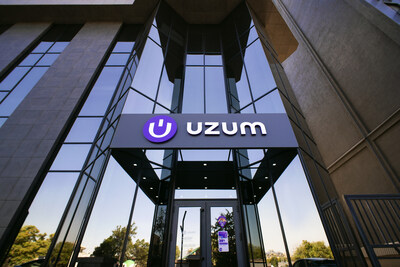
TASHKENT, Uzbekistan, March 10, 2026 /PRNewswire/ — Uzum (the “Company”), Uzbekistan’s leading digital ecosystem, is pleased to announce the closing of a strategic investment exceeding $130 million, anchored by the sovereign entities of the Sultanate of Oman (the “Investor“).

Uzum
Uzum

The transaction combines primary equity and structured capital and establishes a $2.3 billion pre-money valuation reference point, with conversion terms linked to the Company’s next qualified financing round. The investment marks a significant step-up from Uzum’s previous funding rounds and materially strengthens the Company’s positioning ahead of its Series B.

The transaction also includes participation from existing international shareholders VR Capital, Tencent, and FinSight Ventures, underscoring strong international confidence in Uzum’s long-term growth and Uzbekistan’s rapidly expanding digital economy.

The capital will be used to accelerate Uzum’s next phase of growth across its core verticals — e-commerce, digital banking, payments, and consumer lending — with a focus on expanding product depth, strengthening infrastructure, and increasing access to digital services nationwide. Uzum has built a fully integrated ecosystem combining commerce and fintech at a national scale. Its platforms — including Uzum Market, Uzum Tezkor, Uzum Bank, and Uzum Nasiya — are used by over 20 million people, representing more than half of Uzbekistan’s population.

Global conviction in Uzbekistan’s growth story

The Investor brings long-term regional expertise and a strong focus on high-growth consumer and technology markets. The partnership reflects growing international interest in Uzbekistan as one of the most attractive emerging digital economies globally.

“This investment is a strong endorsement of both Uzum’s strategy and Uzbekistan’s digital potential,” commented Djasur Djumaev, Founder and CEO of Uzum.

“We are focused on building an infrastructure of national scale — technology-driven, inclusive, and designed for everyday use by millions of people and businesses. The support from the Investor, alongside our existing global shareholders, gives us strong momentum as we prepare for Series B and continue scaling our ecosystem.”

Uzum was advised on this transaction by DLA Piper. The Investor was advised by Greenberg Traurig.

Laos, Myanmar Sign Five-Year Cooperation Agreement

Lao and Myanmar officials sign a five-year cooperation agreement in Naypyidaw, Myanmar. (Photo by The Committee for External Relations)

Laos and Myanmar have signed a five-year Memorandum of Understanding (MOU) aimed at strengthening bilateral cooperation and deepening people-to-people ties between the two nations.

The MOU, signed on 27 February in Naypyidaw, Myanmar, establishes a formal framework for joint activities, including exchanges, cooperation programs, and public engagement initiatives, designed to foster mutual understanding and lasting friendship between the peoples of the two countries. 

The signing took place during a bilateral meeting attended by Chanthavong Saenarmadmontee, Vice Chairman of the Lao National Assembly’s Foreign Affairs Committee, and Win Maung, President of the Myanmar-Laos Friendship Association.

During the meeting, both delegations reviewed cooperation activities conducted throughout 2025 and outlined plans for the upcoming five-year period (2026-2030), with a shared focus on reinforcing friendship and enhancing collaboration between the two associations.

On the sidelines of the visit, the Lao delegation also held a courtesy call with U Than Swe, Minister of Foreign Affairs of Myanmar. The Minister underscored the strengthening relationship between the two countries, noting that bilateral cooperation plays a vital role in advancing people-to-people diplomacy and deepening national ties.

Chanthavong expressed gratitude for the warm hospitality extended to the Lao delegation and reaffirmed his association’s commitment to working closely with its Myanmar counterpart in furthering bilateral friendship and cooperation.

In addition to the official engagements, the delegation visited a number of historical and cultural sites across Yangon and Naypyidaw before concluding their seven-day mission and departing Myanmar on 3 March.

Turkcell and ZTE/Netaş Collaborate on Next-Generation Superbox with 5G and Wi-Fi 7 Support

ISTANBUL, March 10, 2026 /PRNewswire/ — Turkcell and ZTE/Netaş have signed a new collaboration agreement in the field of fixed wireless access (FWA). Within the scope of this collaboration, ZTE/Netaş’s next-generation FWA solution, which combines 5G and Wi-Fi 7 technologies, will be positioned within the Turkcell 5G Superbox ecosystem to support Turkcell’s broadband vision.

Turkcell and ZTE/Netaş Collaborate on Next-Generation Superbox with 5G and Wi-Fi 7 Support

Turkcell 5G Superbox offers fiber-speed internet over the 5G network without the need for a fixed internet infrastructure. Providing quick installation in homes and offices, this solution brings high-speed, low-latency connectivity wherever users need it.

The new generation 5G + Wi-Fi 7 Superbox solution offered by ZTE/Netaş provides Gigabit-level data speeds over 5G infrastructure, while aiming to offer higher capacity, wider coverage, and optimized connectivity performance in multi-device scenarios within homes and offices with Wi-Fi 7 support. The solution provides a powerful alternative for data-intensive applications, cloud services, and high-resolution content experiences.

Prof. Dr. Vehbi Çağrı Güngör, Deputy General Manager for Network Technologies of Turkcell, said: “As Turkcell, with the arrival of 5G, we are accelerating our efforts to offer our customers a high-quality and high-speed broadband experience in every environment. The new 5G Superbox, which we developed with ZTE/Netaş, will provide fiber-speed internet service wherever 5G is available, making a significant contribution to Türkiye’s digitalization journey.”

With this collaboration, Turkcell aims to bring high-speed broadband access to more users wherever 5G is available. ZTE/Netaş, on the other hand, continues to contribute to the digital transformation journey of operators with its advanced FWA solutions.

Lin Zhi, Vice President of ZTE, said, “This collaboration with Turkcell is an important step in bringing our advanced FWA solutions to users in Türkiye. This next-generation solution, which combines 5G and Wi-Fi 7, will enable superior connectivity performance in homes and offices while also supporting operators in building future-ready infrastructure.”

Currently available Wi-Fi 7 enabled Superbox 5G modems will be upgraded to 5G-compatible modems after 5G technology becomes available on April 1, 2026.

MEDIA INQUIRIES:
ZTE Corporation
Communications
Email: ZTE.press.release@zte.com.cn 

Westlake University Opens Applications for 2026 Summer Research Internship

HANGZHOU, China, March 10, 2026 /PRNewswire/ — Westlake University has officially opened applications for its 2026 Summer Research Internship, a one-month immersive program designed for aspiring scientists from around the world. Scheduled to run from July 13 to August 14, 2026, the program invites current or recently graduated bachelor’s and master’s students to conduct cutting-edge research alongside world-class faculty in Westlake’s state-of-the-art laboratories.

Participants will have the opportunity to contribute to meaningful scientific advancement while experiencing the dynamic and collaborative environment that defines the university’s approach to research and innovation.

A Cross-Disciplinary Immersion in Research

The Westlake Summer Research Internship offers students the unique opportunity to engage in research across our four prestigious schools: School of Science, School of Engineering, School of Life Sciences, School of Medicine.

Each internship is a unique, hands-on laboratory or theoretical research project tailored to current research being conducted within our Principal Investigators’ (PIs) laboratories. Each of these experiential learning opportunities is designed to hone research skills and prepare participants for advanced academic and professional pursuits. Interns can also participate in research forums, interdisciplinary roundtable discussions, and cultural activities at Westlake University as well as in the surrounding Hangzhou area.

Research Opportunities and Hands-On Learning

The 2026 Summer Research Internship at Westlake University offers more than 50 distinctive projects, providing approximately 100 immersive placements across its four schools: the School of Science, School of Engineering, School of Life Sciences, and School of Medicine.

Interns will conduct research across our beautiful campuses—primarily at the Yungu Campus, with selected projects located at the Yunqi Campus and the Center for Infectious Disease Research.The program spans a diverse spectrum of interdisciplinary fields, ranging from artificial intelligence, machine learning, and robotics to life sciences, medicine, and fundamental sciences, and beyond.

Each intern will be integrated into the active research team of a Principal Investigator, gaining authentic hands-on laboratory experience. Through direct mentorship, the program is designed to transition participants from observers to active contributors, enabling them to develop technical skills, critical scientific thinking, and a deep understanding of the research process—from conception through experimentation.

Please refer to the University’s website (https://en.westlake.edu.cn/admissions/summer_sessions/summer_graduate_research_internship/) to see the Eligibility and Application Process.

Contact:
Chi Zhang
media@westlake.edu.cn 
+86-15659837873

Robot anxiety is highest where robots are least visible, new global study from Hexagon finds

  • A global split in confidence: UK adults are most anxious (52%) vs South Korea least (29%), while high-exposure markets like China (75% of adults have seen/used robots) are also the most excited about robots’ potential (81%)
  • The biggest concern is security, not jobs: Hacking is the top concern of adults (51%), well ahead of being replaced at work (41%) and trust (24%).
  • Hexagon’s global study finds “robot anxiety” is context dependent: it’s highest where robots are least visible, and falls when people can see robots working safely alongside humans

LONDON, March 10, 2026 /PRNewswire/ — A new global study from Hexagon, the global leader in measurement technologies, reveals wide differences in how people around the world feel about robotics. The Robot Generation research, spanning nine major markets and 18,000 participants, finds that anxieties about robots are most acute where they are least visible in everyday life.

Across nine major markets, the UK ranks highest in robot anxiety, with 52% of adults saying they feel worried that something might go wrong when they think about interacting with or working alongside robots. By contrast, South Korean adults report the lowest anxiety, at just 29%.

Robot anxiety league table

% of adults who say “I feel worried (something might go wrong)” describes how they feel when thinking about robots

  1. UK — 52%
  2. US — 45% 
  3. Brazil — 45% 
  4. Germany — 44% 
  5. China — 44% 
  6. India — 42%
  7. Switzerland — 39%
  8. Japan — 35%
  9. South Korea — 29%

The study suggests anxiety levels are closely correlated with exposure to robots in everyday life. For example, British adults are the least likely to have seen or used robots in real life (30%) and are the most worried (52%). Interestingly, when asked about AI, 61% of UK adults admitted to having used it in the past three months, and 56% said they consider AI chatbots to be robots. This suggests anxiety levels spike when people think about physical AI, rather than software-based technologies, which have become embedded in day-to-day life.

Meanwhile, Chinese adults are the most likely to have seen or used robots (75%) and are also the most excited about their future potential (81%). In China, 90% of adults have used AI in the past three months, and 76% of adults consider AI chatbots ‘robots’.

Robot anxiety is context-dependent

The findings strongly suggest that people are not broadly “anti-robot”. Instead, attitudes are closely tied to place and task. Comfort levels rise sharply when robots are seen as solving clear, practical problems.

For this reason, adults are most comfortable with robots in factories and warehouses (63%, compared with 46% who are comfortable with robots in the home or 39% in classrooms), where tasks are well defined, and safety standards are well understood. Support is also strongest for robots that take on dangerous or physically demanding work, with half of respondents citing improved safety (50%) and productivity (51%) as the main benefits for robots in these contexts.

Interestingly, this suggests that the popular assumption that people are most worried about job losses or machines “going rogue” isn’t the public’s top concern. Instead, the biggest source of anxiety is security.

When asked what worries them most about the growing use of robots at work, a majority of adults (51%) cited the risk of robots being hacked or misused, putting data and systems at risk. This outranks concerns about physical malfunction or harm (41%) and job replacement (41%).

The keys to reducing robot anxiety

According to Hexagon, the findings point to a clear path for building public trust: visibility, purpose, and control.

“People are not having a single abstract debate about ‘robotics,'” said Burkhard Boeckem, CTO at Hexagon. “They are making practical judgments about where robots, in all their form factors, belong, what they should do, and how securely they are governed. Anxiety grows where robots feel invisible, poorly understood, or out of human control.”

The study suggests that robot anxiety falls when people can see robots working safely alongside humans, doing clearly defined jobs, with strong safeguards around data and decision-making.

“Trust is built through experience and clear boundaries,” Boeckem added. “When people understand what robots are for, and what they are not, confidence follows.”

Trust

“It’s not just ‘do you trust AI?’ It’s which tool, used for what? A robot helping children learn is very different from an AI system used in defence, even though we often talk about them as the same thing.” Said Dr Jim Everett, Associate Professor in Moral Psychology. “What you want to foster is appropriate trust, or appropriate reliance, where people clearly understand when a system is useful and when they should be cautious.”

“When people actually meet a robot, especially a small, friendly one, the fear often disappears. You can almost hear them think, ‘Oh, that’s not going to take over the world.’ Exposure changes the conversation very quickly.” Said Michael Szollosy, Research Fellow in Robotics. “If scientists and engineers want people to come with them on this journey, they have a responsibility to explain why these technologies exist and what they’re actually for. If you don’t take people with you, the counter-narrative sticks and once that happens, it’s very hard to undo.”

Methodology:

The Hexagon Robot Generation study surveyed 9000 adults and 9000 children aged 8–18 across the USA, UK, Germany, Switzerland, Japan, South Korea, China, Brazil and India. The survey was carried out by Vitreous World on behalf of Hexagon between Oct – Nov 2025.

‘Robot’ in this context means a machine that can carry out tasks either completely on its own or with human guidance. These tasks could be pre-programmed or the robot could be acting independently. Robots can be found in many forms — for example, machines that build products, deliver goods, or help at home. They don’t always look like people.

About Hexagon:

Hexagon is the global leader in measurement technologies. We provide the confidence that vital industries rely on to build, navigate, and innovate. From microns to Mars, our solutions ensure productivity, quality, safety, and sustainability in everything from manufacturing and construction to mining and autonomous systems.

Hexagon (Nasdaq Stockholm: HEXA B) has approximately 24,800 employees in 50 countries and net sales of approximately 5.4bn EUR.

Learn more at hexagon.com.

FOR MORE INFORMATION, CONTACT:  

Carla Gutierrez, Senior Director, Communications, media@hexagon.com
Harriet Funston, Senior Account Director, MikeWorldWide (MWW), hmasters@mww.com

Nebius expands into Asia-Pacific region to support rapid global growth

  • Leading AI cloud company to build out presence in Asia-Pacific to tap region’s growth potential
  • Names John Haarer as General Manager for Asia-Pacific and Japan to drive commercial expansion
  • Company is on hypergrowth trajectory following 479% revenue growth in 2025 and contract wins with hundreds of customers, from AI natives to large enterprises

SINGAPORE – EQS Newswire – 10 March 2026 – Nebius (NASDAQ: NBIS), the AI cloud company, today announced the expansion of its operations in the Asia-Pacific region as it seeks to capture surging global demand for purpose-built AI infrastructure. The company has appointed John Haarer as General Manager for Asia-Pacific and Japan to lead its commercial growth across the region.

Reporting to Chief Revenue Officer Marc Boroditsky, Haarer will be based in Singapore and will oversee the company’s commercial expansion across the region through key markets including Singapore, Japan, South Korea and India. Haarer brings over a decade of experience driving go-to-market efforts in the region for global technology leaders including Cloudflare and Twilio.

“Over the past year we have taken our first steps into Asian markets, winning our first customers and building the foundations for rapid expansion in the region,” said Marc Boroditsky, Chief Revenue Officer at Nebius. “The appointment of a leader like John reinforces this commitment. He brings deep regional experience from scaling major tech companies across Asia-Pacific, and he joins at a moment when demand for purpose-built AI infrastructure is accelerating across every major market in the region.”

“Asia is one of the world’s most exciting regions for AI, and Nebius is the cloud that is powering the next wave of AI innovation,” said John Haarer, General Manager for Asia-Pacific and Japan. “I am excited to join a company with some of the world’s most talented engineers at a pivotal moment for the business. As we ramp up in Asia, I look forward to helping our partners, customers and local governments across the region navigate their AI bottlenecks and transform the promise of AI into tangible economic value.”

Nebius is one of the fastest-growing AI cloud companies globally, with 479% year-over-year revenue growth in 2025 and a contract backlog exceeding $20 billion, including multi-year AI infrastructure agreements with Microsoft and Meta. The company has $3.7 billion in cash and is targeting annualized run-rate revenue of $7 billion to $9 billion by end of 2026. Haarer’s appointment marks the company’s shift in Asia-Pacific from initial market entry to full commercial expansion.

Forward-Looking Statements

This press release contains forward-looking statements within the meaning of the Private Securities Litigation Reform Act of 1995, which involve risks and uncertainties. All statements contained in this press release other than statements of historical fact, including, without limitation, statements regarding our expansion plans in the Asia-Pacific region, anticipated revenue targets, contract backlog, and expected business growth, are forward-looking statements. The words “anticipate,” “believe,” “continue,” “estimate,” “expect,” “guide,” “intend,” “likely,” “may,” “will” and similar expressions and their negatives are intended to identify forward-looking statements.

These forward-looking statements are subject to risks, uncertainties and assumptions, some of which are beyond our control. Actual results may differ materially from the results predicted or implied by such statements, and our reported results should not be considered as an indication of future performance. The potential risks and uncertainties that could cause actual results to differ from the results predicted or implied by such statements include, among others: market, macroeconomic and geopolitical conditions; our ability to successfully expand into new geographic markets; competitive pressures; technological developments; and our ability to secure and retain clients; as well as those risks and uncertainties related to our continuing businesses included under the captions “Risk Factors” and “Operating and Financial Review and Prospects” in our Annual Report on Form 20-F for the year ended December 31, 2024, filed with the Securities and Exchange Commission (“SEC”) on April 30, 2025.

All information in this press release is as of the date hereof (unless stated otherwise). Except as required by law, we undertake no obligation to update or revise publicly any forward-looking statements, whether as a result of new information, future events or otherwise, after the date on which the statements are made or to reflect the occurrence of unanticipated events.

In addition, statements that “we believe” and similar statements reflect our beliefs and opinions on the relevant subject. These statements are based upon information available to us as of the date hereof and, while we believe such information forms a reasonable basis for such statements, such information may be limited or incomplete, and our statements should not be read to indicate that we have conducted an exhaustive inquiry into, or review of, all potentially available relevant information. These statements are inherently uncertain, and investors are cautioned not to unduly rely upon these statements.
Hashtag: #Nebius

The issuer is solely responsible for the content of this announcement.

About Nebius

Nebius, the AI cloud company, is building the full-stack platform for developers and companies to take charge of their AI future — from data and model training to production deployment. Founded on deep in-house technological expertise and operating at scale with a rapidly expanding global footprint, Nebius serves startups and enterprises building AI products, agents, and services worldwide.

Nebius is listed on Nasdaq (NASDAQ: NBIS) and headquartered in Amsterdam.

For more information please visit.

Sino Land Ranked Global Top 5% in S&P Global Sustainability Yearbook 2026

HONG KONG, March 10, 2026 /PRNewswire/ — Sino Group (‘the Group’) is pleased to announce that Sino Land Company Limited (‘Sino Land’) (Stock Code: 0083.HK) has been ranked among the Global Top 5% in the Real Estate Management & Development industry in the S&P Global Sustainability Yearbook 2026. Among over 9,200 companies assessed worldwide, Sino Land is the only developer from Hong Kong to receive this recognition. This marks the company’s fourth consecutive inclusion in the Yearbook and its first ranking in the Global Top 5%.

Sino Land has been ranked among the Global Top 5% in its industry in the S&P Global Sustainability Yearbook 2026, based on assessments of over 9,200 companies worldwide.

The Sustainability Yearbook, published by S&P Global, recognises companies that demonstrate sustained execution, credible disclosure, and year‑over‑year improvement in sustainability performance, based on the annual Corporate Sustainability Assessment (CSA). The CSA is an industry-specific evaluation covering an average of 23 topics, including climate strategy, biodiversity, and supply chain management. In the 2026 edition, only 848 companies qualified for inclusion, reflecting the selectivity of the assessment.

This recognition underscores Sino Land’s commitment to sustainability and continuous improvement across its operations. Key initiatives over the past year included strengthening supplier engagement and carbon management through the ‘Supplier Climate Alliance’, advancing community‑based environmental education with the Discover Shui Hau project, and promoting sustainability awareness among colleagues during Sino Sustainability Month.

Mr Daryl Ng, Chairman of Sino Group and Chairman of the Group’s ESG Steering Committee, said, ‘It is an honour to be included in the S&P Global Sustainability Yearbook for the fourth consecutive year and to achieve a place in the Global Top 5% in the Real Estate Management & Development industry. This recognition reflects the collective efforts of our teams and our ongoing commitment to integrating sustainability into our operations through collaboration, responsible practices, and community engagement. I extend my heartfelt thanks to our colleagues, like-minded suppliers, partners, and the communities we work with for their unwavering support and dedication. Together, we are making steady progress towards meaningful outcomes. As we continue our sustainability journey, we remain committed to working closely with our stakeholders to build resilience and create long-term sustainable value.’