Home Blog Page 1105

SK shieldus Recognized by IDC as a Major Player for MDR in Asia-Pacific

SEOUL, South Korea, Feb. 5, 2026 /PRNewswire/ — SK shieldus, a leading cybersecurity service provider, announced today that the company has been named a Major Player in the IDC MarketScape: Asia Pacific (Excluding Japan) Managed Detection and Response Services 2025 Vendor Assessment (doc # AP52998725, September 2025).

According to the IDC MarketScape report, “Clients value SK shieldus for its responsive monitoring, structured processes, and deep domain expertise in managing both domestic and international threat environments. The company is appreciated for maintaining continuous, uninterrupted security operations with timely incident handling and clear methodologies. Customers highlight the effectiveness of forensic analysis, threat identification, and remediation planning; and recognize the provider’s role in improving detection quality and preventing incidents over multiyear engagements.”

We believe this recognition underscores SK shieldus’s transformation into a global-standard MDR provider, capable of competing with leading cybersecurity firms across Japan, Singapore, and other advanced markets in the Asia-Pacific region.

At the core of SK shieldus’s MDR service lies Secudium, its proprietary AI-based security operations platform integrating automated analysis and SOAR (Security Orchestration, Automation, and Response) capabilities. Secudium enables real-time detection, rapid containment, and automated remediation of threats through advanced machine-learning algorithms and contextual threat correlation. By continuously refining its AI models through additional R&D investments exceeding USD 15 million, SK shieldus is continuing to invest to ensure detection accuracy and operational scalability across enterprise environments.

SK shieldus’s MDR service is designed with flexibility and accessibility at its foundation. Large enterprises benefit from customized compliance management and complex infrastructure monitoring. Mid-sized and small enterprises can access professional MDR capabilities through subscription-based, remote services, minimizing upfront investment while maintaining enterprise-grade defense.

SK shieldus continues to expand its intelligence ecosystem through real-time threat information sharing and international alliance partners, which enable accurate detection and analysis for its 3,000 customers. Its MITRE-aligned detection framework ensures that SK shieldus’s MDR offering is fully benchmarked against global adversary techniques and tactics, allowing standardized and transparent threat response across industries and geographies.

Building on its validated capabilities, SK shieldus is now accelerating its global go-to-market strategy. The company is expanding its MDR footprint into Japan, Southeast Asia, China, the U.S., and Europe through strategic partnerships and localized SaaS-based MDR portals. These efforts aim to deliver region-specific compliance, language, and threat-intelligence adaptation, establishing SK shieldus as a trusted global cybersecurity brand delivering uniform real-time protection worldwide.

Looking ahead, SK shieldus plans to further enhance its internal threat-intelligence ecosystem and strengthen its AI-based adaptive automation capabilities. SK shieldus has more than 3,000 customers and with insights into threat actors’ tactics, techniques and procedures, SK shieldus plans to utilize its insight to further strengthen its threat intelligence database and its underpinning platform. Through expanded analyst training programs, deeper R&D integration, and multi-regional threat data collection, the company aims to elevate real-time detection accuracy and reduce mean time to response (MTTR) across all client environments.

“We believe being recognized as a Major Player is a testament to SK shieldus’s competitiveness in cybersecurity,” said Byung-moo Kim, Executive Vice President of Cybersecurity Business at SK shieldus. 

“With over USD 15 million invested in our Secudium platform, we are now positioned to deliver country-specific, AI-driven MDR services that meet global regulatory and threat landscapes — offering truly reliable, real-time protection for organizations worldwide.”

SK shieldus is a leading cybersecurity and safety solutions provider headquartered in Pangyo, South Korea.

Through its next-generation Secudium platform, the company delivers integrated Managed Security Services (MSS) and Managed Detection and Response (MDR) capabilities powered by AI, automation, and threat intelligence.

SK shieldus supports enterprises across sectors with end-to-end digital protection, from proactive threat monitoring to incident response, compliance, and risk management.

For more information, please visit SK shieldus’s official website.

About SK shieldus:

SK shieldus is a leading security company headquartered in South Korea with a comprehensive cyber and physical security portfolio. For cyber security, SK shieldus has more than 3,000 customers providing a wide range of services that includes advisory, implementation and managed security services.

About IDC MarketScape:

IDC MarketScape vendor assessment model is designed to provide an overview of the competitive fitness of technology and service suppliers in a given market. The research utilizes a rigorous scoring methodology based on both qualitative and quantitative criteria that results in a single graphical illustration of each supplier’s position within a given market. IDC MarketScape provides a clear framework in which the product and service offerings, capabilities and strategies, and current and future market success factors of technology suppliers can be meaningfully compared. The framework also provides technology buyers with a 360-degree assessment of the strengths and weaknesses of current and prospective suppliers.
 

Beong-Soo Kim Unanimously Elected 13th President of USC

Visionary Leader Beong-Soo Kim to Advance USC’s National and Global Excellence

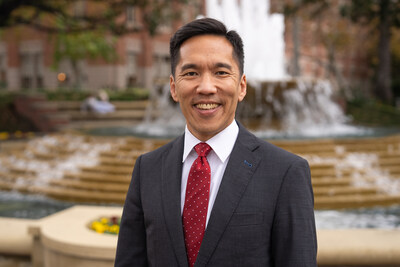
LOS ANGELES, Feb. 5, 2026 /PRNewswire/ — The Board of Trustees for the University of Southern California (USC) announced today, Feb. 4, 2026, the unanimous appointment of Beong-Soo Kim as the university’s 13th president following a highly competitive and comprehensive search process. Kim will immediately assume his new position.

“The Board’s unanimous vote reflects what we learned throughout the search process: widespread confidence in Beong’s leadership. As a next generation president, we believe that he can dramatically accelerate USC’s institutional advancement as a distinctive leader in higher education during a time of unprecedented change,” said Suzanne Nora Johnson, Chair of the USC Board of Trustees. “During his service as Interim President, we recognized his demonstration of our core values, which included his impeccable character, his engagement and respect for all members of our university community, his courage in making and owning difficult and complex decisions, and his commitment to excellence in all that we do.”

Serving as Interim President since July 1, 2025, Kim has positioned the university to deepen its academic impact across the nation and the globe, fostered interdisciplinary research, and unlocked transformative philanthropic support. By collaborating closely with the Board of Trustees, senior leadership, academic deans, faculty, staff, students, and alumni worldwide, he has also established a strong foundation of trust across the Trojan Family.

“I am deeply honored by the confidence the Trojan Family and Board of Trustees have placed in me,” said Kim. “USC is a very special place, and we are uniquely positioned to advance our mission and impact during this period of change across higher education. Our unwavering commitment to academic excellence, groundbreaking research, and global impact positions us to shape the future – not just respond to it. Together with our accomplished faculty and dedicated staff, we will prepare the next generation not just for the jobs of tomorrow, but to provide the leadership and solutions our world needs.”

As president, Kim will continue to advance USC’s core mission: prioritizing academic excellence, cultivating future leaders, addressing complex societal challenges through collaboration and open dialogue, and advancing interdisciplinary scientific research. His Presidential Open Dialogue Project and the AI Strategy Committee, launched during his time as Interim President, created university-wide forums that address the critical challenges of the 21st century.

Kim recently co-hosted USC’s first-ever AI Summit which brought together students, faculty, and industry leaders to explore AI’s impact on education, business, and society, addressing both opportunities and ethical challenges. The event positioned USC as a leader in shaping conversations about responsible AI development and reflected Kim’s commitment to bridging academic research with real-world entrepreneurship.

To further leverage the expertise on USC’s campuses and more directly involve faculty in key university decisions, Kim brought deans into the President’s Cabinet to advance his top strategic priorities, and established a Faculty Advisory Committee reporting directly to him and representing faculty from many of the schools.

“Beong has already demonstrated a deep commitment to advance USC’s academic mission working alongside our outstanding faculty. His lofty ambitions and sustained dedication will guide the university to even greater scholarly accomplishments,” said Dana Goldman, Founding Director of the USC Schaeffer Institute for Public Policy & Government Service.

As part of his commitment to extending USC’s thought leadership, Kim started a podcast, “Trojan Talks,” which he has used to communicate USC’s priorities, research, and leadership to wider audiences. Guests have included Dean Willow Bay, Jonathan Haidt, Dr. Indy Gill, Professor Eileen Crimmins, and others.

“Since becoming Interim President, Beong has been instrumental in cultivating support for our research and elevating awareness for our groundbreaking advances to cure blindness,” said Mark Humayun, MD, PhD, Director of the USC Dr. Allen and Charlotte Ginsburg Institute for Biomedical Therapeutics and Co-Director of USC Roski Eye Institute. “I strongly believe that universities today must demonstrate real-world impact and I look forward to helping Beong so that USC’s biomedical discoveries reach the global stage and the communities that need them most.”

Over the past seven months, Kim has met with more than 40,000 members of the Trojan Family on USC’s campuses in Los Angeles and Washington, D.C., as well as at events around the world, engaging students, faculty, staff, researchers, and alumni.

“Beong stepped into the interim role with transparency, authenticity, and a strong commitment to all constituents: staff, students, and faculty,” said Erika Chesley, Senior Associate Director, USC Hospitality. “He listened openly, welcomed diverse perspectives, and adapted thoughtfully as circumstances evolved. His non-traditional background proved to be a strength, offering a fresh and steady approach at a time when change required both honesty and compassion. I look forward to continuing our conversations around staff experience as he builds on the strong foundation established during the interim period.”

In India, he recognized and celebrated the powerful legacy of the late USC Trustee Ratan Tata and underscored USC’s long-standing relationships with international students. And at the USC Norris Cancer Hospital, he met with patients, physicians, nurses, faculty, and Keck Medicine leadership. Throughout his interactions, his approach has been consistent: visionary leadership grounded in compassion, intellectual curiosity, and active listening.

“Beong’s commitment to USC is extraordinary,” said Carmen Nava, USC Trustee and Co-Chair of the Presidential Search Committee. “He possesses exceptional diplomatic skills and has made decisive decisions that have maintained the university’s academic mission and preserved the institution’s long-term financial health. Throughout difficult moments, Beong has led with transparency, open communication, and genuine care for our Trojan Family. His approach to the challenges facing higher education – marked by open mindedness and personal integrity – is exactly what USC needs at this critical juncture.”

“Beong demonstrated exceptional leadership during one of the most challenging periods not only in higher education, but in the nation,” said Mark Stevens, USC Trustee and Co-Chair of the Presidential Search Committee. “He navigated complex challenges while positioning USC for growth, all without losing sight of our central mission. His work connecting USC’s strengths and deepening community ties is already reshaping what’s possible for our students and the broader Trojan family.”

Kim’s career spans higher education, health care, legal practice, and public service. He previously served as USC’s Senior Vice President and General Counsel, and as a lecturer at the USC Gould School of Law. Kim helped guide USC through the Covid-19 pandemic, built stronger compliance systems and trust across the university, advocated for both academic freedom and non-discrimination, and strengthened governance across the health system and health sciences schools.

Prior to joining USC, he held senior roles at Kaiser Permanente, served as a partner in an international law firm, and served as a federal prosecutor in the United States Attorney’s Office for the Central District of California. Kim earned his bachelor’s degree and Juris Doctor from Harvard University and a master’s degree from the London School of Economics.

A Los Angeles native, Kim’s personal connection to USC runs deep. He is the son of Korean immigrant parents who both pursued graduate studies at USC. His mother earned her master’s degree in education in 1970, and his father completed PhD coursework in economics. As a student at Calabasas High School, Kim studied the cello and chamber music under the tutelage of two legendary professors at the USC Thornton School of Music, Eleonore and Alice Schoenfeld. During the pandemic, Kim performed “porch concerts” with his wife Bonnie Wongtrakool to bring calm to his neighborhood and has gone on to perform with students, and for faculty, staff, students, and patients at USC’s University Park and Health Sciences Campuses.

“Playing cello for most of my life has taught me that excellence demands listening, timing, and harmony. USC works the same way: exceptional people working together toward a shared mission none of us could accomplish alone. My job as president is orchestrating that collective effort,” said Kim.

Kim’s selection reflects a comprehensive and thoughtful search process that valued the robust feedback provided by the Trojan Family.

“On behalf of the Board of Trustees, I want to extend our deepest gratitude to our Presidential Search Committee chairs for their outstanding stewardship during this process,” said Suzanne Nora Johnson. “Their commitment to hosting a thorough and inclusive search that engaged the entire Trojan Family resulted in an outstanding outcome for USC’s future. Their work will have a lasting impact on the university for generations to come.”

About USC

Founded in 1880, the University of Southern California is one of the world’s leading academic research institutions with 23 schools, a multi-billion-dollar health enterprise, and a vast research and development engine. The university enrolls 46,000 highly accomplished undergraduate and graduate students and employs 4,600 faculty who are members of major national academies, and MacArthur, Academy Award, and Pulitzer Prize winners, among many others. USC has a nationally recognized athletic program and a passionate global network of 500,000 alumni – the Trojan Family. Located in the heart of Los Angeles, USC is a powerhouse of innovation and impact with a global reach.

Henry Kofman/Daily Trojan


/UPDATE FOR COMPLETENESS — Office of the Chair of the International AI Safety Report/

In the news release, 2026 International AI Safety Report Charts Rapid Changes and Emerging Risks, issued on February 3 by Office of the Chair of the International AI Safety Report over PR Newswire, we are advised by the organization that changes have been made. The complete, updated release follows, with additional details at the end:

2026 International AI Safety Report Charts Rapid Changes and Emerging Risks

MONTREAL, Feb. 3, 2026 /PRNewswire/ — The 2026 International AI Safety Report is released today, providing an up-to-date, internationally shared, science-based assessment of general-purpose AI capabilities, emerging risks, and the current state of risk management and safeguards.

Chaired by Turing Award-winner Yoshua Bengio, this second edition of the International AI Safety Report brings together over 100 international experts and is backed by an Expert Advisory Panel with nominees from more than 30 countries and international organisations, including the EU, OECD and UN. The Report’s findings will inform discussions at the AI Impact Summit hosted by India later this month.

Key highlights of the Report include:

  • General-purpose AI capabilities have continued to improve rapidly, especially in mathematics, coding, and autonomous operation. In 2025, leading AI systems achieved gold-medal performance on International Mathematical Olympiad questions, exceeded PhD-level expert performance on science benchmarks, and became able to autonomously complete some software engineering tasks that would take a human programmer multiple hours. Performance nevertheless remains “jagged,” with systems still failing at some seemingly simple tasks.
  • AI adoption has been swift, though uneven globally. AI has been adopted faster than previous technologies like the personal computer, with at least 700 million people now using leading AI systems weekly. In some countries, over half of the population uses AI, though across much of Africa, Asia, and Latin America, estimated adoption rates remain below 10%.
  • Incidents related to deepfakes are on the rise. AI deepfakes are increasingly used for fraud and scams. AI-generated non-consensual intimate imagery, which disproportionately affects women and girls, is also increasingly common. For example, one study found that 19 out of 20 popular “nudify” apps specialise in the simulated undressing of women.
  • Biological misuse concerns have prompted stronger safeguards for some leading models. In 2025, multiple AI companies released new models with heightened safeguards after pre-deployment testing could not rule out the possibility that systems could meaningfully help novices develop biological weapons.
  • Malicious actors such as criminals actively use general-purpose AI in cyberattacks. AI systems can generate harmful code and discover vulnerabilities in software that criminals can exploit. In 2025, an AI agent placed in the top 5% of teams in a major cybersecurity competition. Underground marketplaces now sell pre-packaged AI tools that lower the skill threshold for attacks.
  • Many safeguards are improving, but current risk management techniques remain fallible. While certain types of failures, like “hallucinations,” have become less common, some models are now capable of distinguishing between evaluation and deployment contexts and can alter their behaviour accordingly, creating new challenges around evaluation and safety testing.

Chair of the Report Yoshua Bengio, Full Professor at Université de Montréal, Scientific Director of LawZero and Scientific Advisor of Mila – Quebec AI Institute, said:

“Since the release of the inaugural International AI Safety Report a year ago, we have seen significant leaps in model capabilities, but also in their potential risks, and the gap between the pace of technological advancement and our ability to implement effective safeguards remains a critical challenge. The Report is intended to provide decision-makers with the rigorous evidence needed to steer AI toward a future that is safe, secure, and beneficial for all. With its second edition, we are updating and strengthening our shared, science-based understanding of the rapid evolution of frontier AI on a global scale. “

UK Minister for AI, Kanishka Narayan said:

“Trust and confidence in AI are crucial to unlocking its full potential. It’s a technology which will deliver better public services, new job opportunities and innovations that will change lives. But we are also determined to keep people safe as this technology develops. Responsible AI development is a shared priority, and we can only shape its future to deliver positive change if we work together. This report helps us do exactly that – bringing experts from around the world to ensure we have a strong scientific evidence-base to take the right decisions today which will lay the foundation for a brighter and safer future.”

Ashwini Vaishnaw – Minister of Railways, Information & Broadcasting and Electronics & Information Technology, Government of India – said:

”As Al systems grow more capable, safety and security remain critical priorities. The Report highlights practical approaches of model evaluations, dangerous capability thresholds and ‘if-then’ safety commitments to reduce high-impact failures. Our global risk management frameworks are still immature, with limited quantitative benchmarks and significant evidence gaps. These gaps must be addressed alongside innovation. For India and the Global South, Al safety is closely tied to inclusion, safety and institutional readiness. Responsible openness of Al models, fair access to compute and data, and international cooperation are essential too. As host of the 2026 India Al Impact Summit, India has a key role in shaping global Al safety efforts. The Report is intended to help policymakers, researchers, industry and civil society shape national strategies.”

About The International AI Safety Report

The International AI Safety Report is a synthesis of the evidence on the capabilities and risks of advanced AI systems. It is designed to support informed policymaking globally by providing an evidence base for decision-makers. Chaired by Prof. Yoshua Bengio and authored by a diverse group of over 100 independent experts, the Report is backed by an Expert Advisory Panel composed of nominated representatives from over 30 countries and international organisations including the EU, OECD and UN. While acknowledging AI’s immense potential benefits, the Report’s focus is on identifying risks and evaluating mitigation strategies to ensure AI is developed and used safely for the benefit of all. The Report was commissioned by the UK Government with the Secretariat sitting in the UK AI Security Institute to provide operational support.

Update: This version of the release includes an anchored link in the 1st paragraph (under words ‘2026 International AI Safety Report’) and an additional quote at the end of the release.

Robin Zeng: Unlocking the Sustainable Energy Era with Zero-Carbon Technology

NINGDE, China, Feb. 5, 2026 /PRNewswire/ — Dr. Robin Zeng, Chairman and CEO of CATL, delivered a speech about the future of energy at the World Laureate Summit and the World Governments Summit in Dubai, the UAE on Feb. 3. Full text below:

Throughout human history, energy has been the driving force behind civilization’s growth. Every major leap in human development has been accompanied by an energy revolution. Today, we are experiencing another revolutionary energy shift, one comparable to humanity’s transition from hunter-gatherers to agricultural societies — from an era where we track down and gather fossil fuels, to one where we can harvest energy in wind and solar farms and store it in batteries.

This revolution is enabled by science and technology progress, which delivers practical solutions and drives down costs. According to the IEA and BNEF, over the past decade, the cost of LFP batteries and solar has fallen by about 80%. Sustainable energy solutions have evolved from being technically feasible to becoming an economically compelling choice.

CATL is enabling renewable energy to achieve true economic competitiveness across a range of applications. In the mining sector, solar-plus-storage systems powered by CATL have been deployed in Chile and the Democratic Republic of the Congo, supplying electricity to remote operations at about one-fourth the cost of diesel generators.

A similar transformation is underway in industrial applications. In Pakistan, the rapid growth of distributed solar, combined with CATL’s energy storage solutions, is providing reliable power to local cement plants, cutting electricity costs by half.

In California, we see what future power systems will look like at the grid scale. As storage capacity expands, the “duck curve” created by high renewable penetration has been significantly eased. In 2025, the grid recorded more than 1,800 hours when clean energy met or exceeded total electricity demand, showing what becomes possible when renewables and storage grow together.

These developments point to a broader reality: in many regions, clean energy is being adopted not just for climate goals, but also because technological progress has made it the most commercially viable option.

We are embracing the profound shift towards a net-zero energy era. The future energy system, to my mind, can be defined by three words: distributed, intelligent, circular.

First, distributed power systems, which include renewable generation and advanced battery storage, will mushroom across the world, especially in areas with weak grid infrastructure. This will replace a lot of fossil fuel energy, which is centralized and relies heavily on large-scale power plants and a strong grid.

However, a high proportion of renewable energy introduces new challenges to the stable operation of power systems. To address those challenges, CATL has developed an innovative high-voltage grid-forming energy storage technology, which can act as a stabilizer for zero-carbon energy systems. It can provide grid frequency regulation, reactive power compensation, damping control, and system inertia support. It also offers excellent black-start capabilities, which are crucial in the case of large-scale blackouts, like the one hit Spain last year.

This technology has been successfully validated in engineering, and in China we are applying this technology to build an off-grid industrial park, which is powered entirely by wind, solar, and storage to supply a 40GWh battery plant. It showcases how advanced energy technology can create a net-zero power system.

Beyond being distributed, future energy systems will be more intelligent. They will be able to handle vast amounts of data and adjust to fluctuations in renewable power generation and consumption. Advanced AI-driven scheduling and optimization will be required to balance energy supply and demand. For instance, we use AI to enhance energy system management for SenseTime’s AI Data Center in Shanghai, helping manage the fluctuating energy demand of computing tasks.

Thirdly, circular economy is crucial for achieving zero-carbon energy. Unlike fossil fuels, which are burned upon use, materials for zero-carbon energy systems can be recycled. CATL has been at the forefront of this effort, and we have achieved the highest recovery rates in the industry—99.6% for nickel and cobalt, and 96.5% for lithium. To build a stable, sustainable supply of critical raw materials, we are also working closely with NGOs and industry peers to promote a circular economy in the sector.

Driven by continued progress in zero-carbon technologies, a sustainable energy era is no longer a distant vision — it is approaching rapidly. In my estimate, 2030 will mark the true beginning of the sustainable energy era.

How can we get there? My answer is: science shows us what is possible, but engineering and manufacturing determine how fast we get there.

Basic science remains the ultimate source of transformation. Breakthroughs in material science, artificial intelligence, and new energy systems will continue to shape what the future can look like. To be honest, with today’s technologies, we may have solved less than 30% of what a fully sustainable energy system require. Many disruptive technologies have yet to emerge, and much foundational research still lies ahead.

For technology to truly change the world, it must move beyond labs and be deployed at scale. Today, we have made scientific and technological breakthroughs in frontier areas such as condensed batteries, solid-state batteries, and perovskite solar batteries. Yet there is still much more to do to scale these innovations from the lab to the market. That is why we are investing heavily in R&D – more than all other players in the industry combined.

While fighting global warming appears to be a climate issue, it is in essence an energy issue, and fundamentally, a development issue. We believe international cooperation is the most efficient way to tackle it, and we are willing to share battery technologies and experiences with the world. We have evolved from exporting batteries in the early days, to “local production, for local markets” now. We are also licensing technologies to our partners to help them build their own battery plants.

To accelerate the transition to a sustainable energy era, we need to scale up advanced energy technologies in a more efficient and affordable manner globally. However, in some markets, in our experience, building and equipment regulations are the cause of higher cost of production. I would like to propose a solution: setting up special economic zones that adopt similar regulations of building and equipment which are practiced in China. This will quickly scale up productivity, as it has been proven successful in China.

Ladies and gentlemen, a recent study by Columbia University projects a 1.7 degrees C temperature rise above the pre-industrial level in 2027. To tackle global warming, we need to take immediate action to build a sustainable energy system. This requires technology breakthroughs, courage and wisdom.

As a pioneer of the energy transition, CATL is willing to work more closely with the scientific community, governments, businesses, and anyone who is committed to the mission. Let’s work together towards a net-zero energy future, and leave a healthy, green Earth for future generations to come.

SenseTime’s AI Data Center in Shanghai

Silicon Quantum Computing Launches Quantum Twins™ Enabling the Simulation of Quantum Physics and Chemistry

15,000 qubit registers patterned on pure silicon with atomic precision provide an unparalleled understanding and ability to model quantum systems

SYDNEY, Feb. 5, 2026 /PRNewswire/ — Silicon Quantum Computing (“SQC”), a leader in quantum computing and quantum machine learning, today announced the launch of Quantum Twins, an application-specific quantum simulator designed to accelerate molecule and materials discovery. Built utilizing the company’s atomic-scale semiconductor manufacturing process, Quantum Twins showcases the exceptional precision and already-achieved scalability of SQC’s full-stack approach to quantum computing.

Quantum Twins are comprised of large arrays of qubit registers (quantum dots) patterned on pure silicon with 0.13 nanometer (atom level) accuracy. This exquisite precision enables SQC to create custom chips – Quantum Twins – that physically encode direct replicas of the physical systems and chemical interactions that customers wish to analyse and understand.

This world-first product provides a pathway to simulation of quantum systems that is impossible for classical computers. Quantum Twins provide an enhanced understanding of quantum interactions. Analysing magnetism, atomic interaction and superconductivity at this scale will pave the way for novel information storage, low power electronics and broad materials discovery. Details on the scientific foundation of this platform were published today in Nature, a system including 15,000 qubit registers.

The launch follows a period of rapid expansion in SQC’s manufacturing capabilities. In November 2025, the company demonstrated the ability to pattern 250,000 qubit registers in just eight hours, de-risking the required manufacturing yields and volumes needed to deliver commercial-scale, fault-tolerant quantum computers. As a full-stack company, SQC can design, produce and test new quantum chips in under a week. It’s one of the many key advantages of the company’s 14|15 platform in the race to deliver the world’s first commercial scale quantum computer.

SQC’s Founder and CEO, Michelle Simmons, said: “Quantum Twins represents a window into the quantum world that customers can use for materials discovery today. The enabler is that we can engineer hundreds of thousands of qubit registers with atomic precision. It’s an incredible achievement in semiconductor manufacturing with sub-nanometer accuracy.”  

SQC’s Chair and former ARM CEO, Simon Segars, added: “Expanding our product offering with the launch of Quantum Twins brings SQC’s atomic-scale advantage to the global materials and chemistry sectors. Having demonstrated commercial success with our quantum machine learning system, Watermelon, SQC’s latest offering is a definitive signal of our world leading manufacturing precision and scalability.”

SQC debuted its multi-qubit, multi-register processor last month with industry-leading fidelities up to 99.99% and performance that improves as the system scales. The company recently progressed to Stage B of DARPA’s Quantum Benchmarking Initiative and its quantum machine learning system, Watermelon, is already delivering impact across a variety of sectors including telecommunications and defence.

Quantum Twins are now available via direct contract with SQC. For more information, visit www.sqc.com.au.

About Silicon Quantum Computing

Silicon Quantum Computing (“SQC”) is at the forefront of global efforts to build a commercial-scale quantum system. Leveraging over 25 years of technological excellence and delivery, SQC’s proprietary machines and processes allow the company to see and control matter atom-by-atom. SQC’s atomically engineered quantum machine learning chips and universal quantum computing systems have demonstrated world-leading algorithmic fidelity, positioning the company at the forefront of quantum innovation. Controlling its own QPU manufacturing means that SQC can design, produce and test new systems every week while delivering quantum machine learning and simulation systems to customers today. The company was founded in 2017 and is headquartered in Sydney, Australia.

Media Contact
Noah Bethke, Head of Media & Public Relations
Silicon Quantum Computing
noah.bethke@sqc.com.au

Arasan’s ultra low power MIPI D-PHY IP achieves ISO26262 Certification

Arasan Announces ISO 26262 Functional Safety Certification for its ultra low power MIPI D-PHY IP 

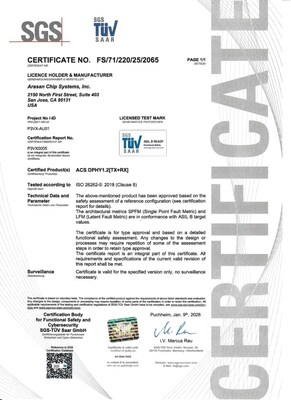
SAN JOSE, Calif., Feb. 4, 2026 /PRNewswire/ — Arasan Chip Systems, the industry’s first provider of IP for the MIPI standards today announced that its 2’nd generation ultra low power MIPI® D-PHY IP has achieved ISO 26262 functional safety certification. Arasan has been an executive member of the MIPI Association since 2005 and offers the broadest MIPI IP portfolio.  The ISO 26262 certified MIPI D-PHY IP is available for immediately licensing on foundry nodes from 40nm to 4nm. Additional safety collateral and technical details are available to qualified customers upon request under NDA.

Arasan MIPI D-PHY ISO 26262 ASIL-B Certification

The ISO 26262 Certified MIPI D-PHY IP is seamlessly integrated with Arasan’s ISO 26262 Certified MIPI CSI-2 IP for Camera Applications and MIPI DSI-2 IP for Display Applications providing a Total ISO 26262 Certified MIPI Display and Camera IP Solution. Arasan also offers its VESA DSC Encoder and Decoder IP seamlessly integrated with its DSI-2 and D-PHY IP for the display interface in SoC’s. The MIPI D-PHY IP can be configured as Tx only or Rx only to save on area and power.

ISO 26262 Certification confirms that Arasan’s MIPI D-PHY IP seamlessly integrated with its DSI-2 IP and CSI-2 IP meets stringent automotive safety requirements, supporting system developers as they design advanced driver assistance systems (ADAS), digital cockpits, surround-view systems, and other camera and display‑intensive automotive platforms.

“With the growing number of cameras and high‑resolution displays in modern vehicles, reliable high‑speed connectivity is critical,” said Prakash Kamath, CTO at Arasan Chip Systems. “Achieving ISO 26262 certification for our latest version of the MIPI D-PHY IP demonstrates our commitment to delivering proven, automotive‑grade IP that customers can deploy with confidence in safety‑critical designs.”

Arasan also offers the MIPI I3C IP which can be used for camera or display control in addition to audio IP like MIPI Soundwire and MIPI SWI3S. All digital IP’s come with seamlessly integrated PHY IP and software stack.

Arasan Chip Systems is a leading provider of standards‑based silicon IP, delivering high‑quality interface, memory, and system IP to customers worldwide. Arasan’s IP is used in billions of devices across mobile, automotive, consumer, and enterprise markets. For more information on Arasan MIPI D-PHY IP, please visit https://www.arasan.com/products/mipi/mipi-phys/d-phy-1-2/

About Arasan:

Arasan Chip Systems has been an active member of the MIPI Association since 2005, providing IP solutions for mobile storage and connectivity interfaces. With over a billion chips shipped incorporating Arasan’s MIPI IP, the company has established a reputation for delivering high-quality, silicon-proven Total IP Solutions, encompassing digital IP, AMS PHY IP, Verification IP, HDK, and Software. Arasan’s focus lies in mobile SoCs, which have evolved to encompass a wide range of applications, from PDAs in the mid-’90s to today’s automobiles, drones, and IoT devices. Arasan remains at the forefront of this “Mobile” evolution, providing standards-based IP that forms the foundation of Mobile SoCs.


Agility: Global Logistics Execs Predict Volatile 2026

Industry looks to AI, cost controls, supply chain re-engineering as tools to cope

ABU DHABI, UAE, Feb. 5, 2026 /PRNewswire/ — Logistics executives are bracing for a year of volatility in trade, geopolitics and the global economy, and managing uncertainty by turning to AI, scrutinizing costs, and reconfiguring their supply chains, according to the 2026 Agility Emerging Markets Index.

Logistics executives expect a volatile 2026 and are turning to AI, cost discipline, and supply‑chain redesign, according to the 2026 Agility Emerging Markets Index.

In a survey of 503 industry professionals, 86% say they expect increased volatility in 2026 or view trade, political and economic turbulence as the “new normal.”

The Agility survey shows near-universal logistics industry adoption of AI. Ninety-eight percent of respondents say their companies are using artificial intelligence to manage a piece of their supply chain or operations. The survey also suggests that shifts in global production and sourcing – spurred first by COVID, then U.S.-China friction, and last year by a wave of tariff increases – are continuous today as companies restructure and fine tune their supply chains.     

“Leaders in business and government realize there is no comfort zone, no time to rest. They’re searching for durable paths to growth at a time of extraordinary uncertainty,” says Agility Chairman Tarek Sultan. “They see AI as both a contributor to volatility and a tool to manage it. They’re facing new trade barriers in real time. They’re pushing the energy transition, and they’re navigating conflict between economic partners.”

The survey and Index are Agility’s 17th annual snapshot of industry sentiment and ranking the world’s 50 leading emerging markets. The Index ranks countries for overall competitiveness based on domestic and international logistics strengths, business climates and digital readiness — factors that make them attractive to logistics providers, freight forwarders, air and ocean carriers, distributors and investors.

The 2026 Index features in-depth analysis of the Arabian Gulf economies. Individually and as a group, the six Gulf countries are positioning themselves as global transit and logistics hubs, investing heavily in AI, energy transition, and talent development. The GCC area is “thriving” as a trade crossroads, strengthened by rapid adoption and scaling of AI, and its ability to remain on good terms with both the U.S. and China. “Volatility won’t derail (Gulf) ambition,” the Index says.

Stability prevailed at the top of the 50-country Index rankings. China, India, UAE, Saudi Arabia, Malaysia, Indonesia, Qatar, Mexico, Thailand and Brazil rank in the top 10 in the 2026 Index.

The six Gulf countries all are among the top 12 for best business conditions, while the countries most digitally ready are China, Malaysia, India, UAE, and Saudi Arabia.

In international logistics opportunities, China, India, Mexico, UAE and Saudi Arabia rank highest. In domestic logistics, the leaders are China, India, Indonesia, Qatar and Saudi Arabia. 

2026 Index Highlights

SURVEY

  • Supply Chains – Supply chain diversification and reconfiguration by global companies is continuous today. Ninety-seven percent of executives surveyed say their companies have or will soon shift some production and sourcing.
  • Risks – Companies see tariffs and trade protection as the risk they are least prepared for. The leading tools they are using to cope with trade turmoil: supplier diversification, freight consolidation and strategic warehousing.
  • Sustainability – A significant percentage – 48% — say they their companies are pausing or slowing on sustainability. The most frequently cited reasons: cost-cutting, shifting business priorities, and difficulty showing return on investment.

Transport Intelligence (Ti), a leading analysis and research firm for the logistics industry, has compiled the Index since it was launched in 2009.

John Manners-Bell, Chief Executive of Ti, said: “One phrase which came up time and again throughout our research was ‘structural uncertainty’ — caused by geopolitical fragmentation, trade policy volatility and uneven economic momentum. The Index confirms that supply chain companies aren’t retreating from this uncertainty but instead are engineering around it. Looking at emerging markets, we see advanced digital tools being embedded in some while others are constrained by skill, infrastructure and access to capital. Since its inception, the Agility Emerging Market Index has enabled investors to differentiate between those countries which have fully embraced the opportunities and those which are lagging behind.” “

2026 Agility Emerging Markets Logistics Index: agility.com/2026index

About Agility

Agility is a multi-business operator and long-term investor in global and regional businesses. Its portfolio of diversified international assets includes the world’s largest aviation services company (Menzies Aviation); a global fuel logistics business (Tristar); a leading logistics parks developer and operator across the Middle East, Africa, and South Asia (Agility Logistics Parks); and other businesses in digital logistics, e-commerce logistics, remote-site services, and public-sector logistics. It holds minority stakes in DSV, the world’s largest freight forwarder; Reem Mall, a mega-mall in Abu Dhabi; commercial real estate and supply chain companies in the GCC, and emerging technology companies in e-commerce enablement, energy transition, digital supply chain, and more. Agility Global has a global footprint across six continents and 80+ countries, with a workforce of 68,000 employees. It is publicly listed on the Abu Dhabi Securities Exchange (ADX).

For more information about Agility, visit:
Website: www.agility.com
Twitter: twitter.com/agility  
LinkedIn: linkedin.com/company/agility
YouTube: youtube.com/user/agilitycorp


Finally, a Natural Alternative to Acacia Gum in Beverages

RIVER FALLS, Wis., Feb. 5, 2026 /PRNewswire/ — Fiberstar, Inc., the leader of innovative citrus fibers launched an all-natural alternative to acacia gum – Citri-Fi® Pro. For decades, the beverage industry has been searching for an acacia gum replacement due to the geopolitical instability in the Sudan region which is causing humanitarian crises thus posing a question surrounding ethical sourcing. The beverage industry uses acacia gum (gum arabic) extensively to create emulsions.

“This new acacia gum alternative, Citri-Fi Pro, comes at a time when beverage makers are desperately seeking a substitute,” says President and CEO of Fiberstar, Inc. John Haen. “Directives such as the proposed EU Corporate Sustainability Due Diligence Directive (CSDDD) would mandate large companies to identify and mitigate human rights and environmental risks across their global operations and supply chains which in the end will affect their ability to source acacia gum from war zones in the future.”

Citri-Fi Pro is a groundbreaking innovative citrus fiber designed to replace up to 75% of acacia gum or modified food starch in beverages. As a result, this natural food ingredient provides significant cost-in-use savings. Because Citri-Fi Pro is naturally derived, responsibly sourced and backed by a stable, transparent supply chain, this citrus fiber gives global beverage brands a reliable path to maintain beverage quality over time while meeting clean-label, sustainability and risk-mitigation goals.

Citri-Fi Pro is allergen-free and gluten-free. Labeling options include citrus fiber, dried citrus pulp or citrus flour which resonate well in the natural beverage markets.

For more information, please contact CF-Pro@fiberstar.net

About Fiberstar, Inc.: Fiberstar, Inc. www.FiberstarIngredients.com is a privately held innovative biotechnology Company focused on enhancing food performance by manufacturing and marketing value-added, plant-based food ingredients. Its largest brand, Citri-Fi®, is a natural, high performing citrus fiber sustainably produced from citrus fruit. The physical process, which is free from chemical modifications, creates high water holding and clean emulsification properties which benefit meat, dairy, bakery, dressings, sauces, frozen food, beverages, pet food, dairy alternatives and meat substitutes. Citri-Fi is GRAS, non-allergenic, non-GMO Project certified and has no E-number. Headquartered in River Falls, Wisconsin with manufacturing in Florida and Wisconsin.

Media Contact 
marketing@fiberstar.net