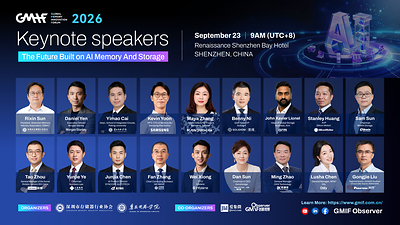
SHENZHEN, China, Sept. 20, 2026 /PRNewswire/ — On September 23, the 5th Global Memory Innovation Forum (GMIF2026) will be held in Shenzhen, China, at the Renaissance Shenzhen Bay Hotel. Co-hosted by the Shenzhen Memory Industry Association and School of Integrated Circuits at Peking University, GMIF2026, themed “The Future Built on AI Memory and Storage,” will offer a comprehensive perspective on the memory and storage value chain through the lens of the token economy. The event brings together leading enterprises, distinguished technical experts, and industry leaders from across the global storage and semiconductor supply chain to examine emerging trends, evolving demands, and new avenues of collaboration in the AI era.
Meet the Keynote Speakers at Global Memory Innovation Forum 2026
In the exhibition area, 39+ exhibitors will bring 300+ innovations spanning the full memory & storage and semiconductor stack — wafer IDMs, controller makers, solution providers,OSATs, equipment vendors, platform companies, AI compute and server makers, and end-application companies. It’s a rare chance to meet the entire memory & storage landscape in one place, get a read on where AI memory & storage tech is headed, and strike up conversations that could turn into real deals.
Register now to lock in your spot at GMIF2026 — get ahead of the trends in the AI memory and storage industry, meet the people shaping the industry, and open doors to your next opportunity.
About GMIF
Global Memory Innovation Forum (GMIF) is a premier annual gathering that connects the global memory and storage community. Featuring diverse activities including keynote speeches, roundtable dialogues, supply-demand match-making, product showcases, industry rankings, awards programs, and global livestreaming, GMIF brings together key enterprises across the memory and storage chain, technical experts, terminal companies and investment institutions to exchange insights, build partnerships, and create business opportunities.
NANNING, CHINA – Media OutReach Newswire – 20 September 2026 – On September 16, as an international science and technology exchange platform included in the list of cooperation initiatives for the series of leaders’ meetings on East Asia cooperation, the Fourth Forum on China-ASEAN Artificial Intelligence Cooperation was successfully held in Nanning, Guangxi. With the theme of “AI for Industries, Digitalization for Shared Future”, this forum was co-hosted by the China-ASEAN Technology Transfer Center, the China-ASEAN Innovation Cooperation Center for Artificial Intelligence, the Department of Science and Technology of Guangxi Zhuang Autonomous Region, and the Guangxi Institute of Industrial Technology. More than 700 government representatives, research scholars, tech entrepreneurs, and venture capital representatives from China and ASEAN countries gathered on site, focusing on three major directions, namely embodied intelligence, AI finance, and data circulation, discussing collaborative technological innovation, jointly pursuing industrial digital transformation, and comprehensively deepening pragmatic cooperation between China and ASEAN in the field of artificial intelligence.
Fourth Forum on China-ASEAN Artificial Intelligence Cooperation Successfully Held in Nanning, Drawing Over 700 Delegates
Coinciding with the historic milestone of the Pinglu Canal being completed and navigable, a canal opens up a physical trade corridor between China and ASEAN, opening a new chapter of digital economy collaboration. “Goods Flow Across Rivers and Seas, Digital Intelligence Connects ASEAN” has become the most distinctive symbol of the era at this forum. The forum closely follows the differentiated development path of “R&D in Beijing, Shanghai, and Guangzhou + Integration in Guangxi + Application in ASEAN”, solving problems through technological breakthroughs, gathering momentum through industry-finance linkage, and promoting effectiveness through scenario implementation, to deepen and solidify China-ASEAN AI cooperation.
Technology empowers the opening, creating a new paradigm of human-machine collaboration
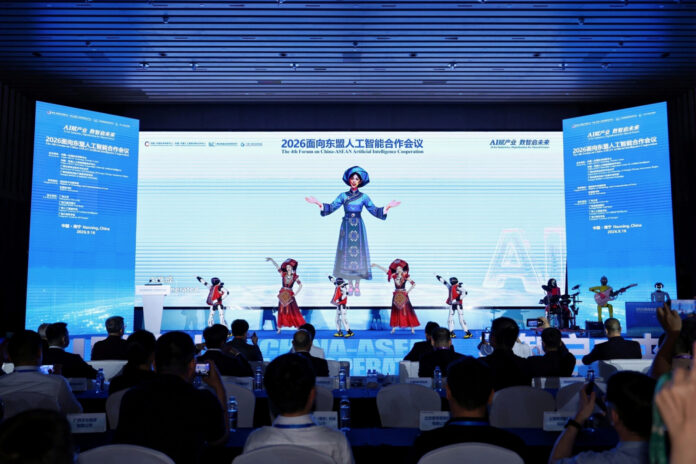
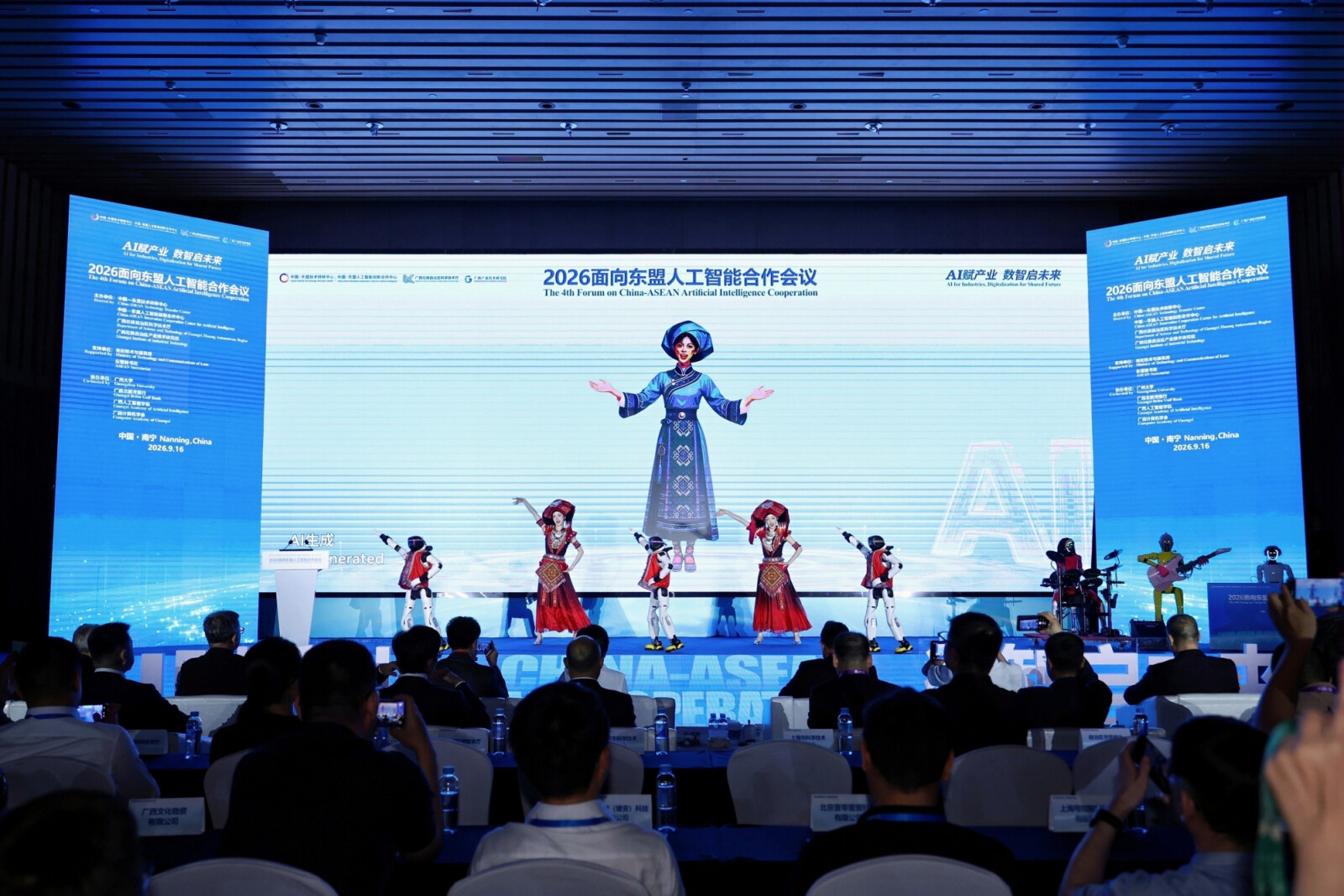
The forum kicked off with Guangxi’s classic ethnic song “Folk Songs like the Spring River”, where human dancers, dancing robots, accompaniment robots, and a digital crowd performing the folk song collaborated across disciplines to perform group collaborations. Relying on millisecond-level cluster scheduling technology, ethnic culture and embodied intelligence were deeply integrated to create an immersive technological audiovisual feast. This forum innovatively adopted a three-party collaborative hosting model of “human host + digital human avatar + intelligent robot”. Yang Yanqing, Professor of ShanghaiTech University, coordinated with her digital human avatar and AGIBOT Lingxi X2 to jointly host the forum, empowering the forum scene through technology, which became a major highlight of the event.
Dr. Padapxay SAYAKHOT, Director-General, Institute of Information and Communication Technology, Ministry of Technology and Communications, Lao PDR, Sun Ruijun, Director-General, China-ASEAN Technology Transfer Center, Secretary of the Party Leadership Group and Director-General, Department of Science and Technology of Guangxi Zhuang Autonomous Region, Secretary of the Party Committee, Guangxi Institute of Industrial Technology, delivered speeches in succession. Both sides stated that they will use this forum as a link to deepen the connection of scientific research and innovation, the implementation of industrial scenarios, and the coordination of policies and mechanisms, gather synergy for digital and intelligent development, and serve the building of a closer China-ASEAN community with a shared future.
Industry authorities gather, anchoring regional AI development directions
The speakers at the forum combined international breadth and professional depth, bringing together industry experts, academic and cutting-edge research forces, industrial technology, and cross-border implementation capabilities from ASEAN countries, forming a core high ground for intellectual exchange and gathering top intellectuals for China-ASEAN AI innovation and development.
Industry experts from ASEAN countries: Dr. Wasan Pattara-atikom, Vice President, National Science and Technology Development Agency, Thailand; Li Haizhou, Fellow of the Academy of Engineering, Singapore (SAEng), Dean of the School of Artificial Intelligence, the Chinese University of Hong Kong, Shenzhen; YAP Hwa Jen, Professor of Universiti Malaya, Managing Director of the UPUM Sdn. Bhd.;
Academic and cutting-edge research forces: Yang Chao, Professor of Peking University, Founder and Chief Scientist of Beijing 1011 Technology Co., Ltd.; Cui Peng, Professor of Tsinghua University and Chief Scientist of Stable AI (Xiong’an) Technology Co., Ltd.; Wang Shisong, Professor of Guangzhou University, Co-founder of Abelian (a quantum-resistant blockchain infrastructure);
Industry technology and cross-border implementation forces: Li Nan, Founder, Chairman, and CEO of Maimai Technology Group; Yao Yuan, Vice President of the Middle East Asia-Pacific Region Division, AGIBOT Innovation (Shanghai) Technology Co., Ltd.; Lyu Jun, Chief Scientist of Shanghai Noematrix Technology Co., Ltd.; Liu Liqi, General Manager of Data Strategy Department, X Square Robot Technology (Shenzhen) Co., Ltd.
The guests focused on three major directions, namely embodied intelligence, AI finance, and data circulation, exploring feasible paths for technological breakthroughs, ecosystem co-construction, and joint innovation. They covered the key stages of artificial intelligence from source research and development and technology transfer to industrial implementation and cross-border cooperation, achieving a two-way dialogue between cutting-edge academic theories and practical industry needs, and providing diverse perspectives and action ideas to bridge the regional digital divide and unlock the inclusive value of AI.
Five achievements released, strengthening the solid foundation for digital intelligence cooperation
At the forum, five scientific and technological innovation achievements were released together, constructing an AI innovation supply system oriented toward ASEAN from multiple dimensions including technology products, platform carriers, talent systems, and decision-making support.
1. The China-ASEAN Cross-Border Industrial Large Language Model: It covers multilingual capabilities and industry knowledge graph for ASEAN, integrates six major agents to collaboratively analyze business scenarios, and serves as a professional intelligent partner for Chinese enterprises to expand into the ASEAN market.
2. Achievements in AI Talent Development for ASEAN: Relying on the Guangxi Academy of Artificial Intelligence, a talent training model of “a dual-mentor system, dual-integrated teaching, dual training tracks, and an integrated master-doctoral program” has been created, achieving an international education pattern of enrolling at one university, earning credits from multiple universities, gaining practical experience in multiple countries, and strengthening talent support for cross-border AI cooperation.
3. “Guikerong” Sci-Tech Finance Digital-Intelligent Foundation Platform: Developed under the guidance of the Department of Science and Technology of Guangxi Zhuang Autonomous Region, it uses data-driven technology credit evaluation to open the value transformation chain of “technology, industry, and finance”, supporting the innovative development of technology-based enterprises.
4. Lao-Language Large Language Model (LLM) for the Energy and Power Sector: China’s first AI overseas project in the power industry, implemented on Electricite du Laos, exploring a new model of “Retaining Computing Power in Guangxi, Exporting Services Globally” for compliant token going global, providing a practical example for cross-border services in the energy sector.
5. “2026 China-ASEAN Artificial Intelligence Industry Development Study Report”: A panoramic overview of regional industrial policy environment, market scale, and application patterns, analyzing core industry development trends, and providing decision-making references for China-ASEAN AI industry cooperation.
Exhibition and negotiation are working together to build a pragmatic platform for exchange and cooperation
The forum adheres to the principles of “promoting research through exhibitions, cooperation through meetings, and implementation through business matchmaking”, simultaneously hosting the Special Session on AI: Bank-Enterprise Matchmaking and the Industry Supply-Demand Matchmaking and Technology Achievement Exhibition, achieving precise coordination between exhibition displays and business negotiations, and building a cross-border cooperation ecosystem deeply integrating industry, academia, research, and application.
The Technology Achievement Exhibition showcased high-tech products such as the General Embodied Intelligent Robot, Fingertip 3D Force Sensors, Integrated Land-Sea-Air Inspection Equipment, Smart Wall-Climbing Industrial Robot, and AI + Embodied Intelligence Teaching and Experiment Platform, covering key tracks like humanoid robots, industrial intelligent equipment, and education and training, demonstrating the innovative strength of domestic AI technology adaptation to ASEAN scenarios.
The venue also set up an immersive AI experience zone, where interactive projects such as coffee-making robots, agile robotic arms, AI customized cultural products, and unmanned retail attracted attendees to stop and experience the vivid effects of AI empowering people’s services up close, highlighting the development philosophy of technology for good and digital intelligence benefiting the people.
Focusing on collaborative win-win cooperation to jointly build a new pattern of regional development
As an international platform for scientific and technological exchange aimed at ASEAN, the Forum on China-ASEAN Artificial Intelligence Cooperation has been held consecutively for four sessions, bringing together more than 4,300 guests from China, foreign government, industry, academia, and research, facilitating the connection of over a hundred industrial projects, and becoming an important platform for the exchange of ideas, interconnection of technologies, and mutual industrial support between China and ASEAN in the field of artificial intelligence.
Looking to the future, China and ASEAN will continue to deepen cross-border joint innovation, promote the orderly flow of AI innovation elements, cultivate a vibrant and inclusive regional digital innovation ecosystem, facilitate digital intelligence benefiting regional industrial upgrading and livelihood development, and jointly build a new mutually beneficial and win-win pattern of China-ASEAN digital economy.
This forum was supported by the Ministry of Technology and Communications of Laos and the ASEAN Secretariat, and co-hosted by Guangzhou University, Guangxi Beibu Gulf Bank, Guangxi Academy of Artificial Intelligence, and Computer Academy of Guangxi.
The issuer is solely responsible for the content of this announcement.
SHANGHAI, Sept. 20, 2026 /PRNewswire/ — A news report from Yicai Global:
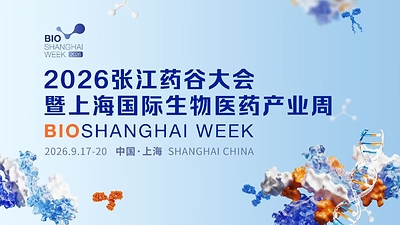
On September 17, the BioShanghai Week 2026 opened at Zhangjiang Science Hall in Shanghai. Themed “AI for Biopharma, Health for All,” this year’s event brings together innovation resources from around the world to foster an open, collaborative innovation ecosystem for the biopharmaceutical industry.
The opening ceremony marked the launch of the “Connect Globally: Shanghai–London Life Sciences Innovation Partnership.” The ceremony was attended by representatives of Chinese and British institutions, including Zhangjiang Group, Shanghai Minhang Biomedical Industry Development Co., Ltd., Shanghai Jiading Industrial Zone Development (Group) Co., Ltd., London & Partners, Imperial College London, and Oxford University Innovation. Going forward, London Life Sciences Week and BioShanghai Week will work more closely to connect research capabilities, industry resources, and innovation platforms in life sciences across China and the UK, creating an open, efficient platform for international exchange and cooperation.
The ceremony also unveiled the “Empower the Future: BioShanghai Investment and Financing Ecosystem Partnership,” bringing together representatives from domestic and foreign equity investment and financial institutions. These included Shanghai Industrial Investment (Holdings) Co., Ltd., Shanghai State-owned Capital Investment Co., Ltd., Advantech Capital, CBC Group, Pudong Venture Capital Group, GL Ventures, HongShan, Jefferies Financial Group, Guotai Haitong Securities, New Alliance Capital, YUNION Healthcare Ventures, and Shanghai Hongsheng Capital. Together, these partners will work to align capital with industry and build a biopharmaceutical capital ecosystem that supports companies at every stage of their life cycle.
The BioShanghai Week 2026 officially opened. Running from September 17 to 20, this event follows a “1+5+1+1” framework: one opening ceremony, five thematic tracks, one exhibition with matchmaking sessions, and one Bio-Tour of industry sites. It brings together entrepreneurs, investors, scientists, clinical PIs, and other key players to address practical challenges in frontier technologies, research commercialization, industry collaboration, and business growth. Activities are organized around five themes: Innovation Integration, Clinical Translation, Capital Empowerment, Ecosystem Services, and Coordinated Healthcare Development. To connect resources efficiently, formats such as “One Room One Topic,” closed-door discussion, project roadshows, one-on-one meetings, and Bio-Tour are adopted.
This year, BioShanghai Week returns with an upgraded format, aiming to position itself as a global bellwether for cutting-edge biopharmaceutical technologies and a gateway for cross-border collaboration. Over the years, Zhangjiang Pharma Valley has become an internationally recognized and influential signature brand of the biopharmaceutical industry. Pairing BioShanghai Week with the Zhangjiang brand will further raise both the profile and market vitality of Zhangjiang Pharma Valley, creating a premier annual dealmaking summit that connects global capital with Chinese pharmaceutical innovation and takes Chinese breakthroughs to global markets. These efforts will support Shanghai’s ambition to become “the world’s most supportive city for innovative drugs and medical devices.”
The 2026 Jiading District Biopharmaceutical Industry Development Promotion Conference and the 2026 Minhang District Biopharmaceutical Ecosystem Promotion Conference were held on the same day. Both events support Shanghai’s drive to develop high-end medical device industry clusters and help land innovation resources and outcomes in the city.
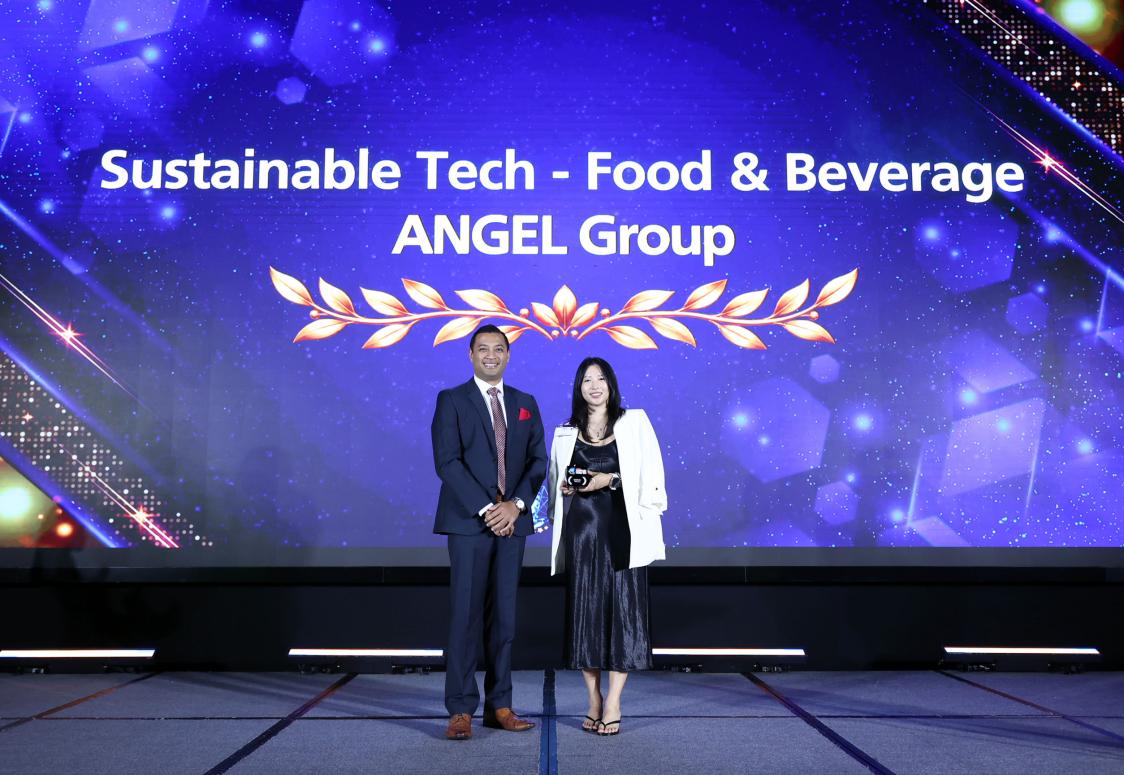
BANGKOK, THAIALND – Media OutReach Newswire – 20 September 2026 – ANGEL has been honored with the Sustainable Tech – Food & Beverage award at the Asian Technology Excellence Awards 2026. The award recognizes ANGEL’s nationwide commercial water purification deployment for KFC Indonesia, which delivers localized, sustainable water treatment solutions across the archipelago’s complex and diverse water conditions.
The Asian Technology Excellence Awards recognise groundbreaking technological projects and innovations across Asia. Presented by Asian Business Review, the programme selects one winner per technology category and industry in each market, with entries judged on uniqueness and innovation, effectiveness and impact, and dynamism.
For ANGEL, the KFC Indonesia project demonstrates a capability that matters across the food and beverage sector. The company begins with on-site water quality testing and assessment, then designs the configuration around actual inlet conditions. That approach is backed by a commercial portfolio that includes microfiltration and UV sterilization, and by local delivery and service teams. It is this combination—not a standard product alone—that allows ANGEL to serve restaurant chains operating across diverse markets.
Sustainability is built into that model in practical ways. ANGEL integrates with existing pre-filtration systems, reducing the need for equipment replacement, water supply modifications and installation waste. Treatment is selected according to actual water quality, so sites receive the configuration they need. The modular design also limits maintenance complexity and supports long-term operating efficiency. For KFC Indonesia, this meant upgrading water quality without interrupting daily operations, while keeping existing infrastructure in service.
The deployment itself follows the same logic. Restaurants with more complex water conditions receive the C11 Microfiltration System together with UV sterilization, while sites with relatively stable inlet water can use UV sterilization alone. This scenario-based approach helps KFC Indonesia maintain consistent water quality across different cities and islands, and reflects how ANGEL works with food and beverage customers more broadly.
Accepting the award, ANGEL’s Assistant Vice President Annie Guo said, “This award recognizes the work of our teams and local partners in turning technology into practical value for customers. It reinforces our approach to international growth: understand local needs, deliver the right solution, and support it properly over time. For ANGEL, the responsibility continues after installation.”
The KFC project reflects ANGEL’s broader commercial strategy. For its global food and beverage business, the project shows that water purification can move beyond a functional utility to become a strategic asset for operators. ANGEL has built a commercial portfolio spanning microfiltration, ultrafiltration, and reverse osmosis, enabling tailored solutions for local conditions and customer needs. In markets where complex water conditions could otherwise constrain expansion, these capabilities support safer operations, greater resource efficiency, and more sustainable growth.
Hashtag: #ANGELGroup
The issuer is solely responsible for the content of this announcement.
About ANGEL
Founded in 1987, ANGEL has become a global leader in water purification. For nearly four decades, the company has dedicated itself to improving drinking water quality through innovation, delivering safe, healthy, and stylish water solutions. ANGEL has earned 11 internationally recognized certifications, including NSF, UL, TUV, SGS, CSA, and HALAL, ensuring compliance with high standards of quality, safety, and environmental responsibility.
SHANGHAI, Sept. 20, 2026 /PRNewswire/ — HUAWEI CONNECT 2026 kicked off in Shanghai, The HUAWEI AIDC Facility Summit was held alongside the event. Huawei unveiled its grid-interactive AIDC solution, setting a new paradigm for AI infrastructure to maximize tokens per watt.
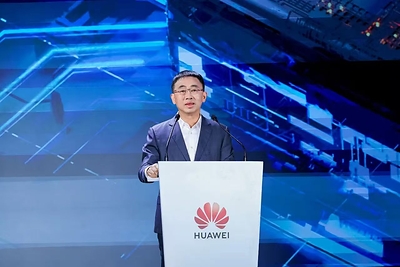
Hou Jinlong, Director of the Board of Huawei, President of Huawei Digital Power
Hou Jinlong, Director of the Board of Huawei and President of Huawei Digital Power, delivered the opening speech at the summit. He shared four insights on architectural innovation and systematic design to address AIDC construction challenges such as power acquisition, power quality, rack power supply and heat dissipation, and engineering delivery.
First, innovative power architecture and liquid cooling ensure stable power supply and efficient heat dissipation, delivering comprehensive reliability and efficiency. Second, a multi-layer hybrid energy storage system absorbs local power fluctuations, enhancing AIDC power quality and grid-friendliness. Third, electricity-compute synergy and supply-consumption interaction enable AIDCs to transform from rigid loads to an integral part of the new power system. Fourth, construction mode innovation and modular, prefabricated, and product-based delivery significantly shorten the lead time.
Mr. Hou emphasized that maximizing tokens per watt and minimizing costs per token will be the core competitiveness of compute factories.
Huawei Grid-Interactive AIDC Solution Unveiled
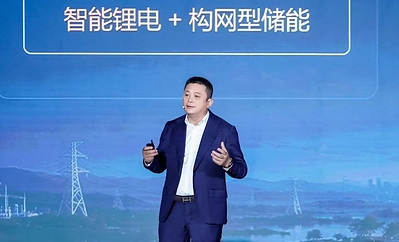
Bob He, Vice President of Huawei Digital Power
Bob He, Vice President of Huawei Digital Power, stated that as the share of renewable energy grows, the power grid exhibits stronger features of power electronics. Coupled with the rapid and severe power fluctuations of AI workloads, compute and energy infrastructure are no longer decoupled but deeply coordinated. By leveraging “3+1” innovations, Huawei builds a grid-interactive AIDC solution that is highly reliable, energy-efficient, fast to deliver, and grid-friendly to maximize tokens per watt.
In the watt domain, Huawei proposes a future-oriented MIMO power supply architecture. To address industry challenges, Huawei has launched the grid-interactive AIDC 1.0 solution. By integrating grid-friendly UPS, intelligent lithium batteries, and grid-forming energy storage systems, the solution enables AIDC to adapt to and support the power grid while smoothing AI workload fluctuations. In the heat field, Huawei launched an AI-powered liquid cooling system, predict the health of working fluids, and facilitate predictive maintenance.
According to Mr. He, Huawei’s unique advantage lies in its end-to-end energy and full-stack AI capabilities.
Compute-Electricity Synergy: Establishing a Solid Foundation for the AI Era
Booming AI has brought about a sharp increase in tokens, posing higher requirements on AI infrastructure. Xia Qin, Chief Expert in Huawei Computing Strategy Planning, noted that AIDC is evolving toward an integrated, coordinated compute-network-storage architecture, and energy is fundamental to infrastructure. An energy system that is highly reliable, energy-efficient, and rapidly deployable allows hyperscale AI compute clusters to operate reliably, establishing a solid foundation for large-scale training and inference in the agentic era.
Traditional data centers have limited interaction with the power grid. However, AI workloads are prone to high-frequency changes, which can easily cause grid operation issues such as grid disconnection and unstable wideband oscillation. Josh Chen, Founder & Chairman of VNET Group, stated that power sources, campuses, and buildings can be redefined to enable mutual support among power sources, scheduling within campuses, and DC power supply for buildings. This will create a new power system centered on direct green power connection and active microgrids, ensuring reliable and stable power supply for GW-level AIDC.
Lin Hai, General Manager of Intelligent Computing Center, SenseCore Business Group at SenseTime, elaborated on the efficiency evolution of SenseTime intelligent computing from PUE to TPW at the summit. SenseCore is driving the transformation of IDC from energy efficiency management centered on power usage effectiveness (PUE) to end-to-end efficiency management centered on tokens per watt, which directly connects power consumption with token output, covering the entire chain from power plants and grids to IDC rack services, computing cloud services, and model services. It’s a metric that reflects the essence of AI production. Through end-to-end optimization, SenseCore has improved the TPW by 80%.
At HUAWEI CONNECT 2026, Huawei showcased its grid-interactive AIDC solution and one-stop AI inference solution, to build a computing foundation that is highly reliable, energy-efficient, and fast to deliver for AI cluster infrastructure.
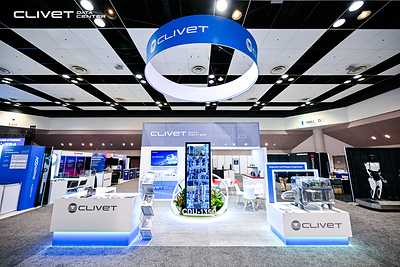
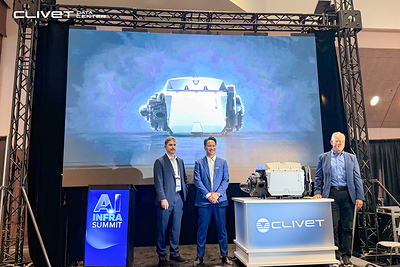
SANTA CLARA, Calif., Sept. 20, 2026 /PRNewswire/ — Under the DUO POWER BOOST theme, Clivet made the global debut of its Next-Gen Magnetic Levitation Technology at AI Infra Summit 2026 in Santa Clara, California. The company also presented a portfolio of cooling sources, liquid cooling distribution, and supporting products for data centers, alongside a joint power-and-cooling coordination solution with CLOU.
Clivet’s Full-Chain Liquid Cooling at AI Infra Summit 2026
According to the company, rising AI computing densities are placing growing pressure on data center cooling, with high-temperature performance degradation, energy efficiency bottleneck, and reliability risks as key challenges. General-purpose cooling technologies can no longer meet the specific needs of data centers, driving demand for AIDC-optimized thermal management solutions.
The portfolio’s core is Clivet’s next-generation magnetic levitation compressor, built on the DUO POWER BOOST dual-rotor variable-speed architecture. In a two-stage compression structure, two rotors and their impellers can adjust speed independently based on operating conditions, adapting to different flow rates and pressure ratios. According to Clivet, this design brings data center load variations, water temperature conditions, and system operating strategies into cooling source design, supporting optimization under complex conditions.
Addressing cooling needs across the data center, Clivet displayed a portfolio comprising magnetic levitation cooling sources, magnetic CDUs, high-capacity CDUs, fan walls, and terminal units. The air-cooled magnetic levitation chiller serves facility-side cooling, while the magnetic CDU combines cooling source and liquid cooling distribution functions.
A high-capacity CDU displayed at the event handles secondary-side heat exchange and distribution, with capacity ranging up to 3 MW (at 3K approach temperature difference, ATD) or 5 MW (at 5K ATD). Predictive temperature control keeps fluctuations within ±0.5°C, while key components support online replacement, helping ensure continuous operation in high-availability environments.
Through different product combinations, the solution can be configured according to project climate conditions, rack density, and supply requirements.
In addition, Clivet and CLOU jointly demonstrated a power-and-cooling coordination solution for AI workloads. CLOU provided energy storage and power delivery capabilities, while Clivet delivered thermal management products and solutions for high-density computing environments. For high-density computing projects, power configuration, thermal design, space layout, and operation and maintenance planning need to be considered simultaneously in the early stages of a project.
Coordinated planning of power and cooling aims to help customers assess the relationships between different infrastructure links from a system perspective, providing a reference for subsequent solution design and engineering delivery.
From a portfolio covering facility-side, liquid-cooling, and outdoor heat rejection stages, to the power-and-cooling coordination showcase, and to the launch of the next-generation magnetic levitation compressor, Clivet’s appearance at the event presented its technology and product layout for data center thermal management.
Clivet Debuts Next-Gen Magnetic Levitation Technology
BEIJING, Sept. 20, 2026 /PRNewswire/ — The following article was published today by China Daily.
The Chinese Bridge-Chinese Proficiency Competition has attracted large numbers of Chinese language enthusiasts from around the world over the years.
In the past, it was widely agreed that Chinese was difficult to learn. Today, however, Chinese has a special appeal, and learning it feels like opening the door to a fresh new world. On TikTok, a video by Chinese American Sherry Zhu turned drinking hot water, wearing cotton slippers and brewing goji berries into a global trend, gaining her 740,000 followers in months. One user even memorized the character “呢” by breaking it into “o-p-t”, to the delight of commenters. Chinese is moving from the classroom into everyday life worldwide. In many countries, even knowing Chinese can mean landing a well-paid job.
The numbers bear this out. According to China’s Ministry of Education, 90 countries have incorporated Chinese into their national education systems, with nearly 210 million learners and users worldwide. In the first half of this year, 564,000 candidates sat for the Chinese Proficiency Test (HSK) globally, up 36 percent year on year.
Of course, economics is not the only driver. At this year’s Chinese Bridge competition, Vietnam’s Le Van Dai started with a self-study handbook, writing the character “我” a hundred times before Chinese poetry carried him all the way to the stage, “Tang and Song verse nourished my heart”, he says.
Togo’s Wang Jiayi discovered Chinese through martial artist Jackie Chan films, and later saw a different China in the TV series Meet Yourself — “those stories made my imagination of China more concrete day by day”.
American contestant Ma Siwei calls himself a “challenge addict” who picked Chinese precisely because it is hard, teaching himself the bamboo flute and hulusi through online videos, and once performed Spring Festival Overture at a China-US concert.
Australia’s Ava Gibbons visited China with her parents at the age of 12 and has studied the language for seven years. She performed a fish-lantern dance in hanfu and says the journey “closed the distance between me and China — not on the map, but between hearts”.
Brazil’s Song Yinuo stood on the Chinese Bridge stage for the first time, climbing the Great Wall and telling her teacher excitedly. For her, the competition was never just a contest but “real, vivid experiences” — “I came to know China through its language, met friends through conversation, and in each hands-on experience saw a bigger world and my own future”.
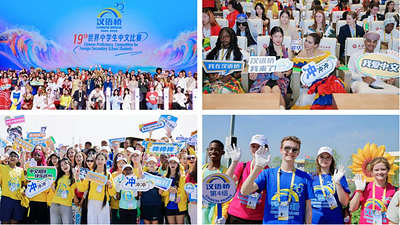
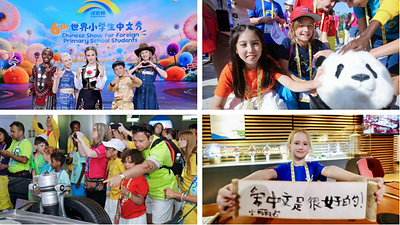
This year marks the 25th anniversary of Chinese Bridge. Over the years, the competition has drawn Chinese-language enthusiasts from around the world. Right now, the secondary and primary school competitions are taking place in Tianjin, bringing together young people from over a hundred countries to make friends and see China through its language.
Twenty-five years ago, Chinese Bridge was just a competition. Today, it has become a phenomenon. When 210 million people learn Chinese, they are not merely absorbing grammar and vocabulary — they are encountering a China that is engaging with the world in ways both deep and daily. And through the eyes of these young people, China is being seen more clearly, and more truthfully, by the world.
This year marks the 25th anniversary of the Chinese Bridge-Chinese Proficiency Competition. Competitions for secondary and primary school students are held in Tianjin.
SHANGHAI, Sept. 20, 2026 /PRNewswire/ — During HUAWEI CONNECT 2026, Huawei unveiled its upgraded Stellar AI Campus Network Solution that stands out with innovations in superfast wireless, full-scope security, and network autonomy, helping enterprises build a superfast, secure AI campus.
Leon Wang, President of Huawei’s Data Communication Product Line, delivering a speech
“Driven by AI, today’s campuses are evolving into a super agent that can perceive, think, self-heal, and dynamically adapt,” said Leon Wang. “Leveraging our ICT prowess, we, together with global customers and partners, are building ubiquitous AI campuses to bring ‘technology for people’ to life and accelerate digital and intelligent transformation across all industries.”
“The AI era has placed higher demands for campus networks, especially bandwidth capacity, security defense, and O&M efficiency,” said Shawn Zhao. “To address this, Huawei’s upgraded Stellar AI Campus Network Solution offers innovations across superfast wireless, full-scope security, and network autonomy, helping maximize productivity.”
Huawei’s solution delivers enhanced capabilities across three pillars.
Superfast wireless: As multi-agent collaboration gains momentum at enterprise workspaces, Huawei Wi-Fi 7 Advanced introduced intelligent Coordinated Scheduling and Spatial Reuse (iCSSR) technology that delivers twice the networking performance of industry peers. To grow the Wi-Fi+X ecosystem, Huawei also debuted the eCampusLink platform and HiSpaceX appliance, supporting full-element digital campus operations with unified access, spatial modeling, and rapid orchestration.
Full-scope security: Huawei’s solution offers asset, connectivity, spatial, and privacy security to enable full-scope security across the digital and physical worlds. Particularly, Huawei’s upgraded Asset Security Solution achieves second-level blocking of terminal behavior anomalies and precise network-security collaborative tracing, ensuring that all assets are fully visible, trustworthy, and controllable.
Network autonomy: With the rise of AI, enterprises urgently need to boost their network O&M efficiency. Huawei meets this with its iFlow and distributed real-time simulation technologies to enable pre-event proactive detection, in-event rapid localization, and post-event service verification, thereby delivering real-time visibility into agent experience. Furthermore, Huawei has made upgrades across data, models, and tools to deliver 24/7 AI-powered operations, achieving a 95% troubleshooting accuracy rate and a 90% reduction in MTTR.
Looking ahead, Huawei will continue to innovate and work closely with customers and partners worldwide to build a superfast, secure AI campus for the agentic world.