Home Blog Page 115

Macao Economic, Trade and Tourism Investment Promotion Seminar Held in Kuala Lumpur, Malaysia, Opening a New Chapter of Bilateral Cooperation


KUALA LUMPUR, MALAYSIA – Media OutReach Newswire – 4 September 2026 – On September 3, the Macao SAR Government hosted a reception and the Macao Economic, Trade and Tourism Investment Promotion Seminar in Kuala Lumpur, Malaysia, to pragmatically advance bilateral cooperation across public and private sectors. The event facilitated over 120 business matching sessions and concluded with more than 60 signed agreements. These partnerships span key sectors including tourism, MICE (meetings, incentives, conferences, and exhibitions), high-tech & AI services, traditional Chinese medicine (TCM) & big health, and Muslim-friendly initiatives. Some agreements specifically focused on pharmaceutical registration and certification, regional distribution networks, and “multi-destination” tourism layouts.

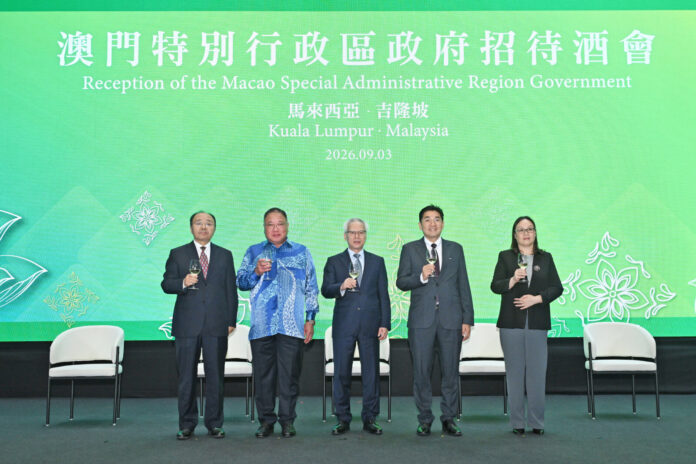
The Chief Executive, Mr Sam Hou Fai, and guests make a toast at a reception in Kuala Lumpur, Malaysia hosted by the Macao Special Administrative Region Government.

The event gathered over 350 guests, including Sam Hou Fai, Chief Executive of the Macao SAR; Tiong King Sing, Minister of Tourism, Arts and Culture of Malaysia; Sim Tze Tzin, Deputy Minister of Investment, Trade and Industry of Malaysia; and Ouyang Yujing, Chinese Ambassador to Malaysia. They were joined by members of the Macao SAR government and entrepreneurial delegations, representatives from the Chinese Embassy in Malaysia, and prominent figures from various sectors in Malaysia.

Sam Hou Fai stated that this visit to Malaysia aims to renew traditional friendship, build further consensus, and elevate pragmatic cooperation between Macao and Malaysia to a higher level. Macao aspires to serve as a bridge for deepening cooperation between Malaysia and Mainland China, working together to open a new chapter of mutual benefit, win-win outcomes, and synergistic development. He pointed out that both Macao and Malaysia are key nodes on the “Maritime Silk Road,” sharing deep cultural and people-to-people bonds and close exchanges. Facilitated by mutual visa-free entry and direct flights, the two regions have achieved fruitful cooperation in trade, investment, tourism, MICE, and education. Malaysia is not only an important economic partner and international tourist source market for Macao, but also demonstrates immense potential for collaboration in cultural exchange, educational partnerships, and the promotion of Muslim-friendly tourism.

Tiong King Sing highlighted Malaysia’s strategic position in ASEAN—a fast-growing regional market—and Macao’s role in the Guangdong-Hong Kong-Macao Greater Bay Area (GBA). By linking their networks, both sides can help businesses unlock vast opportunities between ASEAN and the GBA. He emphasized Malaysia’s readiness to strengthen cooperation in trade, tourism, and education. He urged both sides to bridge connections and engage businesses, schools, tourism operators, and cultural groups to deliver tangible results.

The seminar featured presentations, business matching, and sharing sessions highlighting Macao’s “Tourism+” initiatives, especially “Tourism + Healthcare” big health. Notably, Macao Union Medical Center’s advanced services are meet diverse international healthcare needs.

Additionally, Macao’s upcoming private healthcare law will introduce a “day hospital” category, a one-stop licensing system, and regulations for telemedicine, outreach services, and advanced therapies, fostering a clear, flexible investment environment. Leveraging Macao-Hengqin synergy, the region seeks to partner with Southeast Asian firms to capture medical tourism and big health opportunities.

The issuer is solely responsible for the content of this announcement.

Malaysia’s Next Automotive Chapter: From Assembly Lines to Global Value Creation

As the industry rewires around electronics and software, Malaysia is trying to move from assembling cars to making the higher-value parts inside them, and to carry its own companies up the supply chain as it does.


KUALA LUMPUR, MALAYSIA – Media OutReach Newswire – 4 September 2026 – The global automotive industry is undergoing one of its most significant transformations in decades, and Malaysia is preparing for its next chapter. The vehicle of the future will not be defined by its engine or its bodywork. It is becoming a combination of semiconductors, electronics, software, sensors and batteries, more connected, electrified and intelligent than anything before it. The question facing Malaysia, a country that has assembled cars for half a century, is whether its own companies can evolve at the same pace.

For the Malaysian Investment Development Authority (MIDA), the agency that courts and screens industrial investment, the answer cannot simply be to attract more capital or build more vehicles. Its aim is to create deeper value: stronger technological capabilities, skilled talent, and Malaysian companies embedded more firmly in regional and global supply chains.

Beyond Traditional Manufacturing

Malaysia has spent decades building an automotive and manufacturing base, with established capabilities in electrical and electronics and in semiconductors. The task now, in MIDA’s view, is to connect those strengths and steer investment toward the technologies that will define the next generation of mobility: automotive electronics, power systems, battery technology, advanced sensors, vehicle control systems, charging infrastructure and the software behind connected and automated vehicles.

The foundation is substantial. From 2017 through the first half of 2026, Malaysia approved RM71.7 billion, about US$16.9 billion, in investments across 745 projects in the transportation equipment sector, expected to generate over 59,000 jobs. That momentum has carried into this year. That momentum has carried into this year.

In the first half of 2026 alone, the country approved RM218.5 billion, about US$49 billion, in investments overall, almost 12 per cent more than a year earlier, with foreign investors accounting for RM126.9 billion of the total, an increase of more than 18 per cent. What MIDA says it is chasing now is not scale but depth, and the difference shows in the kind of work arriving.

“We are no longer measuring success by the size of the investment alone,” said Datuk Sikh Shamsul Ibrahim Sikh Abdul Majid, the Chief Executive Officer of MIDA. “The RM218.5 billion we approved in just the first half of this year shows the confidence investors have in Malaysia, but the real test is what that investment leaves behind: the technology transferred, the talent built, and the number of Malaysian companies drawn into global supply chains. That is where the next chapter will be won, in the depth of the value we create, not simply the volume of what we attract.”

Deepening Localisation, Strengthening Local Suppliers

Consider Mazda. The Japanese carmaker has maintained a long-standing presence in Malaysia through its partnership with Bermaz Auto, with local assembly providing an important foundation for expanding its manufacturing and supply-chain footprint in the country. In 2026, Mazda moved to deepen that presence through the local assembly of the All-New Mazda CX-5, with a targeted 60 per cent localisation level. The programme represents an important step in strengthening Malaysia’s role as a regional manufacturing and export base for Mazda.

The significance of Mazda’s commitment lies as much in what it creates for Malaysian companies as in the vehicles themselves. The localisation of the All-New CX-5 provides a platform for Malaysian automotive suppliers to participate more deeply in Mazda’s supply chain, while creating opportunities for technology transfer, capability development and stronger industrial linkages between Malaysian and Japanese companies. In this context, localisation is not simply about increasing the percentage of locally sourced components, but about developing effective and higher-value local capabilities that can compete within regional and global automotive supply chains.

This is where MIDA has concentrated its efforts. Through the MIDA–Mazda Strategic Vendor Development and Supply Chain Programme in Hiroshima, Japan, from 19–25 July 2026, MIDA, together with Bermaz Auto, Mazda Malaysia and Mazda Motor Corporation, brought 16 Malaysian automotive vendors from sectors including chassis and suspension, stamping, precision machining, plastic injection moulding, cockpit modules, seating systems and insulation components to engage with Mazda and its Japanese supply-chain partners. The programme resulted in the exchange of five Memorandums of Understanding between Malaysian and Japanese companies, creating concrete opportunities to support the localisation of the All-New Mazda CX-5.

For Malaysia, the deeper significance of Mazda’s commitment therefore lies not only in the vehicles assembled locally, but in the industrial ecosystem developing around them. Each localisation project, supplier partnership and technology collaboration strengthens Malaysia’s automotive manufacturing capabilities and creates opportunities for Malaysian vendors to move into higher-value activities. More importantly, Mazda’s commitment to Malaysia as an ASEAN export hub provides a platform for local companies to integrate into regional supply chains and reinforces Malaysia’s position as a competitive and increasingly sophisticated automotive manufacturing base.

From Tier Two, Upward

If Mazda is the carmaker whose deepening presence lifts others, Pecca Group is a Malaysian company climbing on its own. For a quarter of a century, Pecca has cut and stitched the leather that lines the seats of the cars Malaysians drive, supplying the national marques and the Japanese carmakers as a Tier-2 supplier, essential work that rarely commands the highest margins. It has never treated that as its ceiling.

Listed on the Main Board of Bursa Malaysia since 2016 and employing some 800 people, the company is working toward Tier-1 status through seat assembly, and has carried its craft into aviation, manufacturing and refurbishing aircraft cabin interiors under European airworthiness approval for customers from the United States to Australia and the Gulf. “We have been a Tier-2 supplier for twenty-five years, and we are ready for the next chapter,” said Foo Ken Nee, Chief Executive Officer of Pecca Group. “Moving up the value chain is how a Malaysian company like ours grows alongside the industry rather than beneath it.” Pecca is one of several Malaysian firms, alongside names such as PMB Aluminium, Tomcare Resources and Xenso Tech, whose capabilities are increasingly worth putting before the world.

A Different Measure of Success

The next stage of Malaysia’s industrial development, MIDA argues, will require relationships that go beyond the traditional buyer and supplier model, with local companies drawn earlier into product development and, over time, designing and engineering for international markets. Multinationals bring technology, global networks and market access; Malaysian firms bring manufacturing depth and, increasingly, their own engineering. The task is to bring those strengths together.

“Malaysia has assembled the world’s cars for fifty years, and we are grateful for it,” said Datuk Sikh Shamsul. “But our ambition now is larger. We want the next generation of vehicles to carry Malaysian technology, Malaysian engineering and Malaysian companies within them, not just Malaysian hands on the line. That is the future we are building toward, and the investments arriving today tell us it is within reach.”

Ultimately, the country’s success in this phase will not be measured by the number of investments secured, but by the depth of the value created: more Malaysian companies in the higher-value segments of the mobility chain, supplying global carmakers and developing technology, and more multinationals deepening their footprint here through research, engineering and supplier development. Malaysia has the industrial foundation, the electronics and automotive expertise, the talent and access to a growing ASEAN market. The challenge now is to connect those strengths more deeply, so that as the industry enters its next generation, the country is not simply along for the ride, but helping to build the road ahead.

Hashtag: #mida #automotive #industry #investment #business #electronics #manufacturing


The issuer is solely responsible for the content of this announcement.

About Malaysian Investment Development Authority (MIDA)

The Malaysian Investment Development Authority (MIDA) is Malaysia’s principal investment promotion and development agency under the Ministry of Investment, Trade and Industry (MITI). MIDA plays a central role in facilitating domestic and foreign investments across Malaysia’s manufacturing and services sectors, while supporting the country’s industrial development and economic transformation.
MIDA works closely with investors, government agencies and industry stakeholders to create a conducive investment environment, strengthen domestic supply chains, promote high-value and technology-intensive investments, and support the development of a competitive and sustainable Malaysian economy.
Through its network of offices in Malaysia and overseas, MIDA provides investors with information, facilitation and assistance throughout the investment journey, from exploring opportunities and establishing operations to expansion and reinvestment.


Baidu Announces Upcoming Inclusion of Its Class A Ordinary Shares in the Shanghai-Hong Kong Stock Connect Program

BEIJING, Sept. 4, 2026 /PRNewswire/ — Baidu, Inc. (“Baidu” or the “Company”) (Nasdaq: BIDU; HKEX: 9888 (HKD Counter) and 89888 (RMB Counter)), a leading AI company with strong Internet foundation, today announced that the Company’s Class A ordinary shares traded on The Stock Exchange of Hong Kong Limited (the “Hong Kong Stock Exchange”) will be included in the Shanghai-Hong Kong Stock Connect program, effective September 7, 2026.

The inclusion is pursuant to the Notice of the Adjustment of the Eligible Stocks in Hong Kong Stock Connect under the Shanghai-Hong Kong Stock Connect issued by the Shanghai Stock Exchange on September 4, 2026.

Following the inclusion, eligible investors in the Chinese Mainland will have direct access to the trading of Baidu’s Class A ordinary shares through the Shanghai-Hong Kong Stock Connect. The inclusion marks an important step toward expanding the Company’s reach among Chinese Mainland investors and is expected to further diversify its investor base and enhance the liquidity of its shares.

Baidu appreciates the continued support of its shareholders and investors and remains committed to driving sustainable growth and creating long-term value for shareholders.

About the Shanghai-Hong Kong Stock Connect

The Shanghai-Hong Kong Stock Connect established a two-way trading link between the Shanghai Stock Exchange and the Hong Kong Stock Exchange. The stock connect allows qualified Chinese Mainland investors to access eligible Hong Kong shares (Southbound) as well as Hong Kong and overseas investors to trade eligible A-shares (Northbound), subject to a certain amount of daily quota.

About Baidu

Founded in 2000, Baidu’s mission is to make the complicated world simpler through technology. Baidu is a leading AI company with strong Internet foundation, trading on Nasdaq under “BIDU” and HKEX under “9888”. One Baidu ADS represents eight Class A ordinary shares.

Safe Harbor Statement

This announcement contains forward-looking statements. These statements are made under the “safe harbor” provisions of the U.S. Private Securities Litigation Reform Act of 1995. These forward-looking statements can be identified by terminology such as “will,” “expects,” “anticipates,” “future,” “intends,” “plans,” “believes,” “estimates,” “confident” and similar statements. Among other things, Baidu’s and other parties’ strategic and operational plans, contain forward-looking statements. Baidu may also make written or oral forward-looking statements in its periodic reports to the U.S. Securities and Exchange Commission, in announcements made on the website of the Hong Kong Stock Exchange, in its annual report to shareholders, in press releases and other written materials and in oral statements made by its officers, directors or employees to third parties. Statements that are not historical facts, including but not limited to statements about Baidu’s beliefs and expectations, are forward-looking statements. Forward-looking statements involve inherent risks and uncertainties. A number of factors could cause actual results to differ materially from those contained in any forward-looking statement, including but not limited to the following: Baidu’s growth strategies; its future business development, including development of new products and services; its ability to attract and retain users and customers; competition in the Chinese Internet search and newsfeed market; competition for online marketing customers; changes in the Company’s revenues and certain cost or expense items as a percentage of its revenues; the outcome of ongoing, or any future, litigation or arbitration, including those relating to intellectual property rights; the expected growth of the Chinese-language Internet search and newsfeed market and the number of Internet and broadband users in China; Chinese governmental policies relating to the Internet and Internet search providers, and general economic conditions in China and elsewhere. Further information regarding these and other risks is included in the Company’s annual report on Form 20-F and other documents filed with the Securities and Exchange Commission, and announcements on the website of the Hong Kong Stock Exchange. Baidu does not undertake any obligation to update any forward-looking statement, except as required under applicable law. All information provided in this press release and in the attachments is as of the date of the press release, and Baidu undertakes no duty to update such information, except as required under applicable law.

Dare to go further: Baseus Brings New Charging, Audio and Security Innovations to IFA 2026

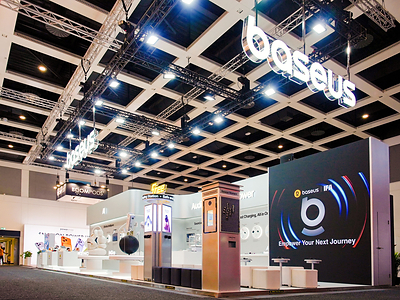
BERLIN, Sept. 4, 2026 /PRNewswire/ — Baseus, a user-centric consumer technology brand, showcased a new lineup of charging, audio, and smart-security innovations at IFA 2026. Headlining the showcase are the Dark Cherry Collection, the Baseus MC2 NC open-ear clip-on earbuds, and the PrimeSentinel U2 Pro Outdoor 3K Dual Camera—reflecting the brand’s continued evolution from everyday accessories to a broader ecosystem of technology designed around how people power, experience, and protect their daily lives.


A New Take on Clip-On Listening

In audio, Baseus showcased the MC2 NC Clip-on ANC Earbuds, expanding its open-ear audio portfolio with a new smart ANC feature designed in clip-on form. Created for commutes, workdays, and active routines, MC2 NC offers a lighter, less restrictive alternative to conventional in-ear earbuds—bringing a more focused listening experience to the open-ear category.

Rather than seeking to replicate the fully isolated listening experience of traditional TWS ANC earbuds, MC2 NC is designed to reduce the everyday distractions that conventional non-ANC open-ear wearables leave unaddressed. Its Air Ear Wing creates a natural acoustic seal that works with dual adaptive ANC to support more focused listening, while a dual air chamber system delivers a secure yet gentle fit through long workdays, commutes, and workouts. The MC2 NC Clip-on Earbuds will officially launch in October 2026.

Charging, Styled for Apple Users

Inspired by the latest iPhone colorway, the Baseus Dark Cherry Collection brings a coordinated new look to an Apple-friendly charging ecosystem. Designed to move naturally between the desk, commute, and travel, the collection combines high-performance power with a more cohesive everyday carry.

At its center is the PicoGo Pro AH22 Digital Display Fast Charger 3C 100W, one of the smallest 100W three-port chargers on the market. In a compact form, AH22 supports multi-device charging while offering three intelligent charging modes for different everyday needs. Its customizable smart display adds a more intuitive way to view and personalize the charging experience.

For iPhone users on the move, the ultra-slim 10,000mAh PicoGo AM52 delivers fast Qi2.2 magnetic charging for longer days away from an outlet, while the ultra-light 5,000mAh PicoGo Air offers effortless backup power in a pocket-ready form. Completing the collection are the Dark Cherry USB-C Cable and the new Dark Cherry Inspire XC1.

The Dark Cherry Collection is now available from September 4, 2026. More information can be found on the Baseus website and the official Baseus Amazon Store.

For global travelers, Baseus also showcased the PicoGo Mix AT51 Universal 3-in-1 Charge Power Bank. Integrating a 10,000mAh power bank, 67W fast charging, universal travel adapters, and built-in dual cables, AT51 supports US / JP / UK / EU standards for seamless worldwide use. It brings Baseus’ promise of “Safe Fast Charging, All You Need in One” to business trips, study abroad, and life across borders. Stay tuned.

Smarter Tracking, Brighter Protection

Baseus will also expand its smart-security lineup with the PrimeSentinel U2 Pro Outdoor 3K Dual Camera, designed to bring more precise, more proactive protection to larger outdoor spaces. At its core is the world’s first target-focused deterrence spotlight, a strong, focused, motorized beam that locks onto a flagged intruder and tracks their movement in real time, even as they sprint, turning passive monitoring and illumination into active deterrence.

Alongside this, a fixed 3K wide-angle lens and a 3K PTZ camera work together for 360° coverage, backed by dual PIR sensing and AI recognition that identifies people, faces, vehicles, and pets. This enables meaningful alerts powered by cloud-based AI analysis through a subscription. Built for around-the-clock outdoor use, the camera combines IP65 weather resistance, solar-assisted long-lasting battery power, local storage, and two-way audio in one dependable security solution. U2 Pro will be available from October 2026, further strengthening Baseus’ smart-security presence with protection that is intelligent, dependable, and easy to live with.

Through its IFA 2026 lineup, Baseus brings its user-first approach to the technologies people rely on every day: power that travels well, audio that feels natural to wear, and security designed for real-world spaces. Discover the complete lineup at Hall 4.2, Booth 145, IFA Berlin.

HoneyNaps Develops Next-Generation Wireless PSG system Using Four Skin Patches

  • Patch-based wireless sensors and AI-powered analysis combine to improve patient comfort and clinical efficiency in polysomnography
  • New platform reduces more than 24 wired sensors to four compact patches, with potential applications in hospitals, home sleep testing and remote monitoring

BOSTON, Sept. 4, 2026 /PRNewswire/ — HoneyNaps, specializing in AI-powered sleep medical devices, has developed a next-generation wireless polysomnography system that combines patch-based skin sensors with artificial intelligence-driven analysis.

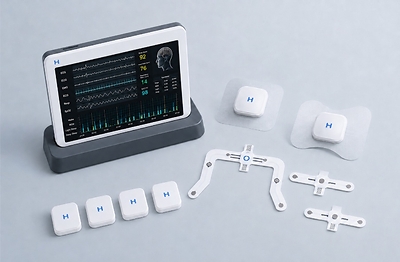
HoneyNaps’ Wireless PSG system

Polysomnography (PSG) is the standard diagnostic test for sleep disorders such as sleep apnea. Conventional PSG, however, generally requires patients to spend a night at a hospital while connected to more than 24 wired sensors placed across the face, chest, abdomen and legs. The complex setup and restricted movement can cause considerable discomfort. Sleeping in an unfamiliar clinical environment may also affect patients’ usual sleep patterns, potentially making it more difficult to capture representative data.

To overcome these limitations, HoneyNaps redesigned the conventional PSG measurement architecture. Its Wireless PSG system consists of four compact skin patches: a Head Sensor, Chest Sensor, Body Sensor and Leg Sensor. Together, they consolidate the functions previously performed by numerous wired sensors into a single wearable platform.

Once the patches are attached, the system can capture the primary physiological signals required for polysomnography without cables. These include electroencephalography (EEG), electrooculography (EOG), electrocardiography (ECG), electromyography (EMG), respiratory airflow, blood oxygen saturation (SpO₂), body position and physical activity.

The system’s capabilities extend beyond wireless connectivity. HoneyNaps incorporated a six-layer flexible printed circuit board design, an integrated analog-to-digital converter and sensor architecture, wireless noise-reduction technology and electrostatic discharge protection to maintain medical-grade signal quality during extended monitoring. A low-power design is intended to reduce the burden on patients while supporting potential use in both hospitals and future home-based polysomnography settings.

Data collected through the wireless skin sensors are integrated with SOMNUM, HoneyNaps’ AI-powered sleep analysis software. The software automatically analyzes key sleep indicators, including sleep stages, sleep apnea events, arousals and periodic limb movements during sleep. By automating parts of the traditionally labor-intensive scoring and interpretation process, the platform is designed to help medical professionals review sleep studies more efficiently. It also incorporates edge-computing technology to process large volumes of physiological data in real time and support integration with healthcare institutions’ centralized management systems.

The Wireless PSG platform builds on HoneyNaps’ accumulated research and development in sleep sensing and AI analysis. The company has developed technologies including SOMNUM Scanning, a contactless sleep-sensing pad; single-channel EEG technology; AI-based sleep diagnostic software; and a digital therapeutic for insomnia. By integrating these technologies into a patch-based wireless medical device, HoneyNaps aims to establish a platform that can expand beyond hospital-based sleep studies into home sleep testing, remote monitoring and broader digital healthcare services.

“By bringing patch-based wireless skin sensors and AI-powered analysis together in a single platform, our Wireless PSG system improves both patient convenience and diagnostic efficiency for medical professionals, while laying the foundation for HoneyNaps to expand its presence in the global sleep diagnostics market,” said Sean Ha (Taekyoung Ha), President of HoneyNaps USA.

For further information, please contact:
HoneyNaps USA, Inc.
Christine Kwon / Managing Director
Email: sleep@honeynaps.com
Address: 14th Floor, One Broadway, Cambridge, MA 02142, USA
Website: www.honeynaps.com

ECOVACS Launches WINBOT W2S PRO OMNI, the Latest Addition to the World’s #1 Robotic Window Cleaner Line

The latest WINBOT combines upgraded edge-to-edge scrubbing, cordless cleaning, intelligent navigation and comprehensive safety for a more effortless way to keep windows clean

SAN FRANCISCO, Sept. 4, 2026 /PRNewswire/ — ECOVACS Robotics today launched the WINBOT W2S PRO OMNI robotic window cleaner and WINBOT W2S PRO, the latest additions to the WINBOT family, following their global debut at IFA 2026 in Berlin. Showcasing ECOVACS’ latest advancements in robotic window cleaning, the new WINBOT models bring the company’s “Created for Ease” philosophy to a new generation of smarter, more effortless window cleaning. The WINBOT W2S PRO OMNI combines precise edge-to-edge scrubbing, cordless cleaning, intelligent navigation and comprehensive safety features to transform a once-tiring chore into a more hands-free, worry-free experience.

Window cleaning can be a time-consuming and potentially hazardous household task, particularly for large, hard-to-reach and exterior windows. The WINBOT W2S PRO OMNI is designed to take the work out of the chore, delivering powerful cleaning across glass surfaces while helping users clean more windows with fewer interruptions.

WINBOT W2S PRO OMNI
WINBOT W2S PRO OMNI

Precision at Every Corner, High Performance from Edge to Edge

The WINBOT W2S PRO OMNI features upgraded TruEdge 2.0 Technology, combining precise frame sensing with an optimized four-corner scrubbing system for more complete edge-to-edge cleaning coverage. Four active corner scrubbers use high-density felt bristles to target dirt along window borders and corners, while continuous frame detection helps the WINBOT maintain stable contact with window frames and edges. Together, the four-way scrubbing system delivers up to a 46% increase in cleaning efficiency compared with the previous generation, covering up to 1 square meter in 90 seconds.

The WINBOT can dynamically adjust its path and brush position as it encounters different window structures, helping minimize jamming and maintain consistent cleaning coverage without manual intervention. For tougher outdoor dirt such as rain stains, dust accumulation and bird droppings, its pressurized dual-side spray technology uses three precision spray nozzles on each side. The upgraded triple-nozzle design expands spray coverage to 90%, helping reduce dead spots while creating a fine, wind-resistant water film that loosens dirt before wiping. Combined with an ultra-fine microfiber wiping pad, the system helps lift away dust, pollen, water spots, fingerprints, smudges and pet marks for a streak-free finish.

For larger cleaning jobs, its 4.1 fl oz water reservoir provides up to 807 sq. ft. of coverage per fill, allowing users to clean more windows without repeatedly stopping to refill.

Multi-Purpose OMNI Station Redefines Convenience

The OMNI Station combines control, charging, power and storage in one portable base, making the WINBOT easy to set up, operate and transport. Its integrated 5200mAh battery provides up to 110 minutes of cordless cleaning, allowing users to clean in locations where power outlets may be difficult to access, such as balconies and bathrooms. The station can also connect directly to AC power for longer cleaning sessions.

A high-strength 2-in-1 compound cable combines power delivery and safety tethering in a single line and automatically retracts into the OMNI Station after cleaning, helping keep the setup organized and tangle-free. When the job is done, the WINBOT and its accessories can be stored inside the OMNI Station, while its soft rubber handle makes the station easy to carry.

Intelligently Adapts to Every Scenario

Powered by WIN-SLAM 4.0 Technology, the WINBOT W2S PRO OMNI can adapt its path planning across a wide range of window layouts, including expansive floor-to-ceiling windows, frameless partitions and vanity mirrors. Its multi-sensor detection system continuously monitors window frames and obstacles, allowing the WINBOT to calculate a bypass strategy when it encounters obstacles such as window handles or locks and continue cleaning.

Through the ECOVACS mobile app, voice control or shortcut buttons on the OMNI Station, users can choose from eight cleaning modes to suit different cleaning needs and scenarios. At just 66dB, the WINBOT W2S PRO OMNI is the quietest model in the WINBOT family to date. Its four-layer noise reduction system combines Dual-Wing Air Ducts, vibration control, acoustic padding and sound insulation to help deliver quieter operation.

Designed for Safety and Peace of Mind

The WINBOT W2S PRO OMNI features a 12-tier protection system combining hardware and software safeguards for a secure and reliable cleaning experience. Key protections include 10,000Pa suction power, automatic air pressure compensation, a floating wiping pad plate, anti-drop protection and power-off protection. The automatic air pressure compensation system detects air leaks in as little as 0.007 seconds and compensates to help maintain consistent suction.

If power is interrupted or the battery level becomes low, power-off protection keeps the WINBOT attached to the window for more than 30 minutes, providing additional time for users to respond.

For additional peace of mind, users can also enjoy insurance protection in the unlikely event of damage caused by a loss of suction.

Pricing and Availability

The ECOVACS WINBOT W2S PRO OMNI is now available at a limited-time launch price of $499.99, a $100 discount off its $599.99 MSRP, through September 14, 2026. The WINBOT W2S PRO is available at a limited-time launch price of $339.99, a $60 discount off its $399.99 MSRP, through September 7, 2026. Both are available through the official ECOVACS store on Amazon.

About ECOVACS ROBOTICS:

ECOVACS. Created for ease. Founded in 1998, ECOVACS ROBOTICS builds indoor and outdoor home robots that take routine chores off people’s hands, guided by the mission Robotics for All and the corporate philosophy, Never Follow. Always Define. Cited as the No. 1 Brand in Global Home Robotics by Forbes China in 2026, ECOVACS is trusted by 38M homes across the globe. It holds 2,500 patents across a product line spanning robotic cleaners from vacuum and mops, window cleaners, lawn mowers, and pool cleaners. It sells its products in 180 countries and has earned consistent industry recognition for design and performance.

Source: “IDC Worldwide Home Cleaning Robot Market Tracker” showed ECOVACS WINBOT was the #1 Robotic Window Cleaner globally in terms of shipment volume in the first three quarters of 2025.

Acepodia Announces FDA Clearance of IND Application for ACE723, a Novel Dual-Payload Antibody-Drug Conjugate

FDA clearance enables initiation of a Phase 1 clinical trial and advances the first AD2C-generated candidate into clinical development

ALAMEDA, Calif. and TAIPEI, Sept. 4, 2026 /PRNewswire/ — Acepodia (6976: TT), a clinical-stage biotechnology company developing next-generation cell therapies and antibody-drug conjugates, today announced that the U.S. Food and Drug Administration (FDA) has cleared the Company’s Investigational New Drug (IND) application for ACE723, a GPC3-targeted dual-payload antibody-drug conjugate (ADC) developed using Acepodia’s proprietary Antibody-Dual-Drugs Conjugation (AD2C) platform for the treatment of unresectable or metastatic hepatocellular carcinoma (HCC). The clearance enables Acepodia to advance ACE723 into Phase 1 clinical development.

“The FDA clearance of ACE723 marks an important milestone for our AD2C platform and brings our first AD2C-generated candidate into clinical development,” said Sonny Hsiao, Ph.D., Chief Executive Officer and Chairman of Acepodia. “ACE723 is designed to deliver two cytotoxic payloads to GPC3-expressing tumor cells, with the goal of addressing tumor heterogeneity and potential resistance to single-payload therapies. We look forward to evaluating its safety, pharmacokinetics and preliminary anti-tumor activity in patients with unresectable or metastatic HCC.”

ACE723 is an investigational GPC3-targeted dual-payload ADC developed through Acepodia’s proprietary AD2C platform, which integrates expertise in antibody engineering, medicinal chemistry and tumor biology. GPC3 is a tumor-associated antigen frequently expressed in HCC, providing a potential target for selective delivery of cytotoxic payloads to tumor cells.

HCC accounts for more than 70% of liver cancer cases worldwide. Although immunotherapy-based combination regimens have improved first-line treatment for patients with unresectable or metastatic disease, significant unmet medical need remains for patients whose disease progresses or becomes resistant to treatment, underscoring the need for therapies with differentiated mechanisms of action.

The planned Phase 1 study will evaluate the safety, tolerability, dose-limiting toxicities, pharmacokinetics and preliminary anti-tumor activity of ACE723 in patients with unresectable or metastatic HCC. The dose-escalation portion of the study is expected to characterize the safety profile and establish a recommended dose for subsequent clinical development and potential expansion cohorts.

Acepodia also submitted an IND application for ACE723 to China’s National Medical Products Administration (NMPA) in August 2026 as part of the Company’s global development strategy for the program.

About Acepodia

Acepodia (6976: TT) is a clinical-stage biotechnology company developing next-generation therapies for cancer and autoimmune diseases through its proprietary conjugation technology platforms. Leveraging a family of bio-orthogonal click chemistry approaches originating from Nobel Prize laureate Carolyn Bertozzi’s laboratory, Acepodia has built a modular platform designed to combine antibodies with immune cells or therapeutic payloads to create differentiated treatment modalities.

The Company is advancing a pipeline based on its Antibody-Cell Conjugation (ACC) and Antibody-Dual-Drugs Conjugation (AD2C) platforms. These technologies are designed to enable flexible integration across antibodies, immune cells, and payload architectures, with the goal of enhancing targeted therapeutic activity while supporting broad applicability across hematologic malignancies, solid tumors, and autoimmune diseases.

By applying its conjugation technologies across multiple therapeutic modalities, Acepodia aims to develop scalable and differentiated therapies for patients with significant unmet medical needs.

For more information, please visit www.acepodia.com.

Hanin Showcases Consumer Printing Portfolio at IFA Berlin 2026, Led by the Global Debut of the EQ3 Instant Camera

The showcase connects creative imaging with everyday printing across instant cameras, photo printers, label makers and portable A4 printers.

BERLIN, GERMANY– Media OutReach Newswire – 4 September 2026 – The global debut of the EQ3 takes center stage in Hanin’s consumer printing showcase at Booth H20-139 during IFA Berlin 2026.

Hanin

For many instant-camera users, the ideal experience sits between two worlds: the emotional pull of a large physical print and the control to shape an image before it leaves the camera. The EQ3 brings those ideas together in a square-format hybrid instant camera designed for users seeking larger instant prints.

The EQ3 draws on more than two decades of Hanin’s experience in printing technology. Today, more than 400 R&D professionals support a growing portfolio of products serving users across more than 100 countries and regions.

Edit In Camera. Print Only What Is Worth Keeping.

The EQ3 offers customizable filters, image adjustment and in-camera collage creation. Users can refine images before printing, helping reduce wasted prints without sacrificing spontaneity.

Its larger square format suits portraits and everyday scenes, while dye-sublimation printing produces durable photos. A removable battery makes replacement easier and supports longer use.

“The moment can be spontaneous; the print should be intentional,”said Shaowei Song, General Manager of Hanin’s Consumer Electronics Division. “EQ3 gives people the freedom to create first, then keep the moments that matter in a larger square format.”

The display also includes the Z1, Z2, M3, M5S, M6 and M6 Pro, spanning ZINK ink-free and dye-sublimation printing. Selected models offer built-in displays, reprinting and Bluetooth connectivity for app-based printing.

From Creative Imaging to Everyday Printing
Beyond instant cameras, the portfolio includes photo printers for smartphone images, label makers for homes and small businesses, and portable A4 printers for documents beyond the desk.

Together, the categories connect creative expression with everyday use and create opportunities for retailers, distributors and technology partners.

Booth: H20-139
Date: September 4-8, 2026

Explore Hanin’s consumer electronics portfolio

Hashtag: #Hanin

The issuer is solely responsible for the content of this announcement.

About Hanin

Xiamen Hanin Co., Ltd. develops and manufactures printing equipment for consumer, commercial and industrial applications. Hanin’s thermal printer mechanisms have held the world’s No. 1 market share by sales volume for seven consecutive years.