Home Blog Page 131

Laos’ Population Growth Slows as Birth Rates Fall, 2025 Census Finds

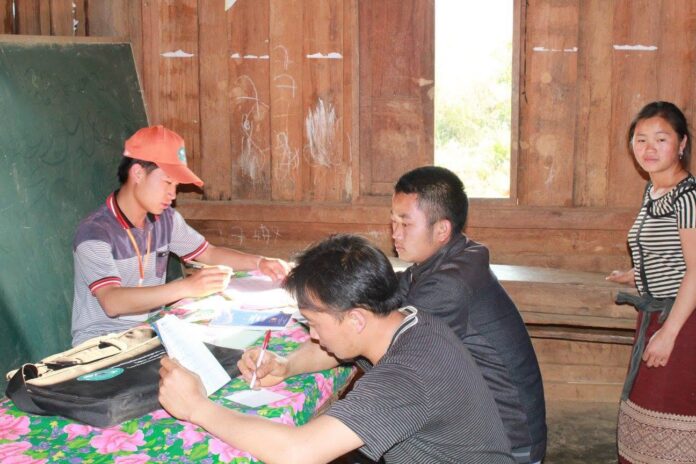
Laos’ 2025 census shows slowing population growth, falling birth rates, an ageing population, and significant differences in provincial growth and density. (Photo: Lao Population and Housing Census)

Laos’ population is growing more slowly, with birth rates falling and the population getting older, according to the country’s 2025 Population and Housing Census.

The fifth nationwide census ran from 3 November to 28 December 2025. For the first time, the Lao Statistics Bureau collected data digitally, following four years of preparation with support from UNFPA and other development partners.

Census workers directly counted 6.74 million usual residents. A follow-up survey found that the initial count had missed about 497,000 people, bringing the estimated resident population to 7.24 million.

“We are 95 percent confident in the results,” Deputy Minister of Finance Phetsamone Sone said at the census launch on 20 October.

The findings show that Laos’ annual population growth rate fell to 1.1 percent in 2025, less than half the peak of 2.5 percent recorded between 1985 and 1995.

The birth rate has also dropped over the past decade, from 28 births per 1,000 people in 2015 to 18.1 in 2025. Meanwhile, the median age rose from 18.5 years in 2005 to 27 years in 2025.

Women Are Becoming Mothers at Different Ages

The census recorded 122,043 births and 23,806 deaths in the 12 months before the survey.

It also found differences in the age at which women become mothers. The average age was 23.5 years nationwide and 25.4 years in urban areas. In rural communities without road access, it was 21.2 years.

The figures show that the timing of motherhood varies across the country, but they do not explain why birth rates are falling. Further research would be needed to understand the factors behind the change.

A Country of Uneven Population Distribution

Four provinces and the capital account for more than 40 percent of Laos’ population: Savannakhet, Vientiane Capital, Champasak, and Luang Prabang. Savannakhet and Vientiane Capital each account for about 13 percent.

Population growth also varies widely by province. Attapeu and Sekong are growing fastest, at close to 3 percent a year, while Champasak and Savannakhet have seen little growth.

About two-thirds of the population live in rural areas. Around 301,500 rural residents still lack road access, nearly 30 percent of whom live in Houaphanh Province.

Population density also differs sharply across the country. Vientiane Capital has 228 people per square kilometre, while Phongsaly has just 12.

What the Changes Mean for Laos

The changing age structure could create opportunities for economic growth, but it also presents challenges for public planning.

“Knowing these changes in the population age structure can create opportunities for economic growth, and estimate how much they require to invest in education, health, skills, employment, and social protection,” UNFPA Representative to Laos Bakhtiyor Kadyrov said.

With children making up a smaller share of the population, demand for some services may change over time. At the same time, a larger share of working-age people could support economic growth if enough jobs and training opportunities are available.

The census found that Laos had 53.8 children and older people for every 100 people of working age in 2025, down from 76.4 in 2005. Known as the dependency ratio, the measure compares the number of children and older people with the working-age population.

A lower ratio means fewer dependants relative to the working-age population, potentially creating more room for investment and economic growth. But the benefits will depend partly on whether people can find stable jobs and earn enough to support themselves and their families, according to documents shared by the Lao Statistics Bureau and UNFPA Laos. 


*Information from UNFPA Laos, and Lao Statistics Bureau

SIM Academy Examines How Working Adults Can Build New Skills for a Changing Workplace


SINGAPORE – Media OutReach Newswire – 20 October 2026 – Singapore’s workforce is undergoing significant change as automation, artificial intelligence (AI), sustainability, and changing workplace demands reshape industries. Employers are placing greater emphasis on demonstrated skills and competencies alongside formal qualifications, while working professionals are expected to upgrade their capabilities continually to remain competitive in this environment.

Against this backdrop, many mid-career professionals and adult learners grapple with a practical question: should they focus on building hard skills or soft skills first? For individuals who are still deciding how to begin their learning journey, the following three steps provide a structured approach to building both soft and hard skills in tandem.
Establish and secure a strong soft skills foundation
Soft skills are interpersonal, behavioural, and cognitive capabilities that influence how individuals work with others and respond to change. They include communication, teamwork, adaptability, critical thinking, creativity, emotional intelligence, and stakeholder management.

The quality of workplace relationships has a direct impact on job performance and overall productivity. Strengthening emotional intelligence and understanding interpersonal dynamics can support more effective teamwork and smoother collaboration with colleagues and clients.

Critical thinking is another core capability that differentiates effective professionals. Individuals who can analyse situations clearly, weigh different perspectives, and make sound decisions are often better equipped to handle complex tasks and deliver consistent results. Formal training in reasoning and critical thinking frameworks can provide a structured way to develop these skills and apply them in daily work contexts.
Build at least one role relevant hard skill
Hard skills refer to specific technical knowledge and expertise required to perform defined tasks or roles. They are generally linked to formal qualifications, certifications, or structured training programmes. Examples include data analysis, programming, accounting, engineering competencies, and specialist knowledge in fields such as cybersecurity or advanced manufacturing.

Singapore’s training and adult education landscape highlights strong demand for hard skills that support mid-career reskilling, applied AI, sustainability-related capabilities, and digital transformation across industries. Employers increasingly seek workers with the technical proficiency to operate new systems, interpret data, and apply knowledge to sector-specific challenges.
For individual learners, they can choose a technical module that is closely aligned with their current or target role. Options may include Excel and data analytics, AI, digital marketing or compliance, with a focus on skills that can be applied immediately in the workplace. For professionals who are interested in project management, a course covering essential tools and techniques may also be a suitable choice.
Iterate the learning as the role changes
Employers report that they want professionals who can combine technical proficiency with strong communication, collaboration, and problem-solving abilities. In practice, this suggests that soft and hard skills are complementary rather than competing priorities.

As individuals gain experience and take on new responsibilities, they can continue to refine their soft skills while refreshing or deepening their hard skills. Their knowledge and strengths can then become a clear differentiator, helping them stand out from the crowd.

By approaching learning as a continuous cycle, working adults in Singapore can build a robust skills portfolio. This portfolio supports current performance and expands their opportunities for future progression in a skills driven economy.

Hashtag: #SIMAcademy #SIMA

The issuer is solely responsible for the content of this announcement.

About SIM Academy

SIM Academy provides leading-edge professional development and enterprise solutions. SIM Academy offers over 300 executive and business programmes that help almost 10,000 professionals annually on average hone their competencies to drive business value and achieve peak personal and enterprise performance.

Our programmes encompass a comprehensive range of lifelong learning opportunities designed to empower professionals with the knowledge, skills, and competencies necessary to become effective change-makers and leaders in today’s volatile and uncertain business landscape.

For more information on SIM Academy, visit

Malaysian Tech Firm CDC Highlights Responsible AI Adoption In Public Procurement

CDC shares Malaysia’s AI-driven procurement experience at ADB-organised regional conference, highlighting measurable efficiency gains and responsible technology adoption.

KUALA LUMPUR, MALAYSIA – Media OutReach Newswire – 20 October 2026 – Malaysian technology company Commerce Dot Com Sdn Bhd (CDC), which has more than 25 years of experience in developing government electronic procurement (e-GP) solutions, has shared its experience in applying artificial intelligence (AI) to public procurement with regional counterparts.

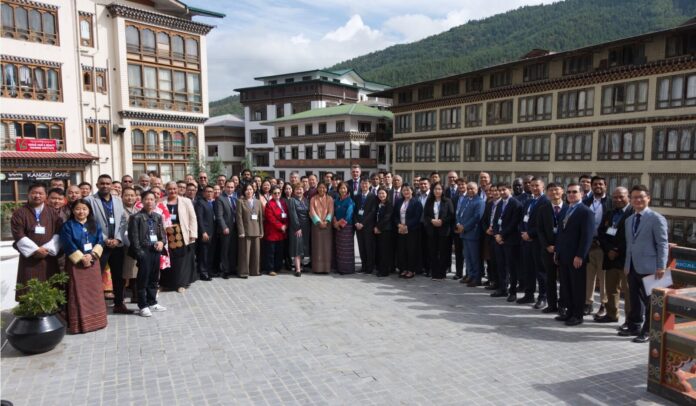
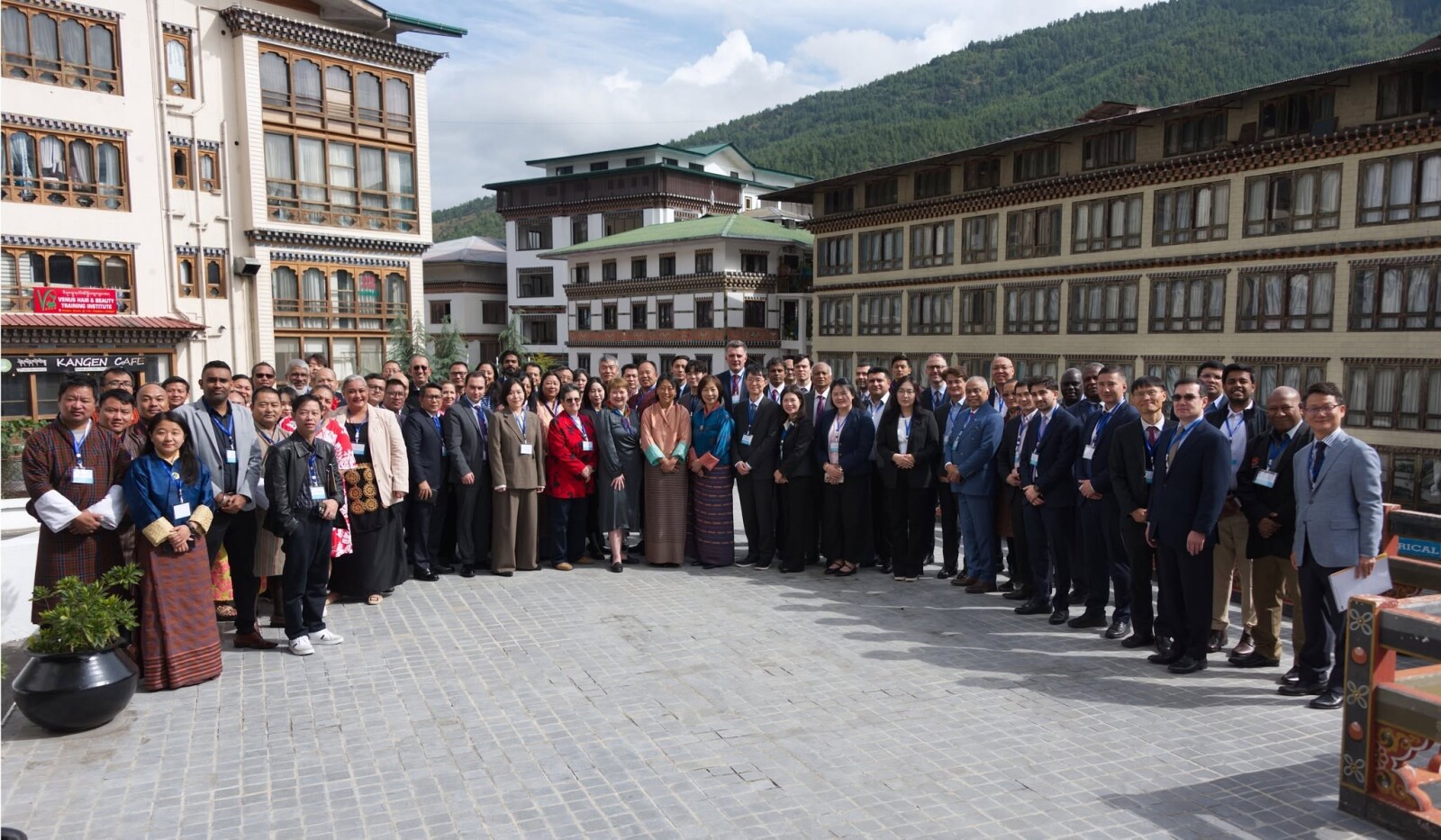
Participants and delegates from across the Asia-Pacific region gather in Bhutan for the 11th Conference of the Asia Pacific Public Electronic Procurement Network.

CDC was invited as an industry speaker and panellist at the 11th Asia Pacific Public Electronic Procurement Network (APPeN) Conference in Thimphu, Bhutan, where it shared practical insights into integrating AI into next-generation e-GP platforms.
Held on Oct 5 and 6, the conference, organised by the Asian Development Bank (ADB) in collaboration with the Royal Government of Bhutan, brought together more than 70 participants from 28 countries, including public procurement officials and technology industry representatives.
CDC Executive Director Putri Nurul Ida Yahya said AI could help public institutions interpret complex information, automate routine tasks and generate insights to support procurement decision-making.
“The priority is to select applications that address real challenges and deliver measurable improvements. For example, a three-month conversational AI pilot project in Malaysia’s government procurement system successfully reduced call centre workload by 15 to 18 per cent,” she said in a statement.
Putri Nurul Ida said the successful pilot demonstrated how AI could facilitate users’ access to information, allowing support teams to focus on more complex enquiries.
Beyond operational efficiency, CDC also highlighted that the responsible use of AI required ethical practices, strict protection and confidentiality of government data, appropriate security and access controls, transparency, and continuous human oversight.
During the workshops and networking sessions throughout the conference, delegates engaged with CDC on key topics, including technology implementation strategies, change management, system deployment and approaches to sustaining user adoption.
The discussions provided an opportunity for CDC to share lessons from Malaysia’s e-GP experience with regional institutions exploring the use of AI in public procurement.
The exchange also highlighted how Malaysia’s experience in developing and operating e-GP systems could contribute to regional efforts to adopt AI in public procurement in a practical and responsible manner.

— BERNAMA
Hashtag: #CommerceDotCom #ArtificialIntelligence #GovTech #DigitalProcurement #ResponsibleAI #Malaysia


The issuer is solely responsible for the content of this announcement.

Commerce Dot Com Sdn Bhd

Established in 1999 as a procurement solutions provider, Commerce Dot Com Sdn. Bhd. (CDC) is a government-linked company under the Ministry of Finance whereby the ministry’s corporate arm, Ministry of Finance (Incorporated), holds a golden share in the company. With over 20 years of experience under its belt, CDC has established itself as among the leading procurement solutions providers in Malaysia and has a well-earned reputation for providing exceptional services through its innovative solutions.

2026 Yangtze River Delta International Youth Film Festival Unveiled in Ningbo

NINGBO, China, Oct. 20, 2026 /PRNewswire/ — From October 17 to 23, the 2026 Yangtze River Delta International Youth Film Festival, guided by the China Film Administration and co-hosted by China Media Group and the People’s Government of Zhejiang Province, is being held in Ningbo, China.

The Selection Committee makes its appearance at the opening ceremony.

As China’s first officially established film festival dedicated to young filmmakers, the festival features a “2+5” framework: two major events—the opening and closing ceremonies—and five major sections: the Youth Film Project Market, the China Film New Force Forum, Film Panorama, Theme Event and the “Movie+” Series Events. With two main threads—professional activities and public-benefit initiatives—running throughout, it aims to create a major film event combining professional excellence, commercial value and an international vision, ignite young filmmakers’ creative vitality, promote coordinated development of the Yangtze River Delta’s film industry, and advance diverse cinematic expression and international outreach.

The ninth China Film New Force Forum will feature keynote speeches on topics including “Film Stories and the China Image,” “Cinematic Perspectives in the AI Era,” “The New Map of the Film Economy” and “Film and a Changed Audience,” as well as roundtable discussions aimed at forging industry consensus.

2026 marks the 70th anniversary of the establishment of diplomatic relations between China and Africa. A core thematic event of the festival, the China-Africa Youth Filmmakers Roundtable will provide a platform for dialogue, bringing together more than 100 young filmmakers, scholars and representatives of film and television institutions from China and African countries in Ningbo. The event aims to facilitate connections between China’s film and television industry and the African film market.

The festival has launched its flagship “Youth Film Project Market,” a one-stop project-incubation platform for young film talent worldwide, to help more young filmmakers light up the Chinese screen.

During the festival, forty Chinese and international films will be screened in 187 showings at 20 cinemas in 10 cities across the Yangtze River Delta. The festival is also creating “Film+” experiences that bring together technology, cultural tourism and consumer activities.

Looking back at the history of Chinese cinema, Ningbo—the “cradle of Chinese film”—has been a constant presence. Generations of Ningbo-born filmmakers have created nearly 50 “firsts” in Chinese film history. In the early days of Chinese cinema, Zhang Shichuan (1891-1953) directed China’s first narrative short film Die for Marriage (Nan Fu Nan Qi) and its first sound film Sing-Song Girl Red Peony (Ge Nü Hong Mu Dan), and founded the country’s first film school—Mingxing Film and Drama School. Song of the Fishermen (Yu Guang Qu) was filmed on location in Shipu, Xiangshan County, Ningbo, and won China’s first international film award. Yuan Muzhi (1909-1978) starred in Children of Troubled Times (Feng Yun Er Nü), in which “March of the Volunteers” was heard on screen for the first time. After the founding of the People’s Republic of China, Sang Hu (1916-2004) directed New China’s first color stage-opera film, Liang San-po A Cu Jing-tchaj (Butterfly Lovers), and its first color feature film, New Year Sacrifice (Zhu Fu). Ningbo filmmaker Xu Jingda (1934-1987) and others directed China’s first large-scale, color, widescreen animated feature, Nezha Conquers the Dragon King (Ne Zha Nao Hai), and Hsin-Yen Chang (1934- ) directed China’s first martial arts film to gross 100 million yuan, The Shaolin Temple (Shao Lin Si).

Today, Ningbo is home to more than 5,000 film and television enterprises and has built an industrialized, standardized and technology-driven film industry system, creating a landscape where “the whole city is a set, and creation is possible in every season.”

A display of posters for Zhang Shichuan's classic productions.
A display of posters for Zhang Shichuan’s classic productions.

TOBLERONE REINVENTS ITS PRALINES WITH A BISCOFF® TWIST

A special-edition collaboration with Lotus Biscoff®, available for a short time only

SYDNEY, Oct. 20, 2026 /PRNewswire/ — Toblerone has reinvented its Pralines range with the launch of Toblerone Biscoff® Pralines, a special-edition collaboration bringing the caramelised taste of Lotus Biscoff® into its signature diamond-shaped pralines, available now while stocks last.

Toblerone Biscoff® Pralines are available in 176g and 44g formats.

Each praline brings together a smooth, rich milk chocolate coating with Toblerone’s signature soft, chewy honey-almond nougat, and a velvety Lotus Biscoff® centre, made from the original Lotus Biscoff® caramelised biscuits, crushed and blended into a smooth, buttery spreadable paste.

Toblerone launched its Pralines range in 2023, featuring a smooth centre encased in a distinctive diamond shape. The Biscoff® collaboration marks the first partnership for the range, taking it in its most indulgent direction yet.

Ben Wicks, CMO / VP Marketing ANZ at Mondelēz International, said: “Toblerone is ‘Never Square’ and has always been about doing things a little differently. This collaboration is no exception, pairing our signature Pralines with Biscoff® ‘s smooth, caramelised biscuit spread let us create something that feels both familiar and completely new. It’s the kind of pairing we think our fans will love and we can’t wait for people to try it. Just don’t wait too long, once it’s gone, it’s gone.”

The collaboration brings Lotus Biscoff’s® signature caramelised biscuit spread into the Toblerone Pralines range for the first time, giving fans a new way to experience two familiar tastes together.

Toblerone Biscoff® Pralines are available in 176g and 44g formats RRP $20.00 and $7.00 AUD at Coles, Woolworths and Independent supermarkets from 2nd September while stocks last.

NOTES TO EDITOR:

About Mondelez International

Mondelēz International, Inc. is one of the world’s largest snacking companies and one of Australia’s largest food manufacturers. Its purpose is to empower people to snack right by delivering a broader range of delicious, high-quality snacks that nourish life’s moments, that consumers can feel good about. It is the custodian of iconic brands including, Toblerone, Cadbury Dairy Milk, The Natural Confectionery Co., Oreo, In A Biskit, Olina’s Bakehouse and Philadelphia Cream Cheese.

GREY2K USA Worldwide Report: Australian greyhound tracks depend on the killing of tens of thousands of kangaroos each year

Nonprofit Group calls for End of Greyhound Racing Industry

SYDNEY, Oct. 20, 2026 /PRNewswire/ — According to a new report from the Center for a Humane Economy (CHE), tens of thousands of kangaroos are being shot each year to provide cheap meat for the Australian greyhound racing industry.

“This is another example of how the greyhound racing industry cuts corners and prioritizes profits over animal welfare,” said GREY2K USA Worldwide President and General Counsel Christine A. Dorchak. “Greyhound racing is cruel and inhumane and must end.”

The CHE investigation documents, for the first time, a commercial connection between Australia’s kangaroo meat trade and its greyhound racing industry. As international demand for kangaroo meat and skins has plummeted, low-cost kangaroo meat has become a major feed source for racing greyhounds. According to CHE, the number of kangaroos being shot for the greyhound racing industry could be as high as 75,000 annually, assuming a diet split between kangaroo meat and other sources.

That figure excludes tens of thousands of dependent joeys, who are killed at the hands of shooters by blunt force trauma or decapitation, or left to die of starvation or predation after their mothers are shot.

“We already had plenty of good reasons to halt greyhound racing, and now we add one more: mass shooting of native kangaroos during the night to supply bushmeat to greyhounds,” said Wayne Pacelle, president of the Center for a Humane Economy. “If the mistreatment of the dogs itself was not enough to warrant reform, now the case is fortified by understanding the link between greyhound racing to the slaughter of Australia wildlife.”

The report identifies Ray Borda as a key link between the two industries. Borda is a longtime greyhound breeder and owner with roughly 300 greyhounds currently racing. He is also managing director of Macro Group Australia, which controls the country’s largest retail distribution network for kangaroo meat, and serves as national president of the Australian Wild Game Industry Council (AWGIC), the peak body representing the kangaroo industry.

“Across the world, greyhound trainers use cheap meat as a way to reduce costs and maximize the profit margin for each individual dog,” said Dorchak. “We are grateful to our allies at the Center for a Humane Economy for shining a light on the link between the shooting of kangaroos and greyhound racing.”

Greyhound racing was recently prohibited in New Zealand, Wales and Scotland. It is illegal in 44 American states, and a bill to outlaw greyhound racing nationwide recently passed the U.S. House of Representatives. In December, a bill to phase out greyhound was approved by the Tasmanian House of Assembly, by a vote of 22-11.

The full report, “Australia’s Global Bushmeat Trade: A Report on the Commercial Kangaroo Meat Industry, Economics, Food Safety, and Animal Welfare Failures,” authored by Svetlana Feigin, Ph.D., Jennifer Skiff, Tina Lawrence, B.Juris., LL.B., Jim Keen, D.V.M., Ph.D., Dr. Thomas Pool, D.V.M., M.P.H., Kevin Chambers, and Peter Hylands, is available at https://act.centerforahumaneeconomy.org/a/kangaroo-report-survey.

About GREY2K USA Worldwide

Formed in February of 2001, GREY2K USA Worldwide is the largest greyhound protection organization in the world with more than 300,000 supporters. As a non-profit 501(c)4 organization, the group works to pass stronger greyhound protection laws and end the cruelty of dog racing on both national and international levels. GREY2K also promotes the rescue and adoption of greyhounds across the globe. For more information, go to www.GREY2KUSA.org or visit GREY2K on Facebook, Twitter or Instagram.

Contact: Christine A. Dorchak, Esq., +1.617.981.0490, christine@grey2kusa.org

Can we produce low-cost omega-3s without relying on fish?

GOLD COAST, Australia, Oct. 20, 2026 /PRNewswire/ — Southern Cross University researchers are aiming to halve the cost of producing omega-3 supplements to make these essential nutrients more accessible to pregnant women and infants in low-income countries, backed by the University’s first-ever grant from The Gates Foundation.

The research takes a novel approach: rather than relying on fish oil, the team is going closer to the original source of omega-3. Fish don’t produce omega-3 themselves – they accumulate it from marine microorganisms lower in the food chain.

Led by Professor Dirk Erler from Southern Cross University’s Faculty of Science and Engineering, the team is investigating how these naturally omega-3-producing microorganisms can be grown more cheaply through precision fermentation, including the use of agricultural and food-processing by-products as a source of fermentation sugar.

Omega-3 is an important nutrient during pregnancy and early life, supporting brain and nervous system development in babies. But the cost of supplements remains a significant barrier to access in many low-income countries.

“The main barrier for the uptake of omega-3s as supplements in pregnant women is the cost,” Professor Erler said.

“The whole objective of our project is to reduce that cost and make omega-3 supplements more available.”

The research team at Southern Cross University, which includes biomedical scientist Dr Nedeljka Rosic, Dr Shane McIntosh, postdoctoral researcher Dr Jasmine Haskell and PhD researcher Michael Ingram, is focused on growing omega-3-producing marine microorganisms known as thraustochytrids – or ‘throstys’ for short.

“By growing those microorganisms on land through precision fermentation, we have an alternative way of producing omega-3s that is both reliable and highly targeted,” Professor Erler said.

Precision fermentation allows the researchers to grow thraustochytrids under controlled conditions to produce omega-3 oils. The team is investigating whether expensive feedstocks used in the process can be replaced with lower-cost agricultural and food-processing by-products, helping drive down the overall cost of production.

The approach could also reduce reliance on wild-caught fish as a source of omega-3 oil and create a more reliable, scalable, and local supply.

For biomedical scientist Dr Nedeljka Rosic, the production challenge is ultimately about what greater access to omega-3 could mean for women and babies.

“As a biomedical scientist, my purpose is to find ways to use science to improve people’s health,” Dr Rosic said.

“This project is important because it aims to improve the health of pregnant women and children and reduce preterm births through simple dietary improvements.”

Pexar VivKeep Digital Photo Frames, Powered by Lexar, Now Available at JB Hi-Fi in Australia

MELBOURNE, Australia, Oct. 20, 2026 /PRNewswire/ — Pexar, a smart device brand powered by Lexar, announced that its VivKeep digital photo frames are now available exclusively through JB Hi-Fi Australia, the premier electronics retailer in Australia, in stores nationwide and online. The launch gives Australian families a simple way to keep shared photos on display at home. Anti-Glare, No Subscription Fee, Up to 60 second videos, unlimited photo uploads, families calendar and much more.


Founded in Melbourne in 1974, JB Hi-Fi has more than 200 stores across Australia and is where many Australians shop for their tech.

“Working with JB Hi-Fi brings Pexar to more homes in Australia,” said Victor Zhao, Co-Founder of Pexar “With Pexar, you get a top-quality display, more useful app features and no monthly fees. Whether it’s for your own home or a gift for someone important to you, a Pexar frame is the best choice.”

Photos and a calendar in one frame

Pexar VivKeep frames are built for homes that want more from a digital frame. Through the free Pexar App, family and friends can send photos and videos to the frame from anywhere, and the frame can also display a calendar. There are no subscription fees, and photos are stored on the frame itself.

Three sizes for any room

The 11-inch 2K VivKeep Pro has a sharp, 2000 x 1200 anti-glare touchscreen and comes in Black or Sand. The 15.6-inch VivKeep Starlight adds gallery lighting that glows from behind the display onto the wall, giving each photo a sense of warmth and depth. The 10.1-inch VivKeep is a compact choice for a desk or bedside table. All three work in landscape or portrait. The 10.1- and 11-inch models hold about 40,000 photos, and the Starlight holds about 80,000.

Availability at JB Hi-Fi

The Pexar VivKeep digital photo frames are now available at JB Hi-Fi stores across Australia and through the JB Hi-Fi online store. The 11-inch 2K VivKeep Pro (Black or Sand) is priced at AU$299, the 15.6-inch VivKeep Starlight at AU$499 and the 10.1-inch VivKeep (Black or Grey) at AU$229.

About Pexar

Powered by Lexar, Pexar crafts premium products for life-sharing and creative workflows, from digital displays to precision desktop accessories. Our mission is to eliminate everyday friction with thoughtful innovation and masterfully engineered hardware that goes beyond good enough. For more information, please visit pexar.com, or find Pexar on Instagram, Facebook and YouTube.

Media Contact

Katherine Zhang

Head of Brand & Marketing, Pexar

marketing@pexar.com