A seasoned business leader with deep market insight to drive strategic initiatives and business outcomes
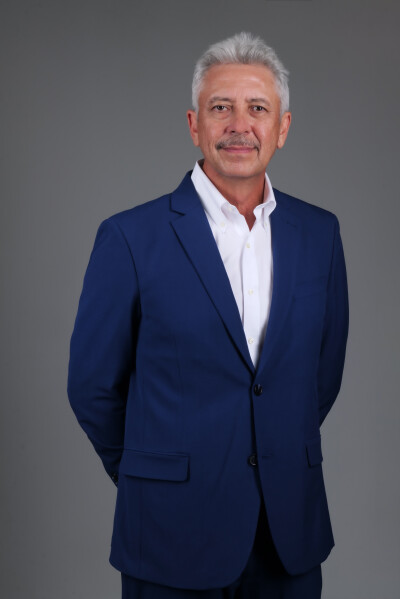
DENVER, USA and SINGAPORE – Media OutReach Newswire – 3 February 2026 – Vantage Data Centers, a leading global provider of hyperscale data center campuses, today announced the appointment of Fitri Abdullah as country managing director, Malaysia. In this newly created role, Abdullah will oversee Vantage’s business in Malaysia, leading strategies that strengthen stakeholder engagement and market leadership. Abdullah will be part of Vantage APAC’s leadership team and report directly to Jeremy Deutsch, the region’s president.
Fitri Abdullah, Country Managing Director, Malaysia, Vantage Data Centers
With more than 30 years of experience across the technology and communication industries, Abdullah brings a wealth of expertise in navigating complex business landscapes, fostering strong stakeholder relationships and building high-performing teams from both local and regional perspectives. Most recently, he served as managing director of Oracle Corporation Malaysia for the last nine years, where he led the business strategy and execution plan to transform the company into a leading cloud service provider in Malaysia.
Prior to Oracle, Abdullah was managing director of Mesiniaga Berhad, a publicly listed IT services company, and senior vice president for the enterprise business of Maxis Berhad, a leading communication service provider in Malaysia. In these roles, he orchestrated teams to drive substantial business growth through differentiated offerings, enhanced customer engagements and streamlined business operations. Earlier in his career, he held various leadership roles in consulting and systems integration at Hewlett Packard across the Asia-Pacific region.
“I am delighted to welcome Fitri to Vantage’s APAC business as our new managing director for Malaysia. Fitri’s appointment comes at a time of significant growth for us. His strategic vision and extensive experience will be instrumental as we pursue new opportunities and deepen our commitment to innovation and sustainability to keep pace with customer demand in such a dynamic market,” said Deutsch.
“Malaysia is a strategically important market to Vantage and our customers. I am honored and excited to take on this new role in advancing Vantage’s APAC growth journey and supporting Malaysia’s digital economy,” said Abdullah. “I look forward to collaborating with teams across the company, customers, investors, government, policymakers and other stakeholders to deliver long-term value and a positive impact.”
Vantage’s portfolio in Malaysia encompasses three hyperscale campuses across Kuala Lumpur and Johor. The company’s ongoing expansion in Malaysia underscores its commitment to driving the country’s cloud and AI transformation. For more information on Vantage’s APAC platform, please visit https://vantage-dc.com/data-center-locations/apac/.
Hashtag: #VantageDataCenters
The issuer is solely responsible for the content of this announcement.
About Vantage Data Centers
Vantage Data Centers is a global leader in digital infrastructure serving the world’s most influential AI and cloud providers. With operations spanning North America, EMEA and Asia Pacific, Vantage delivers capacity at unrivaled speed and scale, driven by a relentless commitment to operational excellence and customer success. Vantage is empowering transformative companies to shape the future.
COLOGNE, Germany, Feb. 3, 2026 /PRNewswire/ — DeepL, a global AI product and research company, today announced the general availability of DeepL Voice API. This innovative product empowers developers to integrate real-time voice transcription and translation capabilities into their applications, significantly enhancing multilingual support for businesses.
The DeepL Voice API allows businesses to stream audio and receive transcriptions in the source language, along with translations into up to five target languages. The API provides a seamless experience for users, ensuring that language barriers do not hinder effective communication.
DeepL Voice API will be widely available for customers with spoken communication at their core, with contact centres and business process outsourcing (BPOs) providers being the earliest adopters of this solution.
Transforming Multilingual Support
The DeepL Voice API turns language support from a staffing problem many contact centers face, into an easy-to-use solution that fits well with current systems. By adding real-time transcription and translation to how agents work, supervisors can handle issues better, and agents can assist customers in different languages without needing to pass them on to a colleague or revert to written communication to allow for translation.
On the operational side, the Voice API provides clear transcripts and translations that help with quality checks and training of customer service teams. This allows for quicker reviews, fairer evaluations across different locations, and clearer feedback on agent performance and gaps in knowledge. By minimizing issues caused by language barriers, like longer calls, repeated contacts, and expensive misunderstandings, the DeepL Voice API changes the overall experience for the end user.
“When interacting with a customer service representative, the end user is often trying to resolve an important issue, so facing communication barriers often leads to a negative experience. By equipping contact center teams with tools that enable real-time communication in any language, we can turn what is often perceived as a cost center for a business, into a revenue generating one through customer excellence. This also makes the work of contact center agents smoother, reducing the need to pass tasks to others or seek workaround solutions,” said Gonçalo Gaiolas, Chief Product Officer at DeepL.
The DeepL API will enable the following for users:
Hire for expertise, not language coverage DeepL Voice API lets contact centers staff agents who understand the customer issue and the business context, even when they do not speak the customer’s language.
Expand talent pools while managing costs By reducing the need for language specific staffing, teams can centralize or distribute support more flexibly, which can lower operating costs and improve coverage planning.
Provide reliable coverage in urgent moments Real time translation helps teams maintain service levels during nights, weekends, and holidays, when fewer specialized language agents are available.
Two way understanding, not just text on screen Agents can follow the conversation through live translated audio, alongside on screen transcription and translation, so they can respond naturally and confidently in the moment.
Business Value and Operational Resilience
For leaders in the industry, the business value is multifold. Organizations can expand language coverage without overhauling their hiring models, add new geographies quickly, and support more client programs with the same core team. This control over customer experience, compliance, and cost becomes increasingly important as operations grow.
The launch also includes a six week early access program for voice-to-voice capabilities, set to run from mid-February. This feature will allow agents to hear translated audio while communicating with customers in their preferred languages in real-time, further streamlining the customer experience.
Availability
The DeepL Voice API will be available to all DeepL API Pro customers starting February 2. Interested businesses can get started by accessing the DeepL API documentation or contacting sales for Voice API access.
For more information on DeepL Voice API, including supported languages, please visit the website here.
About DeepL:
DeepL is a global AI product and research company focused on building secure, intelligent solutions to complex business problems. Over 200,000 business customers and millions of individuals across 228 global markets today trust DeepL’s Language AI platform for human-like translation, improved writing and real-time voice translation. Building on a history of innovation, quality and security, DeepL continues to expand its offerings beyond the field of Language, including DeepL Agent – an autonomous AI assistant designed to transform the way businesses and knowledge workers get work done. Founded in 2017 by CEO Jarek Kutylowski, DeepL now has over 1,000 passionate employees and is supported by world-renowned investors including Benchmark, IVP, and Index Ventures. For more information on DeepL, visitwww.deepl.com.
Toyota Fudosan’s tender offer drastically undervalues the Company
Elliott does not intend to tender its shares into the Revised TOB at the current terms and strongly encourages other shareholders not to tender
LONDON, Feb. 3, 2026 /PRNewswire/ — Elliott Investment Management L.P. and Elliott Advisors (UK) Limited (“Elliott”), which advise funds that together have a significant investment in Toyota Industries Corporation (“Toyota Industries” or the “Company”) and are the Company’s largest independent shareholder, today issued the following statement:
Elliott notes the non-binding statement issued today by an affiliate of Toyota Fudosan Co., Ltd. (“Toyota Fudosan”). Elliott maintains its position that the revised tender offer by Toyota Fudosan at ¥18,800 per share (the “Revised TOB”) very significantly undervalues Toyota Industries, as Elliott demonstrates in its public materials. Elliott continues to strongly disagree with Toyota Fudosan’s assertion that the Revised TOB price “reflects the intrinsic value of the Target Company“.
Elliott does not intend to tender its shares into the Revised TOB at the current terms and strongly encourages other shareholders not to tender.
Elliott Investment Management L.P. (together with its affiliates, “Elliott”) manages approximately $76.1 billion of assets as of June 30, 2025. Founded in 1977, it is one of the oldest funds under continuous management. The Elliott funds’ investors include pension plans, sovereign wealth funds, endowments, foundations, funds-of-funds, high net worth individuals and families, and employees of the firm. Elliott Advisors (UK) Limited is an affiliate of Elliott Investment Management L.P.
Investor Contacts:
Okapi Partners LLC New York: Pat McHugh T:+1 212 297 0720 Toll Free: (877) 629-6357 London: Christian Jacques T: +44 20 3031 6613 TICO@okapipartners.com
SEOUL, South Korea, Feb. 3, 2026 /PRNewswire/ — Hecto Financial, a regulated financial services provider in South Korea, announced today its integration with Circle Payments Network (CPN). The integration provides Hecto Financial with access to a global settlement infrastructure for cross-border payments using regulated stablecoins such as USDC.
Hecto Financial Integrates with Circle Payments Network to Enable Stablecoin-Based Payments
Moving forward, Hecto Financial plans to streamline overseas remittance and settlement procedures through CPN, in alignment with domestic regulatory standards in South Korea, to provide faster and more secure cross-border payment services to both domestic and international customers.
Operated by Circle Technology Services, LLC, an affiliate of Circle Internet Group, Inc. (NYSE: CRCL), CPN connects financial institutions, payment providers, and fintechs to facilitate programmable, always-on settlement using stablecoins such as USDC and EURC. The network is designed to unify traditional and blockchain-based payment systems while eliminating intermediaries and supporting real-time settlement.
Through CPN, Hecto Financial aims to enhance the speed, efficiency, and global reach of its cross-border payment services for enterprise clients and platform partners. Supported use cases include B2B payments, remittances, and treasury flows.
“As financial infrastructure evolves, we see an opportunity to offer clients new ways to move value quickly across borders in a compliant manner,” said Jong-won Choi, CEO of Hecto Financial. “In line with the global shift toward stablecoin-centered financial infrastructure, Hecto Financial aims to help establish a foundation for the KRW-based digital payment ecosystem to expand into global markets and contribute to enhancing the international standing of the Korean Won.”
“Hecto Financial’s integration with Circle Payments Network supports the delivery of near-instant cross-border payments across key global corridors,” said Irfan Ganchi, SVP of Product Management, Payments at Circle. “By connecting to CPN, Hecto enables programmable money movement that aligns with the demands of today’s digital economy.”
This integration builds on Hecto Financial’s participation in the October 2025 public testnet of Arc, Circle’s enterprise-grade layer-1 blockchain designed as the Economic Operating System (OS) for the internet, where it joined over 100 institutions in validating early infrastructure use cases.
About Hecto Financial
Hecto Financial (KOSDAQ: 234340) is a leading, regulated financial services provider in South Korea, offering a comprehensive suite of integrated payment solutions and financial infrastructure. The company specializes in virtual accounts, automated settlement systems, and innovative cross-border payment services. Leveraging its robust domestic network and advanced technological capabilities, Hecto Financial is at the forefront of modernizing financial services by bridging traditional banking systems with digital assets and blockchain-based settlement networks. The company is committed to delivering secure, compliant, and efficient financial tools for enterprise clients and platform partners globally.
About Circle Payments Network
Circle Technology Services, LLC (CTS) is the operator of Circle Payments Network (CPN) and offers products and services to financial institutions that participate in CPN to facilitate their CPN access and integration. CPN connects participating financial institutions around the world, with CTS serving as the technology service provider to participating financial institutions. While CTS does not hold funds or manage accounts on behalf of customers, we enable the global ecosystem of participating financial institutions to connect directly with each other, communicate securely, and settle directly with each other. CTS is not a party to transactions between participating financial institutions facilitated by CPN who use CPN to execute transactions at their own risk. Use of CPN is subject to the CPN Rules and the CPN Participation Agreement between CTS and a participating financial institution.
ISGlobal, supported by Rockefeller Foundation, analyzed impact of severe global aid cuts in 93 countries, with 21 in Asia
New study published in The Lancet finds slashing global aid, particularly by US and European countries, will reverse decades of progress in fighting diseases
BANGKOK, Feb. 3, 2026 /PRNewswire/ — The Lancet Global Healthpublished a new peer-reviewed study today by the Barcelona Institute for Global Health (ISGlobal), which warns that a precipitous drop in global aid could lead to 22.6 million additional deaths by 2030 across 93 low- and middle- income countries, including 5.4 million children under the age of five. With support from The Rockefeller Foundation, the analysis demonstrates that Sub-Saharan Africa, which accounts for 38 of the 93 countries analyzed, is particularly at risk, and with 21 of the countries in Asia, 12 in Latin America, 12 in the Middle East and North Africa, and 10 in Europe, including Ukraine, severe cuts to official development assistance (ODA) could be felt globally. ISGlobal’s research also reveals that over the course of 2002-2021, ODA helped reduce child mortality by 39%; prevent HIV/AIDS deaths by 70%, with a 56% reduction in deaths from both malaria and nutritional deficiencies; and increased additional global health outcomes in these 93 countries, which are home to 75% of the world’s population.
“These findings are a warning of the profound moral cost of the zero-sum approach many political leaders are taking—and they are an urgent call to action to all of us to prevent this human suffering,” said Dr. Rajiv J. Shah, President of The Rockefeller Foundation in a Statement on the Human Cost of Foreign Aid Cuts. “The question before humanity today is whether we will accept a global retreat from commitments to feed the hungry, cure the sick, and lift up the most vulnerable define the future or whether we will come together to build new models of cooperation worthy of the tens of millions of people who could lose their lives if we do not.”
In 2024 international aid fell for the first time in six years, and the United States, United Kingdom, France, and Germany significantly reduced their ODA contributions for the first time in nearly 30 years. These deep cuts, along with projected cuts in 2025 and 2026, sparked the need to understand what this could mean at the human level for communities all over the world.
“Our analyses show that development assistance is among the most effective global health interventions available. Over the past two decades, it has saved an extraordinary number of lives and strengthened fragile welfare states and healthcare systems. Withdrawing this support now would not only reverse hard-won progress, but would translate directly into millions of preventable adult and child deaths in the coming years. Budget decisions made today in donor countries will have irreversible consequences for millions of people for years to come,” said Davide Rasella, Coordinator of the study, ICREA Research Professor at ISGlobal and at the Brazilian Institute of Collective Health.
Millions More Lives at Risk: As the world’s largest donors and other countries around the world continued to slash billions in assistance, the Organisation of Economic Cooperation and Development (OECD) is projecting that ODA could decline by 10%-18% from 2024 to 2025. In order to assess the realized impact of ODA in these countries and project what may happen if current aid cuts continue or worsen, ISGlobal – with support from The Rockefeller Foundation in association with its charitable offshoot, RF Catalytic Capital – examined 20 years of development data between 2002 and 2021 in 93 countries that are home to 6.3 billion people.
“Asia’s scale means that when health systems fail, the human cost is immense, and in 21 countries across the region, decades of development gains are now at risk of being reversed,” said Deepali Khanna, Senior Vice President & Head of Asia, The Rockefeller Foundation. “Without sustained and smarter development assistance, hard-won progress against disease can disappear, health systems can weaken, and preventable loss of life can follow. These outcomes are not inevitable, but avoiding them requires country-led financing and resilient, self-reliant systems that can protect the most vulnerable and save lives.”
Mild defunding scenario. With a 10.6% yearly reduction (corresponding to the average reduction of the last two years, 2024–2025), these cuts could result in 9.4 million preventable deaths, including 2.5 million children younger than five years.
Severe defunding scenario. Based on $32 billion (15.1%) in ODA cuts from 2024 to 2025, with the funding cuts continuing and worsening through the end of this decade, this could cause 5.4 million children younger than age five years to die as part of more than 22.6 million additional deaths of all ages – Roughly equivalent to (1) the combined populations of greater Barcelona, Paris, and London; (2) more than the individual populations of Mexico City, Dhaka, Sao Paulo, Cairo, and Mumbai; (3) or the entire U.S. State of Florida perishing by 2030.
ISGlobal researchers applied a consistent methodological framework that integrates longitudinal panel data with validated country-level microsimulation models to quantify the health consequences of funding reductions across all OECD contributors. As result, the new study also demonstrates that higher global ODA levels in the 93 countries analyzed between 2002 and 2021 contributed to:
Decreasing all-cause mortality by 23%.
Declining child mortality by 39%.
Reducing deaths mortality rates from HIV/AIDS by 70%, nutritional deficiencies by 56%, malaria by 56%, diarrheal diseases by 55%, and neglected tropical diseases by 54%.
Strengthening health systems and supporting disease control and eradication efforts.
Improving preparedness for outbreaks and epidemics.
It also warns that at least three out of every four people on the planet live in countries where two decades of development gains could be reversed, where progress against diseases disappears, and where preventable loss of life could happen. The countries analyzed in this study include:
21 countries in Asia: Afghanistan, Azerbaijan, Bangladesh, Cambodia, China, India, Indonesia, Kazakhstan, Kyrgyzstan, Laos, Malaysia, Mongolia, Myanmar, Nepal, Pakistan, Philippines, Sri Lanka, Tajikistan, Thailand, Uzbekistan, and Vietnam.
10 countries in Europe: Albania, Armenia, Belarus, Bosnia and Herzegovina, Georgia, North Macedonia, Moldova, Montenegro, Serbia, and Ukraine.
12 countries in Latin America: Argentina, Bolivia, Brazil, Colombia, Ecuador, El Salvador, Guatemala, Honduras, Mexico, Nicaragua, Paraguay, and Peru.
12 countries in the Middle East and North Africa: Algeria, Djibouti, Egypt, Iran, Iraq, Jordan, Lebanon, Libya, Morocco, Sudan, Tunisia, and Turkiye.
38 countries in Sub-Saharan Africa: Angola, Benin, Botswana, Burkina Faso, Burundi, Cameroon, Central African Republic, Chad, Côte d’Ivoire, Democratic Republic of the Congo, Equatorial Guinea, Eswatini, Ethiopia, Gabon, Gambia, Ghana, Guinea, Kenya, Lesotho, Liberia, Madagascar, Malawi, Mali, Mauritania, Mozambique, Namibia, Niger, Nigeria, Republic of the Congo, Rwanda, Senegal, Sierra Leone, South Africa, Tanzania, Togo, Uganda, Zambia, and Zimbabwe.
As a result of the severe realized and projected cuts to ODA, The Rockefeller Foundation is undertaking its mission-driven work around the world – with a focus on Sub-Saharan Africa – to identify country-led solutions to maximize every dollar of remaining aid and to stimulate new investments. This work, along with ISGlobal’s research, is supported by the Foundation’s Build the Shared Future Initiative, through which the 113-year-old philanthropic organization aims to inspire and inform global cooperation and international development work that matches the challenges of the 21st century.
Researchers from ISGlobal – a Barcelona-based institution supported by the “la Caixa” Foundation, together with the Institute of Collective Health at the Federal University of Bahia (UFBA) in Brazil, the Mozambique-based Manhiça Health Research Centre (CISM), and the National Institute of Health (INS) – submitted this report to The Lancet Global Health on 18 November 2025.
It builds on an ISGlobal-led study published last year, which found that the dismantling of the U.S. Agency for International Development (USAID) alone could lead to over 14 million additional preventable deaths by 2030. Both analyses applied the same methodological framework, integrating longitudinal panel data with validated country-level microsimulation models—to quantify the health consequences of funding reductions. While the USAID study focused on a single donor, the new analysis encompasses all OECD contributors, providing a comprehensive assessment of global aid defunding on mortality.
About The Barcelona Institute for Global Health (ISGlobal) The Barcelona Institute for Global Health, ISGlobal, is the fruit of an innovative alliance between the “la Caixa” Foundation, academic institutions and government bodies to contribute to the efforts undertaken by the international community to address the challenges in global health. ISGlobal is a consolidated hub of excellence in research that has grown out of work first started in the world of health care by the Hospital Clínic and the Parc de Salut MAR and in the academic sphere by the University of Barcelona and Pompeu Fabra University. Its working model is based on the generation of scientific knowledge through Research Programmes and Groups, and its translation through the areas of Education and Training and Analysis and Global Development. Its ultimate goal is to help close the gaps in health disparities between and within different regions of the world. For more information, visit www.isglobal.org.
About The Rockefeller Foundation Investing $30 billion over the last 113 years to promote the well-being of humanity, The Rockefeller Foundation is a pioneering philanthropy built on unlikely partnerships and innovative solutions that deliver measurable results for people in the United States and around the world. We leverage scientific breakthroughs, artificial intelligence, and new technologies to make big bets across energy, food, health, and finance, including with our charitable offshoot, RF Catalytic Capital (RFCC). For more information, sign up for our newsletter at www.rockefellerfoundation.org/subscribe and follow us on X @RockefellerFdn, Instagram @rockefellerfdn, YouTube @RockefellerFdn, and LinkedIn @the-rockefeller-foundation.
ZEISS ARTEVO 750 and ZEISS ARTEVO 850 surgical microscopes provide ophthalmic surgeons in China with end-to-end workflow integration to improve efficiency, precision, and surgical safety.
JENA, Germany and SHANGHAI, Feb. 3, 2026 /PRNewswire/ — ZEISS Medical Technology announced today that China’s National Medical Products Administration (NMPA) has approved the ZEISS ARTEVO 750 and ARTEVO 850 ophthalmic microscopes. The microscopes provide high quality optical and digital visualization for both anterior and posterior segments. With upgrades spanning both hardware and software, the newly approved microscopes supporting ophthalmic surgeries ensure more precise operations and greater surgical safety with enhanced resolution, RGB illumination and full compatibility with the latest generation of ZEISS’s cataract workflow.
ZEISS ARTEVO 750
“The introduction of ZEISS ARTEVO 750 and ARTEVO 850 microscopes powerfully demonstrates our commitment to ophthalmologists in China. We will leverage the power of innovation to contribute to the advancement of eye health in China and better serve Chinese surgeons and their patients,” says Martin Fischer, President & CEO of ZEISS Greater China.
The ZEISS ARTEVO 750 ophthalmic microscope is another breakthrough in ZEISS’s ophthalmic surgical microscope family that made its Chinese debut at the 2025 China International Import Expo (CIIE). Combining advanced technology with established optical expertise, the ARTEVO 750 enables surgeons to finetune their surgical views in routine and complex procedures, including cataract & vitreoretinal surgery, corneal transplantation, and minimally invasive glaucoma surgery (MIGS). With enhanced resolution, elevated depth of field, intelligent RGB illumination and intraoperative OCT, the ZEISS ARTEVO 750 supports excellent usability and a seamless end-to-end workflow.
“The enhanced optical resolution of the ARTEVO 750 enables us to elevate our capabilities in performing delicate ophthalmic surgeries,” states Professor Chen Jili from Shanghai Jing’an District Shibei Hospital.
The ZEISS ARTEVO 850 is a 3D-enabled digital microscope designed for multiple specialties in ophthalmology, setting the pace in digital visualization. It combines the proven benefits of a digital ophthalmic microscope with customizable 3D digital visualization, functional integration, excellent usability, and integration into a comprehensive medical ecosystem. Digital Color Assistant (DCA) enhances colors in the surgical image to accentuate anatomical details. Another advantage of digital visualization includes optimization of the depth of field up to 60%1 with Smart Depth of Field (DoF) function. A redesigned user interface for ZEISS CALLISTO eye centralizes all controls onto a single intuitive touchscreen. Digital integration into ZEISS ophthalmic workflows allows for seamless data transfer, with reference image matching directly on the 3D screen and a markerless toric IOL implantation that can be fully surgeon controlled.
Professor Xu Gezhi from the EENT Hospital of Fudan University explains, “The resolution of the ARTEVO 850 is truly excellent, and the clear visibility and reduced fatigue during the surgery make the experience very pleasant.”
The availability in China of the next generation of ZEISS ophthalmic microscopes, including the ZEISS ARTEVO 750 and ARTEVO 850, helps transform the surgical experience with superior optics and capabilities.
The ZEISS ARTEVO 850 will be showcased as part of ZEISS’s ophthalmic workflows in the ZEISS booth #5FG-J01 at the 41st Asia-Pacific Academy of Ophthalmology (APAO) conference in Hong Kong from February 5-8, 2026. For more information about ZEISS ophthalmic surgical microscopes, visit here.
1 Data on file. Compared to ZEISS ARTEVO 800.
Not all products, services or offers are approved or offered in every market and approved labeling and instructions may vary from one country to another. For country-specific product information, see the appropriate country website. Product specifications are subject to change in design and scope of delivery as a result of ongoing technical development. The statements of the healthcare professionals reflect only their personal opinions and experiences and do not necessarily reflect the opinion of any institution that they are affiliated with. The healthcare professionals alone are responsible for the content of their experience reported and any potential resulting infringements. Carl Zeiss Meditec AG and its affiliates to not have clinical evidence supporting the opinions and statements of the health care professionals nor accept any responsibility or liability of the healthcare professionals’ content.The healthcare professionals have a contractual or other financial relationship with Carl Zeiss Meditec AG and its affiliates and have received financial support.
Contact for investors Sebastian Frericks Director Investor Relations Carl Zeiss Meditec AG Phone: +49 3641 220 116 Mail: investors.med@zeiss.com
Contact for the press Frank Smith Head of Global Communications Ophthalmology, Carl Zeiss Meditec Inc. Phone: +49 3641 220 331 Mail: press.med@zeiss.com
Carl Zeiss Meditec AG (ISIN: DE0005313704), which is listed on the MDAX and TecDAX of the German stock exchange, is one of the world’s leading medical technology companies. The Company supplies innovative technologies and application-oriented solutions designed to help doctors improve the quality of life of their patients. The Company offers complete solutions, including implants and consumables, to diagnose and treat eye diseases. The Company creates innovative visualization solutions in the field of microsurgery. With 5,730 employees worldwide, the Group generated revenue of €2,066.1m in fiscal year 2023/24 (to 30 September).
The Group’s head office is located in Jena, Germany, and it has subsidiaries in Germany and abroad; more than 50 percent of its employees are based in the USA, Japan, Spain and France. The Center for Application and Research (CARIn) in Bangalore, India and the Carl Zeiss Innovations Center for Research and Development in Shanghai, China, strengthen the Company’s presence in these rapidly developing economies. Around 39 percent of Carl Zeiss Meditec AG’s shares are in free float. Approx. 59 percent are held by Carl Zeiss AG, one of the world’s leading groups in the optical and optoelectronic industries.
SYDNEY, Feb. 3, 2026 /PRNewswire/ — New research from Appian(Nasdaq: APPN) reveals AI adoption in the public sector has gained rapid traction, with 70% of public sector workers reporting AI is now integrated into their daily tasks, a significant jump from 58% just one year ago. This places the public sector close behind large private enterprises, which continue to lead the market with an 82% AI adoption rate, according to Australian Government figures.
Further indicating the Australian public sector is increasingly ready to leverage AI-driven automation, the Appian survey of 500 Australian public sector workers, found that 68% are confident in understanding the AI tools used in their roles. This compares to just 59% in 2024.
“AI has the potential to revolutionise public sector processes, connecting siloed systems and automating routine tasks,” said Luke Thomas, Area Vice President Asia Pacific and Japan at Appian. “It’s really encouraging to see public sector workers becoming increasingly engaged with AI technologies as part of their daily roles. This can free up valuable time for staff to focus on more meaningful work and engage more effectively with citizens.”
However, Thomas cautions that many organisations continue to fall into the trap of implementing AI as isolated add-ons, such as standalone chatbots or copilots. “This kind of fragmented AI adoption doesn’t deliver the widespread improvements in productivity or resilience that public sector leaders are looking for.”
Digital growth across the public sector
The Appian research shows continued acceleration of digital transformation across Australia’s public sector. A substantial 87% of public sector workers say their organisation has implemented new digital initiatives over the past five years.
These new digital tools appear to be having an increasingly positive impact on public sector workers, with 81% reporting that digital transformation projects have improved collaboration and communication within their department or agency (compared to 64% in 2024). In addition, 86% reported that digital transformation has made public services more accessible to citizens, up from just 63% in 2024.
“The public sector manages enormous volumes of information, and workers face constant pressure around data management, compliance and administration,” said Thomas. “It’s really positive to see continued investment in digital tools translating into real improvements for staff and making public services more accessible for citizens.”
Disconnected data still a challenge
Digital progress, including AI, is being undermined by one big challenge: worsening system and data fragmentation. Appian’s research found that 72% of public sector workers report struggling with separate, disconnected databases within their organisation, a sharp rise from 56% in 2024.
The downstream impact is clear, as 64% of staff acknowledge that these disconnected databases have reduced collaboration within their department or agency (up from 49% in 2024). Additionally, 53% of workers find themselves working with incomplete, inaccessible information due to data siloes.
“The rise in digital tools alongside growing system fragmentation shows that many public sector organisations are rolling out technology in isolation rather than integrating it in a way that streamlines processes and connects information,” Thomas said.
“As a result, AI is falling short, but it’s not because of the technology itself. It falls short when organisations layer new tools on top of disconnected data, legacy systems and manual handoffs — conditions that make it impossible for technology to deliver its full value.”
A path forward
For the Australian public sector to realise the full return on its digital and AI investments, departments will need to shift focus from individual tools to the broader organisational value these technologies can unlock. This means looking beyond isolated deployments and instead understanding which end-to-end processes are most critical to service delivery, workforce efficiency and citizen outcomes.
“We encourage organisations to start with their processes, not the technology,” Thomas said. “Identify where the bottlenecks, delays and pain points sit. Only then can you determine where AI and other new technologies will meaningfully improve the process and deliver lasting impact.”
Methodology:
Appian commissioned Zoho research to survey 500 Australian public sector workers in Q4 2025.
About Appian
Appian provides process automation. We automate complex processes in large enterprises and governments. Our platform is known for its unique reliability and scale. We’ve been automating processes for 25 years and understand enterprise operations like no one else. For more information, visit appian.com. [Nasdaq: APPN]
SEATTLE, Feb. 3, 2026 /PRNewswire/ — Tineco today shared its design-led vision for modern floor care, highlighting how thoughtful engineering and human-centered thinking continue to shape more intuitive, effortless cleaning experiences. The approach reflects a broader evolution in how floor care fits naturally into everyday living.
In today’s homes, innovation is no longer judged by how advanced it sounds, but by how seamlessly it integrates into daily life. For Tineco, smart living has never been about adding complexity. Instead, it begins with thoughtful design—designed to reduce effort, remove decision-making, and create cleaning experiences that simply feel right.
Across its product portfolio, Tineco has built a reputation not only for performance, but for a design philosophy rooted in real consumer behavior. Each design choice is guided by one principle: make everyday living feel effortless.
Intelligence that works quietly in the background
One of the most defining examples of this philosophy is Tineco’s iLoop smart sensor technology. Rather than asking users to adjust modes, settings, or power levels, iLoop continuously senses real-time conditions and automatically adapts key performance elements—such as water flow, suction power, and brush movement—based on actual cleaning needs.
This intelligent balance allows products to deliver optimal performance without unnecessary resource use. By adjusting only when needed, iLoop helps extend runtime, reduce water replacement frequency, and maintain consistent cleaning results from start to finish. More importantly, it removes the mental load from the user. The product makes the decisions, so users don’t have to.
Developed from a consumer-first perspective, iLoop has become a core design foundation across Tineco’s floor washers, vacuum cleaners, and carpet cleaning solutions—reflecting a brand belief that true intelligence should feel invisible, intuitive, and reassuring.
Designed around how people actually move
Effortless cleaning is not only about intelligence — it’s also about how a product feels in use. From the early S3 series, Tineco began redefining what a floor washer could be, and with each generation, the brand has continued to refine the physical interaction between user and machine through extensive user testing and long-term feedback.
Over time, Tineco re-engineered key structural elements, including repositioning water tanks from the front of the body to the rear and eventually integrating them closer to the top of the brush head. These changes were driven by real-world usage studies, aimed at improving balance, reducing wrist strain, and creating a more natural cleaning posture.
Building on this foundation, later generations introduced assisted movement technologies that respond to user motion, subtly supporting both forward and backward movement. This approach allows the product to glide smoothly with minimal effort, creating a lighter, more controlled experience—especially during extended cleaning sessions.
Rethinking everyday categories through design
Tineco’s design thinking also extends to reimagining product categories that have traditionally been associated with heavy, infrequent use. In carpet care, conventional cleaners are often bulky and physically demanding, leading many households to use them infrequently, despite the investment.
By rethinking weight distribution and integrating clean and dirty water into a single, top-mounted tank positioned closer to the ground, Tineco redesigned the carpet cleaning experience to feel more balanced and approachable. Combined with assisted movement that helps guide the product across carpets, this design reduces physical strain and encourages more frequent, practical use.
This reimagined approach to carpet care is exemplified by the Carpet One Cruiser, which was recognized by TIME as one of its Best Inventions of 2025—an acknowledgment of how thoughtful design can transform everyday categories and make powerful tools genuinely accessible.
When products belong naturally in the home
As a brand that has played a key role in shaping the modern floor washer category, Tineco also believes that performance should coexist with living spaces—not compete with them. Over time, consumer feedback revealed a shift in expectations: cleaning appliances were no longer meant to be hidden away, but to exist naturally within modern interiors.
Beginning with the S9 Series, Tineco elevated material quality, refined proportions, and simplified its visual language. The result is a new generation of floor washers designed to sit comfortably within living rooms or bedrooms, complementing different interior styles while reinforcing a sense of pride and trust in ownership.
Designing for life, not just cleaning
For Tineco, smart design is not about chasing features—it’s about understanding how people live, move, and feel in their homes. By combining intelligent sensing, ergonomic engineering, and refined aesthetics, the brand continues to shape cleaning experiences that feel intuitive, balanced, and quietly powerful.
When design works well, it doesn’t demand attention—it simply makes everyday life easier.
About Tineco
Tineco (“tin-co”) was founded in 1998 with its first product launch as a vacuum cleaner and, in 2019, pioneered the first-ever smart vacuum. Today, the brand has evolved into a global leader in intelligent appliances spanning floor care, kitchen, and personal care categories. With a growing user base of over 23 million households and availability in approximately 30 countries worldwide, Tineco remains committed to its brand vision of making life easier through smart technology and continuous innovation. For more information, visit au.tineco.com.