Home Blog Page 1409

Global Appeal 2026: Education as the Key to Ending Leprosy Stigma and Discrimination

—  Launch Event in Brussels Will Be Live-Streamed Worldwide —

TOKYO, Jan. 28, 2026 /PRNewswire/ — The transformative power of education in replacing fear with knowledge and prejudice with empathy lies at the heart of the Global Appeal 2026 to End Stigma and Discrimination against Persons Affected by Leprosy.

Global Appeal 2026
Global Appeal 2026

The appeal will be launched at a ceremony in Brussels, Belgium, on Thursday, 29 January 2026. The event is being co-hosted by Education International and the Sasakawa Leprosy (Hansen’s Disease) Initiative, in partnership with the Damien Foundation.

Since its establishment by the Initiative in 2006, the Global Appeal has been an annual call to action, aiming to mobilize different sectors of society—ranging from religious leaders and Nobel laureates to nurses and legal professionals—to sign a collective pledge to eliminate the social barriers surrounding leprosy, also known as Hansen’s disease.

Although leprosy is often perceived as a disease of the past, it remains a health and human rights issue. In 2024, 172,717 new cases were reported from 133 countries. Millions of people worldwide live with leprosy-related disabilities, a reality that continues to fuel stigma and discrimination.

Addressing the misconceptions that perpetuate this injustice requires the transformative power of education. This is the message that Education International delivers through the Global Appeal 2026. As the global voice of teachers and education workers, Education International pledges to use its collective voice to promote knowledge, empathy and action, working toward a society in which the dignity of all individuals is upheld.

The launch event, which will be live-streamed worldwide, will bring together persons affected by leprosy, educators, policymakers, healthcare professionals, education unions, and civil society organizations, to reaffirm their shared commitment to dignity, inclusion and the principle of leaving no one behind.

The event will feature testimonials from persons affected by leprosy from Brazil, India, Indonesia and Senegal whose stories highlight the persistence of stigma even after medical cure. There will also be a panel discussion and a multi-stakeholder dialogue.

On the morning of the event, a delegation of persons affected by leprosy and participating stakeholders shall be received in audience by Her Majesty Queen Mathilde of the Belgians.

Time: 13:30 – 18:30 (CET)
Program: https://sasakawaleprosyinitiative.org/latest-updates/initiative-news/6359/
Streaming URL:
 https://eur.cvent.me/vvlkdx

About leprosy

Leprosy, also known as Hansen’s disease, is an infectious disease that primarily affects the skin and peripheral nerves. In 2024, 172,717 new cases were reported worldwide. Although leprosy is curable, delayed diagnosis and treatment can result in permanent disability. Beyond the physical toll, many people who have experienced leprosy continue to face deep-seated stigma and systemic discrimination, which prevents them from participating fully in society.

About Sasakawa Leprosy (Hansen’s Disease) Initiative

The Sasakawa Leprosy (Hansen’s Disease) Initiative is a strategic alliance of WHO Goodwill Ambassador Yohei Sasakawa, the Sasakawa Health Foundation, and The Nippon Foundation for achieving a world without leprosy and problems related to the disease. Since 1975, the Initiative has contributed over US$200 million to support national leprosy programs through the WHO. It is also committed to empowering persons affected by leprosy and their organizations. The Initiative has played a key role in raising leprosy as a human rights issue at the UN, resulting in several resolutions to eliminate discrimination against persons affected by leprosy and their families.

About Education International

Education International is the Global Union Federation that brings together organizations of teachers and other education employees from across the world. Through our 375 member organizations, we represent more than 33 million teachers and education support personnel in 180 countries and territories.

About Damien Foundation

Damien Foundation is a Belgian medical non-profit organization that works to support people with tuberculosis and skin-related neglected tropical diseases such as leprosy and leishmaniasis.

For over 60 years, we have shared this expertise in the area of public health by building solid partnerships wherever we go, to support vulnerable populations and help advance research.

We work to strengthen healthcare systems in support of, and at the request of, the national authorities of 13 countries.

Our mission is to provide equal access to robust health services throughout the world including Belgium, ensuring that no one suffers or dies from diseases that can be prevented and cured.

HKCERT Releases “Hong Kong Cybersecurity Outlook 2026” Security Incidents Hit Record High with 27% Annual Increase

AI-related Attacks and Supply Chain Risks Emerge as Top Concerns Nearly 30% of Enterprises Lack Dedicated Cybersecurity Personnel


HONG KONG SAR – Media OutReach Newswire – 28 January 2026 – The Hong Kong Computer Emergency Response Team Coordination Centre (HKCERT), under the Hong Kong Productivity Council (HKPC), today hosted a media briefing to officially release the annual “Hong Kong Cybersecurity Outlook 2026”. The report reveals that cyberattacks have become more automated, targeted, and destructive with the rapid proliferation of Artificial Intelligence (AI) technologies, posing significant threats to business operations and information security. A record high 15,877 cybersecurity incidents were recorded in Hong Kong in 2025, marking a 27% year-on-year increase. The report also highlights five key cybersecurity risks expected to emerge in 2026, mainly under AI-related threats and supply chain vulnerabilities.

HKCERT also released the findings of the “Hong Kong Enterprise Cybersecurity Landscape”, which analyses the current state of local enterprises’ cybersecurity defences and resource allocation in the face of cyber risks. The study covered 622 enterprises (including 544 SMEs and 78 large enterprises) and interviewed 50 cybersecurity service providers to assess the key factors businesses consider when selecting cybersecurity services. The findings reveal that nearly 70% of enterprises have dedicated cybersecurity personnel, showing the increasing importance local businesses place on cybersecurity. Many SMEs have also begun strengthening their security measures, demonstrating a proactive awareness of cyber threats. However, they were behind large enterprises in terms of technology deployment and resource allocation. Moreover, around 35% of businesses using AI would enter corporate data into AI tools, suggesting that there is still room for improvement in local overall defence capabilities and AI governance awareness.

Mr Edmond LAI, Chief Digital Officer of HKPC, stated, “The proliferation of AI can drive innovation, but it can also become a powerful tool for hackers, making cyber threats stealthier and more scalable. Our report indicates a lack of governance in corporate use of AI tools. In particular, the limited resources and knowledge of SMEs may limit their full understanding of the potential risks involved. Moreover, supply chain attacks have become the weakest link in enterprise security, where a single vendor’s vulnerability can trigger a chain reaction of crises, even if the enterprises have robust protective measures. To address these challenges, enterprises must shift from passive response to proactive deployment, starting with establishing clear AI usage guidelines and audit mechanisms, and deeply integrating them into the overall cybersecurity strategy”.

Overview of Cybersecurity Incidents in 2025:

Phishing Accounts for Nearly 60% – Record-High Number of Cases

According to the latest statistics from HKCERT, a total of 15,877 cybersecurity incidents were reported in 2025, marking a new record high. Among them, phishing attacks remained the most prominent threat, accounting for nearly 60% (57%) of total cases. The rise of generative AI has made phishing messages increasingly realistic and harder to detect, further amplifying the associated risks. Attack delivery methods have expanded beyond traditional email to social media or instant messaging platforms (such as WhatsApp) (34%) and cryptocurrency platforms (18%).

In parallel, cases involving vulnerable systems also saw a sharp increase, with 2,328 incidents (15%), representing a more than 3.5-fold rise compared to the previous year. This suggests that attackers are actively exploiting misconfigurations and unpatched system vulnerabilities. Meanwhile, botnet-related incidents remained steady at 18%. While stable in number, botnets are notoriously difficult to eradicate completely, representing a long-term latent threat.

Top 5 Cybersecurity Risks in 2026

Based on industry expert analysis and HKPC’s ongoing research into the local business environment, and considering industry trends and technological developments, HKCERT predicts that the following five cybersecurity risks will pose significant challenges to businesses in 2026:

  1. AI-Driven Attacks and Agentic AI Risks
  2. Weak AI Governance of Enterprises Increases Data Leakage Risks
  3. Supply Chain Vulnerabilities and Third-Party Security Gaps
  4. Over-Reliance on Cloud Infrastructure Creates Single Points of Failure
  5. Emerging Threats from AI-Enabled Devices

30% of Enterprises Lack Dedicated Cybersecurity Staff, SMEs Lag in Defense and Investment

“The Hong Kong Enterprise Cybersecurity Landscape” reveals nearly 70% of enterprises have dedicated cybersecurity personnel, showing the increasing importance place on cybersecurity. By company size, 67% of SMEs have personnel responsible for cybersecurity, and 95% of large enterprises do. Among them, 26% of SMEs have dedicated cybersecurity personnel, which is lower than the 59% of large enterprises, reflecting different challenges in resource allocation and professional support for companies of different sizes.

Many SMEs have already implemented basic protective measures, such as 48% of SMEs have adopted email security, but there is still room for improvement when compared to the 79% of large enterprises. For Privileged Access Management (PAM), 29% of SMEs are employed, which is still lower than 60% of large enterprises. The figure on using Advanced cybersecurity practices, such as Remote Access Security Measures (SMEs 31% vs 67%), also reflects that SMEs still need support in promoting technological upgrades, especially when data security is increasingly important today, the protection of SMEs of all sizes cannot be ignored.

Regarding investment and resource allocation, SMEs are generally cautious in their investment, but some companies have gradually increased their investment in cybersecurity and training. In the past year 13% of SMEs increased cybersecurity-related resources (including staff and tools), and 12% invested more resources in cybersecurity training. In comparison, the proportions for large enterprises were 41% and 50%, respectively. Looking ahead to the next 12 months, SMEs are relatively conservative in their plans for increasing resources — no matter in recruitment of cybersecurity personnel (SMEs 5% vs 15%), training (SMEs 13% vs 38%) and budget (SMEs 13% vs 36%). However, as cyber threats evolve, it is believed that enterprises will gradually increase their related investments to strengthen their overall defense capabilities.

HKCERT’s Five Key Recommendations: Helping Enterprises Build Effective Cyber Defenses

HKCERT has outlined five key recommendations to help enterprises strengthen their cybersecurity posture:

  1. Assigning Personnel for Cybersecurity: Enterprises should assign employees with basic cybersecurity knowledge to be responsible for daily monitoring and response work, with clear division of responsibilities to ensure timely response to emergencies.
  2. Promoting AI Governance and Regulation: As the application of AI tools and third-party platforms becomes increasingly widespread, enterprises should formulate relevant policies and operational guidelines, clearly specifying the available tools and scope of data input, as well as procedures for responding to third-party incidents, to minimise operational and reputational risks.
  3. Collaborative Efforts of All Staff to Prevent Phishing Attacks: Enterprises should adopt both technical measures (such as email filtering and multi‑factor authentication) and an organisation‑wide security culture to jointly defend against phishing attacks. This helps enhance each employee’s ability to identify suspicious emails and links, thereby reducing the risk of data leakage.
  4. Enhance Cybersecurity Awareness and Training across all Staff: Cybersecurity is a shared responsibility across the entire organisation. Enterprises should regularly provide targeted security training for different departments—especially for roles that handle sensitive data—and strengthen incident response capabilities through simulation exercises and case‑based learning to reduce human error.
  5. Strengthen Technical Protection Measures: Enterprises should implement essential cybersecurity technologies, including:
    • Email security and access‑rights control
    • Data protection measures (such as encryption and backup)
    • Remote access security measures mechanisms (such as VPNs and identity authentication)
    • Proactive security solutions (such as intrusion detection and firewall monitoring)

As cyber threats grow increasingly complex and attack techniques become more advanced, enabling SMEs to effectively deploy cybersecurity defences has become a shared responsibility across society. In addition to operating a 24-hour incident reporting and supporting hotline, HKCERT continuously monitors local online activities. When cyberattacks targeting Hong Kong are detected, it proactively traces and disrupts the source and issues timely public alerts. In recent years, HKCERT has also leveraged self‑developed AI systems to take down phishing websites in advance, preventing incidents before they occur. To strengthen preventive measures and promote education among SMEs, HKCERT has published multiple security guidelines addressing emerging technology risks, helping technical personnel understand and adopt appropriate protection strategies. At the same time, HKCERT actively promotes cybersecurity awareness through a dedicated webpage on in‑depth analysis of major phishing and ransomware attacks, as well as by organising large‑scale public events and participating in over 30 seminars annually.

Since last year, HKCERT further acted as a bridge between SMEs and cybersecurity service providers to launch the Cybersecurity Service Providers Connect Programme with Digital Policy Office. The Programme offers a one-stop platform that brings together 21 vetted cybersecurity service providers, covering four key areas, including Internet Security Solutions, Cybersecurity Assessment Services, Managed Security and Incident Response Services, and Cybersecurity Training Services. It helps SMEs quickly identify suitable solutions and strengthen their cyber defence capabilities. The Programme will continue to enhance its services, promote resource sharing, and collaborate with the industry to build a safer digital business environment.

Hashtag: #HKCERT

The issuer is solely responsible for the content of this announcement.

About Hong Kong Computer Emergency Response Team Coordination Centre

Managed by the Hong Kong Productivity Council (HKPC), Hong Kong Computer Emergency Response Team Coordination Centre (HKCERT) is the centre for coordination of computer security incident response for local enterprises and Internet Users. Its missions are to facilitate information disseminating, provide advices on preventive measures against security threats and to promote information security awareness.

HKCERT collaborates with local bodies to collect and disseminate information, and coordinate response actions. HKCERT is also a member of the Forum of Incident Response and Security Teams (FIRST) and the Asia Pacific Computer Emergency Response Team (APCERT). We exchange information with other CERTs and act as a point of contact on cross-border security incidents.

About the Hong Kong Productivity Council
The Hong Kong Productivity Council (HKPC) is a statutory body established in 1967, dedicated to enhancing the productivity and competitiveness of Hong Kong enterprises through world-class applied R&D, innovative technology services, and integrated manufacturing solutions. As a market-oriented, international R&D organisation, HKPC leverages its deep expertise and extensive industry experience in key areas such as AI, advanced manufacturing, life and health technology, green technology and new energy to drive new industrialisation and support the growth of emerging and future industries.

HKPC focuses on addressing businesses challenges and industrial technology needs, promoting the full integration between technological and industrial innovation. Through technology transfer, product innovation, intellectual property protection and commercialisation of R&D outcomes, the Council fosters collaboration with the local business community as well as top global R&D institutions, delivering added value to industries and advancing the development of new productive forces. HKPC’s world-class R&D achievements have been widely recognised over the years, winning an array of local and overseas accolades, reinforcing Hong Kong’s role as an international innovation and technology centre and a smart city.

To help enterprises capitalise on Hong Kong’s strengths in international connectivity to expand into global markets, HKPC offers comprehensive overseas expansion services tailored to critical areas including product development, technology, manufacturing, and management, enabling businesses to successfully go global from Hong Kong.

HKPC is also committed to providing timely and practical support to SMEs and startups with timely and practical , assisting them in accessing Government funding programmes. Through its FutureSkills training initiatives, HKPC helps both industry and academia stay ahead in latest digital and STEM technologies, nurturing a future-ready talent pool for Hong Kong.

For more information, please visit HKPC’s website:

IET’s First International Conference on Digital Twins and Applications Concludes at Hong Kong PolyU, Highlighting the Transformative Power of Digital Twin Technology


HONG KONG SAR – Media OutReach Newswire – 28 January 2026 – The Institution of Engineering and Technology (IET)’s first International Conference on Digital Twins and Applications (DTA APAC 2026) was held from 10–12 January 2026 at The Hong Kong Polytechnic University (PolyU). The conference was hosted by the IET, co-hosted by PolyU and Zhejiang University, and sponsored by Yinghe Technology, bringing together over 150 digital twin experts from 16 countries to share emerging research and real-world deployments of digital twins across engineering systems, Artificial Intelligence (AI), simulation-based optimisation, IoT, construction, manufacturing, logistics, and energy.

Delegates participated in over 70 technical presentations and a half-day technical visit to the Centre for Future Construction at the Hong Kong Institute of Construction’s Kowloon Bay Campus. The event featured distinguished academicians, including Academician Youxian Sun, Academician Lorenz Biegler, and Academician Asoke K. Nandi, who shared their profound insights into the future of digital twin technology.

Prof. H.C. Man, Dean of the Faculty of Engineering at The Hong Kong Polytechnic University, said: “It is particularly meaningful to see so many participants joining us from around the world, all converging here to explore the rapidly evolving field of digital twins and their applications. Digital twins are transforming the way we understand, design and manage complex systems, from manufacturing and smart cities to healthcare, transportation, energy and beyond. They exemplify the integration of the physical and digital worlds, and they embody the spirit of data-driven innovation that is reshaping our societies and economies.”

During the DTA APAC 2026, speakers highlighted the latest advancements across policy, academia, and industry. Joseph Lo, Head of Project Strategy and Governance Office, Development Bureau, HKSAR Government, delivered a keynote speech on policies to drive an integrated digital ecosystem for construction and asset management. Academician Lorenz Biegler from Carnegie Mellon University presented academic breakthroughs in Trust Region Filter strategies with digital twins for simulation-based optimisation. Keynotes by Prof. Yan Huang, President of China Three Gorges University and PK Gupta from Dell Technologies further explored the new service for social-economic development and the evolution of digital twin.

Prof. Wenhai Wang, Conference co-chair and Qiushi Distinguished Professor at Zhejiang University, remarked: “In my group, we firmly believe that theory must serve practice. We founded UWNTEK to translate advanced research into deployable industrial solutions; We developed the multi-domain platform NGM to support modelling, simulation, control, and lifecycle management across domains; and we are committed to moving digital twins out of the lab and into factories, logistics networks, and smart infrastructures—where they deliver real value. We also launched the journal Digital Twins and Applications, which was indexed by EI Compendex within just 18 months—a strong testament to the global momentum in this field.”

The DTA APAC 2026 conference serves as a premier forum, converging the latest policies, cutting-edge research, and industrial applications from government, academia, and the corporate sector.

Prof. George Q. Huang, Conference co-chair and Chair Professor of Smart Manufacturing at The Hong Kong Polytechnic University, expressed: “On behalf of the organising committee, I would like to thank the IET and Zhejiang University, and all the sponsors and members of the committees for all their efforts and commitment to make this conference happen.”

Hashtag: #IET #Digitaltwins #HKPolyU #ZhejiangUniversity

The issuer is solely responsible for the content of this announcement.

About The Institution of Engineering and Technology

  • We inspire, inform and influence the global engineering community to engineer a better world.
  • We are a diverse home for engineering and technology intelligence throughout the world. This breadth and depth mean we are uniquely placed to help the sector progress society.
  • We want to build the profile of engineering and technology to change outdated perceptions and tackle the skills gap. This includes encouraging more women to become engineers and growing the number of engineering apprentices.
  • Interview opportunities are available with our spokespeople from a range of engineering and technology disciplines including cyber-security, energy, engineering skills, innovation, manufacturing, technology, transport and diversity in engineering.
  • For more information, visit www.theiet.org
  • Follow the IET on LinkedIn and Instagram @TheIET / @InstitutionofEngineeringandTechnology.

Bybit’s Full-Stack Solana Synergy: Fueling 10x SKR’s Runs, Penguin Early Listing, and bbSOL Yield Dominance in 2026

DUBAI, UAE, Jan. 28, 2026 /PRNewswire/ — Bybit, the world’s second-largest cryptocurrency exchange by trading volume, has established itself as the leading Solana powerhouse with its early vision, comprehensive Solana coverage, and deep integration with the network. As Solana carries into 2026 the explosive on-chain momentum, memecoin revivals, and record staking inflows, Bybit’s integrated full-stack strategy delivers unmatched synergy.

From Bybit Alpha‘s prescient early listings, Byreal‘s gas-free staking, to Bybit’s deep spot liquidity and bbSOL liquid staking, Bybit has powered multiple 10x pumps like the recent SKR breakout and outpacing fragmented offerings in the market, positioning Bybit as the premier hub for traders on Solana and yield farmers worldwide.

Charging the Solana Surge: Bybit Dominates Where Solana Leads

Solana has roared into the new year with SOL up over 16% amid soaring network activity, stablecoin highs, and meme resurgence cementing Solana as the top memecoin launchpad of 2026.

With its full-stack strategy for Solana, Bybit enables users to capture gains while seamlessly transitioning into yield-generating strategies via Byreal and bbSOL. Leading Solana projects enjoy full exposure across access points on Bybit, often following the Bybit Alpha and Byreal, Spot listing, and bbSOL liquid staking model, unleashing the full profit-taking and yield potential for Bybit and Byreal traders and bbSOL holders. 

Bybit Alpha, the pioneering early discovery platform from Bybit, stands out as a long-standing ecosystem partner of Solana since its conception, unlocking first-mover access to breakout tokens:

  • SKR rocketed from an opening low of around $0.006 to over 10x highs above $0.06 at one point and recorded 24h volume of $250M, Bybit with its SKR/USDT pair contributing over 13% in market share, or over $31M in trading volume, ranking top among CEXs.
  • Bybit Alpha has captured the memecoin revival on Solana, listing a number of new memecoins in January, including PENGUIN, WHITEPEPE, TATA, HAPPY, PYBOBO, etc. Established meme tokens also rebounded, with BONK gaining over 50%.
  • Bybit Alpha users were among the first to ride the Pump.fun wave, which at one point established itself effectively as the second-largest DEX on Solana, and has shown continued momentum with the recent announcement of the Pump Fund, a challenger to the traditional VC model in Web3
  • Breakout projects like KABUTO were seen on Bybit before elsewhere, blending Bybit’s Alpha hype, spot depth, and bbSOL composability for sustained momentum.

Bybit’s well-rounded Solana ecosystem play is complemented by unmatched offerings across the Bybit universe, from Alpha, Spot, Byreal, to bbSOL:

  • Byreal‘s no-gas staking, enabling users to stake Solana assets without worrying about transaction costs, enhancing accessibility for both retail and active traders
  • Deep Spot liquidity on key SOL and Solana ecosystem pairs, supporting high-throughput strategies aligned with Solana’s role as a leading venue for low-latency trading.
  • bbSOL, the first-ever exchange-backed Solana liquid staking token, which allows users to earn staking rewards while maintaining full flexibility to trade, transfer, or deploy capital across integrated DeFi and exchange products.

Bybit’s full-stack infrastructure cements Bybit as the primary gateway for both institutional and retail participation in Solana’s expanding ecosystem, supporting the network’s evolution from meme-driven speculation toward institutional-grade financial infrastructure.

#Bybit / #CryptoArk / #IMakeIt

About Bybit

Bybit is the world’s second-largest cryptocurrency exchange by trading volume, serving a global community of over 80 million users. Founded in 2018, Bybit is redefining openness in the decentralized world by creating a simpler, open and equal ecosystem for everyone. With a strong focus on Web3, Bybit partners strategically with leading blockchain protocols to provide robust infrastructure and drive on-chain innovation. Renowned for its secure custody, diverse marketplaces, intuitive user experience, and advanced blockchain tools, Bybit bridges the gap between TradFi and DeFi, empowering builders, creators, and enthusiasts to unlock the full potential of Web3. Discover the future of decentralized finance at Bybit.com.

For more details about Bybit, please visit Bybit Press

For media inquiries, please contact: media@bybit.com

For updates, please follow: Bybit’s Communities and Social Media

Discord | Facebook | Instagram | LinkedIn | Reddit | Telegram | TikTok | X | Youtube


SwiftStart Confirms Strategic Investment Intent in TIRX, Beginning with $80 Million at $1.50 per Share

BEIJING, Jan. 28, 2026 /PRNewswire/ — TIRX (Nasdaq: TIRX) (the “Company” or “TIRX”) today announced that it has entered into a strategic Memorandum of Understanding (“MOU”) with its strategic investor, SwiftStart Inc. Pursuant to the MOU, SwiftStart Inc. has expressed its intention to pursue an initial equity investment in TIRX at a proposed purchase price of US$1.50 per share, with a proposed total investment amount of US$80 million.

The execution of the MOU marks a further step in the advancement and evaluation of the strategic cooperation between TIRX and SwiftStart Inc. The two parties plan to explore collaboration across multiple areas, including industry digital transformation, intelligent risk management systems, data asset operations, and international business expansion, with the objective of enhancing TIRX’s overall competitiveness in global capital markets and along the industry value chain.

TIRX’s management commented, “The signing of this strategic Memorandum of Understanding with SwiftStart Inc. reflects the positive recognition by international investment institutions of our business model, operational foundation, and long-term development potential. This cooperation framework provides additional strategic flexibility as we continue to strengthen our capital base and advance digital transformation initiatives, innovative business expansion, and potential mergers and acquisitions. We remain focused on improving user experience and operational efficiency to further reinforce our core competitive advantages.”

SwiftStart Inc. stated, “TIRX demonstrates a clear strategic positioning, verifiable operational performance, and resilient growth potential in its relevant service segments and digital operations. Through this Memorandum of Understanding, SwiftStart Inc. looks forward to exploring multi-dimensional collaboration with TIRX across capital, technology, and resources, supporting the Company’s efforts to unlock greater growth opportunities in China and international markets and to achieve sustainable long-term value creation.”

The MOU is non-binding, and the completion of any proposed transaction remains subject to the negotiation and execution of definitive agreements, completion of due diligence, satisfaction of customary closing conditions, and applicable corporate and regulatory approvals. There can be no assurance that the parties will enter into definitive documentation or that any transaction will be completed.

Forward-Looking Statements

Certain statements in this announcement are forward-looking statements, including, but not limited to, the Company’s proposed offering. These forward-looking statements involve known and unknown risks and uncertainties and are based on current expectations and projections about future events and financial trends that the Company believes may affect its financial condition, results of operations, business strategy and financial needs. Investors can find many (but not all) of these statements by the use of words such as “approximates,” “believes,” “hopes,” “expects,” “anticipates,” “estimates,” “projects,” “intends,” “plans,” “will,” “would,” “should,” “could,” “may” or other similar expressions. The Company undertakes no obligation to update or revise publicly any forward-looking statements to reflect subsequent occurring events or circumstances, or changes in its expectations, except as may be required by law. Although the Company believes that the expectations expressed in these forward-looking statements are reasonable, it cannot assure you that such expectations will turn out to be correct, and the Company cautions investors that actual results may differ materially from the anticipated results and encourages investors to review other factors that may affect its future results in the Company’s registration statement and other filings with the SEC.

Contact:

For investor and media enquiries, please contact: 
TIAN RUIXIANG Holdings Ltd 
Investor Relations Department
Email: ir@tianrx.com 

Zoomlion Tower Cranes Power Dubai’s Record-Breaking Skyline Projects

DUBAI, UAE, Jan. 28, 2026 /PRNewswire/ — Zoomlion Heavy Industry Science & Technology Co., Ltd. (“Zoomlion”; 1157.HK) is supporting the transformation of Dubai’s skyline with its tower cranes deployed across a series of landmark developments, including the Ciel Dubai Marina hotel, officially certified by Guinness World Records as the world’s tallest at 377.127 meters. Zoomlion’s cranes served as the main lifting equipment throughout the project, contributing to its successful completion. The achievement underscores the technical demands of ultra-high-rise construction and the proven performance of Zoomlion equipment in complex building environments.


Zoomlion Tower Cranes Power Dubai’s Record-Breaking Skyline Projects

Zoomlion’s L250-20 tower crane served as the main hoisting solution for the hotel project, enabling precise and stable lifting operations as the structure reached record-breaking heights. This achievement further reinforces Zoomlion’s growing expertise in high-rise engineering and its contribution to key infrastructure developments across the Middle East.

In addition to the world-record project, Zoomlion equipment is supporting multiple high-profile developments across Dubai. At the Damac Bay project in the Dubai Marina core district, six Zoomlion L125-10FQ tower cranes have been deployed across three main structures. Equipped with advanced electronic control systems and compact mast sections, these cranes are enhancing operational efficiency and structural stability in space-constrained environments.

At the Azizi Venice residential complex, one of Dubai’s largest housing projects, large-scale coordinated crane operations are underway. Over 40 Zoomlion tower cranes are currently in operation, featuring a range of core models. An additional fleet is scheduled to be deployed, with the site expected to host nearly 80 Zoomlion tower cranes at peak capacity. This project marks a new milestone for the Company’s international multi-unit deployment capabilities.

Zoomlion is also a key equipment partner for the Al Habtoor Tower project, set to become the tallest standalone residential building in the world. Rising over 300 meters with 82 floors along the Dubai Water Canal, the project is equipped with a customized fleet of Zoomlion luffing jib tower cranes and construction hoists, chosen for their lifting precision and adaptability to extreme vertical conditions.

Zoomlion tower cranes have been used in record-breaking landmarks and dense urban developments and have become an integral part of Dubai’s construction ecosystem. Backed by continuous engineering innovation and deep project expertise, Zoomlion remains committed to delivering high-performance construction equipment to support urban development around the world.

Autozi Controlling Shareholder Announces Plan to Invest Up to USD 30 Million in Share Purchase at USD 5 Per Share, Reaffirming Confidence in Future Growth

BEIJING, Jan. 28, 2026 /PRNewswire/ — Autozi (Stock Code: AZI), a leading operator of cloud-based supply chain platforms for China’s automotive industry, announced today that its board of directors has received a Share Increase Commitment Letter from Dr. Zhang Houqi, the company’s founder, controlling shareholder, and chairman. According to the letter, Dr. Zhang plans to purchase Autozi shares incrementally over the next 12 months at USD 5 per share, using personal funds totaling between USD 10 million and USD 30 million. This move demonstrates his firm confidence in the company’s long-term development and will help accelerate the execution of Autozi’s three-year strategic plan.

As the only Nasdaq-listed company in China’s auto parts industrial internet sector, Autozi has faced multiple challenges in the U.S. capital market since its listing. Its share price once fell to just a few cents, and the company entered Nasdaq’s delisting hearing process due to non-compliance with minimum public float and share price requirements—an episode that drew considerable industry attention. The situation largely resulted from limited familiarity with U.S. market regulations and insufficient experience in managing post-IPO capital market pressures.

Confronted with these difficulties, the Autozi team acted swiftly. Leveraging its long-established strengths in platform, data, and finance, along with mature operational expertise, the company implemented a series of corrective measures. It successfully addressed the compliance issues related to its listing status and, on January 14, 2026, formally received a Nasdaq compliance notice. Consequently, the delisting hearing originally scheduled for January 22 was canceled, eliminating the risk of delisting and clearing the path for the company’s strategic advancement.

While navigating the delisting crisis, Autozi—firmly positioned in China’s multi-billion-dollar automotive aftermarket—reorganized and unveiled its three-year strategic framework: “Turn to Profit, Deepen in China, Expand Overseas.” The strategy outlines three core pillars:

Profit Transformation Initiative: Drive comprehensive corporate transformation, focus on improving quality and efficiency in core businesses, accelerate the path to profitability and positive cash flow, and solidify the asset-light, operations-intensive platform model.

Domestic Market Expansion: Concentrate on the automotive maintenance parts segment, acquire and integrate high-quality regional parts supply chain service providers across 30 provinces and municipalities, and build China’s first nationwide maintenance parts supply chain platform. This will be supported by an industry-leading database covering over 100,000 vehicle models and 10 million+ part SKUs.

Overseas Business Breakthrough: Enter the international market through the special purpose vehicle (SPV) business, establish a digital cross-border supply chain platform, integrate global regional supply chain resources, build a worldwide SPV distribution network within three years, and replicate the company’s proven domestic digital supply chain model abroad.

Founded in 2010 by Dr. Zhang Houqi, former Global Vice President of Lenovo Group, Autozi has built a full-industry-chain ecosystem spanning auto parts supply, vehicle supply, and insurance services over 15 years of industry immersion. The company serves more than 100,000 repair shops, records annual GMV exceeding RMB 10 billion, and has accumulated deep industrial expertise and digital capabilities. Following the release of its three-year strategy, Autozi has received positive feedback from industry partners and strategic investors. Dr. Zhang’s share purchase plan serves as a strong personal endorsement of the company’s strategic direction.

Forward-Looking Statements
Certain statements in this announcement are forward-looking statements, including, but not limited to, the Company’s proposed offering. These forward-looking statements involve known and unknown risks and uncertainties and are based on current expectations and projections about future events and financial trends that the Company believes may affect its financial condition, results of operations, business strategy and financial needs. Investors can find many (but not all) of these statements by the use of words such as “approximates,” “believes,” “hopes,” “expects,” “anticipates,” “estimates,” “projects,” “intends,” “plans,” “will,” “would,” “should,” “could,” “may” or other similar expressions. The Company undertakes no obligation to update or revise publicly any forward-looking statements to reflect subsequent occurring events or circumstances, or changes in its expectations, except as may be required by law. Although the Company believes that the expectations expressed in these forward-looking statements are reasonable, it cannot assure you that such expectations will turn out to be correct, and the Company cautions investors that actual results may differ materially from the anticipated results and encourages investors to review other factors that may affect its future results in the Company’s registration statement and other filings with the SEC.

Global Labor Market Conference Concludes Third Edition with 90 Agreements Benefitting Over 6 Million People

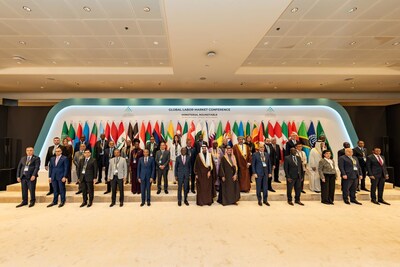
RIYADH, Saudi Arabia, Jan. 28, 2026 /PRNewswire/ — The Global Labor Market Conference (GLMC) 2026 concluded today at the King Abdul Aziz International Conference Center in Riyadh, under the patronage of the Custodian of the Two Holy Mosques King Salman bin Abdulaziz Al Saud. The event saw high-level international participation, with over 10,000 attendees, including 40 labor ministers and more than 200 international speakers and experts representing over 100 countries.

Ministerial Roundtable, GLMC


The third edition of GLMC, held under the theme “Future in Progress“ and organized by the Ministry of Human Resources and Social Development (HRSD), witnessed the signing of 90 strategic agreements and memoranda of understanding (MOUs) between government entities and the private sector. These initiatives aim to support the labor market and are expected to benefit more than 6 million people within and beyond the Kingdom.

The agreements and MOUs focused on four key areas: developing skills and leadership capabilities, advancing digital transformation and AI adoption, expanding flexible and freelance employment opportunities, and strengthening sector-specific partnerships that align training with labor market needs and support sustainable economic growth.

His Excellency Dr. Abdullah bin Nasser Abuthnein, Vice Minister of Human Resources and Social Development for Labor, delivered the closing remarksof GLMC 2026, marking the end of two days of discussions focused on practical solutions to current and future labor market challenges. He emphasized that GLMC is designed to be a continuous platform for collaboration throughout the year, with partnerships and knowledge exchange extending beyond the conference days. The discussions are part of an ongoing cycle of engagement sustained through continuous cooperation.

As part of its research and analytical agenda, GLMC released two reports in collaboration with the World Bank: “What Works for Work: A Guidebook to Proven and Promising Employment Solutions,” developed with the Ministry of Human Resources and Social Development to support policymakers in designing effective labor market programs amid rapid economic and technological change, and “A Decade of Progress,” which provides a comprehensive review of Saudi Arabia’s labor market transformation over the past ten years, documenting key achievements under Vision 2030 and the Labor Market Strategy, as well as the structural reforms that have enhanced efficiency and inclusivity.

The conference kicked off with a high-level ministerial Roundtable, chaired by His Excellency Eng. Ahmed bin Sulaiman Al-Rajhi, Minister of Human Resources and Social Development, and attended by 40 labor ministers and the Director-General of the International Labor Organization (ILO). The ministers agreed on six decisive measures to shape the future of work.

GLMC also celebrated the graduation of the first cohort of the Labor Market Academy, comprising 36 graduates from 34 countries, and launched the second cohort with participants from 31 countries, including 19 countries participating for the first time and 12 returning from the 2025 edition.

The success of the third edition of GLMC highlights Saudi Arabia’s growing role in shaping the future of work globally through innovation, partnerships, and workforce empowerment. The conference also marks the beginning of a new phase focused on policy development and readiness for future labor market transformations.