Home Blog Page 1495

Cadonilimab (PD-1/CTLA-4) Receives FDA Clearance for Global Phase III First-Line Gastric Cancer Trial Versus Nivolumab

HONG KONG, Dec. 12, 2025 /PRNewswire/ — Akeso, Inc. (9926.HK) (“Akeso” or the “Company”) announced FDA approval to initiate COMPASSION-37/AK104-311 trial, a global multicenter Phase III trial in gastric cancer evaluating cadonilimab, a first-in-class PD-1/CTLA-4 bispecific antibody. The study will compare cadonilimab plus chemotherapy against chemotherapy with or without nivolumab as first-line treatment for HER2-negative, unresectable or metastatic gastric/gastroesophageal junction adenocarcinoma.

This is the second international registrational study for cadonilimab, following the ongoing trial in immunotherapy-resistant hepatocellular carcinoma. COMPASSION-37 represents a pivotal advancement in cadonilimab’s global development and a concrete step in Akeso’s worldwide strategy, reinforcing its leadership in next-generation immuno-oncology. The company remains committed to its dual-track approach of proprietary development and strategic collaboration, leveraging global resources to accelerate cadonilimab’s international availability and expand accessible treatment options for patients worldwide.

Chemotherapy with or without PD-1 inhibitors, such as nivolumab, represents the international standard of care for advanced gastric cancer. However, the disease exhibits significant heterogeneity. While PD-1 treatment in combination with chemotherapy remains an effective treatment in many gastric cancer patients with high PD-L1 expression (CPS >5), its efficacy is markedly limited in gastric cancer patients with low PD-L1 expression (CPS <5) or negative PD-L1 expression (CPS <1). These low and negative PD-L1 patients constitute well more than half of the total gastric cancer patient population.

In 2024, the FDA narrowed the indication for all approved PD-1 inhibitors in the first-line treatment of advanced gastric cancer, restricting their use to PD-L1-positive patients. Authoritative guidelines, including those from the National Comprehensive Cancer Network (NCCN) and the European Society for Medical Oncology (ESMO), also prioritize recommending nivolumab-based regimens for patients with PD-L1 CPS ≥5. This underscores that treating advanced gastric cancer in PD-L1 low-expressing and negative patients has become a globally recognized clinical challenge.

In 2024, based on the COMPASSION-15 study results, cadonilimab in combination with chemotherapy was approved in China for the first-line treatment of gastric cancer, demonstrating benefit across all patient populations, including both PD-L1 positive and negative subgroups.

COMPASSION-15 is the only global Phase III clinical study in first-line advanced gastric cancer to have demonstrated survival benefit across all patient populations, irrespective of PD-L1 expression status. In this trial, patients with low PD-L1 expression and those who were PD-L1-negative accounted for as high as 49.8% and 23% of the enrolled population, respectively, significantly exceeding proportions observed in historical studies of its kind. The robust representation of low and negative PD-L1 patients in the study and the effective treatment of these patients validates cadonilimab’s broad-spectrum antitumor efficacy beyond PD-L1 dependency in gastric cancer.

Long-term follow-up data showed that cadonilimab plus chemotherapy significantly reduced the risk of death by 39% in the overall population compared to the control group (OS HR 0.61), regardless of PD-L1 status. In the PD-L1 CPS ≥5 subgroup, the reduction in mortality risk reached 51% (OS HR 0.49). Importantly, even among patients with low PD-L1 expression (CPS <5), a statistically significant 24% reduction in mortality risk was maintained (OS HR 0.76). These results were presented as an oral report at ESMO 2025. Earlier interim analysis data from the COMPASSION-15 study had been released as a prominent oral presentation at AACR 2024, with the full manuscript subsequently published in the Nature Medicine. These results highlight cadonilimab's potential to elevate the current standard of tumor immunotherapy and address clinical challenges unmet by single-target agents.

Forward-Looking Statement of Akeso, Inc.

This announcement by Akeso, Inc. (9926.HK, “Akeso”) contains “forward-looking statements”. These statements reflect the current beliefs and expectations of Akeso’s management and are subject to significant risks and uncertainties. These statements are not intended to form the basis of any investment decision or any decision to purchase securities of Akeso. There can be no assurance that the drug candidate(s) indicated in this announcement or Akeso’s other pipeline candidates will obtain the required regulatory approvals or achieve commercial success. If underlying assumptions prove inaccurate or risks or uncertainties materialize, actual results may differ materially from those set forth in the forward-looking statements.

Risks and uncertainties include but are not limited to, general industry conditions and competition; general economic factors, including interest rate and currency exchange rate fluctuations; the impact of pharmaceutical industry regulation and health care legislation in P.R.China, the United States and internationally; global trends toward health care cost containment; technological advances, new products and patents attained by competitors; challenges inherent in new product development, including obtaining regulatory approval; Akeso’s ability to accurately predict future market conditions; manufacturing difficulties or delays; financial instability of international economies and sovereign risk; dependence on the effectiveness of the Akeso’s patents and other protections for innovative products; and the exposure to litigation, including patent litigation, and/or regulatory actions.

Akeso does not undertake any obligation to publicly revise these forward-looking statements to reflect events or circumstances after the date hereof, except as required by law.

About Akeso

Akeso (HKEX: 9926.HK) is a leading biopharmaceutical company committed to the research, development, manufacturing and commercialization of the world’s first or best-in-class innovative biological medicines. Founded in 2012, the company has created a unique integrated R&D innovation system with the comprehensive end-to-end drug development platform (ACE Platform) and bi-specific antibody drug development technology (Tetrabody) as the core, a GMP-compliant manufacturing system and a commercialization system with an advanced operation mode, and has gradually developed into a globally competitive biopharmaceutical company focused on innovative solutions. With fully integrated multi-functional platform, Akeso is internally working on a robust pipeline of over 50 innovative assets in the fields of cancer, autoimmune disease, inflammation, metabolic disease and other major diseases. Among them, 26 candidates have entered clinical trials (including 15 bispecific/multispecific antibodies and bispecific ADCs. Additionally, 7 new drugs are commercially available. Through efficient and breakthrough R&D innovation, Akeso always integrates superior global resources, develops the first-in-class and best-in-class new drugs, provides affordable therapeutic antibodies for patients worldwide, and continuously creates more commercial and social values to become a global leading biopharmaceutical enterprise.

For more information, please visit https://www.akesobio.com/en/about-us/corporate-profile/ and follow us on Linkedin.
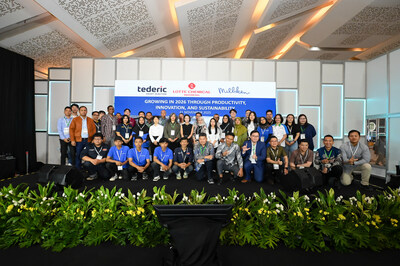
LOTTE Chemical Indonesia, Milliken, and Tederic host joint seminar showcasing advanced polypropylene solutions

JAKARTA, Indonesia, Dec. 11, 2025 /PRNewswire/ — LOTTE Chemical Indonesia, a major petrochemical company and one of the leading resin producers, joined forces with global additives manufacturer Milliken & Company and machinery partner Tederic to host a joint seminar on November 21, 2025, highlighting the latest innovations in polypropylene production and processing.

Group photos of Joint Seminar

This collaborative event underscored the commitment of all three companies to driving innovation, sustainability, and operational excellence in plastics manufacturing. Seminar highlights include:

  • LOTTE Chemical Indonesia introduced various polypropylene grades, including J-560S. Enhanced with a Milliken clarifier additive, J-560S delivers exceptional clarity, nucleation capability, and energy savings for high-performance packaging and consumer goods.
  • Milliken shared insights on 2026 market trends and demonstrated how Millad® NX® 8000 additive technology enables faster cycle times, improved moldability, and superior results in polypropylene manufacturing.
  • Tederic showcased its electric Neo series injection molding machines, designed for high productivity and energy efficiency, ensuring reliable performance and quality output when processing advanced polypropylene grades.

“This seminar marks a pivotal moment for LOTTE Chemical Indonesia and our partners,” said Park Woo Jin, Marketing General Manager at LOTTE Chemical Indonesia. “By collaborating with Milliken and Tederic, we are driving innovation and sustainability in the region’s plastics industry.”

The seminar also featured a special UL ceremony recognized downstream customers who have adopted Millad NX 8000, enabling significant energy savings in injection molding production. It follows a recent celebration of LOTTE Chemical Indonesia’s newly established facility, which boasts an annual production capacity of 1 million tons of ethylene, 520,000 tons of propylene, 350,000 tons of polypropylene, 140,000 tons of butadiene, and 400,000 tons of BTX (benzene, toluene, and xylene).

“Innovation thrives through collaboration,” said Daniel Tanzil, country manager for Milliken’s plastic additives business. “Working together with LOTTE Chemical Indonesia and Tederic demonstrates how shared expertise can accelerate progress toward more energy-efficient, high-performing materials.”

To learn more about LOTTE Chemical Indonesia’s portfolio of high-quality resins, visit www.lottechem.id. To learn more about Milliken plastic additives, visit www.milliken.com.

To learn more about Tederic’s injection molding machinery solutions, visit www.tedericglobal.com.

About Milliken

Milliken & Company is a global manufacturing leader whose focus on materials science delivers tomorrow’s breakthroughs today. From industry-leading molecules to sustainable innovations, Milliken creates products that enhance people’s lives and deliver solutions for its customers and communities. Drawing on thousands of patents and a portfolio with applications across the textile, flooring, chemical and healthcare businesses, the company harnesses a shared sense of integrity and excellence to positively impact the world for generations. Discover more about Milliken’s curious minds and inspired solutions at milliken.com and on Facebook, Instagram, and LinkedIn.

About Lotte Chemical Indonesia

PT LOTTE Chemical Indonesia (LCI) is a petrochemical company committed to supporting the growth of Indonesia’s chemical and manufacturing industries as well as global markets. As part of LOTTE Chemical Corporation, LCI established the first naphtha cracker complex in Indonesia in the past three decades. The facility produces ethylene, propylene, mixed-C4, and pyrolysis gasoline using advanced technology. With an annual production capacity of 1 million tons of ethylene, 520,000 tons of propylene, 350,000 tons of polypropylene, and several other chemical products, LCI plays a vital role in strengthening Indonesia’s petrochemical self-sufficiency and meeting global market demand. For more information, please visit www.lottechem.id

About Tederic

Tederic is a global injection molding machine manufacturer. As the first injection molding machine company listed on the main board of China, Tederic has the core technology and manufacturing capabilities to provide customers with comprehensive plastic injection molding solutions with technical support in all aspects of your production. Tederic has 6 overseas subsidiaries and 8 service networks in the world. Find more about Tederic and its latest technology at www.tedericglobal.com.

DWMaterials: “Building Trust Through Precise Physical Analysis”

SEOUL, South Korea, Dec. 12, 2025 /PRNewswire/ — DWMaterials announced that it has successfully developed a stable heat-generation control technology. This advancement enables the company to resolve issues such as reduced magnetic field separation performance and coil damage caused by insulation breakdown in de-ironing equipment.

DWMaterials is a technology-driven company that integrates electromagnetics, mechanical engineering, and physics to solve problems through precise scientific analysis and data-based research.

Its proprietary simulation technologies—grounded in the Biot–Savart law and Maxwell’s equations—enable high-precision modeling of magnetic fields and optimized internal magnetic field design within screening systems, earning DWMaterials recognition as one of the industry’s most advanced technology innovators.

At its R&D center, led by a team of PhD-level researchers, DWMaterials conducts comprehensive modeling across all processes, from magnetic field measurement to thermal distribution analysis. This approach allows the company to achieve both high magnetic power and operational stability, establishing a strong foundation for its reputation as a provider of reliable and scientifically validated solutions.

Moving forward, DWMaterials aims to go beyond its role as a conventional manufacturer to become a trusted technology partner driving quality innovation across domestic and global materials industries.

MIMO: The AI-Native Storage Species Enables Desktop Scale AI Clusters With NVIDIA DGX Spark

  • Engineered for the AI era, MIMO delivers breakthrough metrics: 400 GB/s bandwidth, 54 million IOPS, and 40–90 μs latency—all within a form factor comparable to a large suitcase.
  • MIMO serves as both a high-performance data hub for large-scale GPU clusters and a flexible edge deployment platform, extending seamlessly to desktop environments where it orchestrates workflows with various DGX Spark units based on NVIDIA’s GB10 Grace Blackwell superchip.
  • This architecture enables independent AI clusters supporting up to 16 computing nodes within constrained environments, managing the complete workflow from large-scale pre-training and fine-tuning to production inference—effectively democratizing enterprise-grade AI capabilities for labs, edge sites, and distributed teams.

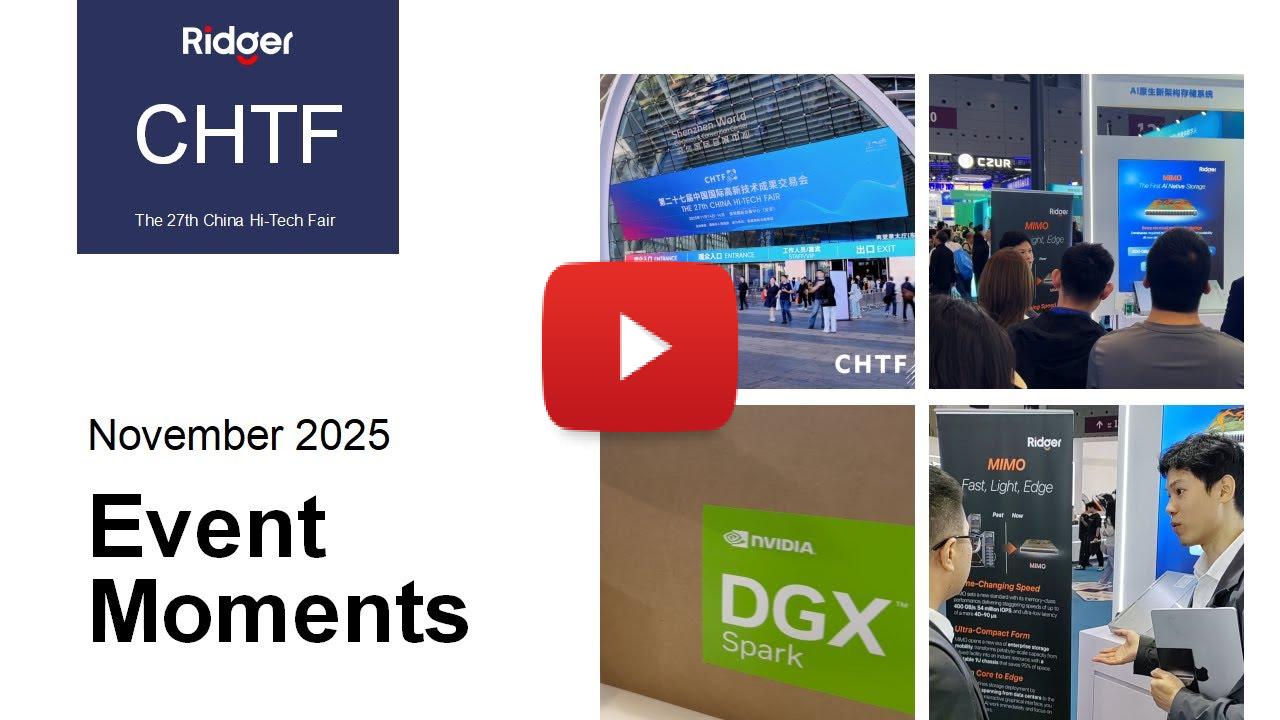
SINGAPORE – Media OutReach Newswire – 12 December 2025 – “Maximize input, maximize output, perfect—this is the architectural breakthrough we’ve been waiting for. I never expected to witness it here in the East”. At the recently concluded China Hi-Tech Fair (CHTF), a seasoned AI architect from New York shared this reflection after examining what has been termed a “new species of storage”—the MIMO system at the Ridger booth.


image-1.jpeg

Professor Zhang Sheng from Tsinghua University Shenzhen International Graduate School expressed a more pragmatic view: “With this solution, we finally no longer have to rely on the university’s data center. Our current annual budget alone is enough to deploy an AI cluster within our lab that better fits our needs—this will significantly boost our research efficiency both technically and operationally. It’s truly fantastic news.”

Asia Debut Marks Industry Inflection Point

Earlier at the 8th China International Import Expo (CIIE), the solution’s core—the world’s first AI-native storage system MIMO—made its strategic Asian debut. Engineered for the AI era, MIMO delivers breakthrough metrics: 400 GB/s bandwidth, 54 million IOPS, and 40–90 μs latency—all within a form factor comparable to a large suitcase.

The platform’s defining Fast-Light-Edge proposition, delivered through its breakthrough architecture, cut through the exhibition noise, generating immediate and widespread attention. MIMO earned exclusive features in top-tier media including Hong Kong Ta Kung Pao and China Securities Journal, while its product demonstration videos gained rapid traction across leading digital channels.

Addressing Foundational Challenges: Technical Dialogues That Matter

During the exhibitions, technical leaders from the United States, Spain, Singapore, Colombia, the UAE (Dubai), India, Pakistan, and Hong Kong SAR engaged in substantive dialogues with Ridger’s Asia team, raising questions that revealed systemic industry gaps:

Architectural Transformation & Strategic Positioning
“Can MIMO fundamentally replace legacy storage architectures—traditional NAS, unified, distributed, and parallel file systems—to deliver accelerated parallel training and high-concurrency inference?”
“With such exceptional performance, would deploying MIMO for traditional enterprise applications represent strategic overinvestment or forward-looking infrastructure?”

Mobile Deployment & Borderless Operations
“MIMO’s suitcase-sized footprint suggests unprecedented mobility. Can it truly accompany research teams globally like standard equipment? How does it maintain operational continuity across jurisdictions? What’s the customs protocol for such ‘technical luggage’?”

Seamless Integration & Global Accessibility
“In scenarios with unnetworked AI servers, can MIMO rapidly establish dedicated training environments with true plug-and-play functionality?”
“Does MIMO integrate transparently with existing AI infrastructure and software stacks without requiring modifications?”
“Beyond Asia-Pacific, what’s the procurement pathway for MIMO? Which currencies and payment methods are accommodated?”

Architectural Breakthrough: Redefining What’s Possible

Addressing these operational realities, Ridger demonstrated MIMO’s system-level value—transcending its role as a storage device to become an architectural cornerstone. MIMO serves as both a high-performance data hub for large-scale GPU clusters and a flexible edge deployment platform, extending seamlessly to desktop environments where it orchestrates workflows with various DGX Spark units based on NVIDIA’s GB10 Grace Blackwell superchip.

Notably, eight global OEM partners—including Dell, HPE, Lenovo, xFusion, H3C, MSI, GIGABYTE, and Acer—have concurrently launched Spark versions based on NVIDIA’s GB10 Grace Blackwell superchip, creating a robust compatibility foundation for MIMO’s ecosystem integration.

This architecture enables independent AI clusters supporting up to 16 computing nodes within constrained environments, managing the complete workflow from large-scale pre-training and fine-tuning to production inference—effectively democratizing enterprise-grade AI capabilities for labs, edge sites, and distributed teams.

As Zhu Ting, an industry observer from Beijing, noted: “This represents the ‘IBM PC moment’ for AI infrastructure—transforming specialized capability into accessible utility.”

Market Validation Through Early Adoption

Market response has been decisive. Following the exhibitions, pioneering organizations across pathological image foundation model development, legal-tech innovation, industrial visual inspection, and naked-eye 3D content production have joined Ridger’s Early Access program, validating the architecture’s transformative potential in real-world operational contexts.

Global Rollout: Accelerating Accessibility

Responding to accelerating global demand, Ridger confirmed the imminent launch of the complete MIMO portfolio and optimized solution bundles for specific DGX Spark configurations through the Ridger Official Global Store. Designed as a frictionless procurement channel, the platform will support diverse payment options including multiple fiat currencies and cryptocurrencies—streamlining access to advanced AI infrastructure.

Organizations seeking deeper understanding of MIMO and its integrated lightweight AI solution with DGX Spark are invited to connect with Ridger team or its strategic partner, NVIDIA Elite Solution Partner SinoInfo.
Hashtag: #Technology #ESG #AI #GPU #Enterprise #Finance #Storage #Flash #Compute #DGX-Spark #NVIDIA #AI-Lab #GDS #NAS #AI-Native


The issuer is solely responsible for the content of this announcement.

Ridger

Ridger is a global technology pioneer building next-generation computing & storage infrastructure for the AI era. Born in the East and operating worldwide, Ridger challenges conventional paths to create new technological paradigms.

The team unites seasoned experts from global storage leaders with visionary AI architects, all driven by a shared mission to democratize cutting-edge technology, rejects incremental improvements and hollow prestige, focusing exclusively on foundational breakthroughs that deliver tangible value and sustainable impact.

From architecture to implementation and from service to empowerment, Ridger provides end-to-end solutions that help clients worldwide ascend to their highest summits.

CDNetworks Reinforces Enterprise Reliability: Highlighting Established Commitment to Service Continuity

SINGAPORE, Dec. 12, 2025 /PRNewswire/ — CDNetworks, the APAC-leading network to deliver edge as a service, is spotlighting its established structured reliability platform, designed to prevent service outages and minimize disruptions for businesses worldwide.

With digital services increasingly dependent on distributed infrastructures, common failure scenarios—such as unsafe configuration changes, inconsistent rollouts, carrier or ISP incidents, and large-scale attacks—continue to challenge businesses. These risks underscore the need for platforms engineered with both resilience and predictable recovery capabilities.

Central to CDNetworks’ commitment to stability is its established three-pillar reliability architecture, which brings structure and operational discipline to how outages are prevented, detected, and contained, covering the full incident lifecycle.

  1. Change Safety
    Disciplined processes ensure safe deployments and minimize risk exposure. Core safeguards include cross-functional reviews, phased grey releases, automated anomaly blocking, and proven rollback plans.
  2. High Availability Architecture
    Existing architecture eliminates single points of failure for continuous service and fast recovery. Its reliability is reinforced by resource redundancy (hardware, bandwidth, and Global Load Balancing) and platform resilience through geo-redundant deployment and automated self-healing agents.
  3. Operational Assurance
    Standardized controls guarantee rapid detection and predictable recovery. This involves regular security scans, end-to-end monitoring, and standardized incident readiness.

“A series of industry-wide outages this year underscored the importance of platform stability and strong recovery capability for digital services,” said Antony Li, Global Head of Infrastructure at CDNetworks. “Our reliability framework ensures customers maintain continuity under pressure, recover quickly from unexpected disruptions, and operate with confidence at global scale.”

As resilience and diversification become central to modern digital strategies, CDNetworks offers a dependable foundation for continuous service delivery, supporting enterprises seeking greater stability and a stronger multi-vendor strategy.

About CDNetworks

As the APAC-leading network with over 2,800 global Points of Presence and more than 20 years of technology experience, CDNetworks delivers the fastest and most secure digital experiences to end users. Our diverse products and services include web performancemedia deliverycloud securityedge computingzero-trust security, and colocation services — all designed to spur business innovation.

To learn more, visit cdnetworks.com and follow us on LinkedIn.

Cities of Stories: Agoda’s Guide to Asia’s Architectural and Cultural Marvels

SINGAPORE, Dec. 12, 2025 /PRNewswire/ — Digital travel platform Agoda has curated a list of must-visit destinations across Asia where human creativity, architectural brilliance, and cultural heritage come together in unforgettable ways. From ancient capitals that feel like open-air museums to lantern-lit trading ports and lakeside palaces, these cities show how urban landscapes can tell powerful stories of both tradition and innovation.

Travelers are increasingly seeking trips that go beyond checklists of attractions, looking instead to immerse themselves in the design, history, and daily rituals of the places they visit. Whether it’s wandering through centuries-old alleyways, gazing up at intricate temple roofs, or crossing grand historic squares at sunset, Asia offers a wealth of man-made wonders that bring its cultures to life.

Krishna Rathi, Associate Vice President at Agoda, shared, “More and more travelers are choosing cities not just for the tallest tower or newest mall, but for the stories etched into their streets, temples, and town squares. According to our 2026 Travel Outlook Report, cultural exploration is one of the top three motivators for Asian travelers, with architecture playing a crucial role in that experience. The places that really resonate are those that protect their heritage while still feeling current – they are living cities, not museum pieces. With Agoda, it’s easy to find and book these kinds of trips, where every walk through town feels like a front-row seat to Asia’s architectural and cultural evolution.”

Here is Agoda’s selection of six captivating destinations where travelers can explore Asia’s man-made marvels:

1.       George Town, PenangMalaysia: George Town’s UNESCO-listed historic center is a vibrant blend of Chinese shophouses, colonial facades, clan houses, and contemporary street art. Travelers can wander narrow lanes lined with colorful buildings, visit ornate temples such as Khoo Kongsi, and pause at traditional kopitiams that have served the community for generations. It’s a city where every corner café and courtyard tells a story of migration, trade, and creativity.

2.       Gyeongju – South Korea: Once the capital of the ancient Silla Kingdom, Gyeongju is often described as a “museum without walls.” Grassy royal tombs rise from city parks, while sites like Bulguksa Temple and the Seokguram Grotto showcase intricate Buddhist architecture and craftsmanship. Travelers can also visit Cheomseongdae, one of Asia’s oldest astronomical observatories, and experience how history, spirituality, and urban life coexist in a remarkably serene setting.

3.       Hoi AnVietnam: Hoi An’s lantern-lit old town, set along the Thu Bon River, is a beautifully preserved trading port that reflects centuries of cultural exchange. Traditional merchant houses, assembly halls, and the iconic Japanese Covered Bridge create a unique streetscape best explored on foot. As day turns to evening, the glow of lanterns, riverside cafes, and wooden shopfronts offers a cinematic view into Vietnam’s architectural and cultural heritage.

4.       Luang Prabang – Laos: Nestled between rivers and mountains, Luang Prabang is a gentle, contemplative city where gilded temples, French-colonial villas, and wooden houses sit harmoniously side by side. Travelers can watch the daily alms-giving ceremony at dawn, climb to Wat Phou Si for views over the town, and explore tranquil monasteries that remain central to local life. The result is a destination that feels both intimate and majestic, shaped by centuries of spiritual and cultural traditions.

5.       Udaipur – India: Often called the “City of Lakes,” Udaipur showcases some of India’s most romantic man-made vistas. The City Palace complex rises dramatically above Lake Pichola, while island palaces and havelis appear to float on the water’s surface. Winding old streets, intricately carved balconies, and hidden courtyards offer endless details for travelers to discover. With its combination of royal architecture and atmospheric lakeside views, Udaipur is a striking example of how design and landscape can work in harmony.

6.       Kanazawa – Japan: Kanazawa offers a refined glimpse into traditional Japan without the crowds of more famous cultural hubs. The city is home to Kenroku-en, one of Japan’s most celebrated landscape gardens, as well as well-preserved districts like Nagamachi, once home to samurai families, and Higashi Chaya, known for its historic teahouses. Museums, craft workshops, and restored wooden buildings help tell the story of a city that has carefully protected its heritage while evolving into a modern cultural center.

Agoda offers over 6 million holiday properties, more than 130,000 flight routes, and over 300,000 activities, all of which can be combined in the same booking. Discover the best deals on Agoda’s mobile app and start planning your next adventure today.

Lao Economy Improves but Lasting Growth Requires Sustained Reforms, Road Network Preservation

The World Bank recommends investing in climate resilient roads and an improved road preservation system as part of reforms to safeguard economic progress. (Photo: World Bank, Philippe Aramburu)

World Bank – Increased exports, foreign investment and tourism have helped Laos begin to emerge from a prolonged economic slowdown, according to a World Bank economic update, released today. Further reforms in the business, finance and infrastructure sectors would help the country sustain its progress.

The report, Consolidating Recent Reform Momentum for Stability and Growth, shows that strong foreign investment and a current account surplus are helping Laos to gradually rebuild its reserves of foreign currency, which in turn have stabilized the exchange rate and brought down inflation.

The World Bank estimates GDP growth at 4.2 percent over 2025, with steady expansion in energy, mining, and manufacturing, and a growing regional economy boosting exports. This economic activity is helping Laos offset the impacts of low public expenditure and high debt repayments.

“The Lao economy has emerged from four difficult years thanks to shrewd reforms and stronger fiscal management”, said Khwima Nthara, World Bank Country Manager for Laos. “There is an opportunity now to consolidate that momentum by continuing the reform agenda so that the country can increase public spending on essential services such as education, health, and roads”.

Growth is expected to remain stable in 2026, with services and resource-based sectors continuing to drive economic activity. However, the outlook in the medium term remains constrained by low productivity, skill shortages, and infrastructure gaps.

The report recommends sustained reforms and deeper regional integration to help ensure a positive outlook, notably, by curbing tax exemptions, establishing a strong legal framework for public–private partnerships, strengthening public debt management, enhancing supervision of commercial banks, and improving the business environment.

The update contains a special section on Preserving Lao Road Assets, which notes that a well-functioning road sector is important for growth, competitiveness, and fiscal sustainability. 

Reliable roads reduce transport costs, improve access to markets, and strengthen links between production hubs and borders. Weak road networks raise logistics costs, dampen private sector activity, and increase the fiscal burden through frequent repairs and emergency maintenance.

Lao roads currently face accelerated wear, particularly from climate impacts and heavy trucks, which alongside fragmented maintenance efforts, insufficient weight controls, and a lack of targeted investment, have resulted in deteriorating road conditions, rising lifecycle costs, and increased vulnerability to climate-related hazards.

The report details a unified asset management system and preservation strategies that can arrest further decline.

It gives clear recommendations for stabilizing revenues to fund road repairs and improvements, for protecting priority road assets through spending plans and better overloading controls, and improving governance and efficiency with higher quality assurance and transparency.

Thai PM Dissolves Parliament, Paving Way for National Elections

Thai Tycoon Wins Parliament Vote to Become Prime Minister
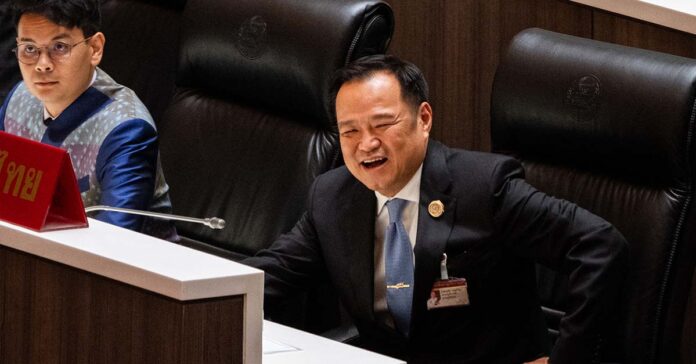
Bhumjaithai Party leader Anutin Charnvirakul (R) smiles in the parliament chamber in Bangkok on September 5, 2025. Thailand's parliament is set on September 5 to vote in a right-wing tycoon as prime minister, ousting the nation's dominant political dynasty from office after their leader was sacked by court order. (Photo by Chanakarn Laosarakham / AFP)

AFP – Thailand’s Prime Minister Anutin Charnvirakul dissolved parliament on 12 December after three months in office, a royal decree showed, paving the way for general elections.

The move comes earlier than expected and during renewed deadly clashes on Thailand’s border with Cambodia.

“The House of Representatives is dissolved to hold a new general election for members of the House,” the decree published in the Royal Gazette said.

Anutin, of the conservative Bhumjaithai party, became prime minister in September after his predecessor was removed from office by the court over an ethics violation.

Earlier this year, he pledged to dissolve the lower house, the formal step to call an election, and hold a vote by early 2026.

Anutin was widely expected to wait until after Christmas to dissolve parliament.

The move comes as fighting flares again on the border with Cambodia, where clashes have killed at least 20 people and displaced around 600,000, mostly in Thailand.

“Since the administration is a minority government and domestic political conditions are fraught with multiple challenges, the government cannot continue administering state affairs continuously, efficiently, and with stability,” the Royal Gazette said, citing a report received from Anutin.

“Therefore, the appropriate solution is to dissolve the House of Representatives and hold a new general election.”


© Agence France-Presse