Home Blog Page 157

Belt and Road Summit in Hong Kong welcomes over 6,200 global leaders to explore new business opportunities


HONG KONG SAR – Media OutReach Newswire – 11 September 2026 – The 11th Belt and Road Summit was successfully held at the Hong Kong Convention & Exhibition Centre (September 9–10), attracting over 6,200 political and business elites from more than 70 countries and regions under the Belt and Road Initiative (BRI) and beyond, exploring co-operation opportunities for mutually beneficial development.

During the two-day event, more than 60 Memoranda of Understanding (MoUs) and bilateral co-operation agreements were witnessed. The total value of these MoUs, together with new projects and deals finalised before and during the Summit, is over US$3.1 billion.

Hosted by the Hong Kong Special Administrative Region (HKSAR) Government since 2016, the summit remains the premier business and investment platform for Hong Kong’s participation in and contribution to the BRI.

Noting that the BRI is a shared blueprint for the future, rooted in a rich history of cross-cultural collaboration, HKSAR Chief Executive John Lee said: “Hong Kong, as a place where East meets West, is where capital, talent, businesses and opportunities converge. In addition to strengthening our relations with traditional partners, Hong Kong continues to expand our network of friends along the Belt and Road.”

Under the theme “Advancing High-quality Development · Embarking on a New Journey”, business and government leaders discussed co-operation across trade and commerce, legal services, green technology, logistics, artificial intelligence and new quality productive forces.

The summit explored new co-operation landscapes and emerging opportunities in trade, investment and development across Belt & Road markets and other regions, with a special focus on ASEAN, Central Asia and the Middle East, underscoring Hong Kong’s unique role as a “super connector” and “super value-adder”.

Mr Lee has led high-level business delegations to explore opportunities in 13 Belt and Road countries across ASEAN, the Middle East and Central Asia, delivering a total of over 250 MoUs and other agreements. These covered policy coordination, trade and investment, expanded connectivity and support for companies, underlining Hong Kong’s focus on opening new markets, forming new partnerships and advancing regional co-operation.

image-1.jpeg

This year’s summit featured three newly-added special chapters – the GoGlobal Chapter, Central Asia Chapter and Middle East Chapter. The GoGlobal Chapter offered a one-stop platform for exchange and matchmaking for Chinese Mainland enterprises looking to tap new markets overseas, while the Central Asia and Middle East chapters invited local officials and business leaders to share investment opportunities.

“In light of the shifting geopolitics, rising trade protectionism and the reshaping of global supply chains, businesses going global is no longer simply an option; it is an increasingly important strategy for Chinese Mainland enterprises to diversify risks, strengthen resilience and pursue new growth opportunities,” said the HKSAR Government’s Secretary for Commerce and Economic Development, Mr Algernon Yau.

A freshly integrated University Zone highlighted Hong Kong universities’ R&D strengths and their capabilities in technology commercialisation across the Belt & Road region, consolidating Hong Kong’s position as an international education hub. The Summit also introduced a debut Dialogue for Future session, promoting think-tank exchanges on “The Belt and Road Initiative and Asia-Pacific Co-operation in a Changing Global Landscape”.

Through the Project Investment Session, Belt and Road Deal-Making, and Exhibition Zones, this year’s event showcased over 300 investment projects, and arranged more than 800 one-on-one deal-making meetings, helping enterprises connect with potential partners.


Hashtag: #HongKong #Belt&Road #BRI #Summit #Global #Business #Opportunities


The issuer is solely responsible for the content of this announcement.

As Corporate Lifespans Shrink, Vingroup Keeps Reinventing Itself


DUBAI, UAE – Media OutReach Newswire – 11 September 2026 – Corporate lifespans are shrinking as technology accelerates creative destruction. At 33, Vingroup offers a case study in how a conglomerate can keep reinventing itself and take the capabilities built at home into global markets.

Photo (31).jpg

“At thirty, one stands firm,” wrote Confucius in the Analects, describing an important stage in a person’s life. For businesses, the idea may be more relevant than ever, although standing firm today can mean something very different: knowing when to change before the market forces the issue, especially as the lifespan of large companies has been falling. In 1958, companies in the S&P 500 was estimated to have an average lifespan of 61 years. By the 2010s, that had fallen to about 18 years. The process of creative destruction is accelerating as technology creates new competitors and new business models.

Why do large companies disappear when they once seemed “too big to fail”? Size can bring capital, scale and resilience, but too much stability can also create inertia. A business that spends too much time protecting what it has built may find that the market has already moved on and that it has failed to move fast enough.

That kind of inertia poses an even greater challenge for conglomerates, which are built to last across generations, yet the industries around them can change within a decade. The answer, increasingly, is reinvention: entering new fields while using the experience, capital and capabilities accumulated in the old ones.

Vingroup, fresh from its 33rd anniversary, offers an interesting example from Vietnam. Its story has evolved from food production and tourism to real estate, hospitality and healthcare, and then now to electric vehicles, green energy and infrastructure.

There are signs that the strategy is gaining recognition. In June, Fortune ranked Vingroup No. 26 among Southeast Asia’s 500 largest companies, up from No. 37 in 2025 and No. 45 in 2024. Just this week, TIME placed Vingroup at No. 340 in its World’s Best Companies 2026 ranking, up 477 places from No. 817 a year earlier. It was the only Vietnamese company to make the list for a second consecutive year. Today, companies across Vingroup’s ecosystem are present in 12 countries and employ around 400,000 people worldwide.

Among them, VinFast is perhaps the clearest example of rapid diversification combined with a global push. Founded in 2017, the electric vehicle maker has become Vietnam’s leading automotive brand by sales and is targeting 300,000 electric cars and 1 million electric motorcycles globally in 2026. From Vietnam, it has expanded into North America, Europe, Asia and the Middle East.

But more than just shipping vehicles, VinFast is also exporting something less visible but equally important: the service capabilities it has developed in Vietnam. By the end of 2025, it had nearly 400 service workshops in Vietnam, while its global network is targeted to exceed 1,100 in 2026, supported by standardized technician training, operating procedures, quality controls and parts delivery targeting 24 hours in key markets.

That makes aftersales more than a support function for international expansion. It is becoming a capability that VinFast can take from Vietnam and adapt to markets abroad, turning the experience built around its domestic network into part of its global offering. The Middle East is one of the markets where that approach is now being put to the test.

At thirty, a person may be expected to stand firm. For a company, longevity may require something else: the ability to keep moving.

Hashtag: #VinFast

The issuer is solely responsible for the content of this announcement.

Bybit Opens the Floor, Inviting Users to Weigh In on Bybit AI

DUBAI, UAE, Sept. 11, 2026 /PRNewswire/ — Bybit, the world’s second-largest cryptocurrency exchange by trading volume, is inviting users to try Bybit AI, an AI assistant built into the Bybit app as an integrated conversational layer, and share their feedback for a chance to win 50 USDT.

From now until October 9, 2026, Bybit invites users to ask Bybit AI anything and submit genuine user reviews and suggestions that can inform ongoing improvements. Users who register for the event, try the assistant, and submit detailed accounts of their experience, including what they asked, what happened, and what could be improved, are eligible to receive 50 USDT each. Up to 500 winners will be selected based on the specificity and authenticity of their feedback.

To enhance AI education, Bybit is also hosting a new Bybit Quests challenge from now until September 20, 2026, offering users the opportunity to explore Bybit AI in-depth through educational resources and a short quiz. The top 40 scorers will each receive 25 USDT in bonus rewards.

Officially released on September 9, 2026, Bybit AI allows users to ask questions in plain language, receive instant answers and customer service, and confirm trading actions. The intelligent assistant works around the clock through conversations, and users no longer need to navigate menus or wait for a support agent for generic queries. Bybit AI currently supports account-related queries, such as checking Bybit Card spending or reviewing VIP benefits, managing account settings and notification preferences, while offering market and product intelligence from funding rates to Bybit TradFi listings.

Bybit will continue to refine Bybit AI based on user input as part of its broader effort to integrate AI-empowered customer experience across the platform. To learn more about Bybit AI, users may visit: Introduction to Bybit AI or rewatch a livestream session to see Bybit AI in action.

Terms and conditions apply. For details, users may visit: Bybit AI is live. Win 50 USDT.

Bybit Opens the Floor, Inviting Users to Weigh In on Bybit AI

#Bybit  / #NewFinancialPlatform

About Bybit

Bybit is The New Financial Platform.

We believe every person should have access to every financial opportunity on earth. That’s why we’re building the first intelligent platform that connects anyone, anywhere to the world’s finance.

Trusted by more than 80 million users worldwide, Bybit brings together investing, trading, payments, and wealth-building in a single secure and intelligent ecosystem. Through the combination of AI-powered technology, deep global liquidity, robust security, and transparent operations, Bybit makes global finance more accessible, efficient, and empowering for everyone.

Built for everyone. Powered by intelligence. Open to the world.

Learn more at Bybit.com

For more details about Bybit, please visit Bybit Press

For media inquiries, please contact: media@bybit.com

For updates, please follow: Bybit’s Communities and Social Media

Facebook | Instagram | LinkedIn | Reddit | Telegram | TikTok | X | Youtube

POWTEK Group Showcases Multi-Brand Manufacturing Strength at Heating Tech Expo 2026 and Zuchex 2026

WARSAW, Poland and ISTANBUL, Sept. 11, 2026 /PRNewswire/ — POWTEK Group (“POWTEK”) showcased its multi-brand product portfolio and manufacturing capabilities at two major European trade shows in September, with KALTEC participating in Heating Tech Expo 2026 in Warsaw, Poland, and MORRTOP and X-CRAFTER exhibiting at Zuchex International Home and Kitchenware Exhibition in Istanbul, Turkey. Through its brands serving different product categories and customer segments, POWTEK engaged with industry professionals, international buyers and potential business partners while strengthening its connections across the European market.


The two exhibitions highlighted POWTEK’s capabilities across diverse sectors. At Heating Tech Expo 2026, KALTEC showcased customized HVAC solutions and R&D tailored for the European market, while MORRTOP and X-CRAFTER presented kitchen appliances at Zuchex 2026 to demonstrate the Group’s manufacturing and development expertise to global buyers.

Founded in 2003, POWTEK is a worldwide leading manufacturer specializing in heating and domestic hot water, alongside smart kitchen appliances. As a trusted, long-term partner to world-renowned brands, POWTEK proudly delivers high-quality solutions to customers in more than 50 countries and regions.

Operating 12 intelligent production lines with an annual capacity of 2 million units, the Group’s new manufacturing base has been completed and put into operation, further expanding its production capabilities and supporting growing demand from international markets. The facilities strictly adhere to international manufacturing protocols, holding full ISO 9001 and ISO 14001 certifications.

KALTEC, a brand of POWTEK Group, has developed a presence in the European HVAC market through its Spanish subsidiary, Kaltec-Confort S.L.U., and its membership in Spain’s HVAC industry association FEGECA. MORRTOP and X-CRAFTER extend the Group’s multi-brand portfolio into the kitchen appliance sector, enabling POWTEK Group to address different market needs through specialized brands and product offerings.

“Europe and international markets have long been important to POWTEK’s business development. Through our brands participating in Heating Tech Expo and Zuchex, we had the opportunity to engage directly with industry professionals, customers and potential partners from different markets,” said Michael Chan, CEO of POWTEK. “By bringing different brands to specialized exhibitions, we aim to demonstrate the Group’s capabilities in product development, R&D and manufacturing while exploring long-term cooperation with more international partners. We are confident in the prospects of the European market and look forward to providing more customers with high-quality manufacturing services.”

For more information, please visit http://www.powtek.com/

Thailand Fast-Tracks $3.66 Billion Industrial Pipeline, Unveils Tax Incentives to Spur Tech IPOs


BANGKOK, THAILAND – Media OutReach Newswire – 11 September 2026 – Thailand is fast-tracking regulatory approval for $3.66 billion (121 billion baht) in strategic industrial investment. The move is part of a broader overhaul of the national investment regime, aimed at anchoring high-value global supply chains and boosting capital-market listings.

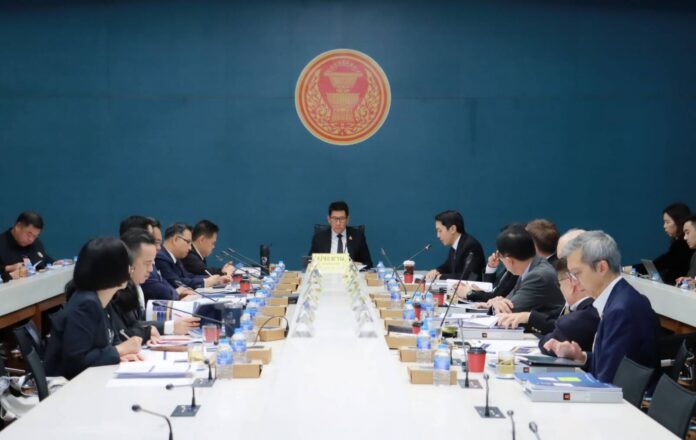
Thailand Board of Investment Meeting

The Thailand Board of Investment (BOI) approved the pivot at a meeting chaired by Deputy Prime Minister and Finance Minister Ekniti Nitithanprapas. It is concentrating resources on advanced manufacturing, technology transfer, and domestic vendor integration, phasing out tax breaks for low-margin operations along the way.

BOI is also changing how it measures success, shifting from application volume to realized outcomes. New strategic indicators will track domestic value added, SME integration into supply chains, high-skill job creation, research and development, technology transfer, capital-market linkages, and realized investment. Operational indicators will track how many approved projects convert into actual investment and how quickly approvals are granted. At the same time, the BOI will integrate its investment promotion tools with the measures and mechanisms of relevant agencies to ensure comprehensive investment support and deliver tangible results.

“Our focus has decisively shifted toward the realized quality and tangible domestic value of every investment committed,” said Mr. Narit Therdsteerasukdi, Secretary General of the Thailand Board of Investment. “We are deploying targeted, proactive measures for strategic sectors. This will lift national investment to 30% of GDP, drive annual economic growth above 3%, and support Thailand’s push to reach the top 20 in global competitiveness and become a high-income nation within 12 years.”

BOI also cleared its third batch of Thailand FastPass projects: 17 investments from 15 companies worth $3.66 billion (121 billion baht), expected to create more than 14,000 jobs. Electronics and electrical component manufacturers dominated the intake, securing 10 projects valued at $2.54 billion (83.92 billion baht) — nearly 70% of the batch. The remaining seven projects span high-grade processed foods at $735.4 million (24.34 billion baht), pet nutrition at $265.9 million (8.80 billion baht), and precision machinery and automotive parts at $131.8 million (4.36 billion baht).

The addition brings Thailand’s cumulative FastPass portfolio across three intakes to 42 strategic projects worth $10.39 billion (344 billion baht) and 27,000 skilled positions. The mechanism enforces strict Service Level Agreements across state agencies to resolve licensing bottlenecks and speed the transition from application to plant commissioning.

The first two intakes cleared 25 projects from 23 companies worth more than $6.74 billion (223 billion baht), expected to create over 13,000 quality jobs. All 25 have received investment promotion approval, and 19 have been issued investment certificates. Of those, 11 have completed every required permit within the Service Level Agreement window. Projects already in the FastPass pipeline have invested more than $634.4 million (21 billion baht) to date.

Alongside the fast-track mechanism, BOI launched “BOI to IPO” with the Securities and Exchange Commission (SEC) and the Stock Exchange of Thailand (SET), targeting high-potential, BOI-promoted companies — particularly in New Economy sectors — to raise capital and expand locally. The SEC has accelerated its IPO approval timeline while SET is easing market-capitalization and track-record requirements for New Economy listings and adding a special track for BOI- and EEC-promoted companies.

Enterprises listed on the SET, the Market for Alternative Investment (mai), or the growth-focused LiVEx board can claim added tax benefits under two tracks: SET-certified “New Economy” companies get up to three additional tax-free years, or a 50% rate cut for five years; other promoted companies get up to two additional tax-free years, or a 50% rate cut for three years.

The proposed framework aims to replicate the path taken by market heavyweights such as Delta Electronics (Thailand) PCL and Cal-Comp Electronics (Thailand) PCL. Both entered Thailand as foreign manufacturers, then listed on the Thai stock exchange to finance large-scale production and local engineering hubs.

“The BOI-to-IPO measure links our investment promotion policy to the capital market,” Mr. Narit said. “It lets companies that have invested and succeeded in Thailand raise capital to expand plants and production lines, invest in technology and R&D, or grow into overseas markets using Thailand as a base. This sustains investment and lets Thai investors take part in high-growth companies, creating long-term value for the Thai economy.”

In separate project rulings, the board cleared $291.2 million (9.64 billion baht) in direct capital applications across three projects. Wind Mahasarakham 1 Co., Ltd. secured approval for a $95.8 million (3.17 billion baht) investment to build a 90-megawatt wind farm in Maha Sarakham province, supplying clean energy to the state grid under the Electricity Generating Authority of Thailand. Precision Plastic Co., Ltd. was granted approval for a $61.4 million (2.03 billion baht) expansion into sterile, aseptic food and beverage packaging production in Ayutthaya province. ShuCan (Thailand) Co., Ltd., a unit of China’s Chengdu-based ShuCan Technology Group, secured approval for a $134.0 million (4.44 billion baht) expansion of its printed circuit board assembly operation, using full-line surface-mount technology to support a key customer relocating production to Thailand. The project is based in the Nong Lalok Industrial Estate in Rayong province.

“Our broader mission is to transition from standard investment facilitation to serving as an active catalyst for structural economic transformation,” Mr. Narit said in closing. “By tying incentives directly to technology sharing, local supplier integration, and advanced manufacturing capabilities, we are ensuring that every project strengthens Thailand’s long-term industrial resilience and competitiveness on the world stage.”


Note: Currency conversions are based on the Bank of Thailand’s average selling rate of approximately 1 USD = 33.1 THB.

Hashtag: #Thailandboardofinvestment #BOI #FDI #Investment

The issuer is solely responsible for the content of this announcement.

Thailand Board of Investment (BOI)

Established in 1966, the Office of the Board of Investment (BOI) has promoted value-adding investment from foreign and Thai investors for over 60 years, strengthening national competitiveness and driving Thailand’s shift toward a higher-value economy.

Investment Services Center — PR Section, The Office of the Board of Investment (BOI)

555 Vibhavadi-Rangsit Road, Chatuchak, Bangkok 10900 Tel. +66 (0) 2553 8111, Fax: +66 (0) 2553 8222

Vinhomes Shapes Urban Development As Asia’s Cities Drive Global Growth


HANOI, VIETNAM – Media OutReach Newswire – 11 September 2026 – As Asia emerges as the center of global urbanization, Vinhomes is advancing a model of city-building that weaves residential, commercial, educational, healthcare, and green infrastructure into a single, integrated ecosystem. With projects and development plans now extending from Vietnam into Congo, India, Australia, the Philippines, and Indonesia, the company is moving from adopting global urban standards to elevating them on a global scale.

Vinhomes' projects bring together ESG++ operating standards and a comprehensive All-in-One ecosystem.
Vinhomes’ projects bring together ESG++ operating standards and a comprehensive All-in-One ecosystem.

Two decades after its first projects broke ground on reclaimed industrial land and riverbank outside Hanoi, Vinhomes, anchored in the wider Vingroup ecosystem and its “ESG++” environmental standards, is positioning itself to help define what a good city looks like for the decades ahead.

Building Cities as Integrated Ecosystems, Not Just Developments

The first Vinhomes projects rose on difficult ground, but their premise was unusual for its time: that a residential development had to fold an entire urban life into a single, walkable proposition. Royal City and Times City were carved from former industrial land in Hanoi, while Vinhomes Riverside took shape on the far side of a river that once marked the edge of the city’s imagination. What set these projects apart was not their scale but their structural approach, schools, clinics, parks, transit, and commerce built in as foundations, not added on later.

That premise has held up. Vietnam’s cities have since become one of the region’s most closely watched growth stories. In 2025, the country drew more than $38 billion in registered foreign direct investment, with real estate the second-largest recipient sector after manufacturing. The capital is following the population, and the population is following the belief that Asian cities will decide what urban life looks like next. Research from the McKinsey Global Institute finds that roughly half of the world’s 600 largest cities by GDP are now in Asia, and that in most Asian countries, cities already generate more than 80 percent of national output.

Vinhomes’ answer to the challenge of urban sequencing has been structural rather than cosmetic, folding its projects into the wider Vingroup ecosystem. A housing development arrives already wired into education (Vinschool, VinUni), healthcare (Vinmec), retail (Vincom Retail), hospitality (Vinpearl, VinWonders), and green mobility (VinFast, V-Green, Green SM), with renewable energy and regional infrastructure now extending that network through VinEnergo and VinSpeed. The premise is that a city assembled this way behaves less like a real-estate product and more like an economy in miniature, one that generates its own demand for jobs, services, and further investment as residents move in.

From ESG++ Leadership to Global Expansion

The newer test for urban development is what a project is willing to leave alone. Vinhomes has framed its approach as “ESG++”, not merely limiting environmental damage, but actively restoring the ecosystems a project sits within. At Can Gio, Vinhomes Green Paradise is being built alongside one of Vietnam’s most significant mangrove systems, with construction is deliberately constrained to protect it. In Ha Long, Vinhomes Global Gate sits beside a UNESCO World Heritage Bay, built with the explicit aim of complementing rather than competing with the landscape.

This approach has drawn notice beyond Vietnam. Vinhomes Green Paradise became the first official global participant in New7Wonders’ “7 Wonders of Future Cities” initiative. Jean-Paul de la Fuente, the campaign’s director, described visiting the project as an encounter with a place where nature, people, and technology converge in ways he had not anticipated from the paperwork alone, adding that few developers anywhere have the execution capacity to build at this scale and speed while still managing that complexity.

The company’s ambitions now extend well beyond its home market. Vinhomes has projects and development plans in Congo, India, Australia, the Philippines, and Indonesia, less an export of a real-estate model than an attempt to carry two decades of Vietnamese urban experience into markets asking the same questions Vietnam once asked itself. For most of the modern era, Vietnamese cities absorbed standards and formats tested elsewhere; that posture is shifting, and not only inside Vietnam.

The data points to a single conclusion: the next several decades of urban growth will be decided in Asia, whether or not Asian developers are ready to define its terms. The United Nations’ World Urbanization Prospects 2025 puts the scale of that growth beyond dispute, cities are now home to 45 percent of the planet’s 8.2 billion people, more than double the share in 1950, with two-thirds of all future population growth through mid-century expected to land in urban areas. The number of megacities has quadrupled since 1975, from eight to 33, and more than half of them sit in Asia. Capital is already voting with its feet, and McKinsey’s research suggests the economic weight has shifted, even if global recognition has not yet caught up.

What Vinhomes is proposing, in effect, is that the second half of that shift, reputation, precedent, the standing to say what a good city looks like, is still being written. Twenty years on from a stretch of marshland and disused factory yards outside Hanoi, the argument is no longer really about towers. It is about whether a place built quickly can still be built to last, for the people living in it and for the land it stands on.

Hashtag: #Vinhomes

The issuer is solely responsible for the content of this announcement.

About Vinhomes

Vinhomes is Vietnam’s largest residential real estate and integrated township developer. The company pioneers the development of synchronized, modern large-scale townships, delivering premium living standards and unlocking sustainable investment opportunities for domestic and international clients.

Agenda for the 4th Hong Kong Clinical-driven Robotics and Embodied AI Technology (CREATE) Symposium Officially Released

Leading Experts from Medicine, Research, Industry and Investment Revealed

HONG KONG, Sept. 11, 2026 /PRNewswire/ — Scheduled for September 22–23, 2026, the 4th Hong Kong Clinical-driven Robotics and Embodied AI Technology (CREATE) Symposium will be held at the Charles K. Kao Auditorium in Hong Kong Science Park. The Centre for Artificial Intelligence and Robotics (CAIR), Hong Kong Institute of Science & Innovation, Chinese Academy of Sciences (CAS), organizes the event, with co-organization by the Hong Kong Science and Technology Parks Corporation (HKSTP).

The CREATE Symposium is dedicated to building a platform for in-depth dialogue between clinical medicine and cutting-edge technology. Having been held successfully for multiple editions, it has become a flagship international symposium on embodied intelligence in healthcare. This year’s event will focus on the practical clinical needs of more than ten specialties, including neurology, neurosurgery, respiratory intervention, otolaryngology, ultrasound imaging, and sleep medicine. It will bring together world-leading academicians, hospital directors, department leaders, and innovative scholars at the intersection of medicine and engineering to explore clinical applications and translation pathways of AI and robotics technologies, accelerating innovation and industrialization in global healthcare technology.

Symposium Highlights

This year’s symposium features a special “Hospital Presidents’ Roundtable” session. Eight hospital leaders from the Greater Bay Area will engage in in-depth discussions on integrating medicine and engineering, smart hospital development, and practical applications of medical AI.

The distinguished panel includes:

Linbo CAI, President of Guangdong 999 Brain Hospital, Chief Physician, and Doctoral Supervisor at Jinan University.

Kenneth Man-Chee CHEUNG, President and Hospital Chief Executive of The University of Hong Kong – Shenzhen Hospital, The Jessie Ho Professor in Spine Surgery and Chair Professor, Department of Orthopedics and Traumatology, HKU.

Kin-lai CHUNG, CEO of The Chinese University of Hong Kong (CUHK) Medical Centre.

Xiquan HU, Director, Management Committee of Lingnan Hospital; Director and Chief Physician, Department of Rehabilitation Medicine, The Third Affiliated Hospital, Sun Yat-sen University; President-Elect, Chinese Society of Physical Medicine and Rehabilitation, Chinese Medical Association.

Lijian JIN, Dean of Faculty of Dentistry, Modern Dental Group Professor in Clinical Dental Science, HKU.

Wing-yee SO, Hospital Chief Executive of North District Hospital, Hospital Authority.

Kenneth Hing Lim TSANG, Regional CEO of IHH Healthcare North Asia, CEO of Gleneagles Hospital Hong Kong.

Yi XIONG, Executive Director of Shenzhen Luohu District People’s Hospital.

The symposium will also launch CARES 4.0, a multi-modal medical AI large model and intelligent agent system for healthcare scenarios. Concurrently, a dedicated MedTech innovation exhibition will showcase cutting-edge medical hardware, AI algorithms, and other innovative achievements, demonstrating the latest capabilities in embodied intelligent healthcare.

As a co-organizer of this year’s symposium, HKSTP will host a special session titled “Empowering Founders, Enabling Growth: HKSTP’s Entrepreneurship Journey from Idea to Commercialization”. The session will introduce HKSTP’s life and health technology ecosystem and startup community, share “The Road to Commercialization: Insights and Success Stories from HKSTP Startups“, and feature the Roundtable Discussion: Empowering Value Creation and Growth through Strategic Partnerships.

Notably, the CREATE Symposium will debut a new “Roadshow Session” on September 23. The session will connect top-tier investment institutions with innovative companies. Participating companies will showcase products and technologies while receiving professional feedback from leading investors.

Investors from renowned institutions including Guangyuan Investment, Jiuguang Capital, Allwinner Technology, Yuexiu Group, Yanghe Investment, CICC Capital, Jianyuan Tianhua etc. have been invited to serve as judges. Invitations are also being extended to institutions such as Shenzhen Angel Fund of Funds, CCB International etc.

This year’s symposium will fully integrate MEDLing, CAIR’s proprietary intelligent conference assistant. The system has been customized and optimized for medical terminology, providing real-time speech transcription in Mandarin, English, and Cantonese, as well as high-precision transcript recording and simultaneous translation throughout the event. This will enable attendees from diverse fields and countries to communicate seamlessly and enjoy an enhanced conference experience.

Conference Information

Date: September 22–23, 2026 (Tuesday–Wednesday)
Venue: Charles K. Kao Auditorium, Hong Kong Science Park
Event Details and Latest Schedule: https://www.cair-cas.org.hk/article/662
Registration Link: https://forms.office.com/r/ePnu6HMySU?origin=lprLink

This year’s symposium features a dedicated healthcare technology exhibition area in the Atrium Link of Hong Kong Science Park. During the event, multiple guided tours will be organized to facilitate exchanges among attendees, academic experts, and industry representatives, fostering in-depth cross-sector collaboration.

Currently, only a limited number of booths remain available in the corporate exhibition area. Interested companies are invited to review partnership options. 

AluHouse Signs Strategic MoUs with Three Australian Partners to Address Housing Shortage with MiC Technology

HONG KONG, Sept. 11, 2026 /PRNewswire/ — At the Belt and Road Summit 2026 in Hong Kong, AluHouse Group, a global leader in Modular Integrated Construction (MiC), signed three Memorandums of Understanding (MoUs) with Australian partners Northland Group Pty Ltd, DCF Property Group, and Up Modular Pty Ltd. This marks a major milestone in AluHouse’s strategy to introduce its proven modular technology to the Australian market.


“This partnership is an important milestone in AluHouse’s globalisation journey,” said Eric Kwong, Founder and Chairman of AluHouse Group. “Australia’s housing shortage demands innovative, scalable solutions. We will leverage our Hong Kong-proven MiC technology and project experience to deepen local collaboration and help ease Australia’s housing challenge.”

Responding to Australia’s Housing Challenge

Australia faces a severe housing shortage, with a projected shortfall of 380,000 homes by 2030 according to the Urban Development Institute of Australia. In response, the Australian government has committed over AUD 174 million to promote Modern Methods of Construction (MMC). While MMC can cut construction times by 20–50% and costs by 20%, market penetration remains below 5%.

“Australian developers see the efficiency gains of MMC but often lack the expertise in modular design, compliance, supply chain developments, logistics, and on-site installation,” said Johnny Nassif, Director of Northland Group. “We look forward to leveraging AluHouse’s mature modular systems to deliver high-quality housing efficiently.”

Global Modular Expertise, Local Commitment

The three partnerships bring together complementary capabilities required for successful large-scale Modern Methods of Construction (MMC) adoption in Australia, covering modular residential and mixed-use development, prefabricated building R&D, and strategic collaboration across Australia’s rapidly growing construction sector. AluHouse will provide a full-chain, one-stop solution covering all stages from project development and design to manufacturing and installation.

“Hong Kong, as a ‘super-connector’ and ‘value-adder’, continues to bridge Hong Kong and international markets,” Eric Kwong added. “The Belt and Road Summit provided an ideal platform for connecting with Australian partners, with important support from the Hong Kong Trade Development Council (HKDTC).” Eric Kwong, emphasized that the company seeks deep local integration rather than just viewing Australia as an overseas market. “Our vision is to integrate globally proven MiC technology and Hong Kong MiC expertise with Australia’s building regulations, local market needs, and supply chain ecosystem.”

About AluHouse

AluHouse is a global leader in modular construction. Headquartered in Hong Kong, the company operates one of the world’s largest modular manufacturing hubs in China’s Greater Bay Area (48,000 modules/year), with a second facility under construction in Saudi Arabia (30,000 modules/year).

As one of the few modular solution providers with expertise in steel, concrete, and aluminum modular systems, AluHouse provides integrated, end-to-end services—from design and engineering to manufacturing, logistics, and on-site installation. Its projects span high-rise residential housing, apartment, student housing, schools, hospitals, and public utilities, serving markets across North America, Australia, New Zealand, the Middle East, and Greater China.

For more information, please visit www.aluhouse.com