Home Blog Page 160

Vinhomes Shapes Urban Development As Asia’s Cities Drive Global Growth


HANOI, VIETNAM – Media OutReach Newswire – 11 September 2026 – As Asia emerges as the center of global urbanization, Vinhomes is advancing a model of city-building that weaves residential, commercial, educational, healthcare, and green infrastructure into a single, integrated ecosystem. With projects and development plans now extending from Vietnam into Congo, India, Australia, the Philippines, and Indonesia, the company is moving from adopting global urban standards to elevating them on a global scale.

Vinhomes' projects bring together ESG++ operating standards and a comprehensive All-in-One ecosystem.
Vinhomes’ projects bring together ESG++ operating standards and a comprehensive All-in-One ecosystem.

Two decades after its first projects broke ground on reclaimed industrial land and riverbank outside Hanoi, Vinhomes, anchored in the wider Vingroup ecosystem and its “ESG++” environmental standards, is positioning itself to help define what a good city looks like for the decades ahead.

Building Cities as Integrated Ecosystems, Not Just Developments

The first Vinhomes projects rose on difficult ground, but their premise was unusual for its time: that a residential development had to fold an entire urban life into a single, walkable proposition. Royal City and Times City were carved from former industrial land in Hanoi, while Vinhomes Riverside took shape on the far side of a river that once marked the edge of the city’s imagination. What set these projects apart was not their scale but their structural approach, schools, clinics, parks, transit, and commerce built in as foundations, not added on later.

That premise has held up. Vietnam’s cities have since become one of the region’s most closely watched growth stories. In 2025, the country drew more than $38 billion in registered foreign direct investment, with real estate the second-largest recipient sector after manufacturing. The capital is following the population, and the population is following the belief that Asian cities will decide what urban life looks like next. Research from the McKinsey Global Institute finds that roughly half of the world’s 600 largest cities by GDP are now in Asia, and that in most Asian countries, cities already generate more than 80 percent of national output.

Vinhomes’ answer to the challenge of urban sequencing has been structural rather than cosmetic, folding its projects into the wider Vingroup ecosystem. A housing development arrives already wired into education (Vinschool, VinUni), healthcare (Vinmec), retail (Vincom Retail), hospitality (Vinpearl, VinWonders), and green mobility (VinFast, V-Green, Green SM), with renewable energy and regional infrastructure now extending that network through VinEnergo and VinSpeed. The premise is that a city assembled this way behaves less like a real-estate product and more like an economy in miniature, one that generates its own demand for jobs, services, and further investment as residents move in.

From ESG++ Leadership to Global Expansion

The newer test for urban development is what a project is willing to leave alone. Vinhomes has framed its approach as “ESG++”, not merely limiting environmental damage, but actively restoring the ecosystems a project sits within. At Can Gio, Vinhomes Green Paradise is being built alongside one of Vietnam’s most significant mangrove systems, with construction is deliberately constrained to protect it. In Ha Long, Vinhomes Global Gate sits beside a UNESCO World Heritage Bay, built with the explicit aim of complementing rather than competing with the landscape.

This approach has drawn notice beyond Vietnam. Vinhomes Green Paradise became the first official global participant in New7Wonders’ “7 Wonders of Future Cities” initiative. Jean-Paul de la Fuente, the campaign’s director, described visiting the project as an encounter with a place where nature, people, and technology converge in ways he had not anticipated from the paperwork alone, adding that few developers anywhere have the execution capacity to build at this scale and speed while still managing that complexity.

The company’s ambitions now extend well beyond its home market. Vinhomes has projects and development plans in Congo, India, Australia, the Philippines, and Indonesia, less an export of a real-estate model than an attempt to carry two decades of Vietnamese urban experience into markets asking the same questions Vietnam once asked itself. For most of the modern era, Vietnamese cities absorbed standards and formats tested elsewhere; that posture is shifting, and not only inside Vietnam.

The data points to a single conclusion: the next several decades of urban growth will be decided in Asia, whether or not Asian developers are ready to define its terms. The United Nations’ World Urbanization Prospects 2025 puts the scale of that growth beyond dispute, cities are now home to 45 percent of the planet’s 8.2 billion people, more than double the share in 1950, with two-thirds of all future population growth through mid-century expected to land in urban areas. The number of megacities has quadrupled since 1975, from eight to 33, and more than half of them sit in Asia. Capital is already voting with its feet, and McKinsey’s research suggests the economic weight has shifted, even if global recognition has not yet caught up.

What Vinhomes is proposing, in effect, is that the second half of that shift, reputation, precedent, the standing to say what a good city looks like, is still being written. Twenty years on from a stretch of marshland and disused factory yards outside Hanoi, the argument is no longer really about towers. It is about whether a place built quickly can still be built to last, for the people living in it and for the land it stands on.

Hashtag: #Vinhomes

The issuer is solely responsible for the content of this announcement.

About Vinhomes

Vinhomes is Vietnam’s largest residential real estate and integrated township developer. The company pioneers the development of synchronized, modern large-scale townships, delivering premium living standards and unlocking sustainable investment opportunities for domestic and international clients.

Agenda for the 4th Hong Kong Clinical-driven Robotics and Embodied AI Technology (CREATE) Symposium Officially Released

Leading Experts from Medicine, Research, Industry and Investment Revealed

HONG KONG, Sept. 11, 2026 /PRNewswire/ — Scheduled for September 22–23, 2026, the 4th Hong Kong Clinical-driven Robotics and Embodied AI Technology (CREATE) Symposium will be held at the Charles K. Kao Auditorium in Hong Kong Science Park. The Centre for Artificial Intelligence and Robotics (CAIR), Hong Kong Institute of Science & Innovation, Chinese Academy of Sciences (CAS), organizes the event, with co-organization by the Hong Kong Science and Technology Parks Corporation (HKSTP).

The CREATE Symposium is dedicated to building a platform for in-depth dialogue between clinical medicine and cutting-edge technology. Having been held successfully for multiple editions, it has become a flagship international symposium on embodied intelligence in healthcare. This year’s event will focus on the practical clinical needs of more than ten specialties, including neurology, neurosurgery, respiratory intervention, otolaryngology, ultrasound imaging, and sleep medicine. It will bring together world-leading academicians, hospital directors, department leaders, and innovative scholars at the intersection of medicine and engineering to explore clinical applications and translation pathways of AI and robotics technologies, accelerating innovation and industrialization in global healthcare technology.

Symposium Highlights

This year’s symposium features a special “Hospital Presidents’ Roundtable” session. Eight hospital leaders from the Greater Bay Area will engage in in-depth discussions on integrating medicine and engineering, smart hospital development, and practical applications of medical AI.

The distinguished panel includes:

Linbo CAI, President of Guangdong 999 Brain Hospital, Chief Physician, and Doctoral Supervisor at Jinan University.

Kenneth Man-Chee CHEUNG, President and Hospital Chief Executive of The University of Hong Kong – Shenzhen Hospital, The Jessie Ho Professor in Spine Surgery and Chair Professor, Department of Orthopedics and Traumatology, HKU.

Kin-lai CHUNG, CEO of The Chinese University of Hong Kong (CUHK) Medical Centre.

Xiquan HU, Director, Management Committee of Lingnan Hospital; Director and Chief Physician, Department of Rehabilitation Medicine, The Third Affiliated Hospital, Sun Yat-sen University; President-Elect, Chinese Society of Physical Medicine and Rehabilitation, Chinese Medical Association.

Lijian JIN, Dean of Faculty of Dentistry, Modern Dental Group Professor in Clinical Dental Science, HKU.

Wing-yee SO, Hospital Chief Executive of North District Hospital, Hospital Authority.

Kenneth Hing Lim TSANG, Regional CEO of IHH Healthcare North Asia, CEO of Gleneagles Hospital Hong Kong.

Yi XIONG, Executive Director of Shenzhen Luohu District People’s Hospital.

The symposium will also launch CARES 4.0, a multi-modal medical AI large model and intelligent agent system for healthcare scenarios. Concurrently, a dedicated MedTech innovation exhibition will showcase cutting-edge medical hardware, AI algorithms, and other innovative achievements, demonstrating the latest capabilities in embodied intelligent healthcare.

As a co-organizer of this year’s symposium, HKSTP will host a special session titled “Empowering Founders, Enabling Growth: HKSTP’s Entrepreneurship Journey from Idea to Commercialization”. The session will introduce HKSTP’s life and health technology ecosystem and startup community, share “The Road to Commercialization: Insights and Success Stories from HKSTP Startups“, and feature the Roundtable Discussion: Empowering Value Creation and Growth through Strategic Partnerships.

Notably, the CREATE Symposium will debut a new “Roadshow Session” on September 23. The session will connect top-tier investment institutions with innovative companies. Participating companies will showcase products and technologies while receiving professional feedback from leading investors.

Investors from renowned institutions including Guangyuan Investment, Jiuguang Capital, Allwinner Technology, Yuexiu Group, Yanghe Investment, CICC Capital, Jianyuan Tianhua etc. have been invited to serve as judges. Invitations are also being extended to institutions such as Shenzhen Angel Fund of Funds, CCB International etc.

This year’s symposium will fully integrate MEDLing, CAIR’s proprietary intelligent conference assistant. The system has been customized and optimized for medical terminology, providing real-time speech transcription in Mandarin, English, and Cantonese, as well as high-precision transcript recording and simultaneous translation throughout the event. This will enable attendees from diverse fields and countries to communicate seamlessly and enjoy an enhanced conference experience.

Conference Information

Date: September 22–23, 2026 (Tuesday–Wednesday)
Venue: Charles K. Kao Auditorium, Hong Kong Science Park
Event Details and Latest Schedule: https://www.cair-cas.org.hk/article/662
Registration Link: https://forms.office.com/r/ePnu6HMySU?origin=lprLink

This year’s symposium features a dedicated healthcare technology exhibition area in the Atrium Link of Hong Kong Science Park. During the event, multiple guided tours will be organized to facilitate exchanges among attendees, academic experts, and industry representatives, fostering in-depth cross-sector collaboration.

Currently, only a limited number of booths remain available in the corporate exhibition area. Interested companies are invited to review partnership options. 

AluHouse Signs Strategic MoUs with Three Australian Partners to Address Housing Shortage with MiC Technology

HONG KONG, Sept. 11, 2026 /PRNewswire/ — At the Belt and Road Summit 2026 in Hong Kong, AluHouse Group, a global leader in Modular Integrated Construction (MiC), signed three Memorandums of Understanding (MoUs) with Australian partners Northland Group Pty Ltd, DCF Property Group, and Up Modular Pty Ltd. This marks a major milestone in AluHouse’s strategy to introduce its proven modular technology to the Australian market.


“This partnership is an important milestone in AluHouse’s globalisation journey,” said Eric Kwong, Founder and Chairman of AluHouse Group. “Australia’s housing shortage demands innovative, scalable solutions. We will leverage our Hong Kong-proven MiC technology and project experience to deepen local collaboration and help ease Australia’s housing challenge.”

Responding to Australia’s Housing Challenge

Australia faces a severe housing shortage, with a projected shortfall of 380,000 homes by 2030 according to the Urban Development Institute of Australia. In response, the Australian government has committed over AUD 174 million to promote Modern Methods of Construction (MMC). While MMC can cut construction times by 20–50% and costs by 20%, market penetration remains below 5%.

“Australian developers see the efficiency gains of MMC but often lack the expertise in modular design, compliance, supply chain developments, logistics, and on-site installation,” said Johnny Nassif, Director of Northland Group. “We look forward to leveraging AluHouse’s mature modular systems to deliver high-quality housing efficiently.”

Global Modular Expertise, Local Commitment

The three partnerships bring together complementary capabilities required for successful large-scale Modern Methods of Construction (MMC) adoption in Australia, covering modular residential and mixed-use development, prefabricated building R&D, and strategic collaboration across Australia’s rapidly growing construction sector. AluHouse will provide a full-chain, one-stop solution covering all stages from project development and design to manufacturing and installation.

“Hong Kong, as a ‘super-connector’ and ‘value-adder’, continues to bridge Hong Kong and international markets,” Eric Kwong added. “The Belt and Road Summit provided an ideal platform for connecting with Australian partners, with important support from the Hong Kong Trade Development Council (HKDTC).” Eric Kwong, emphasized that the company seeks deep local integration rather than just viewing Australia as an overseas market. “Our vision is to integrate globally proven MiC technology and Hong Kong MiC expertise with Australia’s building regulations, local market needs, and supply chain ecosystem.”

About AluHouse

AluHouse is a global leader in modular construction. Headquartered in Hong Kong, the company operates one of the world’s largest modular manufacturing hubs in China’s Greater Bay Area (48,000 modules/year), with a second facility under construction in Saudi Arabia (30,000 modules/year).

As one of the few modular solution providers with expertise in steel, concrete, and aluminum modular systems, AluHouse provides integrated, end-to-end services—from design and engineering to manufacturing, logistics, and on-site installation. Its projects span high-rise residential housing, apartment, student housing, schools, hospitals, and public utilities, serving markets across North America, Australia, New Zealand, the Middle East, and Greater China.

For more information, please visit www.aluhouse.com

Engineering the Next Horizon: FAW TRUCKS Ready to Deliver in Hannover

HANNOVER, Germany, Sept. 11, 2026 /PRNewswire/ — The 72nd IAA TRANSPORTATION will run from September 14 through September 20 at the Hannover Exhibition Grounds in Germany. Under the theme “Engineering the Next Horizon, Delivering the Next Journey” FAW TRUCKS will make a strong showing with five vehicle models, including the CORTRON CS600, and nine core assemblies—opening a dialogue between its historic legacy and its exploration of the future on the global commercial vehicle stage.

During the show, the five vehicles on display will together trace FAW TRUCKS’s 70-year journey from its beginnings to industry leadership. The lineup will include three CORTRON CS tractors spanning diesel and battery-electric powertrain options. Developed for the long-haul transport market, the diesel models feature a new generation of core assemblies developed in-house, reducing vehicle fuel consumption by 15%. The battery-electric model is built on an 800 V high-voltage platform and supports dual-connector CCS2 fast charging at up to 1,000 A, with a single-connector Megawatt Charging System (MCS) available as an option. It also features a dual-motor e-axle with a peak transmission efficiency of 94.5%.

The stand will also feature nine core assemblies developed in-house, including the GD300 and ER540 Power Domains. Spanning multiple energy pathways—including conventional fuels, battery-electric power, and hydrogen—the lineup demonstrates FAW TRUCKS’s strong in-house development capabilities.

Located at Stand B10, Hall 24, the FAW TRUCKS stand features an open-plan design with four themed zones: Low Carbon, Zero Carbon, Ecosystem, and Future. These zones respectively showcase advances in energy efficiency and carbon reduction for conventional powertrains, the new-energy product portfolio, full-lifecycle solutions, and cutting-edge technologies for next-generation intelligent logistics. Each exhibit has its own QR code, while detailed product information is also available on a dedicated microsite. By integrating the on-site and online experiences, FAW TRUCKS extends the exhibition beyond the boundaries of time and place.

At this year’s exhibition, FAW TRUCKS will exhibit alongside partners including FAWER, FAWAY, FAWSN, SmartLink, and Zhuoyu Technology. Together, they will showcase FAW TRUCKS’s transformation from operating solely as a manufacturer to becoming an integrated “products + services + ecosystem” solutions provider, while creating a platform for deeper engagement with customers and the wider industry ecosystem worldwide. Looking ahead, FAW TRUCKS will remain committed to independent technology development, continue advancing its core capabilities in multi-energy powertrains and intelligent connectivity, expand the global reach of Chinese commercial vehicles, and contribute to the high-quality development of the global transport industry.

2026 World Laureates Foundation Prize Unveiled in Shanghai

11 WLF Prize laureates; the first time scientists of Chinese descent have been awarded; inaugural WLF Prize for Young Scientists launched.

SHANGHAI, Sept. 11, 2026 /PRNewswire/ — A news report from Yicai Global:

On the morning of September 10, the winners of the 2026 World Laureates Foundation Prize (WLF Prize) were officially announced at the Lingang Center in Shanghai. It is the fifth year of the prize since its establishment in 2021, with 11 scientists honored this year. Notably, the WLF Prize for Young Scientists was awarded for the first time, further highlighting outstanding young scientists from around the world. The award ceremony will be held during the World Laureates Forum from October 30 to November 1.

The 2026 WLF Prize is initiated and organized by the World Laureates Foundation (WLF), with prize funding donated exclusively by HongShan and support from the Shanghai Lingang Science and Technology Innovation and Development Foundation.

WU Xiaohua, Chairman of WLF, said in his opening remarks at the press conference that both the number and the quality of nominations for the 2026 WLF Prize reached a multi-year high. Nominees came from leading universities and research institutions in many different countries and regions, including China, the United States, the United Kingdom, France, and Germany, a testament to the global representation and academic rigor of this year’s nominations. The WLF Prize, he added, has grown into an international science award with broad influence among the world’s top scientists.

I. Honors Unveiled: Three Prizes Recognize Landmark Scientific Breakthroughs

At the press conference, the winners of three categories of the 2026 WLF Prize were announced: one laureate of the WLF Prize in Computer Science or Mathematics (CSM), four laureates of the WLF Prize in Life Science or Medicine (LSM), and six laureates of the inaugural WLF Prize for Young Scientists. Another 10 young researchers were named the WLF Prize for Young Scientist Finalists.

2026 WLF Prize Laureate in Computer Science or Mathematics: Ingrid DAUBECHIES, Duke University. HUA Xiansheng, Executive Director of the Institute of AI for Engineering at Tongji University, announced the laureate and the citation, recognizing her “major contributions in applied harmonic analysis, wavelet theory, and image compression, and her leadership in the international mathematics community.” Michael I. JORDAN, Chair of the WLF Prize Selection Committee in Computer Science or Mathematics, offered an interpretation authoritative assessment of the winner’s work prize-winning work via video. Prof. DAUBECHIES has been responsible for some of the most profound developments in Wavelet theory, most notably the compactly supported continuous wavelet, which gave rigorous mathematical meaning to the notion of locality. Prof. DAUBECHIES will receive a prize of RMB 10 million.

2026 WLF Prize Laureates in Life Science or Medicine: YUAN Junying, Interdisciplinary Research Center on Biology and Chemistry, Shanghai Institute of Organic Chemistry, Chinese Academy of Sciences (CAS), Shanghai, China; WANG Xiaodong, National Institute of Biological Sciences (NIBS), Beijing, China; SHAO Feng, National Institute of Biological Sciences (NIBS), Beijing, China; and Vishva DIXIT, Genentech Inc., USA.

SUN Yongkui, Director of Shanghai Innovative Drug R&D Center, announced the laureates and the citation, honoring them for “elucidating the molecular pathways of distinct forms of programmed cell death, and analyzing the mechanisms through which those pathways govern diverse physiological functions and disease pathogenesis.” Randy SCHEKMAN, Chair of the WLF Prize Selection Committee in Life Science or Medicine, offered an authoritative assessment of the winners’ work via video. The four pioneering scientists were recognized for discoveries that transformed programmed cell death from a set of observed biological phenomena into precisely defined molecular pathways. These four laureates will share a prize of RMB 10 million.

Inaugural WLF Prize for Young Scientists: awarded to six young scientists. PENG Huisheng, Member of the Chinese Academy of Sciences and Vice Chairman of the World Laureates Foundation, announced the winners with their citations. Raphaële Juliette CLÉMENT, Max Planck Institute for Solid State Research, is awarded “for being a leading young researcher in future energy materials, with significant discoveries in solid-state systems for electrochemical energy storage and conversion. She is a core driving force in the R&D of next-generation battery technologies.” CHEN Peining, Fudan University, is awarded “for breaking through the classical structural paradigm of electronic devices, making major contributions in the field of novel flexible electronic materials and devices, and expected to drive transformative development in human-computer interaction technology and industry.” DING Shiqian, Tsinghua University, is awarded “for being a precision explorer of fundamental physics, achieving pioneering experimental results in continuous‑wave vacuum ultraviolet lasers, the thorium‑229 nuclear clock, and nuclear quantum precision measurements.” WU Jiajun, Stanford University, is awarded “for pioneering foundational architectures for the era of embodied intelligence. He develops physically grounded world models that bridge artificial intelligence and the real physical world, with profound implications for the future of robotics, AI4S, and beyond.” XIE Weidi, Shanghai Jiao Tong University, is awarded “for establishing a highly impactful model of AI4S, achieving major breakthroughs in AI-enabled reasoning, diagnosis, and treatment of rare diseases, and translating these advances into tangible real-world impact on healthcare.” ZHUANG Ziquan, Johns Hopkins University, is awarded “for being a leading figure of the new generation of international mathematicians, and for his fundamental contributions to K-stability and high-dimensional birational geometry.” Each of the six laureates will receive RMB 1 million.

Additionally, 10 young researchers were honored as Finalists for the 2026 WLF Prize for Young Scientists: AI Qingyao, Tsinghua University; Cesar DE LA FUENTE, University of Pennsylvania; LI Tingxin, Shanghai Jiao Tong University; LINGHU Changyang, University of Michigan-Ann Arbor; LIN Song, Stanford University; PENG Bo, Fudan University; TIAN He, Tsinghua University; WANG Ye, University of Science and Technology of China; WU Qingqing, Shanghai Jiao Tong University; and ZHU Keren, Fudan University.

II. Five Years On: Four Milestones That Define the Prize

This year marks the fifth year of the prize. Four distinctive features set the 2026 edition apart: for the first time, scientists of Chinese descent have won in the prize’s history; the WLF Prize for Young Scientists is newly established and open to researchers worldwide; both the diversity of the nominees and the innovation of the award mechanism have reached unprecedented levels.

Through five years of efforts, the WLF Prize has become a new benchmark for international awards. The prize was established in Shanghai in 2021. It has recognized 12 scientists in the past four years. With five laureates in the two senior categories and six in the inaugural young scientist category this year, a total of 23 scientists have now received the WLF Prize—a mark of its rising international standing.

The inaugural WLF Prize for Young Scientists embodies the notion that “The future of science lies in the youth.” The new category underscores WLF Prize’s care and support for young researchers. It also aligns with Shanghai’s drive to build a youth-development-oriented city, which offers a more favorable environment for young people to unleash their potential, and echoes Lingang’s vibrant practice of developing a sci-tech innovation city and fostering “a young city, and a city for the young.”

Scientists of Chinese descent win for the first time, taking a historically high proportion. Three of the four laureates in Life Science or Medicine and five of the six laureates of the inaugural WLF Prize for Young Scientists are of Chinese descent. Meanwhile, among all the scientists nominated for the 2026 WLF Prize, those of Chinese descent accounted for more than half, demonstrating their growing engagement and influence in the world’s frontier research fields.

With their eyes on the stars and feet firmly on the ground, global intellect and industrial forces join hands to stride toward the future. Alongside its focus on breakthroughs in frontier basic science, the WLF Prize actively engaged candidates representing emerging industries and future industries, with special attention to disruptive technological change and the commercialization of innovations. From the mechanisms of cell death to next-generation therapies, and from wavelet theory to modern imaging and data technologies, the recognized work continues to supply original innovation to fields including biomedicine and artificial intelligence.

III. Next Stop, Lingang — The 2026 World Laureates Forum to Kick Off in October

The laureates met with the press via video link during the press conference, reflecting on their research careers and looking ahead to what lies ahead.

The WLF Prize recognizes researchers and technology pioneers who have never received a top award such as the Nobel Prize, the Turing Award, the Wolf Prize, the Abel Prize, the Lasker Award, the Canada Gairdner International Award, or the Breakthrough Prize in Life Sciences. The WLF Prize for Young Scientists, launched this year, aims to identify and recognize outstanding and promising young scientists worldwide. It focuses on basic science and interdisciplinary frontier research, and closely follows emerging trends in the formation of new quality productive forces and future technological innovation. Each medal carries not merely honor, but also expectations for the continuous advancement of scientific exploration. The WLF Prize for Young Scientists recognizes the potential of today and looks forward to future growth. Today’s young laureates may well become world-leading scientists who drive major scientific breakthroughs and claim the WLF Prize tomorrow.

The WLF Prize’s forward-looking vision in identifying original achievements has won repeated recognition from the global scientific community. Dirk GÖRLICH, a 2022 WLF Prize laureate, received the 2025 Lasker Basic Medical Research Award, which is widely regarded as a bellwether for the Nobel Prize. Michael I. JORDAN, also a 2022 WLF Prize laureate, was honored with the BBVA Foundation Frontiers of Knowledge Award. Yurii NESTEROV, a 2023 WLF Prize laureate, was awarded the Gauss Prize by the International Congress of Mathematicians in 2026, which is the highest distinction in applied mathematics.

The 2026 WLF Prize award ceremony will be held alongside the opening of the World Laureates Forum, from October 30 to November 1, at the Lingang Center in Shanghai. The laureates will attend the ceremony and Forum sessions, joining discussions under the theme “New Science Paradigm: Break Through for the Next Decade.”

The event was attended by representatives of the Shanghai Association for Science and Technology, Lin-gang Special Area of the China (Shanghai) Pilot Free Trade Zone, HongShan, Fudan University, Shanghai Jiao Tong University, Tongji University, East China Normal University, Shanghai University, Shanghai Lingang Science and Technology Innovation and Development Foundation, and the World Laureates Foundation, along with reporters from more than 20 media outlets.

State Grid Suzhou Power Supply Company: Computing‑Power‑Electricity Coordination Empowers High‑Quality Development of the Computing Industry

SUZHOU, China, Sept. 11, 2026 /PRNewswire/ — Driven by the rapid advancement of artificial intelligence, China has witnessed a surging power demand from the computing industry. In Changshu, Suzhou, the electricity load generated by computing infrastructure has grown remarkably. This summer, power consumption increments from the computing sector have overtaken seasonal air-conditioning loads to become the primary driver of regional electricity consumption growth. Concurrently, China’s ongoing market‑oriented power sector reform is deepening, with a series of policies governing electricity trading, green power and green certificate settlement being rolled out.

The Hongyun Technology (Changshu) Big Data Center, a key provincial digital infrastructure project, is now operating at full capacity, delivering robust computing‑power support for the Yangtze River Delta’s digital economy. State Grid Suzhou Power Supply Company has provided full-cycle, tailored power guarantee services for the project. During the construction phase, the company implemented the “Power-on Upon Arrival” service model and deployed a 110kV dual-power supply system to ensure on-schedule power delivery. After official operation, a 24/7 dedicated operation and maintenance system was established to sustain the stable and reliable performance of the center’s computing businesses.

To support the full roll‑out of market‑based power policies, State Grid Suzhou has proactively partnered with Hongyun Technology to take part in power market seminars. It clarifies key operational points for retail power transactions and green power settlement, and encourages enterprises to optimize energy consumption based on market price signals. During the critical summer peak power consumption period, the two parties further deepened government-enterprise collaboration to tap load regulation potential and build a standardized demand response mechanism. By optimizing refrigeration systems, deploying self-contained power supplies, and scheduling non-urgent computing tasks off-peak, the project has achieved an adjustable load capacity of 13,000 kilowatts without compromising core business operations, enabling rapid load reduction within 30 minutes.

Following the implementation of the new transmission and distribution tariff policy, State Grid Suzhou conducted on-site policy briefings and precise electricity cost calculations for Hongyun Technology, helping the enterprise save over ten million yuan in annual electricity expenses. Both parties continue to conduct in-depth research on green power consumption and digital twin applications for data centers. The collaboration is transforming the traditional one-way power supply relationship into a two-way symbiotic digital energy partnership, setting a replicable practical example for the coordinated development of the new power system and the digital economy.

Vietnam-Backed Bauxite Project in Laos Moves Toward 2028 Production

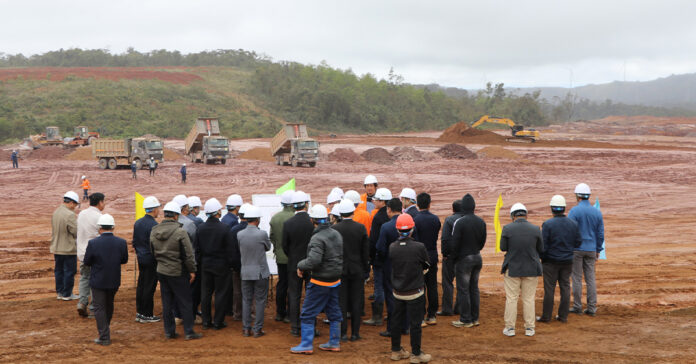
A picture of aluminium smelting project in Sekong Province, southern Laos, is expected to produce 1 million tonnes annually, with operations to begin in 2028.

A major bauxite project in southern Laos is moving closer to production, with Lao and Vietnamese officials now turning their attention to the environmental risks and community impacts of the operation.

A workshop in Vientiane on 10 September brought together officials and project developers to discuss management, technical standards and preparations for a local workforce at the Dakcheung project in Xekong.

Construction of the Dakcheung bauxite mining and alumina processing complex began in late 2022, with production scheduled to start in 2028.

The complex will process bauxite into alumina, allowing Laos to process more of its mineral resources domestically before the material is exported or used in further production.

Phase one of the Dakcheung complex requires is designed to produce 1 million tonnes of alumina annually. Production capacity is planned to increase to 2 million tonnes by 2035.

The project is also expected to create more than 1,000 direct jobs during its first three years, rising to around 1,500–1,800 workers once fully operational.

Developers said they will prioritize local recruitment and training as the project moves toward production.

According to Lao state media, environmental management was a major focus of the discussions in the latest workshop. Talks also included measures to manage water resources, mining waste, and red mud generated during alumina production. 

The project’s developers are Vietnam-Phuong Group (VPG) and its Lao subsidiary VPG Lao-Viet One Member Co., Ltd. (VLV) located in Dakcheung district.

Environmental Concerns

The focus on safeguards comes amid previous environmental and community concerns over bauxite mining in southern Laos.

In 2019, Thai and Chinese investors pursued a bauxite mining project on the Bolaven Plateau in Champasak Province, according to Mekong Watch. The area had already seen communities displaced and lost access to land amid agribusiness and hydropower development.

Despite a government advisory urging restrictions on mining, the project appeared to have been delayed rather than cancelled by mid-2020, raising concerns over potential impacts on livelihoods and the environment.

Lao and Vietnamese officials said the Dakcheung project must therefore combine industrial development with environmental safeguards and measures to limit its impact on local communities.

Emblem, Mascot and Theme Slogan of WCH Beijing 27 Unveiled at One-Year Countdown Event


BEIJING, CHINA – Media OutReach Newswire – 11 September 2026 – On 10 September, the one-year countdown event for the World Athletics Championships Beijing 27 (WCH Beijing 27) was held in the Golden Hall of the National Stadium, commonly known as the Bird’s Nest. Amidst the anticipation of the audience, the emblem, mascot, and theme slogan of the WCH Beijing 27 were officially unveiled, conveying the message of Beijing through unique designs.

The Emblem of WCH Beijing 27: Jing Yue

The emblem, “Jing Yue”, centred on the Temple of Heaven and the Chinese character “京” (Jing), draws on the expressive charm of Chinese calligraphy, engraves Beijing’s local identity, and radiates the vibrant energy of athletics.

The Mascot of WCH Beijing 27: Jing Yan

The mascot, “Jing Yan”, draws inspiration from “Yan’er”, the mascot of the 2015 edition of the Championships. Modelled after the Beijing swift, it symbolises “the return of the swift after 12 years”. The design subtly incorporates traditional Chinese kite patterns and the expressive eye makeup of Peking Opera, while a lightning-bolt dynamic adds a sense of speed. This seamlessly blends natural vitality, culture, art, and athletic competition. It not only nods to the 2015 edition of the Championships, but also brings Beijing’s rich cultural heritage vividly to life.

The theme slogan “Every Step Counts” embodies the relentless competitive spirit that every step and every effort matters. It sends a warm yet resolute message to the world: on the road to excellence, every wholehearted effort holds extraordinary value.

In his video address, President of World Athletics Sebastian Coe noted that Beijing is the first city in the world to have successfully hosted both the Summer and Winter Olympics, with a remarkable record of staging world-class events. He said the World Championships Beijing 2015 produced many iconic moments, and that World Athletics firmly believes China will stage the 2027 edition of the Championships to the highest possible standard and deliver an unforgettable sporting spectacular for audiences across the globe.

The World Athletics Championships Beijing 27 will be held at the National Stadium from 10 to 19 September 2027. More than 2,000 athletes from over 200 countries and regions will gather at the Bird’s Nest for this grand athletics celebration.
Hashtag: #WCHBeijing27 #EveryStepCounts

The issuer is solely responsible for the content of this announcement.