Home Blog Page 184

Hyundai Motor Company Becomes Official Automotive Partner of the UEFA Champions League

  • Hyundai Motor Company becomes Official Automotive Partner of the UEFA Champions League in a multi-year partnership, beginning with the 2026/27 season
  • The competition sets the benchmark for European club football by bringing together the best in the game, a standard Hyundai measures itself against in its own field
  • Designed in Europe for European customers, IONIQ 3 is the first of five major models Hyundai will launch in Europe during the 2026/27 season and the first to represent the brand in the partnership

OFFENBACH, Germany, Sept. 7, 2026 /PRNewswire/ — Hyundai Motor Company today announced a multi-year agreement as the Official Automotive Partner of the UEFA Champions League. The partnership marks the company’s commitment to European club football at its highest level. It begins with the 2026/27 season, running to the end of the 2030/31 season.

Hyundai Motor Company Becomes Official Automotive Partner of the UEFA Champions League

Football is familiar ground. For almost 30 years Hyundai has supported the game at its highest levels, from the largest international tournaments to clubs and associations around the world. The UEFA Champions League extends that commitment to the pinnacle of European club football.

The parallels between the UEFA Champions League and Hyundai run deeper than scale: squads in this competition draw talent from every corner of the globe and compete at the highest level in Europe. Hyundai leverages the strengths of its global scale while designing, engineering and building vehicles in Europe, selling across the continent. Two organisations, unambiguously European in operation and international in influence.

“Football has been part of Hyundai for almost 30 years. It brings people together like almost nothing else, across languages and borders and generations,” said José Muñoz, President and Chief Executive Officer, Hyundai Motor Company. “The UEFA Champions League is the best club football in the world, played every week in front of the most passionate fans in Europe. Following Hyundai’s engagement at the World Cup this summer, the UEFA Champions League is an ideal platform to show our beautifully designed vehicles with features fans love. I am from Madrid, so I have watched this competition my whole life. I’m personally excited about engaging with fans across Europe. It’s a great time to celebrate the beautiful game with Hyundai.”

Under its brand vision of ‘Progress for Humanity’, Hyundai is committed to expanding opportunities and contributing towards a more inclusive future for society. Through this partnership with UC3, UEFA’s joint venture with European Football Clubs, engagement with the UEFA Champions League and Hyundai’s mobility offerings, the company aims to bring people together across cultures and communities throughout Europe, uniting millions of football fans while delivering a positive impact for society.

“The UEFA Champions League and Hyundai are both driven by progress, performance, and the ambition to bring people together,” said Xavier Martinet, President and Chief Executive Officer of Hyundai Motor Europe. “We are entering this partnership with our strongest line-up yet. IONIQ 3 is the first of five new models we are launching in Europe this season, designed and developed for our customers here in the region, and it is the car that leads our lineup for the future.”

The UEFA Champions League is the world’s most-watched annual club football competition with around one in three people being interested in the Champions League worldwide. The 36-club tournament provides a perfect platform to engage with a huge audience of passionate football fans and highlight Hyundai’s future direction, from robotics and physical AI, to software and smart mobility solutions tailored for European customers.

Hyundai is a global brand with a strong footprint in Europe, built over more than 30 years. Its European Technical Centre in Rüsselsheim, Germany, develops and engineers its vehicles, while its European Design Centre at the same site shapes their visual look and identity. Production takes place at plants in the Czech Republic and Türkiye, with Hyundai vehicles reaching customers across 42 European markets through more than 2,000 sales and aftersales outlets. Hyundai’s design, engineering, manufacturing and partner network supports customers and fans every day.

The IONIQ 3: Hyundai’s entry on the pitch

The all-electric IONIQ 3, designed in Europe for European customers, is Hyundai’s opening statement in the partnership. The compact hatchback made its debut at Milan Design Week earlier this year and became the first battery-electric vehicle to enter production at Hyundai’s İzmit plant when manufacturing commenced in August. It is the first of five major new models Hyundai brings to Europe in the 2026/27 season.

With the IONIQ 3, Hyundai enters the compact class, Europe’s most contested segment, with class-leading capability to deliver on European customers’ needs. IONIQ 3’s Aero Hatch typology has been created to deliver class-leading efficiency and range, with a drag coefficient of 0.263 Cd and up to 497 km of range (WLTP). With 441 liters of trunk volume, best-in-class interior space, a segment-leading 14.6-inch display featuring Hyundai’s latest PLEOS Connect infotainment system, and strong value, IONIQ 3 represents Hyundai’s commitment to making electrified mobility accessible to its European customers.

The IONIQ 3 sits within a line-up that offers customers a genuine choice across the full powertrain spectrum, thanks to Hyundai’s flexible strategy: battery-electric, hybrid, plug-in hybrid, hydrogen fuel-cell electric and internal combustion. The range is structured around how people own and use their vehicles, delivering flexibility.

IONIQ 3 builds on Hyundai’s EV recognition in Europe, following significant awards that reflect the breadth of the company’s commitment to electrified mobility. The Hyundai INSTER was named 2025 World Electric Vehicle, while the IONIQ 9 was named Germany’s 2026 Premium Car of the Year. This customer-centric focus frames Hyundai’s newly announced partnership as the UEFA Champions League’s Official Automotive Partner.

Guy-Laurent Epstein, Co-Managing Director, UC3: “We are delighted to welcome Hyundai as an official partner of the UEFA Champions League. Hyundai has a proud history of supporting football at the highest level and a clear belief in its power to bring people together. We look forward to building a partnership that brings that shared ambition to life for fans around the world over the coming years.”

More information about Hyundai Motor and its products can be found at:
https://www.hyundai.com/worldwide/en/ or Newsroom: Media Hub by Hyundai

Follow our Hyundai Global Newsroom Instagram channel @hyundai_mediahub
More information about Hyundai Motor Europe HQ and its products is available at www.hyundai.news.
Follow Hyundai Motor Europe HQ on X @HyundaiEurope, Instagram @Hyundai.Europe and TikTok @Hyundai.Europe

DIGITIMES Intelligence: Chip Controls Are Reshaping China’s Auto Supply Chain — BYD Shows What Comes Next

TAIPEI, Sept. 7, 2026 /PRNewswire/ — The global automotive industry is entering a new phase in which semiconductors are becoming as strategically important as batteries, motors and manufacturing scale. As vehicles evolve into software-defined, AI-enabled platforms, chips increasingly determine everything from power management and cockpit functions to advanced driver-assistance systems. At the same time, geopolitical tensions and technology restrictions are pushing automakers to rethink where those chips come from — turning semiconductor supply into a strategic issue for the global auto industry.

China sits at the center of that shift. U.S. and allied export controls introduced since 2022 were designed primarily to restrict China’s access to advanced semiconductor technologies and manufacturing equipment. Yet the restrictions have also added urgency to Beijing’s long-running localization strategy. A March 2026 analysis by the Center for Strategic and International Studies (CSIS) found that the controls have accelerated the adoption of domestic chips and equipment, while strengthening coordinated efforts across government and industry to localize semiconductor design and manufacturing.

The automotive sector is becoming one of the clearest testing grounds for that strategy. Chinese automakers are accelerating efforts to increase domestic chip sourcing as Beijing pushes for greater semiconductor self-reliance across strategic industries. The shift is especially significant because modern electric and intelligent vehicles depend on a broad range of semiconductors — from mature-node power devices and microcontrollers to increasingly sophisticated computing chips for smart-driving systems.

Against this backdrop, a new DIGITIMES Intelligence report identifies BYD as a particularly revealing case of what happens when policy-driven localization meets years of prior corporate investment. Unlike automakers that are only now accelerating their semiconductor strategies, BYD began building in-house chip capabilities more than two decades ago, initially focusing on power-control semiconductors needed for electric vehicles.

That strategy has steadily moved up the semiconductor value chain. BYD’s early work in IGBT and silicon carbide (SiC) power devices helped secure critical electronic-control components for its EV business. Its semiconductor roadmap has since expanded toward higher-compute smart-driving SoCs, culminating in the Xuanji A3, which the DIGITIMES Intelligence report identifies as entering scaled production on a 4nm automotive-grade process.

The difference is not simply chip design. DIGITIMES Intelligence finds that BYD has spent more than two decades building an integrated device manufacturer (IDM) model spanning chip design, wafer fabrication and mass-production deployment, supported by multiple in-house fabs and a dedicated semiconductor engineering organization. That vertical integration gives BYD a different starting point from automakers now entering custom silicon primarily in response to supply-chain pressure.

The strategic value of that investment may ultimately extend beyond cars. DIGITIMES senior analyst Jessie Lin notes that intelligent vehicles and humanoid robots share many of the same foundational technologies, including AI processors, sensors, motors, batteries and control systems. BYD’s accumulated expertise in smart-driving silicon and algorithms could therefore provide a foundation for expansion into robotics and other physical AI applications.

That possibility is becoming more relevant as China accelerates its push into embodied and physical AI. At the 2026 World Robot Conference in Beijing, more than 300 companies showcased over 2,000 robotics exhibits, with humanoid robots increasingly demonstrated in manufacturing, logistics and household applications rather than simply as prototypes. The growing overlap between China’s EV and robotics ecosystems could make capabilities in batteries, motors, sensors, manufacturing and AI increasingly transferable across the two industries.

BYD’s trajectory also illustrates why the long-term impact of semiconductor export controls is difficult to assess in simple terms. Restrictions can constrain access to frontier technology in the short term, while simultaneously strengthening incentives for domestic substitution and investment. CSIS has argued that although export controls have limited China’s access to some leading-edge technologies, they have also added momentum to domestic semiconductor innovation and localization.

The implications extend beyond BYD or even China’s auto industry. As cars become more dependent on advanced computing, semiconductor capability is increasingly becoming part of automakers’ competitive strategy — alongside software, batteries, manufacturing and supply-chain resilience. The rise of vertically integrated players such as BYD could therefore reshape not only automotive semiconductor sourcing, but also the boundaries between automakers, chipmakers and emerging physical AI companies.

The new DIGITIMES Intelligence report examines BYD’s semiconductor evolution from power devices and SiC to smart-driving SoCs, the structural advantages created by its IDM model, and how those capabilities could position the company as China’s automotive semiconductor localization accelerates and physical AI emerges as a new growth frontier.

For more information: DIGITIMES Intelligence – BYD Semiconductor Report
https://dgt.ms/reportBYDchips_prnewswire

About DIGITIMES

DIGITIMES is a Decision Intelligence platform rooted at the core of the industry, dedicated to helping global decision–makers navigate change and formulate strategies through first–hand insights and AI–driven analysis. We integrate intelligence services, forward–looking research, and influence marketing to provide comprehensive support from insights to execution—continuously defining the future with clarity and serving as a long–term strategic partner for businesses moving forward.

Singapore’s Minré Partners Korean Beauty Innovators to Bring Next-Generation Micro PDRN Technology to Singapore

Homegrown biotechnology skincare company partners Xenohelix and UMECO Group to combine micro PDRN innovation with advanced Korean beauty delivery technology


SINGAPORE– Media OutReach Newswire – 7 September 2026 – Singapore biotechnology skincare company Minré is partnering with South Korean innovators Xenohelix Co., Ltd. and UMECO Group to develop next-generation skincare combining biotechnology with advanced beauty delivery technology.

Xenohelix, a biotechnology company spun off from Yonsei University, will support Minré’s development of an upcoming skincare range featuring its patented miPDRN® technology. The collaboration will make Minré the first Singapore skincare brand to work with Xenohelix’s proprietary miPDRN® technology.

PDRN, or polydeoxyribonucleotide, is increasingly discussed in regenerative and aesthetic skincare. Minré believes consumers should look beyond whether a product contains PDRN to the quality and science behind the technology.

“Great science happens when different expertise comes together,” said Dr Zach Pang, Co-founder of Minré. “By combining Singapore’s strengths in biotechnology with Korea’s leadership in beauty and aesthetic innovation, we’re bringing together complementary expertise to create better skincare.”

Dr Chee Wai Fhu, Co-founder of Minré, added: “The future of skincare will be shaped by science-backed innovation, not short-lived trends. Better science ultimately allows us to build better skincare.”

Micro PDRN for Next-Generation Skincare
Xenohelix’s miPDRN® is designed to support enhanced skin penetration. At approximately 12 kDa and around 20 base pairs, it is described by Xenohelix as the world’s smallest PDRN molecule, with its ultra-small size designed to support more effective absorption and deeper penetration into the skin. (Source: Xenohelix company profile, Vegan & Clean Beauty Fair 2026; COSIN Korea, 2026.)

Minré and Xenohelix will work together on product co-development, formulation optimisation and scientific validation.

Pairing Skincare Science with Korean Delivery Technology
Minré is also collaborating with UMECO Group, a South Korean beauty technology company specialising in nanoporation, regenerative phototherapy and professional aesthetic solutions.

The partnership combines Minré’s regenerative skincare expertise with UMECO’s proprietary nanoporation technology, designed to support the delivery of skincare formulations through the skin.

Developed under the clinical advisory of dermatologist Dr Jung Jae-Yuk, who has served as a medical advisor to the President of South Korea, UMECO’s technology will support joint exploration of treatment protocols, scientific evaluation, user studies, practitioner education and future product-technology innovations.

Singapore-Korea Collaboration
The two Memoranda of Understanding (MOUs) mark the first stage of Minré’s strategy to connect Singapore’s biotechnology ecosystem with international expertise in beauty, dermatology and aesthetic technology, beginning with South Korea.

Minré plans to continue working with universities, biotechnology companies, clinicians and technology innovators internationally as it develops its science-driven skincare portfolio.

Hashtag: #Minre #XenohelixCo

The issuer is solely responsible for the content of this announcement.

About Minré

Minré is a Singapore biotechnology skincare company developing science-driven skincare by bringing together biotechnology, skin science and aesthetic innovation.

Backed by the scientific expertise of sister company AuctuCel Pte Ltd, an A*STAR spin-off specialising in AI-driven bioprocess engineering and cell culture optimisation, Minré works with scientists, clinicians and technology partners to translate biotechnology and aesthetic innovation into skincare solutions for professionals and consumers.

Rznomics Reports Major Advances in High-Efficiency Circular RNA Production in Nucleic Acids Research

SEONGNAM, South Korea, Sept. 6, 2026 /PRNewswire/ — Rznomics Inc.(KOSDAQ: 476830), a biopharmaceutical company specializing in the development of RNA-based gene therapies, announced a major breakthrough in the high-efficiency production of circular RNA (circRNA) – a rapidly emerging modality in next-generation RNA therapeutics.

The research was published online in Nucleic Acids Research (NAR), a premier international journal in the fields of nucleic acid research and molecular biology, on September 4, 2026. The article is titled “Target Site Selection and P1 Engineering Enable Highly Efficient Circular RNA Production via End-to-End Self-Targeting and Splicing”.

The study highlights a substantial enhancement in the circRNA production efficiency of Rznomics’ proprietary Self-Targeting and Splicing (STS) technology, which enables RNA molecules to spontaneously form a circular structure during in vitro transcription.

Unlike conventional linear RNA, circRNA features a covalently closed-loop structure, rendering it highly resistant to enzymatic degradation. This superior stability makes circRNA a highly promising platform for a broad spectrum of RNA-based medicines, including vaccines and protein therapeutics.

However, circularization efficiency generally decreases as RNA length increases. This limitation restricts the size of genes that can be practically accommodated and poses a challenge for efficient large-scale manufacturing.

To address this limitation, the Rznomics research team systematically screened target sites for self-circularization and implemented an engineering strategy to optimize the P1 construct involved in the self-circularization reaction.

The study revealed that self-circularization efficiency fluctuates significantly depending on the location of the target site, even within the same RNA sequence, demonstrating that optimal target site selection is a key factor for high-yield circRNA production. The researchers further engineered the P1 construct by sequentially introducing a short polyA10 sequence and an antisense sequence designed to strengthen interaction with the target site, improving self-circularization efficiency by up to approximately seven-fold compared with the original STS design.

Notably, in experiments using Factor VIII RNA approximately 7.8 kilo-nucleotides in length, the optimized STS method achieved approximately a two-fold higher circularization efficiency than the widely used Permuted Intron–Exon (PIE) method.

These findings demonstrate that integrating strategic target-site selection with P1 construct engineering enables efficient circRNA production not only for relatively short RNAs but also for large RNAs approaching 8 kilo-nucleotides. Rznomics anticipates that this technology could serve as a broadly applicable platform for the development of circRNA-based therapeutics and vaccines.

Dr. Kyung Hyun Lee, first and co-corresponding author of the study, stated, “By establishing a foundation for the efficient and robust production of circRNA even from large RNA molecules, we expect this technology to help broaden the potential horizons of circRNA application.”

Dr. Seong-Wook Lee, CEO of Rznomics and co-corresponding author, added, “This milestone further advances our proprietary circRNA platform and strengthens its potential for practical applications. Moving forward, we plan to expand its utility across diverse therapeutic areas, including CAR-T therapies.”

Journal Article

Target site selection and P1 engineering enable highly efficient circular RNA production via end-to-end self-targeting and splicing | Nucleic Acids Research | Oxford Academic
https://academic.oup.com/nar/article/54/16/gkag869/8785321

About Rznomics Inc.

Rznomics is a clinical-stage biopharmaceutical company based in South Korea focused on developing RNA-based gene therapies. The company’s proprietary trans-splicing ribozyme platform enables precise RNA editing and has broad applicability across multiple indications. Its lead oncology program ‘Taspitimagene advec (RZ-001)’ was designated as a Regenerative Medicine Advanced Therapy (RMAT) by FDA.

The company signed a research collaboration and license agreement with global pharmaceutical company Eli Lilly and Company in May 2025 for the development of a novel RNA editing therapeutic, and subsequently listed on the KOSDAQ market in December 2025. (KOSDAQ 476830)

For more information, please visit  www.rznomics.com

Discover Taiwan’s Wangye Culture: 2026 Kunshen Wangye’s Salt for Peace Festival Invites the World to Celebrate “Peace Without Borders”

TAINAN, TAIWAN – Media OutReach Newswire – 7 September 2026 – The 2026 Kunshen Wangye’s Salt for Peace Festival, one of Taiwan’s major celebrations of Wangye folk religion, will take place on November 7 and 8 at Nankunshen Daitian Temple in Beimen District, Tainan, co-organized by the Southwest Coast National Scenic Area Headquarters and local partners.

Under this year’s theme, “Salt Sustains Peace, Happiness Follows,” the festival will introduce the concept of “Peace Without Borders” for the first time, bringing together Wangye religious traditions, salt industry heritage, wetland ecology, and international cultural exchange. Travelers from around the world are invited to visit Tainan and experience Taiwan’s distinctive religious culture and coastal scenery.

The festival will continue the three traditional rituals of “Inviting the Salt,” “Blessing the Salt,” and “Giving Thanks for the Salt,” symbolizing peace, health, and happiness. This year, a Korean traditional blessing group will also participate in a cultural exchange for the first time, sharing wishes for peace through different cultural traditions. A “Wall of Blessings from Around the World” will also be set up at the venue, with bilingual blessing cards available for visitors from around the world to write down their wishes, allowing messages of peace and well-being to transcend languages and borders.

The festival will also feature international arts performances, specialty markets, family activities, bilingual guided tours, and the distribution of blessed salt sachets. In addition to participating in the festivities, visitors can explore the Jingzaijiao Tile-Paved Salt Fields and discover Beimen’s distinctive blend of religious heritage, salt-making culture, and coastal ecology.

More than a celebration of religious culture, the 2026 Kunshen Wangye’s Salt for Peace Festival serves as a platform connecting culture, tourism, and international exchange. Travelers from around the world are warmly invited to visit Beimen, Tainan, on November 7 and 8 to experience the heartfelt wishes embodied in “Peace Without Borders” and discover the unique cultural appeal of Taiwan.

Hashtag: #TaiwanWangyeCulture

The issuer is solely responsible for the content of this announcement.

New Vientiane-Udon Thani Bus Route to Launch on 9 September

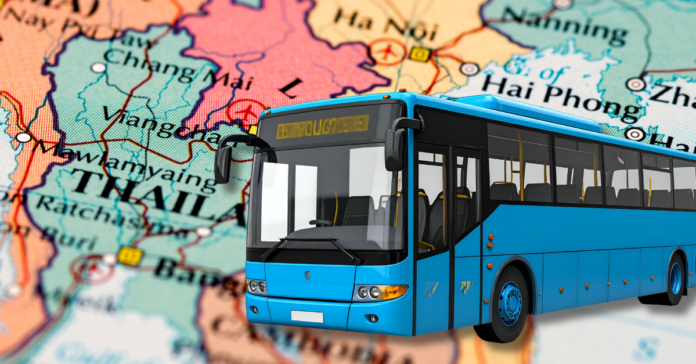
This photo is used for representational purpose only.

Thailand has just announced the launch of a new bus route connecting Laos’ Vientiane and Thailand’s Udon Thani International Airport, via Udon Thani city, strengthening cross-border travel links between the two countries.

The Thai Transport Company (BKS), Thailand’s state-owned intercity and cross-border bus operator, will begin operating the service on 9 September.

The 87-kilometer route will use a 40-seat, second-class air-conditioned bus, with fares set at THB 80 (USD 2.40) per trip. Two round trips will operate each day.

Buses will depart Udon Thani Bus Terminal 1 at 9 AM., stop at Udon Thani International Airport at 9:30 AM., and arrive in Vientiane at noon.

The return service will leave Vientiane at 2 PM, reach Udon Thani Airport at 4:30 PM., and arrive at Udon Thani Bus Terminal 1 at 5:00 PM.

The route will provide a direct bus connection between Udon Thani and Vientiane, including stops at the airport in Udon Thani.

The launch builds on BKS’s recent resumption of another major cross-border route linking Vientiane and Khon Kaen, a neighboring province of Udon Thani.

In October 2025, BKS relaunched the Khon Kaen route after a five-year suspension that began in March 2020 due to the COVID-19 pandemic.

The Khon Kaen route covers 194 kilometers and takes approximately four hours, using air-conditioned buses that seat 42 passengers. BKS charges 180 baht (around USD 5) per ticket and runs two daily round trips, departing Khon Kaen at 8:15 AM and returning from Vientiane at 2:45 PM.

Ascletis Announces Inclusion in the Hong Kong Stock Connect List under the Shanghai-Hong Kong Stock Connect and the Shenzhen-Hong Kong Stock Connect Programs

HONG KONG, Sept. 7, 2026 /PRNewswire/ — Ascletis Pharma Inc. (HKEX: 1672, “Ascletis”) announces that, the ordinary shares of the Company (the “Shares”), which trade on The Stock Exchange of Hong Kong Limited (the “HK Stock Exchange”), have been included in the list of eligible securities under the Shanghai-Hong Kong Stock Connect and Shenzhen-Hong Kong Stock Connect (collectively, the “Hong Kong Stock Connect”) programs, both with effect from September 7, 2026, pursuant to the announcements issued by the Shanghai Stock Exchange and the Shenzhen Stock Exchange, recently. Following the inclusion of the Shares, eligible investors in Chinese Mainland will be able to trade the Shares through the Hong Kong Stock Connect channel.

The Company believes the inclusion of the Shares in the trading mechanism of the Shanghai-Hong Kong Stock Connect and the Shenzhen-Hong Kong Stock Connect demonstrates market recognition of the Company’s investment value and growth prospects. The Company expects the inclusion of the Shares as eligible securities will help further expand the shareholder base of the Company, increase the trading liquidity of the Shares, and support the innovation-driven and sustainable growth of the Company in the long term.

About the Shanghai-Hong Kong Stock Connect and the Shenzhen-Hong Kong Stock Connect

The Shanghai-Hong Kong Stock Connect and the Shenzhen-Hong Kong Stock Connect are mutual stock market access mechanisms between Chinese Mainland and the Hong Kong Special Administrative Region, under which the Shanghai Stock Exchange and the Shenzhen Stock Exchange have established technical connectivity with the HK Stock Exchange, respectively, to enable investors in Chinese Mainland and the Hong Kong Special Administrative Region to trade eligible securities listed on each other’s market through their local securities companies or brokers.

About Ascletis Pharma Inc.

Ascletis Pharma Inc. is a fully integrated biotechnology company focused on the development and commercialization of potentially best-in-class and first-in-class therapeutics to treat metabolic diseases. Utilizing its proprietary Artificial Intelligence-assisted Structure-Based Drug Discovery (AISBDD) and Ultra-Long-Acting Platform (ULAP) technologies as well as Peptide Oral Transport ENhancement Technology (POTENT), Ascletis has developed multiple drug candidates in-house, including both small molecules and peptides, such as its lead program, ASC30, a once-daily oral small molecule GLP-1R agonist for chronic weight management and diabetes; ASC30_48FDC, a once-daily oral small molecule dual agonist, a fixed dose combination of ASC30 (GLP-1R agonist) and ASC48 (GIPR agonist), ASC30_48_39FDC, a once-daily oral small molecule triple agonist, a fixed dose combination of ASC30 (GLP-1R agonist), ASC48 (GIPR agonist) and ASC39 (amylin receptor agonist (SARA)), ASC39, an eloralintide-like potent selective amylin receptor agonist (SARA) once-daily oral small molecule, ASC30_39FDC, a once-daily oral small molecule dual agonist, a fixed dose combination of ASC30 (GLP-1R agonist) and ASC39 (amylin receptor agonist (SARA)), ASC36, an amylin peptide, designed to be administered once monthly to once quarterly subcutaneously and once daily orally, ASC35, a once-monthly subcutaneously administered GLP-1R/GIPR dual peptide agonist, ASC36_35FDC, a once-monthly subcutaneous triple peptide agonist, a fixed combination of ASC36 (amylin receptor agonist) and ASC35 (GLP-1R/GIPR agonist), ASC37, a GLP-1R/GIPR/GCGR triple peptide agonist, designed to be administered once monthly subcutaneously and once daily orally, and ASC36_37FDC, a once-monthly subcutaneous quadruple peptide agonist, a fixed dose combination of ASC36 (amylin receptor agonist) and ASC37 (GLP-1R/GIPR/GCGR agonist), for chronic weight management. Ascletis is listed on the Hong Kong Stock Exchange (1672.HK).

For more information, please visit www.ascletis.com.

Contact:

Peter Vozzo
ICR Healthcare
443-231-0505 (U.S.)
Peter.vozzo@icrhealthcare.com

Ascletis Pharma Inc. PR and IR Teams
+86-181-0650-9129 (China)
pr@ascletis.com
ir@ascletis.com

Laos Warns of More Rain, Flash Floods, Landslides in Early September

Laos to Experience Chilly, Rainy Weather Throughout This Week
Rain falling on roof in Laos (photo: tarm nun)

Laos will see more rain this week, with the Department of Meteorology and Hydrology warning of possible flash floods, landslides and urban flooding in vulnerable areas.

On 7 September, the department said the low-pressure trough will continue moving across central Laos, while the southwest monsoon remains active over most of the country. The conditions are expected to bring thunderstorms and scattered rain, with moderate to heavy rain and strong winds possible in parts of central and southern Laos.

In Vientiane, rain is expected in parts of the capital, including Pak Ngum, Sangthong, Xaythany, Sikhottabong, Sisattanak, Xaysettha and Naxaithong. Temperatures are forecast to reach around 34°C.

Rain is also expected in Vientiane Province, including Phonhong and Vang Vieng, as well as parts of Xaysomboun and Borikhamxay provinces.

The department warned that moderate rain could cause waterlogging in poorly drained areas. Heavy rain could trigger flash floods, landslides and rapidly rising water levels in streams, while rainfall above 90 millimeters could bring a higher risk of severe flooding and landslides.

Residents in vulnerable areas have been urged to monitor weather updates and official warnings, particularly during periods of prolonged rain.

Vientiane Checks Drainage Systems

Vientiane authorities are also preparing for further heavy rain.

Deputy Minister of Agriculture and Environment Saynakhone Inthavong inspected drainage systems and waterways in Xaythany and Sikhottabong districts on 4 September.

The inspection covered natural drainage channels in Vankham Village and the Huay Xay Moun Dam and drainage pump in Nong Da Village.

Saynakhone ordered authorities to urgently repair damaged water pumps, particularly those affected by damaged power lines, and ensure drainage systems are ready to operate during heavy rain.

Officials were also instructed to strengthen monitoring and planning to prevent water from reaching homes and agricultural areas.

Authorities in Sekong Province are also assessing damage from recent disasters in Kalum District.

Officials reported damage to roads and 9.7 hectares of productive land, including rice fields, upland farms and orchards.

On 5 September, district authorities donated LAK 40 million (USD 1,800) toward bridge repairs, along with supplies and school materials for affected communities.

The latest warning comes as several parts of Laos continue to recover from flooding and landslides caused by heavy rain in recent weeks.

Air Quality

Meanwhile, monsoon rains continue to shape weather conditions and air quality across Laos. In Vientiane Capital and the central region, air quality remains generally good, with average PM2.5 levels at around 8.2 μg/m³, within World Health Organization guidelines.

Air quality may occasionally reach AQI levels of 21 to 49 due to vehicle emissions and urban construction activity.