Home Blog Page 1868

China’s 15th National Games open in Guangzhou

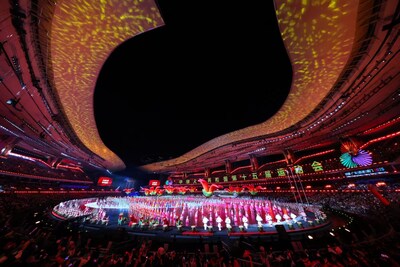
GUANGZHOU, China, Nov. 10, 2025 /PRNewswire/ — On the evening of November 9, the 15th National Games of the People’s Republic of China were inaugurated at the Guangdong Olympic Sports Center in Guangzhou. President Xi Jinping attended the opening ceremony and declared the Games open. This is the first National Games jointly hosted by Guangdong, Hong Kong and Macao.

The opening ceremony of China's 15th National Games
The opening ceremony of China’s 15th National Games

The 37 delegations taking part come from all of China’s provinces, autonomous regions and centrally administered municipalities, the Hong Kong and Macao Special Administrative Regions, the Xinjiang Production and Construction Corps, and three industrial sports associations. Speeches were delivered by Huang Kunming, secretary of the CPC Guangdong Committee; John Lee Ka-chiu, chief executive of the Hong Kong SAR; Sam Hou Fai, chief executive of the Macao SAR; and Gao Zhidan, director of the General Administration of Sport of China. Chen Aisen, Iao Chon-in and Ken Yuen took the oaths on behalf of the athletes, coaches and referees, respectively.

The opening ceremony began with a cultural and sports performance titled “Dreaming of the Future.” The show unfolded in three chapters—”Shared Roots, Shared Origin,” “Shared Hearts, Shared Bonds,” and “Shared Dreams, Shared Fulfillment”—and creatively blended sports elements, artistic performance and cutting–edge technology to bring the Games’ theme, “Passionate National Games, Vibrant Greater Bay Area,” to life. Lingnan cultural elements were prominent: beyond the motif of “prosperity from water,” and the program featured Cantonese opera, Cantonese pop, dragon and lion dances, and Yingge Dance, highlighting Lingnan’s local character, the Greater Bay Area’s appeal, China’s grandeur and a world–class standard.

The thrilling in-stadium torch relay and cauldron-lighting ceremony followed. Beginning on November 2, the torch for the 15th National Games was relayed simultaneously across Guangdong, Hong Kong and Macao, culminating in its arrival at the Guangdong Olympic Sports Center. Amid great anticipation, 12 torchbearers—Ma Lin, Chen Ruolin, Wong Kam-po, Fang Wenhao, Guo Jingjing, Wang Xinyu, Wang Liuyi, Wang Qianyi, Liang Weikeng, Lai Xuanzhi, Xian Dongmei and Rong Zhixing—relayed the flame. The final torchbearers Su Bingtian, Cheung Ka Long and Li Yi jointly lit the Games’ cauldron.

At 9:27 p.m., the opening ceremony concluded amid the fervor generated by the theme song “Hearts as One.”

The ceremony was attended by International Olympic Committee (IOC) President Kirsty Coventry, IOC honorary president for life Thomas Bach, and other overseas guests invited to observe the Games.

The 15th National Games of China are scheduled to conclude on November 21. More than 14,000 athletes are competing in the sporting events, while roughly 11,000 participants are taking part in mass-participation events.

Parade of delegations at China's 15th National Games
Parade of delegations at China’s 15th National Games


New Research from UpGuard Reveals 68% of Security Leaders Admit to Unauthorized AI Usage

The study also shows 8 out of 10 employees use unauthorized AI, eroding corporate trust

MOUNTAIN VIEW, Calif., Nov. 10, 2025 /PRNewswire/ — UpGuard, a leader in cybersecurity and risk management, today released its new “State of Shadow AI” report. The report details the widespread use of unapproved generative AI tools, or “Shadow AI,” by employees in the workplace. Data shows that employees worldwide are actively bypassing corporate governance at all levels, with a staggering 8 out of 10 employees using unauthorized AI tools. This widespread non-compliance extends all the way to the top—68% of security leaders, including CISOs, admit to incorporating unauthorized AI into their daily workflows. This is of increasing concern for organizations as employees expose their companies to greater security risks.

The report also highlights a critical AI security paradox. Despite 40% of employees reporting that they received AI safety training and have a better understanding of the risks, they are also the ones who use unapproved tools most frequently. This correlation suggests that compliance and security awareness campaigns need to evolve to accommodate employees’ increasing drive for productivity and confidence in new technology.

“Shadow AI has triggered a challenge in maintaining trust between employer and employee,” said Greg Pollock, head of Research and Insights at UpGuard. “Our data shows that increased security training and literacy does not curtail increased shadow AI usage; in fact, it increases it. Organizations need to better engage with their employees about AI to channel that curiosity appropriately.”

Who Is Bypassing Controls and at What Level?

UpGuard’s research indicates that traditional security awareness methods are not effective against curtailing unapproved AI usage, and instead, are enabling “AI power users.” The paradox is further aggravated by seniority, with Shadow AI usage increasing alongside managerial authority; senior leadership across the organization is 50% more likely to use shadow AI.

The report finds that:

  • A surprising 90% of security leaders themselves report using unapproved AI tools at work, with 69% of CISOs incorporating them into their daily workflows.
  • 27% of workers trust AI more than their managers or colleagues for reliable information, further highlighting the growing divide of non-compliance between employees and corporate authority.
  • 23% of CISOs know that passwords and other credentials are being shared with AI tools within their company, indicating that organizations are becoming increasingly exposed by the minute.
  • Furthermore, while 52% of employees are familiar with their company’s AI usage policy, 70% know of sensitive data shared with AI tools at their workplace

Guiding Enablement into the Future

Unauthorized AI usage in the workplace will continue to rise unless reinforced governance is implemented. It is clear that the problem cannot be solved by blocking applications, as 41% of employees find a way around it.

For companies keen on creating a transparent environment, a strategic necessity is a shift from a fear-based approach of restriction to one of guided enablement. This new pivot must address the next steps: providing visibility, implementing intelligent guardrails, and offering vetted tools to make the secure path the path of least resistance.

Read the full report, including additional stats and insights on Shadow AI prevalence in the workplace at https://www.upguard.com/resources/the-state-of-shadow-ai

Methodology

  • Data for this report were sourced from two separate methods. The survey of security leaders was conducted by Dynata between August 18-31, 2025. The 542 respondents were security professionals in leadership positions at companies with more than 200 employees located in the US, Canada, the APAC region (comprising Australia, New Zealand, Singapore, and Malaysia), and India.
  • The survey of employees was conducted using the Prolific platform between July 30 – August 11, 2025. The respondents were comprised of 1020 people in the US and UK who reported being currently employed and could provide the employee count and industry classification of their employer.

About UpGuard

Founded in 2012, UpGuard is a leader in cybersecurity and risk management. The company’s AI-powered platform for cyber risk posture management (CRPM), provides a centralized, actionable view of cyber risk across an organization’s vendors, attack surface, and workforce. Trusted by thousands of companies, UpGuard’s platform is designed to help security teams manage cyber risk with confidence and efficiency. To learn more, visit www.upguard.com.


APAC Threat Intelligence Latest Insights: 79% of Enterprises to Increase Investment in Threat Intelligence

BEIJING, Nov. 10, 2025 /PRNewswire/ — As a professional media outlet focused on innovative services within the data intelligence industry, DataYuan consistently tracks the deep integration of new technologies like AI and cloud computing with data applications. With the widespread application of AI Agentic technology in attack and defense, the Asia-Pacific cybersecurity market has presented some new features and trends. Based on continuous observation of the Asia-Pacific cybersecurity market, DataYuan has released this in-depth report, aiming to analyze the development trends, core challenges, and future landscape of the crucial domain of threat intelligence.

The confluence of the digital wave and geopolitical complexities is creating an unprecedentedly complex cybersecurity landscape in the Asia-Pacific (APAC) region, prompting enterprises to significantly boost their investment in threat intelligence (TI).

According to the latest APAC Threat Intelligence Trends Report from consulting firm Forrester, a striking 79% of senior security decision-makers in the region indicate they will increase their TI budget in 2026, a proportion that surpasses both Europe and North America.

Drivers and Challenges: The Dual Engines of APAC Threat Intelligence Development

As the cornerstone of security operations, threat intelligence is driving organizations to shift from reactive incident response towards proactive threat hunting and in-depth analysis of adversary tactics, techniques, and procedures (TTPs). The increased investment by APAC enterprises in TI capabilities is primarily fueled by the following core drivers:

Addressing the Complex and Escalating Threat Landscape: Faced with AI-generated deepfakes, evasive malware, and precise attacks launched by Advanced Persistent Threat (APT) groups targeting specific industries and regions, enterprises require TI to gain insights into emerging attack vectors, understand attacker tactics, and enable proactive threat defense.

Accessing Industry- and Language-Specific Intelligence: The APAC region is characterized by linguistic diversity and unique industry-specific threats. Government sectors confront APTs, financial institutions must focus on combating fraud and phishing, and the retail industry needs to guard against account takeover and brand impersonation. This dynamic makes vendors who can offer localized intelligence, possess deep industry knowledge, and provide contextualized, actionable insights highly sought after.

Enhancing Security Operations Efficiency through Automation: Against the backdrop of a cybersecurity talent shortage, integrating threat intelligence with SOAR (Security Orchestration, Automation, and Response) platforms helps accelerate alert analysis, reduce false positives, and allow security teams to focus on higher-priority threats.

Meeting Compliance and Risk Management Requirements: Facing varied and increasingly stringent regulations such as Singapore’s Cybersecurity Act and Australia’s Notifiable Data Breaches Scheme, threat intelligence has become a critical capability for highly regulated industries like finance, energy, and telecom by assisting with threat monitoring, incident reporting, and compliance alignment.

However, APAC’s embrace of threat intelligence also faces significant challenges. These include a shortage of cybersecurity talent and skills hindering the operationalization of intelligence; cost constraints and an unclear Return on Investment (ROI) influencing investment decisions; and the complexity and integration obstacles of solutions slowing down the adoption rate.

Focus on China: Market Structure Clear, Steady Development Ahead

Within the flourishing APAC threat intelligence landscape, the Chinese market presents a unique development trajectory and immense potential. According to iResearch’s 2024 China Threat Intelligence Industry Development Research Report, the market size for threat intelligence in China reached RMB 1.61 billion in 2024, marking a marginal year-on-year decrease of 0.9%, yet future growth momentum is clearly building.

The factors driving the Chinese TI market into a period of steady development are evident at both the macro and micro levels:

Macro-Level: China’s proactive macro-control policies and increasing emphasis on cybersecurity encourage enterprises to escalate investment in practical capabilities such as threat intelligence. Geopolitical uncertainties also reinforce this demand.

Micro-Demand Side: The fact that Generative AI is lowering the barrier to entry for attacks, coupled with the rampancy of new attack methods and ransomware, compels enterprises to rely on the latest threat intelligence to bolster their detection and protection capabilities.

Micro-Supply Side: The integration of threat intelligence with various security products continues to deepen, leading to its deployment across network, endpoint, and integrated defense solutions, highlighting its growing importance as an advanced cybersecurity capability.

In terms of market structure, China’s threat intelligence industry has evolved into a “low-concentration oligopoly” dominated by leading vendors. According to an iResearch report, in 2024, ThreatBook ranked first in China’s threat intelligence market with a 17.4% market share. Tencent Security and QAX ranked second and third, respectively, each trailing ThreatBook by less than 10%. Overall, competition in China’s threat intelligence market remains relatively intense.

Currently, Chinese vendors are actively integrating new technologies such as large AI models and big data open-source components into their TI products and exploring the convergence of intelligence capabilities with other security products and business models. Therefore, active competition and innovation will be the dominant themes in the future of China’s threat intelligence market.

Future Outlook: Deep Integration of Threat Intelligence and Large Models

The emergence of large models (LMs) has brought a new wave of transformation opportunities to the threat intelligence industry. Their advanced capabilities in Natural Language Processing (NLP) and knowledge synthesis are empowering various stages of TI production and operation. This is expected to significantly boost the productivity of security professionals, lower the application threshold, and enable TI to support more roles across a wider range of scenarios.

While most applications currently remain in the Proof-of-Concept (PoC) phase, future breakthroughs in industry adaptation, deployment efficiency, and performance optimization will further enhance vendor competitiveness. This will ultimately propel the APAC threat intelligence market, driven by both supply and demand, toward a more mature and intelligent new stage of development.


CaoCao Inc. and Abu Dhabi Investment Office Sign MoU to Advance Autonomous Driving and Launch Robotaxi in the Middle East

HONG KONG, Nov. 10, 2025 /PRNewswire/ — November 10, 2025 – CaoCao Inc. (‘CaoCao’ or the ‘Company’, stock code: 2643.HK), a leading intelligent mobility platform in China, today announced the signing of a Memorandum of Understanding (‘MoU’) with the Abu Dhabi Investment Office (‘ADIO’) at DRIFTx 2025. The strategic partnership will explore the deployment of autonomous taxi (Robotaxi) services and promote green, intelligent mobility solutions in Abu Dhabi. The collaboration marks a significant step in CaoCao’s global expansion and introduces its Robotaxi technology to the Middle East.

CaoCao stands as the primary platform for Geely Holding Group’s Robotaxi commercialization. On February 28, CaoCao launched its autonomous driving platform, ‘CaoCao Intelligent Mobility’, subsequently initiating Robotaxi pilot operations in Hangzhou and Suzhou in China. CaoCao is one of the few mobility companies around the world with three core capabilities in intelligent purpose-built vehicles, autonomous driving technology, and intelligent operation, similar to Tesla’s integrated business model.

Under the MoU, CaoCao and ADIO will collaborate across several key areas, focusing on feasibility studies and pilot projects for Robotaxi services in Abu Dhabi. The partners will work with relevant local authorities to adapt CaoCao’s proven autonomous driving technology and operational expertise from the Chinese market to Abu Dhabi’s smart city transportation framework. The collaboration will also promote green mobility technologies, including electric vehicles and battery-swap models, to facilitate their deep integration into Abu Dhabi’s green energy ecosystem.

To facilitate the collaboration, CaoCao plans to establish a regional office in Abu Dhabi, serving as an operational and collaboration hub for its Middle East business. This office will be central to future testing, localization, and synergy with the local supply chain. Furthermore, the partnership will foster knowledge sharing and talent exchange through cooperation with UAE universities and research institutions, nurturing local expertise in smart mobility. The parties will also engage in policy dialogue to help shape a supportive regulatory framework for autonomous driving in the UAE.

Xin Gong, CEO of CaoCao Inc., commented: “The partnership with ADIO is a key milestone in CaoCao’s global strategy for Robotaxi services. We are confident that by deeply integrating purpose-built vehicles, autonomous driving technology, and efficient platform operations with the superior investment environment and support provided by ADIO, we can offer smarter, greener, and more convenient future mobility services to users in Abu Dhabi and the wider Middle East region.”

H.E. Badr Al-Olama, Director General of the Abu Dhabi Investment Office, said: “Abu Dhabi is revolutionising smart mobility by bringing together global players to showcase their solutions in one of the fastest growing markets in the region. Our collaboration with CaoCao reinforces Abu Dhabi’s strategy to position itself at the forefront of next-generation mobility, diving innovation and investment across the transport ecosystem.”

-ENDS-

About CaoCao Inc.

CaoCao Inc. is a leading intelligent mobility platform in China, incubated by Geely Holding Group. CaoCao upholds the brand proposition of “Serving people’s mobility wholeheartedly” and is committed to building a mobility brand with the best reputation for service. As the largest tech-driven mobility platform on HKEX, CaoCao is not only a pioneer in advanced technology but also a seasoned practitioner with massive operational expertise. By integrating vehicles, autonomous driving technology, and intelligent operation systems, CaoCao offers users a diverse range of options, including ride-hailing, taxis, purpose-built, and premium services. The company remains focused on driving the green and intelligent mobility industry. For more information, visit: www.caocao.com.cn.

About Abu Dhabi Investment Office (ADIO)

The Abu Dhabi Investment Office (ADIO) is the government vehicle responsible for accelerating Abu Dhabi’s growth and enabling the emirate’s economic transformation. Through comprehensive support services, ADIO enables both local and foreign investors to shape industries of the future set to transform liveability, technology, resources, and value-added services. Initiatives focused on regional tourism and retail development, as well as public-private partnerships, ensure that community well-being is at the centre of Abu Dhabi’s economic transformation. With a robust network of investors, strong collaboration with key stakeholders, and a global presence, ADIO is committed to empowering those who invest with Abu Dhabi to make a lasting global impact. For more information, visit: https://www.investinabudhabi.gov.ae.

iTeaworld Launches the World’s First Structured “Yin Zhi” Scented Tea Collections — Reimagining a Millennium-Old Chinese Craft

SHENZHEN, China, Nov. 10, 2025 /PRNewswire/ Following the enthusiastic response to iTeaworld’s Oolong Tea Framework at the 2025 Northwest Tea Festival, iTeaworld now extends its exploration into another essential pillar of Chinese tea culture — the art of Yin Zhi (scenting) with real flowers.

iTeaworld three curated scented tea collections

Today, iTeaworld announced the launch of three curated collections designed especially for beginners of traditional scented tea, helping global tea enthusiasts gain a clearer and more systematic understanding of China’s classic Yin Zhi craftsmanship. Each tea in the series is scented exclusively with natural fresh blossoms, without the use of artificial flavorings, to present a purer and more authentic floral aroma.

While jasmine tea is widely recognized around the world, the traditional Yin Zhi process behind it remains little known. Many consumers are unaware of why authentic scented tea differs so greatly from flavored or blended teas, or how diverse jasmine tea traditions exist across China. Beyond jasmine, which other flowers can unite with tea through this meticulous craft of layering and infusion?

These long-standing questions have driven iTeaworld to develop its structured scented tea collections.

Yin Zhi: An Ancient Eastern Craft

The history of Chinese scented tea dates back over a thousand years, rooted in the Eastern philosophy of “food as medicine.” For generations, Chinese artisans have cultivated harmony between humans and nature — using flowers to nurture the mind and fragrance to calm the spirit.

This wisdom is embodied in the character “窨 (Yìn),” meaning to let tea leaves rest among layers of fresh blossoms, allowing the scent to slowly infuse the leaf. From the Tang dynasty’s citrus-peel and ginger teas to the Song’s early floral infusions and the Ming’s perfected technique, Yin Zhi evolved as a meditative craft of timing, temperature, and patience. Tea masters layer tea and flowers in ideal conditions, achieving a state of perfect harmony, where tea and flowers become one — tea draws out the flower’s aroma, and flowers enrich the tea’s taste.

Four Dimensions That Define the Soul of Scented Tea

According to iTeaworld, understanding true Yin Zhi flower tea begins with four essential dimensions:

1. Tea Base – Defines the character of the fragrance. The same jasmine blossom expresses a fresh elegance with green tea, or a honeyed warmth with black tea. Tea differences in oxidation and roasting create distinct aroma profiles.
2. Number of Scenting Cycles – The “immersion level” of aroma. From three to nine scentings, each repetition deepens the fragrance and fuses the tea and flower more completely.
3. Flower–Tea Pairing – A perfect match of nature. Jasmine’s clarity, osmanthus’s sweetness, and gardenia’s richness — each flower seeks its ideal tea companion, forming a unique aromatic map.
4. Region of Origin – The flavor’s “birth certificate.” Fuzhou jasmine offers rock-sugar sweetness; Suzhou’s Daidai flower (Citrus × aurantium Amara) bloom twice a year— every terroir leaves its distinctive mark on flavor and fragrance.

Reimagining Floral Tea for Today

To help global tea enthusiasts explore this sensory landscape, iTeaworld has created three curated collections that reinterpret the heritage of Yin Zhi:

This is only the beginning. iTeaworld will soon take tea drinkers on a “virtual journey” across China’s five major scenting regions, revealing how each landscape shapes its tea.

The brand will also launch a Chenpi (Dried Tangerine Peel) Tea Series, including Chenpi White, Black, Ripe Pu-erh, and Liubao teas. In Chinese tradition, Chenpi — aged sun-dried tangerine peel — is known for its soothing aroma and harmonizing qualities, continuing iTeaworld’s philosophy that “fragrance nourishes the heart, and tea nurtures the body.”

From Tasting to Understanding

To help tea lovers not only appreciate but also share their knowledge, iTeaworld has prepared a special gift: The iTeaworld Guide to Chinese Scented Tea.

This illustrated handbook transforms the complex history and craft of flower tea into engaging stories and practical brewing guides. It helps readers easily distinguish Yin Zhi (true scenting) from simple blending or flavoring, and discover their favorite profiles. The guide is complimentary with orders and also available for free download.

This release coincides with iTeaworld’s Black Friday Premium Loose-Leaf Tea Celebration, featuring the debut of the Top Ten Scented Tea Collection and an extended range of premium loose-leaf teas for global tea enthusiasts to explore.

About iTeaworld

Founded in 2009 in the ancient tea gardens of Guilin, iTeaworld is dedicated to sustainability and the storytelling of Chinese tea culture.

What began as a mission to “share good tea with the world” has evolved into a deeper purpose — bridging the global understanding of authentic Chinese tea. From its green tea system to the oolong series celebrated at the Northwest Tea Festival, and now the revival of traditional scented teas, iTeaworld continues to share not just fine tea, but the craftsmanship, terroir, and human warmth behind every leaf.

Website: www.iTeaworld.com
Social Media: LinkedIn|Instagram|Youtube |Facebook|Discord Group
Contact: Yujie Zhang, market@iTeaworld.com 

IBM and Web Summit to Launch Sports Tech Startup Challenge to Fuel Next Wave of Innovation in Sports

  • The IBM & Web Summit Sports Tech Startup Challenge will seek to find game-changing solutions that could be leveraged throughout IBM’s technology portfolio and world-class global sports and entertainment partnership team.
  • Regional startup competitions planned for Qatar, Vancouver, and Rio, leading to the global finale at Web Summit Lisbon 2026.
  • IBM to become the Official AI Partner across all Web Summit 2026 conferences in Qatar, Vancouver, Rio de Janeiro and Lisbon.

LISBON, Portugal, Nov. 10, 2025 /PRNewswire/ — IBM (NYSE: IBM) and Web Summit today unveiled a new global sports-tech competition proposal. The Sports Tech Startup Challenge will spotlight startups using AI to revolutionize sports — from athlete performance and stadium operations to fan engagement — with regional events planned for Qatar, Vancouver, and Rio, culminating with global winners being selected during Web Summit Lisbon 2026. Participation will be subject to local laws and official rules to be published before each regional competition.

(PRNewsFoto/IBM)
(PRNewsFoto/IBM)

As one of the world’s fastest-growing industries, sports entities of all shapes and sizes are racing to better integrate AI, turning to enterprise-grade solutions to boost performance, unlock new revenue, and deliver smarter fan experiences. For more than three decades, IBM has been a trustworthy tech partner to iconic sports organizations including the Masters, Wimbledon, the US Open, Scuderia Ferrari HP, UFC and ESPN Fantasy Football. With the Sports Tech Startup Challenge, IBM will bring this unrivaled expertise to the sports tech startup community for the first time, accelerating innovation at the intersection of AI and sports.

“IBM has spent decades partnering with global sports icons, integrating our technology to redefine how the game is played, watched, and experienced,” said Emily Fontaine, Global Head of Venture Capital at IBM. “With the IBM & Web Summit Sports AI Startup Challenge, we’ll fuse that legacy with the ingenuity of some of world’s best startups, to spark the next era of sports innovation — and write a new playbook for AI-driven growth across the industry.”

The IBM & Web Summit Sports Tech Startup Challenge is expected to unfold over a 12-month cycle, including mini-regional competitions where startups will pitch enterprise-grade AI solutions for the sports and entertainment industry. Pitches will be judged by a slate of industry leaders, including IBM leaders, sports and tech executives, and world class athletes. Regional winners will be showcased live on stage at Lisbon Web Summit 2026 and conclude with the winner selection. Winners may be eligible for the following from IBM: a paid proof of concept valued at up to $100,000 in collaboration with IBM Sports and Entertainment Partnership Team, mentorship from IBM’s world-class experts in tech, innovation, and business development and evaluation for venture funding.

“As one of our long-standing partners, we’re delighted to enter this new phase with IBM,” said Kevin McDonald, Chief Commercial Officer, Web Summit. “We have helped showcase startups over the years which have went on to become some of the world’s biggest companies, such as Revolut, Stripe and Whoop. This partnership highlights the rapid growth of AI in sports tech, fusing the biggest growth sector in tech with the sports that captivate billions worldwide. We look forward to discovering the next big success story together with IBM over the coming 12 months.”

How to Apply
Startups interested in participating in the IBM & Web Summit Sports Tech Startup Challenge will be able to obtain additional information through the dedicated Web Summit Startups portal. Details, including eligibility, deadlines, and selection criteria will be announced on the portal closer to each regional pitch event.

Applicants may begin the process by going to the IBM & Web Summit Sports Tech Startup Challenge portal: https://websummit.com/ibm-ai-startup-challenge/

IBM as Web Summit’s Official 2026 AI Partner
IBM is the Official AI Partner across all Web Summit 2026 conferences in Qatar, Vancouver, Rio de Janeiro and Lisbon and will host a series of on floor activations and curated content programs focused on AI and quantum for businesses.

About IBM
IBM is a leading provider of global hybrid cloud and AI, and consulting expertise. We help clients in more than 175 countries capitalize on insights from their data, streamline business processes, reduce costs and gain the competitive edge in their industries. Thousands of governments and corporate entities in critical infrastructure areas such as financial services, telecommunications and healthcare rely on IBM’s hybrid cloud platform and Red Hat OpenShift to affect their digital transformations quickly, efficiently and securely. IBM’s breakthrough innovations in AI, quantum computing, industry-specific cloud solutions and consulting deliver open and flexible options to our clients. All of this is backed by IBM’s long-standing commitment to trust, transparency, responsibility, inclusivity and service. Visit www.ibm.com for more information.

About Web Summit
Web Summit is a global technology events company that brings together founders, entrepreneurs, business leaders, and investors to connect and exchange ideas about the technologies and trends shaping the world. Since 2009, Web Summit’s portfolio – including Web Summit in Lisbon, Web Summit Rio in South America, Web Summit Vancouver in North America, and Web Summit Qatar in the Middle East, and RISE in Asia – has attracted nearly one million participants. Its newest event, Web Summit Vancouver, launched in May 2025. To learn more, visit websummit.com and follow Web Summit on LinkedIn.

Media contact:

Web Summit
media@websummit.com

Rebeccah Propp
IBM
Rebeccah.propp@ibm.com

IBM Corporation logo.


Tiumbio to Present First Clinical Data for Dual TGF-β/VEGF Inhibitor Tosposertib (TU2218) at SITC 2025, “Robust Response Rate”

  • 70.6% Partial Response and 82.4% Disease Control Rate Observed in Interim Phase II Data

SEONGNAM, South Korea, Nov. 10, 2025 /PRNewswire/ — On Friday, 7 November (local time) at the Society for Immunotherapy of Cancer (SITC) 2025 annual meeting, Tiumbio Co., Ltd. (KOSDAQ: 321550), a clinical-stage biopharmaceutical company dedicated to developing novel therapies for rare and intractable diseases, today shared the interim Phase II clinical data for its “first-in-class” Tosposertib (TU2218), a dual inhibitor against TGFβ type I receptor (TGFβRI /ALK5) and VEGFR2. The study evaluated Tosposertib in combination with MSD’s Keytruda (pembrolizumab) as a first-line therapy for patients with recurrent/metastatic(r/m) head and neck squamous cell carcinoma (HNSCC).

Tosposertib (TU2218) is a highly potent, oral dual inhibitor designed to block the signaling pathways of transforming growth factor-beta (TGF-β) and vascular endothelial growth factor (VEGF), two critical mediators of tumor growth and metastasis. This novel drug candidate was discovered and developed by Tiumbio to enhance the therapeutic efficacy of immune-oncology agents such as Keytruda.

Hun-Taek Kim, Ph.D., CEO of Tiumbio, stated “The data presented at SITC mark an important milestone, demonstrating that the strong antitumor activity continues to be sustained with accumulating clinical data and ongoing follow-up.” He added, “The combination of Tosposertib (TU2218) and Keytruda has shown meaningful potential and value as an immuno-oncology therapy capable of overcoming the limitations of existing immunotherapies or immunotherapy/chemotherapy combinations in recurrent or metastatic head and neck cancer.”

The company plans to actively advance patient enrollment for the Tosposertib combination therapy and expand its global clinical trial sites to accelerate the studies required for regulatory approval. Through these efforts, the company aims to provide patients with recurrent or metastatic head and neck cancer earlier access to treatment and, in collaboration with global partners, continue to pursue combination trials and broader indication expansion.

Tosposertib (TU2218: TGF-β/VEGF dual inhibitor): Solid Tumors

Poster title: Phase 2 trial of TU2218, TGFβ-RI and VEGF-R2 dual inhibitor in combination with Pembrolizumab in patients with head and neck squamous cell carcinoma (HNSCC)

Observations in the poster presentation include:

  • As of July 31, 2025 data cutoff date, 27 patients (pts) were enrolled
    • The efficacy-evaluable population consisted of 17 patients who had received prior treatments such as surgery, chemotherapy, or radiotherapy.
    • Response rates overall (N=17): 70.6%, including 9 confirmed partial responses (PRs) and 3 unconfirmed PRs by Response Evaluation Criteria in Solid Tumors (RECIST) v1.1. per investigator assessment, including
      • 1L : Response rates overall (N=11) : 72.7% (8/11), including 6 confirmed partial responses (PRs) and 2 unconfirmed PRs
      • 2L+ : Response rates overall (N=6) : 66.7% (4/6), including 3 confirmed partial response (PRs) and 1 unconfirmed PRs
      • Responses observed across PD-L1 levels (CPS 1-19: 66.7% [8/12]; CPS≥20: 80% [4/5])
    • At the time of data cutoff, 17 patients of the 27 enrolled, remained on treatment.
    • Median follow up of 2.6 months for the 27 patients
    • In 27 patients the combination was well tolerated and no significant overlapping toxicities with pembrolizumab were observed.
    • Treatment-emergent adverse events (TEAEs) were reported in 26 pts
      • Most were Grade (G) 1 or 2 in severity (no G5 were observed)
      • G≥3 TEAEs occurred in 11 patients (40.7%)
      • Most common adverse events included rash and mucositis.
      • No cases of major bleeding or cardiovascular toxicities-safety concerns typically associated with VEGF or TGF-β inhibition- were observed

About Tiumbio Co., Ltd.

Tiumbio is dedicated to the discovery and development of innovative therapies that alleviate the burden of serious and debilitating disease. Tiumbio’s mission is to expand hope and improve the quality of life for people through science. For further information, visit our website at www.tiumbio.com/en and connect with us on LinkedIn.

Contacts:

Director Dae-hun Park, Management Office / daehun@tiumbio.com
Manager Hyun-kyoung Kim, Future Growth Team / hyunkyoungkim@tiumbio.com

MicroCloud Hologram Inc. Explores Unlocking the Quantum Codes of Time and Systems

SHENZHEN, China, Nov. 10, 2025 /PRNewswire/ — MicroCloud Hologram Inc. (NASDAQ: HOLO), (“HOLO” or the “Company”), a technology service provider, focuses on conquering deep-level problems in the field of quantum technology, committed to injecting new vitality into global technological development. Among them, innovative research on quantum time and quantum system evolution problems is gradually unveiling a corner of the mysterious veil of the microscopic world, expected to reshape our understanding of the interaction between space-time and matter.

Within the framework of traditional physics, time is often treated as an externally given parameter, like a uniform ruler that ticks away along a predetermined path, marking the sequence of events. HOLO breaks away from conventional thinking and delves into the nature of time at the quantum level. In the model constructed by HOLO, time escapes the confines of a simple parameter and transforms into a dynamic entity represented by quantum operators.

Quantum operators, as the core element in the HOLO model, are analogous to the position operator in quantum mechanics’ Schrödinger representation, showcasing unique multiplicative operator characteristics. The position operator plays a key role in describing the uncertainty of a particle’s spatial position and its probability distribution, drawing an accurate depiction of the particle’s “cloud-like” potential position distribution through complex calculations with the wave function. Similarly, the time quantum operator shatters the rigid, one-way, uniform flow of time in the macroscopic world, instead participating in the evolution of quantum states in an intrinsic manner, closely coupled with the quantum system. Time is no longer a passive recorder isolated from the system, but an organic part of the system’s own properties, intertwined and influencing other quantum observables.

In order to more comprehensively and accurately describe the positional information in quantum spacetime, HOLO introduces the appropriate Positive Operator-Valued Measure (POVM). POVM holds a crucial position in quantum measurement theory, providing a powerful tool to address the uncertainty and probabilistic interpretation of quantum system measurement results. When working in conjunction with the familiar 3D position operator/metric, POVM acts like a precise navigator, not only capable of locating the ‘trajectory’ of microscopic particles in three-dimensional space, but also incorporating the time dimension as a quantum factor, together outlining a unique ‘coordinate’ in quantum spacetime. This means that, within this new theoretical framework, both the ever-changing spatial trajectory of microscopic particles and their subtle evolutionary rhythm in the time dimension can be presented in fine detail, offering a more solid foundation for scientists to delve deeper into the mysteries of the quantum world.

HOLO proposes that quantum evolution is essentially a process. This perspective challenges the traditional notion of partially deterministic evolution in quantum mechanics, pushing the randomness of the quantum world to a new depth. The Lüder projection hypothesis, originally used to explain the phenomenon of state collapse in quantum measurement, emphasizes the discontinuous and probabilistic change in the quantum state due to measurement. HOLO innovatively extends this hypothesis to encompass the spontaneous evolution of quantum systems over time. From this viewpoint, quantum systems no longer evolve along a predetermined, smooth trajectory; instead, at every moment, they face multiple possible ‘branching choices,’ much like being in a quantum maze full of forks, with the path taken governed by probabilistic laws.

HOLO, starting with the development of ultra-precise quantum clocks, aims to surpass the accuracy of any existing timing device, redefining the limits of time measurement. In the field of quantum communication, leveraging a deep understanding of quantum spacetime properties, HOLO seeks to achieve zero-delay and ultra-high security in information transmission. In the realm of quantum computing, it optimizes algorithm design, fully utilizing the random characteristics of quantum evolution to accelerate the solving of complex problems and unlock unprecedented computational power.

About MicroCloud Hologram Inc.

MicroCloud Hologram Inc. (NASDAQ: HOLO) is committed to the research and development and application of holographic technology. Its holographic technology services include holographic light detection and ranging (LiDAR) solutions based on holographic technology, holographic LiDAR point cloud algorithm architecture design, technical holographic imaging solutions, holographic LiDAR sensor chip design, and holographic vehicle intelligent vision technology, providing services to customers offering holographic advanced driving assistance systems (ADAS). MicroCloud Hologram Inc. provides holographic technology services to global customers. MicroCloud Hologram Inc. also provides holographic digital twin technology services and owns proprietary holographic digital twin technology resource libraries. Its holographic digital twin technology resource library utilizes a combination of holographic digital twin software, digital content, space data-driven data science, holographic digital cloud algorithms, and holographic 3D capture technology to capture shapes and objects in 3D holographic form. MicroCloud Hologram Inc. focuses on developments such as quantum computing and quantum holography, with cash reserves exceeding 3 billion RMB, and plans to invest more than 400 million in USD from the cash reserves to engage in blockchain development, quantum computing technology development, quantum holography technology development, and derivatives and technology development in frontier technology fields such as artificial intelligence AR. MicroCloud Hologram Inc.’s goal is to become a global leading quantum holography and quantum computing technology company.

For more information, please visit http://ir.mcholo.com/  

Safe Harbor Statement

This press release contains forward-looking statements as defined by the Private Securities Litigation Reform Act of 1995. Forward-looking statements include statements concerning plans, objectives, goals, strategies, future events or performance, and underlying assumptions and other statements that are other than statements of historical facts. When the Company uses words such as “may,” “will,” “intend,” “should,” “believe,” “expect,” “anticipate,” “project,” “estimate,” or similar expressions that do not relate solely to historical matters, it is making forward-looking statements. Forward-looking statements are not guarantees of future performance and involve risks and uncertainties that may cause the actual results to differ materially from the Company’s expectations discussed in the forward-looking statements. These statements are subject to uncertainties and risks including, but not limited to, the following: the Company’s goals and strategies; the Company’s future business development; product and service demand and acceptance; changes in technology; economic conditions; reputation and brand; the impact of competition and pricing; government regulations; fluctuations in general economic; financial condition and results of operations; the expected growth of the holographic industry and business conditions in China and the international markets the Company plans to serve and assumptions underlying or related to any of the foregoing and other risks contained in reports filed by the Company with the Securities and Exchange Commission (“SEC”), including the Company’s most recently filed Annual Report on Form 10-K and current report on Form 6-K and its subsequent filings. For these reasons, among others, investors are cautioned not to place undue reliance upon any forward-looking statements in this press release. Additional factors are discussed in the Company’s filings with the SEC, which are available for review at www.sec.gov. The Company undertakes no obligation to publicly revise these forward-looking statements to reflect events or circumstances that arise after the date hereof.