Home Blog Page 2227

Touareg Group Expands Global Presence with Establishment of U.S. Technology Subsidiary

NEW YORK, Oct. 13, 2025 /PRNewswire/ — Touareg Group, an international leader in finance, digital assets, and technology innovation, has announced the establishment of its U.S.-based subsidiary, Touareg Group Technologies Co. This strategic expansion represents a major step in the Group’s long-term growth strategy and demonstrates its commitment to building world-class infrastructure at the convergence of finance and emerging technologies.
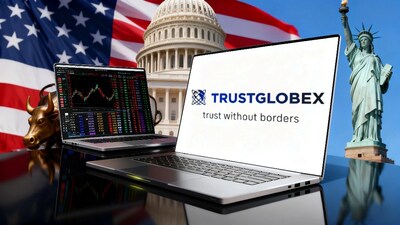
Touareg Group Technologies Co. — the newly registered U.S. subsidiary of Touareg Group — is leading the innovation frontier, with TrustglobeX positioned as the group’s next major digital exchange launch.

The new subsidiary will focus on artificial intelligence (AI), blockchain infrastructure, and digital asset exchange platforms, with a strong emphasis on the development of a next-generation cryptocurrency exchange. This exchange is designed to provide institutional-grade security, regulatory alignment, and advanced trading capabilities that will serve both retail and institutional participants. By placing compliance, transparency, and technological scalability at its core, the exchange aims to establish itself as a trusted platform in the global digital economy.

Operating from the United States, Touareg Group Technologies Co. benefits from proximity to one of the most advanced ecosystems for financial innovation and regulatory oversight. This strategic positioning allows the company to balance cutting-edge development with rigorous governance, ensuring long-term sustainability and market trust.

“The creation of Touareg Group Technologies Co. is a pivotal milestone in our global expansion,” said a spokesperson for Touareg Group. “Our focus is on creating sustainable shareholder value by combining technology, governance, and innovation. The upcoming cryptocurrency exchange will stand as a cornerstone of this strategy, offering a secure, compliant, and efficient marketplace that supports the growth of the digital asset industry.”

In addition to the exchange initiative, the subsidiary will pursue the development of advanced AI applications and institutional-grade blockchain systems. These efforts will be supported by strategic collaborations with leading technology companies, financial institutions, and regulatory authorities, ensuring alignment with global best practices and enhancing adoption across markets.

The launch of Touareg Group Technologies Co. highlights the Group’s broader mission to expand its international footprint, diversify its portfolio, and strengthen its position as a trusted partner at the intersection of finance and technology. By prioritizing resilience, compliance, and corporate responsibility, Touareg Group continues to build a forward-looking ecosystem that empowers businesses, communities, and shareholders worldwide.

This expansion further establishes Touareg Group as a catalyst for innovation, shaping the future of finance and technology through advanced infrastructure, shareholder value creation, and sustainable growth.
Exploring Hunan First Normal University: The Spirit of Youth

CHANGSHA, China, Oct. 13, 2025 /PRNewswire/ — A report from Hunan Today:


Surrounded by greenery, Hunan First Normal University—with red walls and gray tiles—boasts a long history. French visitor Wang Lilian, curious about her Chinese friends’ mentions of “fellow students” and “youth” here, stepped onto campus to uncover its stories.

Guided through the hall, she learned the university nurtured talents like Mao Zedong and Cai Hesen, who studied under teachers such as Yang Huaizhong. They gained knowledge, felt national responsibility, and began their revolutionary journey here.

At the Eighth Classroom, she discovered young Mao attended classes there after 1913 (when his former school merged into First Normal). This room was where he explored national salvation, engaging in passionate discussions with peers.

In 1919, the May 4th Movement spurred many students to study in France—including Cai Hesen, who mastered French quickly and translated Marxist classics. Wang wondered why Mao didn’t go: he believed understanding China’s reality was key for reform, so he stayed to study domestic issues.

They also visited an ancient well. Young Mao took cold baths here daily, even in winter, to “strengthen his physique”—aligning with “a strong youth makes a strong nation.”

By tour’s end, Wang saw “fellow students” and “youth” as symbols of shared dreams. The journey ended at “Just Fellow Students in Youth” Square, echoing the university’s enduring spirit.

Malaysia to Host Southeast Asia’s Premier Sustainability Summit in 2025


KUALA LUMPUR, MALAYSIA – Media OutReach Newswire – 13 October 2025 –Malaysia will host the Kuala Lumpur Sustainability Summit (KLSS) 2025 from 14 to 16 October at the Kuala Lumpur Convention Centre (KLCC). The landmark regional event will bring together leaders from across Southeast Asia and beyond to advance bold action on climate change and sustainable development.

Organised by the Ministry of Natural Resources and Environmental Sustainability (NRES) and the Ministry of Economy (KE), led by Malaysian Green Technology and Climate Change Corporation (MGTC) and Pusat SDG Negara, the summit will convene more than 400 participants from government, business, academia, and civil society.

With the theme “Inclusivity and Sustainability,” KLSS 2025 positions Malaysia as a leading voice in promoting climate resilience and sustainable economic transformation, while serving as a platform for dialogue, knowledge exchange, and concrete action in line with the United Nations Sustainable Development Goals (SDGs).

“Southeast Asia stands at a critical turning point. The window for action is narrowing, and the choices we make this decade will define our shared future. KLSS 2025 is not just a platform for discussion; it is a movement to translate ambition into action. We aim to transition from conceptual ideas to tangible implementation, from commitment to measurable outcomes. Through this summit, we aim to spark collaborations that deliver real solutions on the ground, empowering communities, businesses, and governments to build a more resilient, inclusive, and sustainable region,” said Saiful Adib Abdul Munaff, Acting Group CEO of MGTC.

The KLSS 2025 will bring together a distinguished lineup of participants, including ASEAN leaders, senior government officials, global thought leaders, and international experts. Joining them will be C-suite leaders, financiers, academics, youth advocates, and representatives from civil society.

The summit will feature keynote addresses and dialogues with prominent international figures such as H.E. Selwin Charles Hart, Special Advisor to the UN Secretary-General on Climate Action and Just Transition; Robert Gass, UN Resident Coordinator ad interim for Malaysia, Singapore, and Brunei; and Sadewo Trilastiono Bn Soedarso, Regent of Banyumas, Indonesia.

KLSS will also showcase leading Malaysian voices, including YB Datuk Seri Johari Abdul Ghani, Minister of Plantation and Commodities and Acting Minister of Natural Resources and Environmental Sustainability; Dato’ Seri TPr. (Dr.) Maimunah Mohd Sharif, Mayor of Kuala Lumpur; Izlyn Ramli, CEO of Maybank Foundation; Gurdip Singh, CEO of CIMB Bank Malaysia; and Anita Ahmad, CEO of Yayasan MySDG.

A highlight of the programme will be the MGTC x Bloomberg Series, featuring exclusive research insights and panel discussions on sustainable finance and energy transition by Eric Kane, Nadia Humphreys, Felix Kokasih, and other Bloomberg experts. Discussions will cover resilient markets, sectoral transformation, community empowerment, climate diplomacy, youth-led innovation, and the circular economy. Corporate leaders, grassroots changemakers, and youth advocates will share practical solutions and experiences in building climate-resilient communities.

The summit will conclude with insights, “This Decade Decides”, delivered by Prof. Jeffrey Sachs, President of the UN Sustainable Development Solutions Network (SDSN), underscoring the urgent call for decisive global action in this critical decade for sustainability.

KLSS 2025 will not only convene conversations but also deliver tangible outcomes. The summit will culminate in the Kuala Lumpur Declaration on Climate Resilience, a unified commitment to accelerate climate adaptation and mitigation. In addition, the KLSS Thought Leadership Impact Report will capture insights and best practices from across government, business, and civil society, serving as a reference to advance their sustainability agendas.

As ASEAN Chair in 2025, Malaysia is committed to amplifying the voices of Southeast Asian nations, ensuring equity in global climate action, and strengthening regional leadership. KLSS 2025 is a call to action, uniting policymakers, businesses, academics, civil society, and youth to shape solutions for a resilient, inclusive, and sustainable future.

Hashtag: #KLSS

The issuer is solely responsible for the content of this announcement.

Faraj Defence Lawyers Highlights Connection Between Sydney’s Rising Retail Theft and Cost-of-Living Pressures


SYDNEY, AUSTRALIA – Media OutReach Newswire – 13 October 2025 – Faraj Defence Lawyers has released new research highlighting the sharp rise in retail theft across Sydney and its connection to the city’s worsening cost-of-living crisis. The report finds that while financial strain is driving theft in some suburbs, in others the surge is driven more by opportunity within busy retail zones.

Rising Cost-of-Living Pressures
Sydney households are facing record-high expenses across nearly all categories. Average rent has increased from $550 per week in 2019 to $770 in early 2024, while the median house value has risen by almost 50 per cent in five years. Electricity bills jumped by up to $600 between 2022 and 2023, followed by another 29 per cent rise in 2024–25. Combined with soaring grocery and fuel prices, many households are struggling to keep up despite modest wage growth.

Retail Theft on the Rise
Data from the NSW Bureau of Crime Statistics and Research shows retail theft has risen steadily over the past decade, with some Sydney suburbs recording increases of more than 70 per cent in two years. The research identifies two main patterns:

  • Need-based theft occurs in areas with high unemployment and financial stress.
  • Opportunity-based theft appears in affluent areas with large retail centres and heavy foot traffic.


Sydney’s Theft Hotspots
Per capita figures place the City of Sydney at the top, with over 1,200 incidents per 100,000 residents due to its dense commercial landscape. Other high-ranking LGAs include Waverley, Burwood, Willoughby, and Strathfield. Conversely, Ku-ring-gai, Lane Cove, and Hunters Hill record some of the lowest theft rates, supported by higher household incomes and smaller retail areas.

Legal Consequences
Retail theft in NSW is charged under Section 117 of the Crimes Act 1900. Offences include concealing items, failing to scan goods, or switching price tags. Penalties range from fines and community correction orders to imprisonment, and even minor offences can lead to criminal records affecting employment and travel.

Hashtag: #farajdefencelawyers #sydneylawyers #legalguidance

The issuer is solely responsible for the content of this announcement.

Faraj Defence Lawyers

Faraj Defence Lawyers is a Sydney-based criminal defence firm specialising in theft-related matters. The firm is committed to providing expert legal guidance while recognising the complex social and economic circumstances that can contribute to criminal behaviour.

For more information, visit today for expert legal support.

Laos-China Railway Transported Over 15 Million Passengers Since Early 2025

The Laos-China Railway has transported over 15 million passengers so far in 2025 and nearly 60 million passengers since its opening in December 2021.

The Laos-China Railway (LCR) transported 15.48 million passengers from January through 8 October this year, a 2.38 percent increase over the same period in 2024.

Cross-border travel totaled nearly 200,000 passengers, up 3.17 percent year-on-year, state media reported. The Lao section has served over 2.6 million passengers so far this year. 

The railway has carried nearly 60 million total passengers across 84,000 train operations, attracting visitors from 115 countries and regions. International ridership on cross-border services has exceeded 595,000.

Daily operations in Laos have expanded from four trains at launch to 18 trains per day, substantially improving travel efficiency. 

The Vientiane-Kunming service, launched in April 2023, has grown rapidly in popularity, with monthly passenger volumes along the full route surging from 600,000 to over 1.6 million.

Freight Growth and Regional Trade Expansion

Freight transport has also seen strong growth. As of September 2025, the railway handled over 67.6 million tons of cargo, including 15 million tons of cross-border shipments, according to China Railway Kunming Bureau Group Co., Ltd. The corridor now connects Laos to 19 countries and regions, facilitating bilateral trade and economic cooperation.

Major Lao exports include tropical fruits, cassava, rubber, and minerals, while imports from China encompass electronics, vehicles, solar panels, and consumer goods.

The 422-kilometer Boten-Vientiane Railway, a flagship Belt and Road Initiative project valued at USD 6 billion, has transformed Laos’s regional connectivity and established the landlocked nation as a strategic logistics hub within ASEAN.

MVGX Partners with World Free Zones Organisation to Launch ICER Book & Claim System

Connecting APAC, MEA and LatAm through Decarbonization and Digital Innovation

SINGAPORE, Oct. 13, 2025 /PRNewswire/ — MVGX Tech Pte Ltd (“MVGX”), a leading AI ESG company focused on carbon digitalization and decarbonization infrastructure, today announced the launch of the International Certified Emission Reduction (ICER) Book & Claim System jointly with the World Free Zones Organization (World FZO).

The partnership establishes a unified, blockchain-powered framework to bridge carbon markets across Asia-Pacific (APAC), the Middle East & Africa (MEA), and Latin America (LatAm). This initiative will streamline processes including carbon credit registration, verification, trading and tracing across over 3,000 free zones and industrial parks worldwide, accelerating cross-border decarbonisation collaboration while creating a robust global marketplace for ICER Credits.

The system’s core significance lies in three key innovations:

  1. Building a Unified Marketplace, Activating Collaboration at Scale: By connecting economic hubs across APAC, MEA and LatAm through a single blockchain-anchored system, it creates the world’s largest integrated carbon market for emerging economies. This provides the scale needed to attract global capital while transforming free zones into active carbon market nodes, ensuring economic growth and emission reduction are mutually reinforcing.
  2. Embedding Technology-Driven Trust, Establishing a Global Benchmark: The ICER Credit represents a new global quality benchmark. By embedding technology-guaranteed integrity into its core, it transcends individual national standards, delivering unambiguous and verifiable carbon credits to businesses and governments.
  3. Innovating with Title Separation, Safeguarding Stakeholder Interests: The system innovatively registers both National Title (for future Nationally Determined Contribution applications) and Commercial Title. This dual-title structure enables secure, transparent transfers through blockchain-based traceability, safeguarding host nations’ climate sovereignty while providing commercial entities with clear carbon credit usage rights.

“Through this partnership with World FZO, we are constructing a trusted digital bridge between emerging and developed markets,” stated Dr. Bo Bai, Chairman of MVGX. “The ICER Book & Claim System will enable industrial ecosystems to participate in global decarbonisation whilst aligning with national and international climate goals.”

“Our collaboration with MVGX underscores the World FZO’s commitment to advancing sustainability within free zones worldwide,” commented Samir Hamrouni, CEO of World FZO. “This initiative empowers our members to drive carbon reduction and green transformation at scale.”

The ICER Book & Claim System marks a significant milestone for global voluntary carbon markets, establishing a unified, transparent and verifiable framework to connect industries and governments across continents on their journey towards net zero.

About MVGX Tech Pte. Ltd (MVGX)
MVGX, headquartered in Singapore, is a pioneer in sustainability compliance solutions across seven key markets in Asia-Pacific, with a growing presence. We offer a comprehensive suite of services, including digital Measurement, Reporting, and Verification (MRV), regulatory compliance reporting, carbon credit advisory and trading, capacity building, and access to green finance. 

Leveraging proprietary AI inference models and the region’s most extensive emissions factor database, MVGX streamlines sustainability compliance, making it simpler, scalable, and seamless. Our plug and play solutions enable businesses to lower the cost of regulatory compliance while unlocking capital —whether by securing green finance or monetising carbon credits.

Discover how MVGX is shaping the future of sustainability compliance at www.mvgx.com.

About World Free Zones Organization
The World Free Zones Organization (World FZO) is a global, non-profit entity representing over 3,000 free zones worldwide. It promotes best practices, innovation, and sustainability to enhance the contribution of free zones to global economic development.


Daren Group Enters MoU with FLock Technology Holdings

HONG KONG, Oct. 13, 2025 /PRNewswire/ — A subsidiary of MBV International Limited, Daren Group (“Daren”), announced that it has signed a non-binding Memorandum of Understanding (MoU) with FLock Technology Holdings (“FLock”). The two parties will collaborate to develop privacy-preserving artificial intelligence (AI) solutions and are considering future strategic expansions, including potentially adding the FLOCK token to Daren’s strategic token reserves.

FLock created the first decentralized AI training platform, FLock.io, combining federated learning and blockchain to revolutionize AI development with its platform native utility token FLOCK. It enables secure, privacy-preserving training without centralizing data, allowing for collaboratively creating, training, and owning AI models. FLock also provides its clients with privacy-preserving, end-to-end AI solutions, including local model deployment, data anonymization, fine-tuning, co-training with federated learning, and application building.

FLock stated: “Partnering with Daren marks a key step in extending FLock’s privacy-preserving AI technology from highly regulated sectors like healthcare and finance to consumer manufacturing and apparel supply chains. Daren possesses strong distribution and manufacturing foundations in the Southeast Asian apparel and gift industries. FLock’s private AI platform can help optimize production forecasting, inventory management, and cross-regional sales analysis intelligently and locally. Through secure data collaboration and edge AI deployment, we aim to jointly drive a value transformation from ‘manufacturing-driven’ to ‘data-driven’. This will not only enhance profit margins and operational efficiency but also set a new benchmark for privacy-intelligent solutions in the Southeast Asian consumer goods industry.”

Daren commented: “We are pleased to partner with FLock, which brings extensive experience in blockchain technology and secure privacy protection. FLock is also a strategic AI partner of the United Nations Development Programme (UNDP) and a new technical partner for its Sustainable Development Goals (SDG) Blockchain Accelerator project. The privacy-preserving AI models we develop with FLock will combine the liquidity advantages of tokenization with the needs of physical business development, creating significant potential to revolutionize global asset management and trading models.”

Global lead exposure still costs trillions and endangers children, NUS study finds

Despite the global phase-out of leaded gasoline, lead pollution continues to threaten health and widen inequality, with low- and middle-income countries bearing the brunt

SINGAPORE, Oct. 13, 2025 /PRNewswire/ — Lead poisoning was once thought to largely be a problem of the past, as the globe gradually weaned itself off leaded gasoline in road vehicles in 2021. But has global lead pollution truly been resolved?

A new study led by Dr Chen Mengli, a Research Fellow from the Tropical Marine Science Institute at the National University of Singapore (NUS), in collaboration with researchers from Imperial College London, University of Warwick, University of Oxford, Jadavpur University, University of Michigan, Ann Arbor, Hebrew University of Jerusalem, Massachusetts Institute of Technology, and University of Bristol, showed the answer is not yet: lead exposure remains a pressing public health and economic challenge in the 21st century. The researchers estimated that ongoing childhood lead exposure costs the world more than US$3.4 trillion in lost economic potential each year, with disproportionate impacts on low- and middle-income countries.

Published in the Communications Earth & Environment on 30 September 2025, the findings suggest that without stronger safeguards, the ever-increasing demand for electrification and poorly regulated recycling of lead-containing products could entrench global inequalities and set back decades of progress in children’s health. To avert this, the researchers proposed a four-pronged strategy that policymakers and industries can act on today.

Lessons from history

Lead has been woven into human society for thousands of years, from the plumbing systems of the Roman Empire to the paints, pipes and industrial alloys still in use today. Its widespread use has left a toxic trail. Some of the earliest mass poisonings were linked to contaminated food and drink in Europe centuries ago. But the most recent incident came with the introduction of tetraethyl lead in gasoline in the 1920s, which for decades spewed millions of tonnes of the metal into the atmosphere.

By the 1970s, children across the world carried dangerously high blood lead levels, and the repercussions were severe, causing neurological damage, impaired development and countless premature deaths. The eventual ban on leaded gasoline, completed worldwide only in 2021, is heralded as one of the great public health victories of the modern era. Importantly, it showed that determined, coordinated global action could reduce exposure and save lives.

However, the team noted that the celebration of a “lead-free” world was premature. While blood lead levels fell in many high-income countries, they plateaued or even rose again in parts of Asia, Africa and Latin America. Legacy contamination from soils and infrastructure, coal combustion, numerous lead-laden products such as leaded paint, and informal recycling of lead-acid batteries and e-wastes have all kept exposure alive.

“The perception that the problem was solved has to change. New sources of exposure continue to emerge and the historical emitted lead keeps redistributing through various natural processes,” added Dr Chen, who is also from the Department of Geography, Faculty of Arts and Social Sciences at NUS.

Today’s exposure and economic toll

Lead production today exceeds 16 million tonnes a year, with about 85 per cent going into lead–acid batteries that power vehicles, telecommunications and backup energy systems. Annual production now exceeds the total lead emitted during the entire era of leaded gasoline.

Though these items can be recycled, much of the reprocessing occurs under unsafe conditions, particularly in low- and middle-income countries. Informal recycling sites, often located near homes and schools, expose workers and surrounding communities to hazardous levels of lead. Coal combustion, contaminated soils and the continued sale of lead-laden paints, toys, and even food products, further compound the risks.

The researchers noted from numerous literatures that health consequences are most severe for children. Even at low levels, lead can damage the developing brain, lowering IQ, impairing learning and contributing to behavioural issues. This burden is often carried across one’s lifetime as the effects are irreversible. In particular, the team estimated that childhood exposure today translates into a global economic loss exceeding US$3.4 trillion annually, equivalent to over 2 per cent of the world’s GDP.

Four-pronged approach to curb a resurgence 

The team highlighted that recognising the continuing risks is the first step towards preventing another global health crisis. The study outlined four urgent areas for action to safeguard public health and reduce inequality:

  1. Manage the life cycle of lead-containing products. With demand for batteries and electronics rising, stronger oversight is needed to minimise leakage during production, use and disposal.
  2. Eliminate unsafe and illicit sources. Informal recycling and lead-laden goods such as lead paints, glazed ceramics and adulterated spices continue to expose millions to hazardous levels of lead.
  3. Strengthen monitoring and community involvement. Early detection of lead leakage is often underfunded. Advances in low-cost sensors and machine-learning-based tools, combined with local knowledge, can help identify and address hotspots more effectively.
  4. Capture the full socio-economic cost. Lead exposure disproportionately harms disadvantaged populations. Better models and population-level data are needed to quantify long-term impacts on health, education and productivity, as well as guiding equitable policy responses.

“The world rightly celebrated the phase-out of leaded gasoline as a triumph of international cooperation,” she said. “But the problem of lead exposure has not yet gone away. Unless we remain vigilant about both new sources of exposure and the legacy of lead in the environment, we may risk repeating the same tragedy,” Dr Chen emphasised.

Read more at: https://news.nus.edu.sg/global-lead-exposure-costs-trillions-endangers-children/