Home Blog Page 3257

ZWSOFT Launches ZWCAD Flex in the U.S. and Canada: Powerful CAD Performance Meets Purchasing Flexibility

GUANGZHOU, China, July 21, 2025 /PRNewswire/ — ZWSOFT, a trusted provider of all-in-one CAx solutions, is proud to announce the release of ZWCAD Flex, a powerful, subscription-based CAD solution now available in the United States and Canada.

Built on the robust foundation of ZWCAD, ZWCAD Flex delivers the same advanced features, seamless DWG compatibility, and high-speed performance, now with flexible licensing options designed for today’s dynamic teams and evolving work environments.

ZWCAD Flex
ZWCAD Flex

“ZWCAD Flex is designed to empower professionals who need flexibility without compromising performance,” said Sergio He, Director of Americas at ZWSOFT. “It brings the full capabilities of ZWCAD to North American users in a way that’s scalable, cost-effective, and easy to manage.”

A CAD Solution That Works the Way You Want

ZWCAD Flex is designed to empower architects, engineers, and designers across industries with a full-featured CAD platform that supports both 2D drafting and 3D modeling. Fully compatible with DWG and other major file formats, it enables smooth collaboration with colleagues and clients using various CAD software.

Its intuitive interface and support for third-party applications ensure that users can get started quickly and work in a familiar environment. Migration from previous environments is smooth and disruption-free, allowing users to retain printers, templates, fonts, and other configurations with ease.

Subscription Flexibility Built for Modern Teams

ZWCAD Flex offers multiple subscription options, including monthly, yearly, and three-year plans, with the ability to upgrade plans or switch product tiers (e.g., from Standard to Professional) at any time. Users only pay the price difference, with no need for reinstallation or complex transitions.

A built-in admin panel makes it easy to manage licenses, assign users, and access updates. With no upfront commitment required, users can get started immediately and cancel or adjust their plans at any time.

Whether you are an independent designer working on short-term projects or part of a growing team that needs to scale quickly, ZWCAD Flex provides the flexibility to match your needs.

Learn more and start your ZWCAD Flex experience today at https://www.zwsoft.com/us/product/zwcad-flex

*ZWCAD Flex is currently available only in the United States and Canada. Users outside these regions are encouraged to contact their local ZWSOFT sales team to explore ZWCAD’s perpetual license options.

About ZWSOFT

Since 1998, ZWSOFT’s all-in-one CAx (CAD/CAE/CAM) solutions have helped professionals bridge the gap between concept and creation. By uniting design, simulation, and manufacturing in one integrated platform, we empower architects, engineers, and designers to streamline complex projects at a fair price. This approach accelerates development cycles and minimizes costs without compromising quality.

Over 1.4 million users in 90+ countries—including 149 Fortune 500 corporations—trust ZWSOFT’s 25+ years of expertise to drive innovation. Whether it’s pioneering product design in manufacturing or delivering advanced solutions in the AEC sector, we remain dedicated to turning ambitious ideas into reality and empowering sustainable innovation worldwide.

Macsen Labs Achieves Breakthrough in Sodium-Ion Battery Chemistry, Files Provisional Patent, and Advances Toward Pilot-Scale Manufacturing

Video Link: https://youtu.be/qJQrHt-apeY?si=7P4gCV1rXI3tryFD

UDAIPUR, India, July 21, 2025 /PRNewswire/ — Macsen Labs, a manufacturer of APIs, dyes, and specialty chemicals since 1952, has announced a major breakthrough in Sodium-Ion battery technology through the successful R&D-scale synthesis of its high-performance Prussian White, a next-generation cathode material for Sodium-Ion batteries. The company has filed a provisional patent for its proprietary synthesis process. The material has already undergone optimization for battery use at the company’s electrochemistry and battery R&D facility and has shown promising results, driving the next phase toward pilot-scale manufacturing.

“It’s an interesting story, how a pharmaceutical company like ours entered the energy storage space,” said Mr. Achal Agrawal, CEO of Macsen Labs and the lead researcher behind the project. “While working on Prussian Blue as a drug for radioactive poisoning, we discovered its derivative — Prussian White, which was emerging as a leading candidate for Sodium-Ion battery cathodes. That moment of curiosity led us down this path.”

Exactly one year ago, with zero experience in electrochemistry, Macsen’s team fabricated a basic pouch cell inside a regular chemistry R&D lab, without specialized equipment. “We had no glovebox, no coater, no calendering machine, just our lab experience and synthesized material,” recalled Agrawal. “When that small cell lit up an LED bulb, we knew we had something worth pursuing. That spark led us to establish a full-fledged electrochemistry lab.”

Today, Macsen’s battery R&D facility includes an argon-filled glovebox for inert atmosphere handling, coin and pouch cell fabrication stations, electrode coaters, crimpers, vacuum dryers, and electrochemical testing systems, such as cyclers and potentiostats. With this setup, Macsen can rapidly prototype and test battery cells using its own synthesized materials, significantly reducing development time.

The company already operates a pilot-scale chemical synthesis facility, which is now being used to produce Prussian White at a kilogram scale. Through numerous experiments conducted over the last year, the team has gained proficiency in Prussian White chemistry and has achieved what is likely to be one of the finest quality variants produced to date.

Through its proprietary process, Macsen has achieved an energy density exceeding 150 mAh/g with Prussian White, which is comparable to Lithium Iron Phosphate (LFP). The material also shows excellent stability, fast sodium-ion mobility due to its open crystalline structure, and compatibility with existing Li-ion cell manufacturing infrastructure.

“Performance-wise, it’s at par with LFP, but made from abundant, low-cost materials like sodium and iron,” said Agrawal. “And these elements are easily available, affordable, and free from geopolitical constraints.”

This project, originally incubated within Macsen Labs, is now being advanced under a dedicated entity currently under formation — ‘Macsen Energy’, which will focus exclusively on energy storage innovation and scale-up.

“The real potential of sodium-ion batteries lies not just in electric vehicles,” said Agrawal. “It lies in stationary energy storage systems that store and manage renewable energy from solar and wind. This is where India’s energy transition will happen at scale.”

Macsen’s current Sodium-Ion battery technology, using its Prussian White as cathode paired with a hard carbon anode, is well suited for applications such as battery energy storage systems (BESS) for grid and solar, household backup and inverter systems, short-range EVs, auto-rickshaws, two-wheelers, city buses, rural microgrids, and energy access solutions.

The company is now focusing not only on improving cycle life, energy density, charge-discharge rates, and optimizing electrolyte-additive systems, but also on reducing the cost contribution of other components of the battery cell. Macsen aims to develop economical form factors by innovatively combining low-cost battery materials, components, and manufacturing processes, especially for large-scale stationary energy storage. One inherent cost advantage of sodium-ion technology is its use of aluminium in place of copper as the cathode current collector, which would further reduce raw material costs.

To demonstrate the performance of Prussian White in commercial large-format cells, Macsen is setting up a pilot-scale cell fabrication line. The company is already sourcing equipment for this and aims to have the pilot-scale production facility operational by early 2026.

“We are trying to make a new energy future for India,” concluded Agrawal. “Sodium-ion batteries are India’s opportunity to build a truly indigenous, scalable, and affordable energy storage ecosystem.”

Contact
corporate@macsenlab.com 

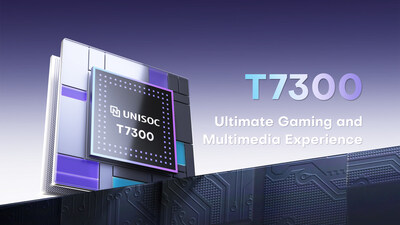
UNISOC Launches Flagship 4G SoC T7300, Delivering Comprehensive Upgrades in Entertainment and Gaming

Highlights:

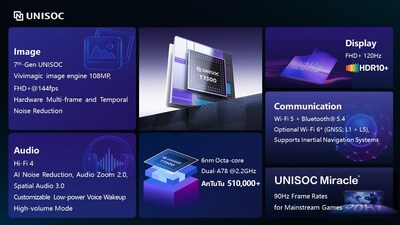
  1. 6nm, octa-core, Dual-A78 up to 2.2GHz,AnTuTu scores 510,000+
  2. Powered by the 7th-gen Vivimagic Engine, excellent noise reduction with hardware multi-frame and temporal noise reduction
  3. Powered by UNISOC Miracle Gaming Engine,delivers stable, smooth 90Hz frame rates for mainstream games
  4. Hi-Fi 4, customizable Low-power voice wakeup and Wireless Sound Transmission

SHANGHAI, July 21, 2025 /PRNewswire/ — UNISOC officially unveiled its next-generation flagship 4G SoC, the T7300, to global markets. With powerful performance capabilities, the T7300 achieves an impressive benchmark score exceeding 510,000 on AnTuTu, offering users a fully enhanced multimedia entertainment experience.


Exceptional Performance, All-Round Entertainment

UNISOC T7300 supports FHD+ resolution with 120Hz high refresh rate and HDR10+ visuals, and powered by UNISOC Miracle Gaming Engine, providing gamers with smooth and detailed graphics for an immersive visual experience. The T7300 also features the 7th-generation Vivimagic Image Engine, significantly enhancing image processing capabilities. Coupled with Hi-Fi grade audio and robust multimedia processing power, the T7300 is designed to deliver a seamless entertainment experience and cinematic audiovisual immersion to users worldwide.

Comprehensive Imaging Upgrades

At the heart of T7300’s imaging capabilities lies the UNISOC 7th-generation Vivimagic Image Engine. Featuring a quad-core ISP, the platform supports ultra-high-definition photography of up to 108MP and enables FHD+ video recording at up to 144fps in select scenarios. It also integrates hardware-level Multi-Frame Noise Reduction and Temporal Noise Reduction to significantly improve image clarity. Furthermore, the engine incorporates advanced 3A auto-focus algorithms and an all-scenario AI+CV computational photography solution, allowing users to capture high-quality photos with ease in any environment.

Hi-Fi Grade Audio Quality

UNISOC T7300 delivers outstanding audio performance with support for HiFi4 and Hi-Res certification, ensuring professional-grade sound quality. AI-powered voice noise reduction guarantees clear voice calls, while Audio Zoom 2.0 enhances sound capture in selected directions while suppressing background noise. The inclusion of Spatial Audio 3.0 creates a more immersive stereo sound experience. Low-power voice wake-up technology allows for customized wake words and screen-off voice activation. A specially designed high-volume mode ensures clearer and louder audio in noisy environments, whether during calls, music playback, or video viewing. The platform also supports an innovative “wireless sound transmission” feature, enabling sound picked up by the phone’s microphone to be wirelessly transmitted to Bluetooth headsets or speakers — ideal for users with hearing difficulties or for shared listening experiences.

Smooth Gaming Experience

For gaming enthusiasts, UNISOC T7300 delivers robust performance through the UNISOC Miracle Gaming Engine. The T7300 ensures stable 90fps gameplay in mainstream games, and is certified for 90fps performance in Free Fire and MLBB, as well as 60fps in PUBG Mobile. It also optimizes in-game voice call quality and supports positional audio features to enhance competitive gameplay. Game Display Enhancement technology further improves the visual presentation of in-game graphics, delivering a superior and immersive gaming experience.

According to the report published by the GSMA, as of 2024, 4G networks will continue to provide coverage for 92% of the global population. UNISOC recognizes the enduring relevance of 4G in global markets and has maintained its competitive edge through continuous innovation. UNISOC platforms, trusted by global brands including Samsung, Motorola, HMD, Xiaomi, vivo, realme, Tecno, Infinix, and itel.

Through continuous innovation of 4G and 5G,UNISOC cater to diverse market needs while preparing for the next wave of connectivity growth. UNISOC’s product are being widely shipped globally, with smartphones powered by UNISOC chips now available in 140 countries and regions, certified by more than 270 carriers, Bringing Smarter Experiences to Everyone.

Note: The data in this article comes from UNISOC Labs, this may vary slightly due to differences in pre-set scenarios.

China International Supply Chain Expo Highlights Global Collaboration

Third CISCE Reflects China’s Role in Strengthening Supply Chain Integration, Innovation, and Resilience

BEIJING, July 21, 2025 /PRNewswire/ — “The Chinese supply chain is a miracle. The Chinese market is vast and full of vitality.” These were the remarks of NVIDIA Chief Executive Officer Jensen Huang during an interview at the third China International Supply Chain Expo (CISCE, the Expo).


Held in Beijing from July 16th to 20th, the third CISCE served as a key platform for facilitating international cooperation in the supply chain sector. The event’s 6 Chains + 1 Exhibition Area structure underscored the importance of enhancing integration and innovation across industrial ecosystems.

  • The Advanced Manufacturing Chain highlighted developments in industrial automation, including AI-enabled platforms and full-stack technologies demonstrated through humanoid robotics.
  • The Green Agriculture Chain emphasized farm-to-table solutions, featuring agricultural drones and the implementation of precision irrigation and other digital practices in rural areas.
  • The Digital Technology Chain focused on enhancing supply chain resilience, with leading global semiconductor firms presenting AI-integrated terminal applications and digital forecasting tools aimed at improving demand planning accuracy.
  • The Healthy Life Chain promoted a holistic health framework, with healthcare companies displaying end-to-end innovation in cotton production and showcasing the evolving role of traditional Chinese medicine in modern clinical settings.
  • The Smart Vehicle Chain explored advancements in mobility infrastructure, as international component suppliers leveraged digitalization to improve response capabilities and domestic electric vehicle (EV) manufacturers reported a 300 percent increase in data processing capacity through AI chip integration.
  • The Clean Energy Chain featured full-cycle capabilities of major industry participants. Chinese firms now supply 80 percent of global photovoltaic modules and contribute one-third of global investment in clean energy.
  • The Supply Chain Service Area demonstrated integrated support functions through coordinated logistics and financial services, offering essential reinforcement for industrial chain operations.

The Expo offers a comprehensive view of the adaptability and innovative capacity of China’s supply chains, reinforcing their position as a central link in global economic connectivity and long-term development.

“Over 80 percent of Apple’s 200 major global suppliers manufacture in China,” Tim Cook, Apple Chief Executive Officer, noted during his visit at the second CISCE.

As the first national-level exposition dedicated exclusively to supply chains, CISCE has emerged as a platform for both policy dialogue and industry engagement, where more insightful trends on dynamic global supply chains could be found at https://en.cisce.org.cn/.

Chinese Tai’an enterprises accelerate overseas expansion and open up new tracks

TAI’AN, China, July 21, 2025 /PRNewswire/ — This is a report from the Shandong Office of Hong Kong Business Daily. In recent years, Tai’an City in Shandong Province has anchored the work idea of “industrial empowerment, digital empowerment, energy revolution, financial assistance, technological upgrading, logistics efficiency improvement, and overseas expansion” for new industrialization, guiding foreign trade enterprises to actively adjust their strategies and open up new development tracks in the global market.

In the workshop of Shandong Zhenting Precision Pistons Co., Ltd., the robotic arm operates accurately and the intelligent production line operates efficiently. This global leader in the small piston industry, with its independently developed gasoline engine pistons, has broken through multiple technical barriers abroad and now firmly holds a high position in the market.

In response to the differentiated needs of the global market, we have established a precise adaptation system in key technical indicators such as lightweight design and high-performance materials, providing customized solutions for markets such as Europe, South America, and the Middle East, “said Xu Hui, Deputy General Manager of Sales at Shandong Zhenting Precision Pistons Co., Ltd.

Shandong Zhenting Precision Pistons Co., Ltd. has taken strategic measures to shift its focus to the European and Middle Eastern markets, and extend its market expansion to emerging markets such as Africa and Southeast Asia. At present, our customers are spread across more than 20 countries, and our export value reached 170 million yuan last year, a year-on-year increase of 12%, “said Xu Hui.

Behind the enterprise’s sail to the sea is the guidance of the local area in Tai’an, which continues to assist the enterprise in expanding into emerging markets such as Asia, Africa, Latin America, and synchronously utilizes cross-border e-commerce platforms to help the enterprise open up new tracks overseas. The enterprise can enhance its development resilience and stimulate vitality in channel expansion. At present, the construction of Tai’an’s comprehensive foreign trade service platform is accelerating, undertaking bulk import business and assisting key enterprises such as Shandong Ruifu Lithium Industry Co., Ltd., Shandong Shiheng Special Steel Group Co., Ltd., and Tai’an Hanwei Group Co., Ltd. in accelerating their high-quality development pace.

Cremo Ice Cream Wins International Award, Appoints Celebrity Ambassador for Brand Upgrade, and Launches Scan-to-Win Campaign

BANGKOK, July 21, 2025 /PRNewswire/ — In 2025, Cremo Ice Cream has achieved a series of milestones. With its Choco Crush series products gaining international recognition, the brand has completed a comprehensive brand upgrade and launched new consumer engagement campaigns, generating strong market response.

Product Innovation Recognized by International Authorities

Cremo’s Choco Crush series received the 2025 Superior Taste Award from the International Taste Institute (ITI) through blind tasting evaluations. Often hailed as the “Oscars of the food industry,” the award is evaluated by a panel of 250 professional judges from 20 countries, based on core criteria such as taste, texture, and innovation.

In recent years, Cremo has consistently delighted consumers by integrating world-leading dairy processing technologies with local flavor innovations. In 2025, the Choco Crush series introduced three new products. Among them, the Cremo Choco Crush Thai Tea flavor — featuring a perfect balance between savory cheese and Thai tea — was shortlisted for the 2025 World Dairy Innovation Awards (WDIA) in the “Best Ice Cream/Frozen Dessert” category, showcasing the brand’s commitment to local innovation.


Comprehensive Brand Upgrade and Consumer Engagement Campaign

In 2025, Cremo underwent a comprehensive brand upgrade, including a refreshed visual identity and updated product packaging. At the same time, the brand announced renowned Thai artist Billkin as its official spokesperson, a collaboration that generated significant buzz across social media platforms.

To align with the refreshed brand image, Cremo launched a consumer engagement campaign in April called “Scan to Win” (กัด ฟิน ว้าว, in Thai). Participants purchasing designated products could scan the QR code on the packaging to enter prize draws and gift redemptions. According to the brand, the campaign has attracted over 130,000 interactions since its launch. The prizes include both physical gifts and redeemable points.


Accelerating Channel Expansion and Development

With the support of Yili Group, Cremo products are now available across major retail channels in Thailand, including supermarkets, convenience stores, and foodservice outlets. The brand has now expanded internationally to 13 countries and regions, including Singapore, Malaysia, France, and Australia.

In May 2025, the Cremo team showcased its award-winning products at THAIFEX – ANUGA ASIA 2025 in Bangkok. At the exhibition, Cremo set up a dedicated area featuring its brand ambassador, drawing significant visitor attention and demonstrating the brand’s strong product strength and growing market influence.

Industry observers believe that Cremo’s recent market moves reflect a strengthened global presence. Looking ahead, the brand’s ongoing innovation and channel expansion efforts are expected to remain in the spotlight.

RWA ltd to Launch Worlds First Non Financial RWA Trading Platform

HONG KONG, July 21, 2025 /PRNewswire/ — RWA Group (formerly NFT China), a subsidiary of Digital Collection China (Hong Kong) Limited, today announced that the world’s first RWA (Real World Assets) trading platform dedicated to non-financial assets will officially launch in early August 2025. The platform aims to achieve compliant digitization, efficient trading, and global circulation of non-financial assets through blockchain technology, filling a structural gap in the current market.

Strategic Layout and Core Advantages

RWA Group (formerly NFT China) began systematically positioning itself in the RWA sector as early as 2023, establishing this as its core strategic direction. The company’s innovative RWA financial solutions have been piloted in the Greater Bay Area (GBA), a smart manufacturing center with integrated industrial chains. Hong Kong carries the mission of “Hong Kong for investment and research, GBA for manufacturing, global markets for sales” amid the fintech wave. Traditional factories transitioning to smart robotics face supply chain funding shortages, which conventional solutions like bank loans or financial leasing cannot fully resolve. Leveraging deep industry expertise and commercial insight, RWA Group designed a refined compliance framework to tokenize such cases, enabling front-end RWA-based NFT trading and back-end capital infusion into supplychains, successfully implementing the solution.

The non-financial RWA trading platform launched by RWA Group adopts the ERC-3643 protocol as its technical backbone. This protocol is a global standard for compliant asset digitization due to its robust security features, identity verification mechanisms, and compliance functions (e.g., transfer control rules), effectively meeting institutional users’ stringent requirements for on-chain asset management.

To enhance international appeal and settlement efficiency, RWA Group will achieve a major breakthrough: Beyond integrating compliant USD stablecoins on EVM, Solana, and TRON chains, the platform will support licensed offshore RMB and HKD stablecoins, allowing users to price assets and settle transactions using RMB or HKD stablecoins. This initiative may establish the first trading pair between offshore RMB stablecoins and RWAs, creating new application scenarios for offshore RMB stablecoins. It paves the way for global circulation of Chinese assets while providing international investors a convenient investment gateway anchored to robust currencies.

Market Opportunity and Platform Value

Despite growing global RWA market activity, the digitization of non-financial assets faces multiple challenges. Nearly all tokenized RWA products currently use financial assets as underlying collateral, constrained by limited professional investor recognition, illiquidity, fragmented compliance standards, and technical protocol in consistencies. Substantial non-financial assets—including rare collectible sand fan economy assets—suffer from severe information asymmetry in traditional trading models, hindering circulation efficiency. Simultaneously, the lack of unified standards for asset rights verification and pricing mechanisms complicates cross-border transactions with legal and regulatory barriers, impeding global value discovery. The market demands an independent platform dedicated to non-financial RWAs, integrating advanced technical standards, providing professional services, and enforcing strict quality control and transaction compliance.

Innovative Business Model

RWA Group’s non-financial RWA trading platform proposes a novel “RWA Exchange + E-commerce” model. Project issuers can exchange goods for corresponding tokens on the platform, while users can redeem tokens for physical goods. This integration of traditionale-commerce and RWA finance accelerates market entry and attracts broader participation from projects and users.

Building a Compliance Ecosystem andEmbracing Industry Standards

RWA.ltd platform actively participates in industry standardization, having joined two key RWA-related consortium working groups: RWA Technical Specifications and RWA Project Evaluation Standards, committed to fostering healthy and orderly industry development. Meanwhile, its Hainan-based platform Digital Collection China has issued China’s first RWA digital collectible redeemable for physical goods (non-financial assets), validating RWA technology’s potential in connecting real-world economies and its market acceptance.

Expert Endorsement and Compliance Progress

The operating entity possesses strong foundations. Major shareholder Fu Rao has extensive research expertise inWeb3.0 and the new economy. As CEO of the Hong Kong International New Economic Research Institute (INERI), he has actively promoted RWA and stablecoin concepts via authoritative media (e.g., Ta Kung Pao, Securities Times, LianheZaobao) since 2018.

Platform technology operations are jointly managed by INERI and RWA Group, ensuring design alignment with multi-jurisdictional regulatory requirements. The platform evolved from NFT exchange NFT China.hk, which holds substantial global compliance experience,including U.S. MSB registration and SEC-filed RWA-type NFT issuance in the U.S., making it an early pioneer in RWA tokenization. Transitioning from NFT to FT trading, the platform now focuses exclusively on non-financial assets. Building on existing compliance foundations, it plans to apply for operational licenses in open financial hubs like Hong Kong, Dubai, and Kazakhstan to enable compliant trading of securitized RWA tokens.

Policy Environment and ChinaOpportunity

Within China, regulatory authorities maintain strong focus on blockchain-enabled real economic development. Multiple policies support using blockchain technology to advance asset digitization and enhance circulation efficiency. RWA has become a hotspot in A-share, H-share, and U.S.-listed Chinese company markets, with relevant firms actively exploring RWA applications and collaboration opportunities in public disclosures.

Co-Building a Global RWA Ecosystem

RWA Group embraces open collaboration to build a robust ecosystem. The platform is partnering with investment banks to provide end-to-end solutions—from structuring to compliant issuance—for Chinese listed companies/entities pursuing asset digitization. It is also establishing partnerships with forward-thinking RWA investment banking partners across Chinese provinces.

As a core strategy, RWA Group will prioritize RWA conversion of high-quality non-financial assets from China (including Hong Kong and global Chinese-held assets), leveraging its global influence and compliance channels to facilitate worldwide promotion, value discovery, and circulation of “Chinese assets.”

Future Outlook: Innovative Financial Connectivity

Long-term, RWA Group will explore innovative financial models. The platform has incorporated a “coin-stock linkage” mechanism into its roadmap to deepen connectivity between crypto and traditional financial markets, pioneer new value-discovery pathways, and deliver diversified investment experiences.

Founder Statement

Fu Rao Tony, Founder of RWA Group:
“We are excited to launch this first global platform dedicated to non-financial RWAs. The integration of ERC-3643 and stablecoins, alongside our steadfast global compliance strategy, will enable unprecedented digitization and circulation of real-world non-financial assets. We are committed to becoming an efficient, compliant bridge connecting premium Chinese assets with global capital.”

About RWA Group

Headquartered at Hong Kong Science Park, RWA Group (formerly NFT China) was founded by professionals with expertise in blockchain, traditional finance, and digital asset infrastructure. Its network spans Hong Kong, Southeast Asia, and mainland China, having successfully built an RWA tokenization and trading platform with advisory services and a broad user base.

The team’s cross-sector fintech experience has enabled tokenization for F&B, real estate, and smart supplychain assets, forming a closed-loop service system of “technology implementation to compliance safeguards to ecosystem expansion,” driving global collaboration and standardization in real-world asset digitization.