HONG KONG SAR – Media OutReach Newswire – 22 January 2025 – Yeebo (International Holdings) Limited (“Yeebo” or the “Company”, stock code: 259, which together with its subsidiaries is referred to as the “Group”) announced that the board of directors of the Company (the “Board”) resolved to declare a special dividend of HKD1.8 per share today.
The Board declared a special dividend following the Group’s disposal of 127,578,590 shares of Nantong Jianghai (stock code: 002484.SZ), representing approximately 15% of Nantong Jianghai’s issued shares. After the transaction, Yeebo stays on as a strategic shareholder with a substantial 13.81% stake and continues confidence in Nantong Jianghai’s robust growth prospects. As at 22 January 2025, the closing price of Nantong Jianghai was RMB26.77 per share, and the market value of the Group’s interest in Nantong Jianghai was approximately RMB3.1 billion.
The disposal generated net proceeds of approximately HK$2.2 billion, which will enhance Yeebo’s financial strength and catalyze further business expansion and development. The special dividend will be payable on or around 24 February 2025, to the shareholders of the Company whose names appear on the register of members of the Company on 12 February 2025.
Mr. Douglas Fang, Chairman of Yeebo, said, “We are delighted to announce the completion of this transaction and the distribution of a special dividend to our shareholders. This reaffirms our dedication to value creation and the commitment to rewarding our shareholders for their ongoing support. By maintaining a strategic stake in Nantong Jianghai, we anticipate continued benefits from its future growth, delivering even greater rewards to our shareholders.
“We will also use some of the proceeds to further develop our core business. Over the past 18 months, we have also expanded into the field of artificial intelligence (AI) and AI compute, making significant strides in this emerging high-growth area. This advancement will drive future growth and long-term development.”
Hashtag: #Yeebo
The issuer is solely responsible for the content of this announcement.
About Yeebo (International Holdings) Limited
Founded in 1988, Yeebo (International Holdings) Limited is a diversified electronic component company, with a wide range of business interests in flat panel display, OLED and capacitor. Headquartered in Hong Kong, the manufacturing activities largely reside in Guangdong and Jiangsu provinces. With a global sales footprint, Yeebo is able to serve its global customers on a local basis.
LOS ANGELES, Jan. 22, 2025 /PRNewswire/ — ZO MOTORS, a global leader in innovative zero-emission vehicles, proudly announces the establishment of its first North American manufacturing plant in Fontana, California. This significant milestone also marks the relocation of the company’s regional headquarters to the Fontana facility, solidifying its commitment to advancing sustainable transportation solutions in the USA.
ZO MOTORS North America Announces its First North American Manufacturing Plant and New Regional Headquarters in the Greater Los Angeles area of California
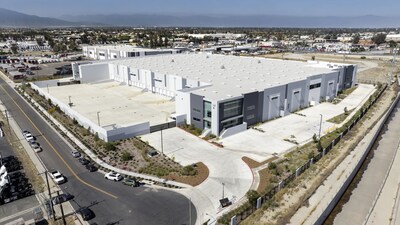
The newly constructed facility spans 9.67 acres, with a factory floor area of 210,000 square feet. It is located in Fontana, a city within the Greater Los Angeles area, approximately 49 miles from downtown Los Angeles.
The new Fontana manufacturing plant will serve as the cornerstone of ZO MOTORS’ operations in the United States, supporting series production of a diverse portfolio of zero-emission products under the ZM Trucks brand. These will include electric commercial trucks, terminal tractors, and airport ground service equipment initially. The state-of-the-art facility is expected to commence production in the first half of 2025.
“Our new Fontana facility reflects ZO MOTORS’ commitment to the U.S. market, U.S. domestic manufacturing and sustainable innovation,” said Joost de Vries, CEO of ZO MOTORS. “This expansion allows us to deliver zero-emission solutions that lower total cost of ownership and drive long-term value for our customers.”
ZO MOTORS has already announced its cutting-edge manufacturing plant in Cambodia, which will be instrumental in supplying the Asian Pacific markets. The addition of the Fontana plant underscores the company’s strategic commitment to scaling its operations in regional markets and grow its global footprint.
The new regional headquarters and manufacturing facility in Fontana are expected to create significant job opportunities in the region while reinforcing ZO MOTORS’ mission to lead the transition to cleaner, more sustainable transportation solutions.
For more information about ZO MOTORS and its ZM Truck commercial vehicle brand, please visit ZMTRUCKS.COM
About ZO MOTORS
ZO MOTORS is a global leader in zero-emission commercial vehicles, dedicated to delivering sustainable transportation solutions for industries including commercial vehicle, port and aviation ground logistics as well as transit and tourist transportation. With manufacturing facilities in Asia and North America, ZO MOTORS is at the forefront of innovation, combining cutting-edge technology with a commitment to reducing environmental impact.
NEW YORK, Jan. 22, 2025 /PRNewswire/ — According to a new report from global technology intelligence firm ABI Research, 3Q 2024 was a particularly good quarter for nuclear power, with overall investment in fusion reaching a record US$7 billion and hype beginning to build around the use of Small Modular Reactors (SMRs) for industrial applications – especially data centers, which are increasingly energy-hungry.
“Nuclear fusion and SMRs are just one of many energy alternatives enterprises and industries are looking into. The adoption of renewables also continued apace in 2024, with China installing more solar and wind than the rest of the world combined between March 2023 and March 2024. These sources now account for 37% of total Chinese power capacity – 758GW – with a further 339GW currently in construction stages,” explains Daniel Burge, Smart Energy for Enterprises and Industries Analyst at ABI Research. In Europe alone, cheap solar PV units facilitated a YoY growth of 15% in the continent’s solar output. Meanwhile, emergent technologies have played an increasingly important role in the wider market, from adopting Artificial Intelligence (AI)-enabled monitoring for renewable assets to using drones in operations at offshore wind farms.
The urgent need for grid expansion – a major topic this year – has stimulated large global projects. In 3Q, the Commonwealth Government approved the Australian component of the Australia-Asia Powerlink, intended to provide up to 6GW of electricity to clients in Darwin and Singapore. Engie, a French utility firm, began construction on an 800MWh battery park in Belgium, while U.S.-based Intersect Power secured funding for its 1GWh of Texan battery storage projects. Grid types have also diversified, with over 21,000 microgrids now in operation – nearly half of which are in Sub-Saharan Africa. Meanwhile, some vendors announced innovative new approaches, with Star Catcher, a U.S. start up, securing funding to construct the world’s first space-based energy grid.
“Agriculture, data center, construction, manufacturing, and mining industries renewed their interest in novel energy approaches, from Enel North America signing the largest U.S. solar grazing contract to Microsoft signing a historic PPA to purchase energy for data centers from the Three Mile Island nuclear plant. Interest in ever ‘smarter’ approaches to energy remains strong heading into 2025,” Burge concludes.
ABI Research is a global technology intelligence firm uniquely positioned at the intersection of technology solution providers and end-market companies. We serve as the bridge that seamlessly connects these two segments by providing exclusive research and expert guidance to drive successful technology implementations and deliver strategies proven to attract and retain customers.
ABI Research是一家全球性的技术情报公司,拥有得天独厚的优势,充当终端市场公司和技术解决方案提供商之间的桥梁,通过提供独家研究和专业性指导,推动成功的技术实施和提供经证明可吸引和留住客户的战略,无缝连接这两大主体。
For more information about ABI Research’s services, contact us at +1.516.624.2500 in the Americas, +44.203.326.0140 in Europe, +65.6592.0290 in Asia-Pacific, or visit www.abiresearch.com.
SPICEWOOD, Texas, Jan. 22, 2025 /PRNewswire/ — Abracon, a leading provider of Timing, Power, and RF solutions, has unveiled a broad line of MEMs oscillators, covering over 50 product series and comprising more than 1,700 individual part numbers to help meet the evolving needs of engineers and the demands of today’s electronics-based industries.
In the wake of the global supply chain challenges the industry experienced over the past several years, Abracon’s ability to meet lead times and deliver MEMs oscillators was also impacted. In response to these challenges, the company has expanded production capacity, introduced U.S. and international supply chain redundancies, and reduced lead times with expedited services. Additionally, by increasing on-hand inventory levels to prioritize high-demand SKUs, Abracon can now ensure quicker serviceability. These strategic initiatives enable Abracon to more effectively meet customer needs and maintain its position as a trusted industry partner.
Abracon now offers four key types of MEMs oscillators including Low Power, Tight Stability, Differential, and Dual Output oscillators. Low Power oscillators emphasize power efficiency, making them ideal for battery-operated devices. Tight Stability oscillators promote exceptional frequency stability, ensuring precise operation even in challenging environments. Differential MEMs oscillators deliver low jitter performance suitable for high-speed data transfer and networking applications. Dual Output MEMs oscillators support programmable frequencies, enabling rapid prototyping and flexible design integration.
In addition to Abracon’s base series, a new MEMs family has emerged, bridging the gap between ultra-low power and tight stability. Abracon’s AMMLP family of oscillators feature common voltage supply compatibility, low rms phase jitter, and tight frequency stability across wide temperature ranges. This release compliments the broader offering of MEMs oscillators.
“With the launch of these new families of Abracon MEMs oscillators coupled with added operational improvements, Abracon reinforces its dedication to MEMs technologies,” explains Matthew DeLeon, Director of Product Management. “New operational enhancements have been introduced to increase serviceability and strengthen supply chain resilience, ensuring we meet our customers’ short-term and long-term needs.”
For more information about Abracon’s full line of MEMs oscillators, visit Abracon’s website here.
About Abracon, LLC | Innovation For Tomorrow’s Designs
Headquartered outside of Austin, Texas, Abracon is a trusted supplier of leading-edge and innovative electronic components including Frequency Control, Timing, Power, Magnetics, RF and Antenna solutions. Servicing world-class companies across data communication, transportation, industrial, medical, consumer, aerospace, and defense industries, Abracon accelerates customers’ time-to-market by providing unmatched product solutions, technical expertise, and service excellence.
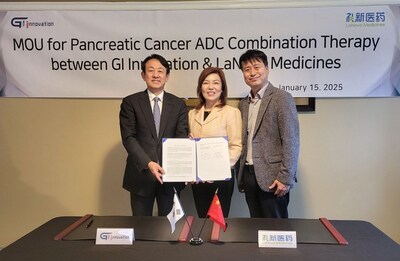
SEOUL, South Korea, Jan. 22, 2025 /PRNewswire/ — GI Innovation(KQ:358570) announced that it signed a Memorandum of Understanding (MOU) with LaNova Medicines (LaNova) for the development of GI-102 and ADC pancreatic cancer combination therapy.
From the left, Rhee Byung-geon, Chairman and CEO of GI Innovation, Dr. Crystal Quin, CEO of LaNova Medicines, and Jang Myoung-ho, CSO of GI Innovation. (Source: GI Innovation)
This MOU was held on January 15th, local time, during JP Morgan Healthcare Conference (San Francisco, USA).
The two companies have been conducting combination therapy study of the immuno-oncology drug GI-102 and ADC LM-302 targeting Claudin18.2 and recently observed excellent anticancer activity in a preclinical pancreatic cancer model.
Both substances are in the clinical stage. GI-102 has completed phase 1 clinical trial in the US and Korea and can quickly enter phase 2. LM-302 is currently in phase 3 clinical trial for 3L and above gastric cancer in China. Pancreatic cancer has no approved immunotherapy, and the only approved treatment is a chemotherapy cocktail, but its treatment efficacy is low and its toxicity is high. Through this agreement, both companies will conduct clinical trial targeting patients with metastatic pancreatic cancer.
Dr. Myoung Ho Jang, CSO said, “We are delighted to be conducting a combination study with LaNova, which is recognized by global pharma companies. LaNova’s ADC, which directly destroys tumor cells to increase the response rate, and GI-102, which can enhance immune memory to increase overall survival, are expected to be a combination therapy that can change the pancreatic cancer treatment paradigm.”
“GI-102 exemplifies GI Innovation’s robust R&D capabilities in immunotherapy. We are excited to explore its combination with LaNova’s Claudin18.2 ADC, LM-302, which holds the potential to provide a novel therapeutic option for pancreatic cancer patients” Dr. Crystal Qin, LaNova CEO emphasized.
About GI Inovation
GI Innovation, a KOSDAQ-listed biotech, pioneers fusion protein drugs for cancer and allergies. Since 2017, it secured $230 million through funding rounds, IPO, and licensing deals for preclinical and clinical assets. Leveraging global partnerships for rapid development, the leading programs include immuno-oncology assets GI-101, subcutaneous form GI-102, and anti-allergy asset GI-301, metabolic immuno-oncology asset GI-108 alongside other innovative programs.
-Medical trend rates in the APAC region rank second-highest globally, according to report
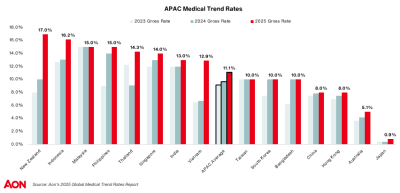
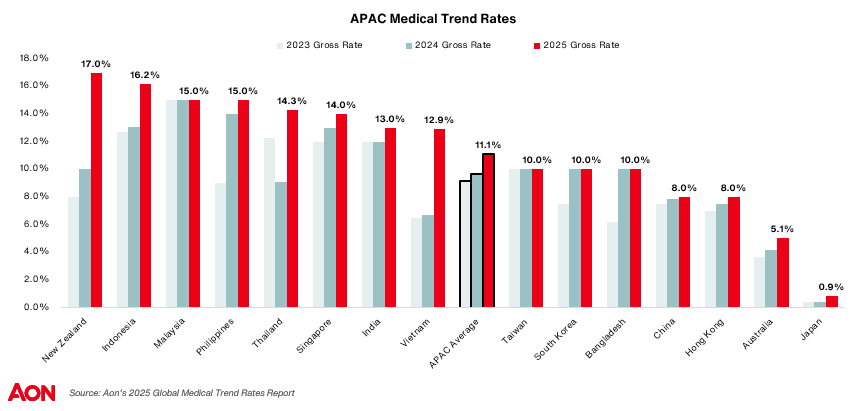
SINGAPORE – Media OutReach Newswire – 22 January 2025–Aon plc (NYSE: AON), a leading global professional services firm, has released its 2025 Global Medical Trend Rates Report. The report forecasts a projected 11.1 percent rise in the Asia Pacific region (APAC), which is higher than the global projected increase for 2024 of 9.7 percent, which represented the highest increase forecasted in 10 years.
Trend rate figures represent the percentage increase in medical plan costs per employee – both insured and self-insured. Knowing estimated costs in advance can help organisations budget and adjust their benefits philosophy in response, ensuring programs are sustainable.
This year’s report projects APAC will experience the second highest year-over-year trend rate increase after the Middle East and Africa, which has the highest trend rate of any region at 15.5 percent.
Forecasted Medical Trend Rate from 2024 to 2025
2024
2025
Asia Pacific
9.7%
11.1%
Global
10.1%
10.0%
Europe
10.4%
8.9%
North America
7.6%
8.8%
Latin America and Caribbean
11.7%
10.7%
Middle East and Africa
15.1%
15.5%
“The biggest rise in medical utilisation and inflation are now behind us in APAC, but recovery in insurer profitability is expected to keep medical trend rates in the double digits for 2025 and 2026,” said Alan Oates, head of global benefits for Asia Pacific at Aon.
“The high medical trend rate can also be attributed to a higher incidence of cancer and chronic conditions than before the COVID-19 pandemic. Managing the impact of medical inflation therefore should be a top priority for all southeast Asia markets and especially important in New Zealand, Papua New Guinea, Thailand and Vietnam, which are seeing 50 to over 100 percent increases compared to last year,” Oates explained.
The survey further revealed that prescription and specialty medications, including weight loss medication, innovations in medical technology, and geopolitical factors, are significantly impacting medical trend rates in APAC and around the world. In addition, support for emotional health as the fastest-growing claim in Aon’s APAC client portfolio, wellbeing initiatives designed to mitigate stress, along with other plan enhancements, are also contributing to the double-digit medical trend.
“Although most insurers are still raising premiums, we are seeing a slight drop in some markets where risk appetites are returning among insurance providers that were quick to take corrective measures in previous renewal periods. As these insurance providers can now offer competitive pricing terms, we are encouraging clients to test the market as there is increasing value in doing so,” said Marina Sukhikh, professional services industry practice leader, global benefits for Asia Pacific at Aon.
How are Companies Addressing Rising Costs? Wellbeing programs, plan design changes, alternative financing, data and analytics and flexible benefits are among the top strategies employers are expected to undertake in 2025 to affordably promote a healthy workforce.
Sukhikh said, “Aon has observed growing co-investment in wellbeing initiatives by employers and insurers. Greater investment is being matched with greater scrutiny into investment return, and wellbeing programs are increasingly being integrated and aligned with prevention strategies. For example, more initiatives are targeting physical inactivity, poor stress management, hypertension, high cholesterol and other risk factors driving chronic conditions that lead to adverse future claims.”
“We are encouraging clients to seek a more integrated value-based outcome from insurers where they are cooperating in the sharing of data, investment in wellbeing and offering creative solutions for design and financing. Sophisticated analytics tools, such as Aon’s Health Risk Analyzer, are helping companies leverage a growing volume of multi-source data, not just to identify and mitigate today’s risks but to accurately predict and prepare for the risks of tomorrow. Technology is helping us identify under-served populations and anticipate opportunities faster than ever,” added Sukhikh.
According to Aon’s 2024 Global Benefits Trends Study, employers in around 60 percent of countries are expected to use flexible benefit plans to address diverse workforce needs while controlling overall benefit costs. Meanwhile, one in three are actively considering alternative benefits financingarrangements, such as multinational pooling, global underwriting and captives.
“More than at any point in the last 10 years we have observed employers taking steps to reduce plan design due to affordability. Flexibility and choice have been a valuable tool in design change because employees generally place a greater value on shorter-term flexibility and choice than they do on longer-term core benefits. Alternative funding will not materially reduce cost, which is generally determined by claims and scale, but it can smooth cost volatility over a longer period than is possible with direct insurance and that is helpful in this volatile market,” Oates added.
About the report: The report is based on insights from 112 Aon offices that broker, administer, or advise on employer-sponsored medical plans in each of the countries covered in the report. The findings reflect the medical trend expectations of Aon professionals based on their interactions with clients and carriers represented in the portfolio of the firm’s medical plan business in each location.
As employer-sponsored medical plans become a larger part of total rewards spend and pressure mounts to accurately forecast and manage costs, this report is a valuable resource for organisations to plan global budgets and benefits strategies for 2025 and beyond.
The issuer is solely responsible for the content of this announcement.
About Aon
Aon plc (NYSE: AON) exists to shape decisions for the better — to protect and enrich the lives of people around the world. Through actionable analytic insight, globally integrated Risk Capital and Human Capital expertise, and locally relevant solutions, our colleagues provide clients in over 120 countries with the clarity and confidence to make better risk and people decisions that protect and grow their businesses.
Disclaimer The information contained in this document is solely for information purposes, for general guidance only and is not intended to address the circumstances of any particular individual or entity. Although Aon endeavours to provide accurate and timely information and uses sources that it considers reliable, the firm does not warrant, represent or guarantee the accuracy, adequacy, completeness or fitness for any purpose of any content of this document and can accept no liability for any loss incurred in any way by any person who may rely on it. There can be no guarantee that the information contained in this document will remain accurate as on the date it is received or that it will continue to be accurate in the future. No individual or entity should make decisions or act based solely on the information contained herein without appropriate professional advice and targeted research.
SEONGNAM-SI, South Korea, Jan. 22, 2025 /PRNewswire/ — L&C Bio (CEO Hwan-Chul Lee) has achieved a significant milestone in its global market strategy by becoming the first company worldwide to secure approval from China’s National Medical Products Administration (NMPA) for its acellular dermal matrix, “MegaDerm Plus.” This approval positions the company to potentially dominate China’s regenerative medicine market for human tissue, with full-scale sales expected to commence in the first half of 2025.
L&C Bioscience Technology (Kunshan) Factory
Pioneering the Chinese Market
China has recently faced a shortage of human tissue products due to incidents involving illegal donor acquisitions, leading to unprecedented shutdowns of major local companies. In this challenging environment, “MegaDerm Plus,” now officially approved by the Chinese government, has emerged as a pivotal product that could effectively address this shortage.
Interest in “MegaDerm Plus” has already surged among China’s leading medical device companies, hospitals, and medical professionals, raising strong prospects for consecutive sales agreements. This positions L&C Bio not only for market entry but also for establishing a decisive foothold in China’s regenerative medicine market for human tissue.
Strategic Acquisition of L&C China
L&C Bio is in the process of completing an acquisition of 100% ownership of L&C China using its own funds, making it a wholly-owned subsidiary. This was achieved without issuing additional convertible bonds (CB), a move of significant strategic importance.
Financial Stability: By avoiding CB issuance and acquiring the stake entirely with internal funds, the company eliminated debt burdens, ensuring stable management.
Secured Management Control: Full ownership enables independent decision-making for contracts and business expansion strategies in China.
Faster Decision-Making: With complete autonomy, L&C Bio can swiftly and flexibly lead operations, strategic alliances, and distribution network development in China.
This move is seen as a strategic masterstroke by CEO Hwan-Chul Lee, who designed a favorable structure for long-term growth in the Chinese market. By avoiding CB issuance, potential risks such as management disputes or stock dilution have been entirely preempted.
Anticipating Significant Gains Through Strategic Investment
Should a major Chinese medical device company acquire a strategic investor (SI) stake in L&C China, the resulting sale proceeds would flow directly to L&C Bio, potentially realizing profits in the hundreds of billions of Korean Won by the end of 2025. This opportunity offers significant financial gains alongside business expansion in China. Moreover, the participation of a major medical device SI could enhance L&C Bio’s corporate value by securing robust medical networks and distribution channels in China, with consistent growth prospects into 2025.
L&C Bio’s Growth Trajectory
Founded in 2011, L&C Bio achieved rapid growth, being listed on KOSDAQ within seven years (2018) of its incorporation and surpassing a market capitalization of KRW 1 trillion by 2020. Currently valued at approximately KRW 500 billion, the company is poised for a new leap forward with the NMPA approval.
CEO Hwan-Chul Lee stated, “Stock prices reflect a company’s growth and stability, and we are steadily achieving our goals as planned. This approval is more than just an achievement; it marks a crucial milestone toward becoming a global leader in regenerative medicine based on human tissue. We will continue to challenge ourselves relentlessly.”
This approval signifies more than market entry—it sets the stage for L&C Bio to establish itself as the industry leader in China. The company’s innovative technology and spirit of challenge are expected to achieve remarkable results in the global market, making its future developments highly anticipated.
SINGAPORE, Jan. 22, 2025 /PRNewswire/ — The DeFi landscape has undergone a dramatic transformation since the “DeFi Summer” of 2020. With Donald Trump assuming office as the President of the United States, a new era of growth for DeFi is emerging, characterized by deeper integration with traditional finance.
Changes in the Crypto Trading Environment Favor Stablecoins and RWAs Prospects
The gradual easing of crypto regulatory policies is facilitating greater institutional investor participation within the crypto ecosystem. This shift has seen stablecoins and RWAs (Real-World Assets) emerge as crucial bridges connecting the traditional finance and decentralized finance worlds.
Data shows a remarkable surge in stablecoins usage in blockchain transactions, which has risen from 3% in 2020 to over 50% by the end of 2024. The core value proposition of stablecoins lies in their ability to facilitate seamless cross-border payments, making them strategically important in international trade.
The report underscores the immense potential of stablecoins, stating, “At present, the global cross-border B2B payments market processed through traditional channels is valued at approximately $40 trillion, while the consumer remittance market generates hundreds of billions of dollars in annual revenue. Stablecoins offer a new alternative for efficient cross-border payments via crypto channels. As the adoption gains momentum, stablecoins are set to penetrate and disrupt this market segment, becoming a key player in the global payments landscape.”
Furthermore, the U.S. House Financial Services Committee is actively preparing to introduce a stablecoin bill, which has the potential to be the first comprehensive crypto legislation passed by Congress. This legislation could drive widespread adoption of crypto wallets, stablecoins, and blockchain-based payment channels among traditional banks, enterprises, and individuals. Notably, several prominent traditional financial giants, including PayPal and Stripe, have already initiated active exploration within the stablecoin sector.
The RWA market saw positive growth during the recent bear market cycle, primarily driven by its stable returns. Unlike cryptocurrencies, the value of RWAs remains largely unaffected by the inherent volatility of the crypto market, a crucial characteristic for building a robust DeFi ecosystem. Industry leaders like Binance project that the RWA market could expand to $16 trillion by 2030. This immense market potential has driven companies like BlackRock and Tether to explore tokenized assets, leading to the emergence of compliance tools for RWA token issuance, such as Securitize.
Opportunities and Challenges for DeFi Projects
As stablecoins and RWAFi emerge as the cornerstones of the evolving DeFi landscape, project teams are tasked with developing innovative products tailored to the new environment and demands. While challenges are inevitable, these transformative shifts also unlock numerous opportunities.
In terms of realizing the vision of yield-generating stablecoins, the report identifies two prevailing market trends:
Treasury-backed Stablecoins: This approach involves utilizing the U.S. Treasury bonds as the underlying assets for stablecoins, effectively introducing traditional financial assets onto the blockchain through tokenization. This methodology preserves the stability and low-risk nature of Treasury bonds while seamlessly integrating the high liquidity and composability inherent to DeFi. Examples include USDY by Ondo Finance and a range of Treasury-backed Vault products from OpenTrade.
Volatility-driven Yield: The alternative approach leverages crypto market volatility and MEV to generate low-risk returns. Ethena, along with its native stablecoin USDe, serve as a prime example of this strategy.
Seamlessly integrating DeFi applications with RWAs presents another critical challenge for project teams. On one hand, the inherent stability of RWAs can effectively mitigate risk in DeFi applications. Collateralized Debt Position (CDP) stablecoins, such as Curve’s crvUSD, are increasingly incorporating RWAs as collateral to enhance their stability. On the other hand, the flexibility of DeFi can significantly boost the utilization rate of tokenized RWAs. Pendle’s newly introduced RWA section, boasting a current TVL of $150 million, exemplifies this synergy. Leveraging the composability of DeFi Lego, Pendle’s diverse yield-generating assets can offer highly attractive APYs, incentivizing users to invest in RWA stablecoins.
Emerging DeFi projects still possess significant untapped potential within niche sectors, such as addressing defaults scenarios within the private credit market within RWA domain and effectively leveraging RWA public chains to empower institutional finance. Looking ahead, the report suggests that on-chain forex, cross-border payment stacks, and multi-pool stablecoin aggregation platforms are among the promising development directions in the “New DeFi” era.
About HTX Ventures
HTX Ventures is the global investment arm of HTX, integrating investment, incubation, and research to identify and discover the best and most innovative projects in the market. Visit us here.





 Aon plc
  LinkedIn
 X
X Facebook
  Instagram


