Home Blog Page 49

Chery Auto to Showcase Nearly 20 Green Technology and Ecosystem Innovations. 2026 Chery International User Summit Opens in October

WUHU, China, Sept. 19, 2026 /PRNewswire/ — Chery Auto will host the 2026 Chery International User Summit from October 18 to 24 at its global headquarters in Wuhu, China. Focused on technology, sustainability and convergence, the Summit will showcase nearly 20 green technologies and ecosystem innovations, highlighting Chery Auto’s progress toward becoming a global high-tech green ecosystem enterprise.

The Summit will bring together users and ecosystem partners to explore intelligent, low-carbon mobility and sustainable lifestyles.

From January to August 2026, Chery Group sold 725,214 new energy vehicles (NEVs), up 46.2% year on year. Chery Auto’s hybrid engine has achieved a thermal efficiency of 48.57%, while the company is advancing all-solid-state battery technology with an energy density of 400 Wh/kg.

Chery Auto is also reducing carbon emissions across the vehicle lifecycle, from R&D and manufacturing to use and recycling. Through vehicle-to-grid (V2G) technology, smart charging, battery recycling and material reuse, it is developing a circular system spanning energy production, storage, use and recycling, positioning NEVs as nodes in smart energy networks.

More than 3,000 AiMOGA embodied AI humanoid robots, developed by Chery Auto, have been delivered in more than 60 countries and regions, covering over 100 use cases across smart manufacturing, commercial services and the home.

At the Summit, Chery Auto will feature AI-powered cockpits, future mobility, human-machine collaboration and other applications integrating smart technology with green energy. Further technologies will be unveiled at the event.

Chery Auto works with international organizations including the International Union for Conservation of Nature (IUCN) and the United Nations Children’s Fund (UNICEF) on nature conservation, education and community initiatives. The Summit will also feature Ride Green Life, a global charity ride bringing users and ecosystem partners together to promote low-carbon living.

Chery Auto’s products and services have reached more than 130 countries and regions, serving millions of owners worldwide. From October 18 to 24, users, the media and ecosystem partners will gather in Wuhu for technology demonstrations, green initiatives and owner activities, exchanging ideas on green mobility, smart technology and sustainable living. The Summit will showcase Chery Auto’s transformation from automaker to “creator of better lives” and its vision for a smarter, lower-carbon and more sustainable future.

GAC Cambodia KD Plant Starts Production, Setting a New Benchmark for Localized Manufacturing

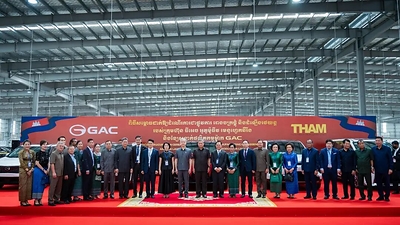
KAMPONG CHHNANG, Cambodia, Sept. 19, 2026 /PRNewswire/ — On September 17, the inauguration ceremony of GAC Cambodia KD Plant was grandly held in Kampong Chhnang Province. Cambodian Prime Minister Hun Manet and Chinese Ambassador to Cambodia Wang Wenbin attended the ceremony, while Jiang Xiuyun, Deputy General Manager of GAC Group, and Wang Shunsheng, Deputy General Manager of GAC International and President of the Southeast Asia Regional Center, together with the leadership of TH Group, GAC’s strategic partner in Cambodia, witnessed the official launch of the THAM assembly plant for GAC vehicles. This marks a new stage in GAC’s development in Cambodia, transitioning from complete vehicle exports to local manufacturing, and stands as yet another achievement of China-Cambodia economic and trade cooperation.


Prime Minister Hun Manet was present in person to witness this important moment. He noted that the official commencement of the GAC KD Plant is a significant achievement of the Royal Government of Cambodia’s industrial transformation, helping Cambodia upgrade from labor-intensive industries to capital-, advanced-technology- and high-skill-driven sectors, spurring local industrial development, raising the added value of the national economy, and cultivating new sources of economic growth.

From complete vehicle imports to local assembly, GAC has steadily built its presence in Cambodia. The project was fully launched in 2024, and through close collaboration among all parties, the plant completed all preparatory and construction work and officially entered production. Under this local assembly project, TH Group is responsible for plant investment, construction and vehicle assembly, while GAC supplies complete knocked-down (CKD) kits, technical standards and full-chain technical support. With a designed annual capacity of around 10,000 units.

Strong market performance further validates the results of GAC’s deep cultivation. TRUMPCHI has enjoyed explosive growth in Cambodia since 2024, with an average annual compound growth rate of over 300% over the past three years, and ranked first among Chinese automotive brands in Cambodia in 2025, with continuously expanding brand influence.

The production launch of GAC Cambodia KD Plant marks a brand-new starting point for GAC’s deep cultivation in Cambodia. Over the past seven years, from channel development to product rollout, from brand establishment to manufacturing upgrading, GAC has been sharing development opportunities with the Cambodian people through tangible capacity, employment and technology.

For further information about GAC, please visit: https://www.gacgroup.com/en or follow us on social media.

2026 Cross-Strait (Kunshan) Mid-Autumn Lantern Festival Opens

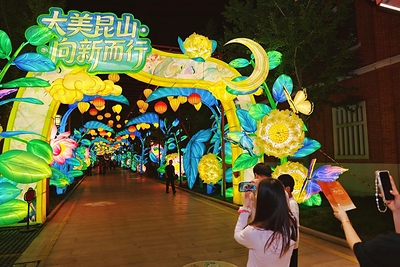
SUZHOU, China, Sept. 19, 2026 /PRNewswire/ — The 2026 Cross-Strait (Kunshan) Mid-Autumn Lantern Festival officially opened on the evening of Sept. 16 in Kunshan, Suzhou, Jiangsu Province. This year’s festival features two main lantern display areas at Huiju Square and Zhouzhuang, along with a diverse program of activities, including a cross-Strait art exhibition, a traditional performing arts fair, and the “Moonlit Cultural Gathering” in the forest. Together, the festivities provide an inviting setting for people from both sides of the Taiwan Strait to enjoy the lantern displays, celebrate the Mid-Autumn Festival and connect through shared cultural traditions.

The main lantern display area at Huiju Square

At the opening ceremony, commemorative certificates were presented to the winners of the seventh “Kunshan Mazu Cup” Youth Lantern Design Competition. The event also included the premiere of Crossing the Sea, an installment in the micro-drama series Wait for Me to Come Home. Inspired by the true story of an effort to return the ashes of a veteran to his hometown, the production portrays the deep bonds and shared heritage connecting people on both sides of the Taiwan Strait.

The closing ceremony of the sixth Cross-Strait Youth Culture Month was also held in conjunction with the festival. Since its launch in July, the two-month initiative has presented more than 70 activities spanning culture and the arts, technological innovation, sports, intangible cultural heritage, and innovation and entrepreneurship, attracting nearly 3,500 young people from Taiwan.

This year’s festival also offers a creative combination of intangible cultural heritage and Taiwan-inspired elements, transforming traditional crafts and techniques into illuminated patterns and visual motifs. Visitors can explore immersive attractions featuring AI-powered visual experiences and interactive installations incorporating light, sound and multimedia.

Kunshan is one of the Chinese mainland’s most active destinations for investment from Taiwan. It is home to a large concentration of Taiwan-invested companies and serves as an important hub for economic, trade and cultural exchanges across the Taiwan Strait. First held in 2013, the Cross-Strait (Kunshan) Mid-Autumn Lantern Festival has continued to showcase China’s rich traditional culture while fostering exchanges between people on both sides of the Taiwan Strait. It has become one of Kunshan’s signature cultural events, promoting exchanges between Kunshan and Taiwan region and strengthening people-to-people connections across the Strait.

China’s “Project Hope” for Elderly Care — “Qinglan Program • Neutech Cohort” Officially Launched

HONG KONG and DALIAN, China, Sept. 18, 2026 /PRNewswire/ — On September 16, 2026, at the 3rd China Nursing Home Directors Conference, the launch ceremony of the “Young Directors Growth Accompaniment Program (Neutech Cohort)” (hereinafter referred to as the “Qinglan Program • Neutech Cohort”), hailed as China’s “Project Hope” for elderly care, was officially held. Wu Yushao, president of the China Association of Social Welfare and Senior Service (CASWSS) and vice dean of Fudan Institute on Ageing; Xu Jianzhong, executive president of CASWSS; Han Hua, vice president of CASWSS; Li Jing, deputy secretary-general of CASWSS; Yang Lijun, director of the Training Center of Fudan Institute on Ageing; Wen Tao, executive director, CEO and president of Neutech Group, the special supporter for the inaugural class; and Wang Xinghui, vice president of Neutech Group and president of Neucare Health Technology, took the stage together with mentors and student representatives of the Qinglan Program to jointly witness this moment.

Finding the “Anchor” for the Industry

The initiation of the “Qinglan Program” addresses a long-repeated yet persistently unresolved issue in the industry.

Wu Yushao, president of CASWSS, pointed out that China currently has 406,000 elderly care institutions and facilities nationwide, including approximately 39,000 registered elderly care homes, with hundreds of thousands of practitioners in management positions. However, the shortage of talent in elderly care services is all-domain, all-dimensional, and long-term, with management personnel being even more scarce. What the industry lacks is not only caregivers, but also the “anchors” who can stabilize an institution — the directors.

Based on this assessment, the CASWSS, together with the Fudan Institute on Ageing, has jointly launched the “Qinglan Program”, positioning it as a “Project Hope” for China’s elderly care sector. The name “Qinglan” is derived from the ancient saying “Blue comes from the indigo plant yet excels it”. Here, lan represents the deep reservoir of wisdom accumulated over decades by generations of seasoned directors; qing embodies the vitality and promise of a new generation of directors. The bond between qing and lan symbolizes the passing of the torch: young directors will inherit experience from seniors and strive for self-transcendence. This is the spiritual core of the Qinglan Program.

As the special supporter of the inaugural “Qinglan Program • Neutech Cohort”, Neutech Group provides resources, technological empowerment and financial backing for the initiative.

The core model of the “Qinglan Program” is “modular systematic training plus one-on-one mentorship throughout the whole process”. The curricula are formulated in accordance with the “Training Outline for Nursing Home Directors (Trial)” issued by the Ministry of Civil Affairs. It covers four major modules: policies and industry development trends, practical service operations, practical management practices and competency building. The training lasts for three years and is fully free of charge.

From the press conference and opening of applications held at the National Convention Center in Beijing on May 18, to the receipt of 552 trainee applications and 101 mentor applications by June 30, and then to the public announcement of the proposed candidate list on August 24, over four months and more than 120 days, the “Qinglan Program” forged ahead without pause, completing its full journey from concept to execution.

Neutech’s Practice for “Education, Healthcare and Wellness“

The implementation of the “Qinglan Program” would not have been possible without the in-depth participation of Neutech.

As the special supporter of the inaugural “Qinglan Program • Neutech Cohort,” Neutech Group is systematically integrating its accumulated educational resources with healthcare and wellness scenarios to form a replicable, exportable capability foundation that integrates “education, healthcare and wellness.”

Twenty-six years of deep engagement in education have given Neutech Group a profound understanding: the progress of any industry ultimately comes back to the growth of people.

Since 2000, relying on Neusoft’s industrial foundation and technological strengths, Neutech Group has successively established three IT application-oriented undergraduate universities in Dalian, Chengdu, and Guangdong, cultivating more than 200,000 graduates in total. Along the way, what has been accumulated is not merely a curriculum system and teaching experience, but a simple conviction: cultivating talents is neither a hasty task nor something we can afford to delay. Today, that conviction is being brought into the elderly care industry.

President Wen Tao stated that the professional competence of a director does not merely impact a single position, but the quality of life of hundreds of elderly residents within an organization. Supporting a young director lights up one institution; illuminating hundreds of such institutions may well revitalize an entire industry.

Drawing on this insight, Neutech has systematically opened up its accumulated education, healthcare and wellness resources to learners of the “Qinglan Program”. Its self-operated physical facilities including “Wecare Family” Nursing Home, Ruikang Cardiovascular Hospital and Stomatological Hospital and Neutech Phoenix College serve as on-site practical training for program learners. Access accounts to the integrated medical, wellness, and elderly care smart system are provided to learners, helping them build data-driven management mindsets. Smart wellness IoT training equipment and online courses are made available in tandem. The ecological resources and operational scenarios of the city-level smart wellness platform enable participants to connect community-based and home-based elderly care services.

In Wen Tao’s view, this is not a one-way transfer of capabilities, but deep interaction between the enterprise and the industry. The enterprise shares its expertise with the industry, while the industry feeds back real demand to the enterprise. Both sides grow together through continuous exchange and adaptation.

A Testament to Long-Termism

The future belongs to human-AI collaboration. Technology empowers administration, and data drives decision-making. Yet the warmth of services, the judgment of the management, and the soul of an institution ultimately come from people. Young directors act as the critical bridge linking technology with human warmth, and data with humanity. Cultivating such talents lays the most solid foundation for a new elderly care ecosystem built on human-AI collaboration.

The industry, its services, and the elderly population it serves are all evolving. With the “Qinglan Program” as its anchor, Neutech focuses not only on the personal development of hundreds of young directors, but also on the systematic development of core capabilities across the elderly care industry. As more and more young directors run their institutions with a shared, scientific, systematic and human-centered approach, the norms and quality standards of the whole industry may be rewritten.

To address the uncertainties of the times through steady capacity building, marking the original aspiration of the “Qinglan Program”, as well as Neutech’s long-term commitment to the cause of elderly care.

Media Contact: 
Lin Wei
weilin@neuedu.com
+852 37953236

Luang Prabang Seizes 28kg of Suspected Wildlife Products, Detains Foreign Man

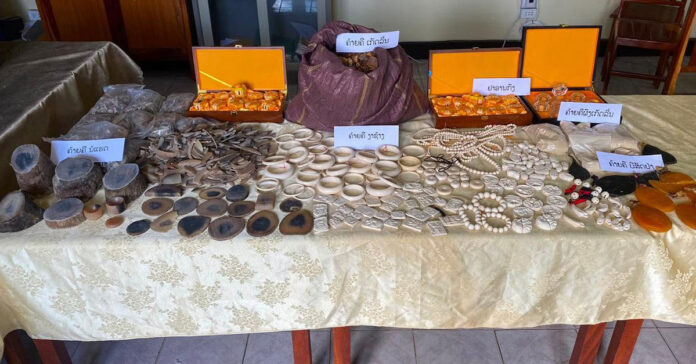
Luang Prabang authorities seized nearly 30 kilograms of suspected wildlife products and detained a foreign man following a raid on 11 September. (Photo: Department of National Resources and Environment Inspection).

On 11 September, Luang Prabang authorities seized 17 items suspected to be wildlife products weighing 28.03 kilograms, amid concerns over wildlife trafficking in the province.

Officers inspected a property in Sanghalok village and recovered suspected rhinoceros horn, carved ivory, wildlife bile and traditional medicines containing wildlife ingredients, along with equipment believed to be used to process wildlife meat,

According to official reports published on 18 September, authorities are now holding all seized items as evidence pending verification.

Police detained the foreign man the same day for questioning over his suspected involvement in the trade. Authorities did not release his name, age, nationality or occupation, citing personal data protection rules.

Three days later, on 14 September, the Luang Prabang Provincial Natural Resources and Environment Inspection Division issued a three-page order calling for an arrest warrant, a formal investigation and his transfer to a provincial detention facility.

The case remains under investigation. The order cites Laos’ Criminal Procedure Law, Wildlife Law and Penal Code, and does not amount to a finding of guilt. The man is presumed innocent unless a court rules otherwise.

A Pattern of Seizures

The raid is the latest in a series of wildlife trafficking cases reported across Laos this year.

On 16 August, authorities detained 11 foreign nationals in Bolikhamxay Province after seizing roughly 1.8 tonnes of suspected ivory and two carcasses resembling black panthers.

In June, Champasak officials intercepted 294 live animals, including turtles, pythons and snakes, on an international bus. Separate operations in Luang Prabang that month turned up more than 170 kilograms of ivory, rhino horn and pangolin products.

Earlier in May, Lao authorities found 25.52 kilograms of bear paws and pangolin parts at a Vientiane restaurant. Across the Mekong, Thai officers also intercepted 130.9 kilograms of ivory being transported to Laos.

On 10 February, Thai authorities arrested a Vietnamese man accused of smuggling 11 kilograms of rhino horn from the Democratic Republic of Congo through Thailand to Laos.

Hong Kong sets out initiatives to secure long-term development of pillar industries


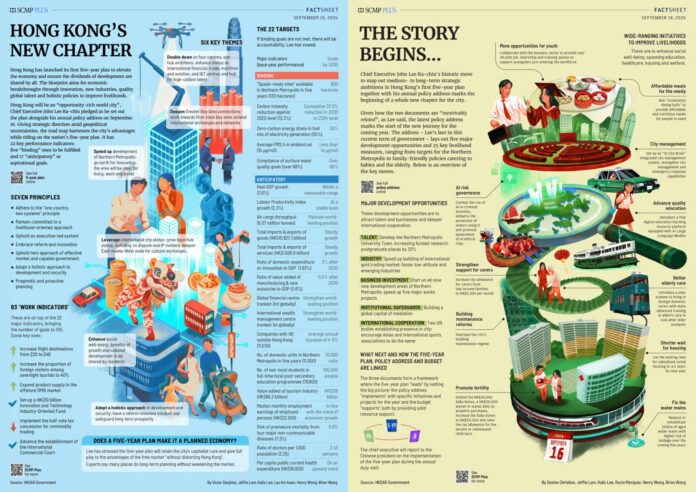
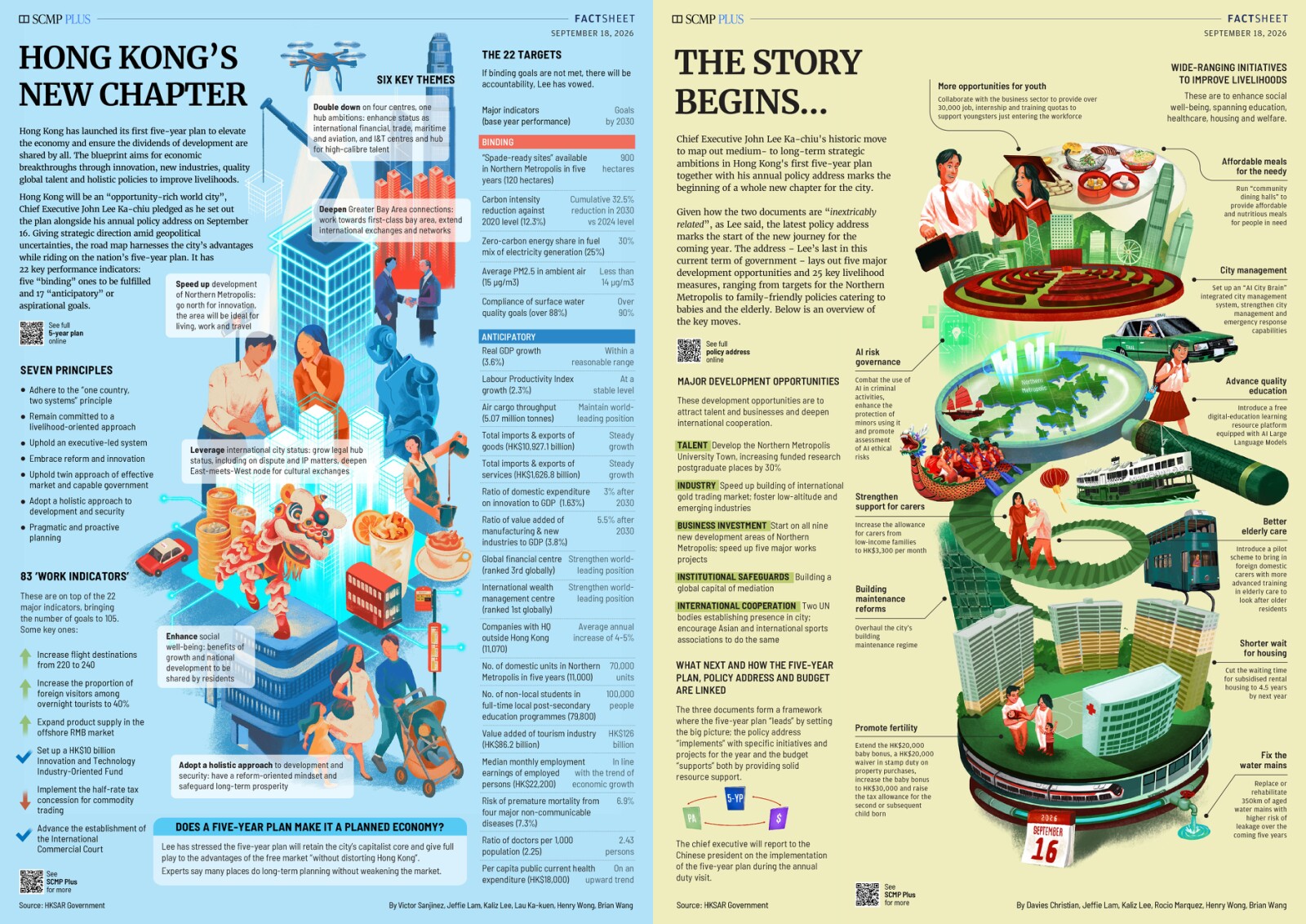
HONG KONG SAR – Media OutReach Newswire – 19 September 2026 – Hong Kong’s Chief Executive John Lee rolled out various measures to develop Hong Kong’s key economic centres when he unveiled the First Five-Year Plan for Economic and Social Development of the Hong Kong Special Administrative Region (HKSAR) (2026-2030) and his fifth Policy Address on September 16.

Under Hong Kong’s First Five-Year Plan, Hong Kong will focus on strengthening the four centres, developing the hub for high-calibre talent, consolidating and enhancing its competitive edge as an international city.

Hong Kong’s status as world-renowned international financial, maritime and trade centres as well as an international aviation hub underpin the city’s high-quality development and provide a firm foundation for the city’s long-term stability and prosperity.

“We will consolidate and enhance Hong Kong’s status as an international financial centre, and stay committed to our global positioning,” Mr Lee said. “Hong Kong will deepen the development of its global offshore Renminbi business and capital market, develop an international asset and wealth management centre and international risk management centre, enhance the securities market and expand fixed income and commodity trading.”

Hong Kong has become the world’s largest cross‑boundary wealth management centre this year, and the HKSAR Government will continue to develop a more attractive asset and wealth management ecosystem, Mr Lee said.

Hong Kong will develop a commodity trading ecosystem with gold as an entry point by driving the development of the clearing system, storage, supply, and infrastructure related to gold trading. The city’s central clearing and settlement system for gold will be officially launched in the first quarter of 2027.

“The significance of the First Five-Year Plan for Hong Kong lies in a mindset shift; we must plan Hong Kong’s financial development with a longer-term vision and broader perspective to adapt with flexibility and diversity,” said Christopher Hui, Hong Kong’s Secretary for Financial Services and the Treasury. “Each of our initiatives centres around one objective, which is to elevate Hong Kong from a ‘corridor of capital’ to a ‘destination of choice’.”

Hong Kong was ranked the world’s fifth‑largest entity in merchandise trade in 2025. The HKSAR Government announced plans to consolidate and enhance Hong Kong’s status as an international trade centre, playing a greater role in the high‑level opening up of the Chinese Mainland.

Since the Task Force on Supporting Mainland Enterprises in Going Global was established last October, it has provided assistance, including listing and raising capital in Hong Kong, aligning with overseas standards, acquiring industry certifications and fulfilling compliance requirements for more than 340 Mainland enterprises.

The Task Force will strengthen collaboration with professional organisations to train talent for the GoGlobal initiative and enhance professional services, among other areas.

“In alignment with the National 15th Five-Year Plan’s call to advocate and practise true multilateralism, the First Five-Year Plan proposes to continue expanding international economic and trade network,” said Algernon Yau, Hong Kong’s Secretary for Commerce and Economic Development.

“We will actively forge free trade agreements and investment agreements with economies that are of development potential or strategic locations. Meanwhile, we will expand our network of overseas offices, and leverage the combined networks of our overseas Economic and Trade Offices, InvestHK, and the Hong Kong Trade Development Council offices globally to deepen overseas ties and step up trade and investment promotion.”

As an international maritime centre, Hong Kong has ranked fourth globally in maritime comprehensive strength for seven consecutive years. The Five-Year Plan will drive a “volume to value” transformation of the Hong Kong Port, capitalising on its strengths in high value‑added maritime services, to develop Hong Kong into a “Global Maritime Capital”.

To promote high value-added services, the industry will develop “Finance + Shipping”.

Taking advantage of the city’s well‑established maritime finance, insurance and maritime arbitration under common law, Hong Kong will build an integrated ecosystem under which Hong Kong‑invested enterprises adopt Hong Kong law, take out Hong Kong insurance and choose for arbitration to be seated in Hong Kong.

Regarding aviation, Hong Kong’s passenger throughput recorded a year‑on‑year increase of 15% last year, to 61 million, with flights to over 220 destinations. The city’s air cargo throughput reached 5.07 million tonnes, making its airport the world’s busiest cargo airport for the 15th year since 2010.

To strengthen development as international aviation hub, Hong Kong will expand its aviation network, and diversify business opportunities.

The HKSAR Government will continue to take the initiative to visit South America, Africa, Central Asia, the Middle East and the Caucasus to expedite the conclusion of new air services agreements and the expansion of traffic rights, thereby assisting the industry in exploring new passenger and cargo sources.

As for building Hong Kong as an international innovation and technology centre, the HKSAR Government will step up its efforts to promote artificial intelligence (AI) applications across various trades, and continue to strike a balance between encouraging innovation and protecting security, thereby enhancing Hong Kong’s international competitiveness in AI development.

In alignment with the national strategic technology areas, Hong Kong will focus on core technologies such as life and health, AI and robotics, microelectronics, new energy, advanced manufacturing and new materials. It will also continue to raise the ratio of Total Domestic Expenditure on Innovation Activities to Gross Domestic Product, striving to reach 3% after 2030.


Hashtag: #HongKong#PolicyAddress#First5YearPlan#FourCentres


The issuer is solely responsible for the content of this announcement.

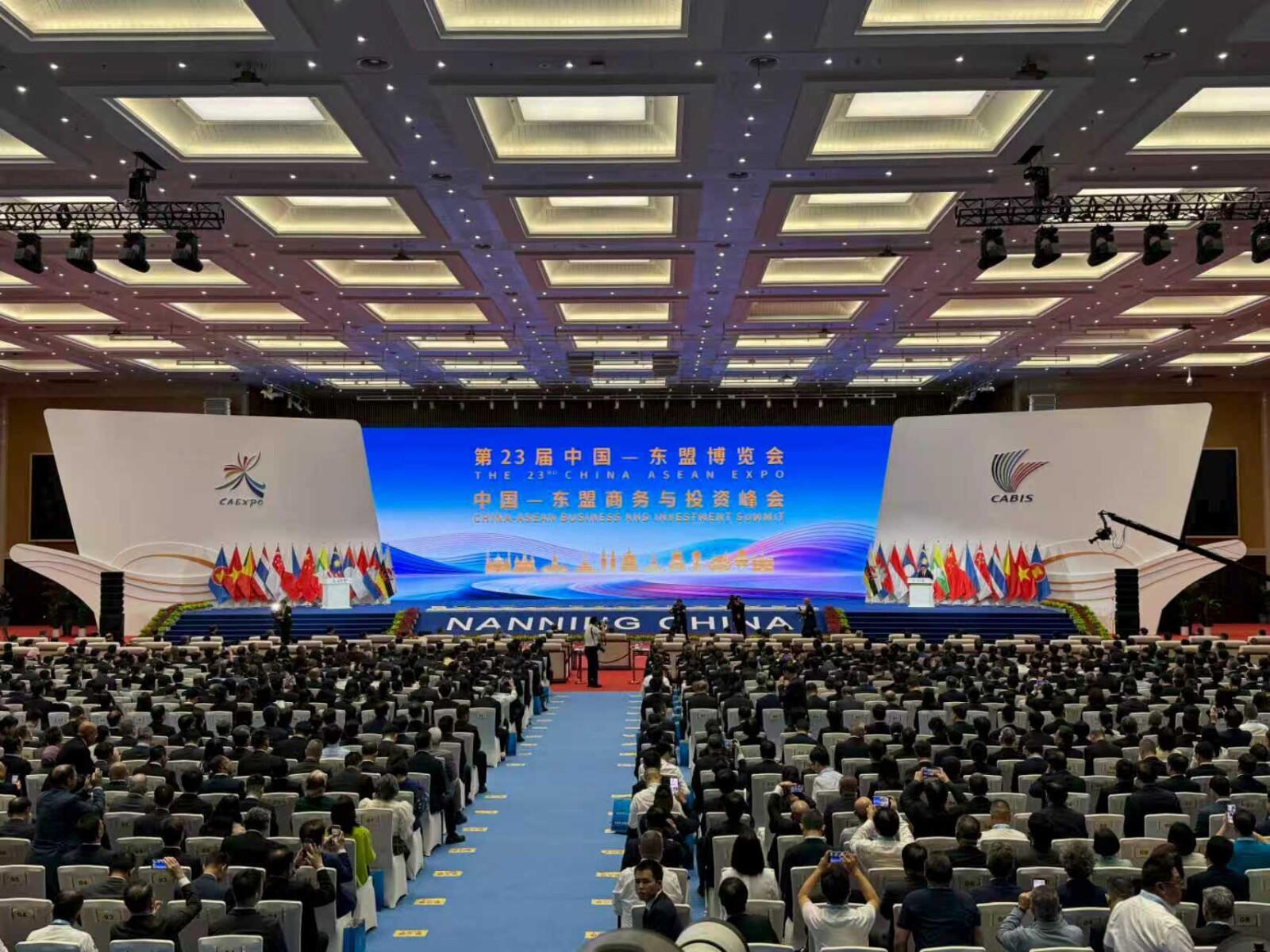
Opening ceremony of 23rd CAEXPO and CABIS held in Nanning


NANNING, CHINA – Media OutReach Newswire – 19 September 2026 – On September 17, the 23rd China-ASEAN Expo and China-ASEAN Business and Investment Summit opened in Nanning, Guangxi. With the theme of “CAFTA 3.0 Opportunities, Better Life”, the 23rd CAEXPO and CABIS was attended by Chinese and foreign leaders and important guests at the opening ceremony.

Opening ceremony of 23rd CAEXPO and CABIS held in Nanning

This year marks the 5th anniversary of the establishment of the China-ASEAN comprehensive strategic partnership, the inaugural year of the “Plan of Action to Implement the ASEAN-China Comprehensive Strategic Partnership (2026-2030)”, and a critical year for accelerating the implementation of the China-ASEAN Free Trade Area (CAFTA) 3.0 Upgrade Protocol following its signing.

The 23rd CAEXPO has a total exhibition area of approximately 170,000 square meters, showcasing the latest achievements of cooperation between China and ASEAN countries, as well as new business opportunities under the Version 3.0 China-ASEAN Free Trade Area (CAFTA). More than 3,400 enterprises from over 70 countries and regions are participating, with the total number of exhibitors increasing by 5.3% compared to the previous session. Timor-Leste made its debut as a formal ASEAN member state and co-organizer of the CAEXPO. This marks the first time that all 11 ASEAN countries have gathered in Nanning, Guangxi, since ASEAN’s expansion, representing a historic moment for the CAEXPO’s circle of friends. In addition to the main exhibition area at the Nanning International Convention and Exhibition Center, two other exhibition areas are set up at CAAIC Community and the Guilin International Conference & Exhibition Center.

For the first time, an ASEAN country demand exhibition is set up during the event, and an ASEAN demand list is released for the first time, focusing on showcasing projects and application needs of ASEAN countries in areas such as transportation, smart logistics, artificial intelligence applications, urban management, and park construction, creating a new one-stop precise matchmaking platform for China and ASEAN.

In addition, more than 50 economic and trade promotion activities will be held during the event, focusing on trade and investment facilitation and regional economic integration, cross-border industrial and supply chain cooperation, “Shop in China”, “Export to China”, “Invest in China”, and other topics.

Hashtag: #CAEXPO#CABIS

The issuer is solely responsible for the content of this announcement.

Global Times: China’s success and prosperity stem from the CPC’s outstanding leadership: former Egyptian PM

BEIJING, Sept. 18, 2026 /PRNewswire/ — As this year marks the 105th anniversary of the founding of the Communist Party of China (CPC), a national conference on Party building was held in Beijing on June 15, making arrangements for studying and implementing Xi Jinping Thought on Party Building. The Thought reflects intrinsic connections among Party self-governance, Party strengthening and national rejuvenation. Articulated through the “Fourteen Upholds” – and comprising a series of signature major concepts, original ideas, and fundamental theoretical insights – the Thought has made major original contributions to the development of the Marxist theory of Party building, and is of great practical significance and far-reaching guiding significance for strengthening the Party and the country.

Of the “Fourteen Upholds,” the first is that upholding the Party’s leadership is the defining feature of socialism with Chinese characteristics. The book Xi Jinping: The Governance of China includes several important speeches on upholding and strengthening the leadership of the Party. In the “Speech at the Ceremony Marking the Centenary of the Communist Party of China” included in Volume IV of Xi Jinping: The Governance of China, Chinese President Xi Jinping stressed, “The leadership of the Party is the defining feature of socialism with Chinese characteristics and constitutes the greatest strength of this system. It is the foundation and lifeblood of the Party and the country, and the crux upon which the interests and wellbeing of all Chinese people depend.” 

Standing at a new historical starting point and guided by Xi Jinping Thought on Party Building, the CPC is advancing from the “world’s largest political party” to becoming the “world’s most powerful political Party.” With unified thinking, firm resolve, coordinated action, and strong fighting strength, it will vigorously advance the great new project of Party building in the new era, thereby providing a strong political guarantee for the noble cause of building a powerful nation and achieving national rejuvenation.

In the 26th installment of the special series “Decoding the Book Xi Jinping: The Governance of China,” the Global Times, along with the People’s Daily Overseas Edition, continues to invite Chinese and foreign scholars, translators of Xi’s works, practitioners with firsthand experience, and international readers to focus on the theme of Xi Jinping Thought on Party Building. Together, they deeply explore the core essence of Xi Jinping Thought on Party Building, as well as its profound practical and global significance, and jointly explore the question: “Why has the CPC remained vibrant after 105 years?”

In the 26th article of the “Readers’ Reflections” column, Global Times (GT) talked to Essam Sharaf (Sharaf), former Egyptian Prime Minister, to get his insights on the understanding of Xi Jinping Thought on Party Building, and why “upholding the CPC’s leadership” is key for the Chinese to realize their dreams. From an international perspective, he also analyzes the profound significance of Chinese modernization for the global development and governance.

GT: On June 15, 2026, a national conference on Party building was held in Beijing. According to the meeting, Xi Jinping Thought on Party Building is an important component of Xi Jinping Thought on Socialism with Chinese Characteristics for a New Era, has made major original contributions to the development of the Marxist theory of Party building, and is of great practical significance and far-reaching guiding significance for strengthening the Party and the country. What’s your understanding on the Thought? What experience or insights can the Thought provide for the discussions on advancing a ruling party’s governance capacity and enhancing national governance across the world?

Sharaf: Xi Jinping Thought on Party Building addresses a fundamental question facing every ruling party: how to maintain vitality, strengthen governance capacity, and preserve public trust over the long term. My understanding is that this thought emphasizes the Party’s ability to continuously improve itself through political commitment, organizational discipline, ideological cohesion, cadre development, anti-corruption efforts, and governance based on institutions and rules. It recognizes that a ruling party cannot effectively reform society unless it is willing to reform itself.

This lesson extends beyond China. Many governance challenges around the world arise not because countries lack policies, but because institutions lack effectiveness, coordination, or public confidence. The Chinese experience suggests that governance capacity depends not only on economic resources but also on institutional discipline, accountability, and the ability to adapt to changing circumstances.

One of the most important lessons is that self-renewal is essential for long-term success. Institutions must regularly evaluate their performance, address shortcomings, and pursue continuous improvement. Without such efforts, even capable systems may struggle to sustain effectiveness over time.

GT: In the “Speech at the Ceremony Marking the Centenary of the Communist Party of China” included in Volume IV of Xi Jinping: The Governance of China, President Xi said “Over the past century, the Communist Party of China has secured extraordinary achievements on behalf of the people. Today, it is rallying the Chinese people and leading them on a new journey towards realizing the Second Centenary Goal.” This year marks the 105th founding anniversary of the Communist Party of China (CPC). In retrospect of the CPC’s major achievements, what do you think the CPC has done right? And, what does the CPC-led system mean for China?

Sharaf: The core secret behind China’s tremendous success and prosperity lies in the outstanding leadership of the CPC. This is the fundamental key to understanding the miracle of China’s development. In retrospect of the CPC’s major achievements over the past 105 years, one of the CPC’s most notable achievements has been guiding China through successive stages of development guided by clear long-term objectives.

The achievement of building a moderately prosperous society in all respects marked a historic milestone. It reflected decades of effort to reduce poverty, improve living standards, expand education and healthcare, and ensure that development benefits reached broad segments of society. The scale of poverty reduction achieved in China remains one of the most significant development accomplishments in modern history.

Yet China did not regard this achievement as the final destination. Instead, it became the foundation for a more ambitious objective: building China into a great modern socialist country in all respects. This goal extends beyond material prosperity. It encompasses technological innovation, industrial upgrading, cultural confidence, ecological sustainability, stronger governance, and enhanced national strength. In essence, China’s vision of modernization seeks comprehensive national development rather than economic growth alone.

A defining feature of this approach is its long-term strategic perspective. Present actions are consistently linked to future national goals, creating continuity and direction that support sustained development.

GT: Xi Jinping Thought on Party Building stresses that upholding the Party’s leadership is the defining feature of socialism with Chinese characteristics. In the article “Maximize the Institutional Strength of CPC Leadership” included in Volume III of Xi Jinping: The Governance of China, President Xi pointed out, “Leadership by the Party is the defining feature of socialism with Chinese characteristics. It represents the common will and fundamental interests of the entire Party and all the Chinese people, and is the fundamental guarantee for a decisive victory in building a moderately prosperous society in all respects and the great success of socialism with Chinese characteristics for a new era.” You have visited China around 50 times since 2005. Could you please introduce some anecdotes about your engagement with the CPC, and how do you think of the CPC?

Sharaf: My engagement with China began in 2005 during my tenure as Egypt’s Minister of Transport. And, I have since visited China about 50 times over 20 plus years. Each visit revealed the same striking pattern: rapid progress in infrastructure, technology, and new industries. The speed and quality of this development are truly impressive.

Throughout my visits to China, I have met CPC officials, scholars, local administrators, and representatives of various institutions. One observation emerged repeatedly: the strong connection between strategic vision and practical implementation. Whether visiting development zones, infrastructure projects, or areas transformed through poverty alleviation programs, I was struck by the degree of coordination among different actors. Government agencies, enterprises, communities, educational institutions, and Party organizations appeared to be working toward common objectives.

What particularly impressed me was that local officials rarely discussed projects in isolation. Instead, they consistently linked local initiatives to broader national priorities and long-term development strategies. This reflected a governance culture that emphasizes continuity, coordination, and strategic thinking.

These experiences helped me better understand what Chinese leaders describe as the institutional strength of CPC leadership. Its effectiveness lies not only in leadership itself but also in its ability to align institutions, mobilize resources, maintain policy continuity, and translate long-term visions into practical outcomes.

GT: In the article “Chinese Modernization: Our Path to a Great Country and National Rejuvenation” included in Volume V of Xi Jinping: The Governance of China, Xi pointed out that Chinese modernization is “a significant result of the enduring efforts of the Chinese people under CPC leadership,” and that “Party leadership has a direct bearing on the fundamental orientation, future trajectory, and ultimate success of Chinese modernization.” How do you view the significance of Chinese modernization under CPC leadership for China and the world? How does it differ from Western modernization? What insights does Chinese modernization provide for other countries, including Egypt? 

Sharaf: Chinese modernization represents one of the most significant concepts in contemporary development discussions. Its importance lies in demonstrating that modernization does not have to follow a single universal model. Historically, many countries assumed that modernization required adopting a specific political, economic, or cultural template. China’s experience challenges that assumption.

Chinese modernization combines economic growth with social development, technological advancement with cultural continuity, and modernization with national independence. It emphasizes common prosperity, environmental sustainability, social stability, and long-term planning while preserving China’s civilizational identity.

This approach differs from some historical Western modernization experiences, which were often associated with colonial expansion, external dominance, or development models driven primarily by market forces. China’s path instead highlights peaceful development, institutional coordination, and modernization based on national conditions. The broader message is not that one model should replace another, but that every country should have the confidence to pursue development in a manner consistent with its own history, culture, and aspirations.