Home Blog Page 499

Startup Moldova Summit 2026 spotlights Moldova’s rise as a startup gateway to European markets

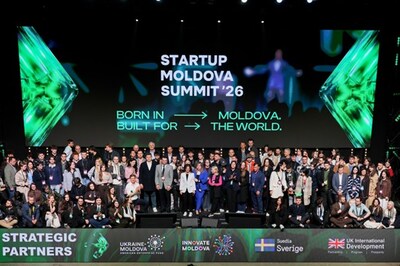
CHIȘINĂU, Moldova, May 1, 2026 /PRNewswire/ — Startup Moldova Summit 2026 showcased Moldova’s growing position as a startup destination for capital, talent and EU market access, bringing over 2,000 participants, 150 startups, 60 speakers and international investors to Chișinău for the largest edition of the country’s flagship startup event to date.
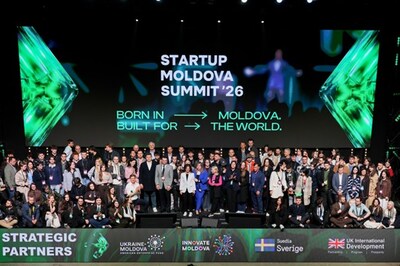
Group photo of participants of the Startup Moldova Summit 2026

Organised by Startup Moldova, the Summit announced new international partnerships with Unicorn Factory Lisbon, the Ukrainian Startup Fund and SeedBlink, strengthening Moldova’s links to European acceleration programmes, angel investor networks and cross-border innovation opportunities.

At the official opening, Olga Melniciuc, CEO of Startup Moldova, highlighted the ecosystem’s rapid progress:

“Moldova’s ecosystem has grown to over 300 companies, expanding by 20% year over year. In 2025 alone, startups generated over $60 million in revenue, created over 1,500 jobs, and attracted over $17 million in investment, demonstrating that startups are becoming a real driver of the country’s economic growth. TThe theme of the Summit — ‘Born in Moldova. Built for the World.’ — reflects the ambitiousness of our founders, who are building companies designed to compete globally from day one.”

Strategic partnerships announced during the Summit will expand Moldova’s startup connectivity. Through signed memorandums Unicorn Factory Lisbon and Startup Moldova will support Moldovan startups in accessing international acceleration programmes and scaling opportunities on EU markets.

Moldova Innovation Technology Park (MITP), Startup Moldova and the Ukrainian Startup Fund partnership will facilitate cross-border cooperation, access to funding and integration into the European innovation landscape.

SeedBlink and Startup Moldova announced the launch of the crowdinvesting platform allowing Moldovan startups to raise capital through syndicated investment rounds and connect with European angel investor networks.

Sergiu Rabii, Director of the Innovate Moldova Programme, funded by Sweden and the United Kingdom, emphasised the importance of these collaborations:

“These partnerships show that Moldova’s startup ecosystem is becoming more connected and internationally relevant. By improving access to capital, expertise and markets, Sweden and the United Kingdom are helping Moldovan founders scale faster and build companies with global potential.”

Moldova’s broader business environment is also becoming more attractive for technology companies and founders. MITP offers a 7% flat tax for eligible IT and digital activities. The country is advancing digital nomad and remote work frameworks, preparing a Fund of Funds to expand access to venture and equity capital, and developing Moldova HiTech Park as a future platform for deeptech, R&D and advanced technology industries. Investments in contactless business, e-governance and digital public infrastructure, including the EVO government app, are simplifying public and business-facing services.

The Delegation of the European Union in Chișinău reiterated its support for strengthening Moldova’s innovation ecosystem and connecting it to European opportunities. Julien Schmitt, Director of the EU4Innovation East programme, noted:

“Startup Moldova Summit 2026 reflects the continued progress of Moldova’s entrepreneurial ecosystem. For the second consecutive year, the European Union, through EU4Innovation East, is proud to support this platform that connects founders, investors and international markets. As the number of startups in Moldova grows, so does the need for stronger support structures and access to capital.”

The Summit also featured a Startup Alley where 42 startups showcased their products, and the national final of the Startup World Cup pitching competition. Ten startups pitched to a jury composed of international investors. Prompted AI won and will represent Moldova at the Global Final in San Francisco, competing for the $1M prize. LyricFluent and Argus AI secured second and third place.

Startup Moldova Summit 2026 concluded with a clear message: Moldova is becoming a notable destination for startup investment and global innovation, giving founders improved access to capital, expertise and markets, while offering international partners a fast-developing innovation ecosystem close to the European Union.
Startup Moldova Summit 2026 spotlights Moldova’s rise as a startup gateway to European markets

CHIȘINĂU, Moldova, May 1, 2026 /PRNewswire/ — Startup Moldova Summit 2026 showcased Moldova’s growing position as a startup destination for capital, talent and EU market access, bringing over 2,000 participants, 150 startups, 60 speakers and international investors to Chișinău for the largest edition of the country’s flagship startup event to date.

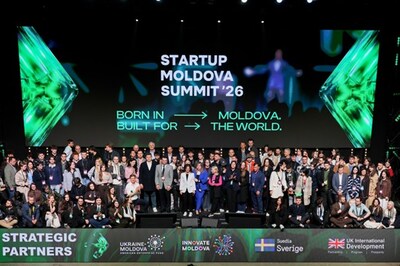
Group photo of participants of the Startup Moldova Summit 2026

Organised by Startup Moldova, the Summit announced new international partnerships with Unicorn Factory Lisbon, the Ukrainian Startup Fund and SeedBlink, strengthening Moldova’s links to European acceleration programmes, angel investor networks and cross-border innovation opportunities.

At the official opening, Olga Melniciuc, CEO of Startup Moldova, highlighted the ecosystem’s rapid progress:

“Moldova’s ecosystem has grown to over 300 companies, expanding by 20% year over year. In 2025 alone, startups generated over $60 million in revenue, created over 1,500 jobs, and attracted over $17 million in investment, demonstrating that startups are becoming a real driver of the country’s economic growth. TThe theme of the Summit — ‘Born in Moldova. Built for the World.’ — reflects the ambitiousness of our founders, who are building companies designed to compete globally from day one.”

Strategic partnerships announced during the Summit will expand Moldova’s startup connectivity. Through signed memorandums Unicorn Factory Lisbon and Startup Moldova will support Moldovan startups in accessing international acceleration programmes and scaling opportunities on EU markets.

Moldova Innovation Technology Park (MITP), Startup Moldova and the Ukrainian Startup Fund partnership will facilitate cross-border cooperation, access to funding and integration into the European innovation landscape.

SeedBlink and Startup Moldova announced the launch of the crowdinvesting platform allowing Moldovan startups to raise capital through syndicated investment rounds and connect with European angel investor networks.

Sergiu Rabii, Director of the Innovate Moldova Programme, funded by Sweden and the United Kingdom, emphasised the importance of these collaborations:

“These partnerships show that Moldova’s startup ecosystem is becoming more connected and internationally relevant. By improving access to capital, expertise and markets, Sweden and the United Kingdom are helping Moldovan founders scale faster and build companies with global potential.”

Moldova’s broader business environment is also becoming more attractive for technology companies and founders. MITP offers a 7% flat tax for eligible IT and digital activities. The country is advancing digital nomad and remote work frameworks, preparing a Fund of Funds to expand access to venture and equity capital, and developing Moldova HiTech Park as a future platform for deeptech, R&D and advanced technology industries. Investments in contactless business, e-governance and digital public infrastructure, including the EVO government app, are simplifying public and business-facing services.

The Delegation of the European Union in Chișinău reiterated its support for strengthening Moldova’s innovation ecosystem and connecting it to European opportunities. Julien Schmitt, Director of the EU4Innovation East programme, noted:

“Startup Moldova Summit 2026 reflects the continued progress of Moldova’s entrepreneurial ecosystem. For the second consecutive year, the European Union, through EU4Innovation East, is proud to support this platform that connects founders, investors and international markets. As the number of startups in Moldova grows, so does the need for stronger support structures and access to capital.”

The Summit also featured a Startup Alley where 42 startups showcased their products, and the national final of the Startup World Cup pitching competition. Ten startups pitched to a jury composed of international investors. Prompted AI won and will represent Moldova at the Global Final in San Francisco, competing for the $1M prize. LyricFluent and Argus AI secured second and third place.

Startup Moldova Summit 2026 concluded with a clear message: Moldova is becoming a notable destination for startup investment and global innovation, giving founders improved access to capital, expertise and markets, while offering international partners a fast-developing innovation ecosystem close to the European Union.
Startup Moldova Summit 2026 spotlights Moldova’s rise as a startup gateway to European markets

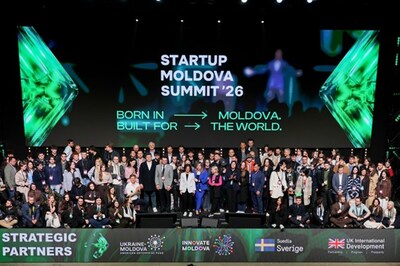
CHIȘINĂU, Moldova, May 1, 2026 /PRNewswire/ — Startup Moldova Summit 2026 showcased Moldova’s growing position as a startup destination for capital, talent and EU market access, bringing over 2,000 participants, 150 startups, 60 speakers and international investors to Chișinău for the largest edition of the country’s flagship startup event to date.

Group photo of participants of the Startup Moldova Summit 2026

Organised by Startup Moldova, the Summit announced new international partnerships with Unicorn Factory Lisbon, the Ukrainian Startup Fund and SeedBlink, strengthening Moldova’s links to European acceleration programmes, angel investor networks and cross-border innovation opportunities.

At the official opening, Olga Melniciuc, CEO of Startup Moldova, highlighted the ecosystem’s rapid progress:

“Moldova’s ecosystem has grown to over 300 companies, expanding by 20% year over year. In 2025 alone, startups generated over $60 million in revenue, created over 1,500 jobs, and attracted over $17 million in investment, demonstrating that startups are becoming a real driver of the country’s economic growth. TThe theme of the Summit — ‘Born in Moldova. Built for the World.’ — reflects the ambitiousness of our founders, who are building companies designed to compete globally from day one.”

Strategic partnerships announced during the Summit will expand Moldova’s startup connectivity. Through signed memorandums Unicorn Factory Lisbon and Startup Moldova will support Moldovan startups in accessing international acceleration programmes and scaling opportunities on EU markets.

Moldova Innovation Technology Park (MITP), Startup Moldova and the Ukrainian Startup Fund partnership will facilitate cross-border cooperation, access to funding and integration into the European innovation landscape.

SeedBlink and Startup Moldova announced the launch of the crowdinvesting platform allowing Moldovan startups to raise capital through syndicated investment rounds and connect with European angel investor networks.

Sergiu Rabii, Director of the Innovate Moldova Programme, funded by Sweden and the United Kingdom, emphasised the importance of these collaborations:

“These partnerships show that Moldova’s startup ecosystem is becoming more connected and internationally relevant. By improving access to capital, expertise and markets, Sweden and the United Kingdom are helping Moldovan founders scale faster and build companies with global potential.”

Moldova’s broader business environment is also becoming more attractive for technology companies and founders. MITP offers a 7% flat tax for eligible IT and digital activities. The country is advancing digital nomad and remote work frameworks, preparing a Fund of Funds to expand access to venture and equity capital, and developing Moldova HiTech Park as a future platform for deeptech, R&D and advanced technology industries. Investments in contactless business, e-governance and digital public infrastructure, including the EVO government app, are simplifying public and business-facing services.

The Delegation of the European Union in Chișinău reiterated its support for strengthening Moldova’s innovation ecosystem and connecting it to European opportunities. Julien Schmitt, Director of the EU4Innovation East programme, noted:

“Startup Moldova Summit 2026 reflects the continued progress of Moldova’s entrepreneurial ecosystem. For the second consecutive year, the European Union, through EU4Innovation East, is proud to support this platform that connects founders, investors and international markets. As the number of startups in Moldova grows, so does the need for stronger support structures and access to capital.”

The Summit also featured a Startup Alley where 42 startups showcased their products, and the national final of the Startup World Cup pitching competition. Ten startups pitched to a jury composed of international investors. Prompted AI won and will represent Moldova at the Global Final in San Francisco, competing for the $1M prize. LyricFluent and Argus AI secured second and third place.

Startup Moldova Summit 2026 concluded with a clear message: Moldova is becoming a notable destination for startup investment and global innovation, giving founders improved access to capital, expertise and markets, while offering international partners a fast-developing innovation ecosystem close to the European Union.
Startup Moldova Summit 2026 spotlights Moldova’s rise as a startup gateway to European markets

CHIȘINĂU, Moldova, May 1, 2026 /PRNewswire/ — Startup Moldova Summit 2026 showcased Moldova’s growing position as a startup destination for capital, talent and EU market access, bringing over 2,000 participants, 150 startups, 60 speakers and international investors to Chișinău for the largest edition of the country’s flagship startup event to date.

Group photo of participants of the Startup Moldova Summit 2026

Organised by Startup Moldova, the Summit announced new international partnerships with Unicorn Factory Lisbon, the Ukrainian Startup Fund and SeedBlink, strengthening Moldova’s links to European acceleration programmes, angel investor networks and cross-border innovation opportunities.

At the official opening, Olga Melniciuc, CEO of Startup Moldova, highlighted the ecosystem’s rapid progress:

“Moldova’s ecosystem has grown to over 300 companies, expanding by 20% year over year. In 2025 alone, startups generated over $60 million in revenue, created over 1,500 jobs, and attracted over $17 million in investment, demonstrating that startups are becoming a real driver of the country’s economic growth. TThe theme of the Summit — ‘Born in Moldova. Built for the World.’ — reflects the ambitiousness of our founders, who are building companies designed to compete globally from day one.”

Strategic partnerships announced during the Summit will expand Moldova’s startup connectivity. Through signed memorandums Unicorn Factory Lisbon and Startup Moldova will support Moldovan startups in accessing international acceleration programmes and scaling opportunities on EU markets.

Moldova Innovation Technology Park (MITP), Startup Moldova and the Ukrainian Startup Fund partnership will facilitate cross-border cooperation, access to funding and integration into the European innovation landscape.

SeedBlink and Startup Moldova announced the launch of the crowdinvesting platform allowing Moldovan startups to raise capital through syndicated investment rounds and connect with European angel investor networks.

Sergiu Rabii, Director of the Innovate Moldova Programme, funded by Sweden and the United Kingdom, emphasised the importance of these collaborations:

“These partnerships show that Moldova’s startup ecosystem is becoming more connected and internationally relevant. By improving access to capital, expertise and markets, Sweden and the United Kingdom are helping Moldovan founders scale faster and build companies with global potential.”

Moldova’s broader business environment is also becoming more attractive for technology companies and founders. MITP offers a 7% flat tax for eligible IT and digital activities. The country is advancing digital nomad and remote work frameworks, preparing a Fund of Funds to expand access to venture and equity capital, and developing Moldova HiTech Park as a future platform for deeptech, R&D and advanced technology industries. Investments in contactless business, e-governance and digital public infrastructure, including the EVO government app, are simplifying public and business-facing services.

The Delegation of the European Union in Chișinău reiterated its support for strengthening Moldova’s innovation ecosystem and connecting it to European opportunities. Julien Schmitt, Director of the EU4Innovation East programme, noted:

“Startup Moldova Summit 2026 reflects the continued progress of Moldova’s entrepreneurial ecosystem. For the second consecutive year, the European Union, through EU4Innovation East, is proud to support this platform that connects founders, investors and international markets. As the number of startups in Moldova grows, so does the need for stronger support structures and access to capital.”

The Summit also featured a Startup Alley where 42 startups showcased their products, and the national final of the Startup World Cup pitching competition. Ten startups pitched to a jury composed of international investors. Prompted AI won and will represent Moldova at the Global Final in San Francisco, competing for the $1M prize. LyricFluent and Argus AI secured second and third place.

Startup Moldova Summit 2026 concluded with a clear message: Moldova is becoming a notable destination for startup investment and global innovation, giving founders improved access to capital, expertise and markets, while offering international partners a fast-developing innovation ecosystem close to the European Union.
Startup Moldova Summit 2026 spotlights Moldova’s rise as a startup gateway to European markets

CHIȘINĂU, Moldova, May 1, 2026 /PRNewswire/ — Startup Moldova Summit 2026 showcased Moldova’s growing position as a startup destination for capital, talent and EU market access, bringing over 2,000 participants, 150 startups, 60 speakers and international investors to Chișinău for the largest edition of the country’s flagship startup event to date.

Group photo of participants of the Startup Moldova Summit 2026

Organised by Startup Moldova, the Summit announced new international partnerships with Unicorn Factory Lisbon, the Ukrainian Startup Fund and SeedBlink, strengthening Moldova’s links to European acceleration programmes, angel investor networks and cross-border innovation opportunities.

At the official opening, Olga Melniciuc, CEO of Startup Moldova, highlighted the ecosystem’s rapid progress:

“Moldova’s ecosystem has grown to over 300 companies, expanding by 20% year over year. In 2025 alone, startups generated over $60 million in revenue, created over 1,500 jobs, and attracted over $17 million in investment, demonstrating that startups are becoming a real driver of the country’s economic growth. TThe theme of the Summit — ‘Born in Moldova. Built for the World.’ — reflects the ambitiousness of our founders, who are building companies designed to compete globally from day one.”

Strategic partnerships announced during the Summit will expand Moldova’s startup connectivity. Through signed memorandums Unicorn Factory Lisbon and Startup Moldova will support Moldovan startups in accessing international acceleration programmes and scaling opportunities on EU markets.

Moldova Innovation Technology Park (MITP), Startup Moldova and the Ukrainian Startup Fund partnership will facilitate cross-border cooperation, access to funding and integration into the European innovation landscape.

SeedBlink and Startup Moldova announced the launch of the crowdinvesting platform allowing Moldovan startups to raise capital through syndicated investment rounds and connect with European angel investor networks.

Sergiu Rabii, Director of the Innovate Moldova Programme, funded by Sweden and the United Kingdom, emphasised the importance of these collaborations:

“These partnerships show that Moldova’s startup ecosystem is becoming more connected and internationally relevant. By improving access to capital, expertise and markets, Sweden and the United Kingdom are helping Moldovan founders scale faster and build companies with global potential.”

Moldova’s broader business environment is also becoming more attractive for technology companies and founders. MITP offers a 7% flat tax for eligible IT and digital activities. The country is advancing digital nomad and remote work frameworks, preparing a Fund of Funds to expand access to venture and equity capital, and developing Moldova HiTech Park as a future platform for deeptech, R&D and advanced technology industries. Investments in contactless business, e-governance and digital public infrastructure, including the EVO government app, are simplifying public and business-facing services.

The Delegation of the European Union in Chișinău reiterated its support for strengthening Moldova’s innovation ecosystem and connecting it to European opportunities. Julien Schmitt, Director of the EU4Innovation East programme, noted:

“Startup Moldova Summit 2026 reflects the continued progress of Moldova’s entrepreneurial ecosystem. For the second consecutive year, the European Union, through EU4Innovation East, is proud to support this platform that connects founders, investors and international markets. As the number of startups in Moldova grows, so does the need for stronger support structures and access to capital.”

The Summit also featured a Startup Alley where 42 startups showcased their products, and the national final of the Startup World Cup pitching competition. Ten startups pitched to a jury composed of international investors. Prompted AI won and will represent Moldova at the Global Final in San Francisco, competing for the $1M prize. LyricFluent and Argus AI secured second and third place.

Startup Moldova Summit 2026 concluded with a clear message: Moldova is becoming a notable destination for startup investment and global innovation, giving founders improved access to capital, expertise and markets, while offering international partners a fast-developing innovation ecosystem close to the European Union.
African Private Sector Leaders Convene in Addis Ababa to Unlock Capital and Scale SDG Delivery

ADDIS ABABA, Ethiopia, May 1, 2026 /PRNewswire/ — African business leaders, investors and policymakers have called for a step change in how private capital is mobilised and deployed across the continent, as the UN Global Compact, in partnership with the United Nations Economic Commission for Africa (ECA) and the United Nations Development Programme (UNDP), convened a high-level Private Sector Forum on 27 April in Addis Ababa.

Held on the margins of the 12th Africa Regional Forum on Sustainable Development (ARFSD-12), the Forum brought together senior decision-makers to move beyond commitments and accelerate the flow of capital into bankable, scalable projects aligned with the Sustainable Development Goals (SDGs) and Africa’s Agenda 2063.

Under the theme “Forward Faster: Scaling Private Sector Partnerships to Accelerate the SDGs in Africa,” discussions focused on closing the persistent gap between capital availability and project execution, one of the central barriers to sustainable development across the continent.

The Forum identified five priority areas where coordinated action between business, finance and government can deliver rapid, system-level impact: water and sanitation infrastructure, affordable and reliable energy, sustainable urban development, industrial value chains and the expansion of blended finance mechanisms to crowd in private investment.

Dr Hervé Lado, Africa Head at the UN Global Compact, said: “Africa does not lack capital, it lacks the conditions to deploy it at scale. What we heard clearly in Addis Ababa is that businesses are ready to lead, but they need to structure more bankable pipelines, with credible partnerships, and most importantly to catalyze enabling policy environments with governments. Through Forward Faster, we are helping companies turn ambition into measurable action and ensuring that private capital flows to where it can accelerate the SDGs by delivering the greatest impact for people and planet.”

A central highlight of the programme was a fireside discussion featuring Mr Deribe Asfaw, CEO of the Cooperative Bank of Oromia (CoopBank). Mr Asfaw provided a practical blueprint for how African financial institutions can bridge last-mile financing gaps by leveraging digital innovation to support micro, small and medium-sized enterprises (MSMEs). Reflecting on the success of the bank’s impact-driven models, he stated: “Our alignment with the SDGs is not a policy decision; it is who we are. For example, using blended finance, we developed Michu, a digital, uncollateralised lending platform which uses data for credit scoring, provides instant access to finance and targets MSMEs and underserved customers across trade, services (finance, health, transport and tourism), manufacturing, construction and agriculture. The platform has disbursed over ETB 52 billion (USD 400 million) to nearly 3 million customers, achieving 80% youth and 80% women inclusion, creating approximately 2.7 million jobs, and therefore serving directly over 10 SDGs.”

Roundtable discussions addressed the structural bottlenecks that continue to constrain investment, including project preparation gaps and perceived market risks. Participants explored success stories from across the continent, focusing on risk-sharing instruments and regional project aggregation models designed to build robust pipelines of investable opportunities.

Closing the forum with a call for deeper institutional integration, Ms Ngone Diop, Director of the ECA Sub-Regional Office for West Africa, emphasised that the private sector’s role extends far beyond capital provision to being a primary driver of industrial transformation.

“Africa’s development ambitions are clear, but the scale of financing, innovation and delivery required cannot be met by public resources alone. The private sector is not only a source of capital. It is a driver of jobs, technology, value chains, industrial transformation and practical solutions in the sectors that matter most to our people: energy, water, infrastructure, cities, agriculture, finance, digital innovation and enterprise growth. The Private Sector Forum has therefore been designed to move us from conversation to action. Let us identify where capital can move, where partnerships can deliver and where policy and financing can work together to accelerate progress on the SDGs. Let us be innovative, practical, yet ambitious,” she noted.

The outcomes of the Forum informed directly intergovernmental deliberations at ARFSD-12 and will feed into global discussions at the upcoming High-Level Political Forum, reinforcing the central role of the private sector in delivering sustainable development.

The Forum concluded with a clear message: Africa’s development trajectory will be shaped by its ability to mobilise private capital at scale and deploy it efficiently. With public resources under increasing pressure, partnerships between governments, businesses and development institutions are no longer optional but essential.

Through its Forward Faster initiative, the UN Global Compact continues to support companies in building capacities, setting ambitious targets, strengthening accountability and scaling solutions across markets. By aligning capital, policy and partnerships, the initiative aims to ensure that sustainable development in Africa is not only achievable, but investable.

About the UN Global Compact
As a special initiative of the United Nations Secretary-General, the UN Global Compact is a call to companies worldwide to align their operations and strategies with Ten Principles in the areas of human rights, labour, environment and anti-corruption. Our vision is clear: to mobilize business to transform sustainability ambition into action at the scale the world demands. With more than 25,000 participants and a presence in over 100 countries through 5 Regional Hubs and more than 70 Country Networks and expansion territories, the UN Global Compact is the world’s largest corporate sustainability initiative.

African Private Sector Leaders Convene in Addis Ababa to Unlock Capital and Scale SDG Delivery

ADDIS ABABA, Ethiopia, May 1, 2026 /PRNewswire/ — African business leaders, investors and policymakers have called for a step change in how private capital is mobilised and deployed across the continent, as the UN Global Compact, in partnership with the United Nations Economic Commission for Africa (ECA) and the United Nations Development Programme (UNDP), convened a high-level Private Sector Forum on 27 April in Addis Ababa.

Held on the margins of the 12th Africa Regional Forum on Sustainable Development (ARFSD-12), the Forum brought together senior decision-makers to move beyond commitments and accelerate the flow of capital into bankable, scalable projects aligned with the Sustainable Development Goals (SDGs) and Africa’s Agenda 2063.

Under the theme “Forward Faster: Scaling Private Sector Partnerships to Accelerate the SDGs in Africa,” discussions focused on closing the persistent gap between capital availability and project execution, one of the central barriers to sustainable development across the continent.

The Forum identified five priority areas where coordinated action between business, finance and government can deliver rapid, system-level impact: water and sanitation infrastructure, affordable and reliable energy, sustainable urban development, industrial value chains and the expansion of blended finance mechanisms to crowd in private investment.

Dr Hervé Lado, Africa Head at the UN Global Compact, said: “Africa does not lack capital, it lacks the conditions to deploy it at scale. What we heard clearly in Addis Ababa is that businesses are ready to lead, but they need to structure more bankable pipelines, with credible partnerships, and most importantly to catalyze enabling policy environments with governments. Through Forward Faster, we are helping companies turn ambition into measurable action and ensuring that private capital flows to where it can accelerate the SDGs by delivering the greatest impact for people and planet.”

A central highlight of the programme was a fireside discussion featuring Mr Deribe Asfaw, CEO of the Cooperative Bank of Oromia (CoopBank). Mr Asfaw provided a practical blueprint for how African financial institutions can bridge last-mile financing gaps by leveraging digital innovation to support micro, small and medium-sized enterprises (MSMEs). Reflecting on the success of the bank’s impact-driven models, he stated: “Our alignment with the SDGs is not a policy decision; it is who we are. For example, using blended finance, we developed Michu, a digital, uncollateralised lending platform which uses data for credit scoring, provides instant access to finance and targets MSMEs and underserved customers across trade, services (finance, health, transport and tourism), manufacturing, construction and agriculture. The platform has disbursed over ETB 52 billion (USD 400 million) to nearly 3 million customers, achieving 80% youth and 80% women inclusion, creating approximately 2.7 million jobs, and therefore serving directly over 10 SDGs.”

Roundtable discussions addressed the structural bottlenecks that continue to constrain investment, including project preparation gaps and perceived market risks. Participants explored success stories from across the continent, focusing on risk-sharing instruments and regional project aggregation models designed to build robust pipelines of investable opportunities.

Closing the forum with a call for deeper institutional integration, Ms Ngone Diop, Director of the ECA Sub-Regional Office for West Africa, emphasised that the private sector’s role extends far beyond capital provision to being a primary driver of industrial transformation.

“Africa’s development ambitions are clear, but the scale of financing, innovation and delivery required cannot be met by public resources alone. The private sector is not only a source of capital. It is a driver of jobs, technology, value chains, industrial transformation and practical solutions in the sectors that matter most to our people: energy, water, infrastructure, cities, agriculture, finance, digital innovation and enterprise growth. The Private Sector Forum has therefore been designed to move us from conversation to action. Let us identify where capital can move, where partnerships can deliver and where policy and financing can work together to accelerate progress on the SDGs. Let us be innovative, practical, yet ambitious,” she noted.

The outcomes of the Forum informed directly intergovernmental deliberations at ARFSD-12 and will feed into global discussions at the upcoming High-Level Political Forum, reinforcing the central role of the private sector in delivering sustainable development.

The Forum concluded with a clear message: Africa’s development trajectory will be shaped by its ability to mobilise private capital at scale and deploy it efficiently. With public resources under increasing pressure, partnerships between governments, businesses and development institutions are no longer optional but essential.

Through its Forward Faster initiative, the UN Global Compact continues to support companies in building capacities, setting ambitious targets, strengthening accountability and scaling solutions across markets. By aligning capital, policy and partnerships, the initiative aims to ensure that sustainable development in Africa is not only achievable, but investable.

About the UN Global Compact
As a special initiative of the United Nations Secretary-General, the UN Global Compact is a call to companies worldwide to align their operations and strategies with Ten Principles in the areas of human rights, labour, environment and anti-corruption. Our vision is clear: to mobilize business to transform sustainability ambition into action at the scale the world demands. With more than 25,000 participants and a presence in over 100 countries through 5 Regional Hubs and more than 70 Country Networks and expansion territories, the UN Global Compact is the world’s largest corporate sustainability initiative.

African Private Sector Leaders Convene in Addis Ababa to Unlock Capital and Scale SDG Delivery

ADDIS ABABA, Ethiopia, May 1, 2026 /PRNewswire/ — African business leaders, investors and policymakers have called for a step change in how private capital is mobilised and deployed across the continent, as the UN Global Compact, in partnership with the United Nations Economic Commission for Africa (ECA) and the United Nations Development Programme (UNDP), convened a high-level Private Sector Forum on 27 April in Addis Ababa.

Held on the margins of the 12th Africa Regional Forum on Sustainable Development (ARFSD-12), the Forum brought together senior decision-makers to move beyond commitments and accelerate the flow of capital into bankable, scalable projects aligned with the Sustainable Development Goals (SDGs) and Africa’s Agenda 2063.

Under the theme “Forward Faster: Scaling Private Sector Partnerships to Accelerate the SDGs in Africa,” discussions focused on closing the persistent gap between capital availability and project execution, one of the central barriers to sustainable development across the continent.

The Forum identified five priority areas where coordinated action between business, finance and government can deliver rapid, system-level impact: water and sanitation infrastructure, affordable and reliable energy, sustainable urban development, industrial value chains and the expansion of blended finance mechanisms to crowd in private investment.

Dr Hervé Lado, Africa Head at the UN Global Compact, said: “Africa does not lack capital, it lacks the conditions to deploy it at scale. What we heard clearly in Addis Ababa is that businesses are ready to lead, but they need to structure more bankable pipelines, with credible partnerships, and most importantly to catalyze enabling policy environments with governments. Through Forward Faster, we are helping companies turn ambition into measurable action and ensuring that private capital flows to where it can accelerate the SDGs by delivering the greatest impact for people and planet.”

A central highlight of the programme was a fireside discussion featuring Mr Deribe Asfaw, CEO of the Cooperative Bank of Oromia (CoopBank). Mr Asfaw provided a practical blueprint for how African financial institutions can bridge last-mile financing gaps by leveraging digital innovation to support micro, small and medium-sized enterprises (MSMEs). Reflecting on the success of the bank’s impact-driven models, he stated: “Our alignment with the SDGs is not a policy decision; it is who we are. For example, using blended finance, we developed Michu, a digital, uncollateralised lending platform which uses data for credit scoring, provides instant access to finance and targets MSMEs and underserved customers across trade, services (finance, health, transport and tourism), manufacturing, construction and agriculture. The platform has disbursed over ETB 52 billion (USD 400 million) to nearly 3 million customers, achieving 80% youth and 80% women inclusion, creating approximately 2.7 million jobs, and therefore serving directly over 10 SDGs.”

Roundtable discussions addressed the structural bottlenecks that continue to constrain investment, including project preparation gaps and perceived market risks. Participants explored success stories from across the continent, focusing on risk-sharing instruments and regional project aggregation models designed to build robust pipelines of investable opportunities.

Closing the forum with a call for deeper institutional integration, Ms Ngone Diop, Director of the ECA Sub-Regional Office for West Africa, emphasised that the private sector’s role extends far beyond capital provision to being a primary driver of industrial transformation.

“Africa’s development ambitions are clear, but the scale of financing, innovation and delivery required cannot be met by public resources alone. The private sector is not only a source of capital. It is a driver of jobs, technology, value chains, industrial transformation and practical solutions in the sectors that matter most to our people: energy, water, infrastructure, cities, agriculture, finance, digital innovation and enterprise growth. The Private Sector Forum has therefore been designed to move us from conversation to action. Let us identify where capital can move, where partnerships can deliver and where policy and financing can work together to accelerate progress on the SDGs. Let us be innovative, practical, yet ambitious,” she noted.

The outcomes of the Forum informed directly intergovernmental deliberations at ARFSD-12 and will feed into global discussions at the upcoming High-Level Political Forum, reinforcing the central role of the private sector in delivering sustainable development.

The Forum concluded with a clear message: Africa’s development trajectory will be shaped by its ability to mobilise private capital at scale and deploy it efficiently. With public resources under increasing pressure, partnerships between governments, businesses and development institutions are no longer optional but essential.

Through its Forward Faster initiative, the UN Global Compact continues to support companies in building capacities, setting ambitious targets, strengthening accountability and scaling solutions across markets. By aligning capital, policy and partnerships, the initiative aims to ensure that sustainable development in Africa is not only achievable, but investable.

About the UN Global Compact
As a special initiative of the United Nations Secretary-General, the UN Global Compact is a call to companies worldwide to align their operations and strategies with Ten Principles in the areas of human rights, labour, environment and anti-corruption. Our vision is clear: to mobilize business to transform sustainability ambition into action at the scale the world demands. With more than 25,000 participants and a presence in over 100 countries through 5 Regional Hubs and more than 70 Country Networks and expansion territories, the UN Global Compact is the world’s largest corporate sustainability initiative.