Home Blog Page 584

BlueFocus CEO Fei Pan on Reinventing the Company for the AI Era

What BlueFocus’s latest results suggest about AI-led reinvention, Globalization 2.0, and the reshaping of the agency business

BEIJING, April 24, 2026 /PRNewswire/ — On April 15, BlueFocus released its 2025 annual results together with a letter to investors from CEO Fei Pan. The company reported revenue of USD 10.07 billion, up 12.99% year on year, while AI-driven revenue rose to USD 546.05 million, an increase of 210.42%. Taken together, the earnings release and the investor letter suggest that BlueFocus is entering a new phase in its AI transition—one in which AI is being framed less as a narrative layer and more as part of the company’s emerging business infrastructure.
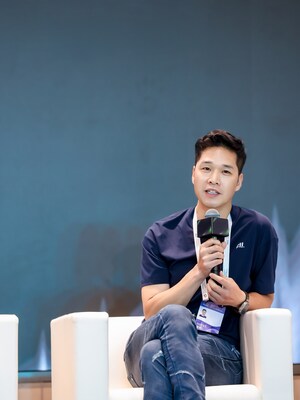
BlueFocus CEO Fei Pan

That is the more consequential signal in the latest disclosure. Three years after launching its “All in AI” strategy, BlueFocus is no longer framing AI only as a future-oriented ambition. It is increasingly linking AI to revenue contribution, product buildout, workflow redesign, and a wider effort to reposition the company for a more automated and globally distributed marketing environment. In BlueFocus CEO Fei Pan’s description, that shift demands more than incremental optimization. It requires “self-reinvention, the spirit of starting over, and the ambition to become a new kind of AI company.”

From AI narrative to operating leverage

AI is beginning to challenge the traditional agency model in more structural ways. Content production is becoming faster and cheaper, media decisioning is increasingly automated, and parts of the historical value chain built on labor-intensive execution are under pressure. For large marketing groups, the question is no longer whether to adopt AI tools, but how deeply AI will reshape the business itself.

BlueFocus’s response has been to push beyond tool adoption and toward a broader repositioning. As the company approaches its 30th anniversary, management is framing this period less as another technology upgrade and more as a transition point—one in which BlueFocus is trying to rebuild itself as a more AI-driven marketing technology company. Rather than relying only on third-party tools or surface-level integrations, it has chosen a heavier path, investing in its own underlying systems and product stack.

In 2025, the company’s AI-related R&D spending, including personnel costs, was about USD 26.387 million. At the center of that push is BlueAI, a multimodal marketing platform that management describes as a core engine for the company’s AI transition. Building on this, BlueFocus has built a clearer product stack: STARUNION AI on the influencer marketing side, AdsWin for ad buying and optimization, and Xinying creative platform for content production. The significance of this portfolio goes beyond the presence of several AI-branded products. The more important question is whether those systems are beginning to change how work is produced, delivered, and monetized.

That is where the 2025 numbers become more relevant. BlueFocus reported AI-driven revenue of USD 546.05 million, up 210.42% year over year. It also said total token consumption exceeded one trillion for the year, suggesting that AI usage within the company has moved beyond experimentation and into scaled deployment. These figures matter less as vanity metrics than as early signs that AI is moving closer to monetization and workflow penetration. In other words, BlueFocus is not only saying that it uses AI; it is trying to show that AI is beginning to influence revenue contribution, internal production logic, and the structure of service delivery.

This is the key distinction. The company’s ambition extends beyond surface-level AI enablement. It is to move toward something closer to AI Native marketing infrastructure: a system in which campaign execution, media decisions, content production, and internal collaboration are increasingly organized around automation, self-learning systems, and machine-assisted decision-making. That is a much broader proposition than simply adopting tools and a much harder one to deliver. But it is precisely this shift that gives BlueFocus’s current transition its strategic significance. As Pan frames it, the longer-term goal is “to systematically reconstruct BlueFocus’s existing business with AI Native methods so that every business scenario becomes AI-driven.”

Globalization 2.0: reworking the business behind overseas growth

A second major strategic theme in BlueFocus’s latest disclosures is what the company calls Globalization 2.0. For several years, overseas business has been one of its main commercial engines. In 2025, outbound advertising placement reached USD 8.282 billion, accounting for more than 80% of total revenue. But at this stage, the more important issue is not scale alone. The more important question now is whether that scale can translate into a healthier mix of revenue and margins over time.

That is what gives Globalization 2.0 its significance. The traditional outbound media-buying model can generate substantial top-line volume, but it also comes with structural margin constraints: policies at major platforms are increasingly transparent, bargaining power is limited, and gross margins remain under pressure. BlueFocus’s response is not to step away from that model, but to move beyond it—shifting the focus from volume alone to the business structure needed to support future growth.

The logic is clearest in the company’s “5-3-2” framework. Management’s longer-term vision is for 50% of outbound business to come from the leading platforms, 30% from mid-tier media platforms, and 20% from self-built traffic and technology platforms such as Blue X and Blue Turbo. Read this way, Globalization 2.0 is not just an overseas growth strategy. It is an attempt to rebalance the business behind overseas growth and build a more diversified profit mix over time.

The company’s overseas office strategy fits the same pattern. BlueFocus says it has already established seven overseas offices and plans to expand that footprint to roughly 10 to 20 over time, covering regions including Southeast Asia, Latin America, Europe, and the United States. The point is not simply geographic reach. It is to make overseas growth more localized, more operationally embedded, and less dependent on platform access alone.

As Pan puts it, “AI and globalization are increasingly intertwined.” In cross-border business, AI offers natural advantages in language, localization, and scalability, which helps explain why BlueFocus sees global markets as an important proving ground for AI Native business models. In that sense, Globalization 2.0 is not only about reworking the profit structure behind overseas growth, but also about creating a more immediate commercial context for the company’s AI ambitions.

AI transformation is more than a technical question

A notable feature of BlueFocus’s current strategy is that it treats AI transformation as an organizational challenge, not just a technical one. For all the emphasis on automation, the company is also making the case that adoption depends on talent, adaptability, and a willingness to relearn how work gets done.

That logic is visible in how management describes internal experimentation. BlueFocus says it allows employees to use leading global AI tools with reimbursed expenses and no preset cap. In a recent interview, Pan noted that the highest individual reimbursement last year exceeded USD 43,978. The significance of that detail lies less in the amount itself than in what it signals about the company’s approach: lowering friction around adoption, encouraging experimentation, and treating AI learning as an operating priority rather than a side initiative.

As Pan puts it, “We are reconstructing BlueFocus into a truly AI Native organization.” That ambition extends beyond tools to talent standards, incentives, and culture. Internally, the company is elevating “AI Native+AI First” as guiding benchmarks, suggesting that the transition is being framed as a broader organizational reset rather than just a technology upgrade in how the organization hires, evaluates, and works.

Just as important, BlueFocus does not frame AI as a substitute for people. The more durable point in management’s messaging is that while AI may reshape workflows, the long-term performance still depends on talent quality, decision-making, and organizational adaptability. In that sense, the company is presenting AI transformation as much a management and organizational story as a technological one.

The same logic also helps explain BlueFocus’s external investment strategy. The company says it has invested in six AI Native companies, not primarily as a financial exercise, but as a way to stay close to frontier capability development. In strategic terms, that suggests a company trying to keep its transformation synchronized with the fastest-moving parts of the ecosystem rather than relying only on internal roadmaps. In Pan’s view, “We need to find the fastest-moving AI Native companies and stay close to them, remain in sync with the industry’s most advanced capabilities. That in itself is one of the ways BlueFocus accelerates its own transformation.”

What BlueFocus is now trying to establish goes further than demonstrating that it has embraced AI. The underlying message is that AI is becoming increasingly inseparable from the business itself. Pan’s view that there should no longer be a meaningful distinction between AI and non-AI business is perhaps the clearest expression of that ambition. This is not a finished transformation story. But BlueFocus is beginning to show that this shift is no longer just strategic rhetoric; it is starting to take shape in how the business is built and run.

Note to editors: Translations of certain RMB amounts into U.S. dollars in this release are provided solely for the convenience of the reader and are based on an exchange rate of USD 1.00 = RMB 6.8216.

From Interconnect to Power and Thermal Management: Luxshare-ICT Expands Its Role in AI Data Center Infrastructure

DONGGUAN, China, April 24, 2026 /PRNewswire/ — As artificial intelligence moves from model training into broader commercial deployment, the underlying data center architecture is changing rapidly. Higher computing density, faster interconnect speeds and increasing rack-level power consumption are placing new demands on the components and systems that sit around processors, accelerators and switches.

For Luxshare Precision Industry Co., Ltd. (“Luxshare-ICT” or the “Company”), this shift represents a natural extension of its long-term capabilities in precision manufacturing, high-speed connectivity, thermal management, power management and system-level integration.

In 2025, Luxshare-ICT’s communications and data center business delivered revenue of RMB 24.57 billion, representing year-on-year growth of 33.81%. Gross margin for the segment reached 18.40%, an improvement of 2 percentage points from the previous year.  

The growth of this business reflects more than short-term demand from the AI cycle. It also reflects the Company’s broader transition from a component supplier to a partner capable of supporting customers at the system architecture level.

AI Infrastructure Is Becoming a System-Level Challenge

The next phase of AI data center development is not defined by computing chips alone. As clusters scale from individual servers to rack-level systems, supernodes and larger data center networks, the performance of the entire system increasingly depends on how power, heat and data move across the infrastructure.

High-speed interconnect must support greater bandwidth while controlling signal loss, latency and power consumption. Thermal solutions must handle much higher heat density as AI accelerators continue to increase in power. Power systems must evolve from traditional server-level supply toward rack-level and high-voltage architectures. These are no longer peripheral issues. They are becoming central design constraints for AI infrastructure.

Luxshare-ICT’s data center strategy is built around this system-level view. The Company does not begin with a single connector, cable, optical module or power product. Instead, its R&D process starts from the customer’s future architecture: how the AI cluster is expected to scale, how compute nodes and switches are connected, how much power the rack will consume, and where the thermal bottlenecks are likely to emerge.

This top-down approach allows the Company to define products from the system backward. It also allows Luxshare-ICT to combine its four core capabilities — electrical interconnect, optical connectivity, thermal management and power management — into integrated solutions for next-generation AI infrastructure.  

Electrical Interconnect: The Backbone of Scale-Up Networks

Within AI racks and supernodes, short-reach, high-density interconnect remains one of the most critical parts of the architecture. Copper-based solutions continue to play an important role in scale-up networks, where latency, power efficiency and signal integrity are essential.

Luxshare-ICT has built a broad portfolio of high-speed electrical interconnect solutions for data center applications, including high-speed backplane solutions, CPC and NPC solutions, DAC, ACC, Lite Active Cable, high-speed internal cables, SSIO and Riser Cable products.  

The Company’s technology roadmap has progressed from 56G and 112G toward 224G, with forward-looking work already underway for 448G and beyond. According to the Company’s data center business leadership, this roadmap reflects a consistent approach: study the future system architecture first, then identify the bottlenecks that must be solved at the component and module level.  

In 2025, Luxshare-ICT’s self-developed 224G KOOLIO™ CPC/NPC solution, 224G Intrepid NEXUS backplane connector and Intrepid Cable Cartridge high-speed cable backplane solution were already used commercially in certain mainstream AI clusters in China and overseas.  

For the Company, the opportunity in copper interconnect is not limited to one product generation. As AI architectures continue to evolve, Luxshare-ICT expects demand to increase for solutions that can balance transmission distance, signal integrity, density, manufacturability and total system cost.

Copper and Optical Are Complementary, Not Mutually Exclusive

A key part of Luxshare-ICT’s technology view is that copper and optical solutions will coexist across different parts of the AI network.

In scale-up networks, copper interconnect, CPC and NPC solutions are expected to remain important because of their advantages in short-distance transmission, low latency and power efficiency. In scale-out networks, where longer reach and larger cluster size become more important, optical solutions — including CPO-related architectures — are expected to play a greater role.

This is why the Company does not see CPC and CPO as competing paths. It views them as complementary technologies serving different layers of the data center network.  

Based on this view, Luxshare-ICT is developing a broader “copper plus optical” portfolio, including CPC, NPC, XPO, NPO and CPO-related technologies. This approach gives the Company flexibility to support different customer architectures rather than relying on a single technical route.

Optical Connectivity: Moving Toward Higher Speed and Lower Power

As AI clusters grow, optical interconnect becomes increasingly important for rack-to-rack and data center-scale communication. Luxshare-ICT’s optical connectivity portfolio includes DPO optical modules and AOC, LPO optical modules and AOC, LRO optical modules and AOC, with supported speeds up to 1.6T and form factors including SFP, QSFP, QSFP-DD, OSFP, as well as SMF and MMF fiber solutions.  

In 2025, the Company introduced LRO and LPO optical modules based on a “light active” design concept, aiming to reduce transmission power consumption and end-to-end latency. Its 800G and 1.6T optical modules have entered small-batch supply, while 800G LRO has passed validation with certain customers. The Company is also conducting deeper R&D on 1.6T LRO/LPO and XPO products.  

At the industry level, optical interconnect is moving toward higher bandwidth, higher density and better thermal efficiency. For Luxshare-ICT, this is not only an optical module opportunity. It is also an integration opportunity, because future optical systems will increasingly require coordination among signal transmission, heat dissipation, mechanical design and power delivery.

The Company has already demonstrated an XPO switch-level interconnect and thermal integration solution, showing its ability to address optical connectivity and thermal constraints together rather than treating them as separate design problems.  

Thermal Management: From Supporting Function to Core System Capability

As AI accelerators and switches increase in power, thermal management has become a critical factor in system performance, reliability and deployment density.

Luxshare-ICT’s thermal management solutions cover active cooling, passive cooling, liquid cooling and temperature-control systems. Its product portfolio includes fan modules, heat sinks, heat pipes, vapor chambers, cold plate liquid cooling systems, manifolds, in-rack CDUs, cabinet CDUs, blind-mate quick connectors and immersion cooling tanks.  

The Company has also been investing in more advanced thermal technologies. According to management, Luxshare-ICT began laying out microchannel technology several years ago, and related products have started to move into mass production. The Company also began investing in diamond-copper thermal materials more than a year ago, which has accelerated the landing of thermal management products with core customers.  

These investments are important because AI data center cooling is no longer a matter of simply adding more fans or larger heat sinks. As rack power continues to rise, customers need cooling solutions that are more compact, more efficient and more closely integrated with the server, rack and switch architecture.

Luxshare-ICT’s advantage lies in combining manufacturing precision with system-level design. This allows the Company to support different deployment scenarios, from air-assisted liquid cooling to cold plate systems, CDU solutions and more advanced liquid cooling architectures.

Power Management: Preparing for Higher-Density AI Racks

Power delivery is also undergoing structural change. As AI racks move toward much higher power density, traditional server-level power systems are no longer sufficient. The industry is moving toward rack-level power distribution, higher voltage architectures and more modular power systems.

Luxshare-ICT’s data center power portfolio includes Power Shelf and Rectifier solutions for AI racks, DC Busbar, 70A-1000A 54V Busbar Clip, 12V/54V AC/DC CRPS up to 3200W, 12V MCRPS up to 3200W, as well as multiple Power Module, VRM and VPM products for AI node-level power solutions.  

The Company has also built capabilities around 800V power systems and has achieved project progress with core customers.  

This is strategically important. In high-density AI clusters, power efficiency directly affects system cost, thermal load, rack density and data center operating expenses. Luxshare-ICT’s power management capabilities allow it to participate earlier in customer architecture discussions and provide solutions that support future rack-level power evolution.

Customer Engagement and Global Expansion

In 2025, Luxshare-ICT continued to deepen cooperation with leading domestic cloud service providers while making meaningful progress in overseas markets. The Company reported notable business development progress in North America, with multiple core component products recognized by leading overseas cloud service providers and computing equipment manufacturers. Several key products were delivered during the reporting period.  

Management has also indicated that the Company is prioritizing resources around leading global CSP customers, with progress in certain areas exceeding earlier expectations.  

For overseas customers, Luxshare-ICT’s value lies not only in technology development. It also lies in the Company’s ability to support product validation, manufacturing ramp-up, quality control and cross-region delivery at scale. As AI infrastructure becomes more complex, customers increasingly need suppliers that can combine engineering depth with manufacturing reliability.

Building a Long-Term Position in AI Infrastructure

The development of AI data centers is still in an early stage of architectural change. Over the next several years, customers are expected to continue upgrading compute density, network bandwidth, cooling systems and power distribution. This will create opportunities for companies that can solve practical engineering problems at scale.

Luxshare-ICT believes its role in this market will continue to expand. The Company is not approaching AI infrastructure as a single-product opportunity. It is building a broader platform across electrical interconnect, optical connectivity, thermal management and power management, supported by precision manufacturing and global delivery capabilities.

As AI systems move toward higher speed, higher density and greater energy efficiency, Luxshare-ICT aims to remain a trusted technology and manufacturing partner for customers building the next generation of data center infrastructure.


Amcor opens advanced healthcare packaging coating facility in Malaysia

A $35 million USD investment brings advanced air-knife coating technology and sterile medical packaging capabilities to Southeast Asia, further strengthening a healthcare regional supply chain

ZURICH, April 24, 2026 /PRNewswire/ — Amcor (NYSE: AMCR, ASX:AMC), a global leader in developing and producing responsible packaging solutions, yesterday opened an advanced healthcare packaging coating facility in Subang Jaya, Selangor, marking a significant expansion of its manufacturing footprint in Malaysia and Southeast Asia.

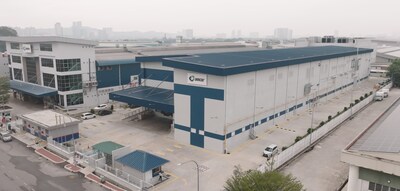
Amcor opened an advanced healthcare packaging coating facility in Subang Jaya, Selangor, marking a significant expansion of its manufacturing footprint in Malaysia and Southeast Asia.

The facility, representing an investment of over $35 million USD, introduces air-knife coating technology to the region for the production of coated medical paper used in sterile medical device packaging. Facilitated by Malaysian Investment Development Authority (MIDA), this investment further strengthens Malaysia’s position as an integrated regional hub for healthcare packaging, enhancing supply chain resilience through local access.

“Amcor’s investment reinforces Malaysia’s position as a strategic center for advanced manufacturing in the region,” said Datuk Sikh Shamsul Ibrahim Sikh Abdul Majid, Chief Executive Officer, MIDA. “Beyond expanding capacity, this facility strengthens local supply chain resilience, accelerates technology adoption and supports the development of skilled Malaysian talent, in line with the New Industrial Master Plan 2030 and our National Investment Aspirations. MIDA will continue to facilitate high-quality investments that generate sustainable, long-term value for Malaysia.”

The facility expands Amcor’s existing healthcare packaging operations into a fully integrated manufacturing site, positioned to support healthcare customers across the region with greater speed and reliability. By localizing production, Amcor gains dual sourcing options, strengthens long-term supply chain reliability and creates a platform for pilot-to-production scale-up, supporting rapid trials, closer technical collaboration and faster commercialization for regional customers.

Amcor’s investment adds to a growing pipeline of high-value commitments to Malaysia’s medical device industry. In 2025, Malaysia approved RM152 million in medical device investments, signalling sustained global confidence in the country as a preferred manufacturing base for the healthcare industry.

“Today marks an important milestone for Amcor and our partners in Malaysia. The opening of this new coating facility underscores our long-term commitment to supporting our partners in the healthcare sector across Asia Pacific,” said Chris Kenneally, President, Amcor Flexibles Asia Pacific. “It also demonstrates the strength of collaboration across our global network in bringing advanced capabilities to the region and serving customers more effectively.”

A key aspect of the project is the strong collaboration across Amcor’s global network, particularly the technology and knowledge transfer that enabled the successful setup of the facility. The company’s technical specialists from the United States worked closely with the Malaysian team in installation, commissioning and hands-on operational training, embedding advanced manufacturing capabilities locally.

The facility is equipped with state-of-the-art production systems, including advanced inspection and automated manufacturing processes, designed to deliver consistent quality and reliability for healthcare packaging applications. Purpose-built for both precision and scale, it incorporates closed-loop process controls, in-line quality monitoring and optimized drying systems to enhance product consistency.

The opening reinforces Malaysia’s growing attractiveness for advanced, knowledge-intensive manufacturing investment, building on established strengths in electronics, medical devices and specialized industrial production.

About Amcor

Amcor is the global leader in developing and producing responsible consumer packaging and dispensing solutions across a variety of materials for nutrition, health, beauty and wellness categories. Our global product innovation and sustainability expertise enables us to solve packaging challenges around the world every day, producing a range of flexible packaging, rigid packaging, cartons and closures that are more sustainable, functional and appealing for our customers and their consumers. We are guided by our purpose of elevating customers, shaping lives and protecting the future. Supported by a commitment to safety, over 75,000 people generate $23 billion in annualized sales from operations that span over 400 locations in more than 40 countries. NYSE: AMCR; ASX: AMC

www.amcor.com | LinkedIn | YouTube 

About MIDA

MIDA is the government’s principal investment promotion and development agency under the Ministry of Investment, Trade and Industry (MITI) to oversee and drive investments into the manufacturing and services sectors in Malaysia. Headquartered in Kuala Lumpur Sentral, MIDA has 12 regional and 20 overseas offices. MIDA partners with investors at every stage of their journey, supporting sustainable growth and long-term value creation for Malaysia. For more information, please visit www.mida.gov.my and follow MIDA on X, Instagram, Facebook, LinkedIn, TikTok and YouTube.

AIA Hong Kong leads the industry as No.1 Insurer of Choice in Hong Kong for 12 consecutive years

HONG KONG, April 24, 2026 /PRNewswire/ — AIA Hong Kong* has once again been recognised as the No.1 insurer of choice in Hong Kong**, and has achieved the highest number of No.1 market positions in 2025++. This recognition is based on the Provisional Statistics on Hong Kong Long Term Business released by the Insurance Authority.#

Our No.1 market positions include:

  • Number of New Business Policies (No.1 for 12 consecutive years+)
  • Number of Inforce Policies (No.1 for 12 consecutive years+)
  • Annualised New Premiums from Agency Channel^
  • New Office Premiums from Agency Channel^
  • Number of New Business Policies from Agency Channel
  • Number of New Business Policies from Brokerage Channel

Mr. Alger Fung, Chief Executive Officer of AIA Hong Kong & Macau, said, “Being the consistent market leader for over a decade in both New Business and Inforce Policies is deeply meaningful to us, as it reflects our purpose in action. It affirms that when individuals and families seek protection, they choose AIA as their insurer of choice for our compelling health and wealth propositions, and they stay with us because we stand by them through different stages of their life with our reliable services, delightful experiences and our shared commitment to creating positive impact for society. We will build on this strong foundation and continue to help more people live Healthier, Longer, Better Lives.”

Beyond market metrics, independent surveys based on daily consumer interviews conducted by global research firm YouGov show that AIA is the only insurer in Hong Kong to achieve top results across a wide range of brand metrics. AIA earned the title of Hong Kong’s most popular insurance brand for 10 consecutive years.##


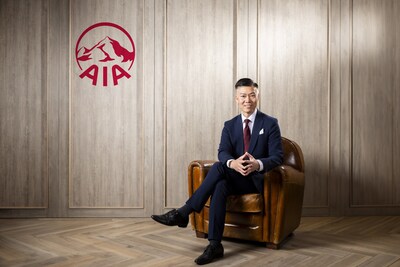
Mr. Alger Fung, Chief Executive Officer of AIA Hong Kong & Macau

Remarks

* Refers to AIA International Limited, AIA Company Limited and AIA Everest Life Company Limited.

** “No. 1 insurer of choice in Hong Kong” refers to AIA Hong Kong being chosen by the most customers, supported by being first in Number of New Business Policies and Number of Inforce Policies for 12 consecutive years+.

++ “The highest number of No. 1 market positions” refers to the top position achieved by AIA International Limited, AIA Company Limited and AIA Everest Life Company Limited in the following categories: Number of Inforce Policies, Number of New Business Policies, Annualised New Premiums from Agency Channel^, New Office Premiums from Agency Channel^, Number of New Business Policies from Agency Channel, Number of New Business Policies from Brokerage Channel—making up the highest share among the 11 key metrics compared to other market peers.

# Source: The latest provisional statistics of the Insurance Authority on Hong Kong long-term business from January to December 2025. The policies refer to Direct Individual New Business and Direct Inforce Business of Participating Business, Other Businesses (Excluding Group Business) and Linked Long Term (Class C). “Agency channel” refers to “Agents” as classified by the Hong Kong Insurance Authority under Distribution Channel.

+ According to the annual statistics of the Insurance Authority on Hong Kong long-term business since 2014, and the provisional statistics of the Insurance Authority on Hong Kong long-term business from January to December 2025.

^ “Annualised New Premiums” represents 100% of annualised first year premium and 10% of single premium. “New Office Premiums” represents 100% of annualised first year premium and 100% of single premium.

## AIA has been the Top Insurance Brand in Brand Consideration and Most Likely to Purchase in Hong Kong for 10 consecutive years since 2016. Source: YouGov.

About AIA Hong Kong & Macau

AIA Group Limited established its operations in Hong Kong in 1931. To date, AIA Hong Kong and AIA Macau have more than 19,000 financial planners[1], as well as an extensive network of independent financial advisors, brokerage and bancassurance partners. We serve over 3.7 million customers[2], offering them a wide selection of professional services and products ranging from individual life, group life, accident, medical and health, pension, personal lines insurance to investment-linked assurance schemes with numerous investment options. We are also dedicated to providing superb product solutions to meet the financial needs of high-net-worth customers.

[1] As at 31 December 2025

[2] Including AIA Hong Kong and AIA Macau’s individual life, group insurance and pension customers (as at 31 December 2025)


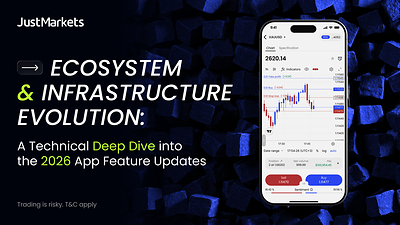
Ecosystem & Infrastructure Evolution: A Technical Deep Dive into the 2026 App Feature Updates

HO CHI MINH CITY, Vietnam, April 24, 2026 /PRNewswire/ — With the development of trading infrastructure advancing through 2026, there is more emphasis on the improvement of platform efficiency rather than the development of new features. In today’s markets, traders demand platforms that will enable fast, flexible, and continuous access to analysis and trading tools regardless of market volatility. In an attempt to satisfy such demands, the latest improvements in the JustMarkets mobile application are part of the larger evolution of trading infrastructure.

JustMarkets 2026: Elevating Execution Speed & Infrastructure Stability

One-Tap Trading: Reducing Execution Friction

The technologically important addition to iOS in its newest version is the implementation of One-Tap Trading mode. In essence, it gives users the opportunity to trade right away and avoid confirmation windows.

From the infrastructure point of view, less execution lag can greatly affect market execution in cases of volatility. While order confirmation is a useful function that helps to avoid accidental trading, it causes additional delays between user action and actual order execution. In fast markets, especially after macroeconomic announcements, geopolitical events, or technical breakout, it may affect order execution and the fill price.

With one-tap trading, users can achieve improved:

  • Order execution speed in case of market volatility
  • Order response time for technical analysis
  • Effective scalping
  • High-frequency trading consistency
Redesigned Insights Module: Improved Data Accessibility

As part of the upgraded Insights component, there have been changes made to the structure to combine the economic calendar feature with the financial news feed into a more cohesive and unified analysis platform.

This technical goal is to minimize the fragmentation of analysis applications and trading execution platforms. Before this update, traders had to switch among various layers of the trading platform or even to outside sources to monitor macroeconomic news and overall market sentiment.

Some benefits gained from the upgrade include:

  • Increased visibility of upcoming macroeconomic data releases
  • Monitoring of economic calendar events in real time
  • Access to market-moving news in the trading workflow
  • Awareness while managing trades
Notification Center Architecture Overhaul

Another significant change on the technical side is the reimagining of the Notification Center, which includes communication history, notification configuration, and personalization filters.

The new features will enable users to customize their notifications and manage them more effectively. From the operational standpoint, this will increase information filtering effectiveness.

Some of the key features that have been updated are:

  • Sophisticated channel filtering
  • Customizable notification preferences
  • Enhanced user experience design
  • Notification history logging

Effective notification management becomes crucial in active trading environments where unnecessary information can distract traders and impact their response times.

Stability Optimization and Performance Refinements

In addition to visual improvements, the upgrade also comprises several backend optimizations and bug fixes intended to increase platform stability and reliability.

The optimization will be focused on:

  • Application crashes minimization
  • Interface responsiveness improvement
  • Chart generation efficiency
  • Stable order-routing performance during peak loads

Backend optimization is an equally important step during the process of developing a trading platform. Backend infrastructure is crucial when it comes to providing reliable trading performance during increased market activity.

Cross-Platform Development Continuity

With the iOS update to version 200.23, the next round of infrastructure updates will see the planned implementation of the Android update to version 6.12, ensuring consistent functionality between mobile operating systems. This ensures uniform functionality for all users who may be trading on various devices and will aid in the further standardization of infrastructure across the JustMarkets environment.

Conclusion

Changes to be implemented in the 2026 mobile application include more emphasis on development that is geared towards execution, whereby the developments in infrastructure will revolve around making things smoother and quicker, as well as bettering the flow in work. Instead of adding more features, the new improvements will be made based on current practical needs for trading.

Risk Warning: Trading financial instruments involves significant risk and may not be suitable for all investors. Market conditions can change rapidly, and losses may exceed deposits. This article is for informational purposes only and does not constitute investment advice.

Green SM And Umoney Partner To Build An Integrated Mobility And Digital Finance Ecosystem In Laos


VIENTIANE, LAOS – Media OutReach Newswire – 24 April 2026 – Green SM Laos and Star Fintech Sole Co., Ltd (Umoney) have announced the signing of a Payment System Integration Agreement to incorporate Umoney into the Green SM application, alongside a Strategic Cooperation Agreement to develop a comprehensive digital finance and smart mobility ecosystem in Laos.

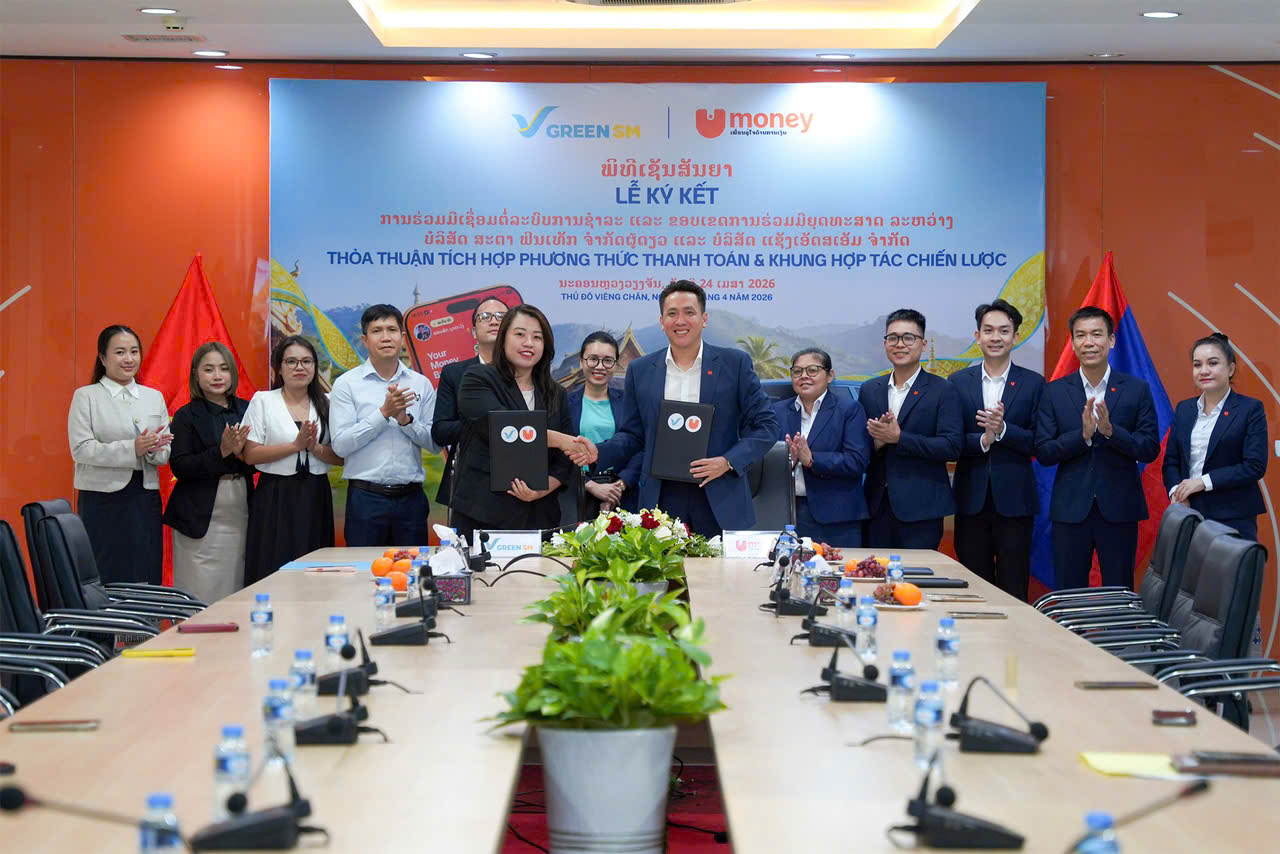
Ms. Tran Hanh An - Director of Mobility Services Sales, GSM Vietnam & Laos (left), and Mr. Ha Chien Thang - Director of Star Fintech Sole Co., Ltd, at the partnership signing ceremony.
Ms. Tran Hanh An – Director of Mobility Services Sales, GSM Vietnam & Laos (left), and Mr. Ha Chien Thang – Director of Star Fintech Sole Co., Ltd, at the partnership signing ceremony.

Under the agreement, Umoney will be integrated as a direct payment method within the Green SM app. The two parties will also implement an embedded integration model enabling Umoney users to seamlessly access Green SM’s mobility services directly within the Umoney platform.

For the first time in Laos, customers will experience a fully seamless ride-hailing journey with fares processed instantly via the Umoney e-wallet upon trip completion, replacing the previously common manual bank transfer method. Users simply link their Umoney wallet to the Green SM app for fast, convenient, and fully cashless transactions. Additionally, customers using partner banking applications can pay drivers through Umoney’s QR system, delivering a flexible, fast, and secure payment experience that enhances user convenience and broadens customer reach across both platforms.

As part of the collaboration, Green SM Laos will provide comprehensive mobility solutions for Umoney’s enterprise partners and individual customers, including Green SM Car electric ride-hailing, Green SM Limo, Green SM Airport transfer services, as well as corporate travel packages and flexible, customized mobility plans. Umoney, in turn, will collaborate with Green SM to develop digital financial and payment solutions tailored for drivers within the Green SM ecosystem, encompassing e-wallet services, direct income disbursement, operational expense payments, and cash flow management tools. This synergy is designed to optimize operational efficiency while enhancing the experience for businesses, drivers, and end-users alike.

Beyond mobility and payment solutions, both parties plan to expand their shared digital services ecosystem by integrating Umoney and Unitel’s telecommunications and digital utilities into the Green SM platform, including SIM card registration, mobile top-ups, data package purchases, and other digital services, thereby enhancing the value proposition for users across both platforms.

The two companies will also jointly roll out customer benefit programs targeting Umoney users in Laos, with a particular focus on airports, transaction points, and key high-traffic locations. Through integrated service offerings and incentives promoting electric mobility, Green SM and Umoney aim to foster environmentally responsible travel habits while delivering greater value to customers within their shared ecosystem.

Mr. Ha Chien Thang, Director of Star Fintech Sole Co., Ltd, shared:”Our partnership with Green SM marks a significant milestone in Umoney’s strategy to develop a comprehensive digital finance ecosystem in Laos. The integration of payment capabilities and digital services not only enhances user convenience but also contributes to the advancement of cashless payments and the broader digital transformation of the economy.”

Ms. Tran Hanh An, Director of Mobility Services Sales at Green SM Vietnam & Laos, stated: “The partnership between Umoney and Green SM reflects a shared commitment to connecting the essential infrastructures of modern urban life, from digital finance and telecommunications to a green mobility ecosystem. Through this collaboration, we aim to expand benefits for our customers and driver community while driving meaningful green transformation that is firmly grounded in everyday mobility and consumption needs.”

Furthermore, Green SM and Umoney will collaborate on multi-channel communications initiatives to strengthen brand awareness and expand their combined customer base. Planned activities include co-branded campaigns, promotional programs for new users, digital platform communications, and on-ground experiential activations in key markets.

The partnership between Green SM and Umoney marks a significant convergence of two leading ecosystems in green mobility and digital finance in Laos, united in their pursuit of integrated service solutions that meet the increasingly diverse demands of modern urban life. This collaboration also represents a pivotal step toward fostering innovation, elevating the user experience, and contributing to the sustainable growth of the digital economy in Laos.

Hashtag: #GreenSM

The issuer is solely responsible for the content of this announcement.

Next-Gen Smart Terminal Tech Breakthrough: DREAME AURORA Announces Overseas Debut

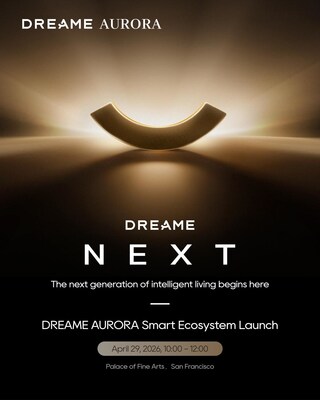
SAN FRANCISCO, April 24, 2026 /PRNewswire/ — DREAME AURORA has officially confirmed it will take the stage at the DREAME NEXT Silicon Valley Launch on April 29, local time. The moment the tagline “Connect NEXT” dropped, it sent the tech world scrambling for theories. This isn’t shaping up to be a routine product unveiling—it reads more like a manifesto to rewire the relationship between people, devices, and future experiences. Whispers are circulating that an industry-defining “mystery heavyweight” will make an appearance, and the anticipation meter is already maxed out. Now the entire industry is waiting with bated breath to see what DREAME AURORA reveals next.

DREAME AURORA Smart Ecosystem Launch

THE SOFTWARE GAMBIT

The consensus among observers is clear—in an era where premium smartphone innovation has hit a ceiling, throwing more hardware at the problem no longer defines the future. The hottest theory zeroes in on a fundamental shift in software and interaction layers.

Industry analysts argue that while AI is reshaping virtually every sector, current mobile AI remains trapped in fragmented feature gimmicks. DREAME AURORA could be the first to break that pattern. The likely answer to breaking that pattern is DREAME AURORA AIOS—the in-development, AI-native operating system previously teased, which embeds AI at the architectural foundation. If the speculation holds, this represents a paradigm-shifting move in mobile AI.

HARDWARE THAT EVOLVES

The other dimension of “connection” almost certainly involves physical form factor. How do you pack professional-grade capabilities into a phone without compromising daily usability?

The most audacious speculation suggests a future where phones function like high-performance PCs—modular, expandable, and customizable. Imagine swapping in dedicated modules for imaging or compute power on demand. If realized, this could kick open an entirely new door for smartphone industrial design.

LUXURY AS CONNECTION

Beyond cold technical specs, the emotional resonance with high-net-worth individuals remains the final frontier. DREAME AURORA’s luxury tier—blending premium materials with artisanal craftsmanship—may formally enter global markets. This signals a new competitive logic: elevating tech products from spec races to expressions of cultural value and scarcity.

THE GLOBAL STAGE STATEMENT

Choosing the world’s tech innovation capital and the industry’s nerve center as the launch venue is loaded with symbolism. This is a deliberate away-game appearance, facing the industry’s most professional audience on their home turf.

Armed with “in-development AI + evolvable hardware + luxury value narrative,” DREAME AURORA has no intention of becoming another follower.

APRIL 29: THE COUNTDOWN TO ANSWERS

On April 29, every theory about “Connect NEXT” will meet its moment of truth. This launch has all the ingredients to become a transformative event in premium tech for 2026—offering our first real glimpse of what next-generation intelligent terminals are supposed to be.

Tuya Smart Unveils Upgraded Hey Tuya and Expanded AI Capabilities for Hardware Innovation, Advancing AI Home, AI Robot, and AI Energy Ecosystems

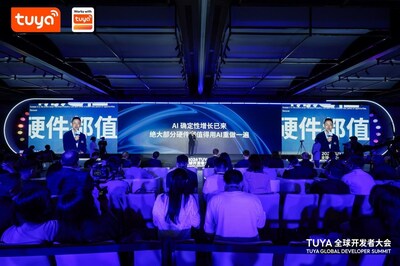
SHENZHEN, China, April 24, 2026 /PRNewswire/ — Tuya Smart (NYSE: TUYA, HKEX: 2391), a leading global AI cloud platform service provider, today unveiled its newly upgraded Hey Tuya at the 2026 TUYA Global Developer Summit. Tuya also presented its strategic focus on three core AI application ecosystems: AI Home, AI Robot, and AI Energy.

The Summit, which opened today, convened thousands of developers, enterprise representatives, and technology experts from around the world to co-build an AI application ecosystem.

Hey Tuya Upgraded: Unlocking New AI Living Experiences

The newest version of Hey Tuya represents a comprehensive evolution from foundational AI capabilities to scenario-based intelligent experiences.

  • Third-party services expansion: Hey Tuya now fully integrates with third-party services such as Google Mail, Calendar, and Docs. Users can issue a single voice command to send emails, schedule meetings, or process documents, transforming AI from a conversational tool into an action-oriented assistant.
  • Expanded hardware ecosystem: Hey Tuya has expanded its hardware ecosystem compatibility, with full support for Matter and mainstream open-source platforms such as Home Assistant.
  • Enhanced AI foundation: Hey Tuya’s AI foundation has been comprehensively enhanced to support more natural conversations, deeper reasoning, and complex task planning. Users can speak naturally as they would to a friend, and Hey Tuya interprets intent and completes tasks accordingly, evolving from reactive execution to proactive assistance.
  • Expanded skills: Hey Tuya now includes a rich and continuously expanding skill library, supporting functions such as slide generation, image recognition, image creation, and video generation, better meeting users’ scenario-based needs.
  • Conversational app creation: With Vibe Coding, developers can rapidly build integrated AI+IoT+Web/mobile solutions. Through natural language interaction exclusively, they can create complex scenarios, personalized device control dashboards, lightweight lifestyle applications, and AI-driven automation workflows. This significantly lowers the barrier to AI application development and empowers a broader range of users to realize their creative visions.
  • Scenario-Based Intelligence: The upgraded Hey Tuya supports scenario-based intelligence across use cases including “Morning Wake-up,” “Health Management,” and “Away from Home Protection.” Each scenario is dynamically generated based on user habits, preferences, and real-time conditions.

Tuya Expands Full-Stack AI Capabilities for Hardware Innovation

In addition to debuting the new version of Hey Tuya, Tuya Smart introduced a suite of self-developed, AI-native technologies purpose-built for real-world hardware deployment.

At the Summit, Tuya unveiled its self-trained Personal Voice Activity Detection (PVAD) model, designed specifically for AI hardware scenarios. PVAD enables devices to automatically identify and focus on the intended speaker without prior enrollment, significantly reducing false activations in complex acoustic environments. This allows AI-powered hardware to more accurately determine who is speaking before executing commands, thereby enhancing both reliability and user experience.

The company also announced major upgrades and new releases across its AI infrastructure, including Physical AI Foundation V2.8, Wukong AI 3.0, Tuya Real-Time Communication (T-RTC) network, Physical Action Model (PAM), and OmniMem V2.0, a long-term memory system. Together, these technologies form a comprehensive “toolkit” for developers building next-generation AI applications.

Attendees also experienced Tuya’s expanding developer ecosystem firsthand. Highlights included TuyaClaw and DuckyClaw, as well as Vibe Coding, which enables developers to build production-grade applications using natural language, and the enhanced Tuya AI development platform.

Through this integrated suite of technologies and tools, Tuya is significantly lowering the barrier to AI development, accelerating innovation, and enabling developers worldwide to bring AI-powered applications to market.

Tuya Focuses on Three Core AI Application Ecosystems, Co-Creating AI Living with Global Developers

At the Summit, Leo Chen, co-chairman and president of Tuya Smart, stated that definitive AI-driven growth has arrived, and almost all hardware is worth rebuilding with AI. Tuya will fully focus on three frontier application domains—AI Home, AI Robot, and AI Energy—empowering developers to unlock AI value and embrace the next decade-defining opportunity with a “Day One” mindset.

  • AI Home: Enable whole-home intelligent coordination and proactive services across devices through AI.
  • AI Robot: Enhance and expand experiences and application scenarios across five categories—companionship, cleaning, wellness, protection, and embodied robotics.
  • AI Energy: Build an AI-driven energy management system for precise energy monitoring, efficient utilization, and intelligent optimization.

From a business-to-business AI developer platform to consumer-facing AI applications, the 2026 TUYA Global Developer Summit outlines a clear path for AI to move from technology to real-world application. Looking ahead, Tuya Smart will continue to work with global developers and ecosystem partners to push the boundaries of innovation, accelerate AI adoption, and bring AI into every corner of the physical world.