Home Blog Page 59

Advancing the Agentic World, Building a Solid Silicon Foundation


Key takeaways:

  • Strategic focus: The rapid approach of an intelligent world is driving up demand for computing power. Huawei is focused on developing AI infrastructure, and is actively driving innovation in systems and architecture centered around SuperPoDs and SuperClusters. These efforts are aimed at building a solid silicon foundation for the intelligent world.
  • Technological breakthroughs: Huawei unveiled the Atlas 960E SuperPoD, the first in the industry to use NPO. The company also launched an upgraded TaiShan 950 SuperPoD, as well as the OceanStor M900 (a memory context storage system). Interconnected with UnifiedBus, Huawei’s agentic SuperCluster can scale up to one million NPUs.
  • Open ecosystems: Huawei is actively building out open computing ecosystems. To date, the Kunpeng ecosystem has attracted 4.16 million developers from around the world. CANN has moved to sustained, community-driven open-source development. Ascend now spans over 90 leading third-party open-source projects and is officially supported as a PyTorch accelerator backend.

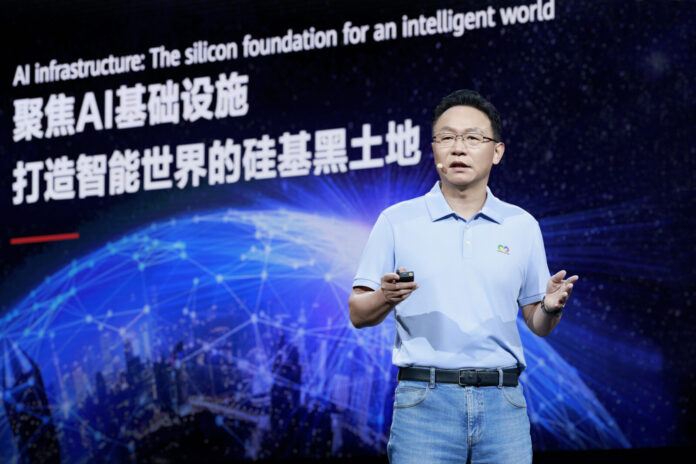
SHANGHAI, CHINA – Media OutReach Newswire – 17 September 2026 – HUAWEI CONNECT 2026 kicked off today in Shanghai. The first keynote of the date was by David Wang, the Deputy Chairman of the Board and Rotating Chairman at Huawei. In his speech (Advancing the Agentic World, Building a Solid Silicon Foundation), Wang highlighted the work the company is doing alongside industry stakeholders to build powerful AI infrastructure, lay a solid computing foundation, and address the challenges and opportunities in the intelligent world to come.

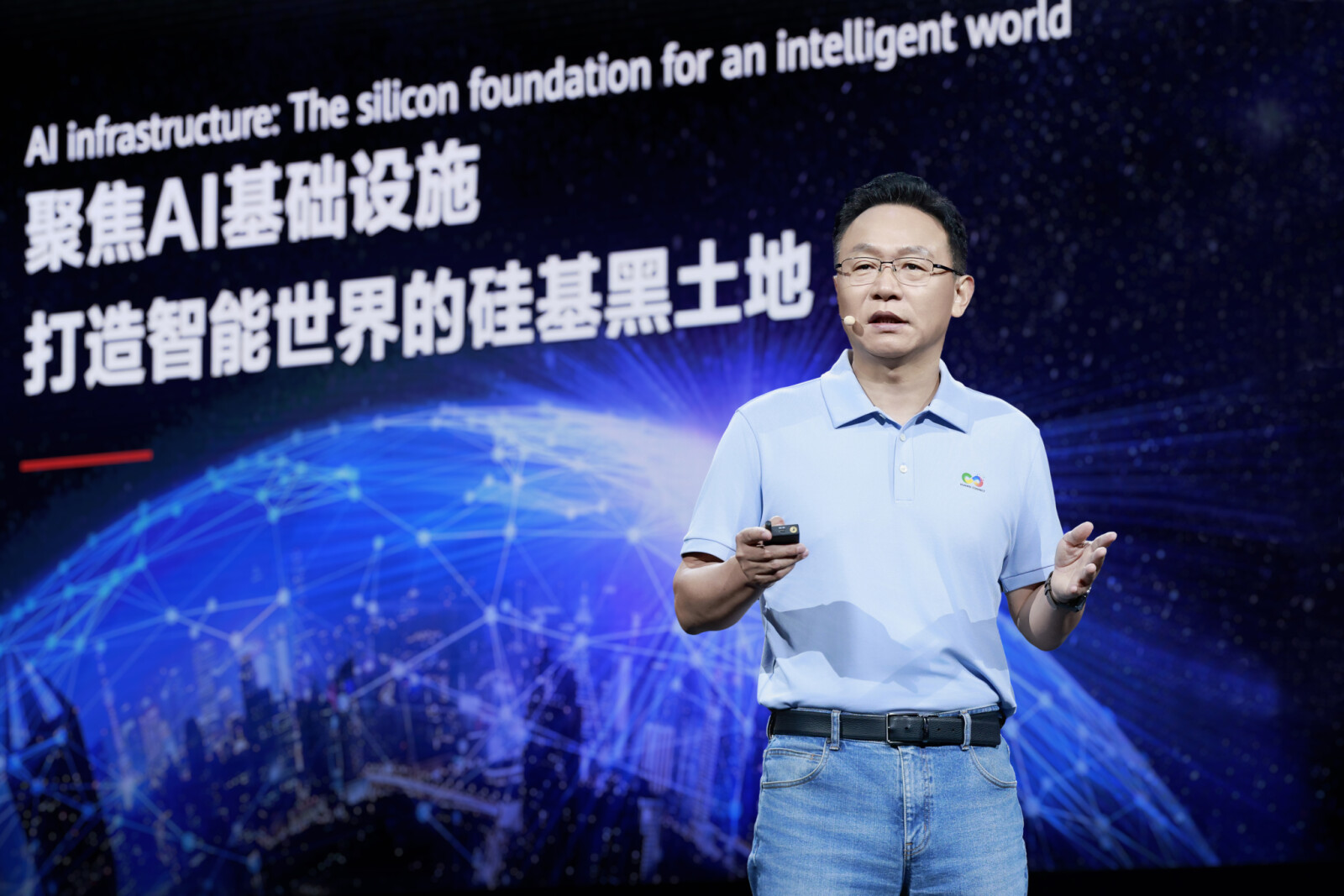
David Wang, Deputy Chairman of the Board and Rotating Chairman at Huawei, delivering a keynote speech at HUAWEI CONNECT 2026

AI is sweeping the world faster than any previous technological revolution. Today, foundation model parameters are rapidly approaching 10 trillion, and are projected to exceed 100 trillion by 2030. AI agents can now work on the same task continuously, for hours on end. By 2030, they will be able to handle tasks that span months.

In China alone, the average number of inference tokens consumed every day has surged to around 500 trillion, and is expected to reach quintillions (1018) by 2030.

On-device AI is also advancing rapidly. On-device models for smartphones have expanded from three billion parameters in 2024 to 30 billion today, and will push toward hundreds of billions in the near future.

These trends will set a much higher bar for the scale, performance, and reliability of underlying technical systems. Only by building powerful AI infrastructure can the industry lay a solid foundation for the future intelligent world.

An intelligent world is approaching – and faster than ever. To lead the charge into this new world, Huawei is laser-focused on building out AI infrastructure – the silicon foundation for the future to come.

In particular, Huawei’s AI strategy is centered on computing power, with a focus on monetizing hardware. The company is also sharpening its competitive edge through systems and architectural innovation. Centering these efforts on SuperPoDs and SuperClusters, the company aims to build a solid computing foundation and offer a new option for the world.

Huawei is a major contributor to open computing ecosystems, and will continue to support native training for mainstream foundation models on its systems, as well as supporting a vast range of models and applications.

For customers, Huawei provides flexible on-premises and cloud compute solutions for its customers to accelerate intelligent transformation across industries.

With diverse forms of compute, including solutions for micro-, low-tier, mid-range, and massive computing power – Huawei is driving the expansion of on-device and in-vehicle AI, making intelligence truly ubiquitous.

Additionally, Huawei is dedicated to building next-generation communications networks to bring readily available compute and intelligence to every person, home, and organization.

SuperPoDs gain broad consensus, with adoption growing in industries, academia, and research institutes

To date, over 1,000 Atlas 900 A3 SuperPoDs have been deployed, and Atlas 950 SuperPoD is seeing large-scale commercial use. While adoption continues to grow, SuperPoDs have gained broad acceptance across industry, academia, and research institutions as a key direction for AI infrastructure. Currently, a SuperPoD is explicitly defined as a computing system in which multiple computing nodes are tightly coupled through high-speed interconnect protocols, featuring unified memory addressing across physical nodes — functioning like a single logical computer.

SuperPoDs are the go-to choice for AI infrastructure buildout. Right now, 100k-NPU computing clusters have become the baseline for training SOTA models. However, traditional server architectures result in intra-cluster communications that account for over 40% of total training time, severely constraining Model FLOPs Utilization (MFU). Simulation results from Huawei’s Markov Lab show that a 100k-NPU cluster built with 4k-NPU SuperPoDs can deliver a 2.75x increase in MFU compared to a 100k-NPU cluster composed of 8-NPU servers.

11-chip UnifiedBus-powered portfolio for SuperPoDs and SuperClusters; the Atlas 960E SuperPoD –the industry’s first to use NPO

The Ascend series of chips is the most critical component in Huawei’s 11-chip UnifiedBus-powered portfolio for SuperPoDs and SuperClusters. Development on Ascend 960 has exceeded the company’s expectations, with performance doubling as planned. Ascend 960DT will be available in Q1 2027, three quarters ahead of the company’s original roadmap. And the Ascend 960PR will be ready in Q3 2027, one quarter ahead of schedule.

“We’re evolving our Ascend chip series on a one-generation-a-year cycle,” said Wang in his keynote. “In 2028 and 2029, we will roll out the Ascend 970 and 980 chips, respectively. Thanks to the Tau (τ) Scaling Law, not only will their compute specifications continue to double, but you can also expect to see huge improvements across the board in terms of memory bandwidth, memory capacity, interconnect bandwidth, and more.”

In addition to Ascend chips, Huawei has also developed a complete portfolio of chips for AI infrastructure, based on UnifiedBus, delivering key capabilities that cover computing, interconnect, storage, and management.

“SuperPoDs are designed to coordinate multiple NPUs through interconnect,” continued Wang. “We have developed a next-generation optical interconnect product based on near-packaged optics (NPO): the High-density Optical-interconnect-Node Engine (Hi-ONE).” Built on Huawei’s proprietary technologies, Hi-ONE has a multi-physics design for balancing optical, mechanical, electrical, electromagnetic, and thermal performance, realizing a transmission capacity of 7.2 Tbit/s per single engine.

“This is the industry’s first NPO product ready for mass production, delivering the largest transmission capacity. It is also the industry’s first NPO product with a built-in light source.”

This product combines high bandwidth and high reliability with low latency and low power consumption. This, coupled with UnifiedBus, will make it far easier to scale up SuperPoD interconnect systems.

Recently, Huawei submitted an implementation agreement (IA) on NPO to the Optical Internetworking Forum (OIF), a standards organization. The response from numerous industry partners has been widely positive. Huawei will continue its efforts to further refine the NPO industry ecosystem.

Using Ascend 960 chips and Hi-ONE, Huawei has developed the industry’s first NPO-based SuperPoDs: the Atlas 960E SuperPoDs. A single Atlas 960E SuperPoD can scale up to 4,096 NPUs, delivering 8 EFLOPS of FP8 compute performance, with up to 1 petabyte of HBM capacity. With 5,500 Hi-ONE units, this SuperPoD doesn’t need the 48,000 800G optical modules that would traditionally be required to connect all the NPUs. This cuts power consumption by over 550 kilowatts, while doubling the system’s fault-free operating time, achieving 99.8% system availability.

Combining the upgraded TaiShan 950 SuperPoD and context memory storage to power an ultrascale cluster with 1 million NPUs

As SOTA models scale to 10 trillion parameters, training and inference can no longer rely on a single AI server or AI SuperPoD – they require a more complex computing system. This system includes AI SuperPoDs, general-purpose SuperPoDs, and an interconnect system that features peer-to-peer interconnect and zero protocol conversion. For inference, including a petabyte-scale KV cache cluster is also a must.

To meet these demands, Huawei has fully upgraded its TaiShan 950 SuperPoD. Powered by UnifiedBus all-optical networking, this new SuperPoD supports up to 4,096 nodes with a unified memory pool of up to 256 TB. This setup significantly improves agent performance. For sandbox-intensive workloads, startup speeds for 100,000 sandboxes are 30 times faster than traditional servers, and sandbox density can be improved by an additional 25%. For vector search across 10 billion x 1,000-dimensional vectors, this SuperPoD delivers twice the search efficiency of traditional servers.

Huawei has also launched OceanStor M900 – a UnifiedBus-powered context memory storage cluster that delivers multi-tier KV caching for agent-heavy and longer-context workloads. Designed for agentic inference, this cluster supports one-hop direct access and provides a petabyte-scale KV cache for the L3.5 layer. OceanStor M900 also uses hybrid media and an optimized retention algorithm, extending SSD read/write lifespan by 16-fold. This ensures a higher KV cache hit rate alongside long-term stability and reliability from the ground up.

Combining its strengths in computing and communications, Huawei has built a brand-new agentic SuperCluster to accelerate training and inference for 10-trillion-parameter models. This SuperCluster uses UnifiedBus to consolidate multiple interconnect protocols into a single unified protocol, significantly reducing protocol conversion overhead. This delivers peer-to-peer interconnect between subsystems like Ascend SuperPoDs, Kunpeng SuperPoDs, and KV cache clusters. The SuperCluster also comes with a multi-tier, high-bandwidth, and large-capacity storage system that enables direct single-hop access for all KV cache tiers.

With a two-tier, four-plane Clos architecture, the SuperCluster can interconnect up to 512,000 NPUs. When combined with a multi-rail topology, this cluster can support up to one million NPUs.

One of Huawei’s core strategies: Going open source and open system to build out computing ecosystems

The Kunpeng ecosystem is driving digital and intelligent innovation across a wide range of industries. To date, the Kunpeng ecosystem has attracted over 4.16 million developers and more than 7,200 ecosystem partners from around the globe. The community currently supports over 560 open-source projects worldwide. openEuler has seen more than 20 million installations, securing the largest share in China’s server OS market.

The Ascend ecosystem has reached a new inflection point. The Compute Architecture for Neural Networks (CANN) is the foundation of the Ascend ecosystem. Today, CANN has moved to sustained, community-driven open-source development, which has brought the platform from usable to user-friendly.

External CANN developers now comprise 61% of all CANN developers, outnumbering internal developers for the first time. With over 5,200 monthly active developers, the CANN community has become the most vibrant open-source community in China. What’s more, over 40 models have been natively pre-trained on Ascend and CANN, making it the only proven domestic stack capable of model pre-training.

Ascend now supports over 90 leading third-party open-source projects, including PyTorch, Triton, vLLM, and veRL. With strong support from the Linux Foundation, Ascend is the first official Chinese compute platform on PyTorch’s website. This gives developers around the world ready access to new innovations in the Ascend ecosystem.

Diverse forms of compute for ubiquitous on-device and in-vehicle AI

AI is expanding faster into all kinds of devices. To deliver an unparalleled AI experience across all scenarios, Huawei will continue to strengthen capabilities in four key areas:

First, Huawei will combine Kirin and Ascend chips to drive self-reliance and autonomy in on-device compute.

Second, Huawei will bring together Pangu models and third-party models to make on-device intelligence better and easier to use.

Third, HarmonyOS, as an Agent OS for ubiquitous intelligence, will be completely redefined from the ground up – spanning system architecture, how it operates, and interaction logic – to enable human-agent collaboration.

Fourth, Huawei will keep cultivating a diverse AI ecosystem, which is the foundation for its system agent Celia to thrive.

Huawei plans to build four on-device computing platforms: for AI phones, AI PCs, vehicles, and homes. Through cross-device and device-cloud compute synergy, Huawei will be able to provide distributed swarm intelligence, delivering integrated and continuous intelligent services across personal mobile, office, vehicle, and home spaces, ultimately bringing intelligence to every person and every space.

Building next-generation communications that prioritize readily available compute, because without networks, all compute is siloed

Next-generation communications networks are crucial for fully unleashing the value of AI compute. We are driving the upgrade to networks that, in addition to connecting people, will prioritize delivering readily available compute. These networks will be underpinned by 5G-A/6G, 10-gigabit optical networks, and multi-tier, low-latency bearer networks, delivering intelligent connectivity across data centers, the edge, and devices.

Concluding his keynote, Wang expressed that AI “may well be the final technological revolution in human history,” noting that its impact is deeper and broader, and coming faster than anyone could have ever imagined. “No single company,” he said, “can build an intelligent world alone.”

He stressed Huawei’s ongoing commitments moving forward:

  • Huawei will remain committed to building a solid silicon foundation to make computing power readily accessible to all.
  • The company will continue to open source its software, helping developers unleash their full potential.
  • It will continue to embrace a wide range of models and applications, unlocking value in every form.

“And we will continue to work together to drive shared success, growing together with our customers and partners around the world,” Wang concluded. “Let’s work together to build a fully connected, intelligent world.”

Themed Advancing the Agentic World, HUAWEI CONNECT 2026 will delve into AI across three dimensions: strategy, technology, and ecosystems. You can expect an in-depth look at our latest strategic initiatives, and we’ll also be unveiling our all-new digital and intelligent infrastructure products, scenario-specific solutions for industries, and development tools. The event will run from September 17 to 19 at the Shanghai World Expo Exhibition & Convention Center and Shanghai Expo Center. For more information, please visit HUAWEI CONNECT 2026 online at www.huawei.com/en/events/huaweiconnect

FAQs:

Q1: What is a SuperPoD, and why is it becoming increasingly important?

A SuperPoD is a computing system in which multiple computing nodes are tightly coupled through high-speed interconnect, enabling them to share unified memory and function like a single computer. As foundation model training and inference continue to scale up, SuperPoDs can reduce communications overhead in large-scale clusters and improve Model FLOPs Utilization (MFU). They have gained broad consensus across industry, academia, and research institutes in AI infrastructure, and are the go-to choice for AI infrastructure buildout.

Q2: What makes the Atlas 960E SuperPoDs special?

The Atlas 960E SuperPoD is the industry’s first NPO-based SuperPoD. A single Atlas 960E SuperPoD can scale up to 4,096 NPUs, delivering 8 EFLOPS of FP8 compute performance, with up to 1 petabyte of HBM capacity. With 5,500 Hi-ONE units, this SuperPoD doesn’t need the 48,000 800G optical modules that would traditionally be required to connect all the NPUs. This cuts power consumption by over 550 kilowatts, while doubling the system’s fault-free operating time, achieving 99.8% system availability. Atlas 960E SuperPoDs can provide efficient and reliable computing power for large-scale AI training and inference.

Q3: What is NPO, and what role does Hi-ONE play in a SuperPoD?

NPO stands for Near-Packaged Optics, an optical interconnect technology designed for high-speed connectivity. Hi-ONE, developed by Huawei, is the industry’s first NPO product ready for mass production. It delivers the largest transmission capacity at 7.2 Tbit/s and is currently the industry’s only NPO product with a built-in light source. Hi-ONE, coupled with UnifiedBus, will make it far easier to scale up SuperPoD interconnect systems.

Hashtag: #Huawei

The issuer is solely responsible for the content of this announcement.

Lee Kum Kee Sauce Actively Participates in the 2026 Fortune Global 500 Forum

Dr. Julie Xing, Global Board Chairman and CEO Discusses New Pathways to High-Quality Growth with Global Business Leaders


GUANGZHOU, CHINA – Media OutReach Newswire – 17 September 2026 – Lee Kum Kee Sauce (“Lee Kum Kee”), the century-old sauce brand and the only sauce and condiments brand among this year’s Forum partners, actively participated in the 2026 Fortune Global 500 Forum, held on September 16 in Guangzhou, China. Julie Xing, Ph.D., Global Board Chairman and Chief Executive Officer of Lee Kum Kee Sauce, was invited to speak at a panel discussion and to attend the Most Powerful Women (MPW) Breakfast, joining other leading global business leaders to explore the key pathways for enterprises to achieve sustainable growth.

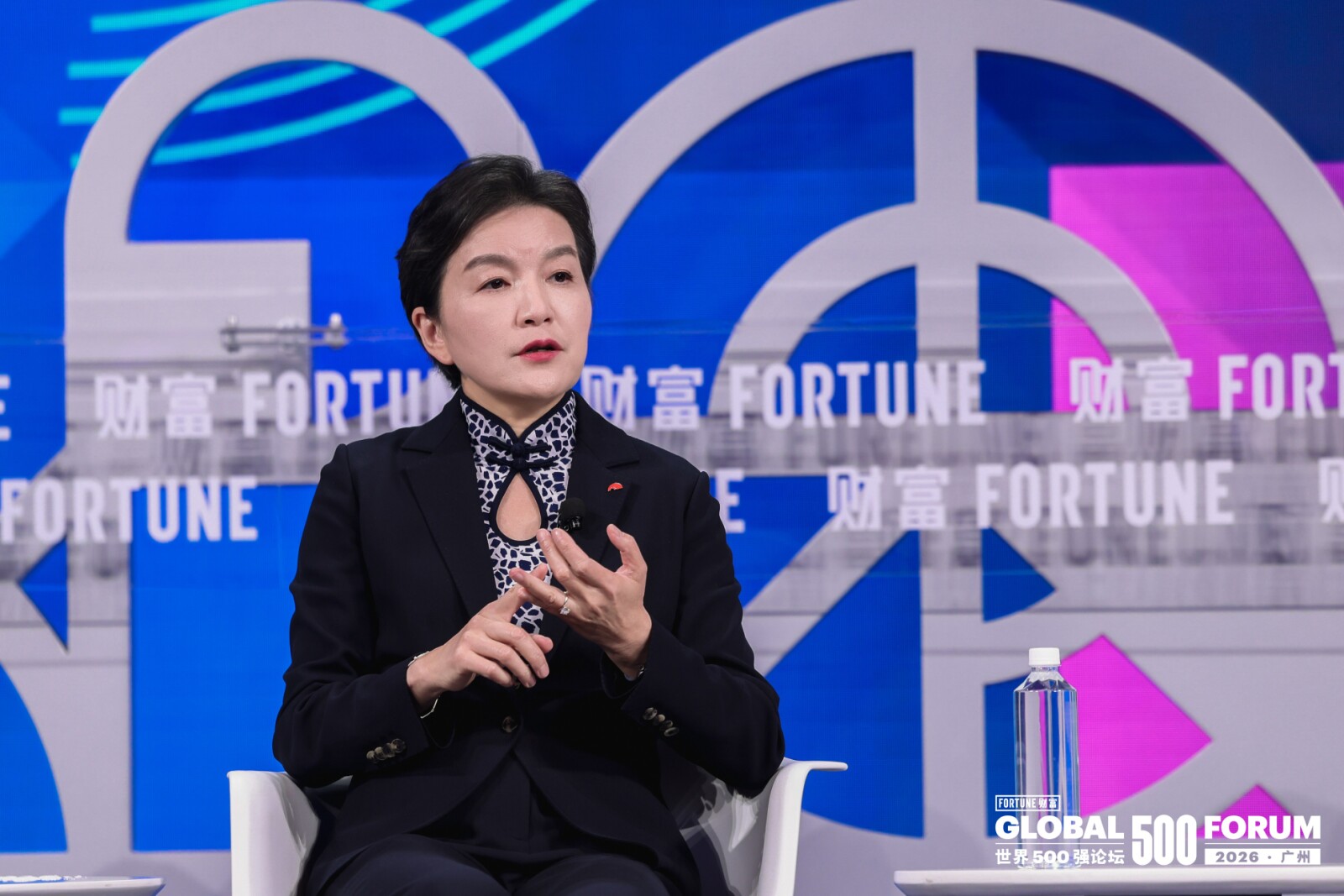
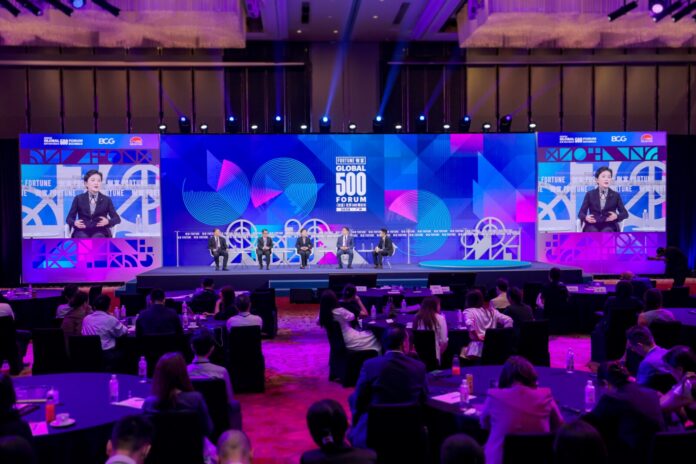
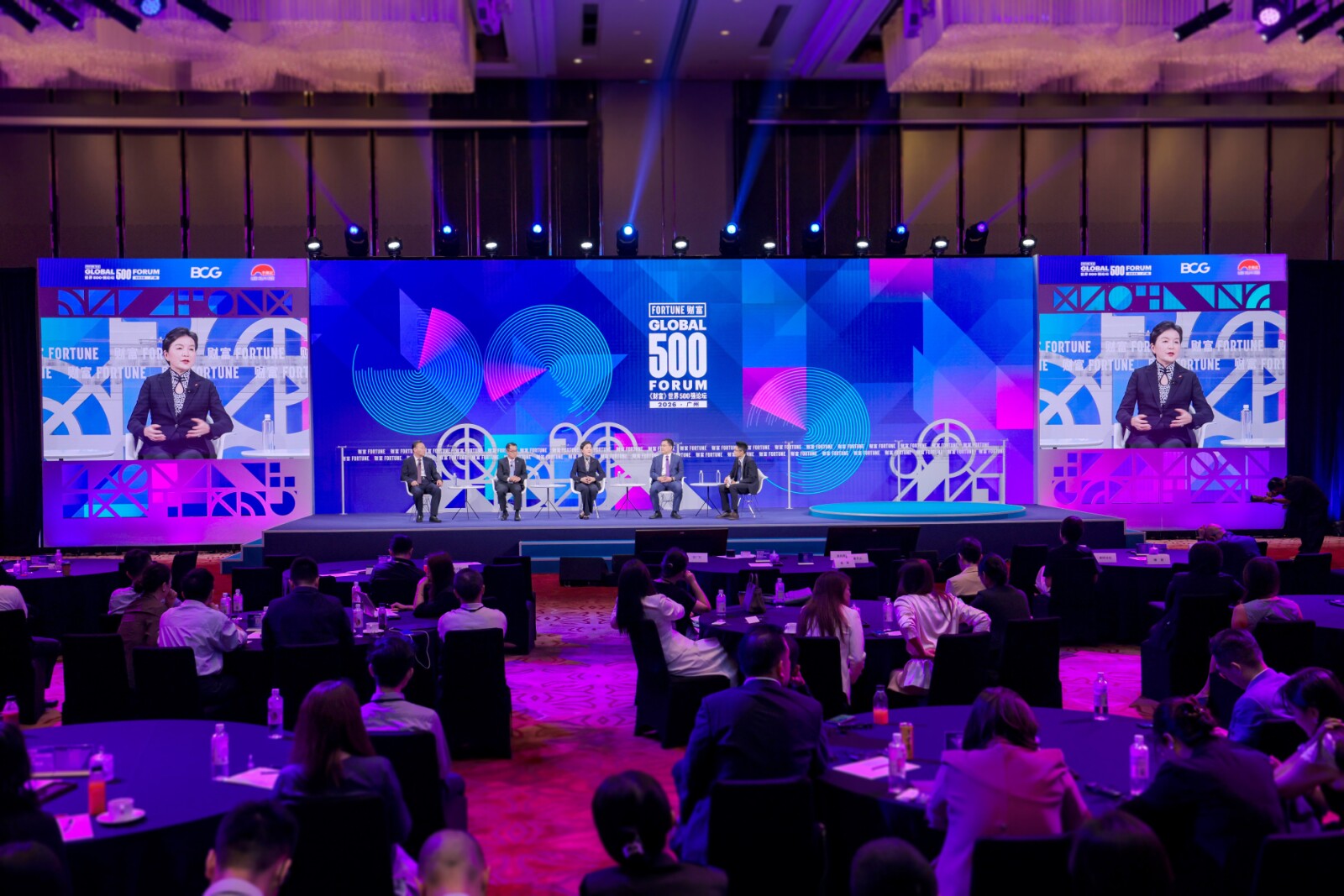
Dr. Julie Xing, Global Board Chairman and Chief Executive Officer of Lee Kum Kee Sauce, speaks at the panel discussion of the 2026 Fortune Global 500 Forum, exchanging insights with industry leaders.

Under the theme “The New Growth Equation”, this year’s forum brought Dr. Xing and three other industry leaders, including Pingyi Huang, Senior Vice President of Shandong Weiqiao Pioneering Group Co., Ltd.; Weiming Xiang, Vice President, GE Aerospace and President, GE Aerospace Greater China; and John Qu, Senior Partner, McKinsey & Company, for a panel discussion titled “The Invisible Moat: Revaluing Soft Power and Sustainability”. Moderated by Wei Yue, Senior Editor at Fortune China, the discussion explored what truly constitutes long-term advantages that can withstand cycles amid rapid technological iteration and intensifying competition. Topics spanned brand trust and consumer mindshare in consumer goods, data insights and organizational transformation in the AI era, and the pathways and stages of globalization for Chinese enterprises.

During the panel discussion, Dr. Xing points out that a true moat is a 360-degree, multi-dimensional structure built on product quality, consumer experience, emotional value, and innovative scenarios. (Photo credit: Fortune Global 500 Forum)

“In an era where almost everything can be replicated, consumers’ mindshare and trust cannot,” Dr. Xing said during the discussion. “The real moat is not just the product itself — it is a 360-degree, multi-dimensional moat built on product quality, consumer experience, emotional value and innovative scenarios.” She added that AI is bringing disruptive changes from consumer insights to organizational structure, and that future-ready organizations must embrace a flatter structure powered by AI agents, redirecting freed-up resources toward strategic decision-making and long-term value creation.

On the topic of Chinese enterprise globalization, Dr. Xing shared a three-stage pathway from product export to local manufacturing to glocalization, emphasizing that true globalization means deeply understanding local consumers and serving local markets with local insights.
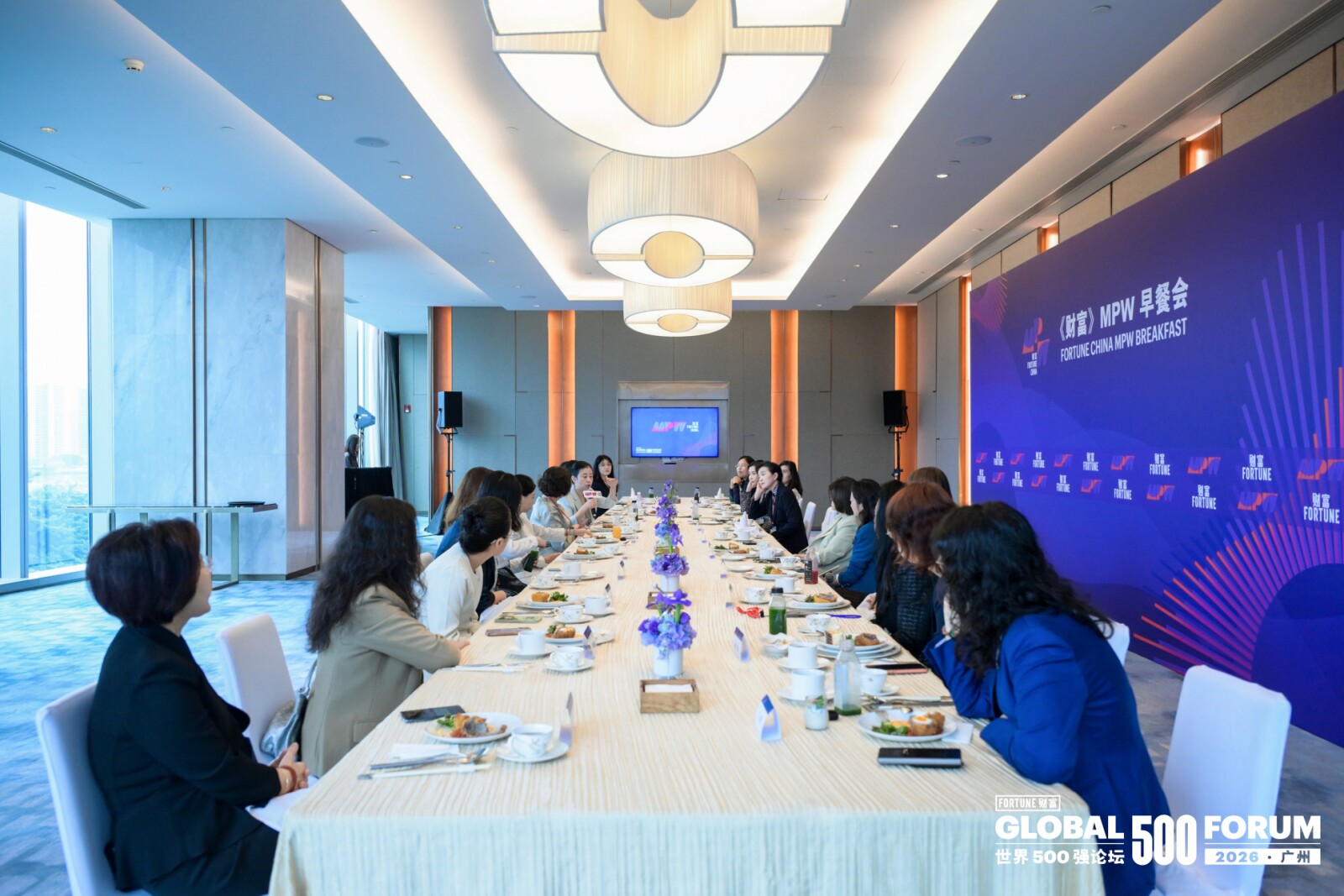
Dr. Julie Xing, named to the 2026 Fortune China MPW list, attends the MPW Breakfast and shares her thoughts on corporate competitiveness in the AI era. (Photo credit: Fortune Global 500 Forum)

During the Forum, Dr. Xing was invited to share her insights at the MPW Breakfast themed “Decision-Making Power in the Age of Efficiency”, where she joined leaders from across industries to discuss opportunities and challenges for businesses in the new era. She highlighted that while AI enhances operational efficiency, human judgment, leadership and long-termism remain more critical competitive advantages.

As a recipient of the 2026 Fortune China’s MPW list, Dr. Xing has earned this recognition for three consecutive years. Launched in 2010, the MPW list is regarded as one of the most representative rankings of women business leaders in China.

The Fortune Global 500 Forum this year brought together representatives from over 350 leading global companies, academic institutions, and business leaders worldwide. Discussions focused on topics including artificial intelligence, global supply chain transformation, sustainable development, and opportunities in emerging markets.

Looking ahead, Lee Kum Kee will continue to uphold its commitment to quality and innovation. Alongside driving business growth, the company will further deepen its sustainability practices, nurture talent, and enhance corporate governance, working with all stakeholders to forge new pathways to high-quality growth.
Hashtag: #LeeKumKee #LKK

The issuer is solely responsible for the content of this announcement.
About Lee Kum Kee Sauce

Lee Kum Kee Sauce is the global gateway to Asian culinary culture, dedicated to promoting Chinese culinary culture worldwide. Since 1888, it has brought people together over joyful reunions, shared traditions and memorable meals. Beloved by consumers and chefs alike, Lee Kum Kee Sauce’s range of more than 300 sauces and condiments sparks creativity in kitchens everywhere, inspiring professional and home chefs to experiment, create and delight. Headquartered in Hong Kong, China and serving over 100 countries and regions, Lee Kum Kee Sauce’s rich heritage, unwavering commitment to quality, sustainable practices and “Constant Entrepreneurship” combine to enable superior experiences through Asian cuisine for people worldwide. For more information, please visit .

About Fortune

Fortune is the premier global media company for global business leaders, built on a 96-year-old legacy of trusted, award-winning journalism. Independently owned, Fortune tells the story of business, spanning legacy companies to the world’s new generation of innovators. Fortune measures corporate performance through rigorous benchmarks, and holds companies accountable, in regions around the world. Its iconic rankings include Fortune 500, Fortune Global 500, Most Powerful Women, and World’s Most Admired Companies. Fortune builds world-class communities by convening industry thought leaders for exclusive summits and conferences, including the Fortune Global Forum, Fortune Brainstorm Tech, and Fortune Most Powerful Women. For more information, visit .

Delphos Advises PowerGen on Strategic Investment from All On to Expand Energy Access Across Nigeria


WASHINGTON D.C., US – Media OutReach Newswire – 17 September 2026 – Delphos is pleased to announce the successful closing of a strategic investment in PowerGen Renewable Energy (“PowerGen”) by All On Partnerships for Energy Access Limited by Guarantee (“All On”), a leading Nigerian impact investor dedicated to expanding access to commercial energy across the country.

Delphos acted as an exclusive financial advisor to PowerGen, supporting the company throughout the structuring, negotiation and successful execution of the transaction.

The funding will support the continued expansion of PowerGen’s renewable energy platform in Nigeria, providing growth capital for both its commercial and industrial (“C&I”) business and distributed utility operations. The investment will fund additional renewable energy infrastructure, delivering reliable, affordable and lower-carbon electricity to businesses and communities, and is expected to support up to 6,000 electricity connections and reach an estimated 41,000 beneficiaries across Nigeria.

The transaction follows PowerGen’s successful landmark capital raise completed in 2025. The fundraising brought together a consortium of leading development finance institutions (DFIs) and private investors, reflecting continued investor confidence in the company’s growth strategy, operating model, and management team. As part of the financing round, Delphos advised PowerGen on the investment from IFU, Denmark’s development finance institution.

Founded in 2016, All On is one of Nigeria’s foremost investors in the distributed energy sector. Its investment in PowerGen further validates the company’s business model and reinforces its position as a leading distributed renewable energy platform in Nigeria.

Aaron Cheng, CEO of PowerGen, stated: “This investment from All On is a strong vote of confidence in PowerGen’s platform and our ability to deliver reliable power at scale. All On’s deep experience in Nigeria’s energy sector, makes them an ideal partner as we grow our operations in Nigeria. We’re grateful to Delphos for their continued partnership in structuring this transaction and supporting our broader financing strategy as we expand across the continent.”

Connor Shine, Director, at Delphos, concluded: “All On’s investment in PowerGen underscores the growing conviction among strategic investors that distributed renewable energy is central to closing Africa’s power gap. Delphos is proud to have advised PowerGen on this transaction, and we look forward to continuing to support the company as it accelerates its expansion across the continent.”

Hashtag: #Delphos

The issuer is solely responsible for the content of this announcement.
About PowerGen:

PowerGen is a leading renewable energy platform across Africa, with offices in four countries (Kenya, Nigeria, Sierra Leone and DRC). PowerGen owns and operates renewable energy and distribution utility projects to deliver clean, reliable, and affordable power. In 2024, PowerGen was listed as one of the Financial Times’ Africa’s Fastest Growing Companies! PowerGen ranked 40th in the overall rankings and 5th in the Energy & Utilities sector.

For more information:

About All On:
All On Partnerships for Energy Access (“All On”), an independent impact investing company, was seeded by Shell to catalyze the growth of Nigeria’s off-grid energy market to provide affordable, reliable, and sustainable energy for low-income households and small businesses.

All On provides debt and equity funding, as well as non-financial support, to Nigerian energy companies that align with its mission of closing Nigeria’s access-to-energy gap through renewable energy solutions.

For more information:

About Delphos:

Delphos is the definitive source for arranging innovative financial solutions for development companies and projects. Specialized in raising long-term, competitively priced capital for corporates, fund managers, developers, SMEs, sovereigns, and entrepreneurs worldwide. Since 1987, Delphos has arranged more than US$20B in development finance to support the efforts of over 1,200 companies. With resources of more than 350 government agencies and multilateral organizations worldwide to help clients with their international business goals and have sustainable impact. Delphos also provides market-leading transaction advisory and investment/risk management consulting services to government and private sector clients across multiple industries. Being approved advisors to AfDB, DFC, IDB Invest, IFC, USAID, US Ex-Im Bank, USTDA, WBG, leading private equity firms, infrastructure developers and strategic investors, and foreign governments and utilities.

For more information:

When Technology Meets Lamborghini Legacy–The Design Story Behind TECNO POVA 8 Pro 5G Tonino Lamborghini Limited Edition

A Collaboration Defined by Boldness

HONG KONG, Sept. 17, 2026 /PRNewswire/ — Founded in 1981 by Tonino Lamborghini, heir to the Lamborghini family, Tonino Lamborghini is a lifestyle experience brand with an engineering heritage. For over four decades, the brand has brought the essence of Italian attitude and Lamborghini uncompromised sprit to the world, where luxury is not only something you own, but something you feel, live and experience. For Tonino Lamborghini, lifestyle is ultimately a state of mind—a bold attitude defined by character, boldness and individuality.

This daring spirit makes the partnership with TECNO a natural fit. TECNO believes that technology should go beyond function and become a way for users to express who they are in a fresh view. This belief is especially strong in the POVA line, where bold expression comes through youthful energy, unconventional design and a performance-driven experience.

In a market where smartphones are becoming increasingly similar, both brands share the desire to break away from convention. Tonino Lamborghini brings Italian design, mechanical aesthetics and a distinctive lifestyle attitude, while TECNO brings mobile innovation, technological know-how and a deep understanding of a new generation of users.

The result is the TECNO POVA 8 Pro 5G Tonino Lamborghini Limited Edition, made for people who see a smartphone as an expression of attitude and identity. Rather than simply placing an iconic logo on a smartphone, the collaboration translates the mechanical design language and bold spirit of Tonino Lamborghini into the youthful identity of POVA.


Bold Expression, Inspired by the Language of Lamborghini Legacy

The project began with a fundamental question: how could Tonino Lamborghini’s legacy, design language and mechanical heritage be translated into a mobile product?

To answer this, the TECNO design team looked beyond the surface. The team studied the visual codes of design, from body lines and lighting structures to cooling grilles, honeycomb patterns and exhaust-inspired details. At the same time, TECNO worked closely with the Tonino Lamborghini team to understand the deeper spirit behind the brand.

Together, the two teams reinterpreted these elements as a design language that belongs naturally to a smartphone while still capturing the attitude behind Tonino Lamborghini: strength, precision, distinction and bold self-expression.

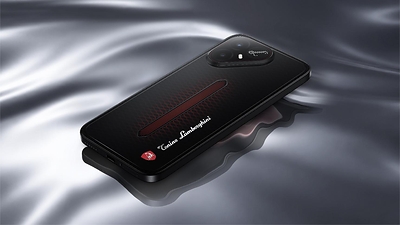
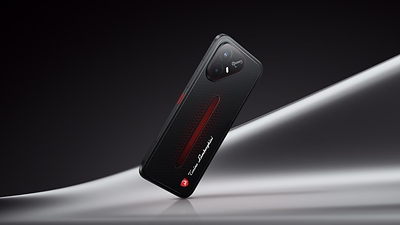
This thinking is reflected across the design of the TECNO POVA 8 Pro 5G Tonino Lamborghini Limited Edition. The phone adopts a classic black-and-red colorway, with black as the dominant tone and red as the visual accent. The result is powerful but controlled, energetic but refined.

At the center of the rear design is the Pulse Line, inspired by the flow of energy and visual rhythm of engineered design. It creates a clear focal point on the back of the phone, like a pulse of energy running through the device. As an abstract expression of power and dynamic movement, it translates POVA’s performance-driven DNA into a distinctive visual signature.


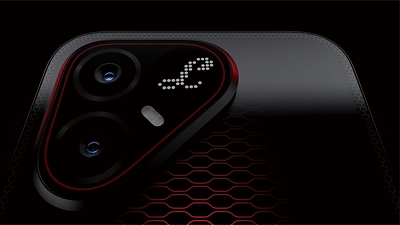
Surrounding it is the Signature Shield pattern, a graphic structure inspired by Tonino Lamborghini’s shield identity and mechanical geometry. Together, these details give the phone a strong sense of movement, depth and recognition. The Pulse Line expresses energy in motion, while the shield pattern gives that energy strength and structure.

Completing the composition is the metallic Tonino Lamborghini logo positioned at the lower-right corner. Rather than appearing as an isolated badge, its premium metallic finish becomes part of the overall composition, working together with the black-red contrast, layered textures and mechanical patterns to create a complete visual identity.

This is where bold expression becomes more than decoration. The phone is no longer only a functional choice. It becomes a statement of identity and a way for users to show confidence, individuality and style, while experiencing Tonino Lamborghini’s aesthetics in a new mobile form.

Bold Design, Elevated by Mechanical-Inspired Craftsmanship

For TECNO, design was only the beginning. The real challenge was to bring the concept to life with a finish that felt truly premium in the hand: to deliver depth, reflection and texture comparable to a high-end lacquered surface, rather than letting the design remain a flat visual idea.

To achieve this, TECNO developed one of the most complex rear-cover production processes ever used on a POVA product.

The team created an exclusive dual-layer stacking process. The first layer uses a brightness-enhancing treatment, similar in spirit to applying a protective coating that expresses depth, clarity, and visual richness on a premium surface. This gives the rear cover a deeper, more refined reflective quality, allowing light and shadow to move across the surface with greater richness.

The second layer was even more challenging. TECNO wanted the black finish to reveal different visual effects under different angles of light. As the user rotates the phone, hidden red structures gradually emerge, creating a subtle shift between darkness and energy. To achieve this effect, TECNO introduced specially processed internal mirror structures. The principle is similar to how curved mirrors refract and redirect light, making the process far more complex and significantly increasing production difficulty.

Between the two material layers, TECNO created a physical height difference. This allows the rear cover to simulate the layered relationship of mechanical structures, cooling components and honeycomb grilles, giving the phone genuine spatial depth rather than a flat printed texture.

Such complexity also brought major consistency challenges. To ensure every mass-produced unit could achieve the desired effect, TECNO spent additional time validating the manufacturing process, repeatedly adjusting the coating, ink and processing techniques.

After months of refinement and multiple rounds of communication with Tonino Lamborghini, TECNO was able to bring the bold design concept into a real product with the quality, depth and finish expected from both brands. The final device does more than carry the visual codes of Tonino Lamborghini. It brings them to life through materials, craftsmanship and production precision and technological innovations.

Every Detail Carries the Spirit

The collaboration does not stop at hardware design. From the beginning, TECNO wanted to create a complete Tonino Lamborghini Limited Edition experience, extending the brand spirit into software, interaction and accessories. The aim was to ensure that the phone’s distinctive identity could be felt not only in its appearance, but throughout everyday use.

In the software experience, TECNO chose the shield, the emblem of the Tonino Lamborghini brand, as the central visual element, extending the brand’s identity into a cohesive system design language.

To maintain consistency, the customized icons adopt the classic black-red color palette and incorporate a glass-like material effect. TECNO also refined selected icon outlines to make them sharper and more geometric, shifting softer rounded forms toward hexagon-like or shield-inspired silhouettes, so the system’s visual language better reflects the strength and precision associated with Tonino Lamborghini.

Beyond static visuals, TECNO invested nearly four months in developing a full set of system experiences, including dynamic wallpapers, ringtones, and the Alive Matrix Display with a customized Tonino Lamborghini’s signature “L” effect. The goal was to ensure that every interaction—from lighting up the device to unlocking and navigating the system—carries a consistent sense of identity, combining TECNO’s intuitive user experience with Tonino Lamborghini’s bold and premium expression.


The same attention to detail extends to the accessories. TECNO redesigned the unboxing experience around the phone, including a black-and-red braided cable, customized charger and protective case. These accessories are not treated as add-ons, but as part of the full design story and experience.

The protective case continues the same mechanical-inspired thinking. It uses a dual-material combination of TPU and PC, improving protection while echoing the relationship between an exterior body covering and an internal mechanical frame. The central section adopts precision carving to create a Kevlar-inspired carbon-fiber texture, giving the case a distinctly technical and dynamic character. Rather than simply protecting the phone, the case extends the same mechanical aesthetic into everyday use.

Boldness as an Attitude

Boldness is not about being excessive. It is not about being loud for the sake of attention. True boldness is the confidence to stay distinctive, to pursue a clear vision, and to turn that vision into every detail of a product.

That is the spirit behind the TECNO POVA 8 Pro 5G Tonino Lamborghini Limited Edition.

From the complex dual-layer rear-cover process and mechanical-paint-like finish to the customized software experience and redesigned accessories, every detail reflects the same ambition: to make the smartphone not only more recognizable, but more expressive.

The TECNO POVA 8 Pro 5G Tonino Lamborghini Limited Edition is therefore more than a co-branded smartphone. It is a contemporary interpretation of mechanical aesthetics, where Italian design, engineering precision and mobile innovation come together in one complete experience.

More importantly, it is a statement of attitude: a bold belief that craftsmanship can transform technology into a more distinctive expression of identity.

DXC Engineering and LOXO join forces to Accelerate Enterprise-Scale Autonomous Commercial Vehicle Deployment

  • DXC Engineering and LOXO are partnering to accelerate the deployment of Level 4 autonomous commercial vehicles for middle- and last-mile logistics.
  • The collaboration combines LOXO’s proven autonomous driving technology with DXC’s engineering, AI, data and systems integration expertise to help industrialize autonomous logistics at scale.
  • Together, the companies aim to move autonomous logistics beyond pilots and into repeatable enterprise operations that address driver shortages, cost pressures, and rising delivery demand.

ASHBURN, Va., Sept. 17, 2026 /PRNewswire/ — DXC Technology (NYSE: DXC), a leading enterprise technology and innovation partner announced a strategic partnership with LOXO, a Swiss-based developer of Level 4 autonomous driving software for commercial vehicles to accelerate the deployment of autonomous logistics solutions at scale. Leveraging LOXO’s proven autonomous driving platform with DXC Engineering’s data and AI expertise, the two companies will help logistics customers deploy next-gen autonomous solutions faster and more reliably.

DXC and LOXO
DXC and LOXO

Autonomous logistics, the systems providing the fully autonomous point-to-point transfer of goods, are rapidly moving from isolated pilots to real-world operations at scale. With industry projections pointing to around 750,000 unfilled truck-driver positions by 2028, logistics providers are facing rising delivery demand, driver shortages, cost pressures, and increasingly complex operating requirements. 

LOXO’s Level 4 autonomous driving platform has established the company as a leader in autonomous urban logistics, becoming the first company in Europe to receive approval for Level 4 driverless logistics operations on public roads.

The autonomous platforms are designed for logistics use cases, including repeatable point-to-point routes between hubs, warehouses, and distribution facilities, where autonomous vehicles can help operators add capacity and improve efficiency without depending solely on scarce driver availability.

Through this partnership, DXC Engineering will advance the industrialization and the scale-up of LOXO’s technology, enabling customers to deploy autonomous logistics solutions, such as driverless light commercial vehicles moving goods between warehouses, more efficiently across enterprise environments. Many autonomous vehicles today still operate mainly in pilot environments, without being fully integrated into customers’ logistics operations. A scalable solution requires more than the vehicle itself – it requires seamless integration with back-end systems, data services, fleet orchestration and operational workflows. The LOXO-DXC collaboration is designed to close this gap.

“We have spent years building the right technology, understanding the real needs of European logistics operators. As regulatory frameworks for autonomous driving take shape across Europe, commercial autonomous vehicle deployment is ready to move from pilots to scaled operations, and we are now ready to scale. DXC brings the engineering depth and enterprise delivery capabilities that complement our autonomous driving technology. Together, we have the opportunity to turn proven autonomy into scalable commercial operations,” said Amin Amini, CEO and Co-Founder, LOXO.

Scaling autonomous logistics

With more than 50 million vehicles powered by DXC technology, DXC will help scale LOXO Digital Driver™ (LDD) across enterprise logistics environments. Vehicle-agnostic and built for defined logistics use cases, LDD reflects LOXO’s understanding of European regulations, operator needs, and route-specific deployments. By combining LOXO’s proven Level 4 autonomous driving platform with DXC Engineering’s advisory, data, AI, systems integration, and delivery capabilities, the companies can help customers address driver shortages, cost pressures, urban access restrictions, and sustainability goals while integrating LDD with the back-end systems, data services, fleet orchestration, and workflows needed to run autonomous logistics reliably at scale.

“Autonomous driving technology is on the road today; the next challenge is scaling it across enterprise operations,” said Karim Jeribi, Europe General Manager, Consulting & Engineering Services DXC Technology. “DXC brings the engineering, integration, and delivery expertise to industrialize autonomous technology and connect it to the systems that keep logistics moving. Together with LOXO, we can help customers move from autonomous vehicles to fully integrated autonomous logistics operations.”

DXC and LOXO aim to create a repeatable deployment model for autonomous commercial vehicles, reducing complexity and accelerating adoption for logistics providers, fleet operators, and vehicle manufacturers. With LOXO’s platform as the foundation and DXC enabling industrial-scale delivery, the companies will focus on turning autonomous driving technology into commercially viable, scalable logistics operations that can be deployed across defined routes, expanded to new customers, and scaled across European markets and beyond.

To learn more about the DXC and LOXO partnership, please visit https://dxc.com/industries/automotive/dxc-loxo 

About LOXO

LOXO is a Swiss-based technology company developing Level 4 autonomous driving solutions for commercial vehicles, with a focus on logistics applications across Europe. LOXO’s Digital Driver technology is designed to support autonomous applications for logistics hubs, distribution networks, and commercial transport operations. 

About DXC Technology

DXC Technology (NYSE: DXC) is a leading enterprise technology and innovation partner delivering software, services and solutions to global enterprises and public sector organizations, helping them harness AI to drive outcomes at a time of exponential change with speed. With deep expertise in Managed Infrastructure Services, Application Modernization and Industry-Specific Software Solutions, DXC modernizes, secures and operates some of the world’s most complex technology estates. Learn more at dxc.com.

Media contacts: Lara Amini, CMO and Managing Director, LOXO Germany, lara@loxo.ch, +41 79 328 30 20; Ashley Houk-Temple, Media Relations, DXC Technology, ashley.houktemple@dxc.com 

NEW POLL: D.C. Policy Influencers, Small Business Owners and American Voters Demand U.S. Companies Receive Fair Treatment by Foreign Governments

Bipartisan majorities warn that U.S. lawmakers cannot tolerate discriminatory regulations by foreign countries that put American jobs, exports, and small businesses at risk.

  • 78% of the American public say they would be more likely to support policymakers who defend American businesses overseas, including 72% of Democrats and 87% of Republicans.
  • More than 90% of small business owners believe the success of American companies in international markets increases U.S. exports and advances American technology.

WASHINGTON, Sept. 17, 2026 /PRNewswire/ — The U.S. government should ensure that American companies are treated fairly by foreign governments while doing business abroad — an issue that bipartisan majorities believe is critical to America’s future economic competitiveness, a comprehensive new poll finds.

The survey of Washington, D.C. policy influencers, small business owners and voters was conducted by the non-partisan research firm Penta Group and commissioned by the US-Asia Fair Market Alliance (US-Asia FMA).

The findings reveal that both Democrats and Republicans broadly believe U.S. lawmakers should make fair market access a priority, and that the U.S. government should respond swiftly to defend businesses against unfair discrimination. The poll also indicates that fair treatment of U.S. firms abroad is no longer seen as just a corporate concern, but as a vital pillar of U.S. economic competitiveness.

“This data sends an unmistakable message to both Washington and our trading partners in Asia: Americans expect a level playing field, and they expect our government to defend it. When foreign regulators selectively target American companies with discriminatory hurdles, they aren’t just harming them — they are choking off export channels for American small businesses, threatening domestic jobs, and undermining the very foundation of rules-based trade. We cannot allow our allies to reap the benefits of open access to the U.S. market while shutting the door on American innovation and enterprise.”
— Matt Mowers, Executive Director, US-Asia Fair Market Alliance

The poll surveyed more than 300 D.C. policy influencers — including congressional staff, think tank scholars, and foreign policy experts — and a nationally representative sample of 1,000 American voters, including 137 small- and medium-sized business owners.

Key findings from the survey include:

  • Broad Demand for Fair Treatment: 86% of D.C. policy influencers and nearly 90 percent (88%) of the American public agree that U.S. companies deserve fair and reciprocal treatment in foreign markets when doing business with global allies. That expectation applies regardless of the company or industry involved.
  • Small Business Owners Feel the Financial Impact of Unfair Treatment Abroad: 70% of small- and medium-sized business owners believe unfair treatment of American companies abroad could have a significant impact on their financial well-being.
  • Consequences for Trade Alliances: A decisive majority of respondents (76% of voters and 71% of D.C. policy influencers) believe the U.S. should respond equally firmly to unfair market restrictions imposed on U.S. companies, regardless of whether the country involved is a close ally.
  • Protecting U.S. Exporters: 67% of voters and 75% of D.C. policy influencers warn that unfair or discriminatory treatment of U.S. companies can cause significant harm to U.S. exports — and over three-in-five D.C. policy influencers believe the issue should be addressed through trade negotiations or formal dispute-settlement.
  • Bipartisan Mandate for U.S. Policymakers: 78% of the American public say they would be more likely to support policymakers who stand up against discriminatory barriers to American businesses overseas, including 72% of Democrats and 87% of Republicans. An equal share (78%) say policymakers who support small businesses should prioritize addressing unfair treatment of American companies abroad.

The release of the poll comes amid mounting public scrutiny over regulatory actions in key markets including the European Union, China, India and South Korea, where American companies are facing disproportionate regulatory pressures that do not apply equally to domestic competitors.

Looking to the future

When U.S. companies are treated fairly in overseas markets, bipartisan groups see positive opportunity for U.S. economic growth, including growth opportunities for small business, job creation and increasing international trade.

  • More than 90% of D.C. policy influencers and small business owners believe fair international markets increase U.S. exports and advance American technology.
  • Across all surveyed groups, over three out of four believe international success of U.S. companies creates more opportunities for U.S. small businesses and creates more American jobs.
  • More than half of small- and medium-sized business owners say some share of their sales come from outside the U.S., and 63% have considered expanding into international markets.
  • 92% of D.C. policy influencers say options like e-commerce marketplaces are important in helping U.S. businesses reach new international markets, and 88% say fair access could help spur growth for U.S. small businesses.

Detailed topline results and the complete survey methodology can be found at: www.usasiafairmarkets.org/public-views-on-fair-market-access

CDTL Highlights E-Drive + EMB Technologies for Commercial Vehicles at IAA Transportation 2026

HANNOVER, Germany, Sept. 17, 2026 /PRNewswire/ — CDTL is showcasing its latest commercial vehicle technologies at IAA Transportation 2026, Hall 21, Stand D37, including distributed electric drive axles for heavy-duty vehicles, EMB electromechanical braking, and solutions for heavy-duty trucks, city buses and next-generation transit systems.


The exhibition highlights CDTL’s distributed e-drive solutions already proven in large-scale commercial operation, its EMB braking system now entering vehicle-level application, and the continued deployment of drive-by-wire, brake-by-wire and steer-by-wire actuation technologies across a wide range of commercial vehicle applications.

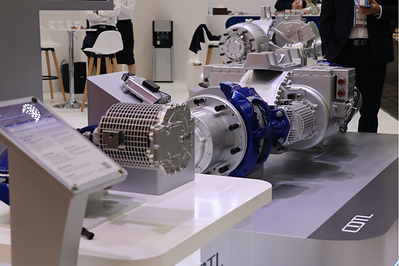
The EA5000NP distributed electric drive axle features two oil-cooled motors, a two-speed transmission and independent left- and right-wheel drive. Without a mechanical differential, it enables electronic differential control, traction control and independent wheel torque management. Its 800 V configuration delivers up to 660 kW rated power and 900 kW peak power, while the underlying platform has already been deployed in more than 3,000 vehicles. For demanding heavy-duty applications, the four-speed EA4800N multi-speed electric drive axle delivers approximately 48,000 N•m of maximum wheel-end torque per axle, with nearly 100,000 N•m available in a 6×4 dual-drive-axle configuration.

The EA2100N low-floor electric portal axle has been widely deployed in commercial operations, with proven service experience across European markets including France, Austria and Belgium.

For intelligent buses and next-generation public transport, the EA1100K independent-suspension distributed drive system integrates drive, steering and independent suspension, enabling all-wheel steering, bidirectional operation and a 100% low-floor architecture. It is already in operation in China, Malaysia and Türkiye. CDTL’s EMB braking system has entered small-series vehicle application. In vehicle applications, it can reduce vehicle weight by more than 100 kg, shorten braking distance by approximately 10%, and reduce braking-system energy consumption by up to 85.4%, demonstrating clear benefits in lightweighting, braking performance and energy efficiency.

On the Press day of the exhibition, CDTL’s booth attracted strong interest from companies across the global commercial vehicle value chain, including vehicle manufacturers. A number of leading industry players visited the booth and engaged in technical discussions with the CDTL team.

The continued attention from global industry players also reflects a broader market trend: as commercial vehicles move rapidly toward electrification, intelligence and autonomous operation, the industry is placing increasing emphasis on high-efficiency e-drive systems, brake-by-wire technologies and core vehicle actuation capabilities.

QBit Semiconductor Targets Physical AI and Drone Markets with QB88XX Series Integrating Robot “Cerebellum” Control

TAIPEI, Sept. 17, 2026 /PRNewswire/ — QBit Semiconductor (TWO: 7913), a Taiwan-based fabless IC design leader in high-end image processing and motion control, unveiled its robotics and drone chipset roadmap at SEMICON Taiwan 2026, targeting Physical AI control opportunities.

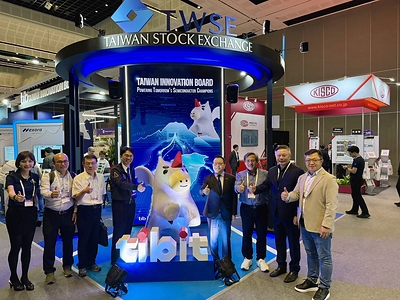
QBit Semiconductor made a standout appearance at SEMICON Taiwan 2026 within the Taiwan Stock Exchange (TWSE) Pavilion. (From right to fourth) TWSE Chairman Sherman Lin and (from right to second) QBit Semiconductor Chairman Simon Shen.

To address space and power constraints in Dexterous Robotic Hands with over 20 degrees of freedom, QBit introduced the highly integrated QB88XX series. The SoC consolidates multi-joint control onto a single chip, reducing system costs and energy consumption. Built on a Cerebellar Model Articulation Controller (CMAC) architecture, it combines quad-core Arm Cortex-A78 processors and an NPU to execute brain commands, in addition, the Arm Cortex-M7, TGEN, and secondary NPU for motor servo control. Supporting up to 32 motors and AI servo tuning, it integrates PCIe, USB, CAN Bus, and camera interfaces for robotic arms and industrial automation.

For Drones, QBit is executing a two-phase strategy:

  • Phase 1 (2026–2028): Penetrating entry-level markets with the QB77XX, supporting up to 32GB LPDDR5/5X, PCIe, USB 3.2, and GbE. Powered by TGEN and Cortex-M33 for real-time flight control, it reduces board counts across mission computers and flight controllers.
  • Phase 2 (2029 Onward): Launching a drone-dedicated QB88XX SoC unifying flight control and mission computing into a single chip with optical flow control and target tracking.

QBit also demonstrated its QB77XX single-object tracking solution, maintaining locks during visual occlusions (tested at relative speeds up to 60 km/h with 10–15 minute flight times). Multi-object tracking will be showcased in Q4 2026.

For cybersecurity, QBit’s QB7 series passed U.S. NIST CAVP validation for Post-Quantum Cryptography (PQC) ML-DSA algorithms in 2025. The drone solutions incorporate PQC-secured boot for device authentication and firmware defense.

About QBit Semiconductor:
Headquartered in Taiwan, QBit Semiconductor (TWO: 7913) is a fabless IC design company specializing in high-end image processing, precision motion control, Edge AI, and Post-Quantum Cryptography (PQC) SoCs, delivering one-stop ASIC design and system integration for robotics, drones, and secure terminals.