Home Blog Page 6345

Special Promotion from The Pizza Company and Swensen’s

On the special occasion of the seventh anniversary of the Pizza Company and Swensen’s opening in Laos, the two restaurants are offering special promotions to give back to their customers, including a buy 1 get 1 free offer. This offer is valid only for a large pizza with crusts, with any kind of topping, dine-in only from Monday to Thursday.


Another special offer is only applicable on Friday to Sunday, the Celebration Set of 333,000 LAK which is now reduced to 259,000 LAK.


For Swensen’s fans, any purchase of Mango Crepe Trio or Hurricane will automatically grant you a free scoop of ice-cream. For any order of any type of cake, you will get a discount from 250,000 LAK to 199,000 LAK and get a mango smoothie or chocolate shake for free.


Please come and join the celebrations for great promotions and value at the Pizza Company and Swensen’s at the following branches: Lao Cultural Hall, Phonesinuane, Dongdok, Vientiane Centre and Suanmone, from 17 May onward. Offers are limited!

Pizza pizza3 18553024_10101685782016384_193640279_o-Recovered

Café Amazon PTT Franchise Seeks to Dominate Lao Market

amazon
amazon

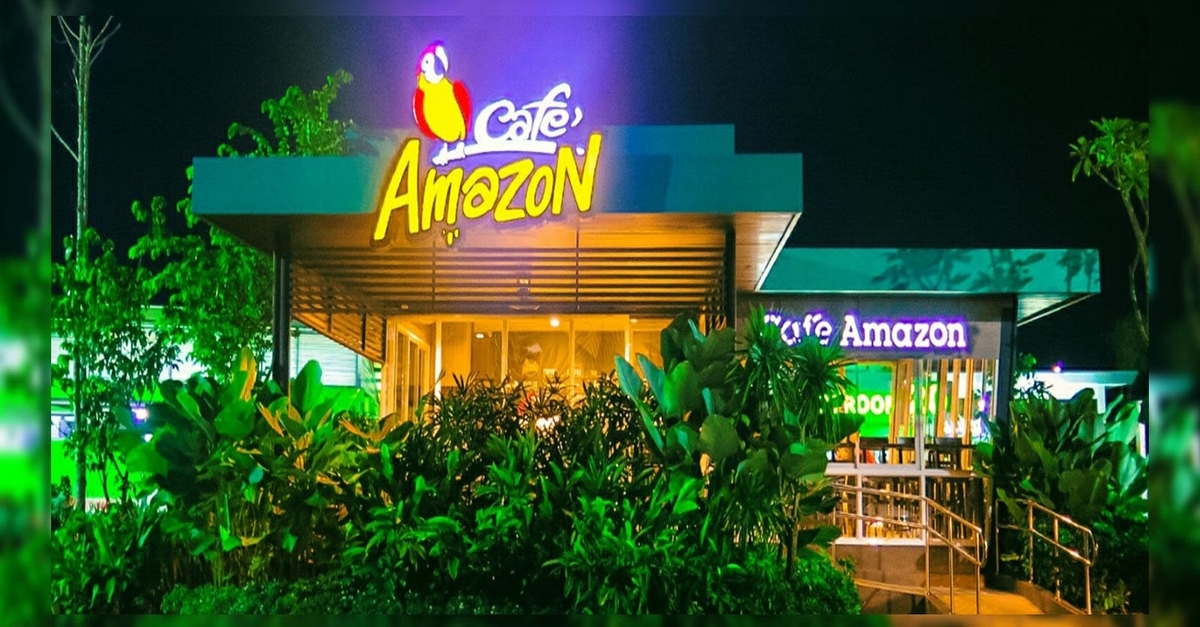
By now, PTT and Café Amazon have become a recognizable brand to the people of Laos. With already 25 Café Amazon outlets operated by PTT Lao, PTT  Thailand has a plan to further expand its master franchise of Café Amazon in the Lao market, with a target set at 38 branches by 2017 and 75 branches by 2021.

The master franchise expansion was signed between Senior Executive Vice President of PTT Public Company Ltd, Auttapol Rerkpiboon and Managing Director of PTT Lao Company Ltd, Somchart Sermvongtraku on May 30th at Crowne Plaza in Vientiane.

Chief Operating Officer, Downstream Petroleum Business Group PTT Public Company Ltd, Mr Sarun Rungkasiri stated that PTT aims to become one of the lead brands in the Indochina region, by introducing Café Amazon to new markets in Southeast Asia along with PTT petroleum products.

After the success of granting the first rights of a master franchise of Café Amazon in Cambodia to PTTCL, PTT continued to forge along the same path by granting rights to PTT Laos and other countries such as Myanmar, Japan and Oman.

Mr Sarun explained, “Granting rights of a master franchise of Café Amazon to PTT Lao not only creates an opportunity to expand our businesses remarkably in Southeast Asia but also provides jobs for Lao people and generates economic growth for our neighbor with products and services of international standards at reasonable prices.”

Dengue Fever Thriving in the Capital

dengue fever
dengue fever

Confirmed by health authorities, the Lao public is still in danger of being infected with dengue fever this year, as the reported rate of cases has increased.

From March thru May 26 of this year, the recorded cases of dengue fever rates in the capital were higher than other provinces in the country, with 268 cases reported while during the same time last year, no cases of infections were reported.

In an effort to reduce the risk of dengue related illnesses, Head of Epidemiology Division under the Vientiane Health Department, Dr Chanthalay Sayavong, believes that increasing public awareness is one of the main strategies to prevent dengue transmission.

“In communities, the cooperation of villagers is necessary to remove mosquito breeding grounds. Family members, family heads, village heads, associations, charities and monks are also important in the battle against the potentially fatal virus,” he said.

Health authorities face a continued threat from the mosquito-borne virus during this peak risk period. Every household is advised to toss out water that collects in jars and vases, and to cover such vessels to prevent more water from filling inside, as  pools of stagnant water is where mosquitoes typically lay their eggs

People are urged to clear shrubbery from around their homes, ensure that tins, jars and tires are turned upside down so that water does not collect water and to routinely change water in flower vases.

Dr Chanthalay mentioned that Laos also requires vector surveillance, resulting in pilot projects in target provinces to determine dengue transmission risk areas and to monitor changes in mosquito density.

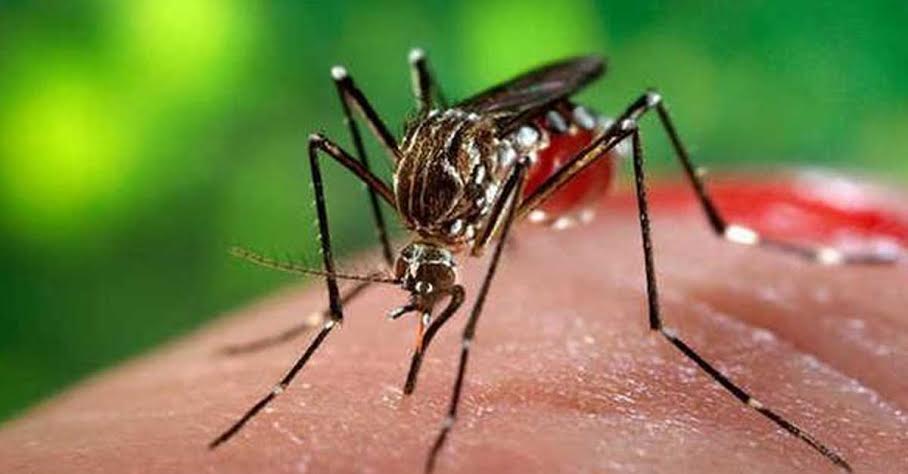
He noted that dengue is an infectious tropical disease transmitted by particular breeds of mosquito, in this case the Aedes Aegypti and Aedes Albopictus species,  and symptoms are rashes, severe headaches, and pain in the joints.

However, the six provinces of Bokeo, Luang Namtha, Xaysomboun, Phongsaly, Huaphan and Xieng Khuang have not reported any outbreaks recently.

According to the National Centre for Laboratory and Epidemiology, there were 281 dengue cases in Vientiane last year from a total of 1,950 dengue cases recorded nationwide.

Seven fatalities were recorded, with Champassak being the most impacted from the outbreak, six of the seven deaths were recorded in the province along with the highest number of cases reported,  while neighboring Saravan province reported the other death.

Is Laos Finally Getting a Krispy Kreme?

king food
king food

Great news for foodies who have to travel to Bangkok just to get their Krispy Kreme fix . King Food Group Co, a Thai-based company owned by the Mahagitsiri family, has announced that they are looking to enter the food market in Cambodia, Laos, Myanmar and Vietnam (CLMV), bringing along Krispy Kreme, Cinnabon, Pie Face, Jamba Juice and International House of Pancakes.

As a result of rising demand from middle-income people in the region, the president of King Food and local operator of the Krispy Kreme bakery chain, Ausanee Mahagitsiri, has stated that the company would convene with the owners of all bakery brands in its portfolio, including Krispy Kreme, Cinnabon, Bulgogi Brothers and Pie Face to request the rights to operate bakery chains in the CLMV market.

“These countries are promising markets due to the rise of middle-class people and their lifestyles have rapidly changed to welcome more fast food and bakeries,” she said.

At home, King Group said it would double its investment to 400 million baht (about $11.7 million) to open 22 branches under six bakery, food and juice brands this year. Of those 22 branches,  eight will be under the Krispy Kreme brand , four under Cinnabon, three under  Pie Face, five under Jamba Juice and two under International House of Pancake.

With the understanding that people are becoming more mindful of their health, Ms Ausanee said King Group is interested in expanding into the fruit and veggie juice sector due to the demand, valuing the market at 200 billion baht (about $5.8 million).

“With all the expansion plans, King Food Group expects its sales to grow 40 percent to 1 billion baht ($29.3 million) by the end of the year.”

According to figures provided by the Thai embassy in Cambodia, the bilateral trade volume of Cambodia and Thailand was valued at $5.6 billion in 2016, a $100 million increase compared to 2015. Thai exports to Cambodia last year were worth $4.7 billion while Cambodian exports to Thailand were valued at $936 million, a 46 percent increase compared to 2015.

Source: Bangkok Post, Khmer Times

Why Do The Chinese Come to Laos?

Chinese Come to Laos

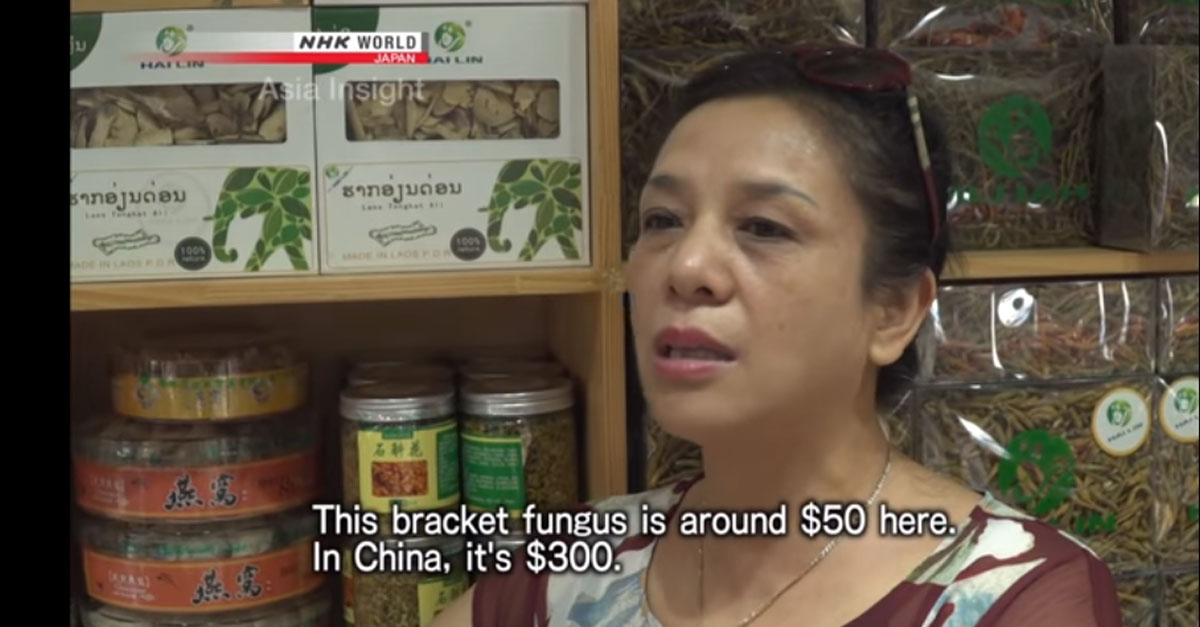
The number of Chinese immigrants to Laos increases daily, with men and women who struggled to succeed in rapidly developing China now seeking new lives for themselves in Laos. More than wealth or opportunity, these Chinese business people wish to begin anew in a country where life moves at a slower pace, without any the stress of their homeland. Around them grow new communities and groups, reflecting the unique presence they bring to Laos.


Source: Asia Insight, NHK World

Tunnel Boring for Laos-China Railway 68 Percent Completed

tunnel
tunnel

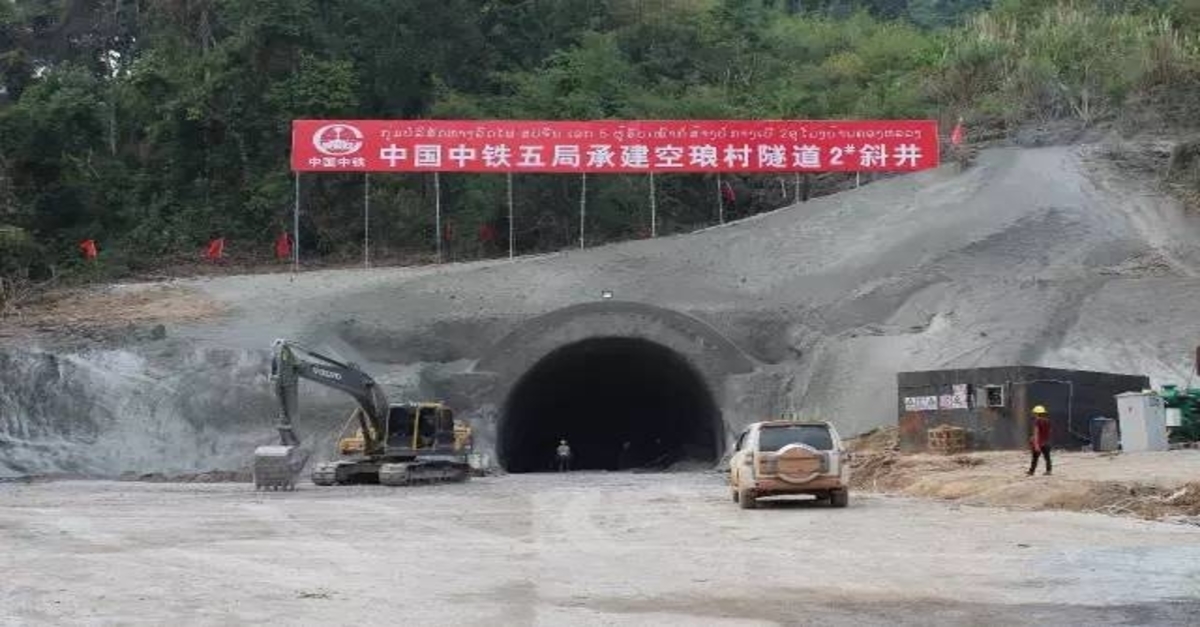
Development on the Laos-China railway has gained traction, with 51 of 75 tunnel entrances successfully bored. The railway is scheduled to be officially operational in December 2021, with tunnels making up 197.83 km of  the 414.332 km rail line linking Vientiane with the Chinese border.

The US$5.8 billion project began in December of last year, with six Chinese contractors carrying out construction of the 1.435-meter single-track railway, with pressure to finish on schedule.

The project coordinator for Luang Namtha province,  Mr Chanthachone Keolakhone, confirmed that all three tunnels in northern Luang Namtha province were being bored with the Boten Tunnel, and have progressed at more than 50 meters.

As previously reported and closely followed by The Laotian Times, as many as 75 tunnels totaling 197.83 km and 167 bridges of 61.81 km will be built along the 414.332 km rail line, linking Vientiane with the Chinese border. The electricity-powered passenger train is designed to run at 160 km per hour and 120 km per hour for freight.

Deputy Minister of Public Works and Transport and Chairman of the Laos-China Railway Project Management Committee, Mr Lattanamany Khounnivong, explained that the Lao People’s Revolutionary Party’s central committee and the government perceives the railway to be the most efficient transport mode in the context of landlocked Laos.

He stated that rail transport is cheaper, safer and reduces travel time with less impact on the environment. The Party and government has prioritized railway development as an essential solution in transforming Laos from a landlocked country into a land-linked country.

“The opportunity is the implementation of the One Belt One Road Initiative,” stated the deputy minister, referring to the China-proposed Belt and Road Initiative of which the Laos-China railway is a crucial part.

Governments from both countries endorsed a Memorandum of Understanding (MoU) on the project development on April 7, 2010. Both sides then proposed on project details which included performing an economic feasibility study, design and investment models that resulted with China contributing 70 percent of the funding, and Laos investing in the remainder.

Once the project is completed and operational, the railway is anticipated to significantly boost trade, investments, tourism and assist in creating employment opportunities for locals, resulting in better livelihoods and alleviating poverty for the Lao economy.

The deputy minister urged for local villagers, especially those living along the rail route, to offer full support and cooperation to the project’s implementation.

Mahosot Houses First Heart Specialized Care Facility

heart
heart

A Cardiac Catheterization Laboratory has officially opened its doors to the public on Friday, at Mahosot Hospital in Vientiane. The first of its kind in Laos, the center focuses on providing the highest quality diagnosis and treatment of heart conditions.

With over 9 billion kip in support from the government and a local private company, the center includes patient treatment rooms, an examination room, laboratory, counseling room and other various facilities.

Previously, due to the lack of facilities, patients with heart issues were left with no option but to seek treatment at hospitals in neighboring countries, assuming they could afford it.

The Minister of Health, Assoc Prof. Dr Bounkong Syhavong, former Deputy Prime Minister, Mr Somsavad Lengsavat, Director of Mahosot Hospital, Assoc Prof. Dr Bounthapany Bounxouei, Director of the CBF Pharma Co., Ltd, Vientiane, Dr Chinda Vongsouly along with senior officials from the ministry, all attended the official opening.

Speaking at the ceremony, Professor Dr Bounkong Syhavong stated that the heart center was necessary due to the rate of cardiac diseases steadily increasing every year.

“We think this centre will respond to public demand in line with government policy by providing the highest quality of screening, early detection, and treatment for the best results,” he added..

CBF Pharma Co., Ltd, Vientiane also donated medical equipment (angiography system) to the center on Friday.

WHO Commends Laos on Efforts to Reduce Tobacco Demand

world-no-tobacco-day

Whether you are a smoker, ex-smoker or non-smoker, the graphic health warnings on a cigarette packaging has more than likely caught your attention.

The use of graphic images as a health warning on tobacco packaging, along with the introduction of tobacco tax has been proven effective in reducing the demand for tobacco products, and World Health Organization (WHO) has praised the Lao Government for its proactiveness in the cause.

On May 26th, the Ministry of Health in partnership with WHO and ASEAN Tobacco Control Alliance convened in Vientiane, to mark the 29th anniversary of World No Tobacco Day and to recognize the various achievements and efforts Laos has made on enforcing WHO Framework Convention on Tobacco Control.

According to the Minister of Health, Dr Bounkong Syhavong, smokers aged 15 and over make up 27.9 percent of the country’s population, deeming Laos the second worst in ASEAN countries.  Smoking related deaths, where tobacco is considered to be the main contributor, is estimated at 4,387 deaths per year.

Despite being a member of the International Convention on Tobacco Control for the last eight years, Laos has done an inadequate job of enforcing the laws on tobacco control previously. Vital measures such as maintaining non-smoking areas, collection of tobacco tax and money for the Tobacco Control Fund were continuously ignored year after year.

Dr Dapeng Luo, acting WHO Representative stated, “Tobacco use was rising fast in many countries where control measures are relatively new. But it is not just health that tobacco damages. Tobacco use is a major barrier to sustainable development on several fronts including food security, gender equity, education, economic growth and the environment.”

On a global scale, tobacco kills more than 7.2 million people every year with an estimated 80% of them living in low- to middle-income countries. These countries carry 40 percent of the global economic cost of smoking, from health expenditures and lost productivity estimated at over US$1.4 trillion.

The 2030 Agenda for Sustainable Development entails increased multi-sectoral collaboration and support from other ministries to implement the WHO Framework Convention on tobacco control. If executed, it will play a critical part in meeting the Sustainable Development Goal target of reducing premature deaths from noncommunicable diseases by one-third in 2030.

Thanks to legislative measures, several countries have seen a decline in smokers. A WHO report shows that the majority of male smokers have decreased in 125 countries.

However, with tobacco companies losing their share of the market amongst male smokers, they have shifted their focus on to the next generation of smokers, primarily targeting adolescent teens and women.

The use of tobacco among young people aged 13-15 years old has decreased slightly from 8% in 2011 to 6.4% in 2016. However, some young people have shifted to using electronic cigarettes which is up to 5.0% of male and 3.7% of female.

For those aged 15 years and older, there is an increase in the number of male smokers from 43% in 2012 to 50.8% in 2015, but female smokers fell from 8.4 % in 2012 to 7.1 %.

Statistics show that  80-90 % of smokers initiate the habit before the age of 18.

“We need to remain true to the evidence that tobacco kills and be bold in implementing measures that protect our young people. We need to adopt measures that will reduce the demand for tobacco products and promote a healthier, more sustainable world,” said Dr Dapeng.

On World No Tobacco Day, Dr Dapeng urged the government of Laos and its partners to work in unison to combat against the emerging epidemic and reduce the disease burden of noncommunicable diseases as a result of tobacco use.