Home Blog Page 6408

Suspected Drug Dealers Nabbed in Provinces

INTERNET OUT Undated Police handout photo of a handful of different types of Ecstasy. Two thousand drug dealers have been arrested during the first four months of a campaign by Scottish police forces, it was announced today August 13 2001. Police have also seized more than â14 million worth of drugs, including heroin, cocaine and Ecstasy, as part of the Know the Score campaign, which ends on August 31. Heroin accounted for almost â £9 million of the total amount of drugs recovered, while officers also seized â1 million worth of cocaine. Drug squad officers also found 142,000 Ecstasy tablets and 40 kilogrammes of amphetamines. See PA 0430 story SCOTLAND Drugs. PA Handout photo.

Police in the provinces of Bokeo and Luang Namtha have made significant arrests involving large quantities of illegal drugs, local media reported.

The Bokeo Drug Prevention and Control Department recently arrested a couple and confiscated 12kg of crystal methamphetamine and about 42,000 amphetamine pills in Namkerng village, Tonpheung district.

According to the Khuamsangob newspaper, police received a tipoff from a local resident regarding the transport of illegal drugs from Bokeo province to Vientiane.

Police used a vehicle inspection checkpoint in Namkerng village to stop and examine a bus and found the crystal methamphetamine and amphetamine pills in the couple’s bags.

The pair were named as Mr Maysengyod, 51, and Ms Fong, 48, of Huaypherng village, Tonpheung district.

They told police that a drug dealer, who they couldn’t name, hired them to take the drugs from Bokeo province to Vientiane for which they would be paid about 102,000 Thai baht.

Police are continuing their investigation into the case in hopes of identifying other people involved in the drug ring.

Meanwhile, in Luang Namtha province police arrested two men after finding 18,000 amphetamine pills concealed in a motorbike.

The men were named as Mr Korpa, 32, and Mr Kermue, 27, both of Poungxay village, Long district.

Police set up a road block in Sing district and stopped the motorbike, finding the stash inside.

Mr Korpa confessed to buying the pills from a man in Myanmar, with the intention of selling them. He paid Mr Kermue 500,000 kip to take him and the pills by motorbike to a Mr Yaso in Homxay village, Sing district.

Under amended Article 146 of the Criminal Law, for cases involving refined drugs as opposed to precursor chemicals, the penalties are the following:

For the possession, trading, sale or trafficking of between 0.3 and 100 grammes of synthetic drugs such as amphetamine, ecstasy, ice or crystal methamphetamine or other mind altering substances, the punishment shall be a prison sentence of 5-10 years. For between 100-500g of any such substances the punishment under the law is 10-20 years in jail plus financial penalties.

Under the law, anyone convicted of possessing over 500g of heroin can be handed the death penalty.


Source: Vientiane Times

Employees Enjoy Better Working Conditions, Rights

More than 400 state enterprises and private factories in Vientiane have signed on to collective bargaining agreements to protect the rights and benefits of both employees and employers.

Most people working at state enterprises are more satisfied with their working conditions than employees in factories, because some state enterprise workers earn a better income.

But both employees in state enterprises and privately-owned factories have seen their social welfare improve after many local businesses entered into collective bargaining agreements, which were initiated by the Lao Federation of Trade Unions and development partners in 2008.

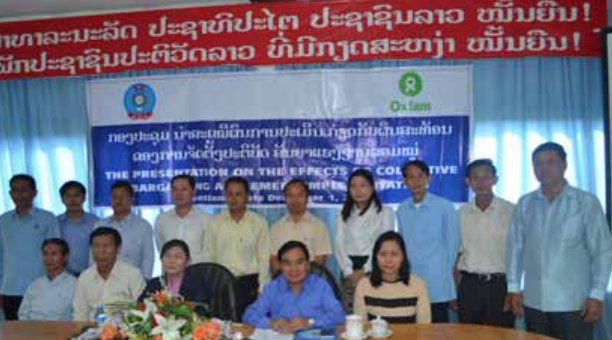
This information was revealed last week at a meeting of the Lao Federation of Trade Unions and the National University of Laos, who have set up a joint cooperation programme. The meeting, which was chaired by the federation’s Vice President Mr Simoun Ounlasy, heard about the effects of collective bargaining agreement implementation.

Participants discussed the ways in which the collective bargaining agreements had helped to improve efforts to protect the rights and benefits of employees and employers.

The Collective Bargaining Agreement Implementation Committee presented a survey of the status changes of business units, employees and employers.

The survey showed that the status of business units had improved and that working conditions were safer in many cases, employees had better and stable jobs, and employees were earning a decent wage and enjoying social welfare benefits.

The average salary in some privately-owned factories is between 1-2 million kip per month and 2-5 million kip in some state enterprises in Vientiane.

It was also found that employees were paying more attention to their work, complying with workplace rules, sticking to working hours, showing more responsibility, and enjoying their work more.

Mostly people working at factories in Vientiane who were not normal residents of the capital came from Huaphan and Luang Prabang provinces, while most of those working at state enterprises who had migrated to Vientiane came from Vientiane province.

The status of employers had also changed for the better, as they had developed better relationships with employees, provided good advice, explained the situation when employees made a mistake, and gave larger bonuses on special occasions.

Some employers also provided facilities, housing and transport, and improved the workplace to provide more convenience for employees.

The Lao National Chamber of Commerce and Industry strongly believes that skill development, labour migration, education, and human resource development are important and benefit the country.

The Chamber advised that businesses should do more to develop labour skills, in addition to ploughing in more investment and creating more job opportunities for Lao people so that Laos can graduate from Least Developed Country status by 2020.


Source: Vientiane Times

Savannakhet Gears Up for That Inhang Festival

The annual That Inhang stupa festival in Kaysone Phomvihane district, Savannakhet province, is ready to go ahead from December 10-14, local authorities have confirmed.

Kaysone Phomvihane district Governor, Mr Bounyou Thammavong, told Vientiane Times on December 1  For this year’s festival we focused on local cultural activities in the hope they will interest visitors and make them want to come back again.

During the afternoon of the official opening ceremony day on December 12, attendees can enjoy a cultural performance with over 10 programmes. I hope they will teach all visitors more about the lifestyle here in Savannakhet province.

During the five-day festival, the organising committee will hold a trade fair which will mainly exhibit products from the province’s 15 districts. Meanwhile, the provincial authority will also present the One District, One Product (ODOP) logo to three districts, namely Kaysone Phomvihane, Songkhon and Atsaphon, so they will be known as ODOP districts, he added.

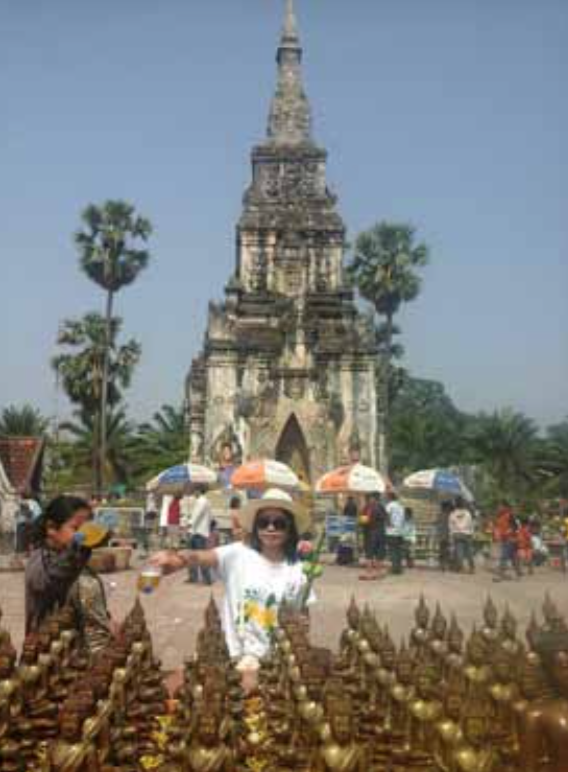
According to the festival schedule, on the afternoon of December 13 thousands of devotees will take part in a wax castle procession around the stupa and on the morning of December 14 there will be a tak baat (alms giving) ceremony. This is a traditional ritual that is a highlight of the annual festival, allowing people to pay homage to the revered stupa.

According to tourismlaos.org, That Inghang is a sacred stupa and reportedly the burial site of one of Buddha’s bones. It is an important place for Buddhists and is registered as a National Treasure of Laos. It was built about 450 years ago during the reign of King Marukhanakhone to commemorate the Buddha’s visit to the site.

Buddha is believed to have delivered a sermon to people at the site and later took a rest under the Hang tree. This is the reason why the stupa is called That Inghang.

The That Inghang festival takes place every December. The stupa is located in That village, Kaysone Phomvihane district. The easiest way to get there is to head out along Route 9 for about 12km and turn left at the police post, and then drive straight for about another 3km and you will come directly to the stupa.

Women are required to wear a traditional sinh (long Lao skirt) to enter the site. These are available next to the entrance. Normally, on days other than the festival, the gate is open daily from 8am to 6pm.

Savannakhet province is situated in central Laos and is the largest province with about 21,774 square kilometres, bordered by Vietnam to the east, Thailand to the west, Khammuan province to the north and Saravan province to the south. About 60 percent of the land is covered by forests.


Source: Vientiane Times

Round Table Meeting a Productive Forum for Exchange: Development Partners

The Round Table Implementation Meeting (RTIM) is an effective platform for productive exchanges between the government and development partners on the progress of their cooperation and enables participants to receive first-hand information on development issues.

This was the view expressed by a senior representative of Laos’ development partners about the recent RTIM, which took place in Vientiane provincial capital in a departure from the meeting’s normal venue in the Lao capital.

United Nations Development Programme Representative and United Nations Coordinator Ms Kaarina Immonen commented on the advantages of holding the meeting outside of Vientiane in a post-meeting press conference on Friday.

She said this year’s Round Table Implementation Meeting had impressed development partners through its relocation to Vientiane province. This enabled participants to visit development projects such as organic food farms, and vocational training and health facilities.

All of these projects are delivering so many positive results and continue to enforce the results, and have prospects for the future strategy and vision on how to take these forward, Ms Immonen said.

The meeting assessed the first year of the five-year National Socio-Economic Development Plan (NSEDP) for 2016-2020, and the challenges and prospects for the coming years.

Ms Immonen said the discussions at this year’s Round Table meeting were of high quality and the government had set a very open format for dialogue, which was appreciated by development partners.

The meeting was attended by members of the National Assembly, development partners, the private sector and civil society. The dialogue they engaged in was a full demonstration of more robust development partnership in operation and action, she added.

Ms Immonen said this kind of meeting was an important channel for the translation of the national agenda at the provincial level and other local levels.

The discussions and field visits were very helpful in making sure that responses were adjusted to local priorities and that there was participation in planning and implementation.

She pointed to the integration of planning and the global agenda into national strategy and the sub-national level as a concrete way that the government and development partners worked in partnership.

Another important aspect of effective cooperation was the provision of data for use in decision making.

We have to make sure that we are provided with data and that information is available about the development response, while boosting statistical information for making decisions, Ms Immonen said.

Attention should also be paid to gender equality and specific beneficiaries such as adolescents and girls. In this regard the availability of statistical information was of particular concern, especially in relation to nutrition, she added.


Source: Vientiane Times

New Funding Programme to Help Improve Ecosystems in Borikhamxay

The Wildlife Conservation Society (WCS) Laos Programme will work closely with the Ministry of Agriculture and Forestry to protect and conserve the unique and important species, habitats, and ecosystems in Borikhamxay province.

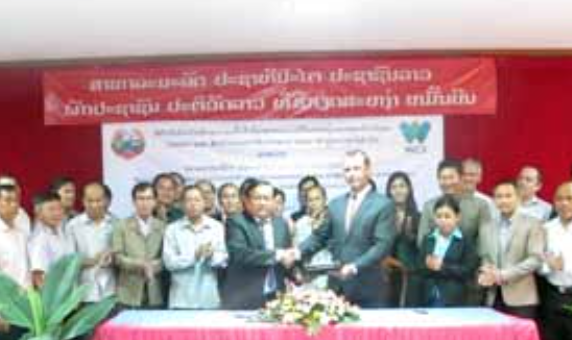
An agreement on the Integrated Ecosystem and Wildlife Management Programme Phase 3 was signed on Wednesday by WCS Greater Mekong Region Director and Country Programme Director, Dr Christopher Holmes, and Director of the Borikhamxay provincial Agriculture and Forestry Department, Mr Khamphiou Phimmathath.

The five-year programme will run until 2020 through financial support of more than 16.9 billion kip (US$ 2,055,684) from the Theun-Hinboun Power Company, Critical Ecosystem Partnership Fund, Cargill, Macarthur, European Union, AFD, and the United States Fish and Wildlife Service.

This agreement will build on more than 10 years of partnership through a programme of community engagement and livelihood development, and biodiversity and watershed management. Under the agreement, the programme will launch at the Nam Kading National Protected Area, Phou Si Thone Endangered Species Conservation Area, and Nam Gnouang South Protection Forest Area. The programme will help Borikhamxay to work in conservation forests and protection forests, with agreement to work in areas where other projects already exist, or are proposed based on discussion prior to the activity implementation.

The overall goal of the programme is to conserve and manage the forest resources and biodiversity within conservation forests, including protected areas and protection forests in support of efforts to improve local livelihoods sustainably.

The vision for Phase 3 of the programme is to continue to support the government to protect and manage the unique ecosystems within protected areas of the province so that they thrive indefinitely and are valued by the people of the Laos, and the world, for the biodiversity and services that they provide to both local communities and the nation.

Phase 3 contains components that build on Phases 1 and 2, which strengthened government capacity and supported the livelihoods of local communities.

The programme contributes to achieving government commitments under international conventions on biological diversity and on International Trade in Endangered Species of Wild Fauna and Flora.

The programme also aligns and contributes to specific government strategies and plans, including the National Socio-Economic Development Plan until 2025 and Vision until 2030, Five Year National Socio-Economic Development Plan for 2016-2020, Forestry Strategy to the Year 2020, Biodiversity Strategy and Action Plan 2010-2020 and other plans.

The Northern Annamite Mountains have the highest concentration of endemic species for a continental area in the world and are recognised globally for their biodiversity, ranked as one of the world’s 200 most important eco-regions.

This eco-region, which includes many forest areas in Borikhamxay, also supports some of Southeast Asia’s most charismatic species including Asian elephants, gibbons, and Annamite endemic species such as the Saola and Annamite striped rabbit, to name only a few.

In Borikhamxay province, the WCS Laos Programme works in partnership with the Lao government and local communities to conserve ecosystems and biodiversity.


Source: Vientiane Times

Japan Supports Gender Education in Bokeo

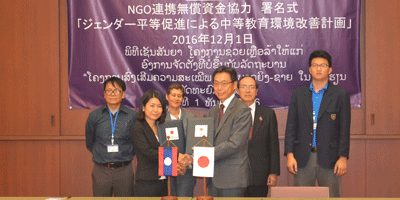
The Japanese government has provided grant assistance of more than 3.7 billion kip (US$450,381) to build secondary school facilities and support gender education in Bokeo province.

A signing ceremony for a grant contract for the project took place on December 1 between the Ambassador of Japan to Laos, Mr Takeshi Hikihara, and Project Manager of Plan International Japan, Ms Chiya Nagashima.

Plan International Japan is a Japanese non-profit organisation that has been actively engaged in development support for the education and health sectors in Laos since 2007. The grant extended at this time will fund activities in the first year of this three-year project.

The project, Better secondary education for girls through promotion of gender equity, aims to create gender-sensitive school environments and develop the capacity of secondary school teachers, students and local communities to promote gender equality.

The project will target all 10 secondary schools in Pha-oudom district, Bokeo province.

In the first year, the project will provide opportunities to learn basic knowledge about gender issues. Two teachers from each school will be selected as gender focal teachers, who will be expected to lead activities at their respective schools.

The project will also establish a reporting and monitoring system for students who have gender-related issues. It will also help with starting a children’s club to promote children’s initiatives and voices.

Five schools will be targeted during the first year. In the second and third years, the project will further strengthen teachers’ capacity to deal with gender related issues. For the newly targeted five schools, the same training will be conducted as in the first year.

Children’s clubs will have exchange programmes with other children’s clubs outside their schools and their leaders will participate in events on International Women’s Day. They will advocate gender equality, and over three years, the project will build student dormitories with kitchen facilities, separate latrines for boys and girls, and a water supply system in one school each year.

Project Manager Ms Chiya Nagashima said they had selected the schools in Pha-oudom district because they were located in a remote area of Bokeo province.

These schools lack the facilities to support teaching and learning, while some families do not support their children in education, especially girls, so there are fewer girls in schools than boys in this area.

The project aims to upgrade gender equality in education and it is believed the project will lead to more development and sustainable outcomes after it ends, Ms Chiya said.


Source: Vientiane Times

Foreign Diplomats Wish Laos Continued Success in Development

The heads of diplomatic missions in Laos have expressed confidence that the current National Socio-Economic Development Plan (NSEDP) will lead to tangible progress in achieving continuous, inclusive and sustainable growth.

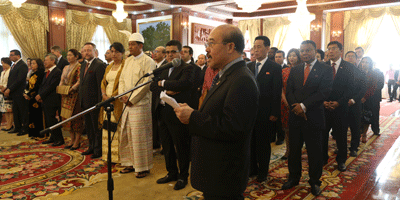
This was the main message delivered by foreign diplomats to the country’s leaders, government and citizens during a ceremony held at the Presidential Palace on Friday to celebrate Laos’ 41st National Day.

Malaysian Ambassador to Laos Dato’ Than Tai Hing, as Dean of the diplomatic corps, led representatives of diplomatic missions in offering good wishes to President Bounnhang Vorachit, his wife, and the government.

Ambassador Hing congratulated Laos on the successful convening of the General Election of the National Assembly in March, saying it paved the way for the smooth transition of the country’s leadership.

The diplomatic corps noted the continuing political stability in Laos over the past 41 years as one of the country’s most remarkable achievements, which they said had enabled the effective and successful implementation of successive five-year NSEDPs, including the current eighth cycle from 2016 to 2020.

We strongly believe that Laos will achieve its objectives and strategies as the 8th NSEDP will be pursued with great vigour and determination under the guidance of the country’s wise and visionary leadership, said the message read by Ambassador Hing.

We are confident that the direction set by the 8th NSEDP will lead to tangible progress in continuous, inclusive and sustainable economic growth, as well as achieving other planned concrete outcomes as outlined in the overall objectives of the plan, the message added.

This year was noted by foreign diplomats as having been eventful, busy and demanding as Laos assumed the chairmanship of ASEAN, and stood out as a year of diplomatic success for the country.

They noted with admiration that under Laos’ chairmanship, ASEAN had taken significant steps in the first year of the establishment of the ASEAN Community towards the realisation of the ASEAN Vision 2025 under the theme Turning Vision into Reality for a Dynamic ASEA N Community.

They also mentioned Laos’ strategic location within the region, which they said made it an attractive add on destination for holiday-makers. People were attracted by its rich blend of nature, culture, traditions and rural lifestyle along with drawcard destinations and historical sites that have fascinated tourists from all over the world.

The diplomatic corps also underlined the spirit of leadership, cooperation and solidarity between Laos and its partners, expressing the hope that this be further developed and strengthened in the years to come.

In greeting guests at the ceremony, President Bounnhang highlighted the achievements made over the past year. He noted that the Party and government had led the nation by bringing together all economic sectors to implement the Resolution adopted by the Tenth Party Congress and realise the eighth NSEDP, whose objectives include fulfilling the United Nations’ Sustainable Development Goals.


Source: Vientiane Times

“They’re so Lao”: Explaining the Thai sense of superiority

theyre-so-lao

A Thai photographer’s Facebook post drew attention to long-standing tensions between the cultures of his nation and neighbouring Lao. But is “you’re so Lao” truly an insult? It apparently is for the fiercely proud Thais.

By Oliver Ward

Thai photographer, Pongsaton Gitprachaya was photographing a motoring expo in Vientiane when he casually commented  “Damn, they´re so Lao” on his Facebook page. The comment was intended to point out the, in his view, inferior nature of the work on display but the comment was picked up by the national media and he had to flee across the border. Despite his apologies Lao netizens exploded with anger and the damage was done.

Behind this story is the strong belief among Thai professionals that their work is far superior to anything produced by their neighbours.  But when you look deeper, the use of the term “Lao” as an insult is offensive not only to Laotians but also to swathes of the northeastern Thai population who share Lao roots.

One people, divided

Divided by the mighty Mekong river, the people in both nations share linguistic and cultural similarities. In fact, the Lao kingdom of Lan Xeng included all of northeastern Thailand as recently as the early 18th century.

As a result, the people of the northeastern Isaan region, in particular, share strong Lao roots. This is because even after the fall of the Lan Xeng kingdom and during the following Ayutthaya and Rattanakosin periods, Isaan was incorporated into the territory of Siam but retained their strong Lao cultural connection. Linguistically they speak Isan, a Lao dialect used by a third of the population of Thailand.

And the connections between the two nations run much deeper than appearances. Shared cuisine, language, fashion and culture transcend the Mekong, meaning any belief in the superiority of “Thainess” fails to grasp the extent to which the two nations were a united Kingdom until fairly recent history. To be fair, the feeling of Thai superiority is not present amongst the whole nation, but certainly, the population of central and southern Thailand look to their northern borders with contempt.

Some of the most public examples of this are cases where the Thai entertainment industry has been responsible for offending Laotians. Several years ago, Thai singer Uthen Prommin caused a stir with public insults while the film Mak Te (Lucky Losers), tells the tale of a football cup where the Thai and Lao national teams face each other in the final. It was widely criticised for depicting Lao’s players as country farmers who were utterly incapable of organising a national team until they hired a Thai as a manager. It was never released.

Where does it come from?

Thamrongsak Petchlertanan, an expert on Thai history at the Rangsit University, believes that the idea of Thai superiority is rooted in almost a century of nationalist education in Thai schools. Anti-communist ideology after the 1950´s bolstered the idea of “Thainess” and the idea of Thai conquest and dominance over the region. As part of this narrative, the destruction of Vientiane by the Siamese army in 1778 has been told with enthusiasm to generations of Thai children.

In the wider picture, Lao has limped behind Thailand economically since the Cold War due in part to the economic restrictions imposed on the country. Much of the economic assistance received by the Lao government since has come from Thai pockets, contributing to increased Thai zealotry. However, this understanding conveniently ignores the fact that Laos’ economy is currently growing faster than that of its Thai neighbour.

The widespread religious belief in karma also plays a role in spawning a sense of Thai superiority. Many Thais feel their neighbouring countries have seen less development as they have procured less karma and goodwill, perpetuating ideas that Laotians or Cambodians are villains that lack moral integrity.

The final plank in the Thai mindset is the history of border skirmishes between the two nations, the most significant of which in December 1987 ignited the Thai-Laotian war. The dispute was over national boundaries and ownership of four small villages. The first blow was landed by the Thai army which moved in and raised their flag,  prompting Lao forces to fight back under cover of darkness and reclaim the village as their own. The fighting went on for some weeks until a ceasefire was declared in February of 1988.

Solving the problem of Thai superiority

Solving the problem between these two brothers in culture and ASEAN will not be a simple task. While politician and educators retain the view of Thai superiority it will never be as easy as changing the syllabus of new diplomatic deals. A complete overhaul of social perceptions would need to occur first. This is especially true for the feeling of superiority over their Cambodian neighbours, as the Thai government has strategically fueled anti-Cambodian sentiment in the past to help strengthen their claim over the disputed land near Preah Vihear.

After joining the ASEAN economic integration agreement, Thai relations with their neighbours are more important than ever as closer economic ties have brought more people from Thailand´s neighbouring countries in to both work and visit the country. Subjecting these people to a bigoted belief of their inferiority will only cause tensions and undermine the modernising process which has made Thailand a good place for foreign nationals to do business.

The Laotians themselves have their own way of fighting back.  On their streets you hear another expression that cuts to the bone, “don’t be Thai to me”. It’s a sense of superiority that has never really been earned.

Source: ASEAN Today